



Truck Battery Voltage Guide: Charts, Testing & Charging (2026)
Healthy truck battery voltage reads 12.6V to 12.8V at rest with the engine off, and 13.7V to 14.7V with the engine running. A resting reading below 12.4V means the battery needs charging, and below 12.0V it is deeply discharged and sulfating.
Those numbers are the short answer. The full picture depends on temperature, battery type, and how the truck is used between starts. This guide from Battery Tender® explains how to read each voltage, test with a multimeter, separate a weak battery from a weak alternator, and hold the correct voltage with a smart charger when a truck sits or makes mostly short trips.
Key Takeaways
- Resting voltage: 12.6V or higher is a full charge, 12.4V is about 75%, and 12.0V is about 25%.
- Running voltage: 13.7V to 14.7V at the battery terminals means the alternator is charging correctly.
- Cranking voltage: It should stay above 9.6V while the engine turns over at about 70°F.
- Prevention: Battery Tender chargers with Infinite Sequential Monitoring (ISM) hold a battery at full charge and are safe to leave connected indefinitely.
- Diesel and dual-battery trucks: Test each battery separately, because one weak battery drags down the whole bank.
What Is Normal Truck Battery Voltage?
Normal truck battery voltage for a healthy 12V lead-acid battery is 12.6V to 12.8V after the truck has rested for several hours. Voltage is a reliable gauge of state of charge only when the battery is at rest, because charging or driving leaves a temporary "surface charge" that reads high.
To clear surface charge, let the truck sit 4 to 12 hours, or switch on the headlights for two minutes with the engine off and then wait five minutes before measuring. The table below applies to a flooded lead-acid battery at roughly 80°F.
| Resting voltage | State of charge | What to do |
|---|---|---|
| 12.6V or higher | 100% | No action needed |
| 12.4V | 75% | Top off within a week or two |
| 12.2V | 50% | Charge now |
| 12.0V | 25% | Charge immediately; sulfation is underway |
| 11.8V or lower | Near 0% | Recover with a smart charger, then load test |
AGM batteries read about 0.1V to 0.2V higher, so a full AGM sits near 12.8V to 13.0V. Lithium (LiFePO4) batteries have a very flat voltage curve, so resting voltage is a poor fuel gauge and a charger with a lithium setting is required.
How to Test Truck Battery Voltage Step by Step
Testing truck battery voltage takes a digital multimeter and about ten minutes. Run the same sequence every time so readings are comparable from month to month.
- Prepare the truck. Turn off the engine, lights, and accessories. Wait at least 4 hours after driving or charging.
- Set the meter. Select DC volts on the 20V range.
- Clean the terminals. Remove corrosion so the probes touch bare metal.
- Measure resting voltage. Touch red to positive and black to negative. Compare the reading with the table above.
- Measure cranking voltage. Have a helper start the engine while you watch the meter. A healthy battery stays above 9.6V at about 70°F.
- Measure running voltage. With the engine at 2,000 rpm, expect 13.7V to 14.7V.
- Add a load. Switch on the headlights, blower fan, and rear defrost. Voltage should hold above roughly 13.0V.
A battery that rests at 12.6V but collapses below 9.6V while cranking is likely failing internally, even though it looks full. In that case, charge it and retest before replacing it, because a deeply discharged battery can mimic a bad one.
What Does Running Truck Battery Voltage Reveal About the Alternator?
Running truck battery voltage between 13.7V and 14.7V means the alternator and regulator work. Below 13.5V points to a worn alternator, slipping belt, or a corroded charging cable. Above 15.0V points to a failed regulator that overcharges and boils electrolyte.
Parasitic draw is the other hidden voltage killer. Modern trucks with telematics, trailer modules, and aftermarket lights often pull more than the typical 50 mA. At 50 mA, a truck parked for 14 days loses 0.05A × 24 h × 14 days = 16.8Ah, about 21% of an 80Ah battery. Short trips make it worse, because a 10-minute drive rarely returns the energy a cold start used.
Dual-Battery Diesel Trucks and 24V Systems
Most diesel pickups wire two 12V batteries in parallel, so system voltage stays 12V while capacity doubles to about 200Ah. Disconnect and test each battery individually. A mismatched or weak battery forces its partner to work harder and shortens the life of both.
Heavy trucks and some commercial vehicles run 24V by wiring two 12V batteries in series. A full 24V bank rests near 25.2V to 25.6V. Always match charger voltage to the system, a principle covered in the cart charger guide on matching voltage, chemistry, and amps.
How Temperature Changes Truck Battery Voltage
Cold lowers available capacity and raises the voltage a charger must apply. A battery at 0°F delivers roughly half the cranking power it does at 80°F, while the engine needs more power to turn over thick oil.
A properly compensated charger adjusts its output by about 0.01V per °F. At 20°F, that is roughly 0.6V higher than the target at 77°F. Without that adjustment, a cold battery stays undercharged, and a hot one is overcharged. That adjustment matters most for a truck parked in an unheated shed through winter or a hot garage through summer.
Discharged batteries also freeze more easily than full ones. A truck that rests at 12.0V in January risks a cracked case, which is why winter voltage checks matter more than summer ones.
How to Hold Truck Battery Voltage with a Smart Charger
The reliable way to hold truck battery voltage at 12.6V or higher is a smart charger that monitors and adapts. Conventional trickle chargers deliver constant current whether or not the battery needs it, which can push voltage past 14.7V, cause gassing, and dry out cells.
Battery Tender ISM technology runs four stages: Initialization tests the battery, Bulk delivers full current until about 80% charge, Absorption holds voltage constant while current tapers, and Float Maintenance sends current only when voltage drops. That is why a Battery Tender charger with ISM can stay connected for months. The ISM charging technology deep dive explains each stage in detail.
Size the charger with this formula: (battery Ah × depth of discharge) ÷ charger amps = approximate hours. Add about 20% for the Absorption taper.
| Truck setup | Battery capacity | Charger | Time from 50% discharged |
|---|---|---|---|
| Weekend or short-trip pickup | Single 70–80Ah | Battery Tender Power Tender 8A/2A | (80 × 0.5) ÷ 8 = 5 hours |
| Work truck with winch or light bars | Single 100Ah | Battery Tender Power Tender 10 Amp | (100 × 0.5) ÷ 10 = 5 hours |
| Diesel pickup, dual batteries | 2 × 100Ah (200Ah) | Battery Tender Power Tender 10 Amp | (200 × 0.5) ÷ 10 = 10 hours |
| Fleet or heavily equipped diesel | 200Ah or more | Battery Tender PowerPlus 12V | (200 × 0.5) ÷ 26 ≈ 4 hours |
Battery Tender Power Tender 10 Amp: Best Match for Most Trucks
A 10A output recovers a single 100Ah battery from 50% in about 5 hours, and it handles a dual-battery bank overnight. It is multi-chemistry, so it still fits if the truck later moves to AGM or lithium. That makes it the best all-around choice for full-size pickups.
Battery Tender Power Tender 10 Amp Multi-Chemistry 12V Battery Charger and Maintainer
Battery Tender Power Tender 8A/2A: Recover Fast, Then Maintain
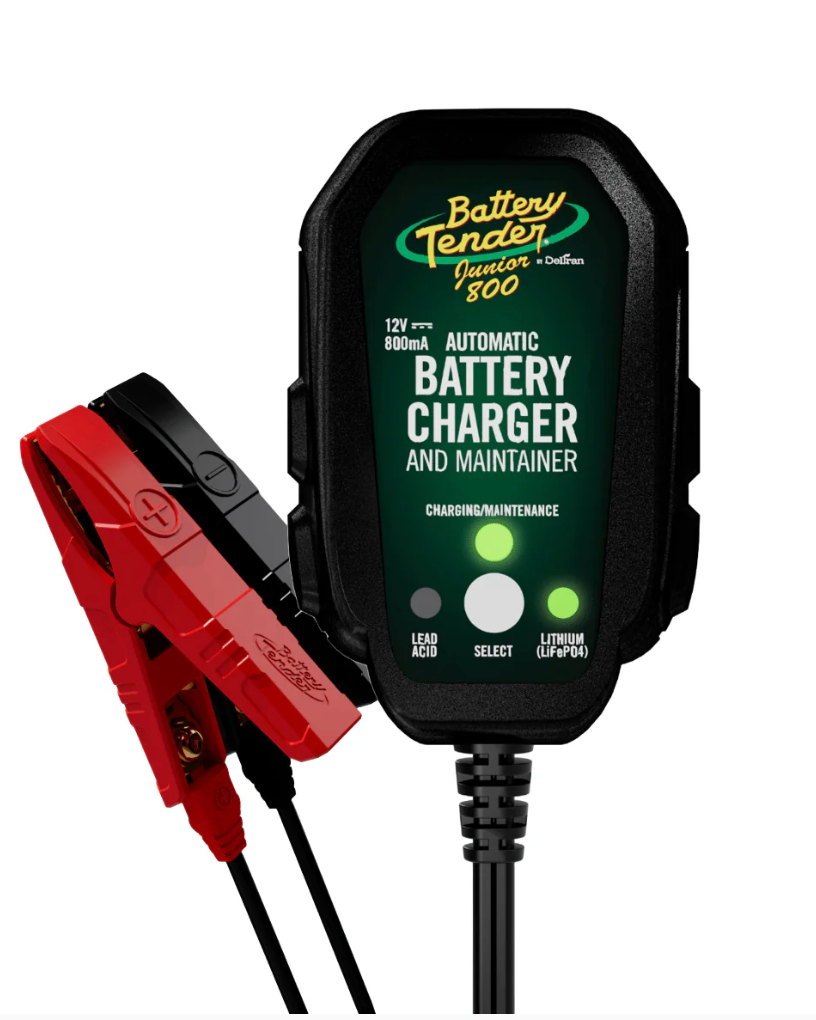
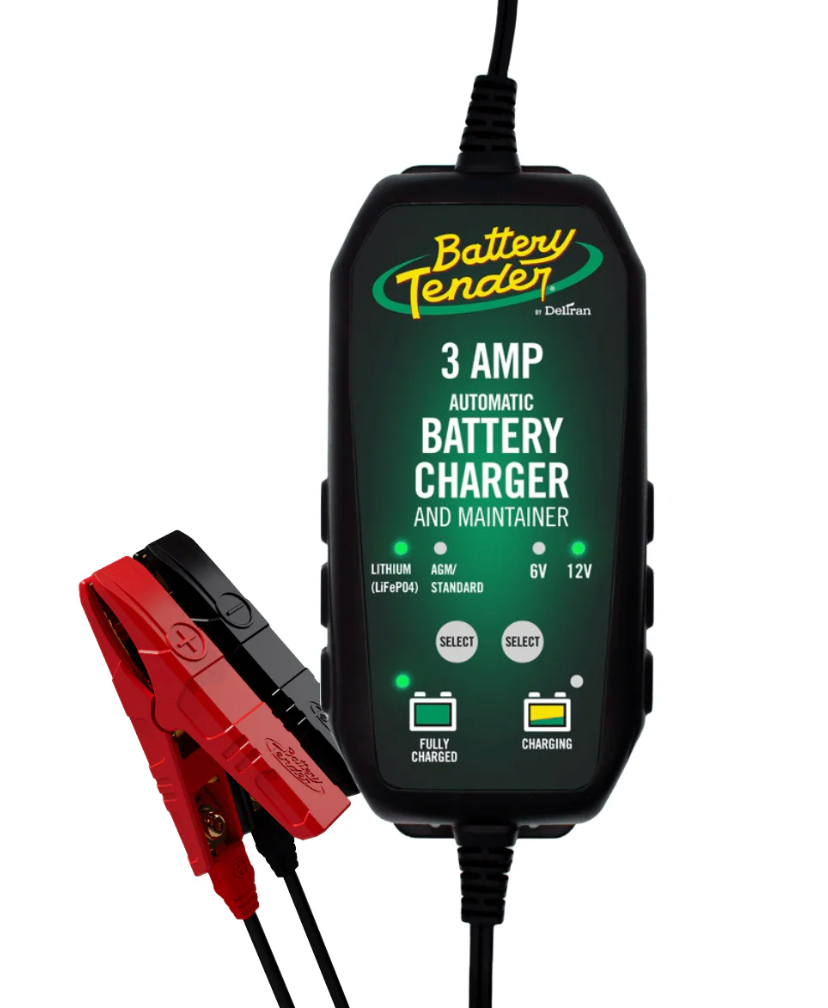
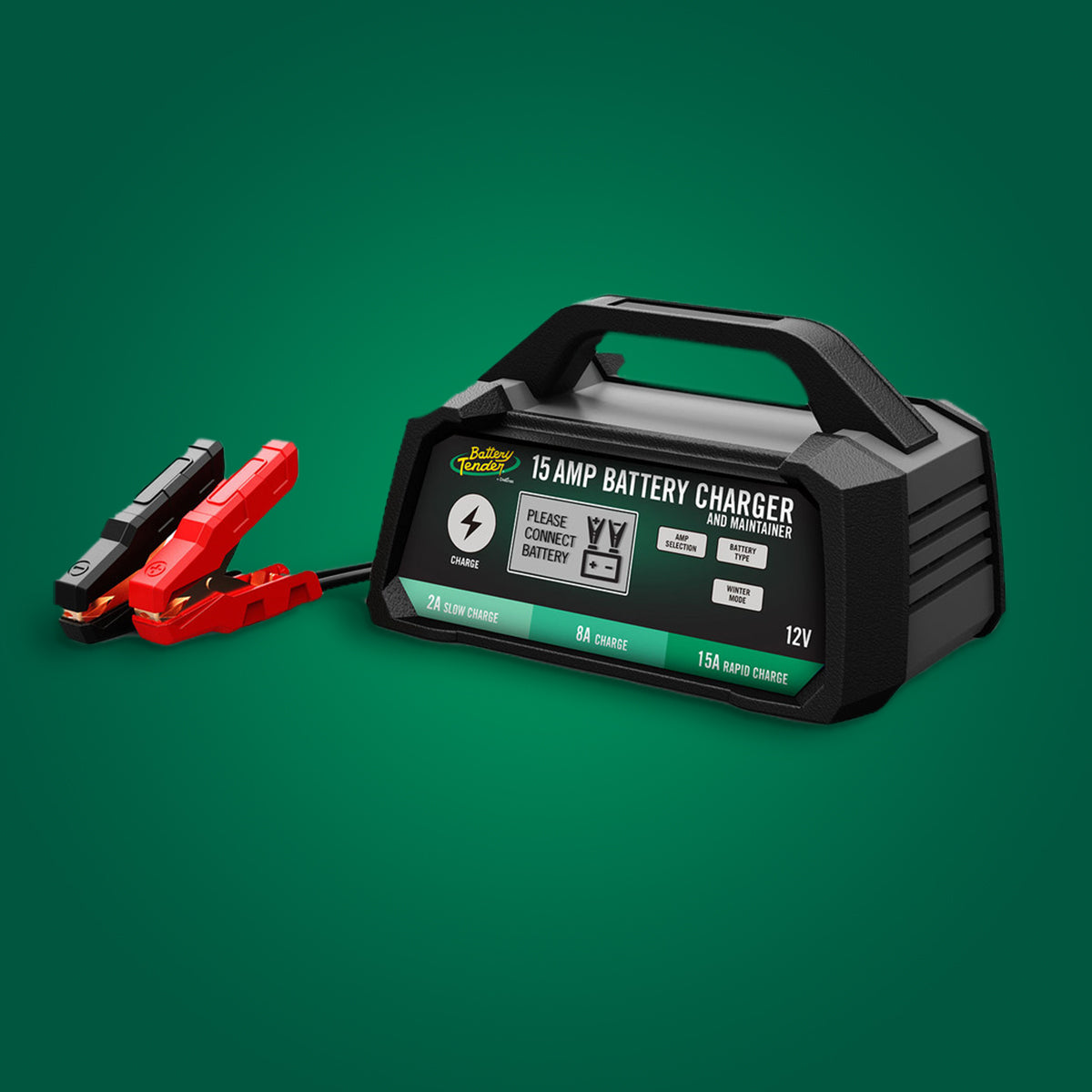
This charger offers a selectable rate: 8A to recover a 70–80Ah battery in about 5 hours, then 2A to keep it topped off during long storage. It suits half-ton pickups that sit for days or weeks between uses.
Battery Tender Power Tender 8 Amp/2 Amp 12V Battery Charger and Maintainer
Battery Tender PowerPlus 12V: For Large Banks and Fleet Trucks
At 26A, this charger restores a 200Ah dual-battery bank from 50% in about 4 hours before taper, and its rugged, weatherproof build stands up to washdown bays and dusty farm shops. It fits shops that turn trucks around quickly or run heavy accessory loads.
Battery Tender PowerPlus 12V 26 Amp Battery Charger and Maintainer
Battery Tender Jump N Start 2000 Amp Power Station: Backup for a Dead Bank
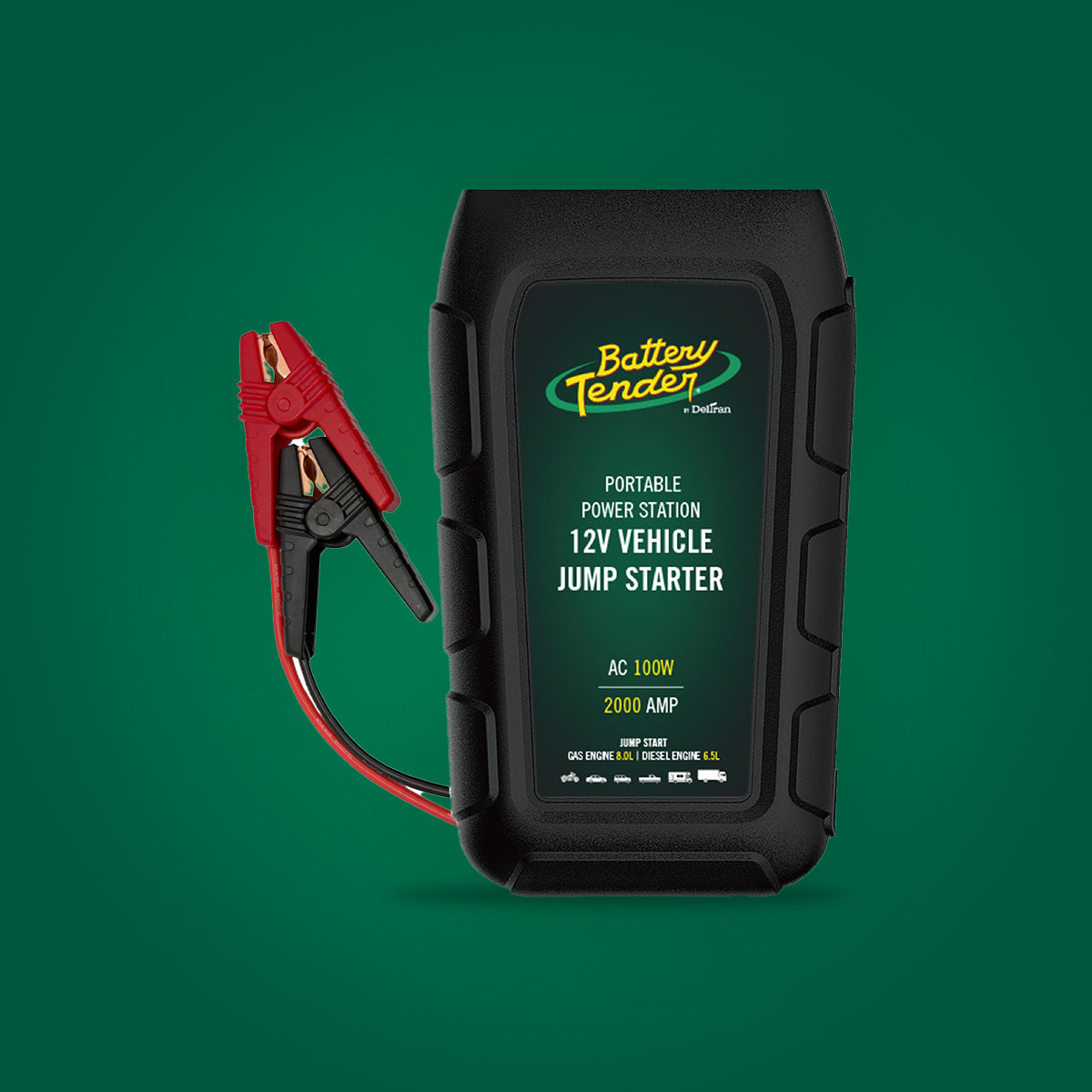
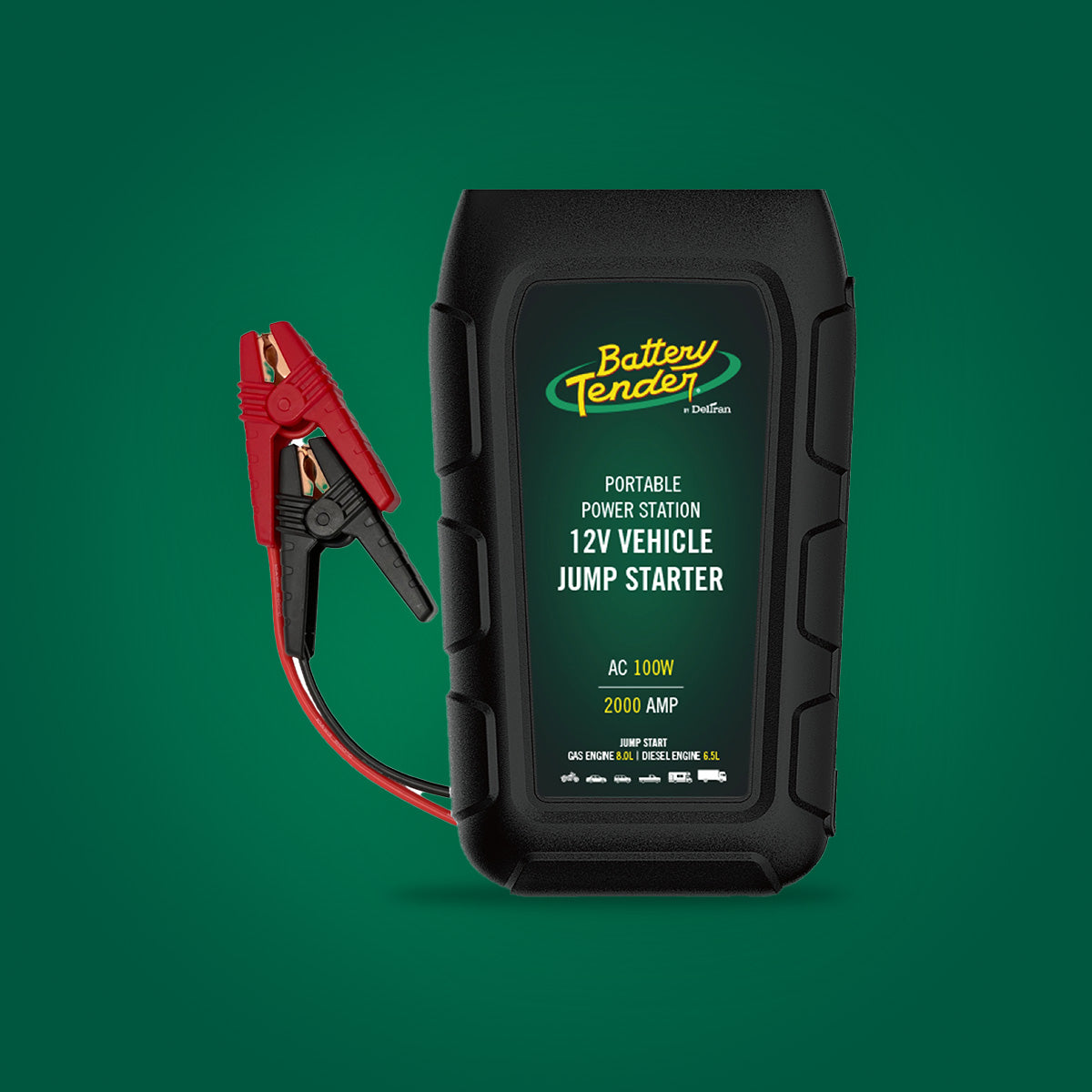
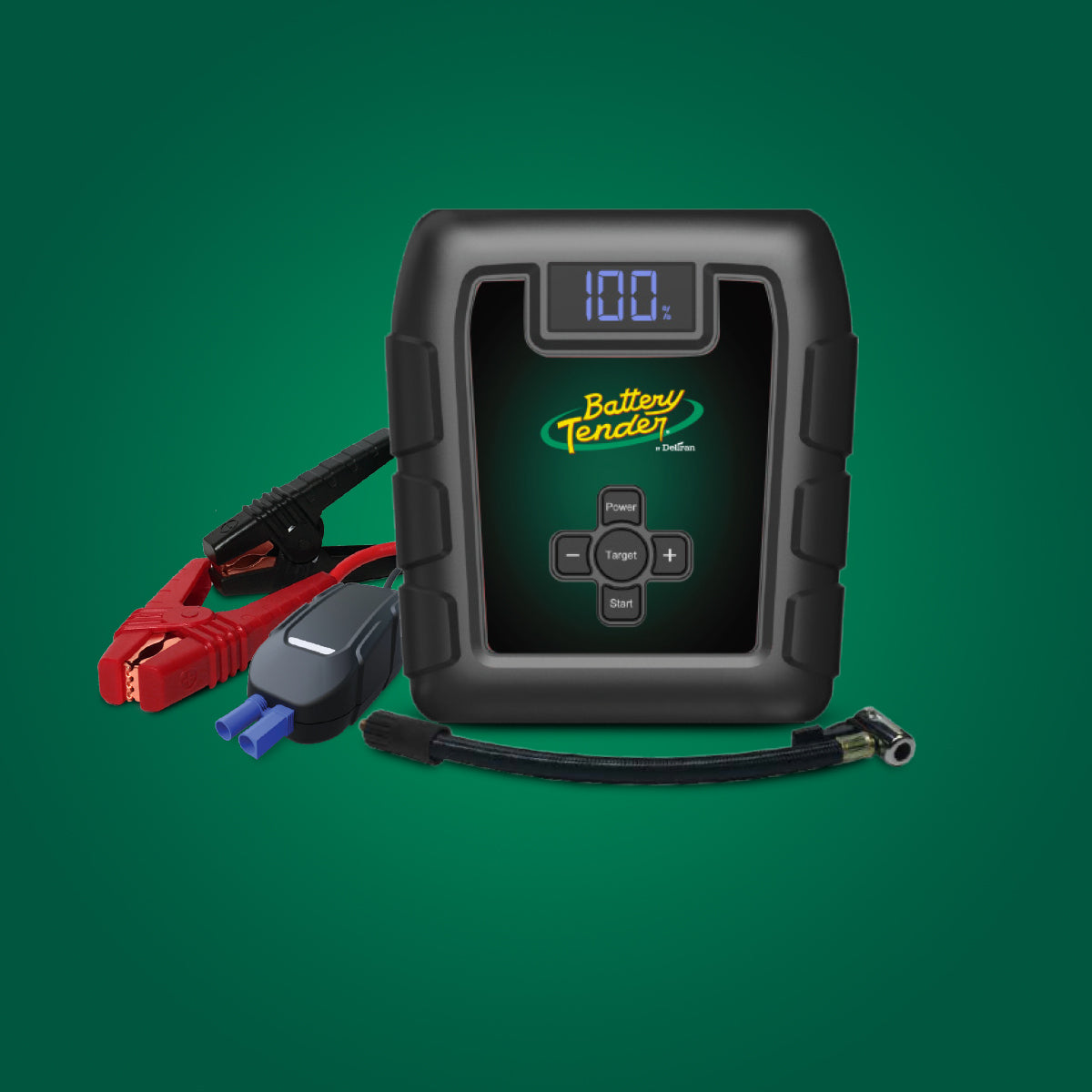
When the battery sits below 11.8V and the truck must move now, this unit delivers 2,000 peak amps for gas and diesel engines and includes a 100W inverter for tools and electronics. Confirm the rated engine size before relying on it for a large diesel; engines beyond that rating need the batteries charged, not jumped. It pairs well with a maintainer in the garage.
Battery Tender Jump N Start 2000 Amp Power Station with 100W Inverter
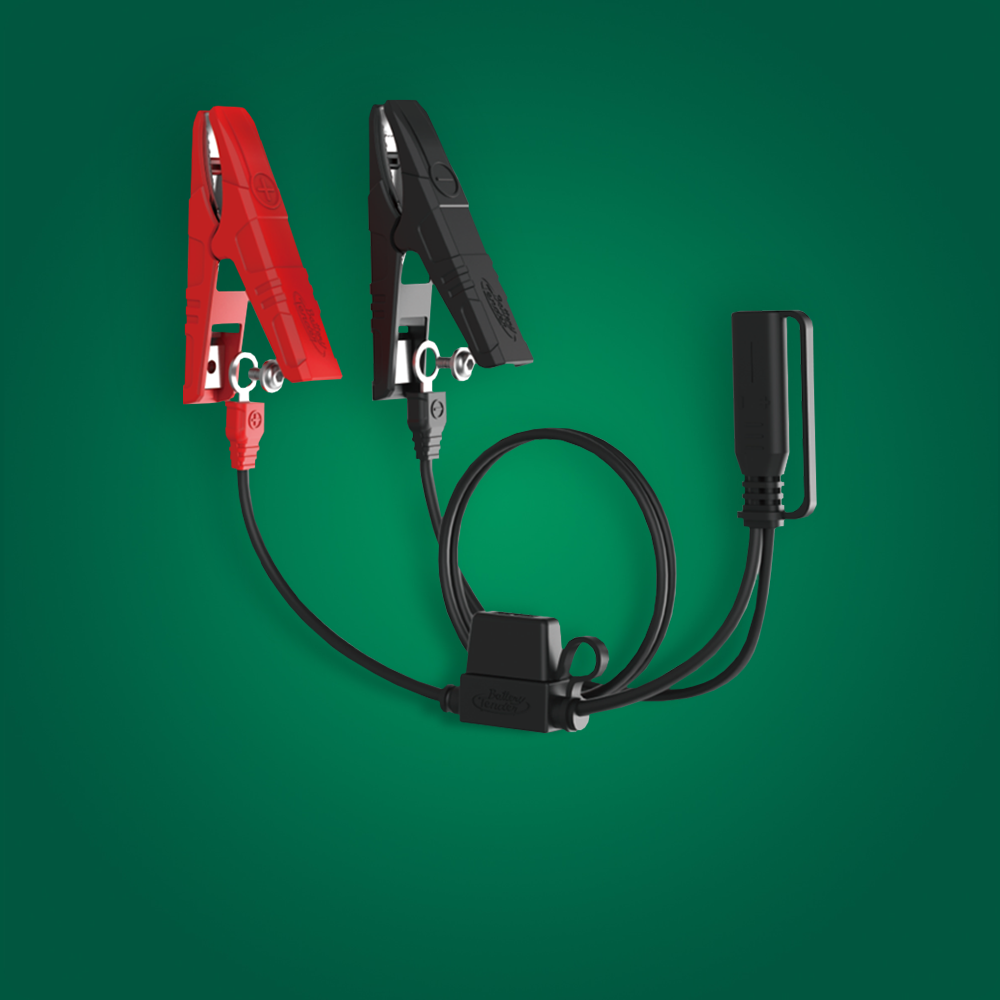
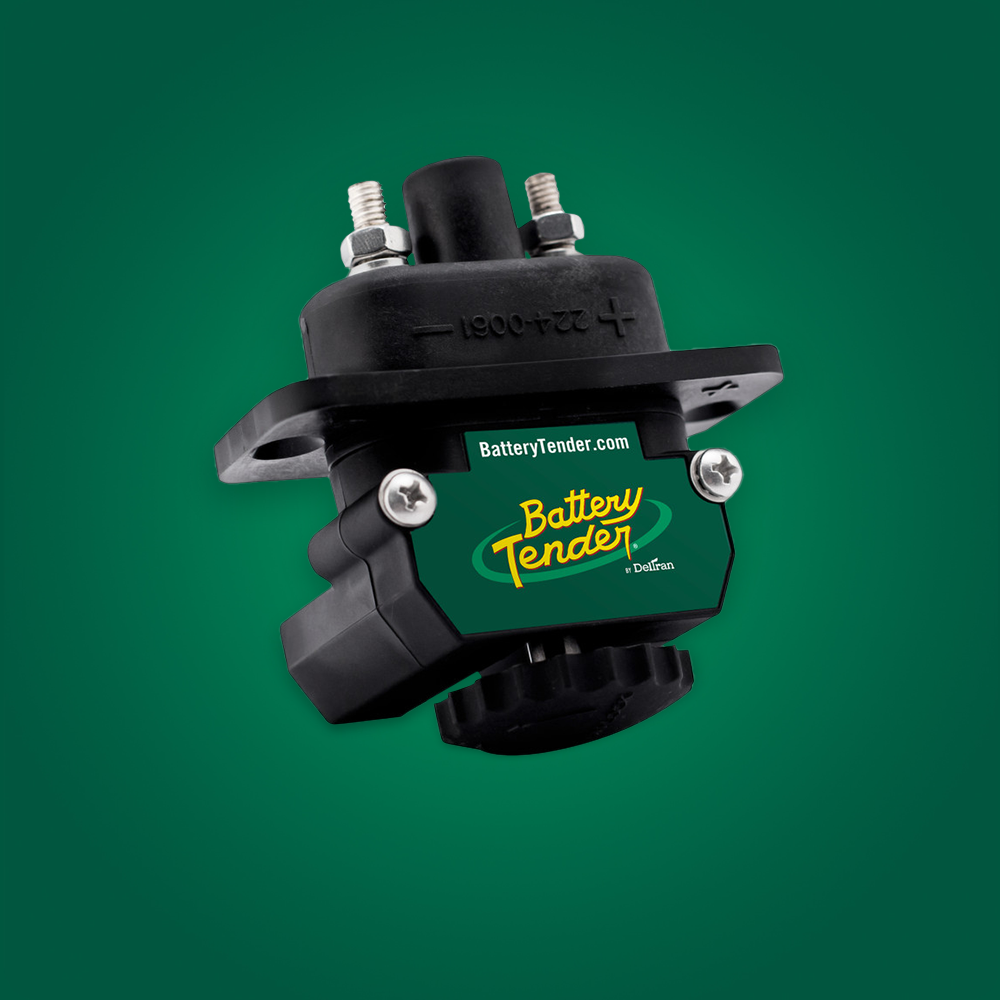
Battery Tender DC Power Connector Kit: A Clamp-Free Connection
Wiring a DC connector to the battery gives the charger a repeatable plug-in point, so there is no reaching under the hood or clipping onto terminals every time the truck parks. That matters for trucks charged weekly or kept where the hood is awkward to open.
Battery Tender DC Power Connector Kit
How to Connect the Charger Safely
- Turn off the engine and all accessories, and make sure the charger is unplugged.
- Clip red to the positive terminal and black to the negative terminal or a clean chassis ground away from the battery.
- Select the correct chemistry and rate, then plug the charger into AC power.
- Leave it connected, and verify resting voltage of 12.6V or more when the charge completes.
Charge in a ventilated area and keep sparks and open flame away from flooded batteries, which vent hydrogen. Never charge a frozen battery.
Frequently Asked Questions
What should truck battery voltage be when the engine is off?
With the engine off and the truck rested for several hours, a healthy 12V battery reads 12.6V to 12.8V. A reading of 12.4V is about 75% charged, 12.2V is about 50%, and 12.0V is about 25%. AGM batteries read slightly higher, around 12.8V to 13.0V when full.
What truck battery voltage means the battery is dead?
A resting reading of 11.8V or lower means the battery is effectively discharged. It may still recover if charged promptly with a smart charger, but weeks below 12.0V cause hard sulfation that reduces capacity permanently. After charging, retest cranking voltage, which should stay above 9.6V.
What should truck battery voltage be when running?
With the engine at about 2,000 rpm, measured at the battery terminals, the reading should be 13.7V to 14.7V. Below 13.5V suggests an alternator, belt, or cable problem. Above 15.0V suggests a failing regulator that is overcharging and can damage the battery.
Can I leave a smart charger on a truck battery all winter?
Yes, if it is a Battery Tender charger with ISM. A Battery Tender maintainer applies current only when voltage drops, so it cannot overcharge the battery. Constant-current trickle chargers are different and should not stay connected unattended for weeks.
How long does it take to charge a truck battery?
Use (amp-hours × depth of discharge) ÷ charger amps. An 80Ah battery at 50% discharge on an 8A charger needs (80 × 0.5) ÷ 8 = 5 hours, plus about 20% for the Absorption taper. On a 2A setting, the same battery needs roughly 20 hours.
Conclusion
Truck battery voltage is the simplest diagnostic a driver has: 12.6V at rest, 13.7V to 14.7V running, and 9.6V or more while cranking. Check it monthly, and charge before the resting number falls below 12.4V. The next step is to match a smart charger to the battery bank, such as the Battery Tender Power Tender 10 Amp for a full-size pickup. Browse every option in the Battery Tender battery charger collection.