


Battery Jumper Box Guide: Portable Jump Starter Basics (2026)
A battery jumper box is a portable lithium jump starter that delivers a short burst of 600 to 2,000 amps to turn over an engine with a dead 12V battery, with no second vehicle required. Match the rating to your engine size, connect red to positive and black to bare metal, and start the engine.
Most drivers buy a battery jumper box after the first dead-battery morning, then leave it in the trunk for two years. This guide covers how the box works, how to size it by engine displacement, and the exact connection sequence. It also covers the step most guides skip: restoring the battery afterward. Battery Tender® chargers and Battery Tender Jump N Start portable jump starters solve the problem from both sides. One starts the engine now, and the other prevents the next dead battery.
Key Takeaways
- A battery jumper box is a lithium-ion jump starter. It borrows no power from another car.
- Size by engine: 600A covers up to 4.0L gas or 2.0L diesel, and 2,000A covers up to 8.0L gas or 6.5L diesel.
- A jump starts the engine but does not repair a discharged battery. Recharge it fully afterward.
- Recharge the jumper box itself every 90 days, and store it between 32°F and 120°F.
- Battery Tender chargers with Infinite Sequential Monitoring (ISM) can stay connected indefinitely. Conventional trickle chargers can overcharge.
What Is a Battery Jumper Box and How Does It Work?
A battery jumper box is a sealed, rechargeable power pack that sends a high-current pulse through clamps to your dead battery's terminals so the starter motor can spin the engine. The alternator then takes over and runs the vehicle.
What Is Inside the Box
Modern units use lithium-ion cells, which deliver high current in a pack small enough for a glove box. A microprocessor monitors the connection. It blocks current if the clamps are reversed, shorted, or attached to a battery with no detectable voltage.
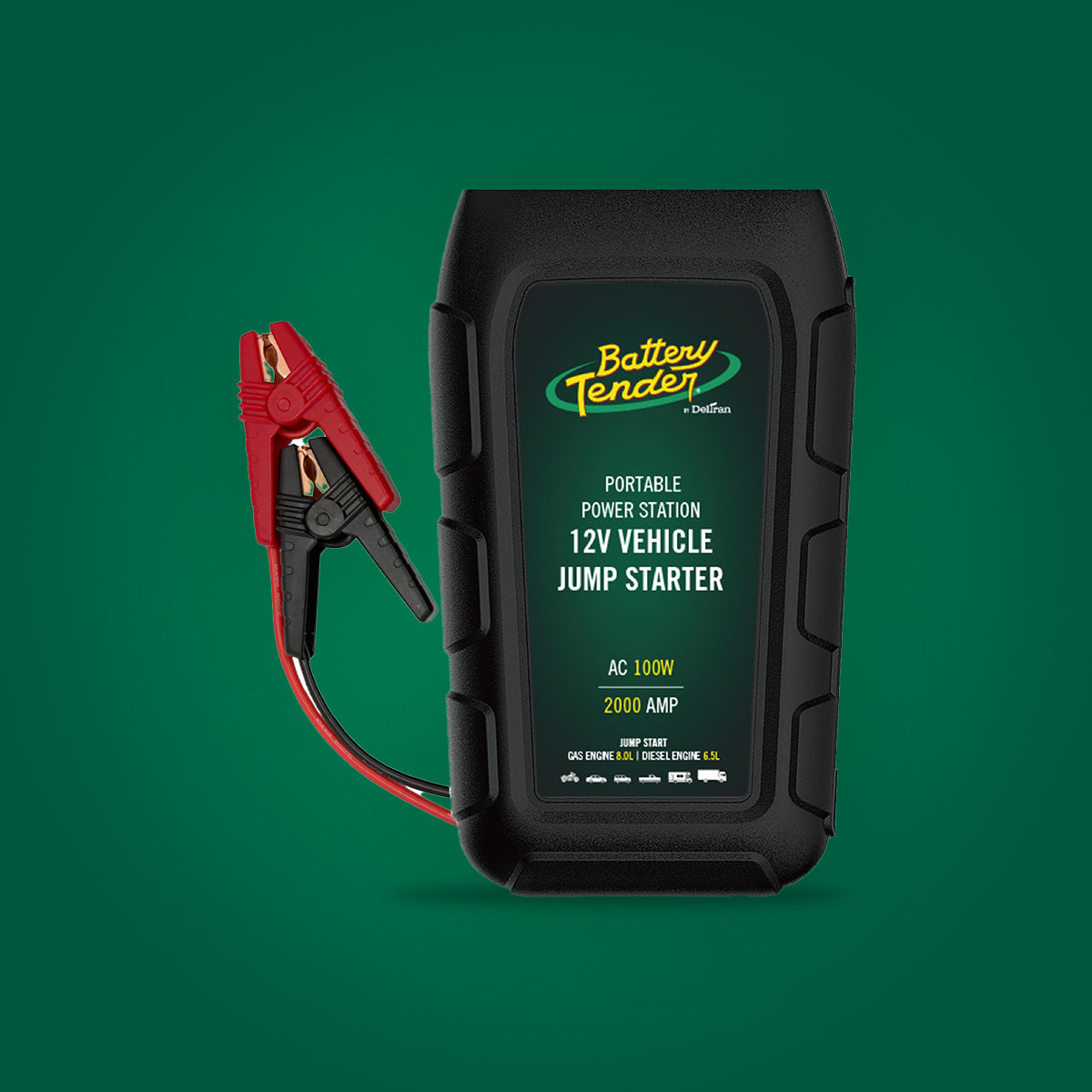
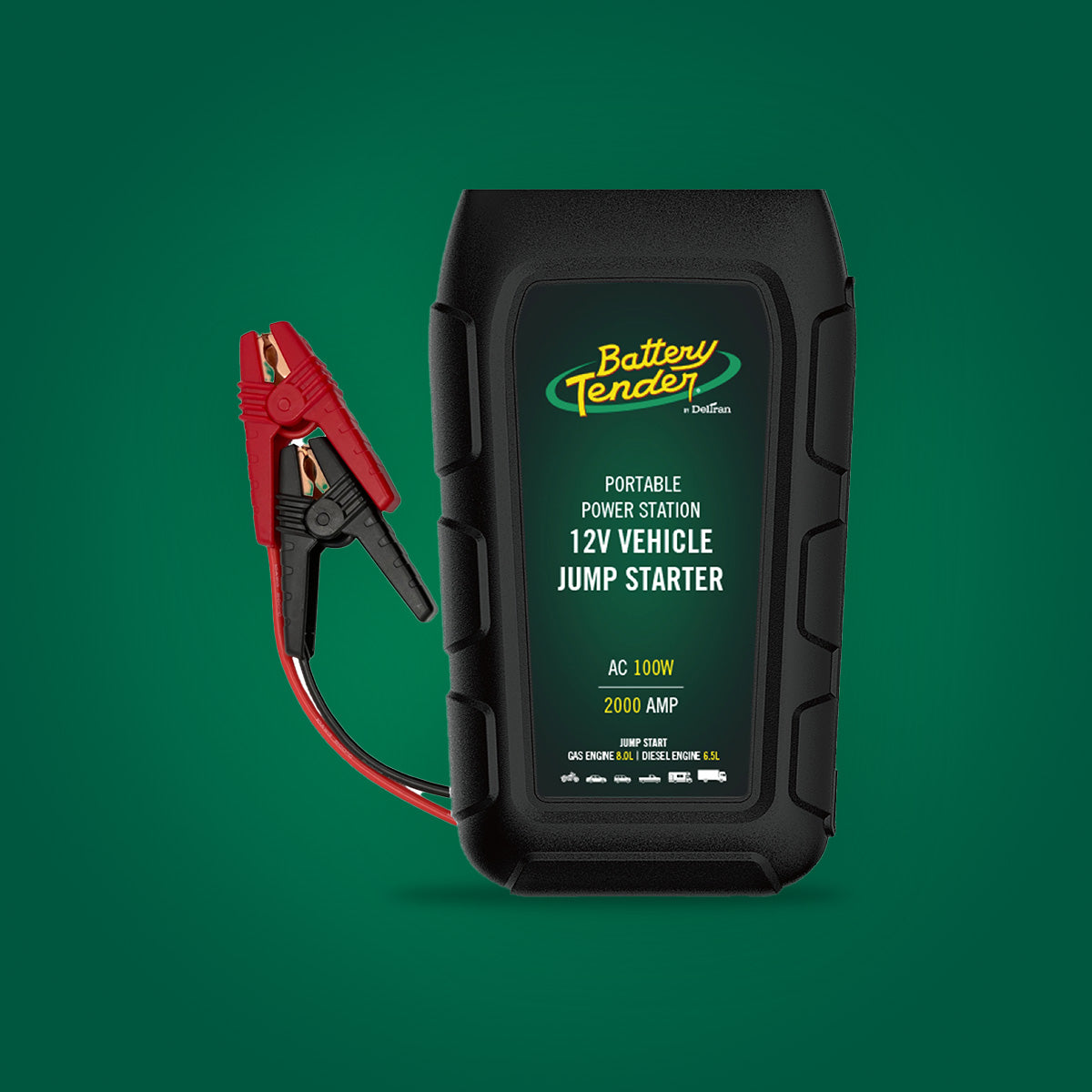
Older jump boxes used sealed lead-acid batteries. They weighed 15 to 25 pounds and lost charge faster in storage. A 16,000 mAh lithium pack, such as the one in the Battery Tender Jump N Start 2000 Amp, weighs a fraction of that and delivers up to 50 starts per charge.
Battery Jumper Box vs. Jumper Cables
- No second vehicle: A jumper box works in an empty parking lot at midnight. Cables need a donor car.
- Built-in protection: Smart clamps prevent sparks and reverse-polarity damage. Plain cables do not.
- Limited capacity: A jumper box has a finite number of starts per charge. A running donor car does not.
- Upkeep: The box needs a recharge every few months. Cables need nothing.
For a deeper look at clamp technology, see the guide to automatic jump starters and smart clamps.
How to Size a Battery Jumper Box by Engine
Size a battery jumper box by engine displacement and fuel type. Diesel engines need more cranking power because of higher compression, so the same pack is rated for a smaller diesel than gas engine.
| Vehicle | Engine Limit | Peak Amps | Battery Tender Option |
|---|---|---|---|
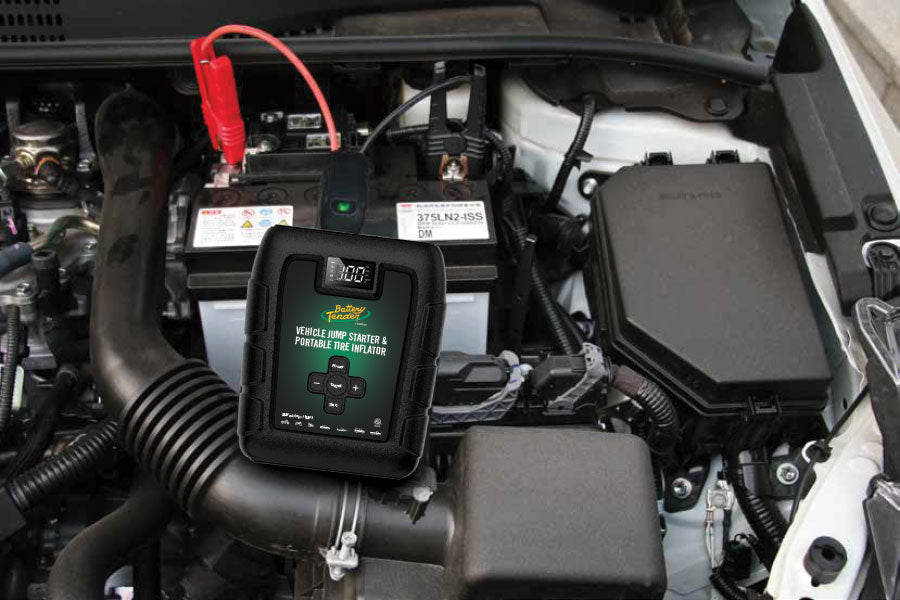
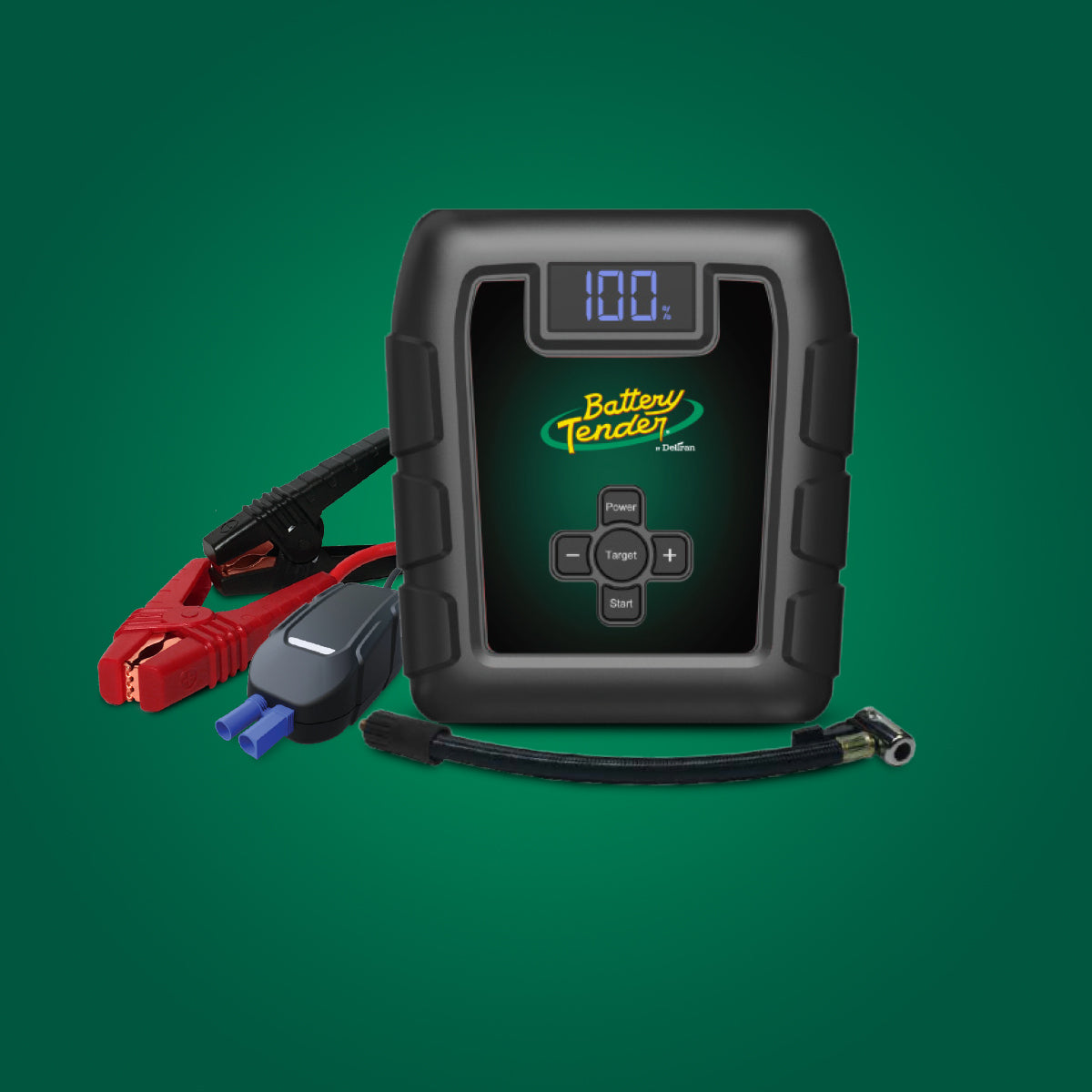
| Motorcycle, ATV, mower, compact car | 4.0L gas / 2.0L diesel | 600A–800A | Battery Tender Jump N Start 600 Amp or Battery Tender Jump N Start 800 Amp + Tire Inflator |
| Powersports, compact car (2-in-1) | 5.0L gas / 3.0L diesel | 1,000A | Battery Tender Charge N Start 1100 |
| Mid-size car, SUV, boat | 6.0L gas / 4.0L diesel | 1,200A | Battery Tender Charge N Start 1120 or Battery Tender Charge N Start 4120 |
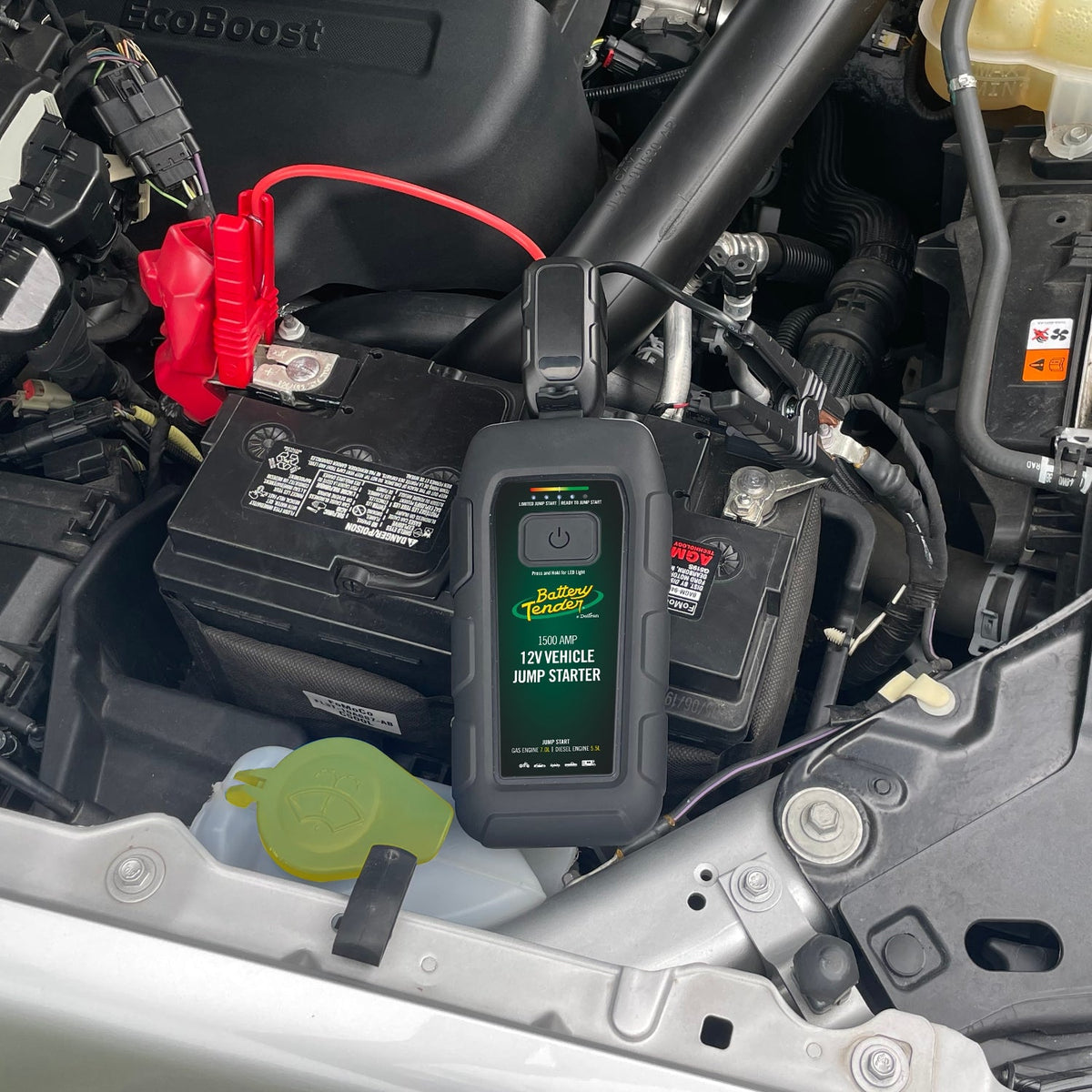
| Full-size SUV, pickup | 7.0L gas / 5.5L diesel | 1,500A | Battery Tender Jump N Start 1500 Amp |
| Heavy truck, RV, diesel pickup | 8.0L gas / 6.5L diesel | 2,000A | Battery Tender Jump N Start 2000 Amp |
Round up when unsure. A 2,000A unit starting a 2.0L engine causes no harm, but a 600A unit on a 6.7L diesel will fail. Cold weather raises the requirement, because a battery at 0°F delivers roughly half its rated cranking power. Owners of diesel trucks should also read the diesel truck battery maintenance guide for heavy-duty charging.
A Pick for Mixed Fleets: Motorcycle to Truck
Households with a motorcycle, a pickup, and a camper want one battery jumper box that covers all three. The Battery Tender Jump N Start 2000 Amp Power Station bundle fits because its 2,000A rating handles up to 8.0L gas or 6.5L diesel, and the included ring terminal cable mounts permanently to a motorcycle or ATV battery for a clip-free connection. The 100W AC inverter also powers a phone charger or laptop at a campsite or during an outage.
For a broader comparison of ratings and features, read the Battery Tender Jump N Start guide.
How to Use a Battery Jumper Box, Step by Step
Using a battery jumper box takes about two minutes. Follow the sequence below, and always check the unit's manual for model-specific steps.
- Turn everything off. Switch off the ignition, headlights, radio, and climate controls.
- Inspect the battery. Do not jump a cracked, bulging, leaking, or frozen battery.
- Check the jumper box charge. At least three of four indicator lights should be lit.
- Connect red to positive (+). Clamp the red lead to the battery's positive terminal.
- Connect black to negative (-) or bare metal. Use the negative terminal or an unpainted engine bolt away from the battery.
- Start the engine. Crank for no more than 5 seconds. If it does not start, wait 30 seconds and try again.
- Disconnect in reverse. Remove black first, then red, and let the engine idle.
Wear eye protection and keep flames and sparks away. Batteries vent hydrogen gas while charging and discharging.
After the Jump: Fix the Battery, Not Just the Start
A jump restores the start, not the battery. A battery that sat discharged is already sulfating, which means lead sulfate crystals are hardening on the plates and permanently shrinking capacity.
Why the Alternator Cannot Finish the Job
A 20-minute drive after a jump will not recharge a deeply discharged battery. The alternator is designed to maintain a charged battery, not to recover a depleted one. Check resting voltage after the car has sat for several hours:
| Resting Voltage | State of Charge | Action |
|---|---|---|
| 12.6V or higher | 100% | Healthy |
| 12.4V | About 75% | Top off with a smart charger |
| 12.2V | About 50% | Full recharge needed |
| 12.0V | About 25% | Recharge immediately, then load test |
| Below 11.8V | Under 10% | Likely sulfated, so test before trusting it |
ISM Smart Charging vs. Trickle Charging
Infinite Sequential Monitoring (ISM) is the four-stage process in Battery Tender chargers. It reads the battery's condition and adapts, rather than pushing current blindly:
- Initialization: Tests the battery and applies gentle current to determine its condition.
- Bulk Charge: Delivers full rated current until the battery reaches roughly 80% state of charge.
- Absorption: Holds voltage constant while current tapers, which helps dissolve sulfate crystals.
- Float Maintenance: Sends charge pulses only when voltage drops, so the charger can stay connected indefinitely.
A conventional trickle charger delivers constant current regardless of battery state. Left connected for weeks, it can overcharge the battery, boil off electrolyte, and shorten its life. With steady ISM maintenance, many owners get five years or more from a battery instead of two to three.
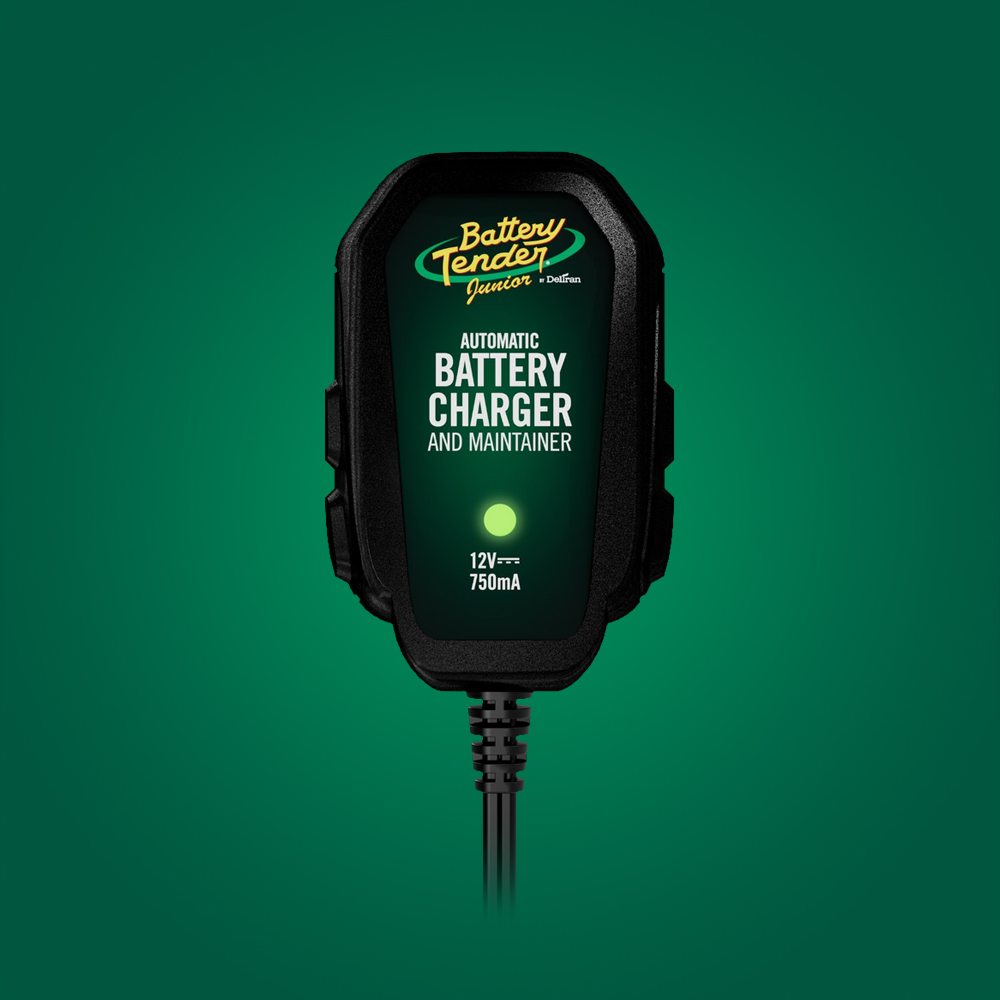
Charging time is simple math: (Ah × depth of discharge) ÷ charger amps. A 50Ah car battery at 50% needs 25Ah. A 1.25A Battery Tender Plus, rated for 14 to 80Ah batteries, needs about 20 hours. A 4A charger needs about 6.3 hours. A 10Ah motorcycle battery at 50% needs 5Ah, and a Battery Tender Junior at 0.75A needs about 6.7 hours. The Battery Tender Plus includes temperature compensation. The Battery Tender Junior does not, so keep it in a stable garage rather than an unheated shed.
Keeping Your Battery Jumper Box Charged and Ready
A battery jumper box that is dead when you need it is just a paperweight. Lithium cells self-discharge slowly, but not to zero, so a unit stored for a year may be nearly empty.
- Recharge every 90 days and after every use. Top it to full before long storage.
- Store between 32°F and 120°F. A parked car's cabin can exceed 140°F in summer, which degrades lithium cells.
- Do not charge below freezing. Bring the unit indoors to warm up first.
- Keep the clamps clean. Wipe off corrosion and coil the cables loosely.
- Test it twice a year. Check the indicator lights before winter and before summer travel.
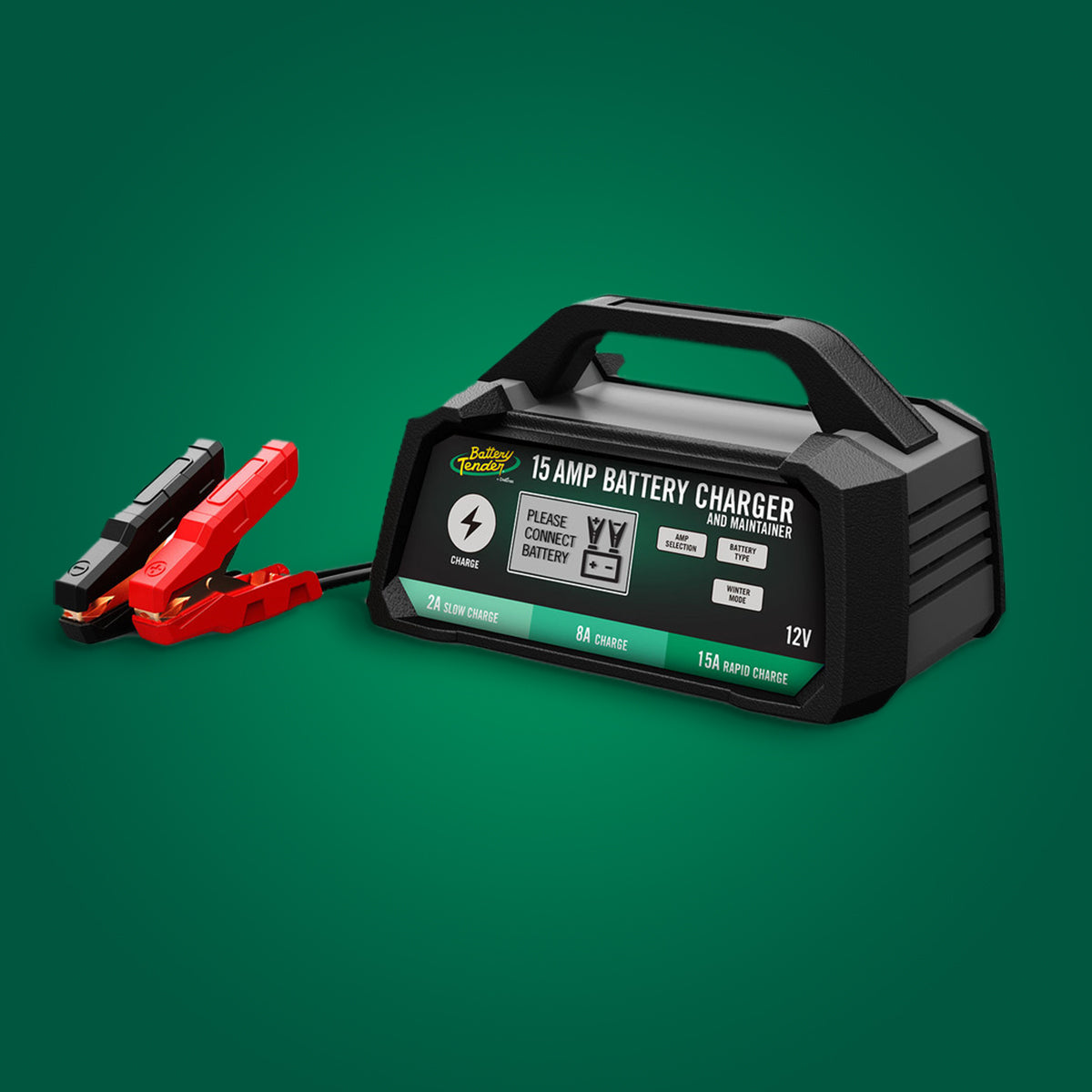
The Battery Tender Charge N Start line avoids this problem. It combines a smart charger and a lithium-ion jump starter in one unit, with Charge N Store float maintenance for the internal pack and SafeGuard anti-backfeed protection. The charger section handles standard, AGM, GEL, and lithium 12V batteries, so one device starts the engine and then restores the battery.
Frequently Asked Questions
How long does a battery jumper box hold its charge?
A lithium battery jumper box typically holds enough charge for a start for 6 to 12 months in moderate temperatures, but readiness declines as it self-discharges. Recharge it every 90 days and after every use. Heat above 120°F and cold below 32°F shorten storage life and reduce available starting power.
Can a battery jumper box start a completely dead battery?
Often yes, but not always. Many units refuse to deliver current if the battery reads below about 2 to 3 volts, as a safety feature. Some models have a manual override button. If the box will not engage, the battery may be too deeply sulfated and need a smart charger or replacement.
Is it safe to leave a battery jumper box in my car?
Short-term, yes, but summer heat is the risk. Cabin temperatures can exceed 140°F, above the 120°F storage limit for most lithium packs. In hot climates, store the box in the garage and carry it on trips. In cold climates, keep it indoors so the cells stay above freezing.
Can a battery jumper box recharge my car battery?
No. A battery jumper box delivers a brief starting burst, not a controlled charge. A discharged battery needs a smart charger running a full cycle. Connect a Battery Tender charger with ISM technology after the jump. It brings the battery to full and holds it there without overcharging.
Conclusion
A battery jumper box is the fastest fix for a dead battery, but it only buys time. Size it to your engine, follow the connection sequence, and recharge the box every 90 days. Then restore the dead battery with an ISM smart charger so you are not jumping the same car next week. Your next step is to check your engine size against the sizing table above, then browse Battery Tender battery chargers and maintainers to pair a smart charger with your jump starter.