



Classic Car Battery Maintenance: 6V, 8V and 12V Storage Guide (2026)
Classic car battery maintenance comes down to one rule: keep the battery fully charged while the car sits. A Battery Tender® Plus maintainer does that automatically, preventing the sulfation that kills most stored classic batteries. Check resting voltage monthly: 6.3V on a 6V system, 12.6V on a 12V system.
Key Takeaways
- Sulfation from sitting at partial charge is the leading cause of battery failure in stored classics, and most cars sit 6 to 12 months between drives.
- Match the charger to the system voltage first. Pre-1956 cars are usually 6V, and a few vintage models use 8V.
- A fully charged battery rests at about 6.3V (6V), 8.4V (8V) or 12.6V (12V). Anything lower needs a recharge.
- A smart maintainer with a float stage can stay connected all winter. A conventional trickle charger cannot.
- Connect to the battery posts, not the chassis, and always check polarity on positive-ground cars.
Why Classic Car Battery Maintenance Is Different From a Daily Driver
A classic car battery fails from neglect, not mileage. A daily driver recharges every commute. A classic that sits for months loses charge in three ways.
- Self-discharge: a lead-acid battery loses roughly 3% to 5% of its charge per month at 70°F, and faster in a hot garage.
- Parasitic draw: a clock, aftermarket radio or alarm pulling 25 mA drains about 18 Ah per month (0.025A × 720 hours).
- Sulfation: below roughly 12.4V on a 12V battery, lead sulfate crystals harden on the plates and permanently reduce capacity.
Cold makes it worse. A fully charged battery survives temperatures well below -50°F, but one at about 40% charge can freeze near 0°F to -16°F. A frozen case cracks, and the damage cannot be repaired.
Classics also carry higher stakes. Original-spec 6V batteries can be hard to source, and a dead battery means a no-start at the first car show of the season. Regular classic car battery maintenance costs far less than the vehicle it protects.
How Do You Test a Classic Car Battery?
Test a classic car battery with a digital multimeter after the car has rested at least 4 hours. Set the meter to DC volts, touch the red probe to the positive post and the black probe to the negative post, then compare the reading to the table below.
| State of Charge | 6V Battery | 12V Battery | Action |
|---|---|---|---|
| 100% | 6.3V or higher | 12.6V or higher | Healthy, keep on maintainer |
| 75% | 6.2V | 12.4V | Recharge soon |
| 50% | 6.1V | 12.2V | Recharge now, sulfation accelerates |
| 25% | 6.0V | 12.0V | Recharge immediately, test for damage |
Voltage shows charge, not condition. A weak battery can read 6.3V at rest and collapse under starter load. A load test separates a battery that needs charging from one that needs replacing.
The Battery Tender 12V / 6V Battery Tester load-tests 12V batteries at 100 amps and 6V batteries at 50 amps. That covers both system voltages found in classic garages, so one tool serves a mixed collection.
Battery Tender 12V / 6V Battery Tester
Which Charger Fits a 6V, 8V or 12V Classic?
The right charger matches the battery voltage and delivers enough current to recharge in a reasonable time. For most stored classics, a 1.25A maintainer is ideal. Larger 12V batteries benefit from selectable higher output.
| Battery System | Typical Application | Recommended Charger | Why It Fits |
|---|---|---|---|
| 6V, 60 to 110 Ah | Most pre-1956 American cars, many British and European classics | Battery Tender Plus 6V 1.25 AMP | Correct voltage, gentle current for indefinite connection |
| 8V | Certain vintage models with 8V systems | Battery Tender Plus 8V 1.25 AMP | Dedicated 8V output, since 6V and 12V chargers do not match |
| 12V, 40 to 100 Ah | 1956 and later cars, restomods, large touring classics | Battery Tender Power Tender 15/8/2 | Selectable rate for fast recharge or low-current maintenance |
| 12V with emergency-start need | Show cars, road-trip classics | Battery Tender Charge N Start 1100 | 1A charger plus 1,000A lithium-ion jump starter |
Battery Tender Plus for 6V and 8V Classics
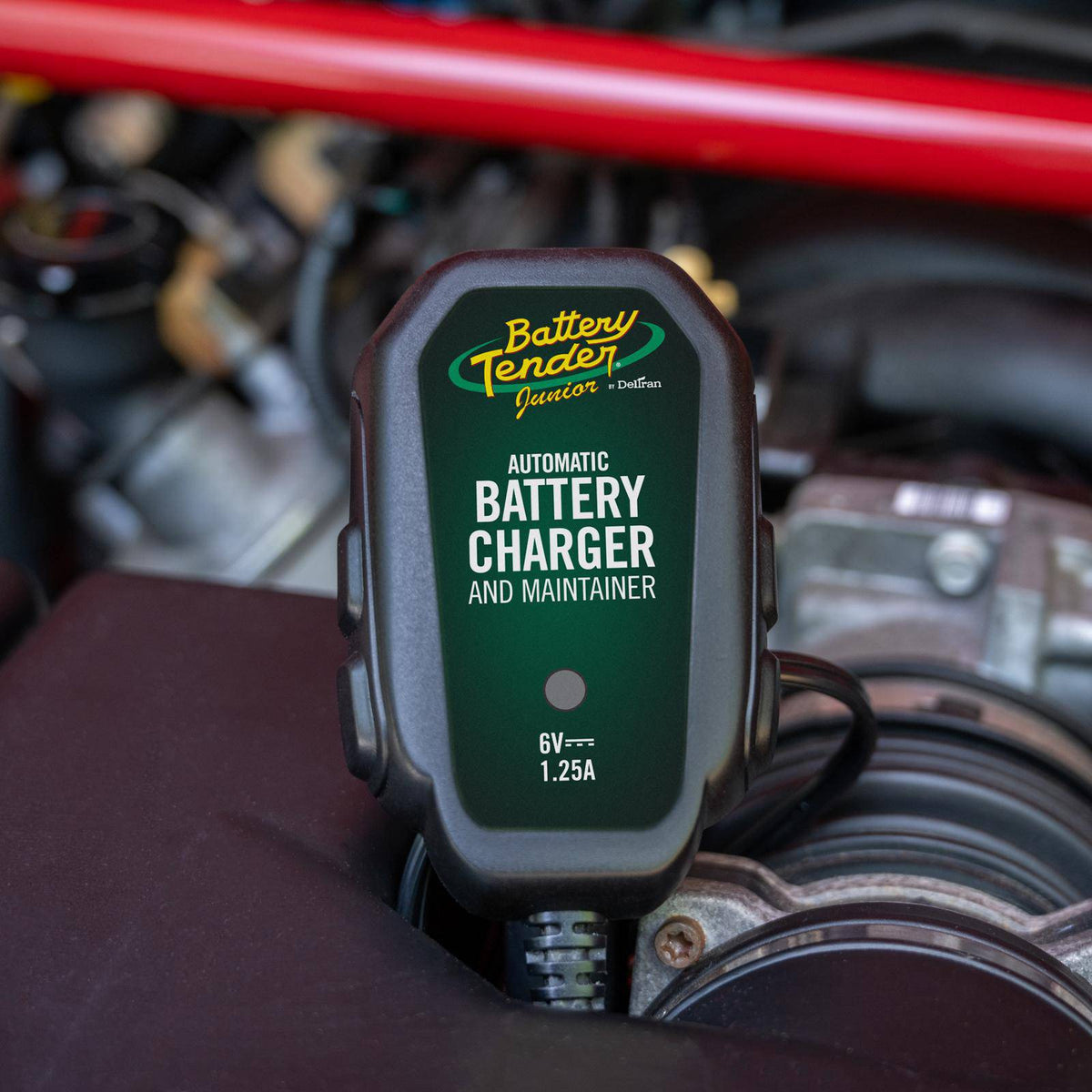
Pre-war and early-1950s cars usually run 6V. A 12V charger on a 6V battery boils off electrolyte and ruins the plates. The 6V Battery Tender Plus charger delivers 1.25A at the correct voltage, a gentle rate that suits a 6V battery through months of storage.
Battery Tender Plus 1.25 AMP 6V Battery Charger and Maintainer
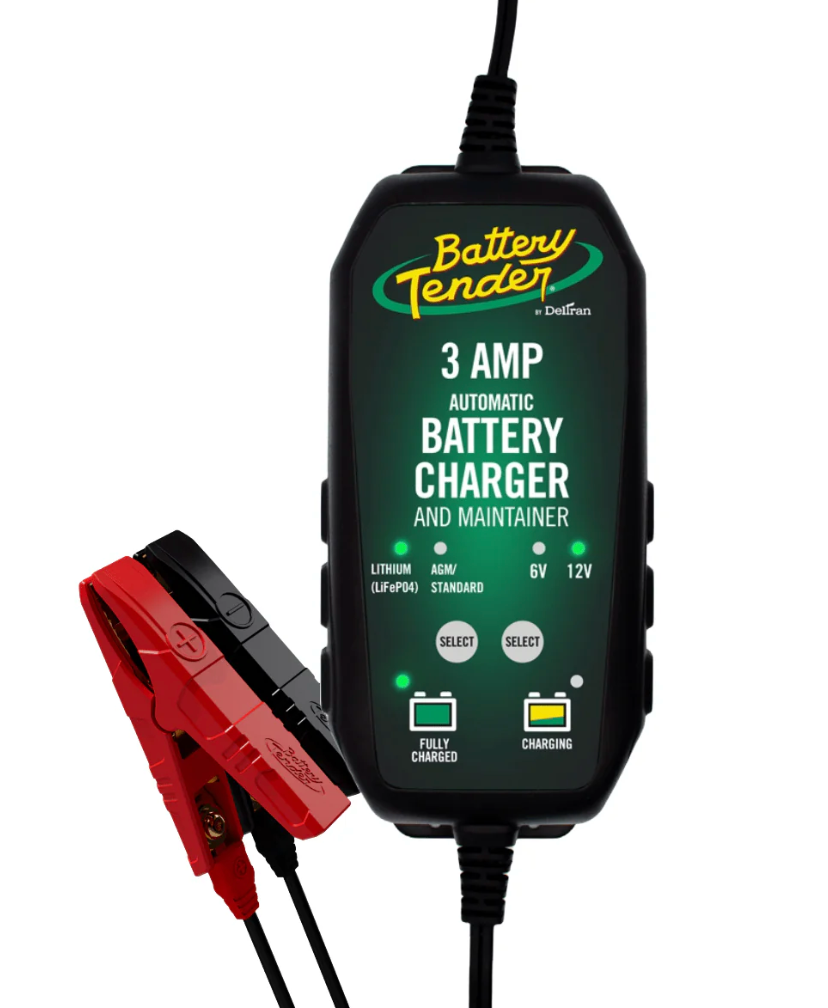
Some vintage vehicles use an 8V battery. Few general-purpose chargers support that voltage, which is why the 8V Battery Tender Plus charger matters. Confirm the voltage printed on the battery or in the factory manual before ordering.
Battery Tender Plus 1.25 AMP 8V Battery Charger and Maintainer
How Infinite Sequential Monitoring (ISM) Keeps Stored Classics Safe
Battery Tender chargers use Infinite Sequential Monitoring (ISM), a proprietary four-stage process:
- Initialization: tests the battery and applies gentle current to judge its condition.
- Bulk Charge: delivers full rated current until the battery reaches about 80% state of charge.
- Absorption: holds voltage constant while current tapers, which helps dissolve sulfate crystals.
- Float Maintenance: sends charge pulses only when voltage drops, so the charger can stay connected indefinitely.
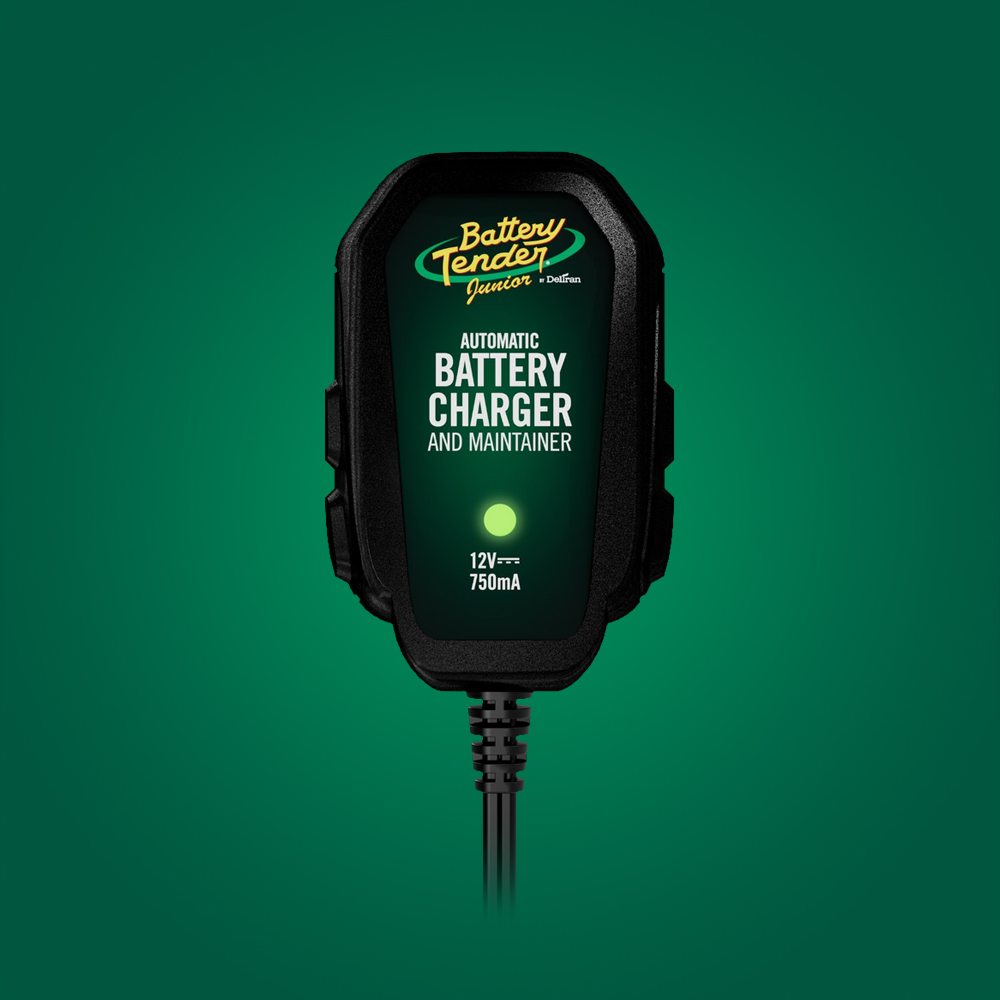
Conventional trickle chargers push constant current regardless of battery state, which risks overcharge during long storage. Float-only chargers hold constant voltage with no Absorption stage and recover a discharged battery more slowly. Battery Tender Plus and Battery Tender Power Tender models include temperature compensation. Battery Tender Junior models do not, so choose a Battery Tender Plus or Battery Tender Power Tender charger for an unheated garage with big temperature swings.
Charging Time Math for Classic Batteries
Estimate charge time with this formula: (Ah × depth of discharge) ÷ charger amps. A 6V 100 Ah battery at 50% discharge needs 50 Ah, so a 1.25A Battery Tender Plus charger takes about 40 hours. A 12V 60 Ah battery at 50% discharge needs 30 Ah, which takes about 4 hours at 8A or 15 hours at 2A. Add roughly 20% for charging inefficiency.
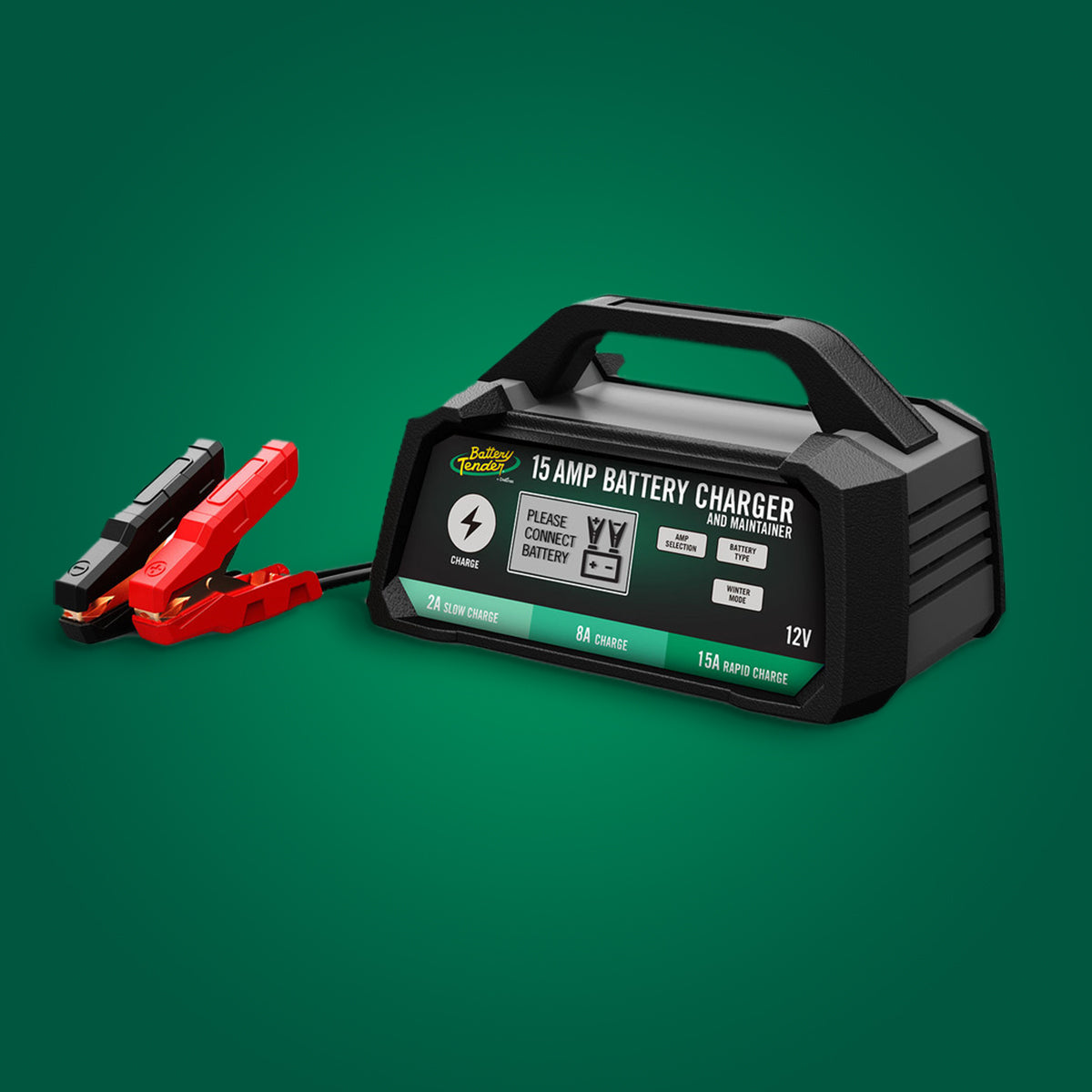
For a 12V classic or restomod, the Battery Tender Power Tender 15/8/2 Amp charger covers both jobs. Use the 8A or 15A setting to recover a drained battery quickly, then drop to 2A for storage. It also supports selectable chemistry, which helps when an owner swaps in an AGM battery.
Battery Tender Power Tender 15/8/2 Amp 12V Battery Charger and Maintainer
Classic Car Battery Maintenance Step by Step: Connect, Charge, Store
Follow these steps to set up classic car battery maintenance before the car goes into storage. The sequence protects the battery and the wiring.
- Park and clean. Switch off all accessories. Remove corrosion from posts and clamps with a baking soda and water paste, then rinse and dry.
- Check electrolyte. On serviceable flooded batteries, top off each cell with distilled water only until the plates are covered.
- Confirm polarity. Many pre-1956 cars use positive ground. Connect the red lead to the positive post and the black lead to the negative post, regardless of which terminal is grounded to the chassis.
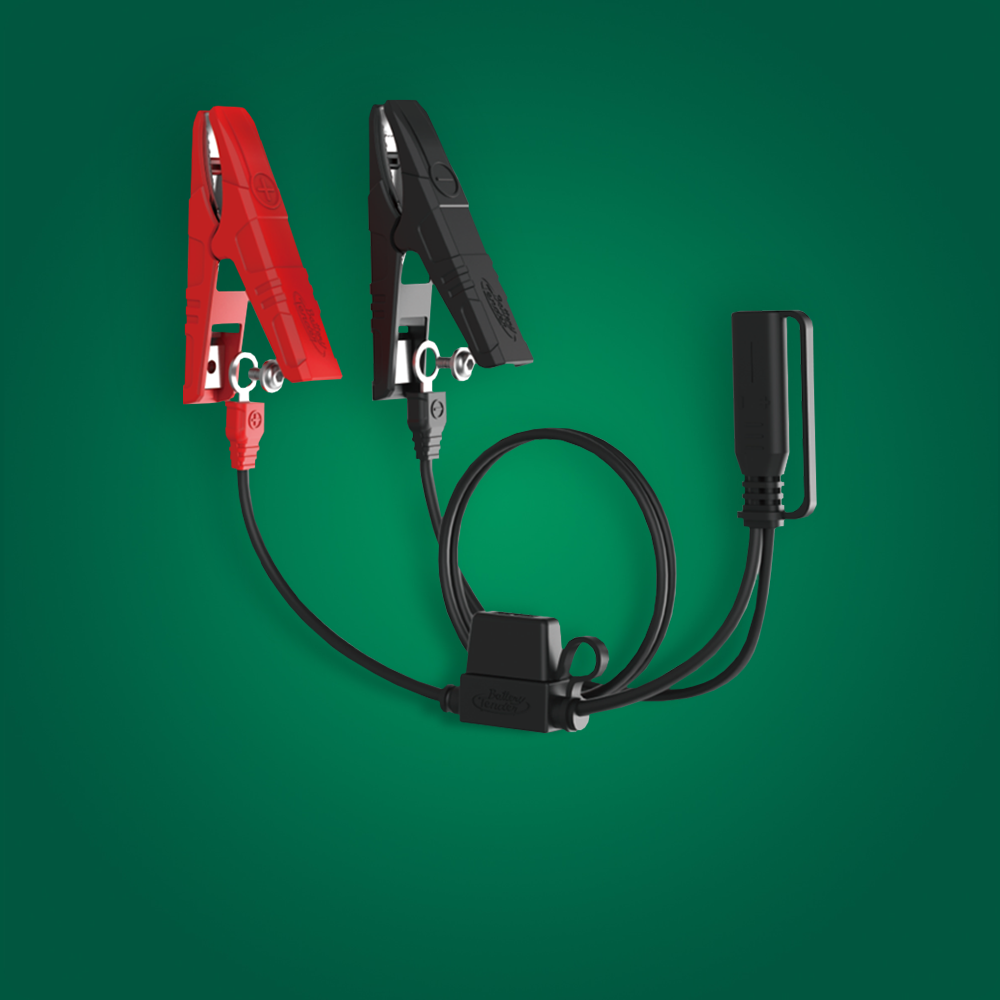
- Connect to the battery posts. Use the ring terminals or clamps directly on the posts. Avoid the chassis as a ground point.
- Plug in last. Ventilate the area, then connect the charger to AC power. Flooded batteries vent hydrogen during charging, so keep sparks and flames away.
- Verify. Check the charger indicator, then measure the battery voltage a day later.
Seasonal Checklist
- Leave the maintainer connected for the full storage period, whether 3 months or 12.
- Measure resting voltage monthly and log it.
- Inspect the hold-down and the battery tray for acid residue.
- Keep the garage above 32°F where possible, though a charged battery tolerates colder.
- Drive the car for 20 to 30 minutes in spring. Short idling sessions do not restore charge.
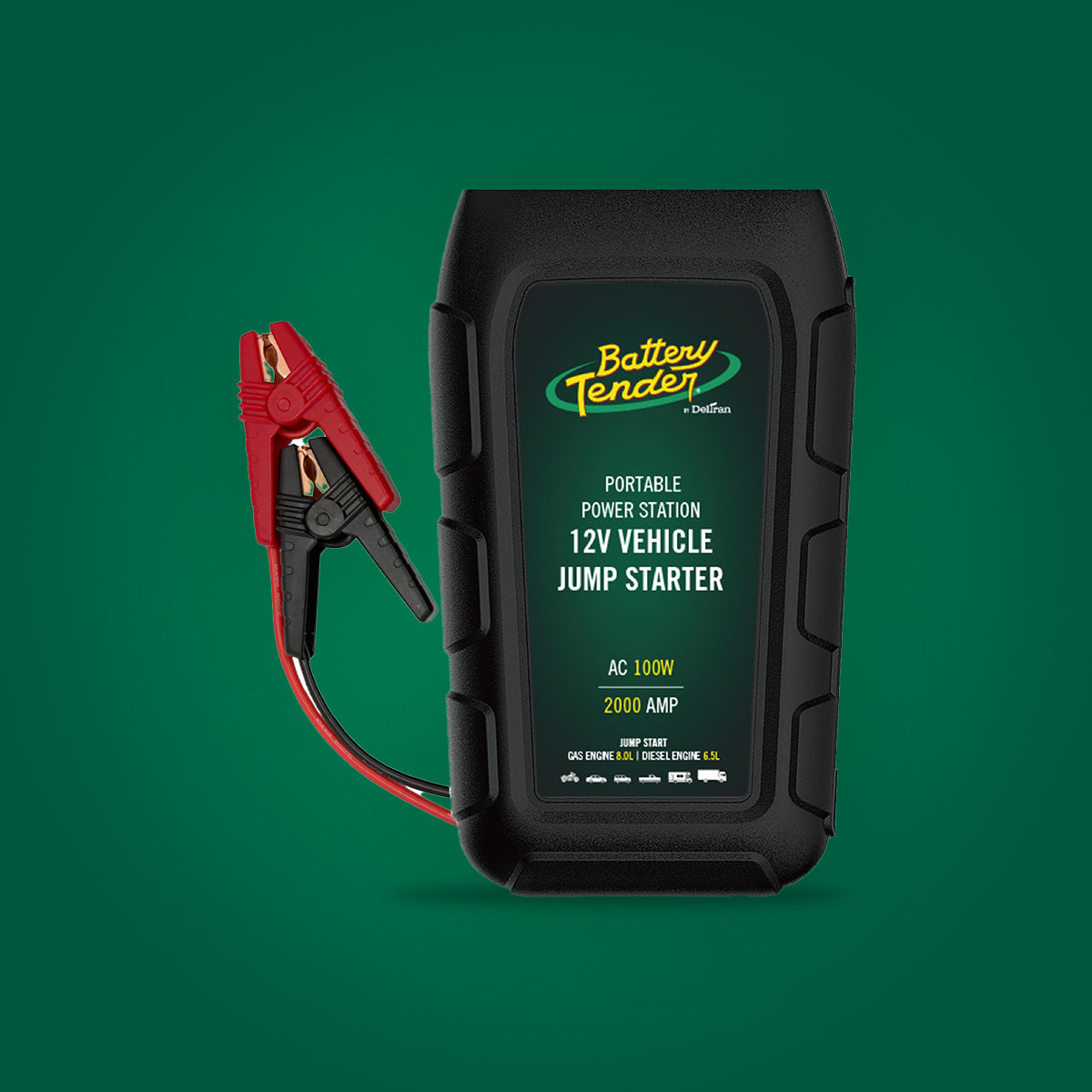
The same routine applies to other long-sitting equipment. For comparison, see how a standby generator battery stays ready with a permanent connection, and how a golf cart charging routine extends pack life with consistent habits.
Should You Carry a Jump Starter in a Classic Car?
Yes, for 12V classics that venture beyond the garage. A dead battery at a car show or rally ends the day early, and a jump from another vehicle risks a surge through original wiring.
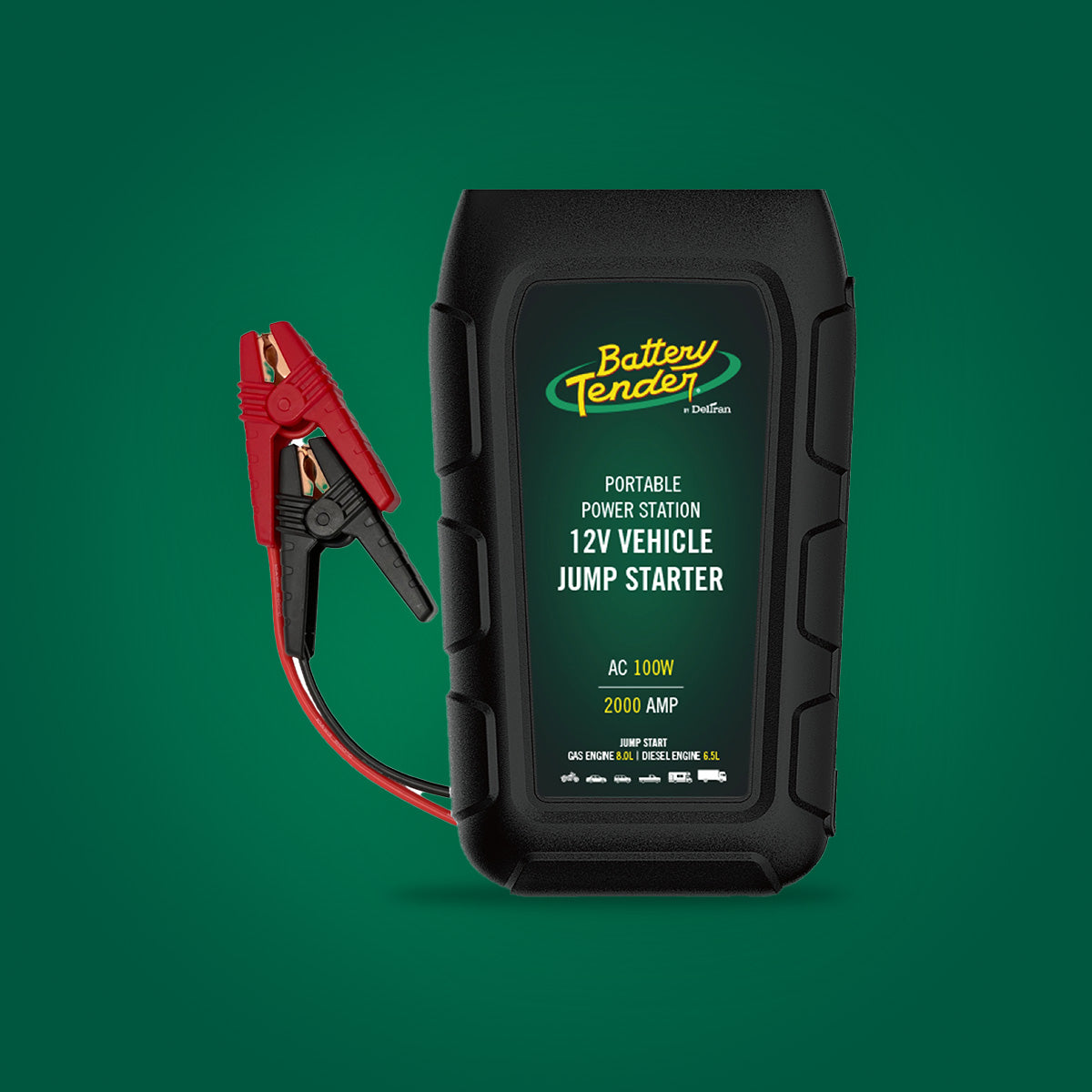
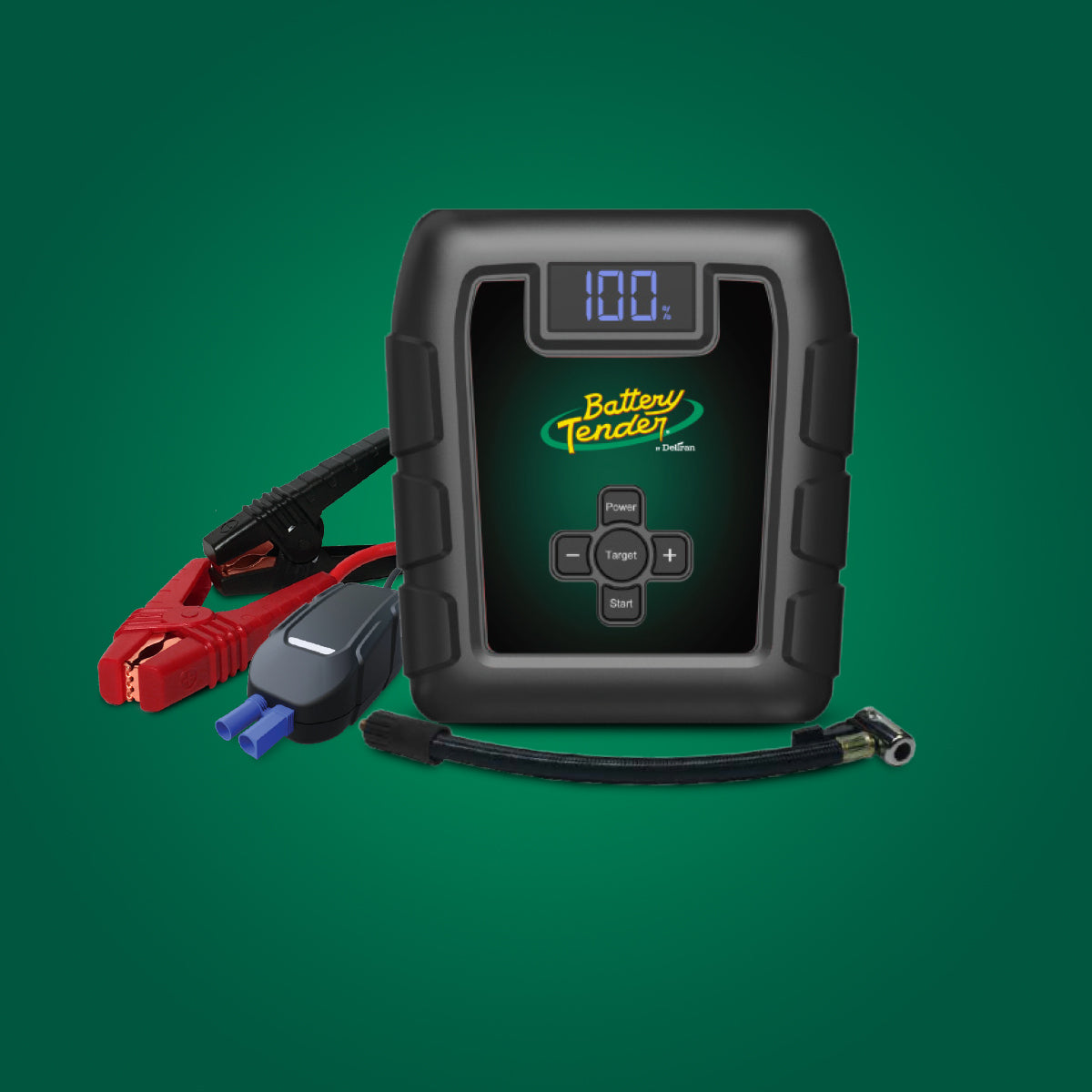
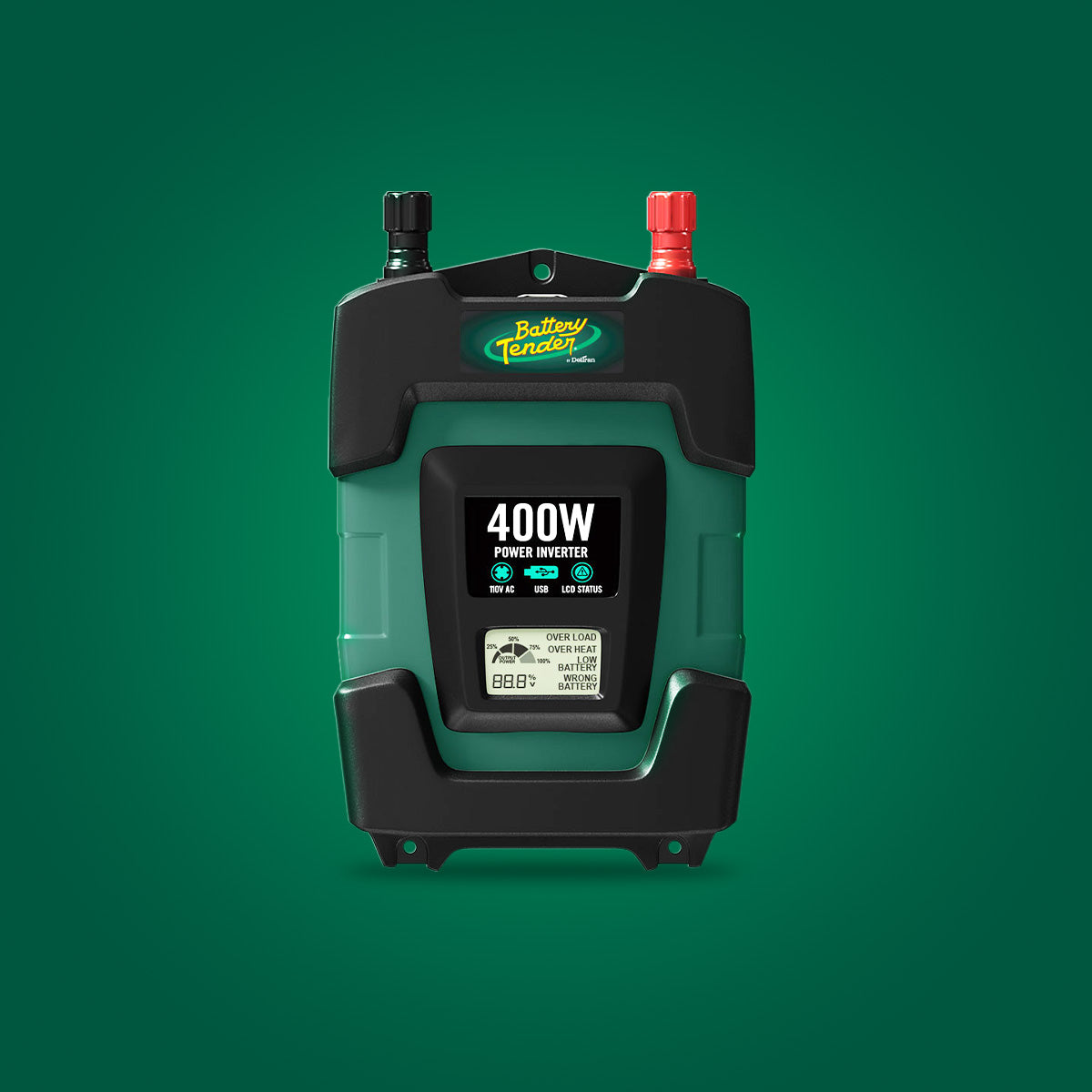
The Battery Tender Charge N Start 1100 combines a 1A battery charger and a 1,000A lithium-ion jump starter in one unit, with enough power for gas engines up to 5.0L. Its charger section maintains 12V batteries at home, while the jump pack provides self-contained starts on the road. Charge N Store keeps the internal pack topped off, and SafeGuard protects against backfeed. It is a 12V product, so it does not suit 6V or 8V systems.
Battery Tender Charge N Start 1100 — 1 Amp Battery Charger & 1000 Amp Jump Starter
Frequently Asked Questions
Can I leave a Battery Tender charger connected to my classic car all winter?
Yes. Battery Tender chargers use ISM, which stops charging once the battery is full and sends maintenance pulses only when voltage drops. That makes continuous connection safe for months. Conventional trickle chargers lack this logic and can overcharge a stored battery, so use a smart maintainer for classic car battery maintenance.
Should I disconnect the battery before connecting a maintainer?
Not required. A maintainer connected to the battery posts charges the battery with the cables in place, and it also covers small parasitic draws. Disconnecting the negative cable is a reasonable extra step for cars with known electrical faults. Always switch off accessories and confirm polarity first.
Can I charge a 6V classic battery with a 12V charger?
No. A 12V charger applies roughly twice the voltage a 6V battery should see, which boils electrolyte and warps the plates. Use a dedicated 6V charger such as the Battery Tender Plus 6V. The same rule applies to 8V batteries, which need a matching 8V charger.
How often should I start a stored classic car?
Short idling sessions do not help. A 5-minute start uses more energy than the alternator or generator returns, and it adds moisture to the exhaust. Drive the car 20 to 30 minutes when you can. Between drives, a connected maintainer holds the battery at full charge without starting the engine.
How long does a classic car battery last with a maintainer?
A properly maintained lead-acid battery commonly lasts 4 to 6 years or more. The same battery left unmaintained through long storage often fails within 1 to 3 winters because of sulfation. Actual life depends on climate, battery quality and how often you test voltage.
Conclusion
Classic car battery maintenance is simple when the routine is consistent. Identify the system voltage, test resting voltage monthly, connect a smart maintainer with ISM, and add a jump starter for 12V cars that travel. Start by checking the voltage on the battery in your garage today, then choose the matching charger from the Battery Tender battery charger collection.