


Battery Quick Disconnects For Charging
A battery quick disconnect is a mated plug and socket wired permanently to the battery terminals, so a charger connects in about two seconds with no clamps. The standard setup is a fused SAE pigtail harness paired with a Battery Tender® maintainer that stays plugged in all season.
Many dead batteries in spring trace back to one habit. The owner skips charging because reaching the battery means removing a seat, a side cover, or a hood panel. A quick disconnect moves the connection to a spot that is easy to reach. This guide covers the connector types, the wire and fuse sizing, a seven-step install, and matching a charger to the battery.
Key Takeaways
- A battery quick disconnect is a fused, keyed SAE connection that stays on the battery, so charging takes one plug-in instead of two clamps.
- Use 16 AWG wire with a 7.5A to 10A inline fuse within 7 inches of the positive terminal for maintainers up to about 3 amps.
- A battery disconnect switch and a quick disconnect harness do different jobs. A switch stops parasitic draw, and a harness delivers charge.
- Match the charger to the battery. Small batteries (2 to 20Ah) suit 800mA, 14 to 80Ah suits 1.25A, and larger batteries suit 3A.
- Infinite Sequential Monitoring (ISM) lets a Battery Tender maintainer stay connected indefinitely, which is the whole point of a permanent quick disconnect.
What Is a Battery Quick Disconnect and Why Install One?
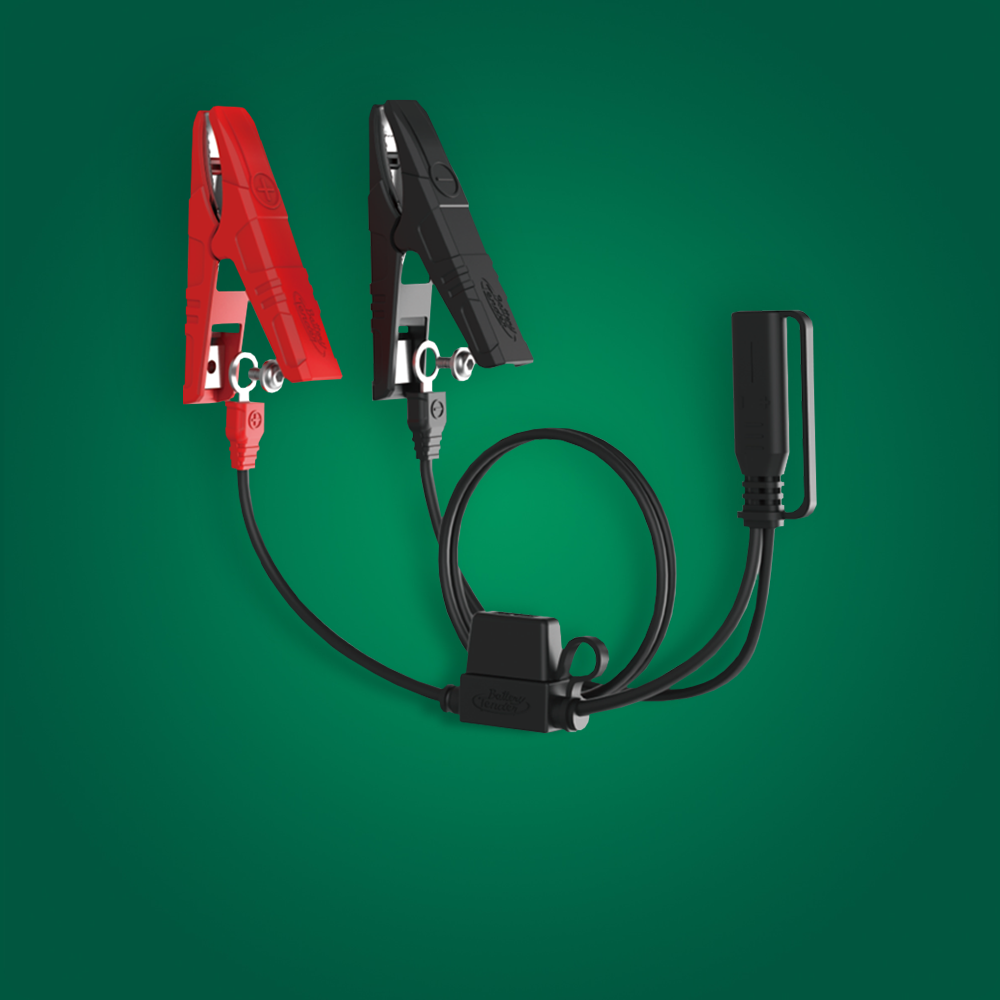
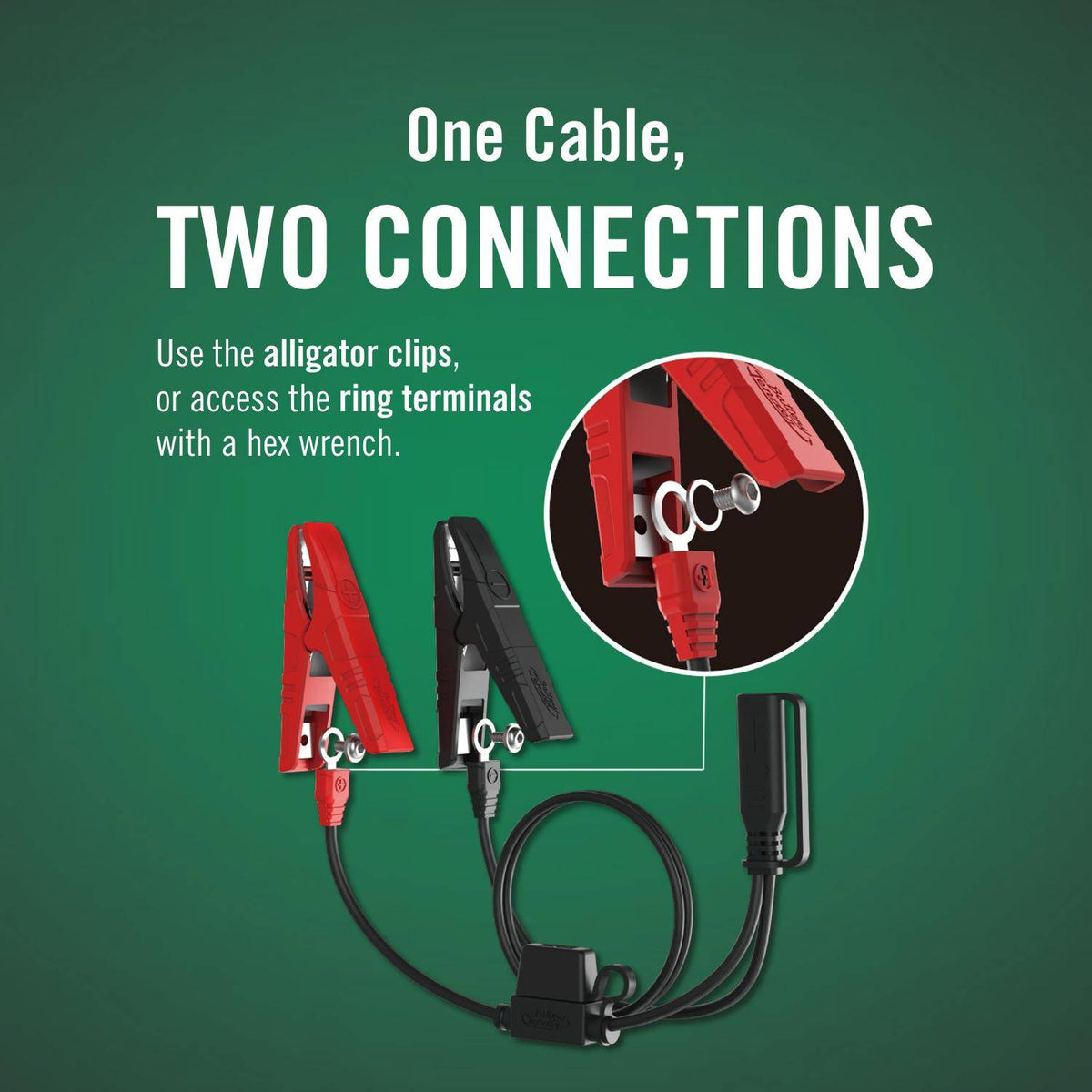
A battery quick disconnect is a short harness with two ring terminals on one end and a keyed SAE connector on the other. The ring terminals bolt to the battery posts, the fused positive lead protects the wire, and the connector sits in a protected spot with a dust cap. When it is time to charge, the charger lead snaps into the connector. The Battery Tender Ring Terminal Harness with Quick Disconnect is a ready-made example with the inline fuse already installed.
The connector is polarized, so it only mates one way. Once the harness is wired correctly, reversed polarity from a rushed hookup is no longer possible.
Why Does a Quick Disconnect Beat Clamps?
- Safer connections: Clamping onto a post can spark near the battery. Plugging in a connector keeps that contact away from the terminals.
- Faster routine: A bike with the seat off or a boat with a sealed battery box takes seconds to charge instead of minutes.
- Consistent contact: Ring terminals bolted to the post do not slip or lose grip the way spring clamps do.
- Better habits: Owners charge more often when charging is easy, and a battery that stays topped up resists sulfation.
Battery Quick Disconnect Types: Harness, Outlet Adapter, or Switch?
Four common parts get called a "battery quick disconnect," and each does a different job. Pick by what you want to accomplish: charge, extend the reach, use an existing outlet, or isolate the battery.
| Type | What it does | Best for | Watch for |
|---|---|---|---|
| SAE ring terminal harness | Permanent fused lead to the battery posts | Motorcycles, ATVs, mowers, cars, boats | Fuse must sit within about 7 inches of the positive post |
| SAE extension cable | Moves the connector to a reachable spot | Garages where the vehicle parks 10 to 25 feet from the outlet | Longer runs add voltage drop |
| 12V outlet adapter cable | Links an SAE connector to a 12V accessory outlet | Vehicles with an outlet that stays live with the key off | Confirm the outlet is fused and powered when parked |
| Battery disconnect switch | Opens the circuit to stop parasitic draw | Long storage of vehicles with no charger | Resets clocks and memory; does not charge anything |
Battery Quick Disconnect Harness vs. Battery Disconnect Switch
A disconnect switch prevents drain, and a quick disconnect harness delivers charge. Parasitic draw adds up. A 50 mA draw from a clock, alarm, or engine computer consumes 36Ah in 30 days (0.05A x 720 hours). That is more than half the capacity of a typical 60Ah car battery.
For storage under about two months, a charger on a harness is the better answer, because the vehicle keeps its memory and the battery stays full. For storage over several months with no power available, a switch is the right tool. If you use both, wire the harness to the battery side of the switch so opening the switch does not cut the charger off.
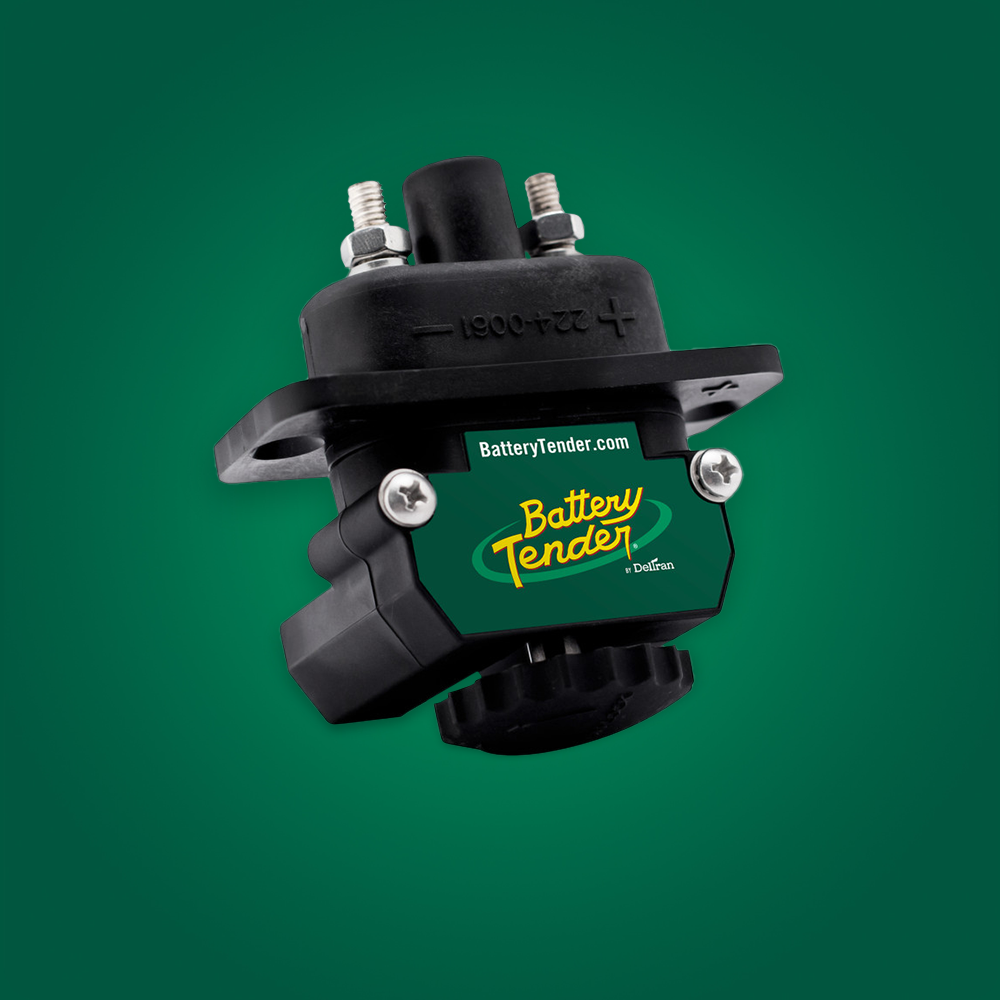
Some vehicles have a 12V outlet that stays powered with the key off. In that case, an outlet adapter lets the maintainer connect through the existing socket. The Battery Tender Quick Disconnect 12V Outlet Adapter Cable fits this setup because it joins the standard SAE connector to an outlet-style plug. Check with a meter that the outlet carries voltage with the key off, because many outlets are switched.
Battery Tender Quick Disconnect 12V Outlet Adapter Cable
How Do You Install a Battery Quick Disconnect Harness?
Installation takes about 15 minutes with basic hand tools. Work on a cool, ventilated vehicle with the ignition off, and wear eye protection.
- Disconnect the negative terminal first with a wrench, then secure the cable away from the post.
- Remove the positive terminal nut and slide the harness ring terminal onto the post.
- Refit the nut and tighten it snug. Do not crush the terminal.
- Attach the negative ring terminal to the negative post or the main ground bolt, then reconnect the negative cable.
- Route the lead away from sharp edges, exhaust parts, belts, and moving linkages.
- Mount the connector where a charger lead reaches it easily, such as behind a side panel, under the seat edge, or at the grille. Secure it with a zip tie or a Battery Tender Quick Disconnect Cable Mount.
- Test the harness. With the connector end open, a meter across the pins should read battery voltage, roughly 12.6V on a full 12V lead-acid battery. Then fit the dust cap.
Wire Gauge and Fuse Sizing
For a maintainer drawing 3 amps or less, 16 AWG wire is adequate. Over 6 feet out and 6 feet back (12 feet of wire at roughly 4 milliohms per foot), 3 amps loses about 0.14V, which is negligible. Use 14 AWG if you plan to run longer extensions or higher-amp chargers.
Place a 7.5A to 10A inline fuse within about 7 inches of the positive terminal. The fuse protects the wire, so a short anywhere along the lead blows the fuse instead of heating the wire. Never bypass the fuse.
Safety Checks Before You Plug In
- Confirm the red lead goes to positive and the black lead goes to negative.
- Check that the battery is not frozen, swollen, or leaking.
- Keep the connector off the battery top where acid or moisture can collect.
- Cap any open connector so metal tools or debris cannot bridge the pins.
Which Charger Should Connect to the Battery Quick Disconnect?
Choose a charger by battery capacity in amp-hours (Ah) and by where the vehicle lives. A charger that is too small can take days to recover a large battery, while one that is oversized for a small battery adds cost and bulk without benefit. The charge time formula is (battery Ah x depth of discharge) / charger amps. A 60Ah car battery at 50% discharge needs 30Ah, and a 3A charger delivers that in about 10 hours, so plan on 12 to 15 once charging losses are included.
| Battery size | Typical application | Suggested charger |
|---|---|---|
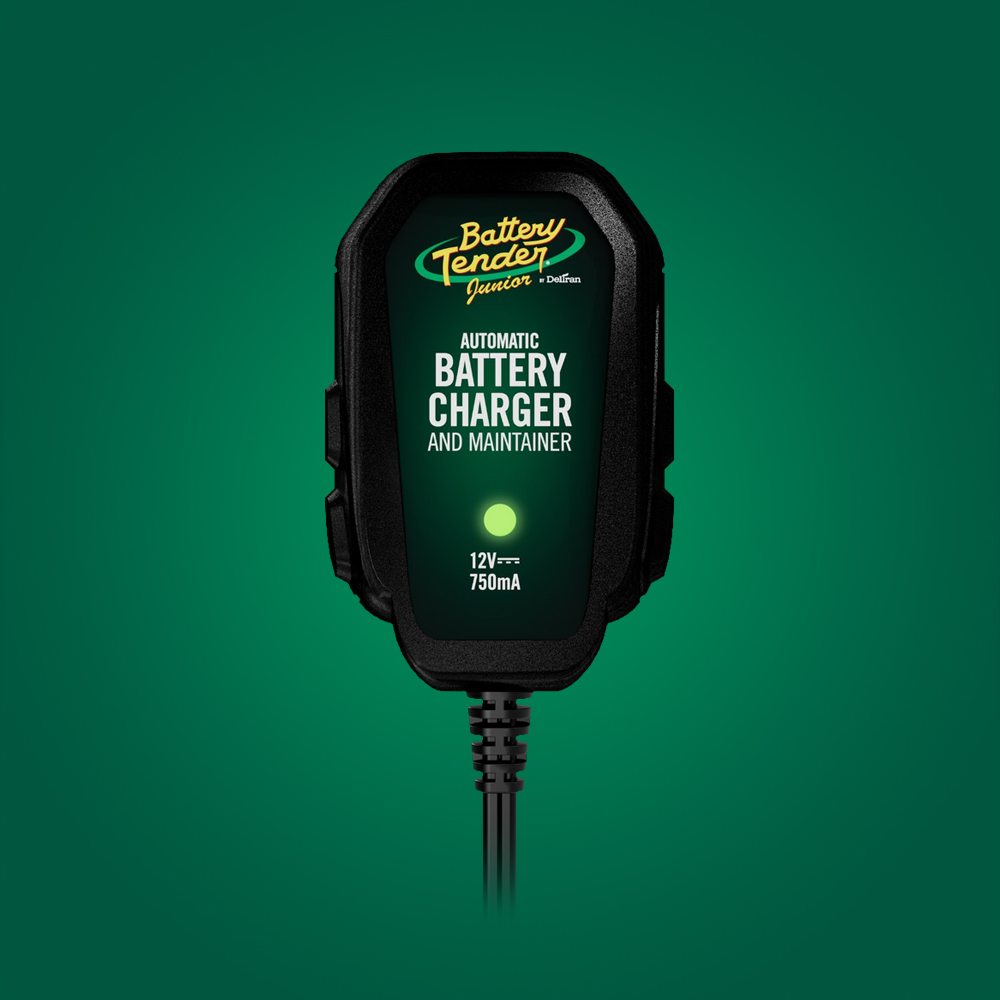
| 2 to 20Ah | Lawn mower, ATV, scooter, personal watercraft | Battery Tender Weather Resistant 800mA |
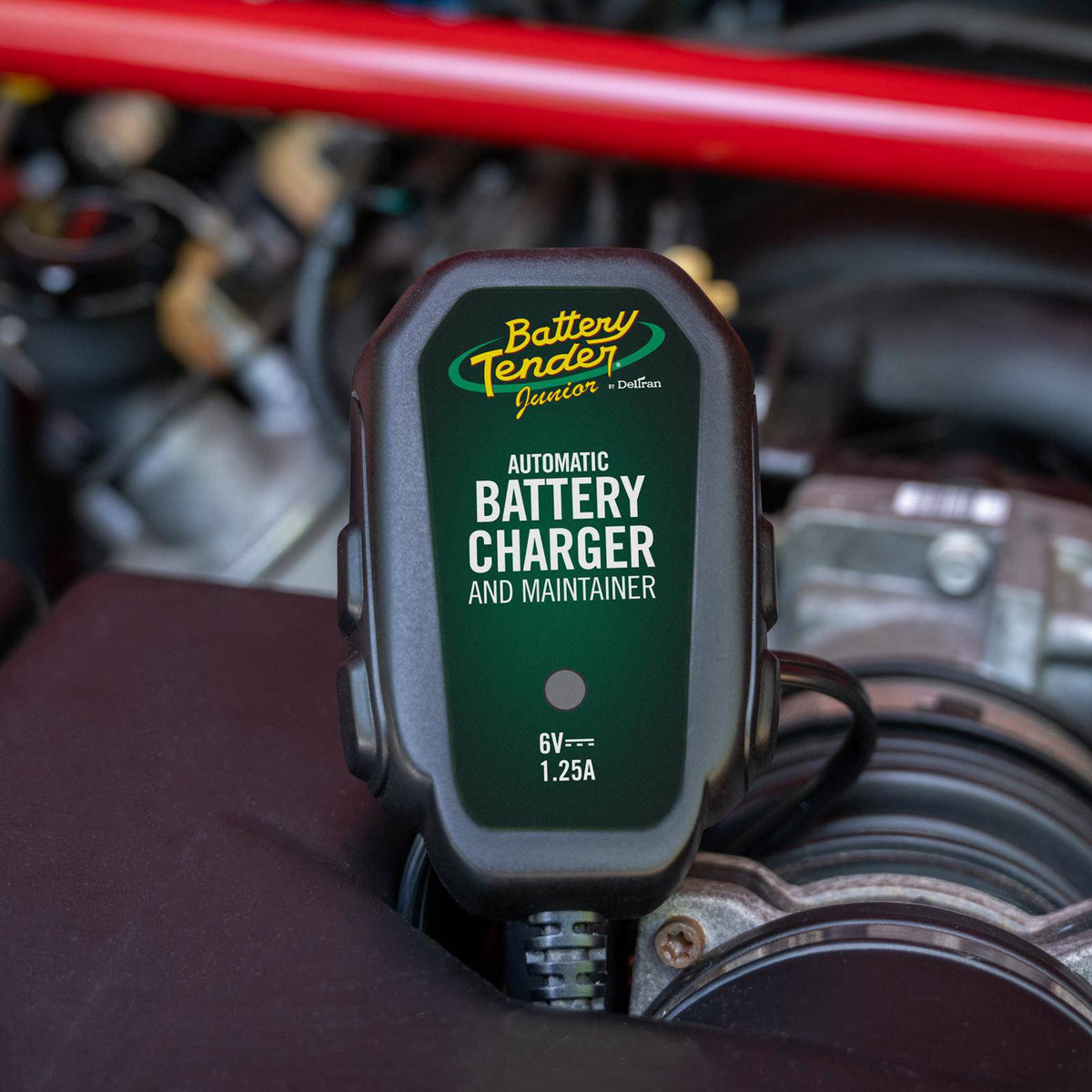
| 14 to 80Ah | Cars, motorcycles, garden tractors, boats | Battery Tender Plus 12V 1.25 Amp IP65 |
| 40 to 100Ah | Trucks, SUVs, small boats, RV starting batteries | Battery Tender Power Tender 3 Amp |
| Any 12V needing a jump | Powersports and compact cars | Battery Tender Charge N Start 1100 |
Battery Tender maintainers use Infinite Sequential Monitoring (ISM), a four-stage process: Initialization, Bulk Charge, Absorption, and Float Maintenance. In the Float Maintenance stage, the charger monitors battery voltage and delivers charge only when it drops. Conventional trickle chargers push constant current regardless of battery state, so they can overcharge a battery left connected for weeks. That difference is what makes a permanent quick disconnect safe to leave in service. The full breakdown is in the ISM charging technology deep dive.
For a 20Ah mower or ATV battery that sits in a shed or on a trailer, the 800mA size is plenty. At 50% discharge, 10Ah needs about 12.5 hours at 0.8A. The Weather Resistant design suits unheated outbuildings and exposed charging points. The Battery Tender Weather Resistant 12V 800mA Battery Charger and Maintainer fits small batteries that live in damp places.
Battery Tender Weather Resistant 12V 800mA Battery Charger and Maintainer
The middle of the range covers most garage vehicles. A 14 to 80Ah battery in a motorcycle, classic car, or garden tractor suits 1.25 amps, and the IP65 rating adds protection from dust and splashing water in a garage or boat shed. The Battery Tender Plus 12V 1.25 Amp IP65 fits that wide range. It also includes temperature compensation, so output adjusts in cold or hot storage.
Battery Tender Plus 12V 1.25 Amp IP65
For bigger batteries, use a bigger charger. A full-size truck, SUV, or RV starting battery of 60 to 100Ah recovers slowly at 1.25A. The Battery Tender Power Tender 3 Amp 12V/6V Battery Charger and Maintainer switches between 12V and 6V, so it also covers older vehicles. Its 3 amps cut recovery time to about 12 to 15 hours for a half-discharged 60Ah battery.
Battery Tender Power Tender 3 Amp 12V/6V Battery Charger and Maintainer
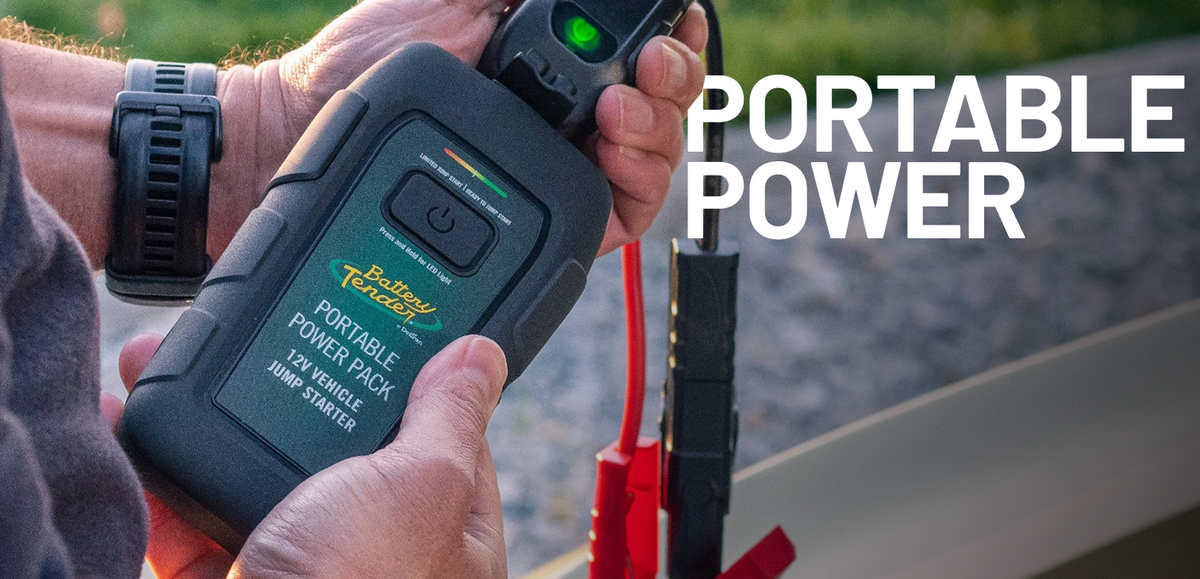
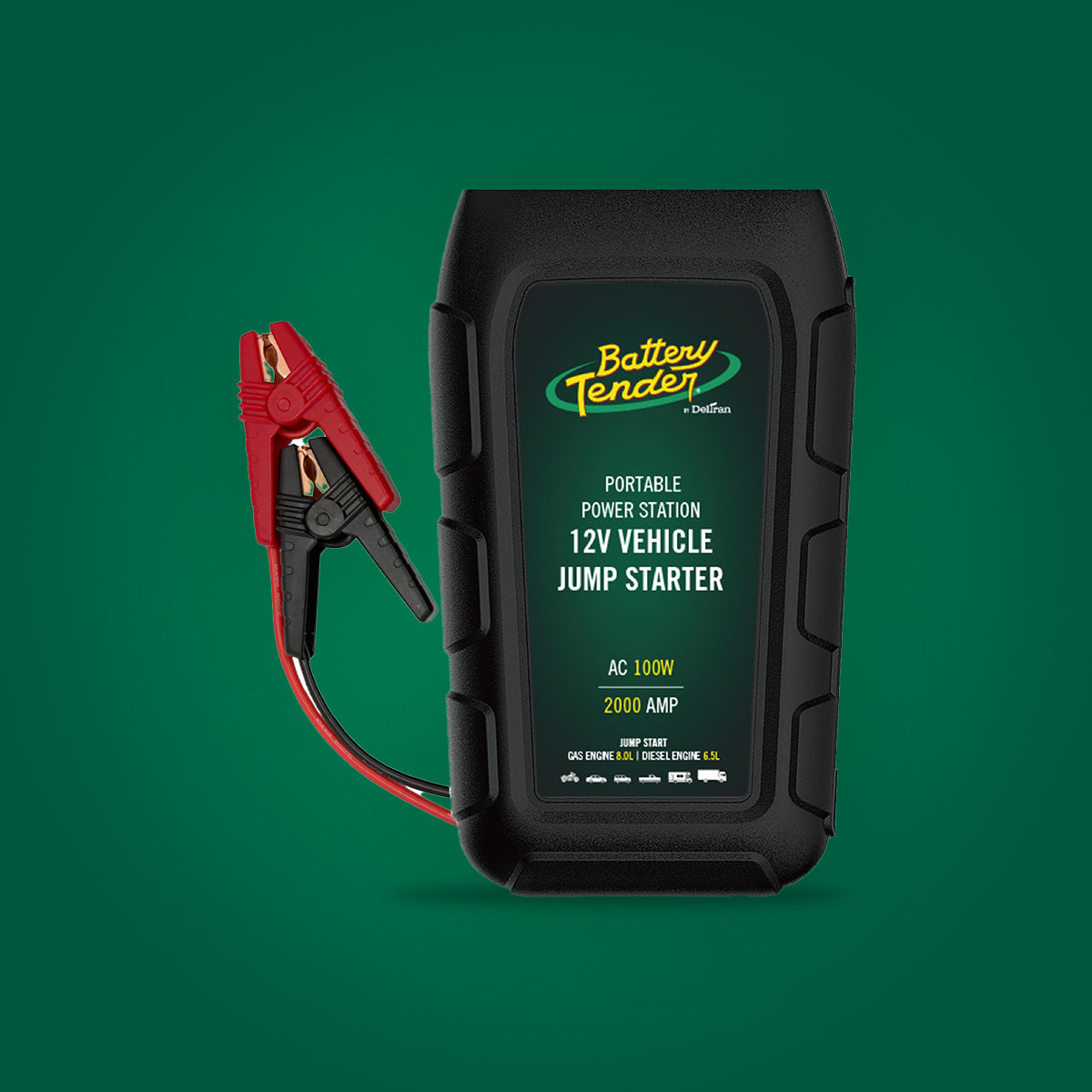
If the battery may be too flat to crank after a long layup, add a jump starter to the plan. The Battery Tender Charge N Start 1100 combines a 1-amp charger with a 1,000A jump starter. The jump starter uses an internal lithium-ion pack, and the charger section handles standard, AGM, GEL, and lithium 12V batteries. The Charge N Store feature maintains the internal pack. The bundle adds a ring terminal cable, which suits a motorcycle or ATV with a permanent connection. The Battery Tender Motorcycle and Powersports Battery Tender Charge N Start 1100 Bundle (1 AMP Charging and 1000 AMP Jump Starting) handles both jobs.
How Do You Keep a Battery Quick Disconnect Reliable Season After Season?
Inspect the connection twice a year and after any battery service. A quick disconnect is a low-maintenance part, but it sits in a harsh spot with vibration, road spray, and temperature swings. A five-minute check catches the faults that cause most failures.
- Check the cap: Replace it if cracked. An open connector collects moisture and debris.
- Inspect the fuse and fuse holder: Look for green or white corrosion and replace any fuse with a discolored element.
- Tug-test the ring terminals: They should not rotate on the post. Re-tighten if they do.
- Apply dielectric grease to the connector contacts in coastal or high-humidity locations.
- Read resting voltage after 12 hours disconnected. A healthy 12V lead-acid battery rests at about 12.6V to 12.8V.
Equipment that sits idle most of the year benefits most. The lawn mower battery charging guide shows how a small harness makes seasonal starts routine. A battery that never sinks below full charge also resists sulfation, which helps extend its service life.
Frequently Asked Questions
What is a battery quick disconnect?
A battery quick disconnect is a permanent harness attached to the battery posts that ends in a keyed SAE connector. It lets you plug in a charger or maintainer in seconds instead of clamping onto the terminals. A fused positive lead protects the wire, and a dust cap keeps the connector clean between uses.
Can I leave a charger plugged into a battery quick disconnect all winter?
Yes, if the charger is a smart maintainer. A charger using Infinite Sequential Monitoring (ISM) tapers current, then pulses only when voltage drops, so it is safe to leave connected for months. A conventional trickle charger delivers constant current and can overcharge, so it should not stay connected unattended.
What size fuse does a battery quick disconnect harness need?
For a 16 AWG harness feeding a maintainer of 3 amps or less, use a 7.5A to 10A inline fuse mounted within about 7 inches of the positive terminal. The fuse protects the wire, not the charger. If you use heavier wire or a larger charger, size the fuse to the wire's rating.
Does a battery quick disconnect work with lithium and AGM batteries?
The harness itself does not care about chemistry, because it only carries current. The charger decides what the battery receives. Match the charger to the chemistry, and confirm on the product page that a charger supports lithium before connecting it to a lithium battery. Standard and AGM lead-acid batteries suit most maintainers.
Is a battery quick disconnect the same as a battery disconnect switch?
No. A quick disconnect harness gives you a convenient charging point. A battery disconnect switch opens the circuit to stop parasitic draw. They solve different problems and can work together if the harness is wired to the battery side of the switch, so the charger keeps working when the switch is open.
Conclusion
A battery quick disconnect turns charging from a chore into a two-second habit, and a battery that stays charged lasts longer. Wire a fused 16 AWG harness to the battery, mount the connector where you can reach it, and match a maintainer to the battery size using the table above. Start by measuring your battery's amp-hours, then choose a charger from the Battery Tender battery charger collection.