


Best Car Trickle Charger? Why Smart Maintainers Win (2026)
The best car trickle charger is not a conventional trickle charger at all. A smart maintainer such as the Battery Tender® Plus charger senses battery voltage and adjusts output through four stages, so it can stay connected for months without overcharging.
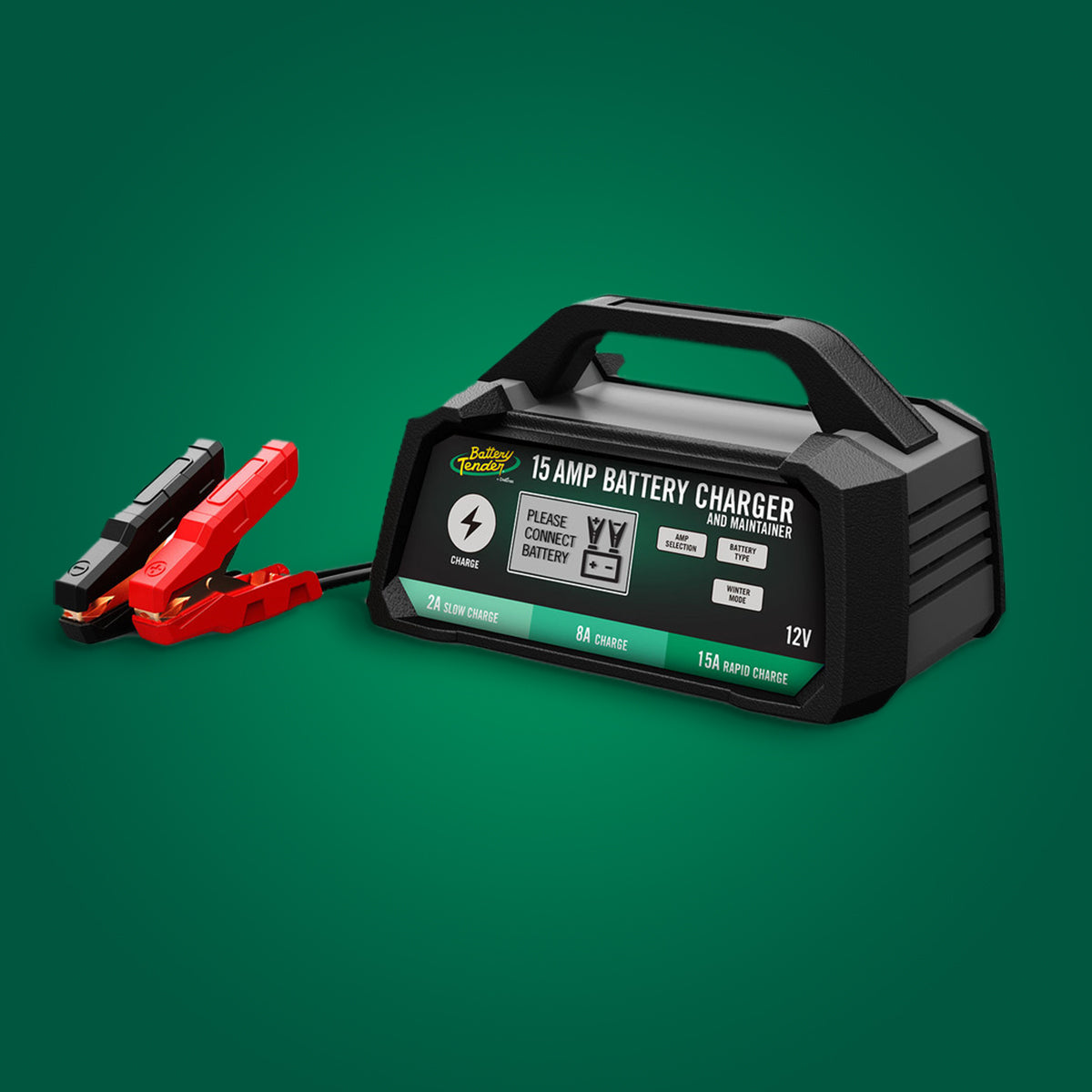
Shoppers search for "trickle charger" because the term is familiar, but the technology behind it predates microprocessors. Conventional units push a fixed current into a battery whether it needs it or not. Battery Tender chargers replace that guesswork with microprocessor-controlled charging. This guide explains the difference, shows how to size a charger by amp-hours, and gives the exact steps to connect one safely in 2026.
Key Takeaways
- Conventional trickle chargers deliver constant current regardless of battery state, so weeks of connection can overcharge a lead-acid battery.
- Battery Tender chargers use Infinite Sequential Monitoring (ISM), a four-stage process that is safe to leave connected indefinitely.
- A 1.25A Battery Tender Plus charger suits batteries from 14Ah to 80Ah, which covers most cars, SUVs, and light trucks.
- Match voltage first: 6V, 8V, and 12V batteries each need the correct charger.
- Pair a maintainer with a battery tester and a portable jump starter for complete cold-weather coverage.
What Does the Best Car Trickle Charger Need to Do?
The best car trickle charger must keep a battery full without damaging it, and constant-current units cannot do both. A conventional trickle charger delivers a small fixed current, typically 500mA to 2A, no matter how full the battery is.
That design works for a few hours. Over days or weeks, a full battery keeps receiving current it cannot store. The excess turns to heat and gas: water electrolyzes out of the electrolyte, positive grids corrode, and the battery loses capacity. Sealed AGM and gel batteries cannot be refilled, so damage there is permanent.
The opposite problem also exists. A battery resting below roughly 12.4V (about 75% state of charge) starts forming hard lead sulfate crystals. A charger with no voltage sensing cannot respond to either condition. For a deeper look at the failure modes, read Trickle Charger for Car Batteries: Risks and Smarter Options (2026).
Trade-offs worth knowing
- Conventional trickle chargers cost less up front but require manual timing and monitoring.
- Smart maintainers cost more but remove the guesswork and protect the battery for the whole storage period.
- No maintainer revives a battery with a shorted cell or a plate that has physically failed.
How Does Four-Stage Smart Charging Differ From Trickle Charging?
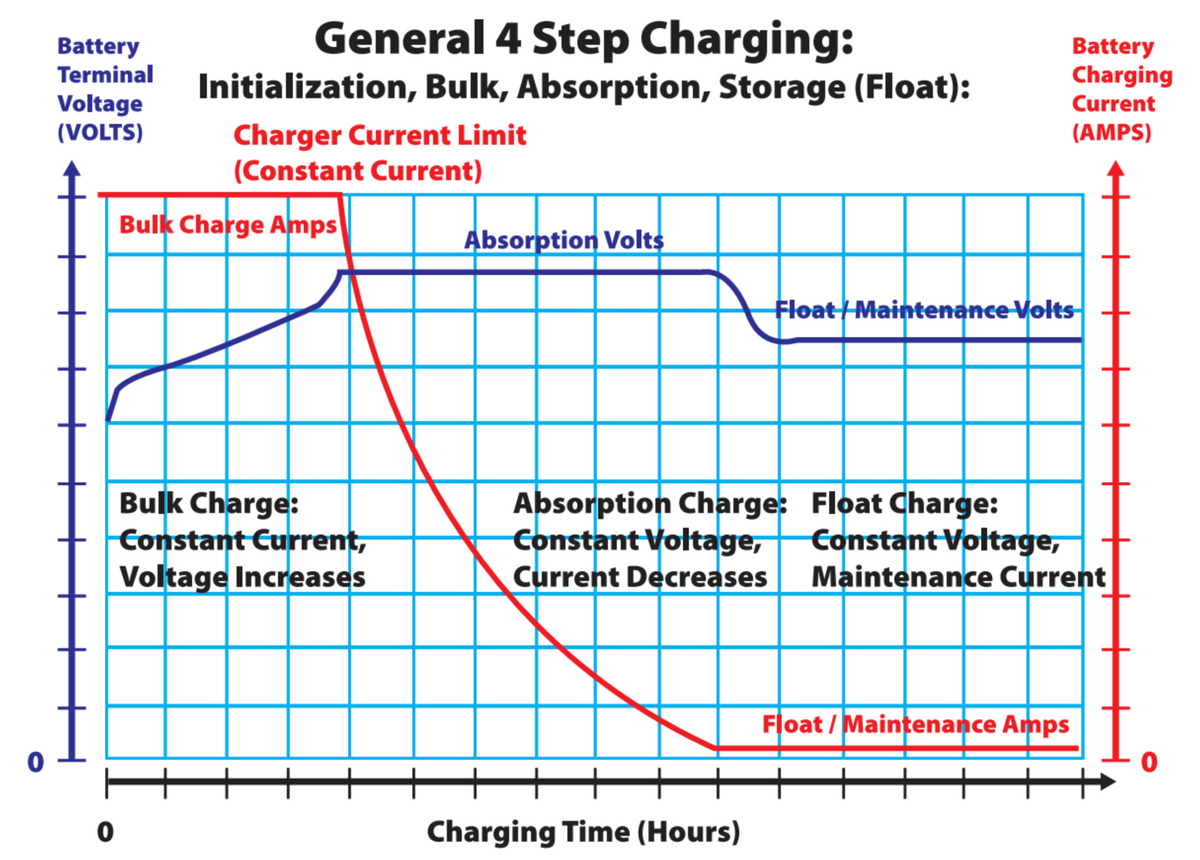
Smart charging reads the battery and changes its output, while trickle charging does not. ISM, the proprietary Infinite Sequential Monitoring process in Battery Tender chargers, moves through four stages automatically:
- Initialization: tests the battery and applies gentle current to determine its condition.
- Bulk Charge: delivers full rated current until the battery reaches about 80% state of charge.
- Absorption: holds voltage constant while current tapers, which completes the charge and helps limit sulfation.
- Float Maintenance: sends charge pulses only when voltage drops, then rests.
Simple float chargers apply constant voltage only and skip the Absorption stage, so they recover batteries more slowly. ISM covers every stage and keeps watching afterward. The table below summarizes the practical differences.
| Feature | Conventional trickle charger | Battery Tender ISM charger |
|---|---|---|
| Output control | Fixed constant current | Four stages that adapt to battery state |
| Voltage sensing | None | Continuous |
| Safe left connected for months | No, overcharge risk | Yes, indefinitely |
| Temperature compensation | Rare | Built into Battery Tender Plus chargers |
| Sulfation control | Minimal | Absorption stage plus demand-based maintenance |
Battery Tender positions this approach as a way to stretch typical 2 to 3 year battery life toward 5 years or more by limiting sulfation and gassing. Actual results depend on battery quality, climate, and usage.
Which Charger Is the Best Car Trickle Charger Replacement for Your Battery?
Match the charger to voltage first, then to amp-hours. Most car owners need a 12V unit, but classic cars and specialty equipment often use 6V or 8V batteries, and a mismatch will not charge correctly.
| Battery | Capacity | Recommended charger | Why |
|---|---|---|---|
| 12V car, SUV, light truck | 14-80Ah | Battery Tender Plus 12V, 1.25A | Rated for this range, with temperature compensation |
| 6V classic car | Within 14-80Ah | Battery Tender Plus 6V, 1.25A | Correct voltage for vintage electrical systems |
| 8V specialty battery | Within 14-80Ah | Battery Tender Plus 8V, 1.25A | Uncommon voltage that a 12V unit cannot serve |
| Large 12V battery over 80Ah | 80Ah and up | Higher-amp Battery Tender Power Tender model | Faster recovery from deep discharge |
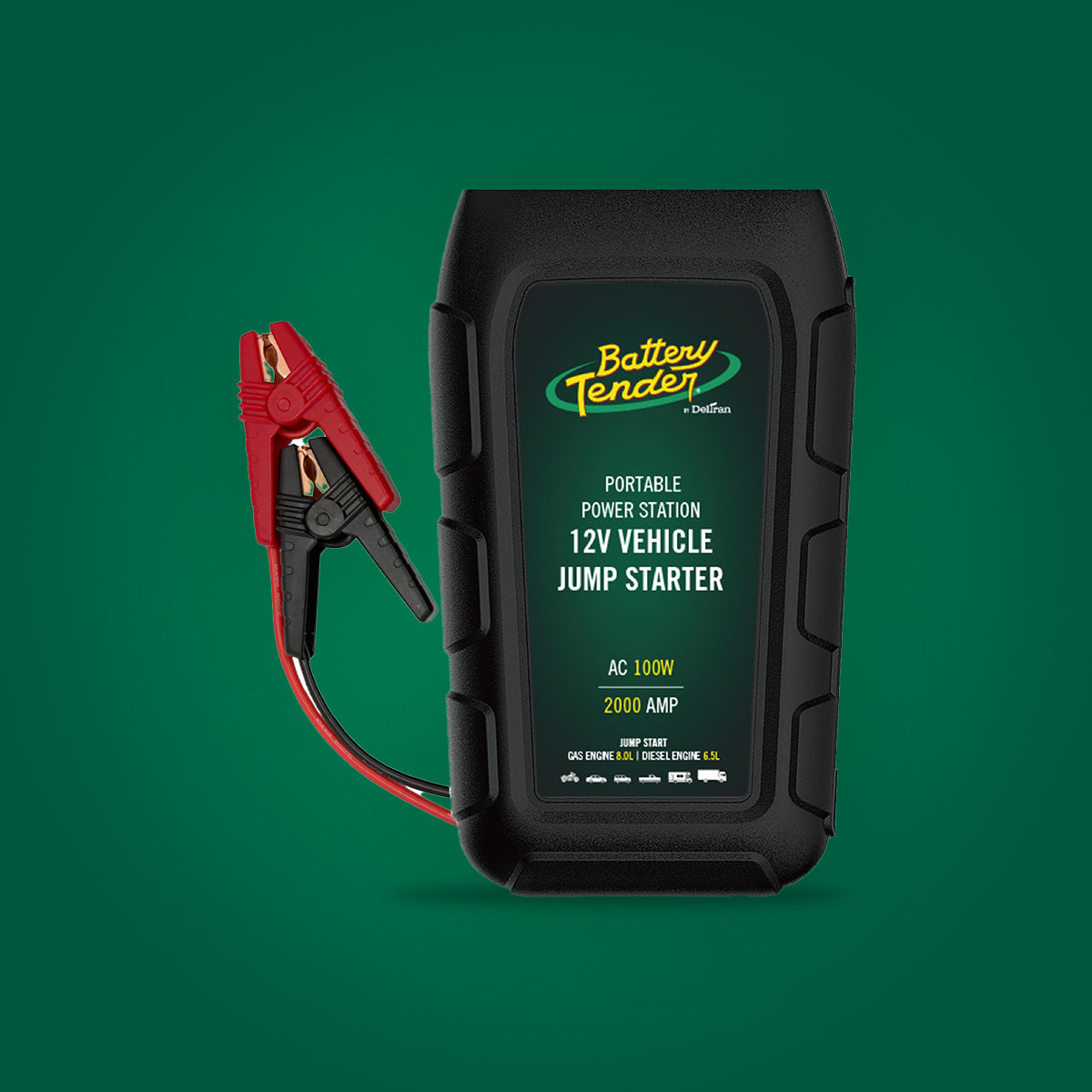
| Dead battery, emergency start | Any 12V | Battery Tender Jump N Start 800 | Starts the engine so the maintainer can finish the job |
Specialty voltages: 8V and 6V
An 8V battery is rare, found mainly in specialty equipment and some restoration projects. Plugging a 12V charger into it will overcharge it, so voltage-specific units matter. The 8V Battery Tender Plus charger runs the same four ISM stages at 1.25A. One caution: golf carts often use several 8V batteries in series, and a single-battery charger will not service the whole pack. That setup needs a pack-level charger, covered in Best Golf Cart Battery Charger for Deep-Cycle Batteries (2026).
Battery Tender Plus 1.25 AMP 8V Battery Charger and Maintainer
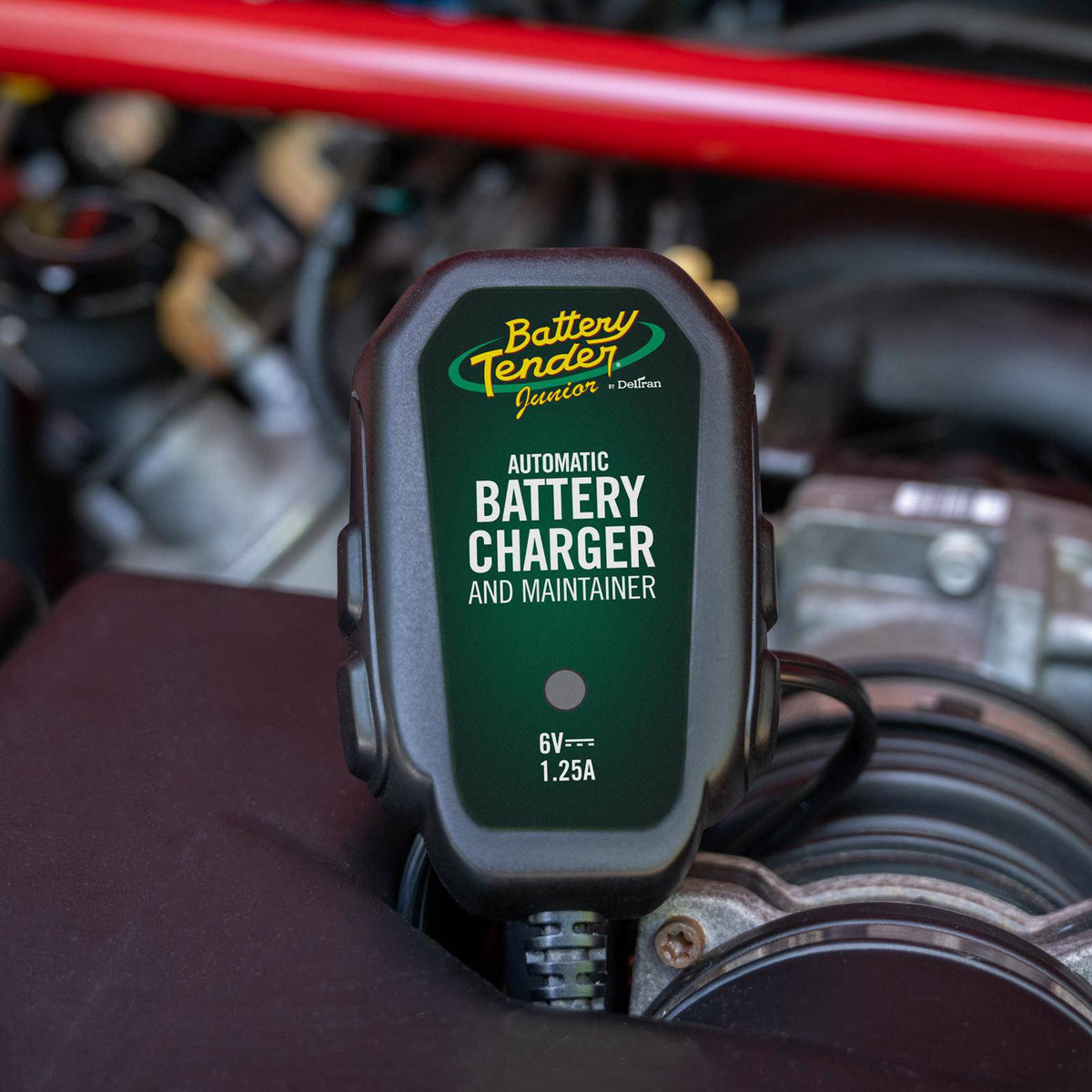
Vintage cars, tractors, and pre-1960s vehicles often run 6V systems. A 12V charger on a 6V battery boils off electrolyte quickly. The 6V Battery Tender Plus charger supplies 1.25A at the correct voltage, which suits long winter storage for a classic car.
Battery Tender Plus 1.25 AMP 6V Battery Charger and Maintainer
The 12V workhorse for modern cars
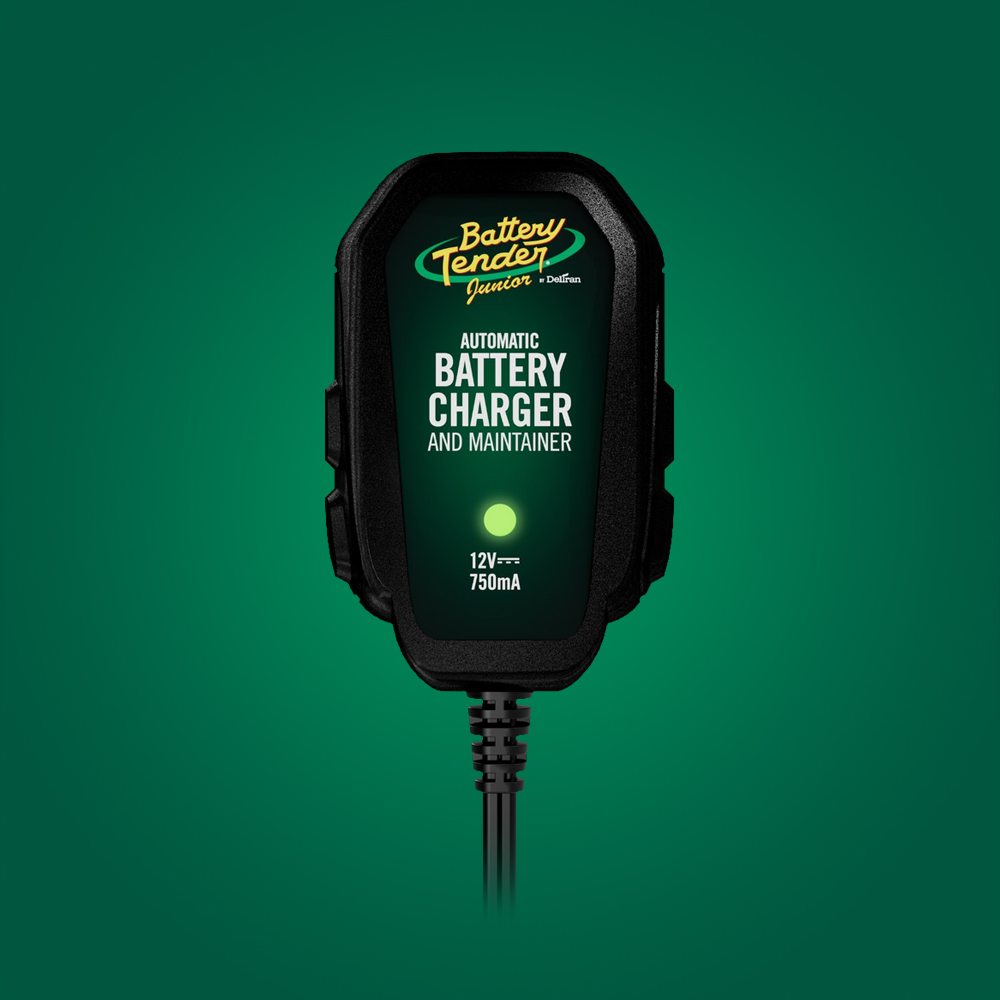
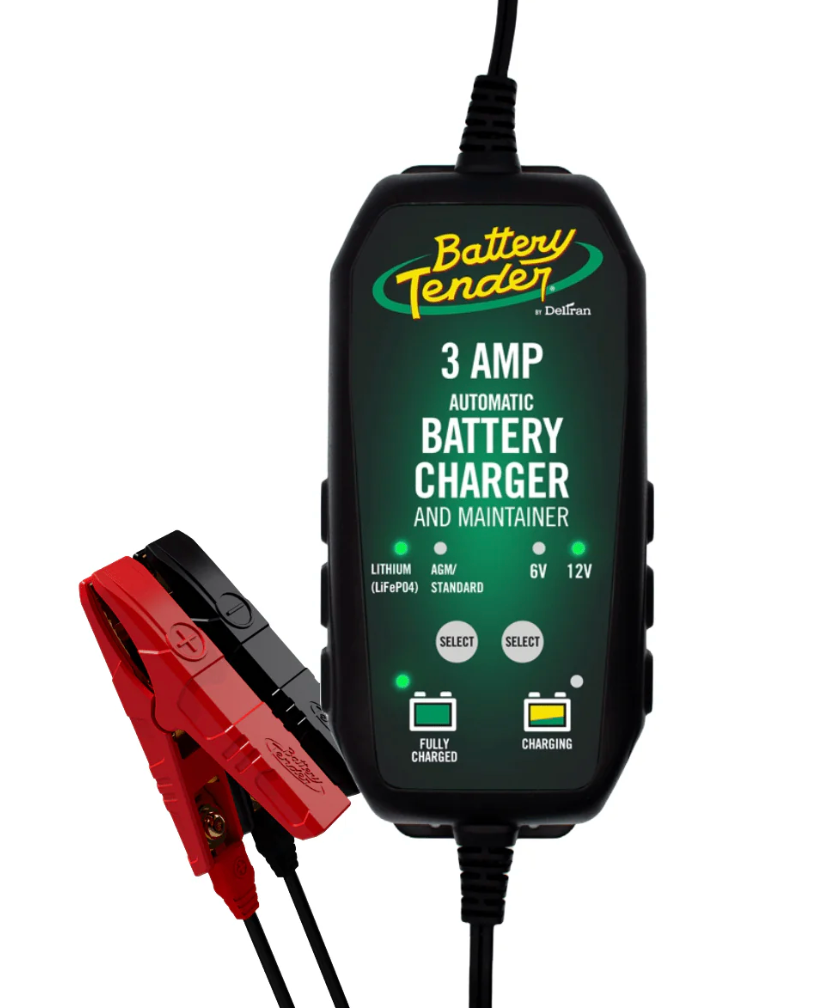
For the typical 12V battery in a sedan, SUV, or pickup, the 12V Battery Tender Plus charger covers 14Ah to 80Ah. Temperature compensation adjusts its output in a freezing garage or a hot carport. That makes the Battery Tender Plus charger a strong fit for a vehicle stored outdoors or in an unheated building.
Battery Tender Plus 1.25 AMP 12V Battery Charger and Maintainer
Charging time math
Use this formula: (battery Ah x depth of discharge) / charger amps = approximate hours. A 50Ah battery at 50% discharge needs 25Ah, and 25 / 1.25 = 20 hours. An 80Ah battery at 50% needs 40 / 1.25 = 32 hours. A 45Ah battery at 30% discharge takes about 11 hours. Slow and gentle is the design: a 1.25A charger is built for maintenance, not rescue.
How Do You Connect a Smart Maintainer Step by Step?
Connect the charger to the battery before plugging it into the wall, and reverse the order to disconnect. Follow these steps for a safe setup:
- Inspect the battery. Look for cracks, swelling, or leaking electrolyte. Do not charge a damaged battery.
- Ventilate. Work in a dry, open area, away from sparks and open flames.
- Confirm voltage. Check the battery label for 6V, 8V, or 12V and use the matching charger.
- Attach the leads. Connect the red lead to positive (+) and the black lead to negative (-), or use the included ring terminals for permanent installation.
- Plug in. Insert the AC plug into a grounded outlet. The indicator light shows charging progress.
- Leave it connected. When the green light shows a full battery, ISM keeps the battery topped off through the storage period.
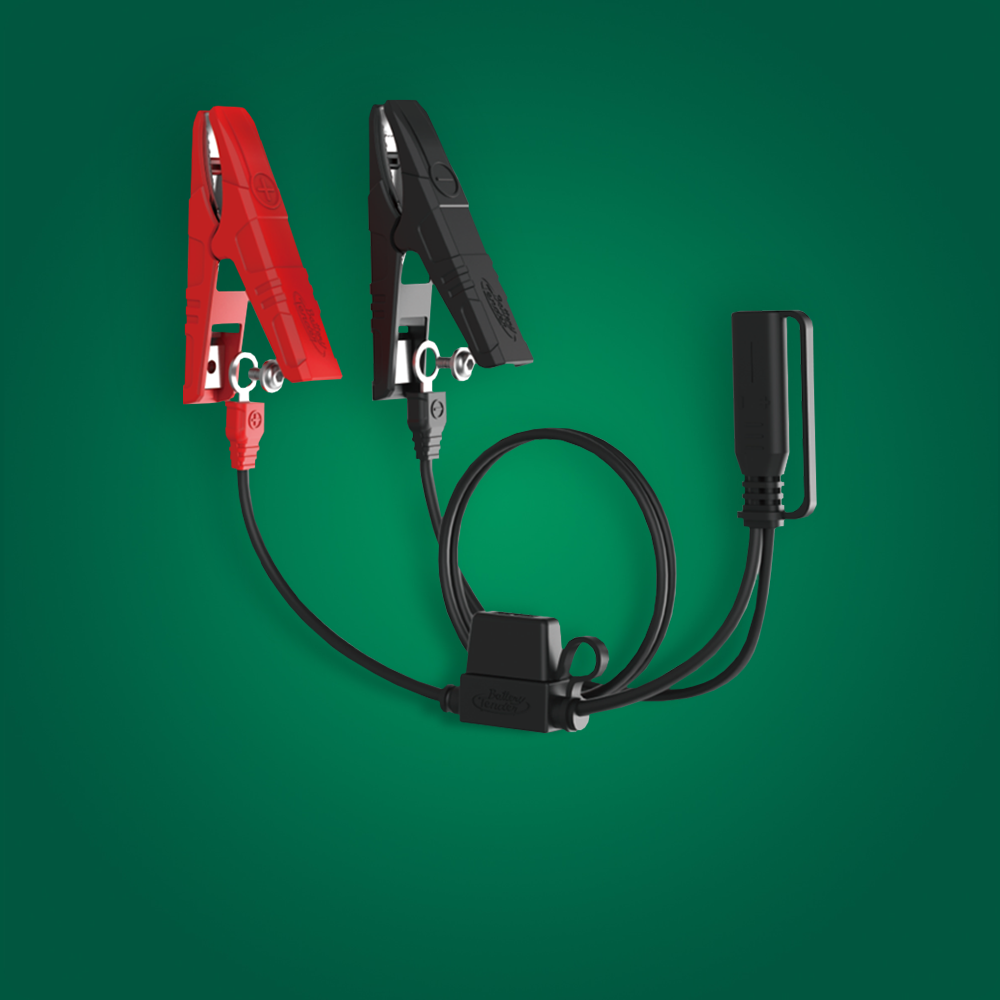
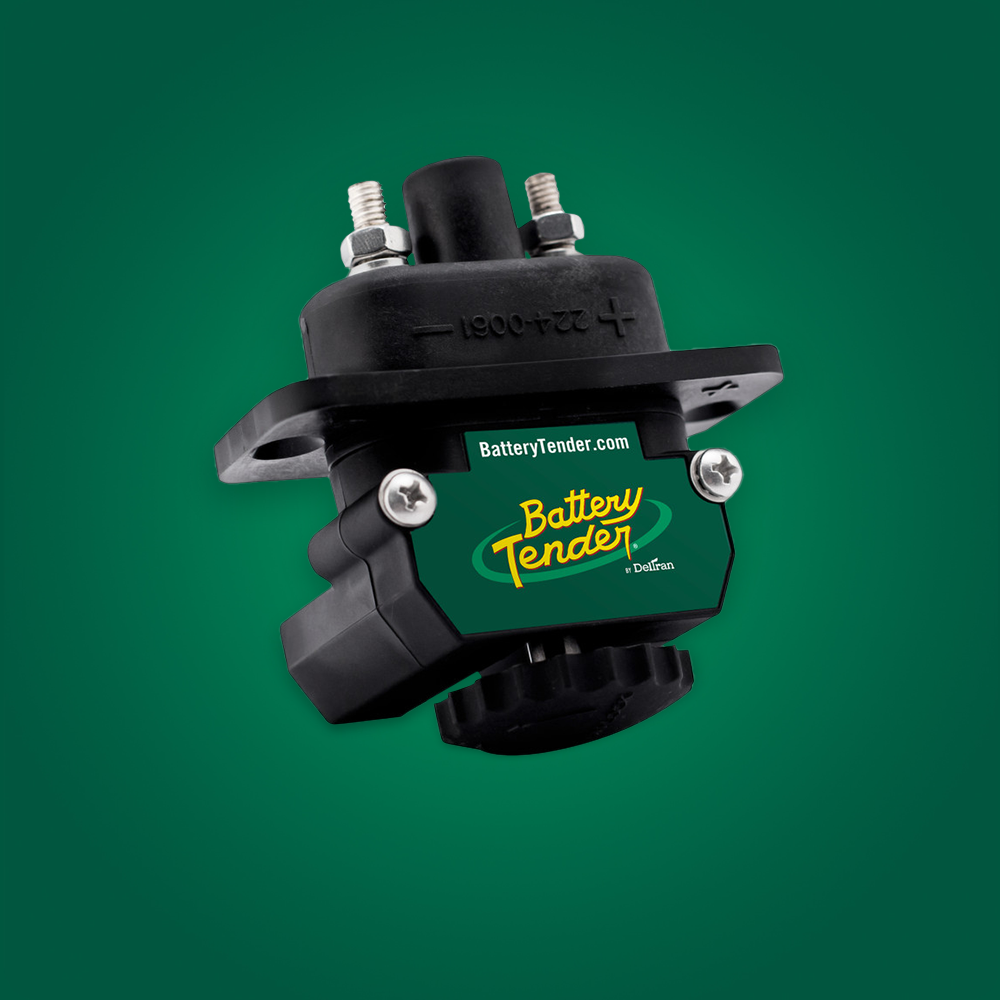
For a battery that stays in the vehicle, a permanent Battery Tender Ring Terminal Harness with Quick Disconnect makes reconnection a ten-second job. Always check the owner's manual for charging guidance on vehicles with start-stop systems or battery management modules.
Do You Need a Tester and Jump Starter With a Maintainer?
Yes, because a maintainer prevents problems but does not diagnose or fix them. A tester tells you whether the battery is healthy before storage, and a jump starter covers the day a battery fails anyway.
Test the battery before you connect a maintainer. A battery that fails a load test will not hold a charge, and a maintainer cannot change that. The Battery Tender 12V / 6V Battery Tester checks both common automotive voltages, so one tool covers modern and classic vehicles.
Battery Tender 12V / 6V Battery Tester
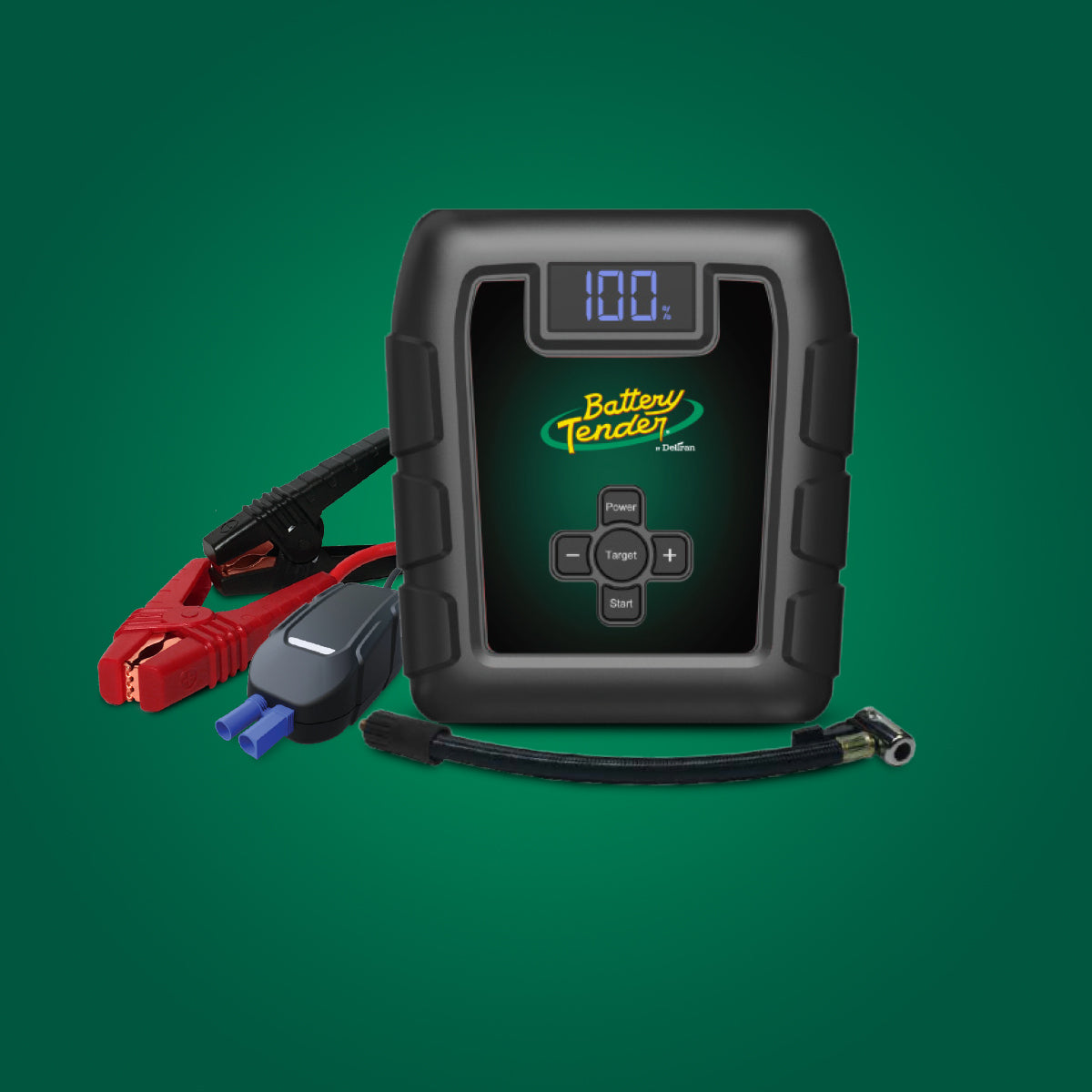
The Battery Tender Jump N Start 800 Amp unit is a compact lithium jump starter with a built-in tire inflator, so it handles two common cold-weather failures after storage: a weak battery and low tire pressure. Check the product page for engine-size ratings before you buy. Keep it in the trunk for the day a battery goes flat away from home.
Battery Tender Jump N Start 800 Amp Jump Starter and Tire Inflator
Frequently Asked Questions
What is the best car trickle charger for long-term storage?
For storage, the best car trickle charger is a smart maintainer rather than a constant-current unit. A Battery Tender Plus charger monitors voltage through four ISM stages and sends current only when needed. That lets a 12V battery sit connected through months of storage without overcharging or sulfating.
Can you leave a trickle charger on a car battery all winter?
A conventional trickle charger should not stay connected all winter because it delivers constant current and can overcharge the battery. A Battery Tender ISM maintainer is designed for indefinite connection. It tapers to demand-based maintenance pulses once the battery is full, so it can stay plugged in from October through April.
How many amps does a car battery maintainer need?
Most cars need only 1 to 1.25 amps for maintenance. A 1.25A charger fully serves batteries from 14Ah to 80Ah, which includes most cars, SUVs, and light trucks. Larger batteries above 80Ah, or batteries that must recover quickly from deep discharge, benefit from a higher-amperage Battery Tender Power Tender model.
Is a smart maintainer the same as a trickle charger?
No. A trickle charger delivers fixed current regardless of battery condition. A smart maintainer such as a Battery Tender charger reads battery voltage and moves through Initialization, Bulk, Absorption, and Float Maintenance stages. This control prevents overcharging, which is the main risk of conventional trickle units left connected for extended periods.
How long does it take to charge a car battery at 1.25 amps?
Use the formula (Ah x depth of discharge) / amps. A 50Ah battery that is 50% discharged needs 25Ah, so 25 / 1.25 takes about 20 hours. An 80Ah battery at the same depth takes about 32 hours. Plan on one to two days for a depleted battery.
Conclusion
The best car trickle charger for 2026 is a smart maintainer: it reads the battery, adapts through four ISM stages, and stays connected safely for months. Measure your battery voltage and amp-hours, match the charger to them using the sizing table above, and test the battery before storage. For your next step, browse the full Battery Tender charger collection and choose the model that fits your battery.