


Charge N Start Battery Tender Jump Starter Charger Explained (2026)
Most drivers own either a battery charger or a jump starter — and hope the one they chose covers the emergency they actually face. Battery Tender® solved that gamble with the Charge N Start line, a 2-in-1 device that pairs a wall-powered Infinite Sequential Monitoring (ISM) smart charger with a lithium-ion portable jump starter inside a single enclosure. Understanding how these two independent subsystems work together is the key to knowing why the Battery Tender® Charge N Start jump starter charger explained below represents a fundamentally different approach to battery management.
A charger prevents dead batteries. A jump starter rescues them after the fact. The Charge N Start does both — simultaneously — through two dedicated cable sets, two distinct power sources, and two separate charging circuits that never interfere with each other. This article breaks down the internal architecture, the science behind each mode, the safety systems that protect both the vehicle battery and the internal lithium pack, and which Charge N Start model matches specific vehicles and use cases. By the end, the operational logic behind every LED indicator, every cable connection, and every charging stage will be clear.
Key Takeaways:
- The Charge N Start contains two independent systems — an ISM wall charger and a lithium-ion jump starter — in one housing.
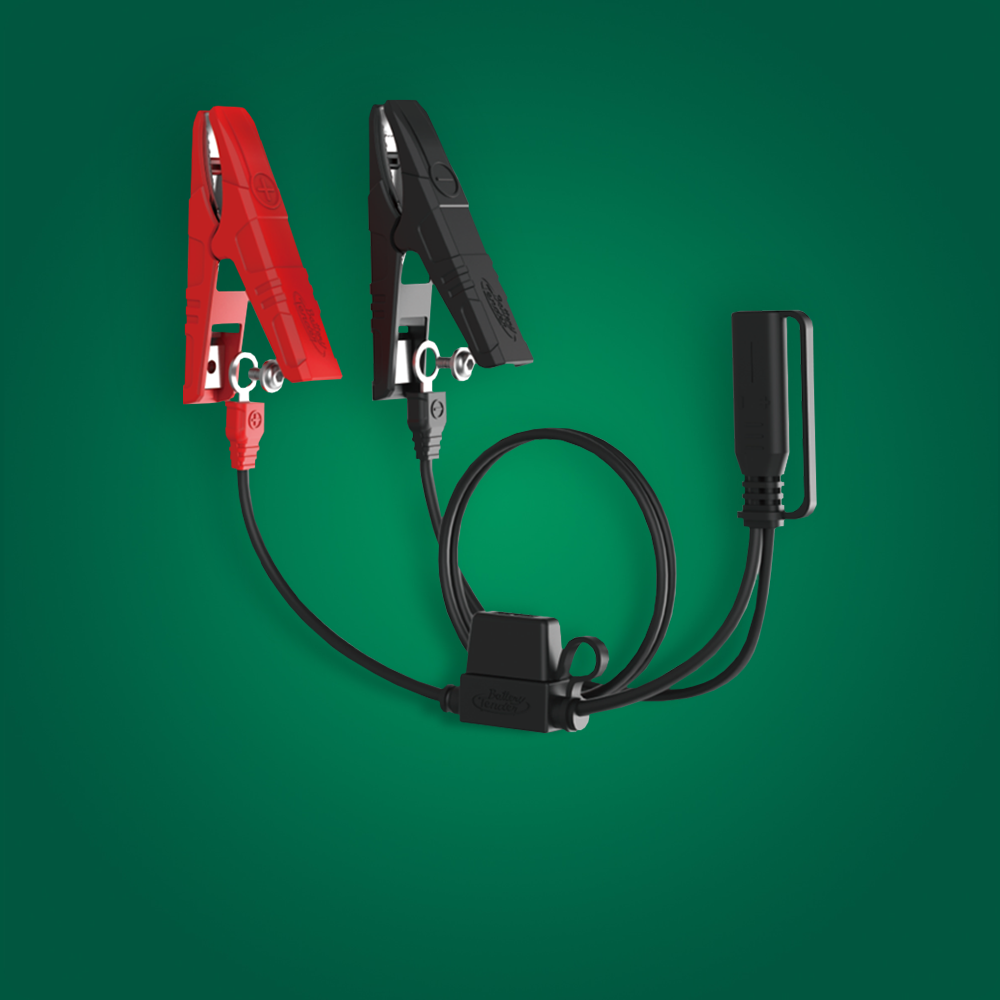
- Two separate cable sets (ISM charging clamps and heavy-duty jump clamps) are not interchangeable.
- Proprietary Charge N Store technology maintains the internal lithium pack at full readiness indefinitely.
- SafeGuard circuitry prevents backfeed between the jump starter and the vehicle electrical system.
- Models range from 1,000A to 1,200A jump capacity, with charger output from 1A to 4A.
How Does the Charge N Start Combine Two Devices Into One?
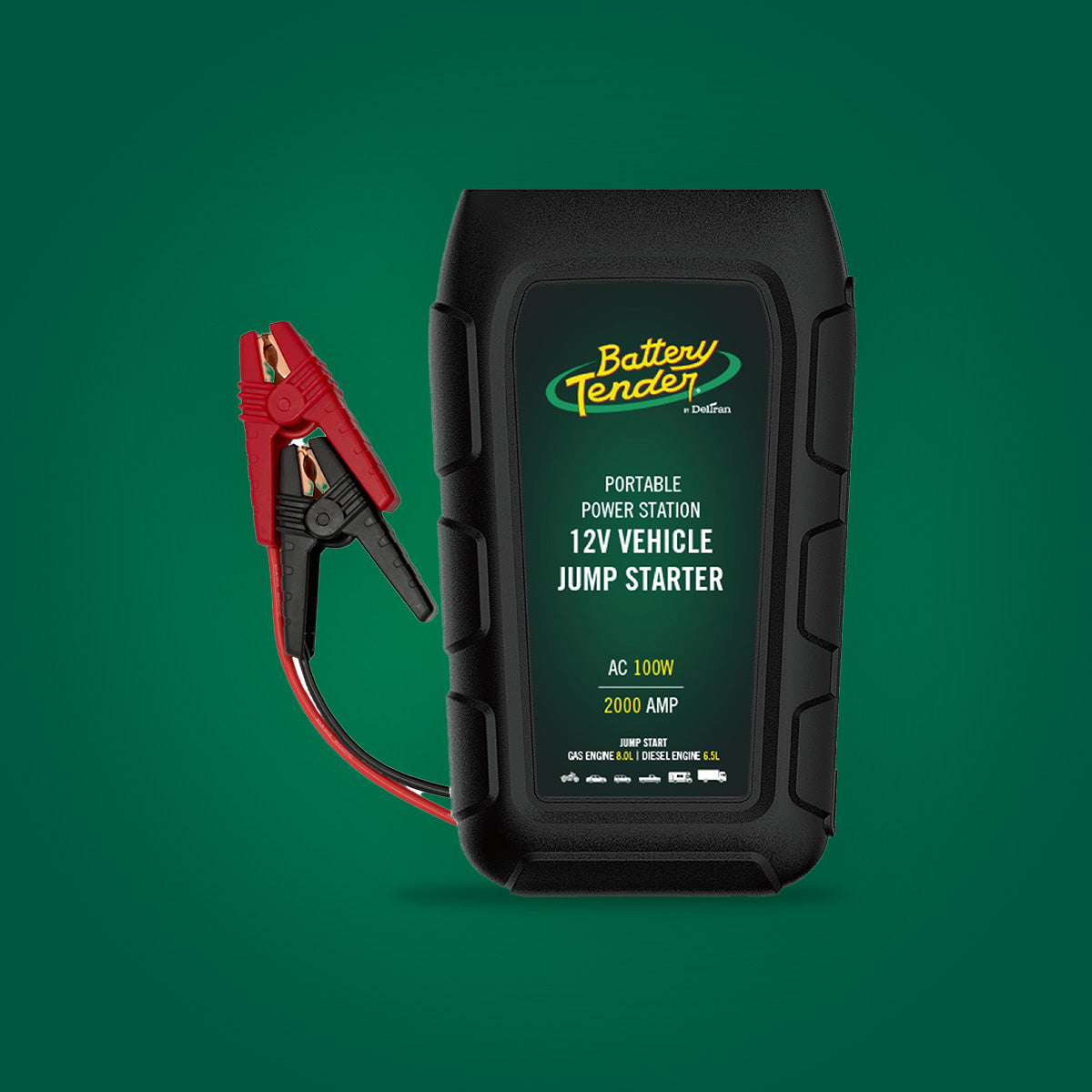
The Battery Tender Charge N Start houses two electrically isolated subsystems inside a single compact shell. The first subsystem is a full ISM smart charger that plugs into a standard 120V AC wall outlet and connects to the vehicle battery through dedicated smart charging clamps. The second subsystem is a lithium-ion jump starter with its own high-current battery pack and a separate pair of heavy-duty jump start clamps rated for instantaneous cranking loads exceeding 1,000 amps.
These two subsystems share a housing but do not share cables, circuits, or power pathways. The ISM charger draws power from the wall outlet to charge the vehicle battery. The jump starter draws power from its internal lithium-ion cells to deliver emergency cranking current. When the unit is plugged into wall power, the ISM charger simultaneously maintains the vehicle battery and tops off the internal jump pack through Battery Tender proprietary Charge N Store technology. This dual maintenance loop is what makes the Charge N Start a prevention-and-rescue device rather than just one or the other.
The physical separation of cables is a critical safety feature, not a design inconvenience. ISM charging clamps deliver low, steady current over hours. Jump start clamps deliver massive current over seconds. Using the wrong clamp type for the wrong task could damage the charger circuit, the vehicle electrical system, or both. Each cable set is connector-keyed to prevent accidental swapping.
The ISM Charger Side: Charge N Start Battery Tender Jump Starter Charger Explained in Four Stages
The ISM smart charger inside every Charge N Start follows the same proprietary four-stage process used across the full Battery Tender charger lineup. ISM stands for Infinite Sequential Monitoring — a continuous closed-loop protocol that adjusts charging behavior based on real-time battery voltage feedback.
Stage 1 — Initialization: The charger tests the connected battery by applying a gentle current pulse and measuring the voltage response. This determines battery condition, identifies deeply discharged cells, and confirms a viable connection before committing full charging current. If the battery is too far gone to accept charge safely, the charger will not advance to Stage 2.
Stage 2 — Bulk Charge (Constant Current): The charger delivers its full rated amperage — 1A on the Battery Tender Charge N Start 1100 and 1120, or 4A on the Battery Tender Charge N Start 4120 — until the battery reaches approximately 80% state of charge. During this stage, voltage rises steadily while current remains constant. For a typical 50Ah automotive battery discharged to 50%, the charging time formula is: (50Ah × 0.50) ÷ 1A = 25 hours at 1A, or (50Ah × 0.50) ÷ 4A = 6.25 hours at 4A.
Stage 3 — Absorption (Constant Voltage): Voltage holds at the battery manufacturer's recommended absorption point (typically 14.4V–14.7V for 12V batteries) while current tapers naturally. This stage dissolves sulfate crystals that form on lead plates during discharge, restoring active surface area and improving capacity. The absorption stage is what separates ISM chargers from basic float chargers, which skip this step entirely.
Stage 4 — Maintenance (Float/Monitor): Once fully charged, the ISM controller drops to a monitoring state. It delivers small charge pulses only when battery voltage dips below a threshold — not continuously. This demand-responsive approach prevents overcharging, eliminates water loss in flooded batteries, and makes the Charge N Start safe for indefinite connection. According to Battery Council International (BCI) data, sulfation is the leading cause of premature battery failure, responsible for approximately 80% of lead-acid battery deaths. The ISM absorption stage directly counteracts this degradation mechanism.
The Jump Starter Side: How Lithium-Ion Cranking Works
The jump starter section of the Charge N Start uses a lithium-ion battery pack — not lead-acid. Lithium-ion cells deliver dramatically higher power density per unit weight compared to traditional lead-acid jump packs, according to the U.S. Department of Energy's Office of Energy Efficiency. This allows the Charge N Start to produce 1,000A to 1,200A of peak cranking current from a unit that weighs a fraction of older booster boxes.
When jump starting, the heavy-duty clamps connect directly to the vehicle battery terminals. The user presses the boost button, which pre-charges an internal capacitor bank and enables the high-current output circuit. The lithium pack then delivers a burst of current sufficient to spin the starter motor. The Battery Tender Charge N Start 1100 delivers 1,000A peak — enough to crank engines up to 5.0L gasoline or 3.0L diesel. The Battery Tender Charge N Start 1120 and 4120 both deliver 1,200A peak, handling engines up to 6.0L gasoline or 4.0L diesel.
A critical safety layer here is SafeGuard anti-backfeed circuit protection. When the jump clamps are connected to a vehicle battery, SafeGuard prevents current from the vehicle's electrical system from flowing backward into the lithium pack. Without this protection, alternator spikes or voltage irregularities during cranking could damage lithium cells or create thermal hazards. SafeGuard isolates the jump circuit until the user deliberately activates it.
Charge N Store: Why the Internal Pack Stays Ready
A jump starter is only useful if its internal battery is charged when an emergency occurs. Lithium-ion cells self-discharge at approximately 2–3% per month under typical conditions (per IEEE Std 1188-2005 guidelines on battery monitoring). A jump pack stored in a glove box or garage shelf for six months could lose 12–18% of its charge — and potentially more in extreme heat.
The Battery Tender Charge N Store system eliminates this problem. When the Charge N Start is plugged into wall power and connected to a vehicle battery, the ISM charger maintains the vehicle battery while simultaneously float-maintaining the internal lithium pack. The internal cells stay at optimal state of charge indefinitely — no separate charging routine, no forgetting to top off the jump pack before winter. This is the operational advantage that standalone jump starters cannot replicate: the Charge N Start maintains itself as long as it has wall power.
Which Charge N Start Model Fits Which Vehicle?
Battery Tender offers three Charge N Start models. Selecting the right one depends on engine size, charging speed requirements, and primary vehicle type.
The Battery Tender Charge N Start 1100 pairs a 1A ISM charger with a 1,000A jump starter. At $139.95, this is the entry point for motorcycles, ATVs, side-by-sides, personal watercraft, and passenger cars with engines up to 5.0L gasoline or 3.0L diesel. The 1A charge rate is ideal for smaller batteries (10–30Ah) common in powersports and compact vehicles, where higher amperage could stress thin-plate construction.
Battery Tender Charge N Start 1100 — 1A Charger + 1,000A Jump Starter
The Battery Tender Charge N Start 1120 increases jump capacity to 1,200A while retaining the 1A charger, handling engines up to 6.0L gasoline or 4.0L diesel. At $149.95, the 1120 is the choice for drivers in cold climates where cranking loads increase substantially — cold cranking amps (CCA) requirements rise roughly 1.5% for every degree Fahrenheit below 80°F, according to BCI technical bulletins.
Battery Tender Charge N Start 1120 — 1A Charger + 1,200A Jump Starter
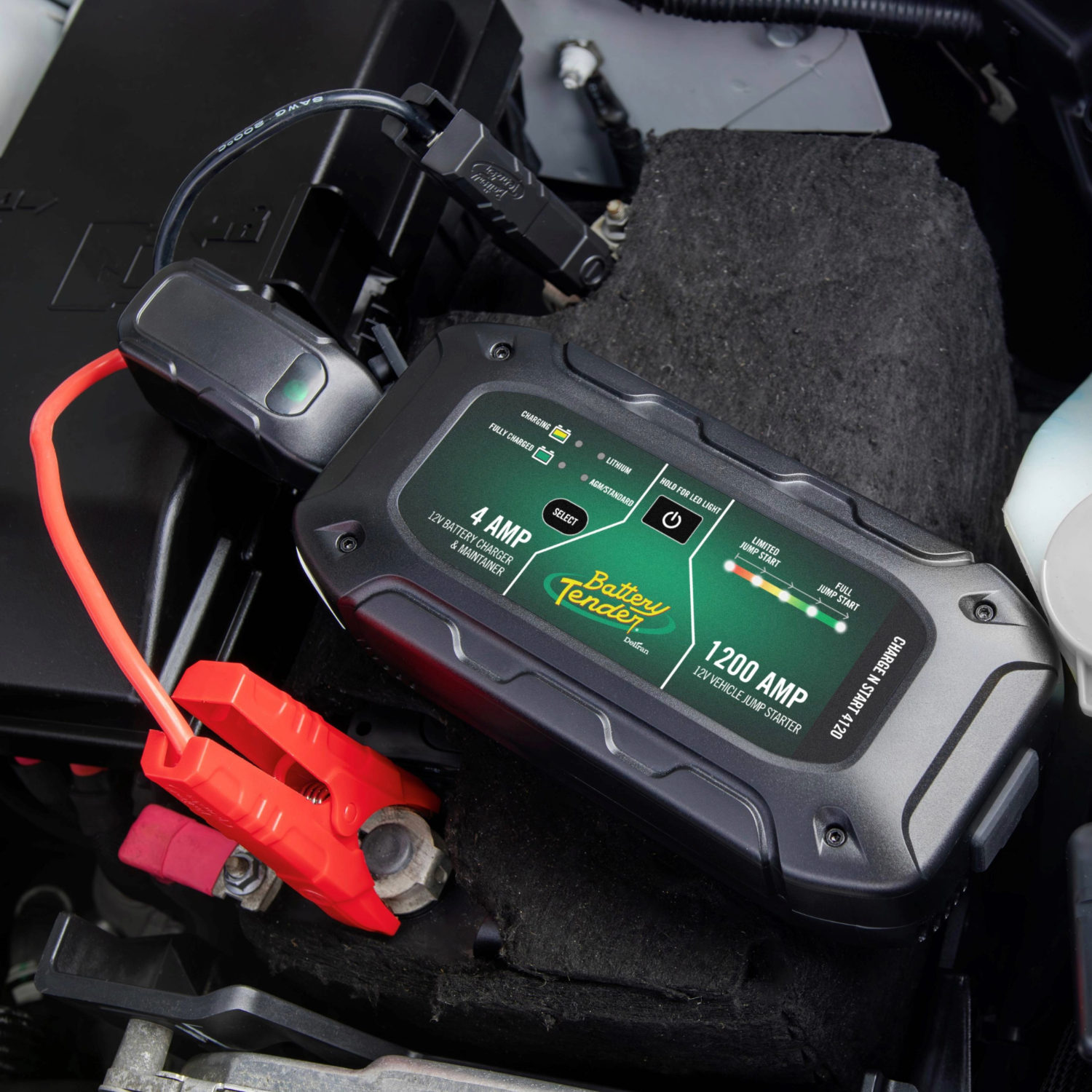
The Battery Tender Charge N Start 4120 is the flagship model at $179.95. It matches the 1120 jump capacity of 1,200A but upgrades the charger to 4A — four times the charging speed. A 60Ah truck battery at 50% depth of discharge charges in roughly (60 × 0.50) ÷ 4 = 7.5 hours instead of 30 hours at 1A. The 4120 also features premium copper-plated jaw clamps on the jump cables for lower resistance connections, reducing voltage drop during cranking. This model handles full-size trucks, SUVs, boats at the dock, and RVs in storage.
Battery Tender Charge N Start 4120 — 4A Charger + 1,200A Jump Starter
Common Misconceptions About 2-in-1 Charger Jump Starters
Misconception: The charger cables can be used for jump starting. False. The ISM charging clamps carry 1A or 4A of sustained current. Jump starting demands 1,000A+ instantaneously. The cables are physically different gauges and have different connectors. They are not interchangeable, and attempting to swap them could damage the unit or create an unsafe connection.
Misconception: Leaving the unit plugged in permanently will damage the vehicle battery. False. ISM Stage 4 maintenance mode is demand-responsive. Unlike trickle chargers, which push constant current regardless of battery state, ISM monitors voltage continuously and only delivers charge pulses when voltage drops below the maintenance threshold. This makes indefinite connection safe for standard lead-acid, AGM, and GEL batteries. Nearly all Battery Tender chargers include temperature compensation to adjust for charging in extreme heat or cold. All Battery Tender Charge N Start models operate within the ISM framework with protections appropriate for extended connection.
Misconception: The jump starter works while the charger is actively charging. The jump starter circuit is electrically isolated. The jump function operates independently whether or not the ISM charger side is active. However, the Charge N Store feature ensures the internal lithium pack remains fully charged whenever wall power is available, so the jump starter is always ready for deployment.
When to Use the Charger Mode vs. Jump Mode
Use charger mode (ISM): for seasonal storage (motorcycles in winter, boats in dry dock, classic cars in garages), for vehicles parked more than two weeks, for batteries showing early voltage sag (12.4V or below at rest), and as ongoing maintenance on any vehicle with parasitic draws from alarms, GPS trackers, or onboard electronics. Plug the unit into a wall outlet, connect the ISM clamps to the battery terminals, and leave connected indefinitely.
Use jump mode: when the battery is too discharged to crank the engine and immediate driving is necessary. Connect the heavy-duty jump clamps to the battery terminals, press the boost button, and crank. After a successful jump start, reconnect the ISM charger to recover the battery through the full four-stage cycle rather than relying solely on the alternator, which typically delivers only a partial surface charge according to SAE J537 starting battery test standards.
Frequently Asked Questions
Can the Charge N Start charge lithium vehicle batteries?
Yes. The ISM charger section of every Charge N Start model charges all common 12V battery types, including standard flooded lead-acid, AGM, GEL, and lithium (LiFePO4). The charger applies the correct voltage profile for each chemistry. The internal jump starter pack is always lithium-ion regardless of the vehicle battery type being charged.
How many jump starts can a fully charged Charge N Start deliver?
The number of consecutive jump starts depends on engine size, temperature, and battery condition. Under typical conditions, a fully charged Charge N Start can deliver multiple jump starts before the internal lithium pack needs recharging. Connecting to wall power through Charge N Store after each use restores the pack to full capacity automatically.
Is it safe to leave the Charge N Start connected to a vehicle battery all winter?
Yes. The ISM four-stage protocol transitions to demand-responsive maintenance mode once the battery is fully charged. The charger only sends current when voltage drops below the maintenance threshold, preventing overcharging. Leaving the Charge N Start connected through an entire storage season keeps the vehicle battery healthy and the internal jump pack ready.
What is the difference between the Charge N Start 1100, 1120, and 4120?
The Battery Tender Charge N Start 1100 provides 1A charging and 1,000A jump starting for engines up to 5.0L gas. The Battery Tender Charge N Start 1120 increases jump capacity to 1,200A for engines up to 6.0L gas. The Battery Tender Charge N Start 4120 matches the 1120 jump power but upgrades the charger to 4A, charging batteries four times faster — ideal for trucks, SUVs, and larger vehicles.
Conclusion
The Battery Tender® Charge N Start jump starter charger explained in this guide represents the only product category that both prevents dead batteries through continuous ISM maintenance and solves them through high-current lithium-ion jump starting. Two independent systems, two dedicated cable sets, and proprietary Charge N Store and SafeGuard technologies make the Battery Tender Charge N Start a complete battery management solution for any 12V vehicle. Whether the need is long-term seasonal storage or emergency roadside cranking, the Charge N Start eliminates the compromise of choosing between a charger and a jump starter.
Explore the full Charge N Start lineup and find the model that matches any vehicle at the Battery Tender Charge N Start collection page.
Last updated: June 2026