

Temperature Compensation Battery Chargers for Cold Climate Charging (2026)
Temperature compensation battery chargers for cold climate use solve a critical electrochemical problem that most vehicle owners never realize exists: as ambient temperature drops, the voltage required to fully charge a lead-acid or AGM battery increases. A charger without temperature compensation delivers the same voltage at 0°F as it does at 80°F, which means batteries in cold garages, unheated barns, and outdoor storage never reach a true 100% state of charge. Over weeks and months, that persistent undercharge triggers sulfation — the leading cause of premature battery failure. Battery Tender® chargers address this directly through built-in temperature sensors that adjust charging voltage in real time.
This guide explains the science behind temperature-compensated charging, identifies exactly how cold affects battery chemistry, and details why choosing a charger with this feature can extend battery life from the typical 2–3 years to 5 or more years. Whether storing a motorcycle through a Minnesota winter, maintaining a truck in an Alaskan driveway, or keeping a boat battery alive in an unheated marina shed, understanding temperature compensation is the difference between a battery that starts reliably in spring and one that requires replacement.
Why Cold Temperatures Change Battery Charging Requirements
Cold temperatures fundamentally alter battery chemistry. The electrolyte inside a lead-acid battery becomes more resistive as temperature drops, slowing the chemical reactions that accept and store electrical energy. According to research published by the Society of Automotive Engineers (SAE), a fully charged 12V battery at 80°F requires a charging voltage of approximately 14.4V to reach 100% state of charge. At 32°F, that same battery needs approximately 14.7V. At 0°F, the required voltage climbs to roughly 15.0V or higher.
This voltage shift follows a well-documented coefficient: approximately –3 to –5 millivolts per cell per degree Celsius of temperature change. A standard 12V battery contains six cells, so the total voltage adjustment across a 50°C temperature swing (roughly –22°F to 122°F) can exceed 0.9V — a significant gap that determines whether a battery reaches full charge or remains perpetually undercharged.
A charger that ignores temperature and outputs a fixed 14.4V will undercharge in cold and overcharge in heat. Both outcomes damage battery plates and shorten service life. The International Electrotechnical Commission (IEC 61427) guidelines for stationary battery systems specifically recommend temperature-compensated charging for installations exposed to ambient temperature fluctuations greater than 15°C (27°F).
What Is Temperature Compensation in a Battery Charger?
Temperature compensation is an automatic voltage-adjustment feature built into advanced smart chargers. A thermistor or temperature sensor monitors ambient temperature continuously, and the charger microprocessor adjusts output voltage upward in cold conditions and downward in warm conditions. This ensures the battery receives the electrochemically correct voltage regardless of whether the charging environment is a heated garage at 70°F or an uninsulated pole barn at –10°F.
Not all chargers include this feature. Basic trickle chargers deliver a constant, unregulated current with no voltage intelligence whatsoever. Even some "smart" chargers adjust for battery state of charge but not for temperature. Nearly all Battery Tender chargers include temperature compensation to adjust for charging in extreme heat or cold. This distinction is critical for anyone charging or maintaining batteries in environments where temperature fluctuates seasonally or even daily.
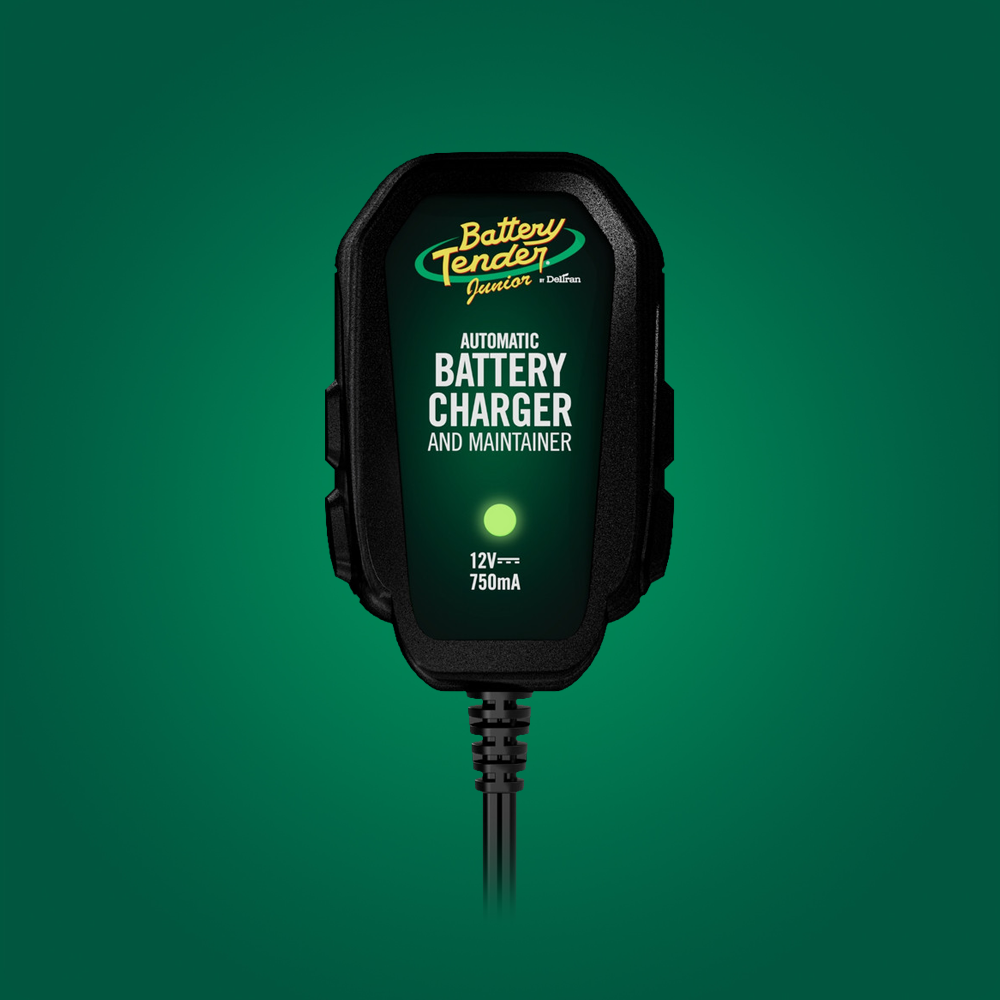
Important note: Nearly all Battery Tender chargers include temperature compensation to adjust for charging in extreme heat or cold. Battery Tender Junior chargers (750mA and 1A models) are designed for powersports batteries in the 2–30 Ah range and are typically used in moderate indoor environments. For cold-climate charging, chargers such as the Battery Tender Plus or the Battery Tender 8A/2A Power Tender provide the necessary voltage adjustment for safe, complete charging.
How Temperature Compensation Works with ISM Charging Technology
Temperature compensation does not operate in isolation. In Battery Tender chargers, it integrates with Infinite Sequential Monitoring (ISM) — the proprietary 4-stage charging process that continuously monitors and adapts to battery conditions. ISM moves through four distinct stages:
- Stage 1 — Initialization: The charger tests the battery and applies gentle current to evaluate condition and chemistry.
- Stage 2 — Bulk Charge: Full rated current flows until the battery reaches approximately 80% state of charge.
- Stage 3 — Absorption: Voltage holds constant while current tapers, dissolving sulfate crystals from battery plates.
- Stage 4 — Float Maintenance: The charger delivers demand-responsive charge pulses only when battery voltage drops below a set threshold.
Temperature compensation adjusts the target voltages at each stage. During Stage 2 (Bulk Charge), the charger raises its voltage ceiling in cold environments so the battery actually reaches 80% rather than stalling at 70–75%. During Stage 3 (Absorption), the higher compensated voltage ensures complete sulfate dissolution. During Stage 4 (Float Maintenance), the charger recalculates the float voltage threshold so it pulses at the correct interval — not too frequently (which would overcharge in warm spells) and not too infrequently (which would allow voltage sag in sustained cold).
This integration of temperature compensation with ISM is what makes indefinite connection safe in any climate. A charger without both features will either overcharge or undercharge across seasonal temperature swings, accumulating damage that shortens battery life by 1–3 years compared to properly maintained batteries.
Temperature Compensation Battery Chargers for Cold Climate: Choosing the Right Model
Selecting a cold-climate charger requires matching amperage output to battery size, confirming temperature compensation capability, and choosing the right form factor for the installation environment. The following Battery Tender models include temperature compensation and are specifically suited for cold-climate applications.
Best All-Around Cold-Climate Charger: Battery Tender Plus 1.25A
The Battery Tender Plus remains the benchmark for cold-climate single-battery maintenance. Rated at 1.25A output, it handles batteries from 14–80 Ah — covering motorcycles, cars, light trucks, and utility vehicles. Temperature compensation adjusts voltage automatically as garage or storage temperatures shift. The unit carries an industry-best 10-year warranty, reflecting confidence in its durability through years of seasonal cycling. For a 50 Ah car battery at 50% state of charge, approximate charge time is: (50 Ah × 0.50) ÷ 1.25A = 20 hours.
Battery Tender Plus 12V 1.25A Charger
Best for Large Batteries and Outdoor Installation: Battery Tender 8A/2A Power Tender
The Battery Tender 8A/2A Power Tender (SKU 022-1005-DL-WH) delivers selectable 8A or 2A charging for large-capacity batteries found in trucks, SUVs, diesel vehicles, and RVs. Its IP65-rated enclosure withstands direct exposure to rain, snow, and dust — ideal for outdoor installations, carports, and unheated workshops. Temperature compensation ensures accurate voltage delivery even in subzero conditions. A 100 Ah deep-cycle battery at 50% discharge charges in approximately: (100 Ah × 0.50) ÷ 8A = 6.25 hours on the 8A setting. The unit also functions as a 6A power supply for diagnostics and ECU reprogramming.
Battery Tender 8A/2A Power Tender (SKU 022-1005-DL-WH)
Best for Multi-Vehicle Cold Storage: Battery Tender 5-Bank Charger
Owners who store multiple vehicles through winter — a car, a motorcycle, a classic truck, an ATV, and a boat — benefit from the Battery Tender 5-Bank charger. Each of the five banks operates independently at 4A with its own ISM cycle and temperature compensation. One unit, mounted on a garage wall, maintains five batteries simultaneously without requiring five separate chargers and five separate outlets. Each bank supports 6V/12V selectable chemistry, accommodating both modern 12V batteries and vintage 6V systems.
Battery Tender 5-Bank 6V/12V 4A Selectable Battery Charger
What Happens When a Charger Lacks Temperature Compensation in Winter
The consequences of charging without temperature compensation are cumulative and often invisible until the battery fails. In cold environments, a non-compensated charger consistently undercharges by 0.3–0.6V. This shortfall leaves lead sulfate crystals on the battery plates instead of converting them back to active material during the absorption phase. Over time, those soft sulfate deposits harden into crystalline structures that permanently reduce battery capacity — a process called irreversible sulfation.
A battery that loses 10–15% of its capacity each winter due to chronic undercharging will typically fail within 2–3 years, even if it was a premium AGM unit with a 5-year design life. By contrast, a temperature-compensated ISM charger delivers the correct voltage at every temperature point, keeping plates clean and preserving the battery's full rated capacity. Battery Tender owners regularly report 5–8 years of service life from batteries that receive year-round ISM maintenance with temperature compensation.
In warm-weather episodes during winter — a sunny afternoon that heats a dark-colored garage to 60°F while outside air remains at 25°F — a non-compensated charger may temporarily overcharge, gassing the electrolyte and accelerating plate corrosion. Temperature compensation catches these fluctuations in real time, reducing voltage to match the warmer conditions and preventing thermal damage.
Emergency Readiness: Jump Starters for Cold-Climate Backup
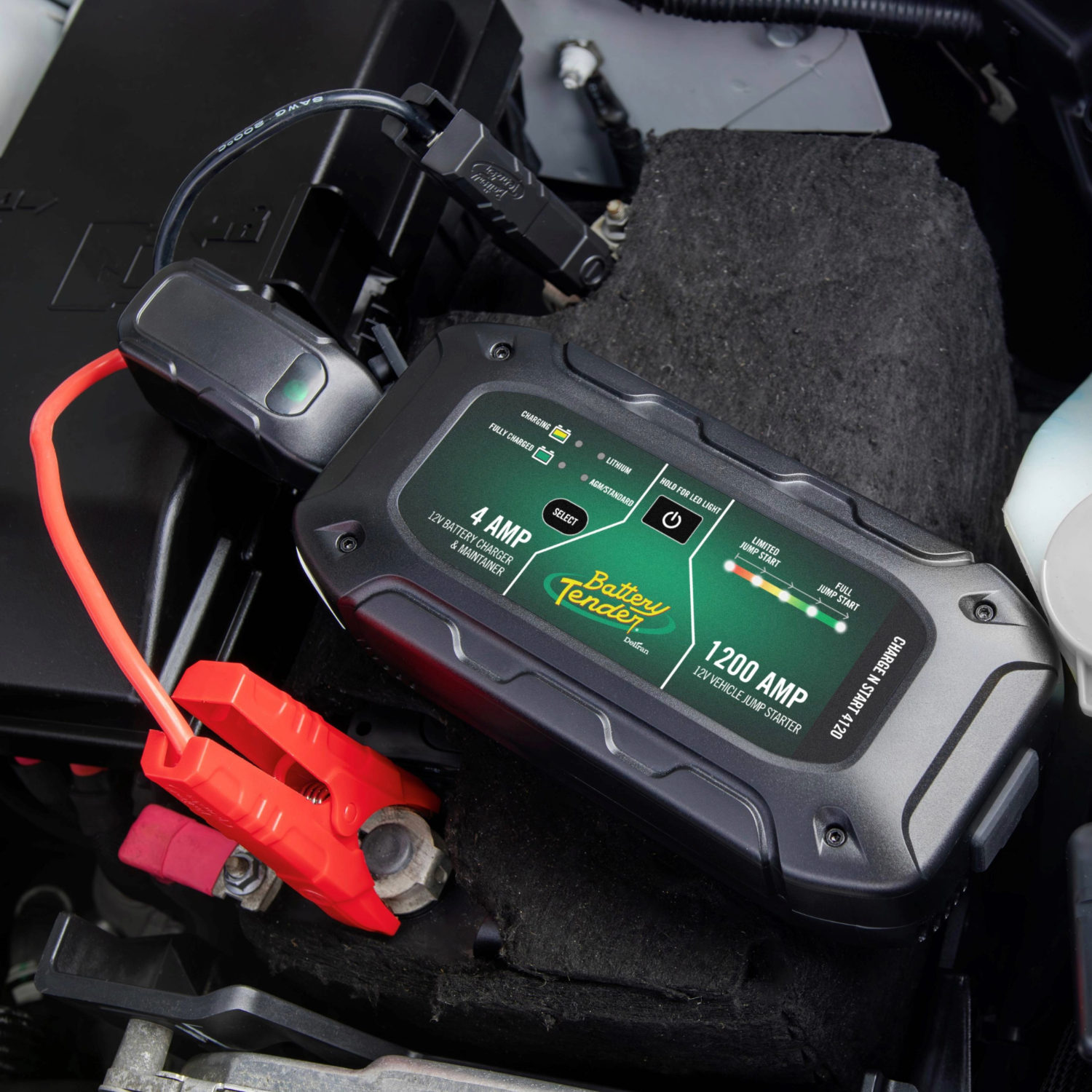
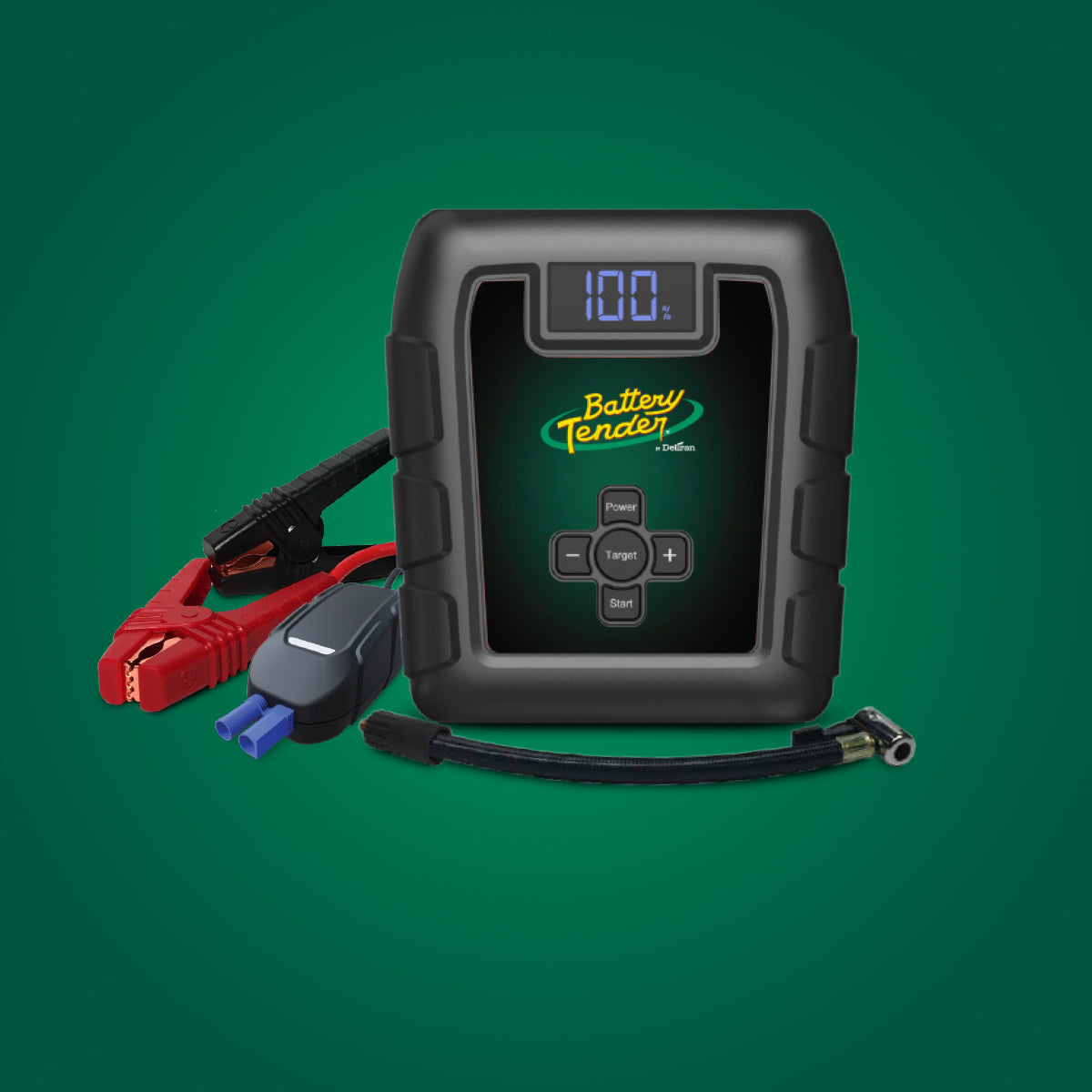
Even with a temperature-compensated charger maintaining a battery through winter, situations arise — power outages, disconnected chargers, or vehicles parked away from power — where a battery may still lack sufficient cranking power in extreme cold. A portable jump starter provides critical backup. The Battery Tender Charge N Start 4120 combines a 4A ISM charger with a 1,200-peak-amp lithium-ion jump starter, handling engines up to 6.0L gas and 4.0L diesel. The 4A charger section includes temperature compensation, making it a dual-purpose cold-climate tool: daily maintenance charger and emergency jump starter in one device.
Battery Tender Charge N Start 4120 — 4A Charger + 1,200A Jump Starter
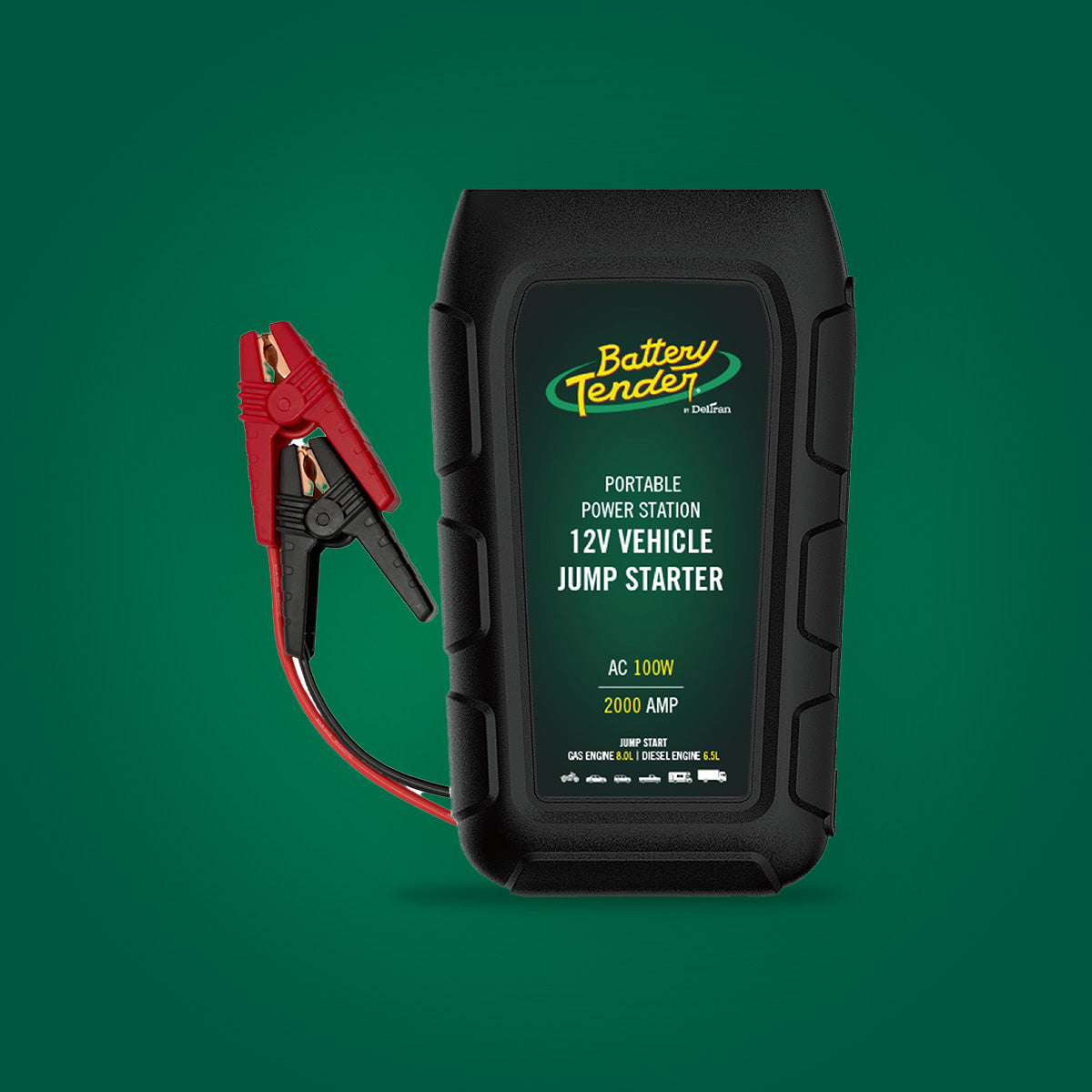
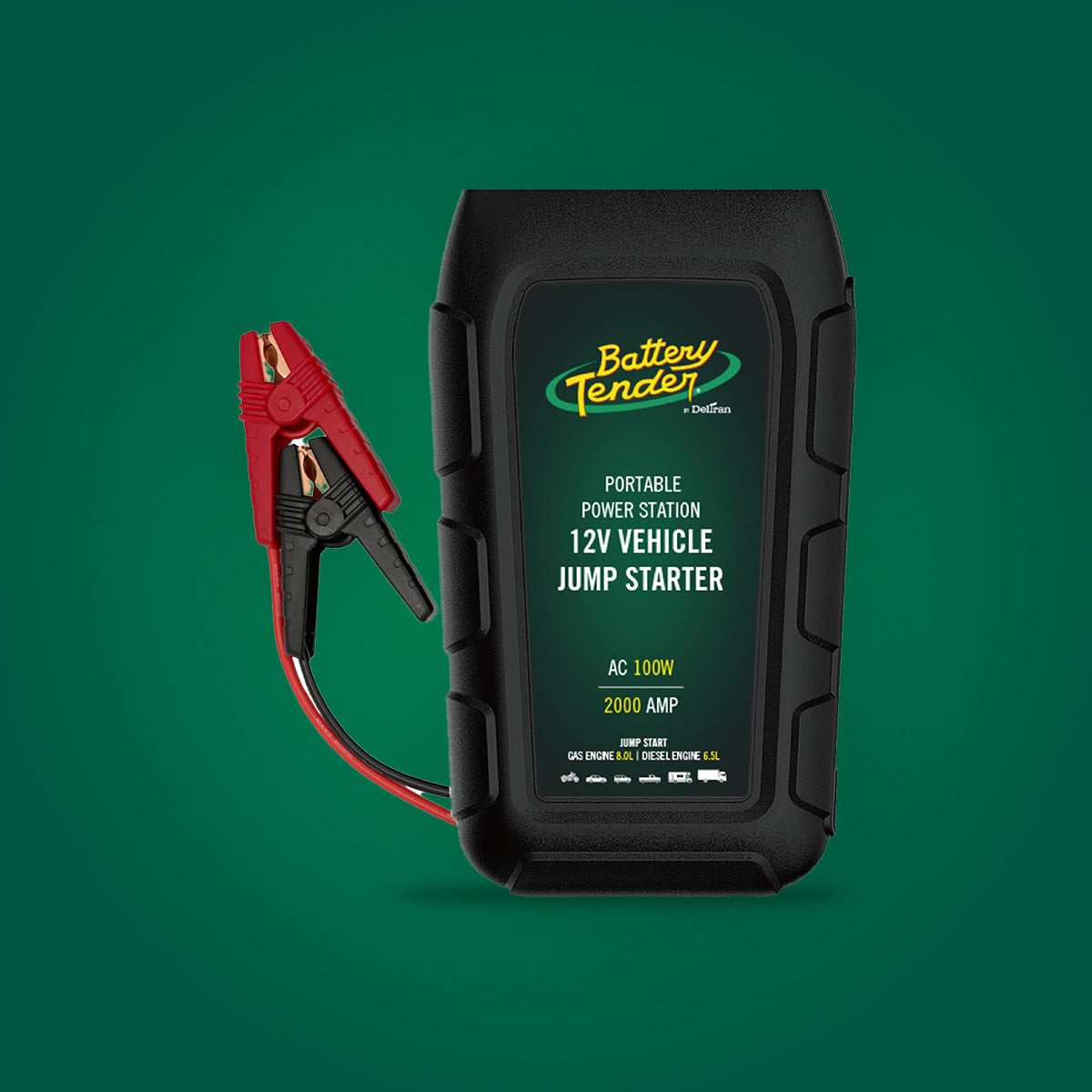
For vehicles stored without shore power, the Battery Tender 1500A Jump Starter provides 12,000 mAh of portable starting power, rated for engines up to 7.0L gas and 5.5L diesel. Its compact lithium-ion pack holds a charge for months, making it an essential cold-weather emergency tool to keep in every vehicle or storage facility.
Battery Tender 1500A Jump Starter
Cold-Climate Charging Best Practices
Using a temperature-compensated charger is the foundation, but several additional practices maximize battery health during cold-climate storage and use:
- Keep the charger connected continuously. ISM technology with temperature compensation makes indefinite connection safe. Disconnecting "to save electricity" allows self-discharge and sulfation to begin within days in cold weather.
- Mount the charger near the battery. Temperature compensation relies on an onboard sensor. If the charger sits in a heated room while the battery is in an unheated space, the sensor reads the wrong temperature. Position the charger in the same thermal environment as the battery.
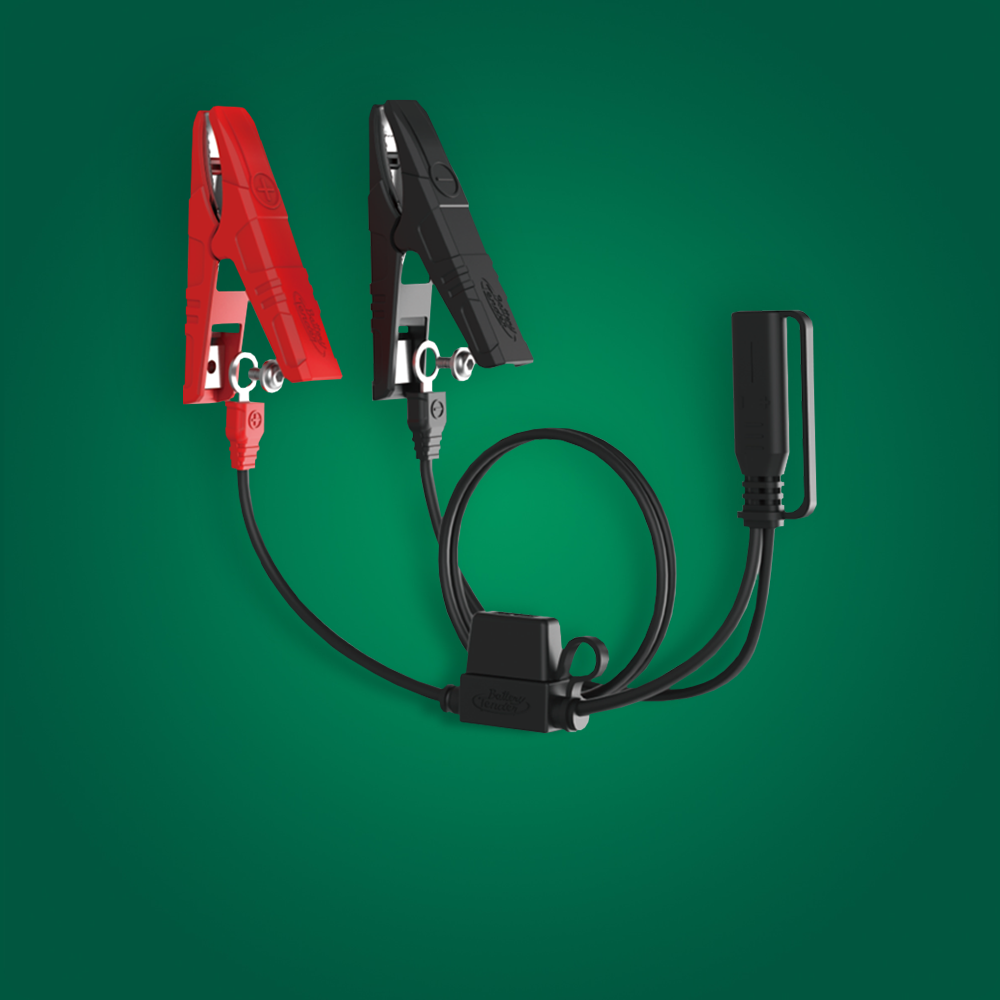
- Use ring terminal harnesses. Quick-disconnect ring terminals (included with most Battery Tender chargers) allow connection and disconnection without removing battery cables — reducing the risk of spark hazards and cable corrosion in cold, damp environments.
- Check electrolyte or battery condition before winter storage. A battery already weakened by low electrolyte, a dead cell, or deep discharge may not recover even with a temperature-compensated charger. Test before storing.
- Avoid charging frozen batteries. A fully discharged lead-acid battery can freeze at temperatures as warm as 20°F. Charging a frozen battery risks cracking the case. Bring frozen batteries indoors to thaw before connecting a charger.
Frequently Asked Questions
Do Battery Tender chargers have temperature compensation?
Nearly all Battery Tender chargers include temperature compensation to adjust for charging in extreme heat or cold. Battery Tender Junior models (750mA and 1A Selectable) are designed for powersports batteries in the 2–30 Ah range, typically maintained indoors. For cold-climate or outdoor use, the Battery Tender Plus (1.25A with temperature compensation) or the Battery Tender 8A/2A Power Tender (SKU 022-1005-DL-WH, IP65 rated) are the recommended alternatives.
Can a temperature-compensated charger be left connected all winter?
Yes. Battery Tender chargers with ISM technology and temperature compensation are designed for indefinite connection. The ISM 4-stage process automatically transitions to float maintenance and delivers charge pulses only when voltage drops, adjusting voltage targets for temperature changes throughout winter. There is no risk of overcharging.
How much voltage difference does temperature compensation correct in cold weather?
Temperature compensation follows a coefficient of approximately –3 to –5 millivolts per cell per degree Celsius. For a 12V battery (six cells), charging at 0°F versus 80°F requires roughly 0.5–0.6V additional voltage. Without compensation, this gap causes chronic undercharging, leading to sulfation and capacity loss within one to two winter seasons.
Is temperature compensation necessary for lithium batteries in cold weather?
Lithium batteries have different cold-weather concerns than lead-acid. Most lithium batteries should not be charged below 32°F (0°C) without a built-in battery management system (BMS) that prevents low-temperature charging. Temperature compensation in a charger primarily benefits lead-acid, AGM, and GEL batteries. For lithium powersports batteries, the Battery Tender Junior 1A Selectable offers a dedicated lithium mode suited for moderate-temperature environments.
Conclusion
Temperature compensation battery chargers for cold climate applications are not a premium luxury — they are an electrochemical necessity. Every degree of temperature drop changes the voltage a battery needs to reach full charge, and chargers without compensation consistently miss that target. The result is sulfation, capacity loss, and batteries that fail years before their rated lifespan. Battery Tender chargers integrate temperature compensation with ISM 4-stage charging to deliver precise, climate-adaptive voltage across every season, making them the definitive choice for cold-climate battery maintenance.
Explore the full lineup of temperature-compensated smart chargers and cold-climate charging solutions at the complete Battery Tender charger collection.
Last updated: 2026