

Best Lawn Mower Battery: Specs to Compare and Care Tips (2026)
The best lawn mower battery matches your mower's group size (usually U1), delivers 200–300 cold cranking amps (CCA), and stays fully charged through the off-season. For most riding mowers, a 12V, 18–35Ah AGM or flooded lead-acid battery on a smart maintainer outlasts a pricier battery left to self-discharge in the shed.
Most mower batteries are not worn out by mowing. They die in storage, when a partially discharged battery sulfates over the winter. The Battery Tender® brand has built smart chargers for decades, and the advice below applies that experience: choose the right battery first, then protect it with the right charger.
Key Takeaways
- Match the group size, terminal polarity and CCA in your owner's manual before comparing brands or chemistries.
- Most lawn tractors and zero-turn mowers use a 12V battery of 18–35Ah with 200–350 CCA.
- AGM is the best all-around upgrade; lithium suits owners who want low weight and can verify charger compatibility.
- Sulfation from seasonal discharge, not mowing, is the main reason mower batteries fail in 2–3 years.
- A Battery Tender maintainer using Infinite Sequential Monitoring (ISM) can help a battery reach 5+ years.
What Makes the Best Lawn Mower Battery for Your Mower?
The best lawn mower battery is the one that fits your tray, terminals and starter load. Brand matters less than getting four specs right.
Check the owner's manual or the label on the old battery for these numbers:
- Group size: U1 is the most common size for lawn tractors. Zero-turn and larger mowers may use different cases.
- Terminal polarity: U1 and U1R look identical but have reversed terminals. A wrong choice can leave the cables too short to reach.
- Cold cranking amps (CCA): 200–300 CCA covers most single- and twin-cylinder engines. Large twin-cylinder and diesel engines may call for 350 CCA or more.
- Capacity (Ah): 18–35Ah is typical. More capacity buys reserve for accessories like lights or electric PTO clutches.
Treat the table below as a starting point. Always confirm against your manual.
| Mower Type | Typical Battery | Typical CCA | Maintainer Match |
|---|---|---|---|
| Walk-behind, electric start | 12V, 4–12Ah | Under 150 | 750mA–800mA maintainer |
| Lawn tractor | 12V, 18–30Ah (U1) | 200–300 | 750mA–1A maintainer |
| Zero-turn mower | 12V, 30–35Ah | 300–350 | 1A maintainer or 2-in-1 charger and jump starter |
| Large garden or diesel tractor | 12V, 35–50Ah | 350+ | 4A or larger charger |
Best Lawn Mower Battery Type: Flooded, AGM or Lithium?
AGM is the best lawn mower battery type for most owners, because it resists vibration, needs no watering and tolerates cold starts. Flooded lead-acid is the budget choice, and lithium is the lightweight option.
Flooded Lead-Acid
This is the factory-standard battery in many mowers. It costs the least but needs periodic electrolyte checks if it has removable caps. It also self-discharges at roughly 5% per month at 70°F, and faster in a hot shed.
AGM (Absorbent Glass Mat)
AGM batteries are sealed and spill-resistant, and they handle the shaking of mowing rough ground. They recover better from partial discharge than flooded batteries, though they still sulfate when left low. They are the safest default upgrade.
Lithium (LiFePO4)
Lithium batteries are lighter and hold voltage well in storage. They need a charger designed for lithium chemistry, and many low-cost lead-acid maintainers do not qualify. Confirm chemistry support on the charger's product page before connecting one.
| Type | Strength | Trade-Off | Best For |
|---|---|---|---|
| Flooded lead-acid | Lowest upfront cost | Maintenance, spill risk | Budget replacements |
| AGM | Sealed, vibration-resistant | Higher cost than flooded | Most riding mowers |
| Lithium (LiFePO4) | Light weight, low self-discharge | Needs a lithium-compatible charger | Owners who want the lightest pack |
Why Do Lawn Mower Batteries Die in 2–3 Years?
Lawn mower batteries die early because they sit partly discharged for months, and lead sulfate hardens on the plates. This process, called sulfation, permanently cuts capacity.
The pattern is predictable. A mower runs hard in summer, then rests from November to April. Self-discharge drops the battery below full charge. Cold weather makes things worse, since a deeply discharged lead-acid battery can freeze near 20°F, while a fully charged one tolerates far lower temperatures.
ISM Versus Trickle Charging
Infinite Sequential Monitoring (ISM) is the four-stage process used in Battery Tender chargers:
- Stage 1, Initialization: tests the battery and applies gentle current to judge its condition.
- Stage 2, Bulk Charge: delivers full rated current until the battery reaches roughly 80% state of charge.
- Stage 3, Absorption: holds voltage constant while current tapers, bringing the battery safely to full charge.
- Stage 4, Float Maintenance: monitors voltage and charges only when it drops.
A conventional trickle charger delivers constant current regardless of battery state, so it can overcharge a battery left connected for months. A Battery Tender charger with ISM is designed to stay connected long-term without overcharging. For a deeper look, read the ISM charging technology deep dive.
Which Battery Tender Chargers Keep a Lawn Mower Battery Healthy?
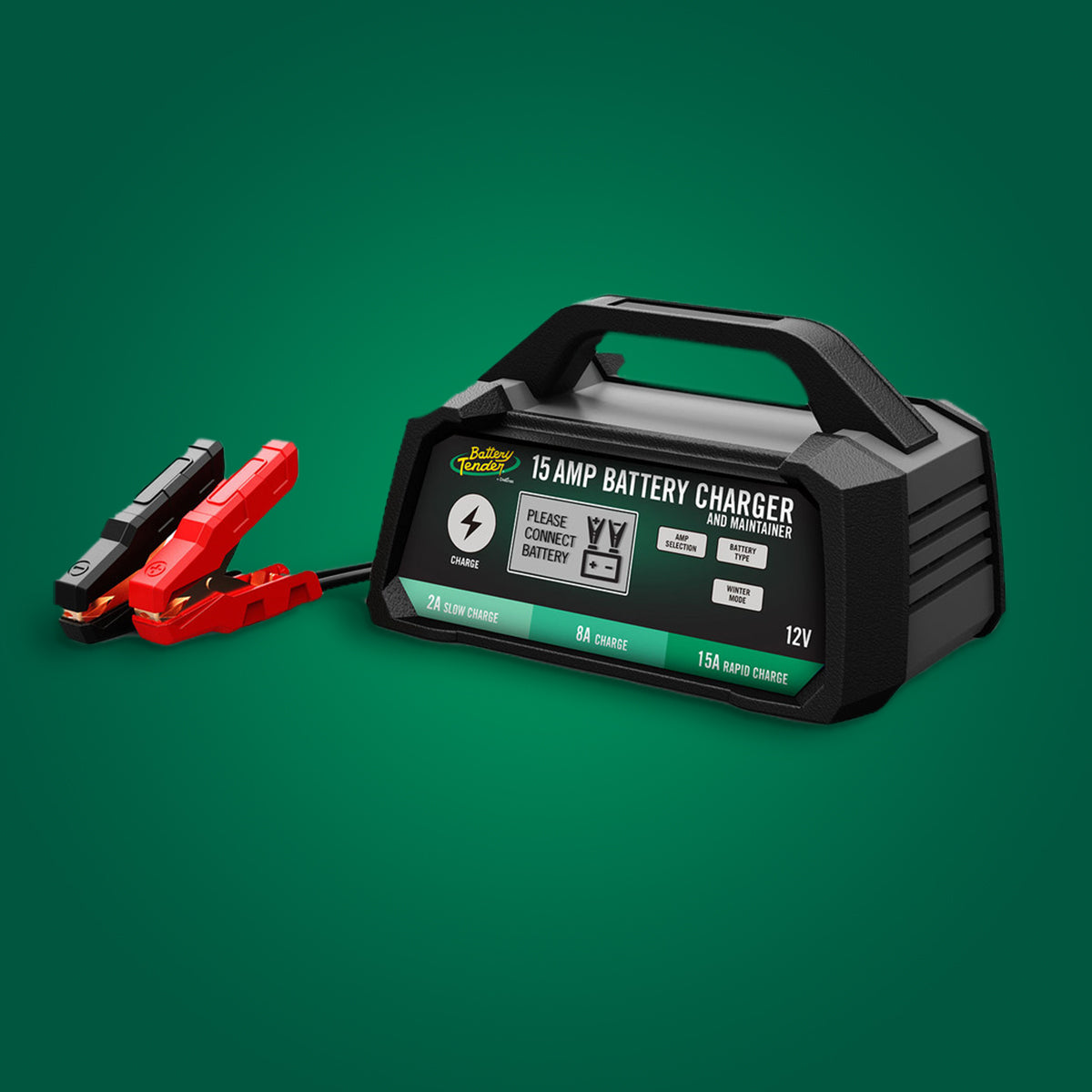
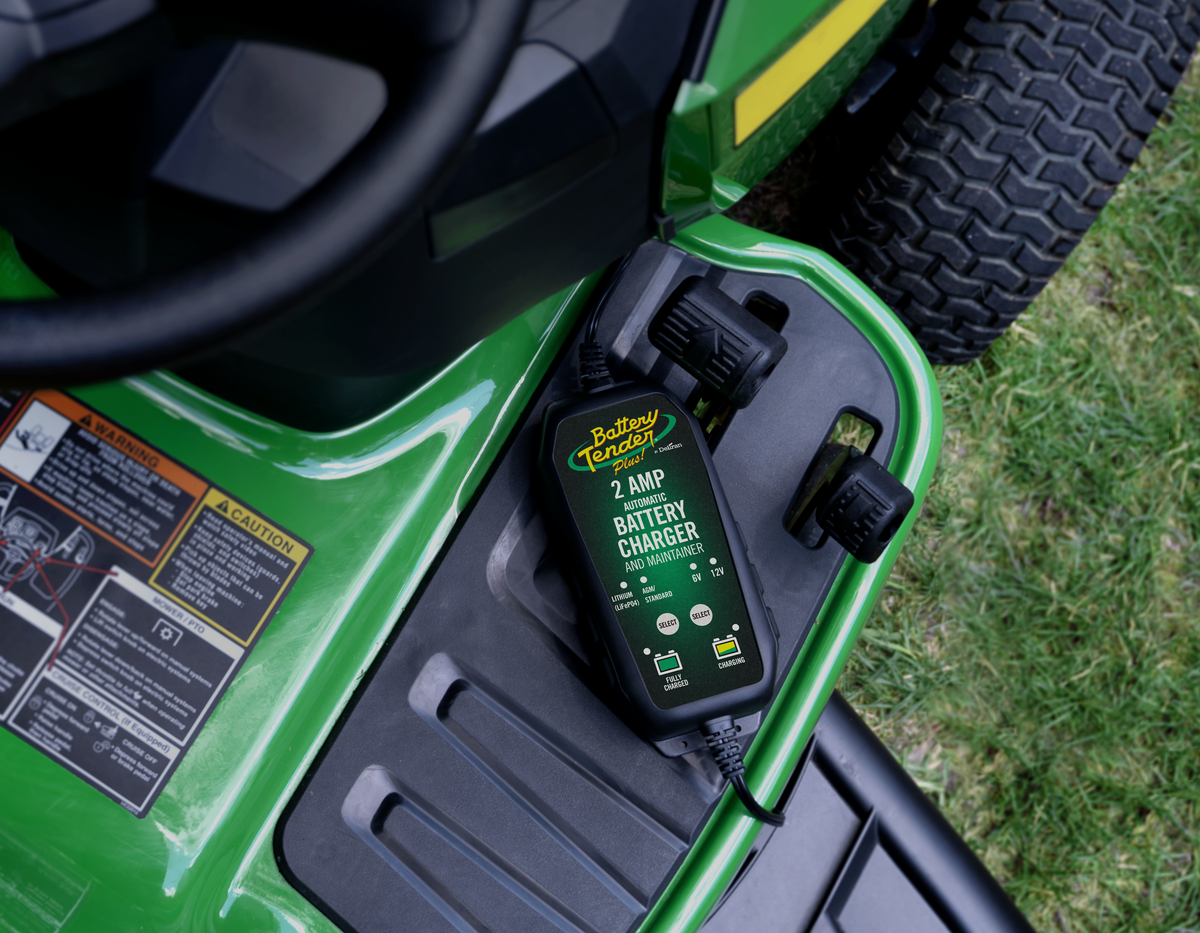
Pick the charger by battery capacity and storage location. A 750mA to 1A maintainer suits most mower batteries, and larger or colder setups may need more.
Battery Tender Weather Resistant 800mA: Primary Pick for Outdoor Sheds
Mowers often sit in sheds or lean-tos where moisture and dust reach the charger. The Battery Tender Weather Resistant 800mA charger is built for exposed conditions, which fits a 12V lawn tractor battery stored in an unheated outbuilding.
Battery Tender Weather Resistant 12V 800mA Battery Charger and Maintainer
Battery Tender Weather Resistant 1 Amp: A Step Up for Larger Batteries
A 30–35Ah zero-turn battery benefits from slightly more current. The Battery Tender Weather Resistant 1 Amp keeps the same moisture-ready design with a bit more output for that size range.
Weather Resistant 1 AMP, 12V Battery Charger - Available at Menards
Battery Tender Junior 750mA: Compact Option for Small Batteries
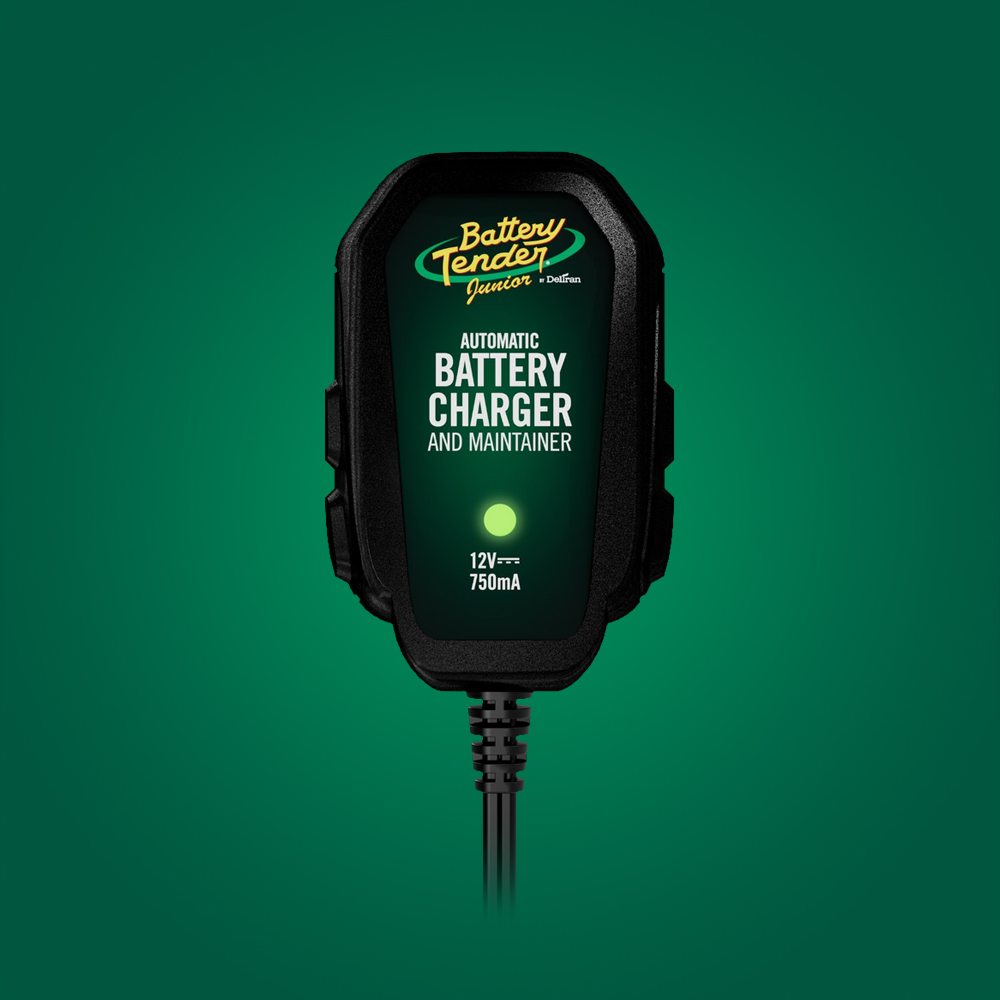
For a walk-behind mower or a small tractor battery under 30Ah stored in a dry garage, the Battery Tender Junior 750mA is the simplest choice. It is designed for sheltered indoor use, so keep it in a dry garage or workshop rather than an open lean-to.
Battery Tender Junior 750mA 12V Battery Charger and Maintainer
Battery Tender Charge N Start 1120: For Mowers That Will Not Crank
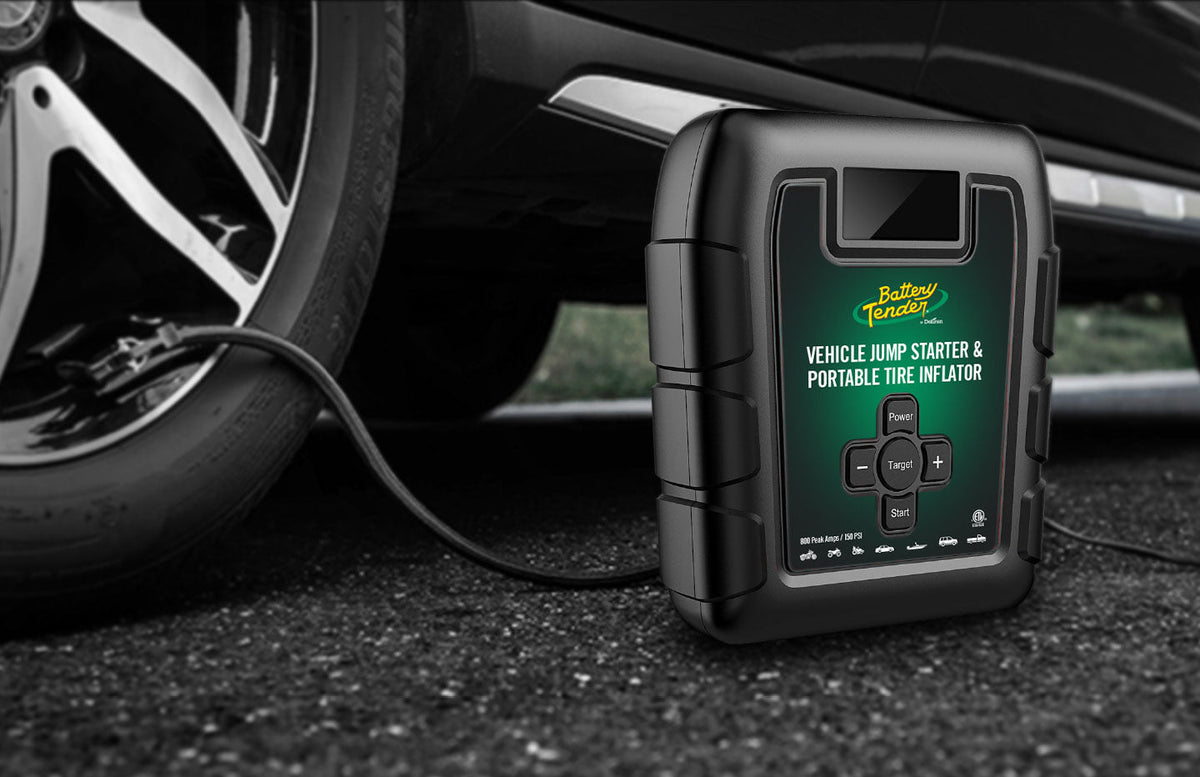
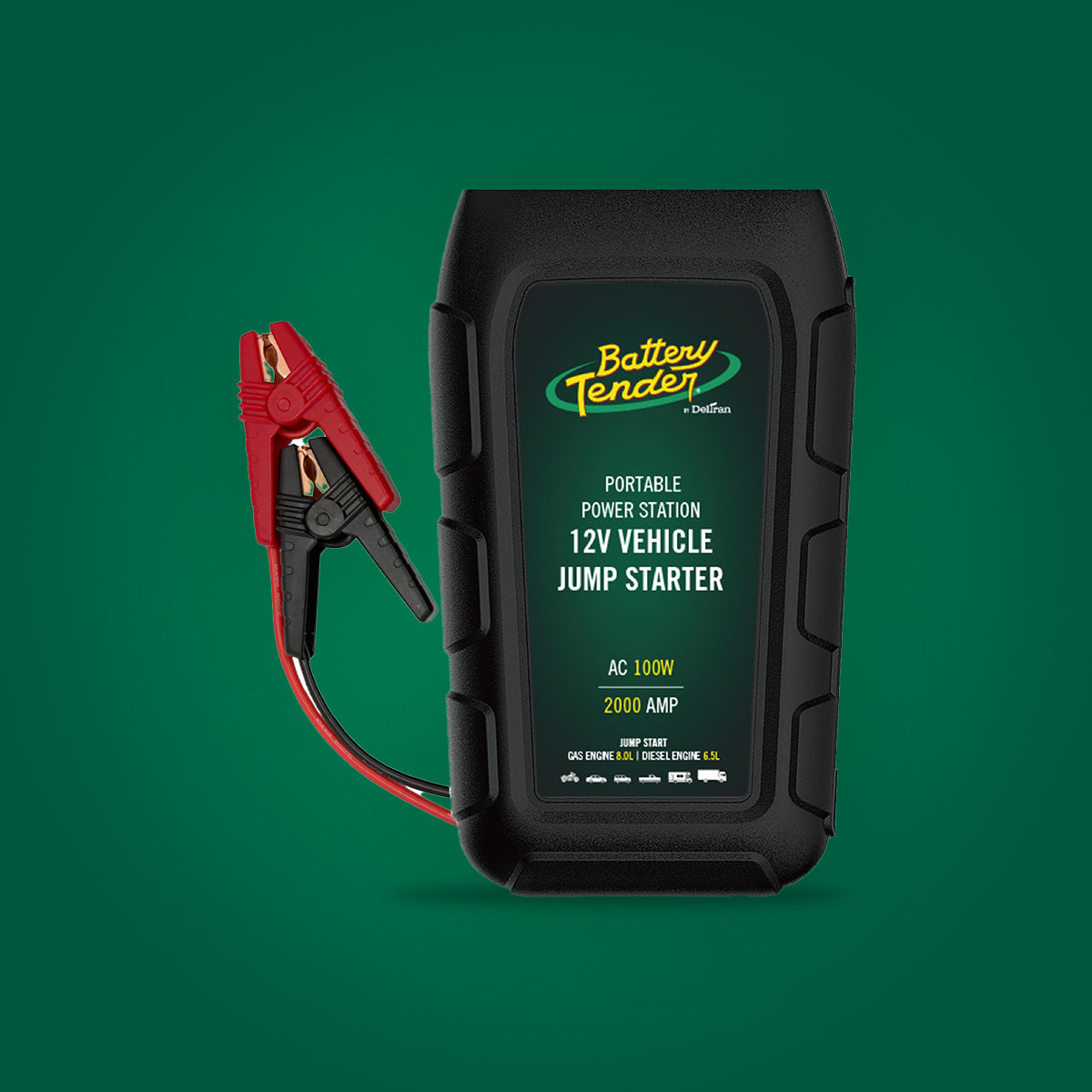
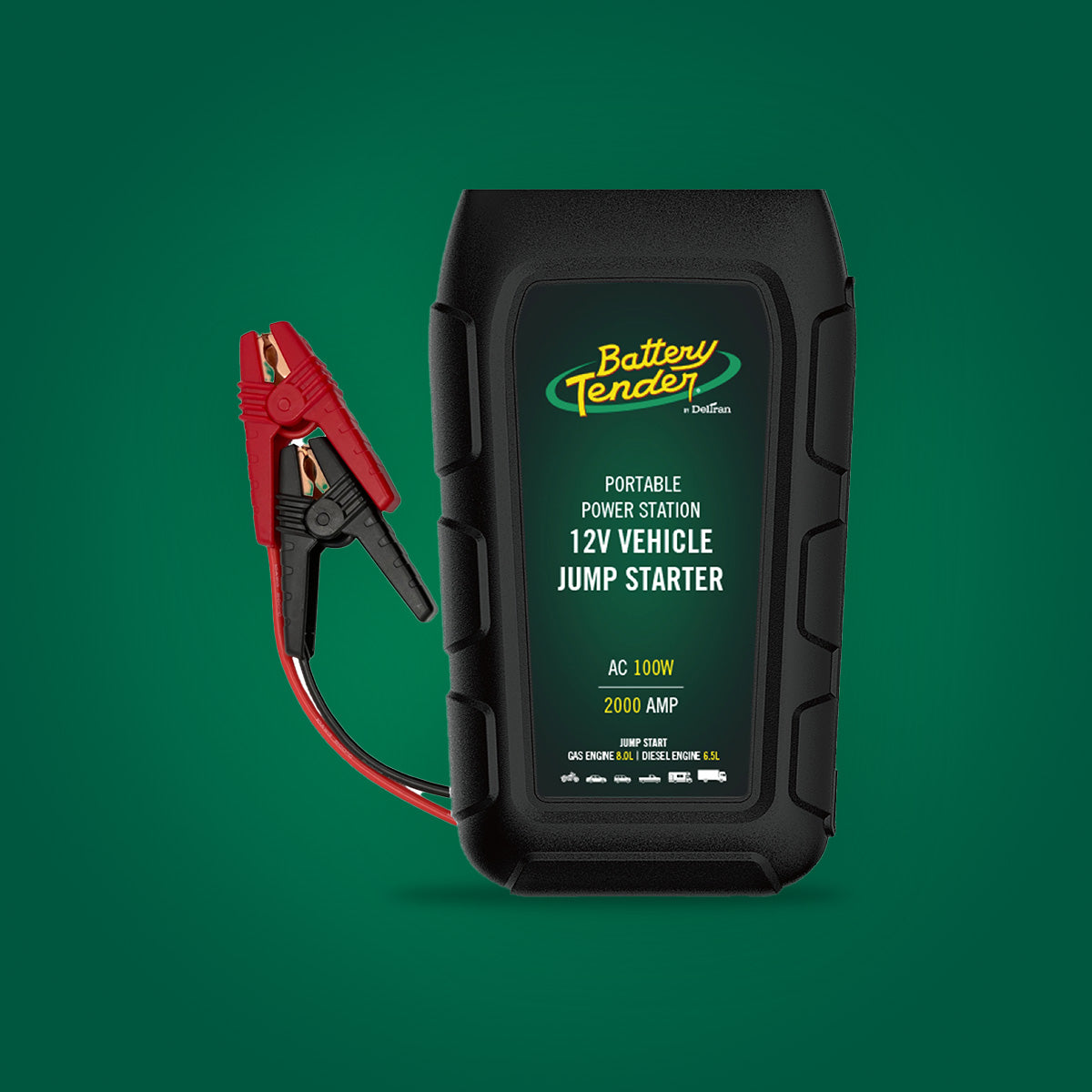
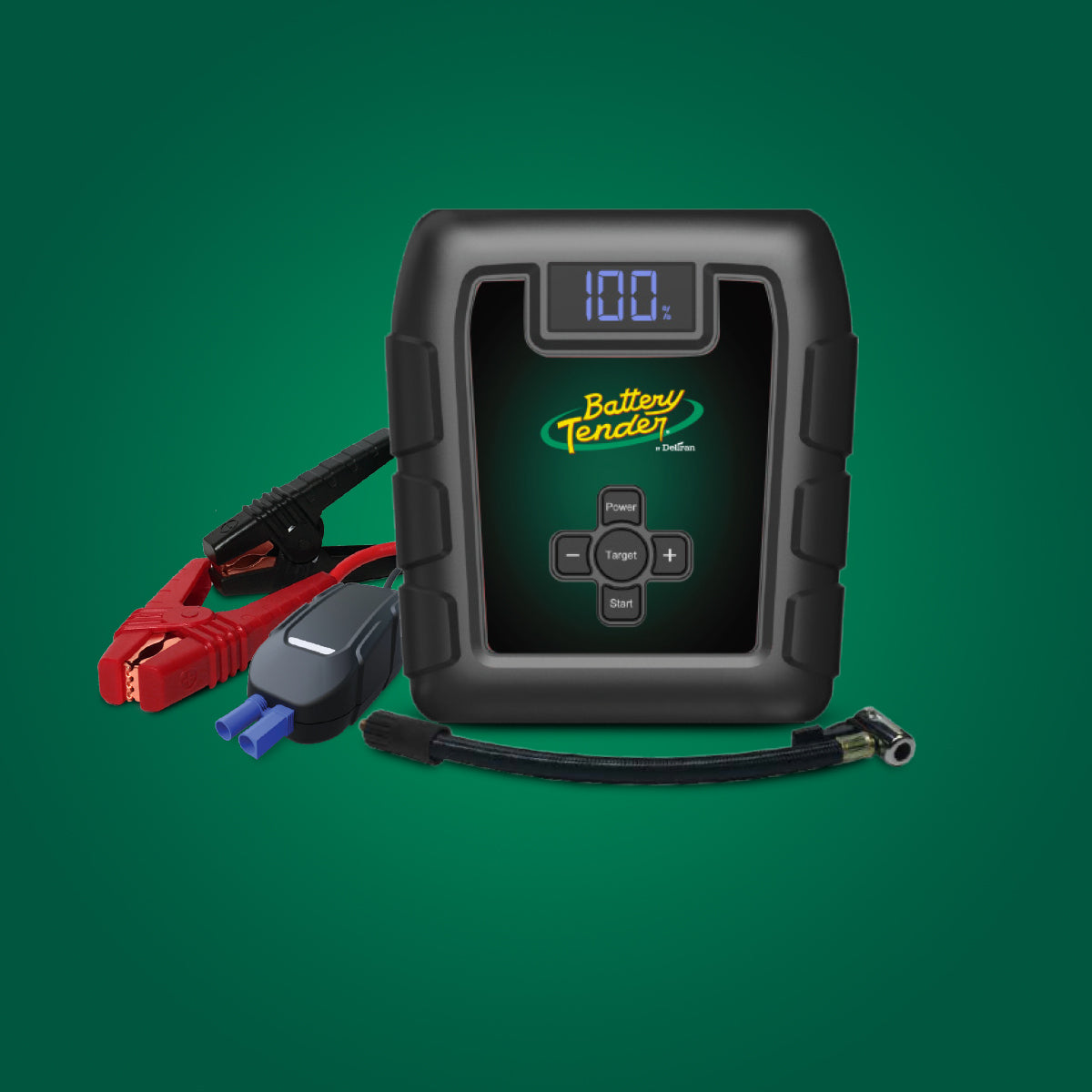
A maintainer cannot start an engine with a flat battery. The Battery Tender Charge N Start 1120 combines a 1A charger with a 1,200A lithium-ion jump starter that handles gas engines up to 6.0L. The charger section works with standard, AGM, GEL and lithium 12V batteries, so one unit covers the mower, the tractor and the truck that pulls the trailer.
Battery Tender Quick Disconnect USB Adapter: Accessory for Fast Hookup
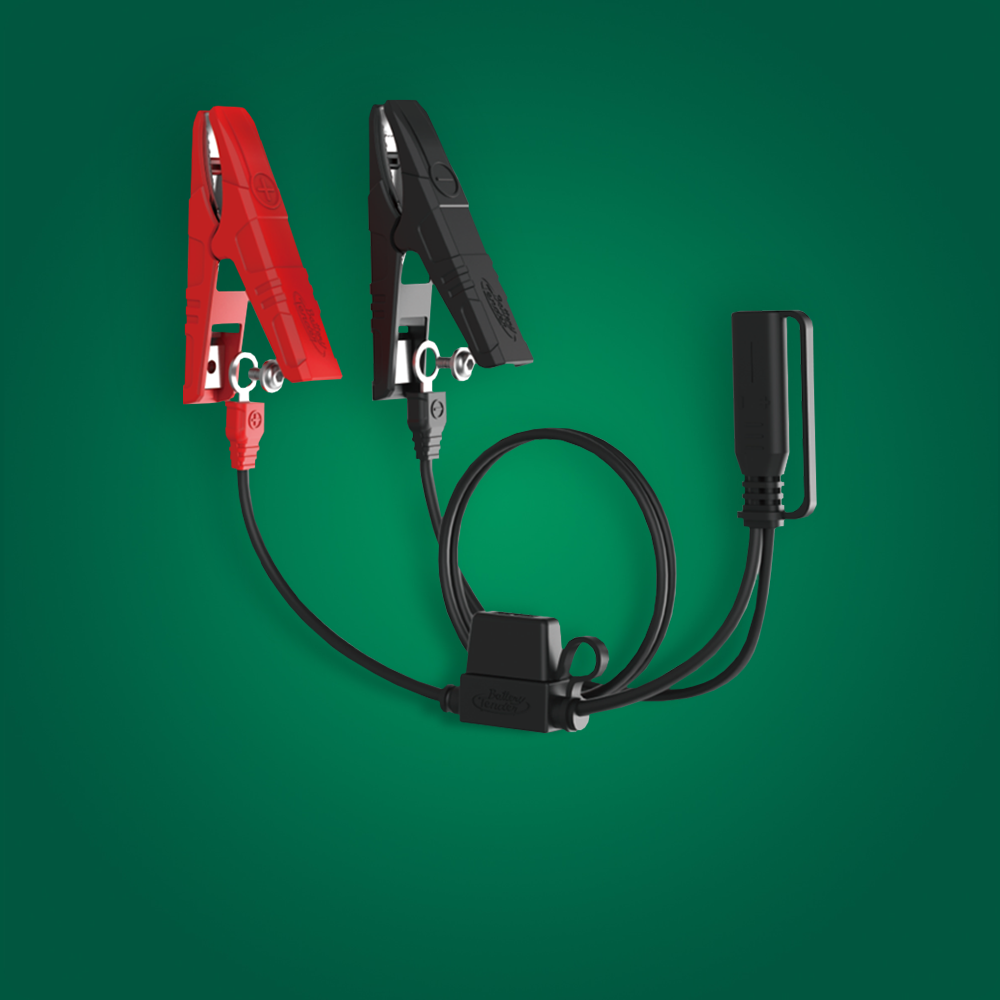
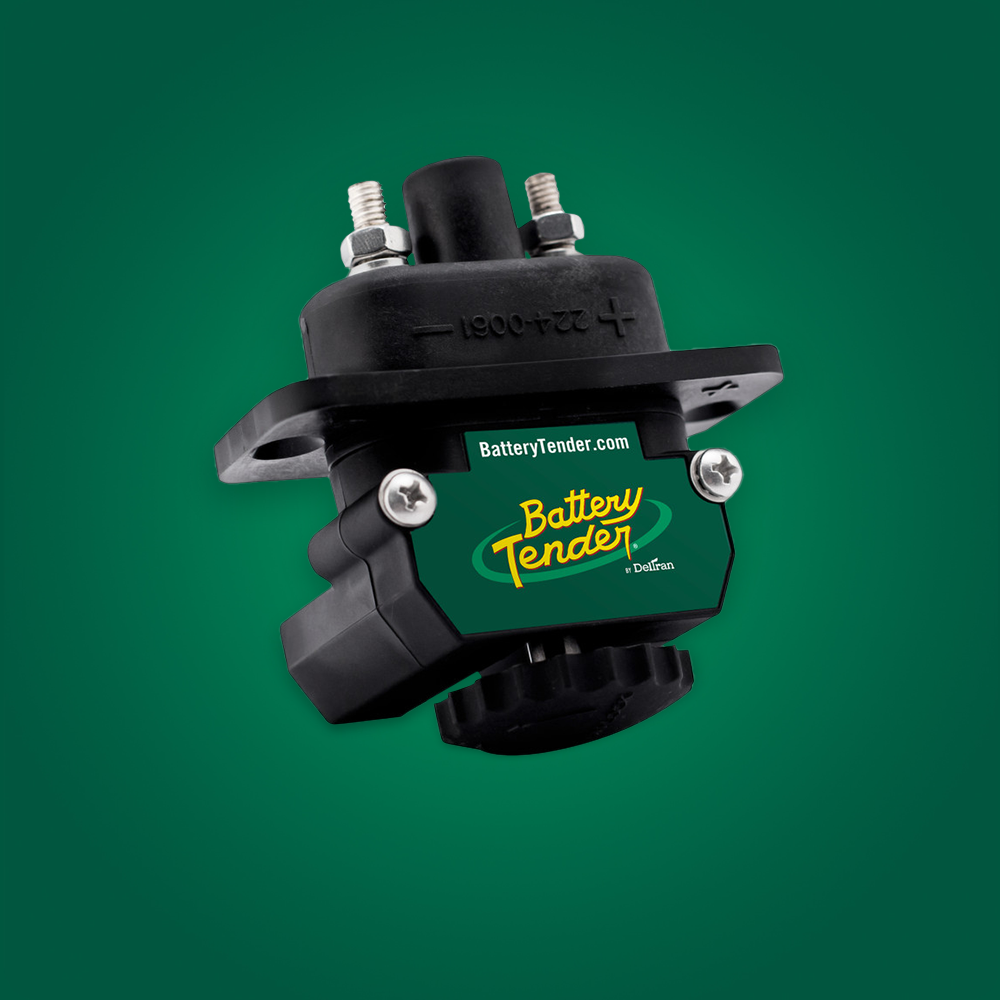
A mower battery often sits under the seat, which makes clamping awkward. Installing a quick disconnect ring terminal harness on the battery lets the charger connect in seconds. Add the Battery Tender Quick Disconnect USB Adapter, and that same connector can also charge a phone.
Battery Tender Quick Disconnect USB Adapter
For charging-time planning, use this formula: (battery Ah × depth of discharge) ÷ charger amps. A 30Ah battery at 50% discharge needs 15Ah. At 0.8A, that is about 19 hours, so plan on a full day or more, then leave the maintainer connected. Solar is an option for sheds without outlets, as covered in the solar charger lawn mower guide.
How to Install and Maintain a New Lawn Mower Battery
A correct installation takes about 15 minutes and protects the starter and wiring. Follow the order below.
- Turn the key off and remove it. Park on level ground and engage the parking brake.
- Disconnect the negative cable first, then the positive. This prevents accidental shorts.
- Remove the hold-down and old battery. Lift with both hands, since a 30Ah battery weighs roughly 15–25 lb.
- Clean the tray and cable ends. Use a wire brush and a baking-soda-and-water mix on any corrosion.
- Set the new battery and secure the hold-down. Confirm the terminal polarity matches before connecting.
- Connect positive first, then negative. Tighten snugly and coat terminals with dielectric grease.
- Attach the maintainer. Connect the charger leads to the battery first, then plug the charger into the wall outlet.
Charge a new battery fully before first use, since batteries often arrive below full charge. Also keep a lead-acid battery away from sparks and open flame, and ventilate the area while charging. The lawn mower charger guide covers seasonal routines in more detail.
Frequently Asked Questions
What is the best lawn mower battery for a riding mower?
For most riding mowers, a 12V AGM battery in the correct group size, often U1, with 200–300 CCA is the best choice. It is sealed, resists vibration and recovers well from cold starts. Always match the group size, polarity and CCA listed in your owner's manual.
How long should a lawn mower battery last?
A typical mower battery lasts 2–3 years when left to self-discharge through winter. With a smart maintainer that prevents sulfation, it can reach 5 years or more. Storage habits affect lifespan more than mowing hours, so charge it before and during the off-season.
Is a bigger CCA rating always better for a lawn mower battery?
No. Choose a CCA rating that meets or modestly exceeds your engine's requirement. Extra CCA does not harm the mower, but it will not improve starting if the original battery already cranked the engine properly. Physical fit and the correct polarity matter more.
Can I leave a maintainer connected to a mower battery all winter?
Yes, if it is a Battery Tender maintainer with ISM. It monitors voltage and charges only when needed, so it will not overcharge the battery. A conventional trickle charger should not be left connected for months because it delivers constant current regardless of battery state.
Can I jump-start a lawn mower with a car jump starter?
Yes, a 12V jump starter can start a mower with a dead battery. Connect the red clamp to the positive terminal and the black clamp to a bare metal ground. A compact unit like the Battery Tender Charge N Start 1120 suits the task and also recharges the battery afterward.
Conclusion
Choosing the best lawn mower battery comes down to matching group size, polarity, CCA and capacity, then protecting that battery from the winter discharge that kills most of them. AGM is the safe default, and a weather-resistant Battery Tender maintainer keeps it ready for spring. Next step: check your owner's manual for the battery specs, then browse the Battery Tender charger collection to match a maintainer to your battery size.