
Jump Starter with Air Compressor: Inflate Tires the Right Way (2026)
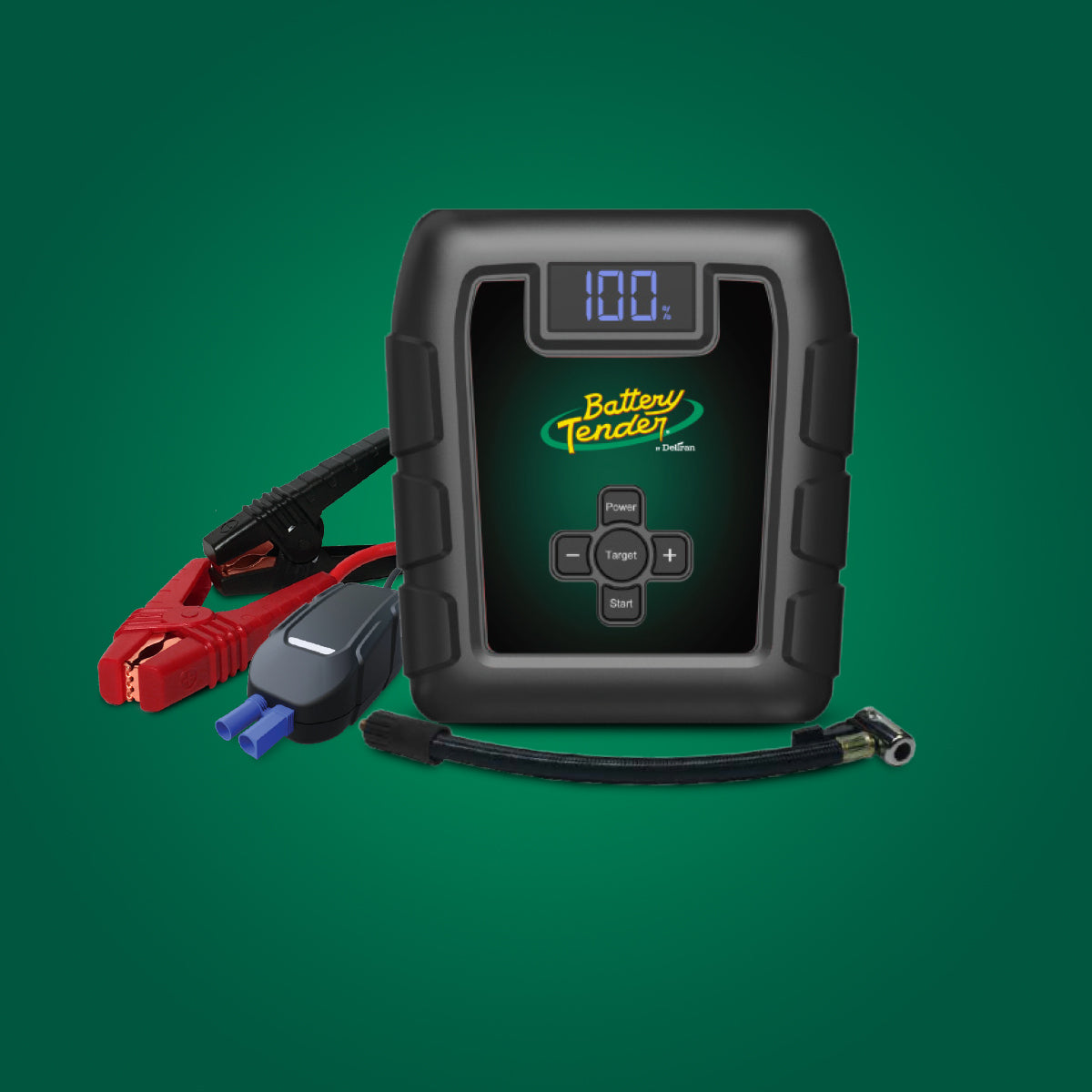
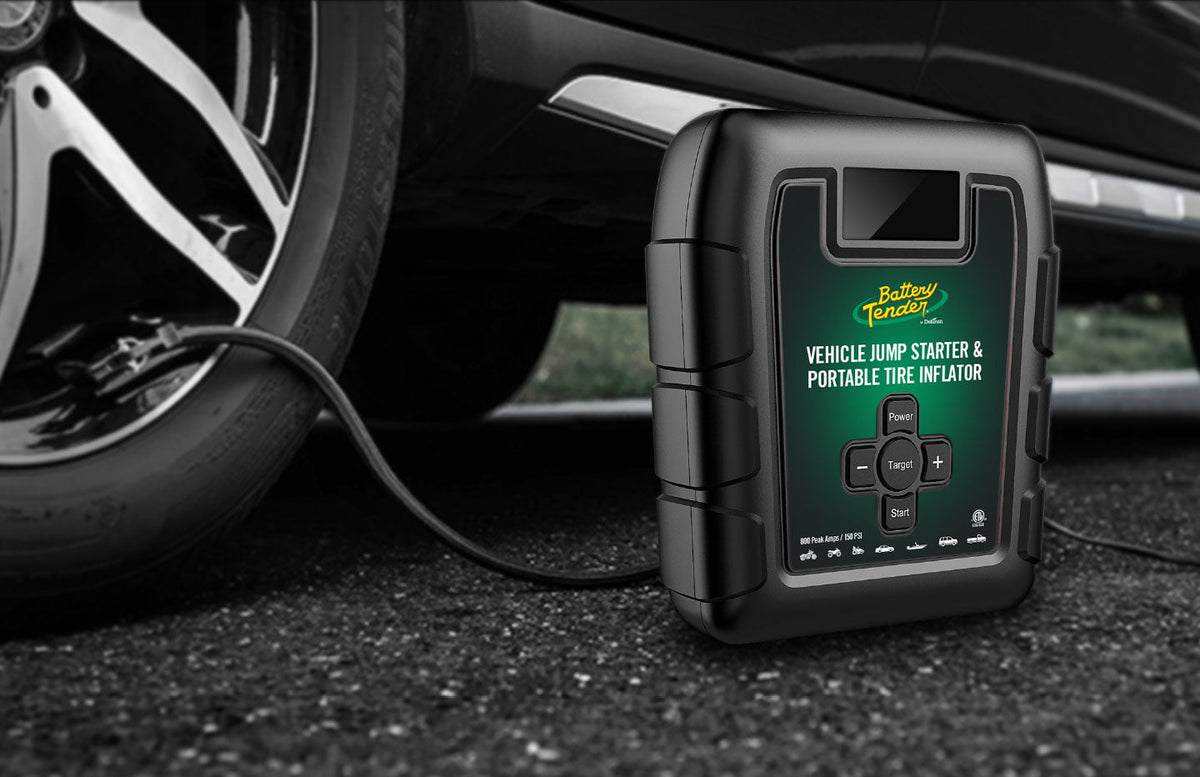
A jump starter with air compressor puts a lithium starting pack and a 12V tire inflator in one case, and both functions draw from the same internal cells. The compressor suits top-offs of 3 to 10 PSI. Every minute it runs spends charge you may need to start the engine.
Most guides compare models. This one covers how to use the compressor function: how much inflating one charge supports, the safe order of operations, and when a separate compressor is the better choice.
Key Takeaways
- A jump starter with air compressor shares one lithium battery between starting and inflating, so every PSI added spends reserve capacity.
- A pack rated near 7,200 mAh stores roughly 27 Wh, enough for about 8 to 10 minutes of real inflating at best.
- Set tire pressure cold, to the door-jamb placard value, never the sidewall maximum.
- Combination units are typically rated around 800A. Larger gas V8s and diesels need 1,200A to 2,000A, so they pair better with a properly sized jump starter and a separate compressor.
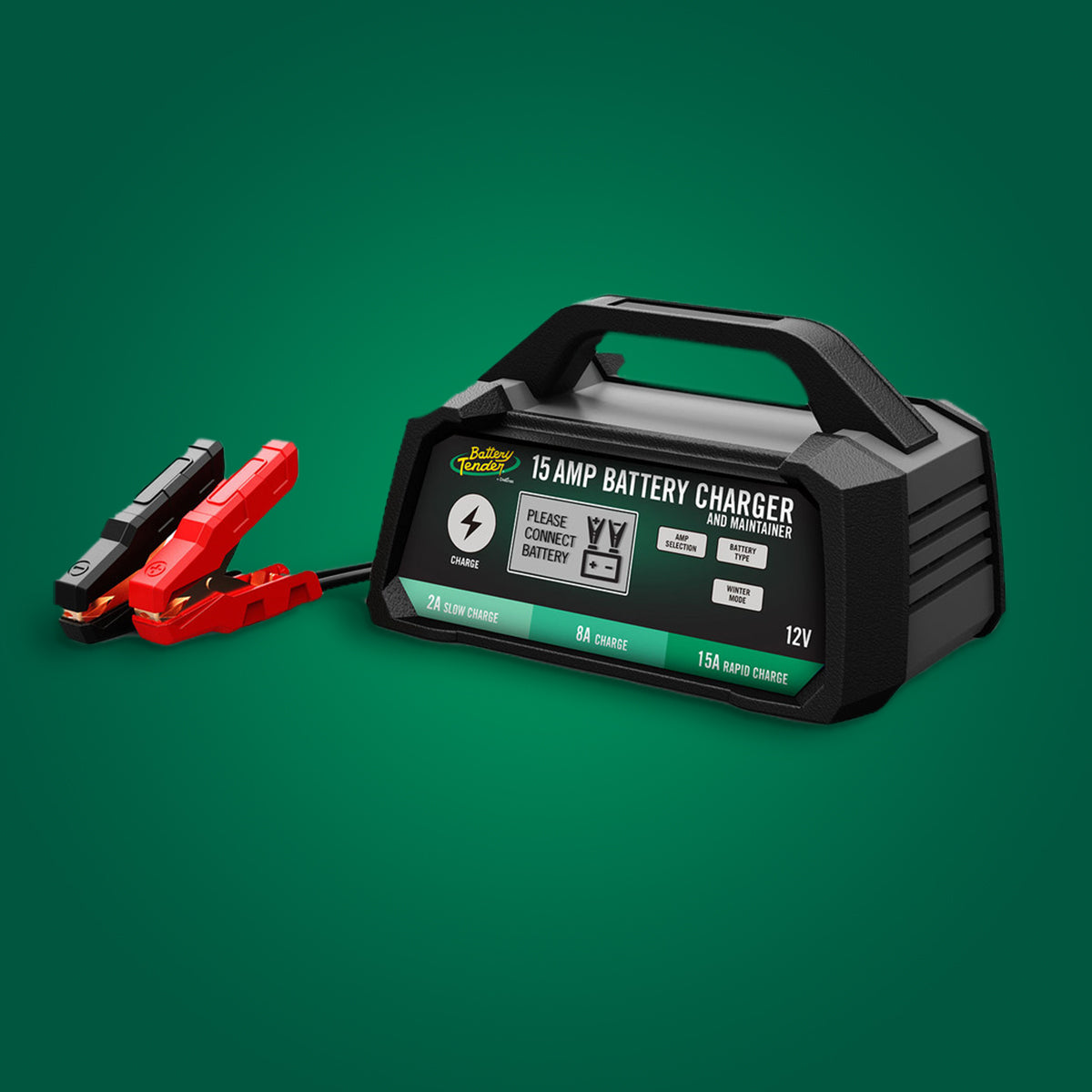
- The Battery Tender® Charge N Start 1120 combines a 1A battery charger with a 1,200A lithium jump starter. It has no built-in inflator.
How Does a Jump Starter with Air Compressor Work?
A jump starter with air compressor runs a small DC pump from the same lithium cells that supply starting current. The pump draws far less current than a cranking load, but it runs for minutes instead of seconds.
One Battery, Two Jobs
Starting is a short burst. A starter motor pulls several hundred amps for two to five seconds. A compressor pulls a modest, steady current, typically around 10A at 12V, for several minutes. That steady draw is what empties the pack.
The Energy Budget
Pack capacity is usually quoted in mAh at the cell voltage of about 3.7V. A pack rated near 7,200 mAh therefore stores about 7.2 Ah × 3.7V = 26.6 Wh. A compressor drawing 10A at 12V uses 120W. Divide 26.6 Wh by 120W and the theoretical ceiling is about 13 minutes. Conversion losses and a reserve for starting shrink that to roughly 8 to 10 minutes of usable inflating.
Check the pack indicator while inflating. Stop when it falls to about half. A starting pack with a flat reserve cannot do its main job.
How Much Air Can a Jump Starter with Air Compressor Deliver?
Expect to top off one or two tires per charge cycle, not to fill a flat from zero. Flow rate is low, and most portable pumps need cooling pauses.
| Task | Typical target | Approximate time |
|---|---|---|
| Passenger tire top-off, 3 to 5 PSI low | 32 to 36 PSI | 1 to 3 minutes |
| Passenger tire, 10 PSI low | 32 to 36 PSI | 3 to 5 minutes |
| Light-truck or SUV tire, 10 PSI low | 35 to 45 PSI | 4 to 7 minutes |
| Motorcycle or ATV tire | 12 to 30 PSI | under 2 minutes |
| Bicycle tire | 40 to 100 PSI | 1 to 2 minutes |
Times are approximate and vary with compressor flow rate and tire volume. Check the manual for the duty cycle. Many small compressors call for a cooling pause after about 10 minutes of running.
Cold weather adds one more factor. Tire pressure drops about 1 PSI for every 10°F of temperature decline. A tire that read 35 PSI at 70°F reads about 30 PSI at 20°F. Inflating in a cold garage and driving into warmer air leaves the tire slightly high, which is normal.
How to Use a Jump Starter with Air Compressor, Step by Step
Check the pack, set up the pump, and inflate in short bursts. Keep the jump clamps stowed throughout inflation.
- Read the placard. Find the recommended cold pressure on the driver-door jamb. Ignore the maximum printed on the sidewall.
- Check the pack. Confirm at least 75% charge before inflating. If the vehicle will not start, jump it first and inflate afterward.
- Park and set the brake. Move the vehicle so the hose reaches the valve stem without stretching.
- Connect the hose. Thread the chuck onto the valve stem and lock the lever or tighten the thread.
- Set the target PSI. Models with a digital gauge stop automatically. Without one, inflate in 30-second bursts and verify with a separate gauge.
- Inflate and pause. Run the pump, then stop to read pressure. Do not run past the duty cycle in the manual.
- Disconnect and recheck. Remove the chuck quickly to limit air loss. Replace the valve cap.
- Recharge the pack. Plug the unit in after use so the next emergency starts with a full pack.
Do not inflate beyond the pressure rating of the tire or the pump. Stop immediately if the hose, chuck, or case becomes very hot.
Sizing a Jump Starter with Air Compressor by Engine
Choose starting power first, because the compressor is a secondary function. Undersized cranking amps fail at the moment you need them most.
| Vehicle | Engine size | Recommended starting power |
|---|---|---|
| Motorcycle, ATV, mower | Small engines | 600A |
| Compact car | Up to 4.0L gas / 2.0L diesel | 800A |
| Sedan, SUV, boat | Up to 6.0L gas / 4.0L diesel | 1,000 to 1,200A |
| Full-size truck | Up to 7.0L gas / 5.5L diesel | 1,500A |
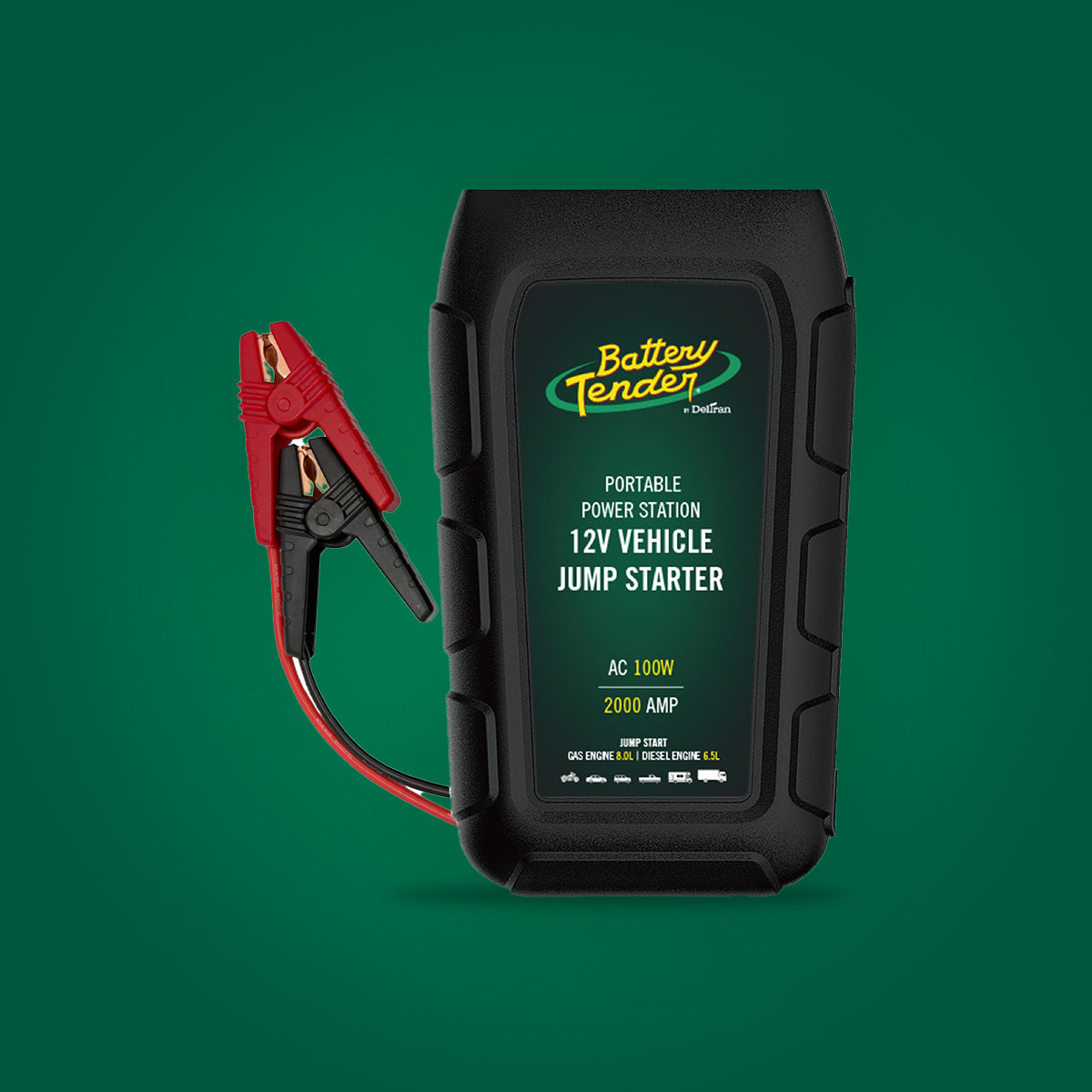
| Heavy diesel, large V8 | Up to 8.0L gas / 6.5L diesel | 2,000A |
The Battery Tender Jump N Start 800 Amp Jump Starter and Tire Inflator carries a 140 PSI inflator and covers engines up to 4.0L gas or 2.0L diesel. A truck with a 6.0L V8 or a diesel needs more starting power than that class offers. In that case, buy a properly sized jump starter and a separate 12V compressor that plugs into the vehicle outlet. The comparison of 600A, 800A, 1500A, and 2000A portable jump starters explains each tier. For the full buying checklist, see the guide to the best car jump starter with air compressor.
Why Battery Tender Charge N Start Is the Smarter Upgrade from a Jump Starter with Air Compressor
A jump starter with air compressor solves two roadside problems but does nothing for the cause of the most common one: a battery that discharged while parked. A Battery Tender Charge N Start unit addresses both the emergency and the cause.
The Battery Tender Charge N Start 1120 — 1 Amp Battery Charger & 1200 Amp Jump Starter fits mid-size cars, SUVs, and boats with engines up to 6.0L gas or 4.0L diesel. Its internal pack is lithium-ion, and the charger section supports 12V standard flooded, AGM, GEL, and lithium batteries. The Charge N Store feature keeps the internal pack topped off between uses, and SafeGuard protection prevents backfeed.
The limitation: the Battery Tender Charge N Start 1120 has no air compressor. Pair it with a plug-in 12V inflator for tire work. That reserves the full internal pack capacity for starting.
Charging Math for the 1A Output
The charging time formula is (battery Ah × depth of discharge) ÷ charger amps. A 40Ah AGM battery that is 50% discharged needs (40 × 0.5) ÷ 1 = 20 hours at 1A. The 1A output is designed for maintenance and gradual recovery. For fast recovery of a large, deeply discharged battery, use a higher-amp charger.
For safe connection technique with protected clamps, see the automatic jump starter guide. Browse the full lineup in the Battery Tender jump starter collection.
Keeping a Jump Starter with Air Compressor Ready
A lithium pack loses charge slowly in storage, but a pack that sits for a year is often below the level needed for a safe start. A simple schedule prevents that.
- Every 90 days: Check the indicator and top off to 100%.
- After every use: Recharge fully, especially after inflating.
- Storage location: Keep the pack in the cabin or garage, away from direct sun. Avoid long storage in a hot trunk, since heat accelerates lithium cell aging.
- Cold weather: Bring the pack indoors on extremely cold nights, and warm it before charging.
- Hose and chuck: Inspect for cracks every season. Replace worn parts before the next trip.
Test the inflator twice a year on a bicycle tire or a spare. A pump that has sat unused can seize its seals.
Frequently Asked Questions
Can a jump starter with air compressor fully inflate a flat tire?
Usually not from zero. A small pump can add 10 to 15 PSI across several minutes, but the battery reserve and duty cycle limit it. Use it to restore a slow leak enough to drive to a shop, then repair the tire. A full fill is a job for a dedicated compressor.
Does using the air compressor drain the jump starter?
Yes. The pump runs from the same lithium cells that supply starting current. A pack near 7,200 mAh stores about 27 Wh, so ten minutes of inflating can consume most of it. Stop at about half charge and recharge the unit afterward.
Can a jump starter with air compressor start a diesel truck?
Only if the starting rating suits the engine. Combination units are generally sized for engines up to 4.0L gas or 2.0L diesel. Full-size trucks, large V8s, and heavy diesels need 1,500A to 2,000A, so buy a larger jump starter and a separate 12V compressor.
Is it safe to inflate tires with the jump clamps connected?
Do not connect the clamps during inflation. Keep them stowed and the jump function idle. Connecting clamps to a battery while a pump runs adds no benefit and creates a spark and short-circuit risk. Use each function separately.
How often should a jump starter with air compressor be recharged?
Recharge it after every use and at least every 90 days in storage. Lithium packs hold charge for months, but a pack drained by inflating needs a full recharge before it can be trusted for an emergency start.
Conclusion
A jump starter with air compressor is convenient for top-offs and emergencies, but it works best when its limits are clear: about 8 to 10 minutes of inflating, starting power sized to the engine, and a recharge after every use. For the strongest setup, pair a Battery Tender Charge N Start unit with a plug-in 12V inflator so the pack stays full for starting. Next step: match your engine size to the sizing table above, then compare options in the Battery Tender jump starter collection.