

Best Battery Jumper (2026): Battery Tender® Jump N Start Guide
The best battery jumper for most drivers is a lithium jump starter rated for your engine size, because it starts a dead battery without a donor vehicle and protects against reversed clamps. Jumper cables still work, but only with a running second vehicle nearby.
A dead battery is rarely random. It usually follows a short trip, a cold night, or weeks of storage. Choose a jumper by three factors: engine displacement, peak amps, and how often you expect to need it. This guide covers sizing, safety features, step-by-step use, and how to keep the next jump from being necessary.
Key Takeaways
- A lithium jump starter beats jumper cables for solo use, safety, and convenience.
- Match peak amps to engine size: 600A for small engines, 1500A for V8 trucks and SUVs, 2000A for large diesels.
- Reverse-polarity and short-circuit protection matter more than the peak-amp number on the box.
- A jump fixes the symptom. A smart maintainer fixes the cause, which is usually sulfation from undercharging.
- A jump starter that is stored cool and recharged every few months will work when needed.
What Makes the Best Battery Jumper in 2026?
The best battery jumper is the one that works when the battery is dead, nobody is around, and the weather is bad. That favors a self-contained lithium jump starter over cables. The table shows the practical differences.
| Factor | Jumper Cables | Lithium Jump Starter |
|---|---|---|
| Needs a second vehicle | Yes | No |
| Reverse-polarity protection | None | Built into smart clamps |
| Risk to donor vehicle electronics | Voltage spikes possible | None, because no donor vehicle is involved |
| Typical storage footprint | Bulky coil | Compact, fits a glove box or seat bag |
| Upkeep | None | Recharge every few months |
| Extra uses | None | USB power bank, some with inflator or inverter |
When Jumper Cables Still Make Sense
Cables cost little and never need charging. They are a reasonable backup in a garage where a second car is always within reach. They are a poor primary tool for solo drivers, riders, boaters, or anyone parked in a remote lot.
Cable quality varies widely. Thin-gauge cables overheat on large engines and deliver less current at the clamp. A jump starter avoids that problem because the current path is short and fixed.
Sizing the Best Battery Jumper to Your Engine
Size the jump starter to the largest engine you will ever start with it. Peak amps matter, but engine displacement and fuel type are the better guide, and diesels need more current than gas engines of the same size. The ratings below come from the Battery Tender Jump N Start lineup.
| Application | Engine Range | Recommended Rating | Battery Tender Model |
|---|---|---|---|
| Motorcycle, ATV, mower, small engines | Up to 4.0L gas / 2.0L diesel | 600A | Battery Tender Jump N Start 600 Amp (6,400 mAh) |
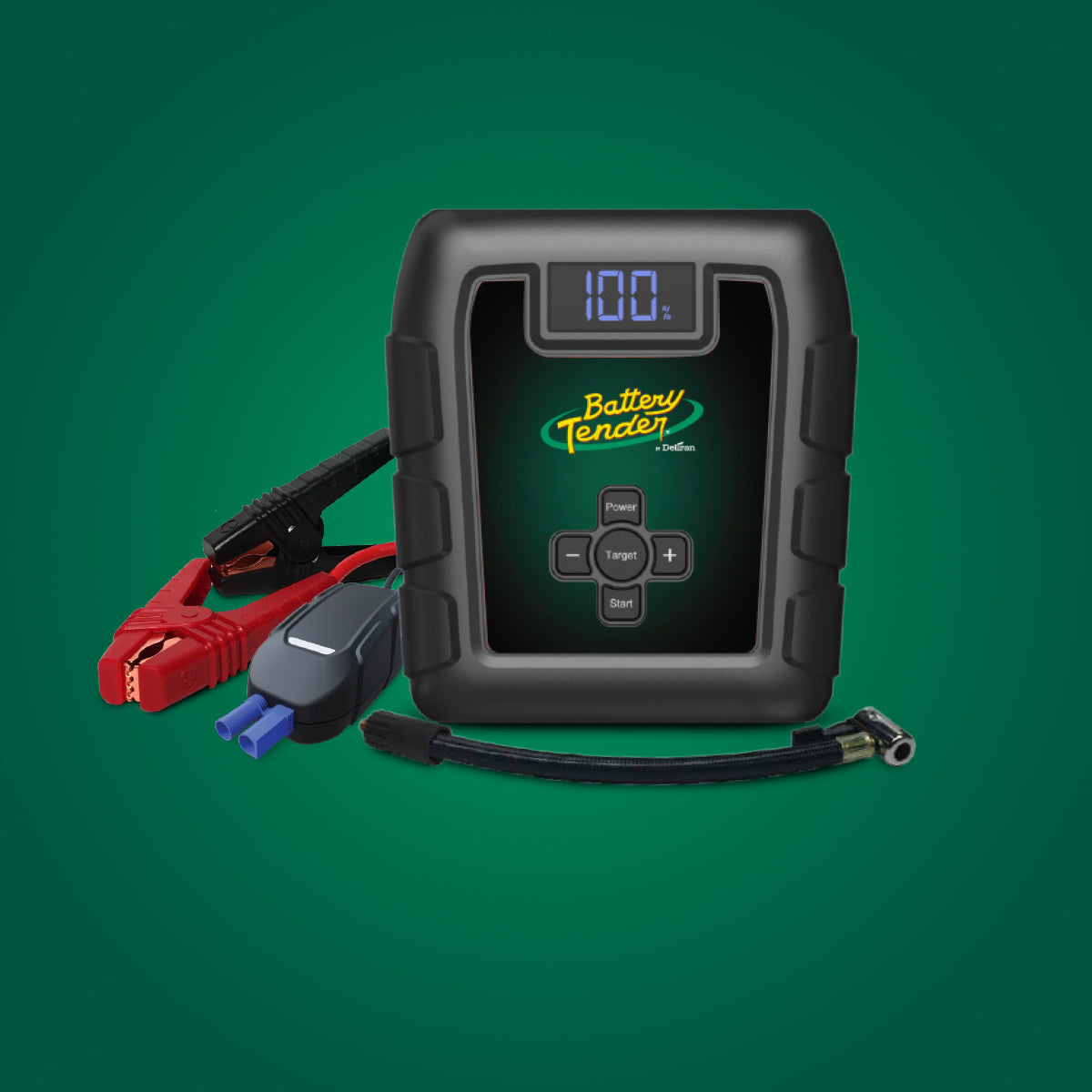
| Compact car or crossover, tire emergencies | Up to 4.0L gas / 2.0L diesel | 800A | Battery Tender Jump N Start 800 Amp with inflator |
| Full-size SUV, V8 pickup, boat | Up to 7.0L gas / 5.5L diesel | 1500A | Battery Tender Jump N Start 1500 Amp (12,000 mAh, about 40 starts) |
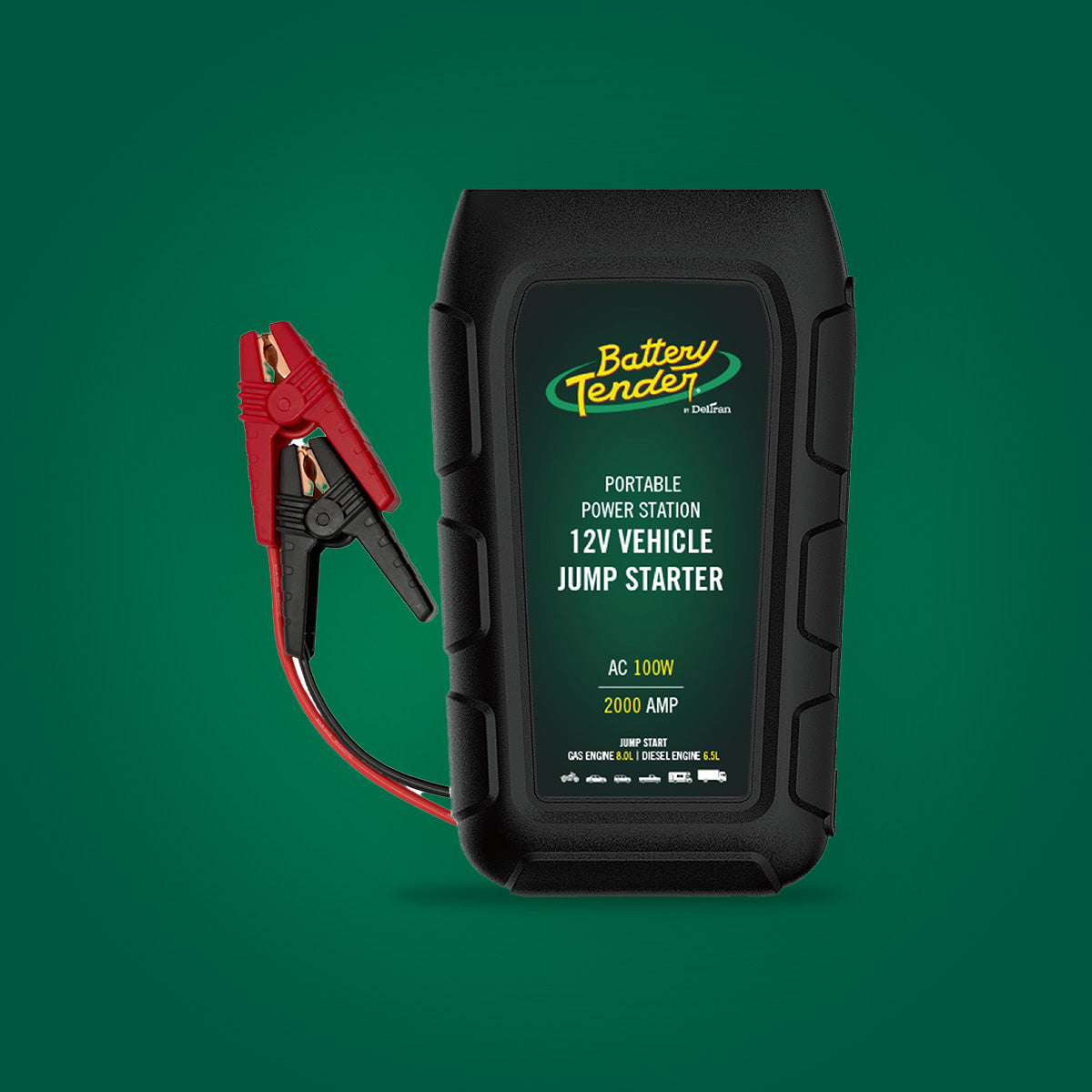
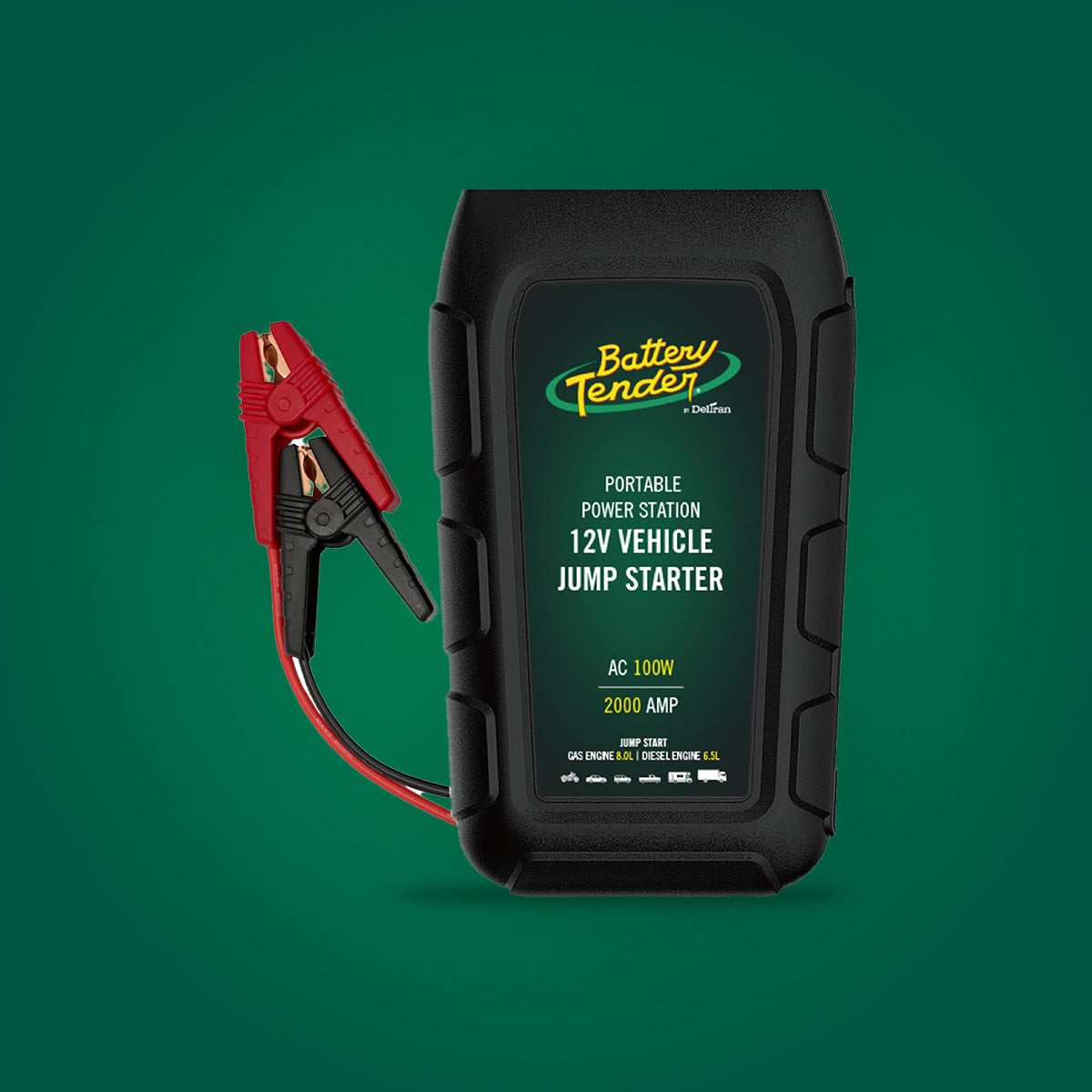
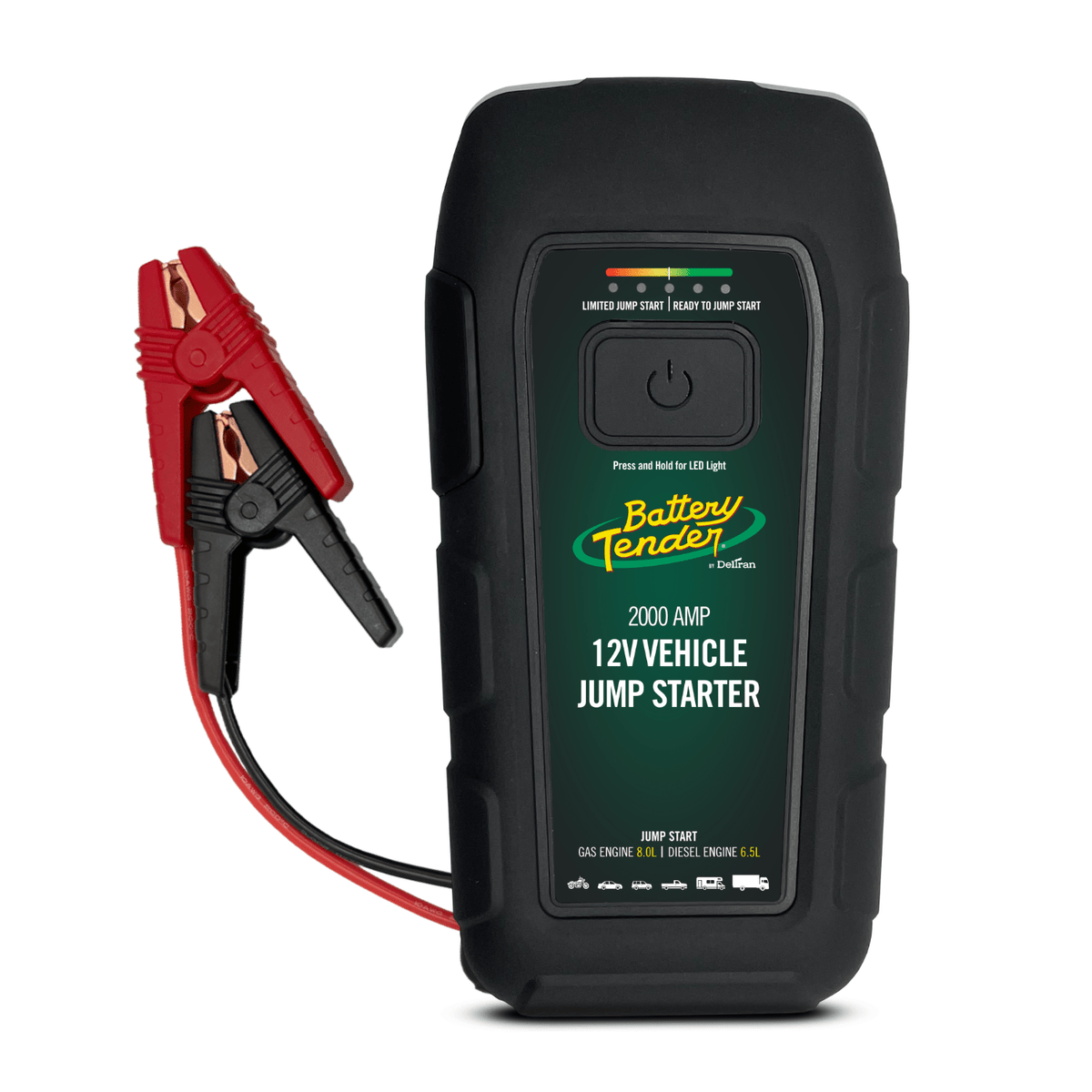
| Heavy diesel, large RV, farm equipment | Up to 8.0L gas / 6.5L diesel | 2000A | Battery Tender Jump N Start 2000 Amp (16,000 mAh, about 50 starts) |
Move up one tier if winters regularly drop below 20°F. Cold thickens engine oil and cuts battery output, so cranking demand rises exactly when available power falls. Diesel owners should read the diesel truck battery maintenance guide for dual-battery specifics.
For a full side-by-side of the four ratings, see the portable jump starter comparison. Oversizing is safe. A 1500A unit starts a small engine without trouble, while an undersized unit may fail to turn over a large one.
Safety Features and Lithium Chemistry in the Best Battery Jumper
Safety protection is what separates a good jump starter from a risky one. Lithium-ion packs store a lot of energy in a small case, so the electronics managing that energy deserve as much attention as the peak-amp figure. Look for these features before buying:
- Reverse-polarity protection: blocks current if the clamps are connected backward.
- Short-circuit protection: prevents sparking if the clamps touch.
- Over-discharge and overcharge protection: protects the lithium cells and extends pack life.
- Smart clamps with status indicators: confirm a safe connection before power flows.
- Quality-rated cells: a 12,000 mAh rating means little if the cells cannot deliver current in cold weather.
Safety note: Never jump a battery that is cracked, leaking, or frozen. Keep sparks and flames away, because charging batteries can release hydrogen gas. Store the jump starter indoors or in the cabin, not in a trunk baking in summer heat.
Lithium has trade-offs. Output drops in extreme cold, so a pack kept in a freezing garage may need warming before use. A pack left uncharged for a year may not deliver full power. Neither problem is serious if the pack gets a recharge every few months.
Where the Battery Tender Jump N Start 1500 Amp Bundle Fits
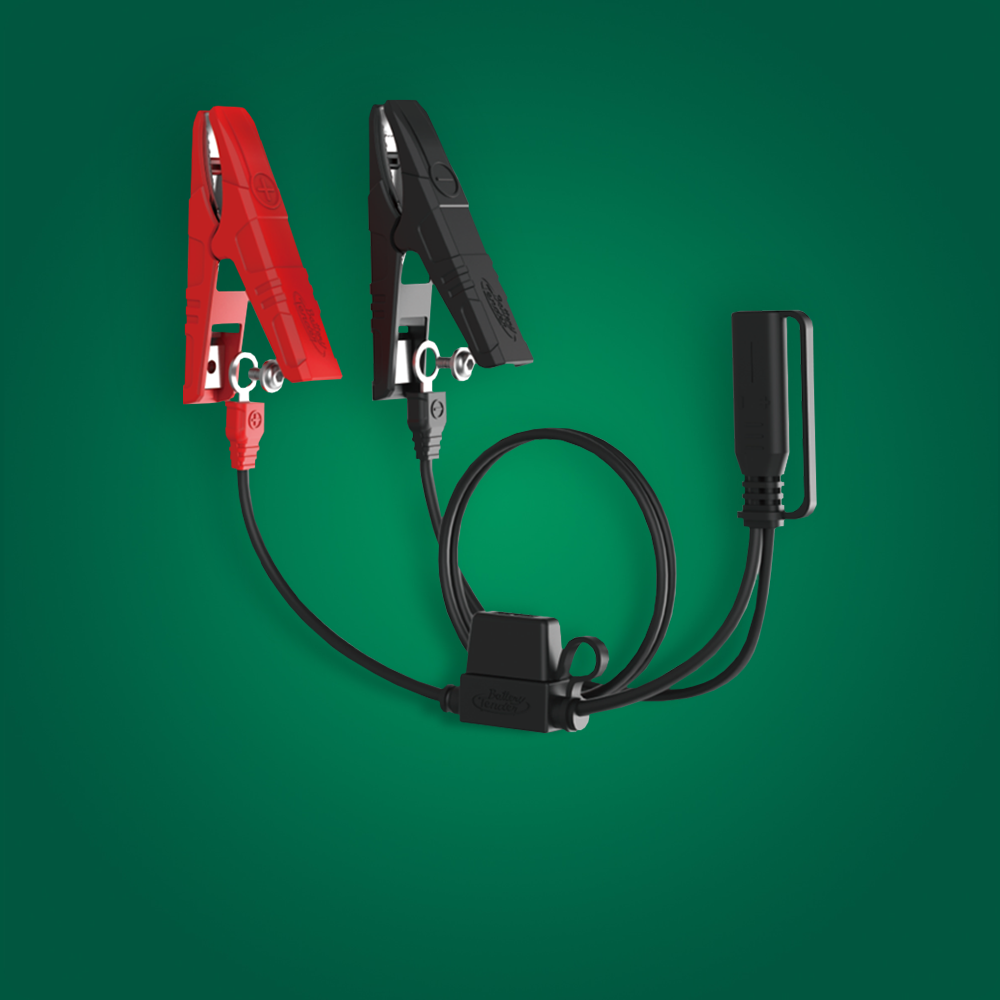
The 1500 amp rating covers engines up to 7.0L gas and 5.5L diesel. That handles most SUVs, V8 pickups, boats, and the trailer-towing rigs where a dead battery is hardest to deal with. The bundle includes a ring terminal cable that stays attached to the battery. Connecting to it takes seconds, with no clamp fumbling under a hood or seat. That suits motorcycles, ATVs, and powersports vehicles where battery access is awkward.
Battery Tender Jump N Start 1500 Amp Motorcycle and Powersports Bundle
Some drivers want one device that both jump-starts and maintains. The Battery Tender Charge N Start line combines a smart charger with a lithium-ion jump pack. The 1100 model pairs a 1A charger with a 1,000A jump pack (up to 5.0L gas / 3.0L diesel). The 1120 model pairs a 1A charger with a 1,200A pack (up to 6.0L gas / 4.0L diesel). The 4120 model pairs a 4A charger with the same 1,200A pack for trucks and RVs. The charger section handles standard, AGM, GEL, and lithium 12V batteries, and Battery Tender Charge N Store technology keeps the internal pack topped off. The Battery Tender Charge N Start complete guide explains how to choose among the three.
Jump-Start Steps, Then Stop the Next Dead Battery
Follow the same sequence every time. It keeps the connection safe and protects the vehicle electronics.
- Turn everything off. Switch off the ignition, lights, radio, and climate control.
- Check the jump starter charge. Confirm the indicator shows enough power before connecting.
- Connect red to positive. Attach the red clamp to the battery positive (+) terminal.
- Connect black to ground. Attach the black clamp to the battery negative (–) terminal or a clean unpainted metal ground point on the engine.
- Confirm the safe indicator, then start the engine within a few seconds.
- Disconnect in reverse order. Remove the black clamp first, then the red clamp.
- Drive or charge. A 20 to 30 minute drive helps, but it does not fully recharge a deeply discharged battery.
Why Batteries Keep Dying
A battery that needs repeated jumps is usually sulfated or chronically undercharged. Lead sulfate crystals form when a battery sits partly discharged. Short trips, cold weather, and storage all contribute. Preventing sulfation costs far less than replacing a battery every two to three years.
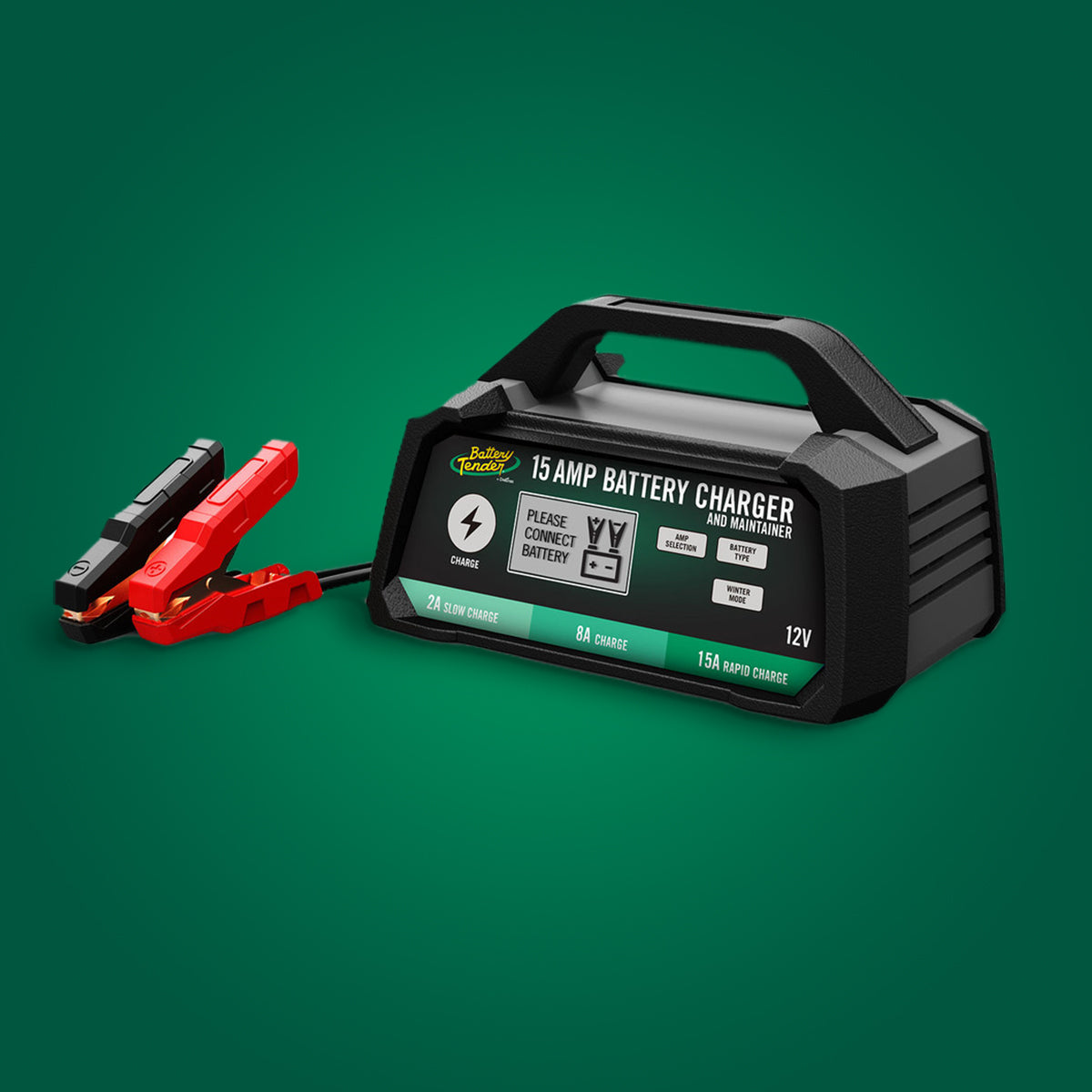
Battery Tender smart chargers use Infinite Sequential Monitoring (ISM), a four-stage process: Initialization tests the battery, Bulk delivers full rated current up to roughly 80% charge, Absorption holds voltage constant while current tapers, and Float Maintenance sends demand-responsive pulses only when voltage drops. That makes a Battery Tender charger safe to leave connected indefinitely. Conventional trickle chargers push constant current regardless of battery state and can overcharge. Float-only chargers hold constant voltage and skip the Absorption stage, so they recover batteries more slowly. Battery Tender ISM maintenance is designed to stretch typical battery life from two to three years toward five or more by preventing sulfation.
Pick the maintainer by battery size:
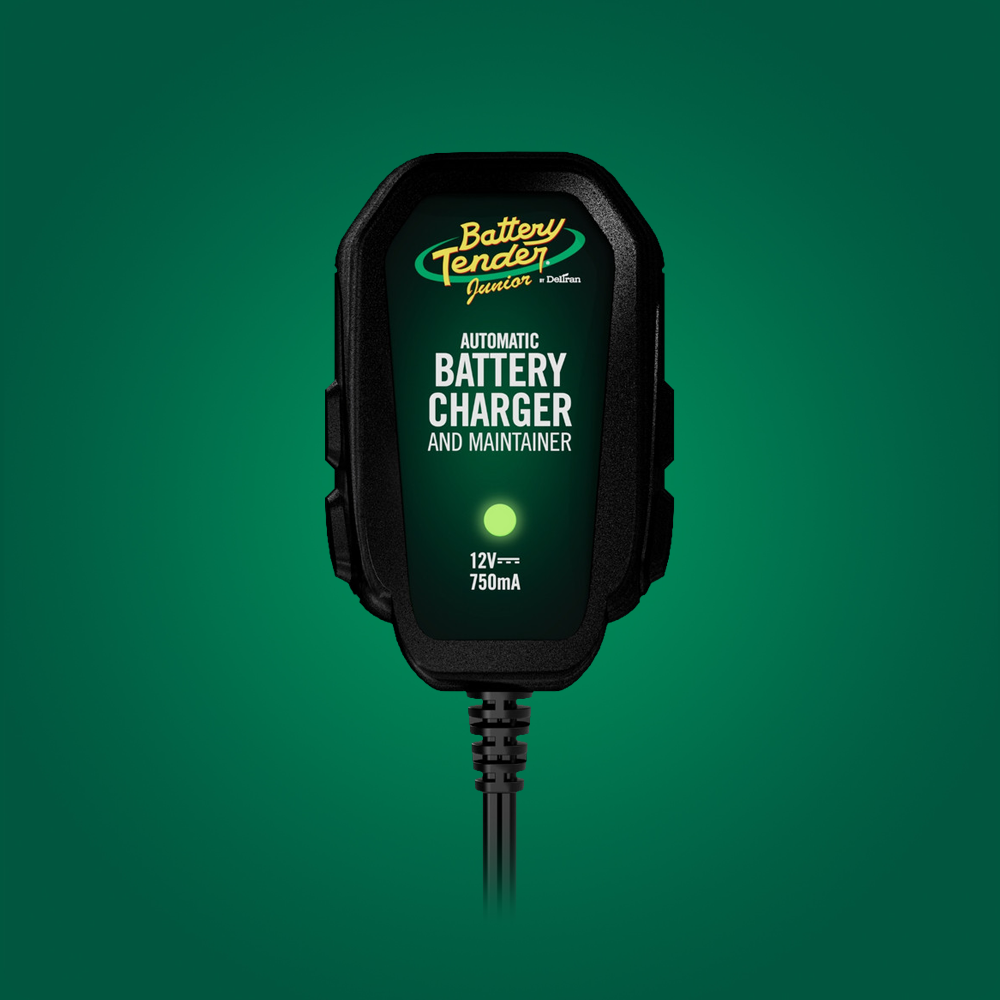
- Battery Tender Junior: powersports batteries from 2 to 30Ah. It does not include temperature compensation.
- Battery Tender Plus: batteries from 14 to 80Ah, motorcycles through cars. Nearly all Battery Tender chargers include temperature compensation to adjust for charging in extreme heat or cold.
- Battery Tender Charge N Start 4120: a 4A charger for larger batteries, with a jump pack included.
Use the charging-time formula to plan. A 50Ah battery at 50% discharge holds 25Ah to replace. On a 1.25A maintainer, that is about 20 hours. On a 4A charger, a 60Ah battery at 50% needs 30Ah, or roughly 7.5 hours. Real-world times run slightly longer because of charging losses.
Frequently Asked Questions
What is the best battery jumper for a car?
For most cars, the best battery jumper is a lithium jump starter rated 800 to 1500 peak amps. Choose 800A for engines up to 4.0L gas and 1500A for SUVs and V8 trucks up to 7.0L. Reverse-polarity protection and smart clamps matter more than extra peak amps.
Is a jump starter better than jumper cables?
For solo drivers, yes. A jump starter needs no second vehicle, protects against reversed clamps, and carries no risk of voltage spikes to a donor car. Jumper cables cost less and need no charging, but they only work when another running vehicle is available and positioned correctly.
How many amps do I need to jump-start a truck?
Gas trucks with engines up to 7.0L generally need 1500 peak amps. Diesel trucks up to 5.5L fit the same rating, while larger diesels up to 6.5L need 2000 amps. In temperatures below 20°F, move up one rating, because cold raises cranking demand.
How often should I recharge a lithium jump starter?
Check the charge level every three to four months and top it off when it drops. Store it indoors or in the cabin, away from extreme heat. A pack that sits fully discharged for months can lose capacity and may not deliver full starting power.
Can a jump starter replace a battery maintainer?
No. A jump starter delivers a short burst to start the engine but does not restore a discharged battery or prevent sulfation. A smart maintainer such as the Battery Tender Plus keeps the battery fully charged between uses, which reduces the need for jumps in the first place.
Conclusion
The best battery jumper is a lithium jump starter sized to the largest engine you drive, with reverse-polarity protection and a recharge routine you actually follow. Add a maintainer to stop the sulfation that causes repeat failures. Start with the Battery Tender Jump N Start 1500 Amp Motorcycle and Powersports Bundle, then browse the full Battery Tender charger lineup to pair it with the right maintainer.