


Electric Vehicle Charger Guide: Size kW, Amps, and Miles (2026)
The right electric vehicle charger replaces the miles you drive each day during the hours the car sits parked. Divide daily miles by the charger's miles-per-hour rating. A 40-mile day takes about 5.6 hours on a 16A Level 1 unit rated at 7.2 mi/hr, but only about 1.1 hours on a 40A Level 2 unit rated at 36 mi/hr.
Most buyers compare brands and features before they know their own numbers. This guide reverses that order: it covers how the equipment works, how to turn kilowatts into miles, and how to size the circuit behind the unit. The Battery Tender® brand pioneered smart charging in 1989, and that experience extends to the 12V auxiliary battery that every electric car still carries. The final sections cover that second battery and a six-step buying checklist.
Key Takeaways
- An electric vehicle charger is a safety-controlled power supply. The car's onboard charger does the actual AC-to-DC conversion and sets the speed ceiling.
- Charging speed in miles per hour is roughly kW × 3.75 for an efficient car. Heavy trucks and SUVs get closer to 2 to 2.5 miles per kWh.
- A continuous load needs a breaker rated at 125% of charger amps: 40A breaker for 32A, 50A for 40A, 60A for 48A.
- Most drivers cover a typical day with a Level 2 unit in 1 to 3 hours. Level 1 works only below roughly 40 miles per day.
- The 12V auxiliary battery is a separate system and needs its own maintainer during long parking periods.
How Does an Electric Vehicle Charger Work?
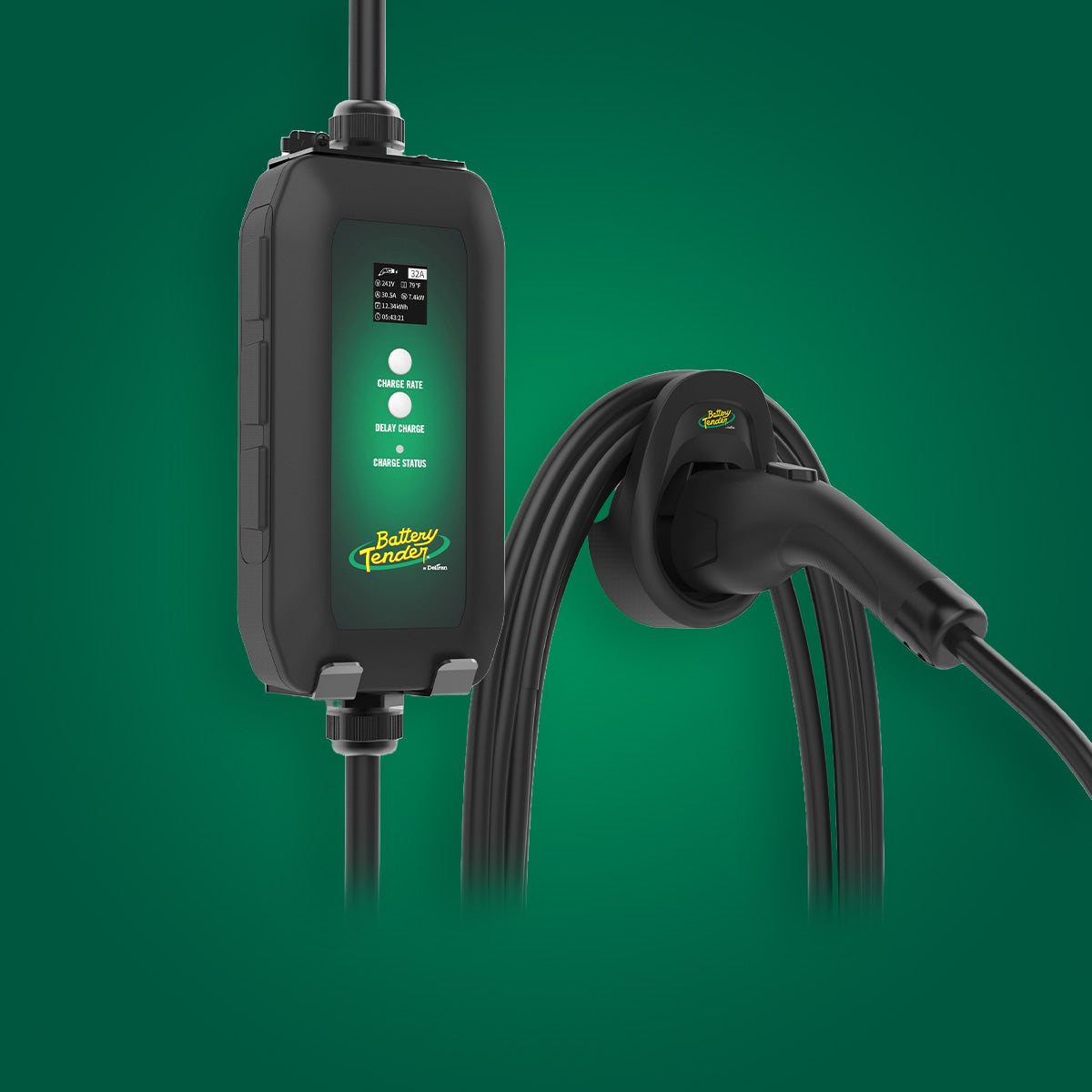
An electric vehicle charger (formally called EVSE, or electric vehicle supply equipment) does not charge the battery directly. It safely delivers AC power to the car, and the onboard charger inside the vehicle converts that power to DC for the traction pack. The wall unit's main jobs are communication, ground-fault protection, and switching power on only after the car confirms a secure connection.
The unit signals its maximum available current to the car through a pilot signal defined in the SAE J1772 standard. The car then draws up to the lower of two numbers: what the charger offers or what the onboard charger accepts.
Level 1 vs. Level 2
- Level 1: 120V standard outlet, 12A to 16A, roughly 1.4 to 2 kW. No installation, but slow.
- Level 2: 240V, 16A to 48A, roughly 3.8 to 11 kW. Requires a dedicated circuit installed by a licensed electrician.
- DC fast charging: bypasses the onboard charger entirely. It is public infrastructure, not a home product.
The Onboard Charger Sets the Ceiling
Many vehicles accept 7.2 kW to 11.5 kW of AC power. A 48A wall unit cannot push an 11 kW load into a car with a 7.2 kW onboard charger. Check the owner's manual for the maximum AC charging rate before choosing amperage.
How Do You Turn kW Into Miles Per Hour of Charging?
Multiply charger power in kW by the car's efficiency in miles per kWh. The catalog ratings for Battery Tender eCharge chargers imply about 3.75 miles per kWh, which fits an efficient sedan or crossover. Trucks and large SUVs often return 2 to 2.5, so reduce the figures below by 30 to 40% for those vehicles.
| Charger Class | Voltage | Amps | Power | Approx. Miles/Hour | Hours for 40 Miles | Breaker Needed |
|---|---|---|---|---|---|---|
| Level 1 | 120V | 12A | 1.4 kW | ~5 | ~8.0 | 15A or 20A circuit |
| Level 1 | 120V | 16A | 2 kW | 7.2 | ~5.6 | 20A circuit |
| Level 2 | 240V | 32A | 7.6 kW | 28.5 | ~1.4 | 40A |
| Level 2 | 240V | 40A | 9.6 kW | 36 | ~1.1 | 50A |
| Level 2 | 240V | 48A | 11 kW | 42.25 | ~0.95 | 60A |
Match the Charger to Your Daily Miles
Use this four-step method:
- Record your daily miles. If some days run long, use the highest regular day rather than the average.
- Count the hours the car sits parked at home. A typical overnight window is 8 to 10 hours.
- Divide daily miles by parked hours to find the minimum miles per hour required.
- Choose the lowest charger class that exceeds that number with a 50% margin for cold weather, since battery heating and cabin heating reduce efficiency.
| Daily Miles | 16A Level 1 (7.2 mi/hr) | 40A Level 2 (36 mi/hr) | 48A Level 2 (42.25 mi/hr) |
|---|---|---|---|
| 30 | 4.2 hours | 0.8 hours | 0.7 hours |
| 60 | 8.3 hours | 1.7 hours | 1.4 hours |
| 120 | 16.7 hours | 3.3 hours | 2.8 hours |
| 200 | 27.8 hours | 5.6 hours | 4.7 hours |
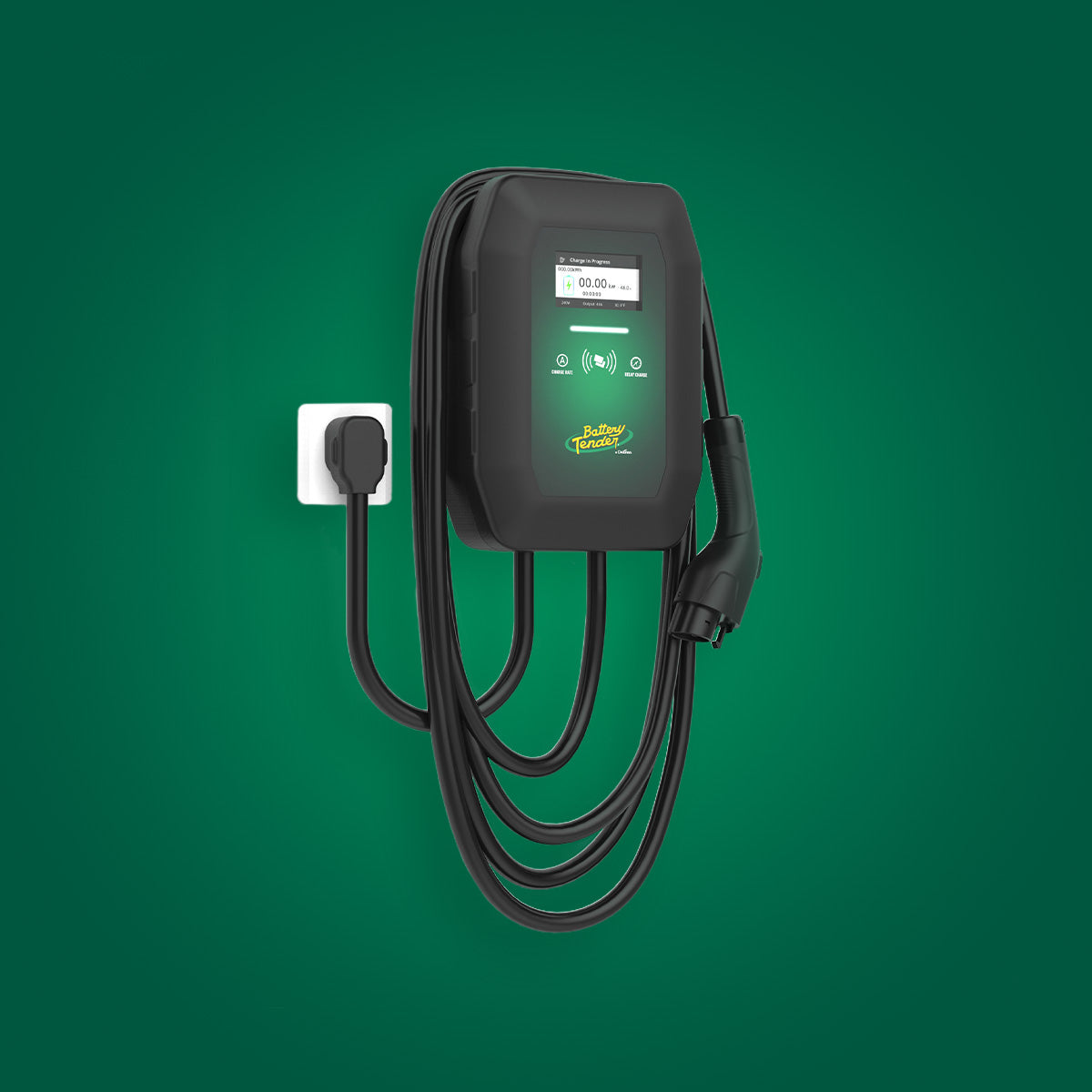
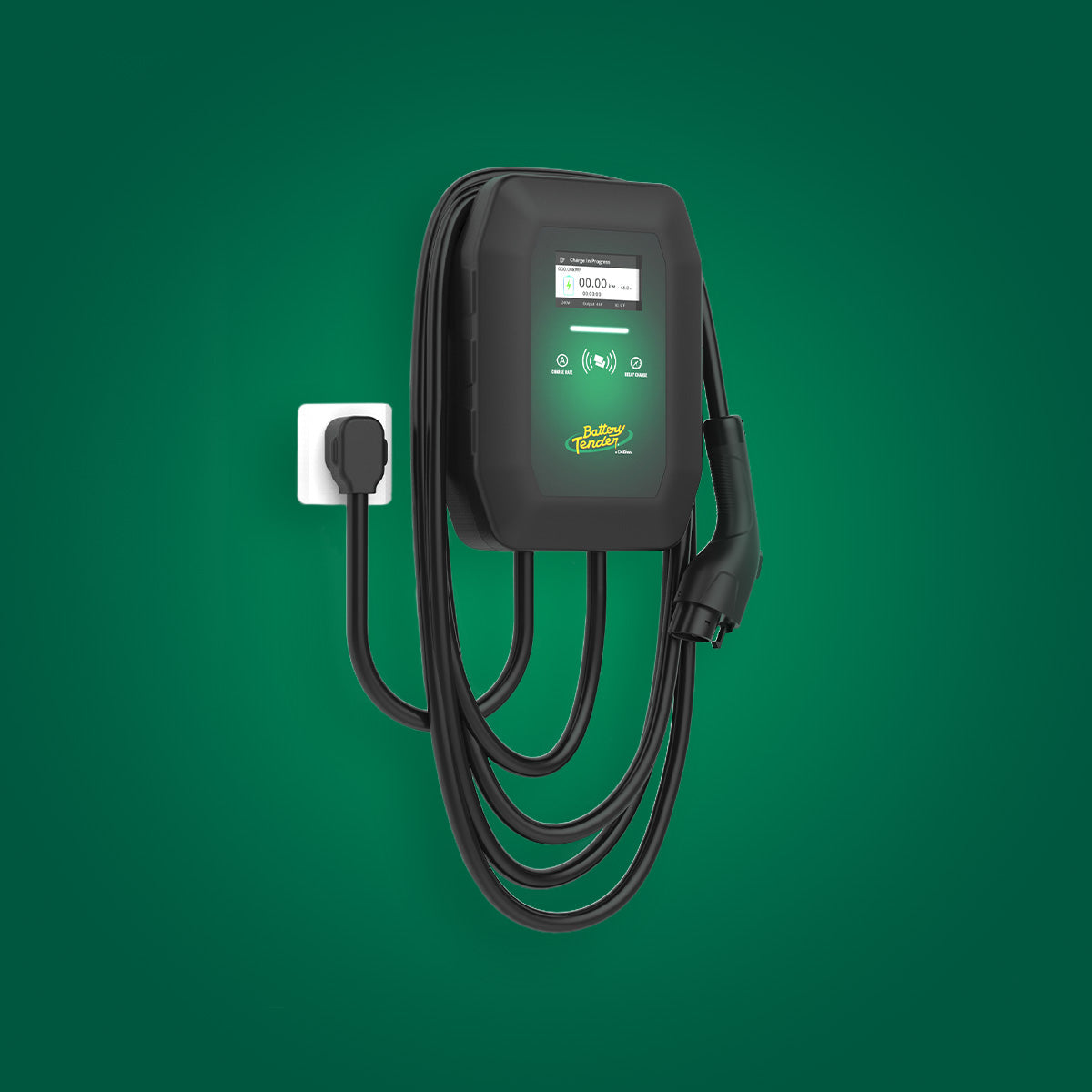
Once you apply the cold-weather margin, Level 1 stops being practical above roughly 40 miles per day. For most households, the 9.6 kW class is the sweet spot. The Battery Tender eCharge 40 Amp Level 2 EV Charger fits here: it delivers 36 mi/hr on a 240V circuit, refills a 120-mile day in about 3.3 hours, and leaves most of an overnight window unused. It is wall-mounted, carries an IP66 rating for garage or exterior walls, and includes RFID access control for shared driveways. Also available at Costco.com.
Step up when the numbers demand it. The Battery Tender eCharge 48 Amp Level 2 EV Charger delivers 11 kW and 42.25 mi/hr. It makes sense for large-pack trucks, two-car households sharing one unit, or drivers who cover 150 or more miles daily. It requires a 60A breaker, a hardwired connection (a 48A load exceeds what a NEMA 14-50 outlet supports), and a vehicle that accepts 48A. Otherwise the extra capacity goes unused.
How Do Amps, Breakers, and the 125% Rule Limit an Electric Vehicle Charger?
The circuit must be rated for 125% of the charger's continuous current, because an EV charging session counts as a continuous load (three hours or longer) under the National Electrical Code. NEC Article 625 governs EV supply equipment and requires the branch circuit and breaker to be sized at 125% of the charger's maximum load. This is why a 40A charger needs a 50A breaker.
- 32A charger: 40A breaker
- 40A charger: 50A breaker
- 48A charger: 60A breaker
Plug-in installations follow the same math. A NEMA 14-50 outlet on a 50A breaker supports 40A continuous, which matches a 40A charger exactly. A hardwired unit avoids plug wear and is often preferred for permanent installations.
Check Your Panel Before Buying
A 200A residential service often has room for a 50A or 60A circuit. A 100A service with an electric range, dryer, and water heater may not. An electrician performs a load calculation under NEC Article 220 and selects conductor size from NEC Table 310.16 based on run length and temperature rating. Permit and inspection rules vary by jurisdiction. A full walkthrough of the process is in the Level 2 home installation guide.
Safety note: never use an extension cord or undersized adapter with a Level 2 unit. Heat buildup at loose or undersized connections is a common cause of charging-related electrical faults. Look for a UL 2594 listing, the safety standard for EV supply equipment.
Why Does Every Electric Vehicle Charger Setup Still Need a 12V Maintainer?
The wall unit feeds the high-voltage pack, but the 12V auxiliary battery runs the door locks, computers, contactors, and the systems that start the car. A DC-DC converter supports the 12V system only while the car is awake or charging. A car left parked for several weeks, especially with remote-access features active, can still drain a 12V battery. A dead 12V battery means the car will not wake, even with a full traction pack.
Choosing a Maintainer
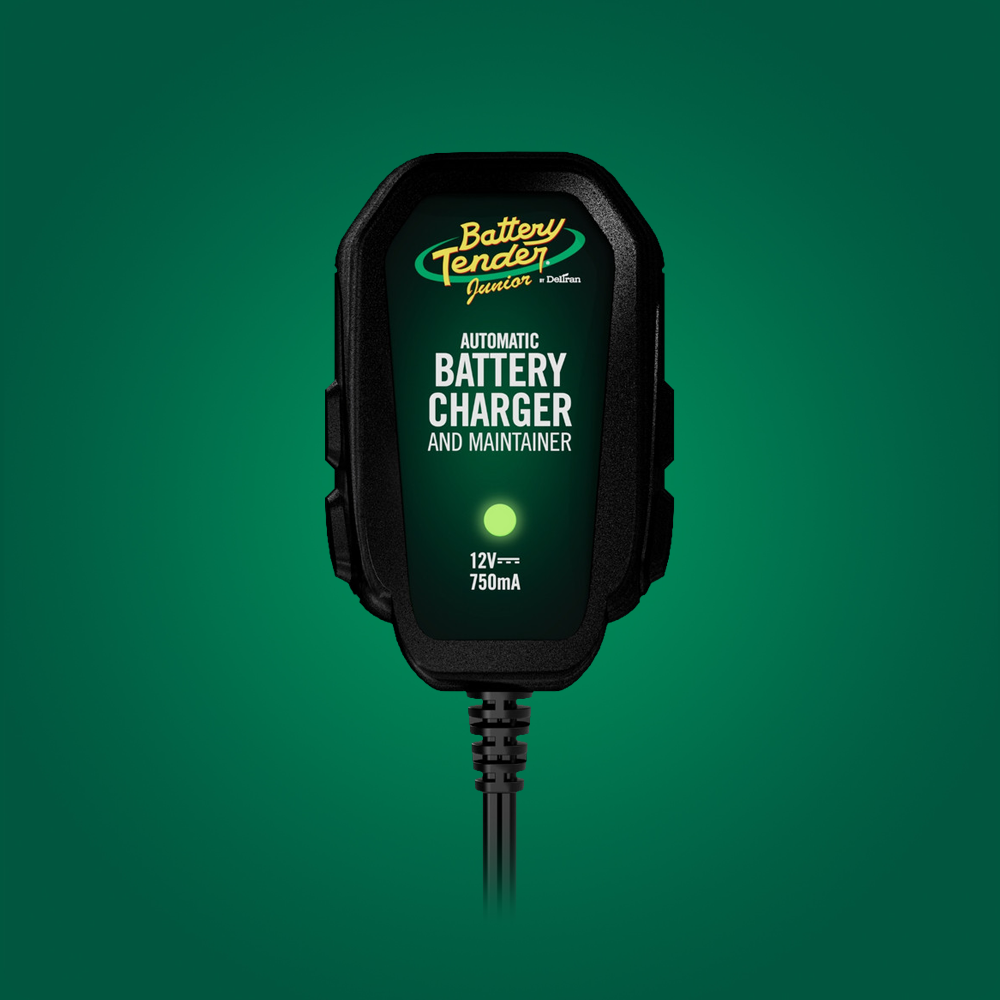
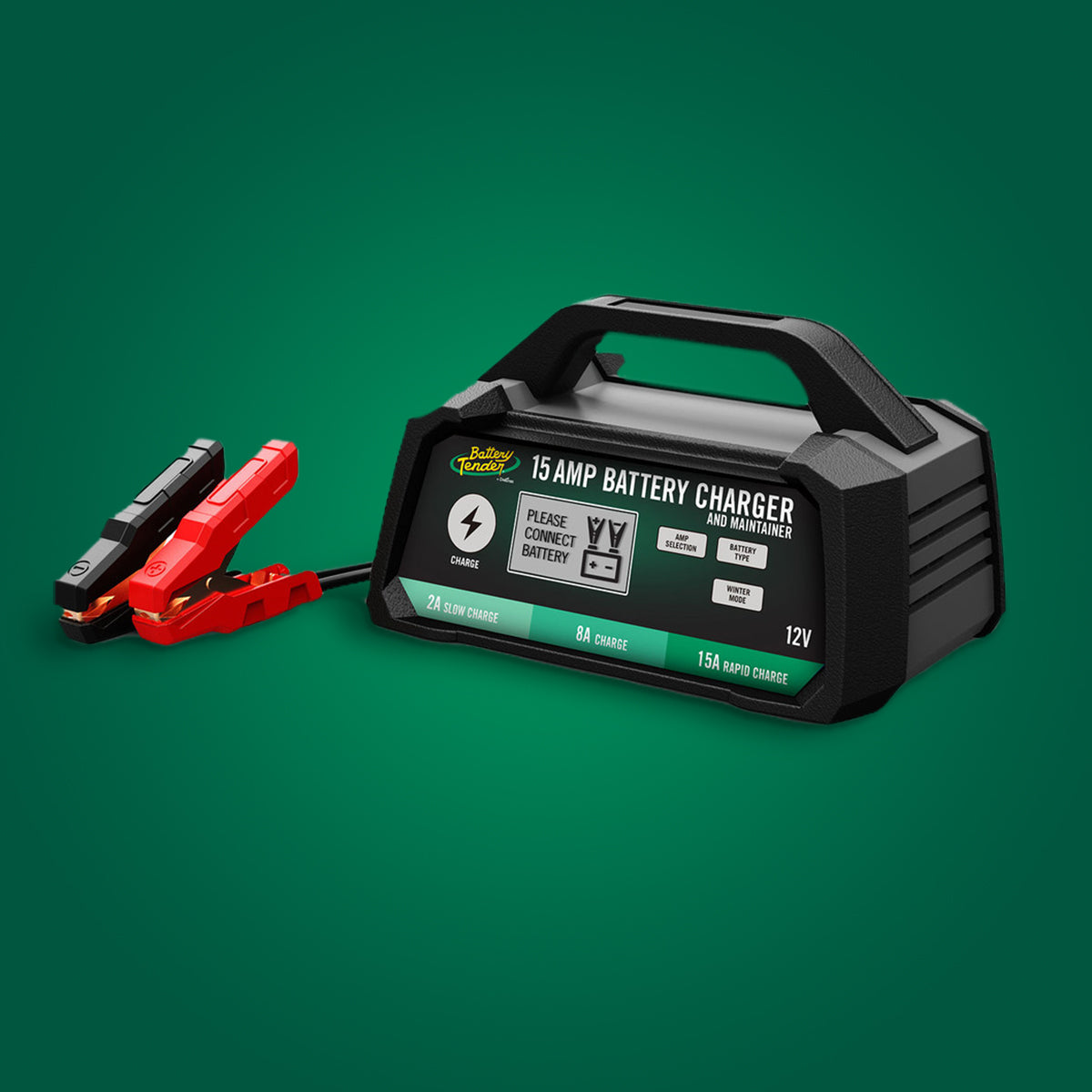
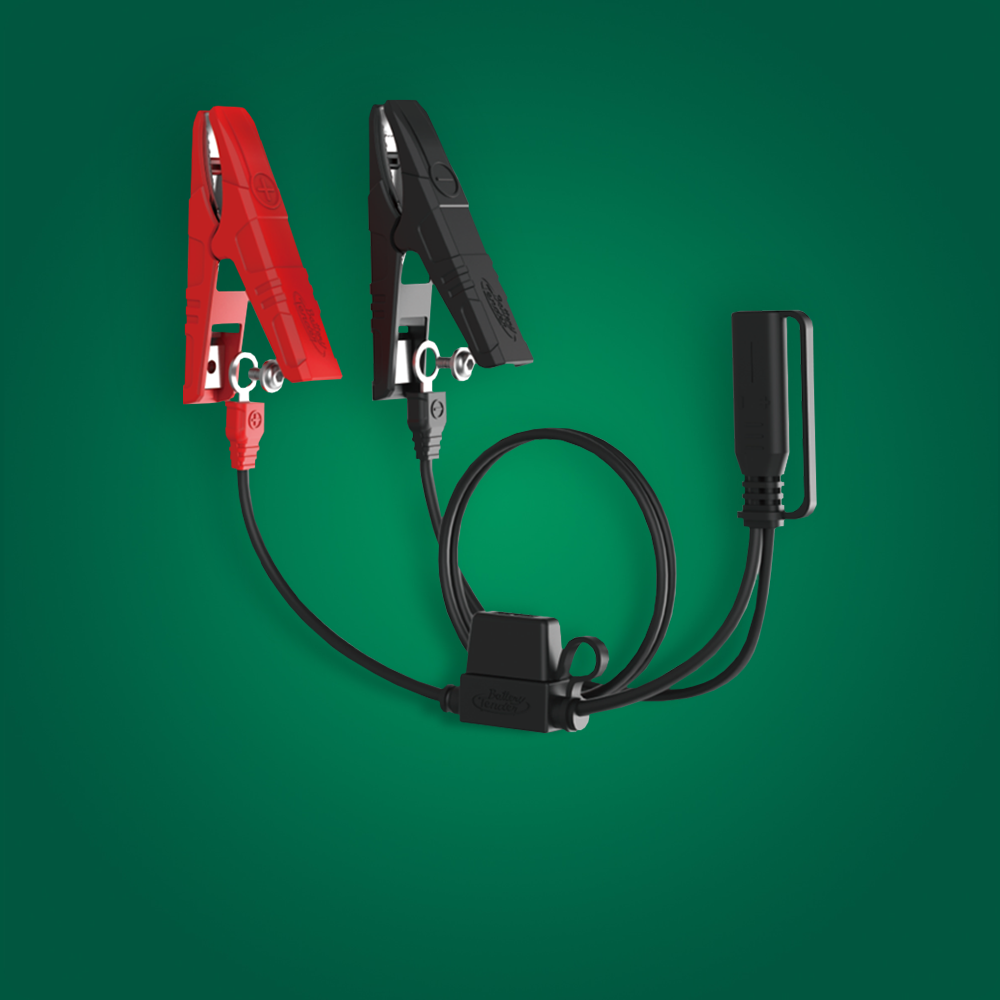
Check the owner's manual first. Many EVs use a 35 to 60 Ah lead-acid or AGM 12V battery, and some newer models use lithium-ion. The Battery Tender Plus 1.25 AMP 12V Battery Charger and Maintainer handles routine maintenance on a typical lead-acid or AGM auxiliary battery. For a lithium-ion 12V battery, choose a multi-chemistry model such as the Battery Tender Junior Multi-Chemistry 12V 1 Amp Battery Charger and Maintainer. For households that also own a truck, RV, or boat, the Battery Tender Power Tender 15/8/2 Amp 12V Battery Charger and Maintainer covers every battery in the driveway. Its 2A mode maintains a stored battery, its 8A mode recovers a discharged one, and its 15A mode handles larger batteries. For an EV's 12V battery alone, the 15A mode is more than you need. This model earns its place when it serves several vehicles.
The charging time formula is simple: (battery Ah × depth of discharge) ÷ charger amps. A 45 Ah battery at 50% discharge holds 22.5 Ah of deficit. At 8A that is about 2.8 hours, plus time in the final stages. At 2A it is about 11 hours.
Battery Tender chargers run Infinite Sequential Monitoring (ISM), a four-stage automatic process: Initialization, Bulk Charge, Absorption, and Float Maintenance. In the Float Maintenance stage, the charger monitors voltage and delivers charge only when it drops, so it can stay connected indefinitely. Nearly all Battery Tender chargers include temperature compensation to adjust for charging in extreme heat or cold.
Test Before You Charge
Measure resting voltage with the car off for at least four hours. A healthy lead-acid battery reads 12.6V to 12.8V. At 12.4V it holds about 75% charge, and below 12.0V it is deeply discharged. The Battery Tender 12V / 6V Battery Tester shows whether a weak battery needs charging or replacement. Lithium 12V batteries read higher (about 13.3V resting), so apply those thresholds only to lead-acid and AGM.
Never clamp onto orange high-voltage cabling. Connect only to the 12V terminals or the manufacturer's jump post. Auxiliary battery procedures for specific vehicles are in the EV 12V auxiliary battery maintenance guide.
Electric Vehicle Charger Buying Checklist: Six Steps
Follow this sequence to avoid the three most common mistakes: oversizing the unit, undersizing the breaker, and ignoring the 12V battery.
- Find the onboard charger limit. Look up maximum AC kW or amps in the owner's manual.
- Calculate required miles per hour. Use the four-step method above with a 50% cold-weather margin.
- Verify panel capacity. Ask an electrician for a load calculation before buying hardware.
- Pick the connection style. Choose hardwired for permanence or a NEMA 14-50 plug for flexibility.
- Check the environment. Outdoor mounting calls for a weather-rated enclosure (IP66 or better).
- Plan for the 12V battery. Add a maintainer for any period when the car sits more than two weeks.
Frequently Asked Questions
What is the difference between an electric vehicle charger and EVSE?
They describe the same wall or portable unit. EVSE stands for electric vehicle supply equipment and is the technical term used in the NEC. The unit supplies AC power and safety controls, while the car's onboard charger converts that power to DC for the battery. Calling it a charger is common shorthand.
How many amps does an electric vehicle charger need?
Most drivers do well with 32A to 40A on a Level 2 circuit. That delivers 28.5 to 36 miles of range per hour and refills a typical day in one to three hours. Choose 48A only if the car's onboard charger accepts it and daily mileage exceeds about 150 miles.
Is a Level 1 electric vehicle charger enough for daily driving?
A 16A Level 1 unit adds about 7.2 miles per hour, or roughly 58 to 72 miles over an 8 to 10 hour night. That covers drivers under about 40 miles per day with no installation cost. Longer commutes, cold weather, or large battery packs usually call for Level 2.
Can an electric vehicle charger charge the 12V battery?
Not directly. The charger feeds the high-voltage pack, and the car's DC-DC converter then supports the 12V battery only while the vehicle is awake. For long parking periods, connect a separate 12V maintainer to the auxiliary battery terminals or the jump post named in the owner's manual.
Do I need a licensed electrician to install a Level 2 electric vehicle charger?
Yes, in nearly all jurisdictions. A Level 2 unit needs a dedicated 240V circuit, a correctly sized breaker, and often a permit and inspection. A licensed electrician confirms panel capacity, selects the conductor under NEC rules, and ensures the work passes local code requirements.
Conclusion
Choosing an electric vehicle charger comes down to four numbers: daily miles, parked hours, onboard charger limit, and available panel capacity. Calculate miles per hour first, then size the breaker at 125% of charger amps, and add a 12V maintainer for any stretch longer than two weeks. Start by writing down your highest regular daily mileage and checking your panel's spare capacity, then compare current options in the Battery Tender EV charger collection.