

Automatic Jump Starter Guide: Smart Clamps and Safe Starts (2026)
An automatic jump starter is a portable lithium pack with smart clamps that detect the battery, verify polarity, and release current only when the connection is safe. Clamp it on, wait for the green indicator, and start the engine. Size the pack to your engine and recharge it every three months.
Battery Tender® pioneered smart charging in 1989, and the same safety-first design runs through the Battery Tender Charge N Start line, which pairs a lithium-ion jump pack with a smart charger in one unit. This guide explains what "automatic" actually means, how the protection circuits work, how to size a pack by engine, and how to use one step by step. It also covers what to do after the jump, because a dead battery is a symptom that needs fixing.
Key Takeaways
- An automatic jump starter checks for a battery and correct polarity before it sends any current to the clamps.
- Size by engine: 600A for powersports, 1,000-1,200A for passenger vehicles, and 2,000A for diesel trucks.
- Battery Tender Charge N Start combines a lithium-ion jump pack with a charger that handles standard, AGM, GEL, and lithium 12V batteries.
- A jump only starts the engine. Recharge the battery fully afterward with a smart charger.
- Recharge the pack every three months and keep it in the cabin during cold weather.
What Is an Automatic Jump Starter and How Does It Work?
An automatic jump starter is a lithium jump pack whose clamps contain a control circuit that decides when current can flow. The output stays off until the circuit confirms a 12V battery is connected correctly. That removes the most common jump starting mistakes: reversed clamps, clamps touching, and sparks near the battery.
"Automatic" is a descriptive term, not a regulated one, so features vary by model. Check the spec sheet for each protection below. Also ask whether the pack is tested to UL 2743, the safety standard for portable power packs.
Protections Built Into the Clamps
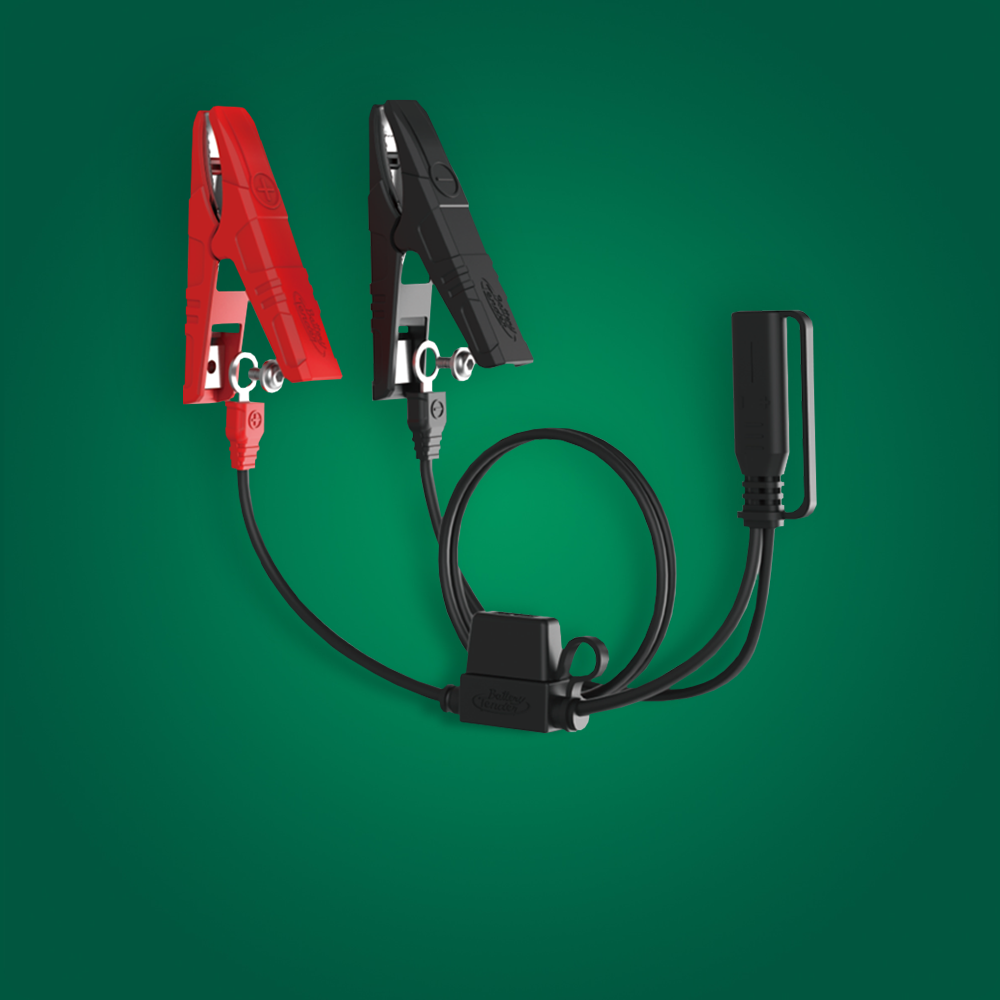
- Battery detection: the clamps sense battery voltage before enabling the output.
- Reverse polarity protection: if red goes to negative and black to positive, no current flows and a warning indicator lights.
- Short circuit protection: if the clamp jaws touch each other, the output stays off.
- Spark-proof operation: because the output is off until a battery is sensed, clamping on does not create an arc.
- Overcurrent and overheat protection: the pack cuts output if the cable or cells run hot.
Automatic Jump Starter vs. Jumper Cables
Jumper cables are passive copper. They have no intelligence, and they depend on a second running vehicle. An automatic jump starter is self-contained and makes the safety decisions for you.
- Cables need a donor vehicle and a parking position that lets both batteries sit within cable reach. A pack works anywhere.
- Reversed cables can spark, melt insulation, or damage electronics. A pack with reverse polarity protection simply refuses to energize.
- Cables cannot warn you about a battery that is too weak or damaged. A pack's indicator tells you when it will not fire.
How to Size an Automatic Jump Starter by Engine
Choose 600A for powersports and cars with V6 engines and smaller, 1,000-1,200A for passenger vehicles, and 2,000A for diesel trucks. Engine displacement and fuel type drive the requirement, because diesel engines have high compression and need far more cranking current than gasoline engines of the same size.
| Application | Engine Limit (Gas / Diesel) | Pack Rating | Battery Tender Option |
|---|---|---|---|
| Motorcycles, ATVs, small engines | 4.0L / 2.0L | 600A | Battery Tender Jump N Start 600 Amp |
| Compact cars, powersports | 5.0L / 3.0L | 1,000A | Battery Tender Charge N Start 1100 |
| Mid-size cars, SUVs, boats | 6.0L / 4.0L | 1,200A | Battery Tender Charge N Start 1120 |
| Trucks, RVs, heavy daily use | 6.0L / 4.0L | 1,200A plus 4A charger | Battery Tender Charge N Start 4120 |
| Large gas trucks and SUVs | 7.0L / 5.5L | 1,500A | Battery Tender Jump N Start 1500 Amp |
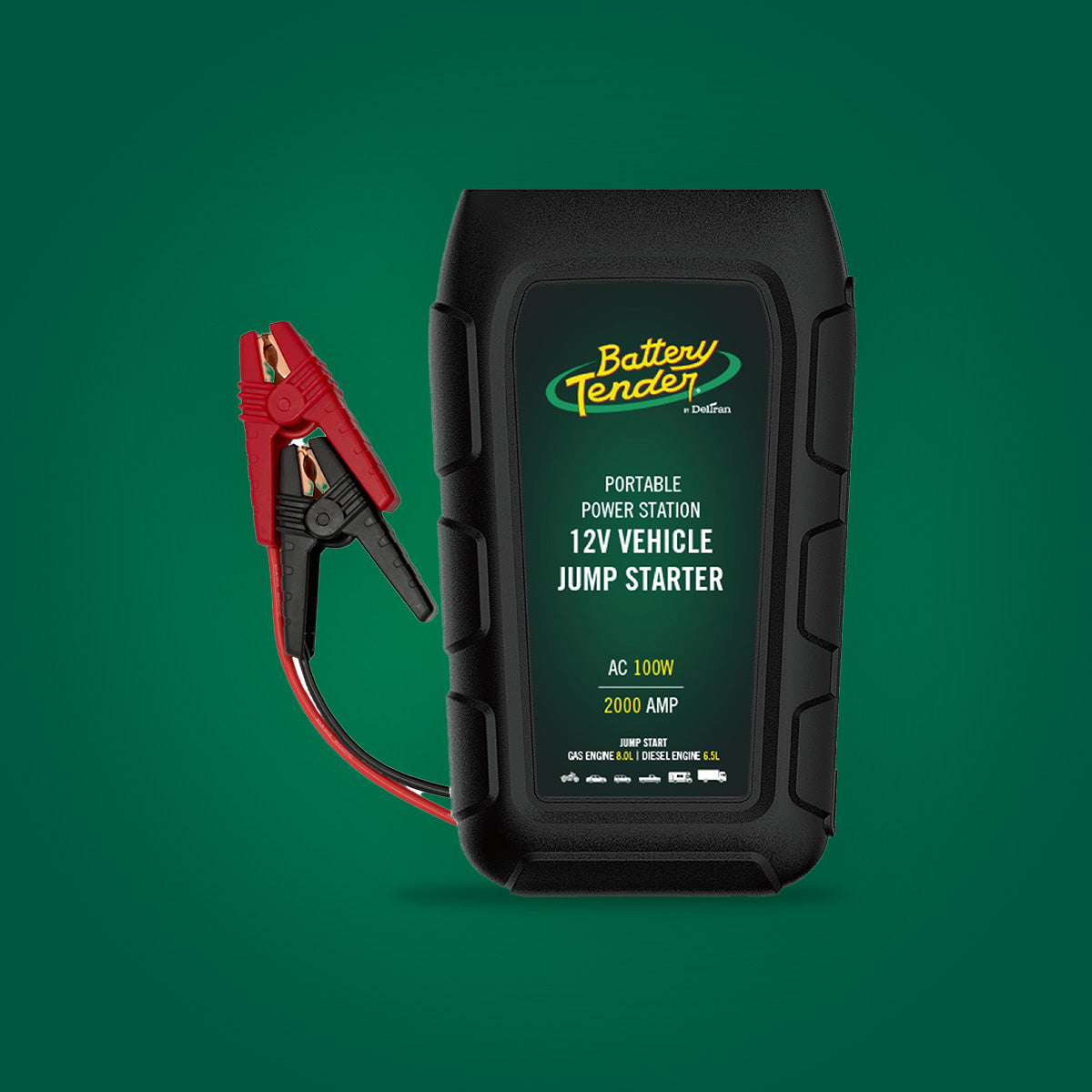
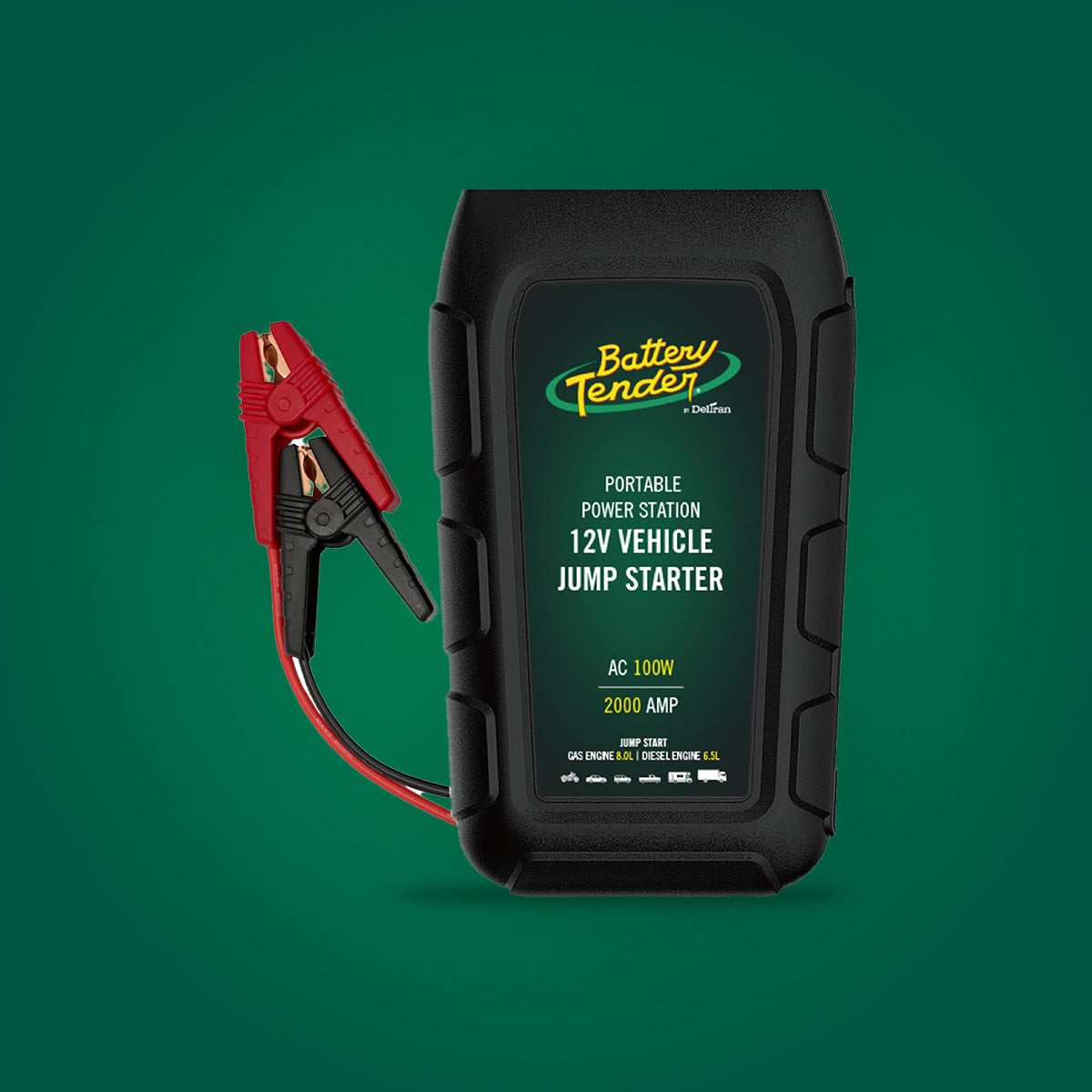
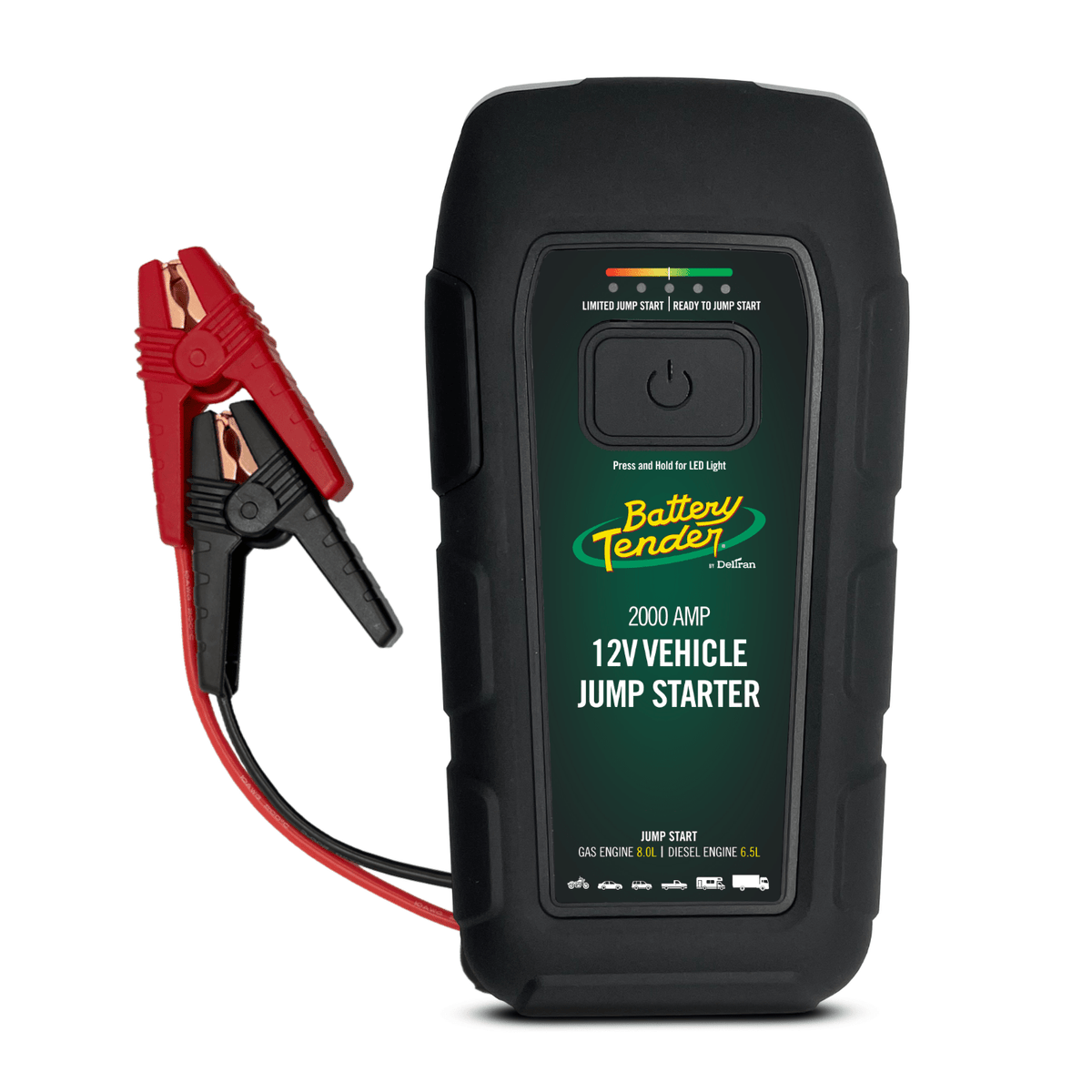
| Diesel pickups, large vehicles | 8.0L / 6.5L | 2,000A | Battery Tender Jump N Start 2000 Amp |
Buy one tier above your engine's limit if you live where winters drop below 20°F. Cold thickens engine oil and cuts battery output, so the same engine demands more at 10°F than at 70°F. For a full side-by-side breakdown of every rating, read the portable jump starter comparison: 600A vs 800A vs 1500A vs 2000A.
Why Battery Tender Charge N Start Is the Smart Upgrade From a Standalone Automatic Jump Starter
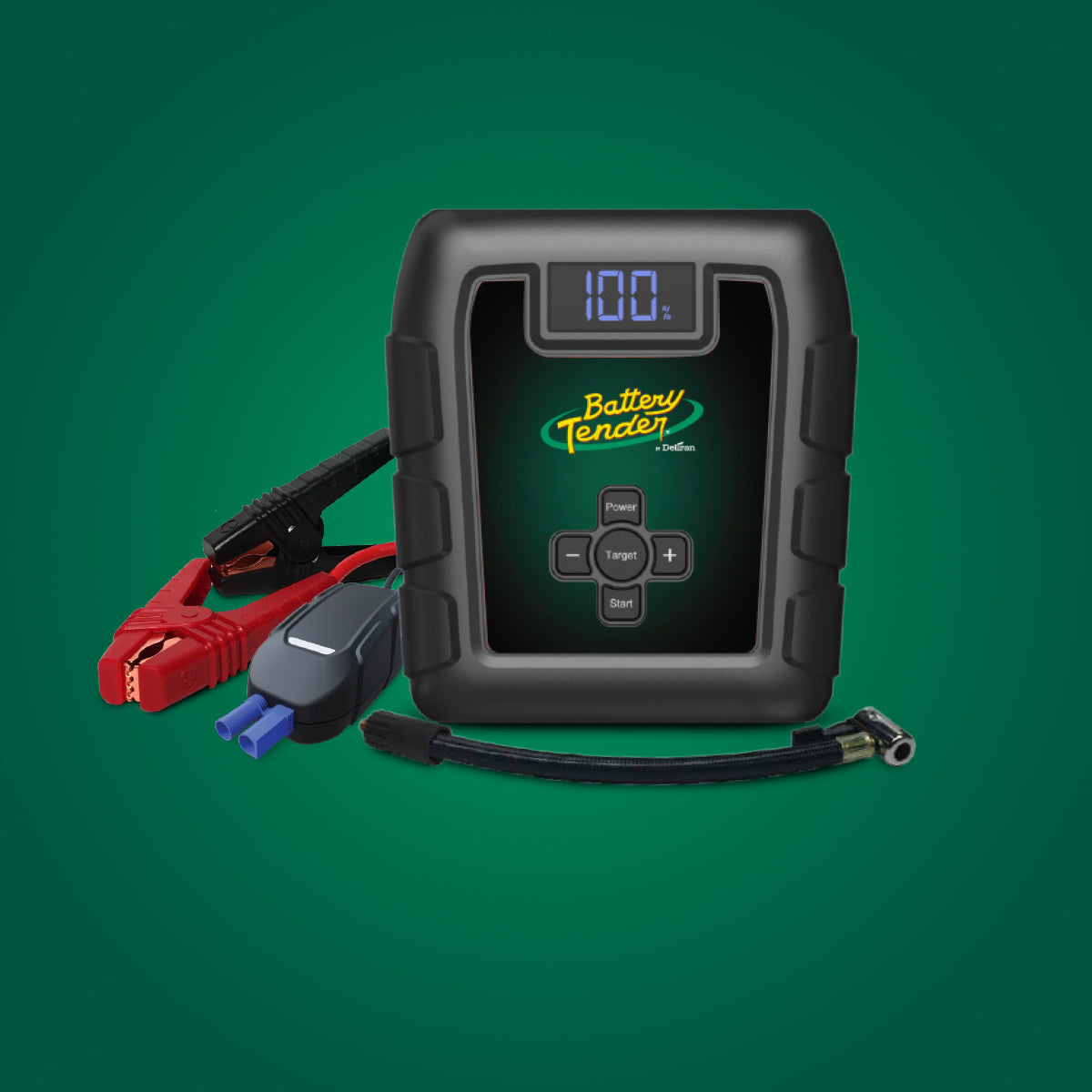
Battery Tender Charge N Start is a 2-in-1 unit: a lithium-ion jump pack plus a smart charger. A standalone automatic jump starter solves the emergency but not the cause, and its own battery slowly self-discharges in the glovebox. The hybrid design handles both problems.
The charger section charges all 12V battery types, including standard lead-acid, AGM, GEL, and lithium. Two proprietary technologies protect the unit. Charge N Store keeps the internal jump pack maintained while the unit is plugged in. SafeGuard is an anti-backfeed circuit that prevents current from flowing the wrong way between the pack and the vehicle battery.
- Battery Tender Charge N Start 1100: 1A charger, 1,000A jump, rated for engines up to 5.0L gas or 3.0L diesel.
- Battery Tender Charge N Start 1120: 1A charger, 1,200A jump, rated up to 6.0L gas or 4.0L diesel.
- Battery Tender Charge N Start 4120: 4A charger, 1,200A jump, built for trucks, RVs, and heavy daily use.
For a motorcycle, ATV, or compact car with a 12V battery in the 10-40Ah range, the 1,000A rating covers the starting load, and the 1A charger suits batteries that small. Use the same unit in the off-season as a maintainer. See the full lineup in the Battery Tender Charge N Start complete guide.
Battery Tender Charge N Start 1100 — 1 Amp Battery Charger & 1000 Amp Jump Starter
How to Use an Automatic Jump Starter, Step by Step
Using an automatic jump starter takes eight steps and about five minutes. Wear eye protection, and do not attempt a jump if the battery case is swollen, cracked, leaking, or frozen.
- Turn everything off. Switch off the ignition, headlights, radio, and climate controls.
- Check the pack. Confirm the jump starter has charge. Most models show a level indicator.
- Connect red to positive. Clamp the red jaw to the battery's positive (+) terminal.
- Connect black to negative. Clamp the black jaw to the negative (-) terminal, or to bare engine metal away from the battery if the manual says so.
- Wait for the ready signal. The smart clamps should show a green or "ready" indicator. A red light or beep means reversed polarity or no detected battery. Reseat the clamps.
- Start the engine. Crank for no more than five seconds. If it does not start, wait one minute before another try so the pack and starter motor can cool.
- Remove the clamps. Once the engine runs, disconnect black first, then red.
- Keep driving or idle. Run the engine, then recharge the battery fully (see below).
If the battery is so discharged that the clamps cannot detect it, many packs offer a manual boost or override button. Use it only when the manual says to, and only after confirming correct polarity. For deep-discharge cases, follow the recovery guide for jump starting a completely dead battery.
After the Jump: Recharge the Battery and Maintain Your Automatic Jump Starter
After a jump, charge the battery to 100% with a smart charger. A short drive rarely replaces what a dead battery lost, and a battery left partly charged sulfates and fails sooner. Use the formula: (Ah x depth of discharge) ÷ charger amps = approximate hours.
Match the Charger to the Battery
Battery Tender chargers use Infinite Sequential Monitoring (ISM), a four-stage process: Initialization tests the battery, Bulk delivers full current to about 80% charge, Absorption holds voltage steady while current tapers, and Float Maintenance sends pulses only when voltage drops. Unlike conventional trickle chargers, a Battery Tender charger with ISM is safe to leave connected indefinitely. Nearly all Battery Tender chargers include temperature compensation to adjust for charging in extreme heat or cold.
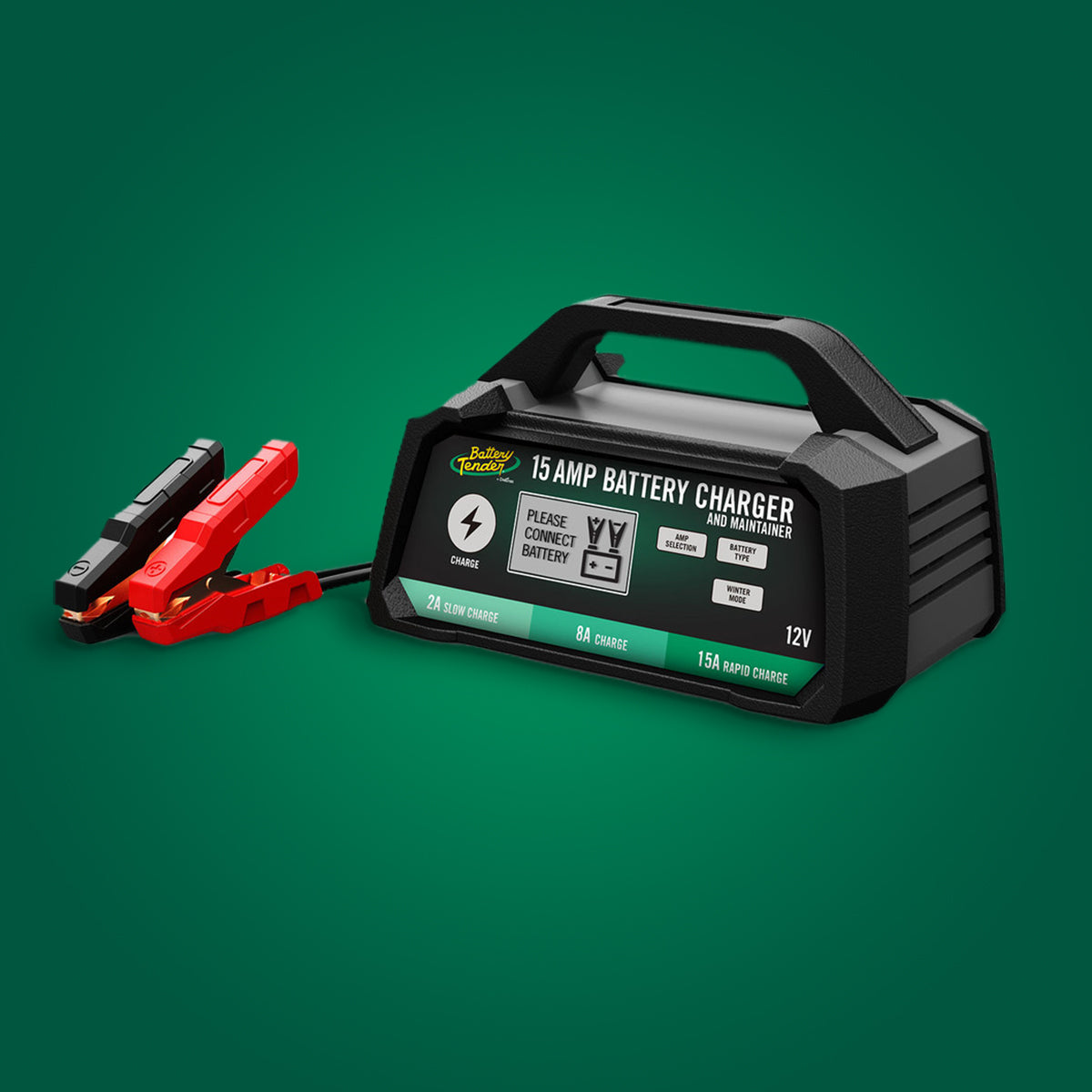
For a truck, RV, or 100Ah deep-cycle battery, the Battery Tender Power Tender 15/8/2 offers three selectable rates and an LCD display. A 100Ah battery that is 50% discharged needs 50Ah, so 50 ÷ 15 is about 3.3 hours at 15A, 50 ÷ 8 is about 6.3 hours at 8A, and 50 ÷ 2 is 25 hours at 2A, plus absorption time. Use the high rate to recover fast, then drop to 2A for storage.
Battery Tender Power Tender 15/8/2 Amp 12V Battery Charger and Maintainer
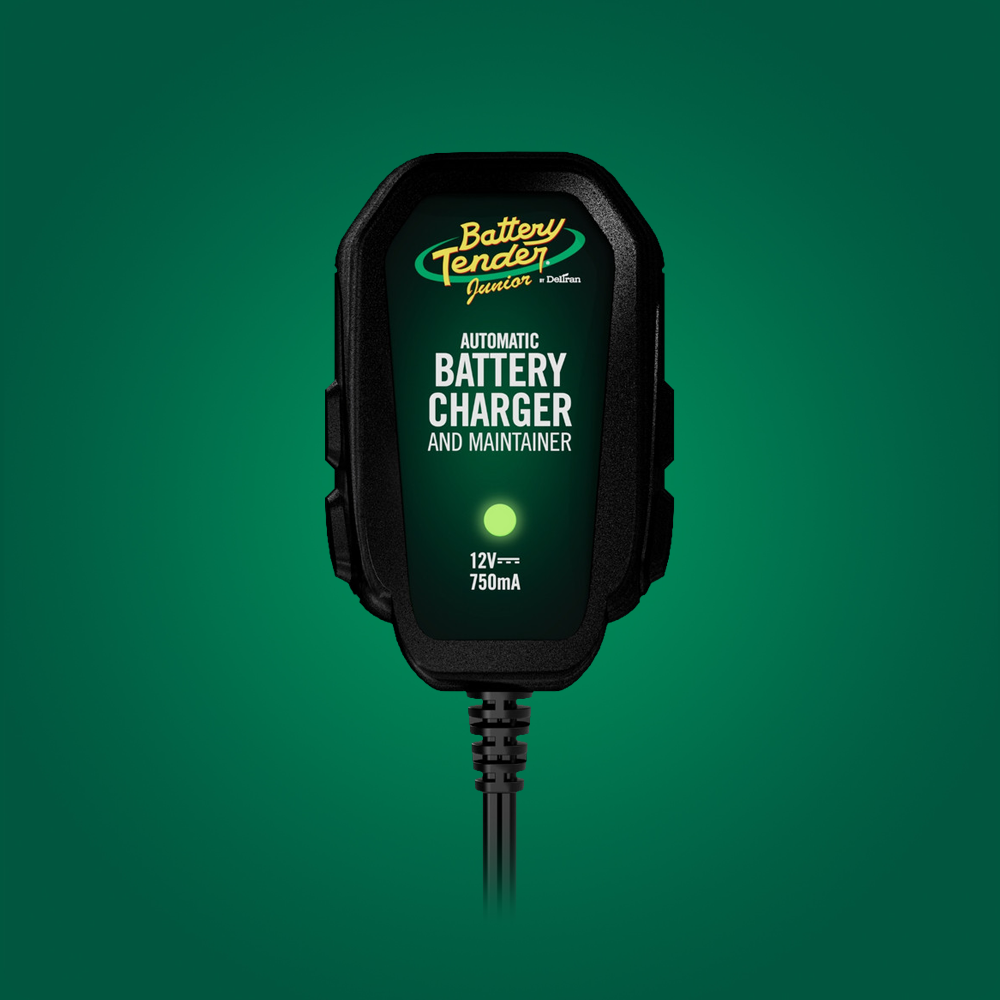
For a motorcycle, mower, or small powersports battery around 12Ah, 1A is the right scale. A 50% discharged 12Ah battery needs 6Ah, so 6 ÷ 1 is about 6 hours. Nearly all Battery Tender chargers include temperature compensation to adjust for charging in extreme heat or cold. Keep your charger in a garage with moderate temperatures.
Battery Tender Junior 12V, 1 Amp Battery Charger
A household with a car, motorcycle, ATV, and lawn tractor can keep all four on one unit. The Battery Tender 4-Bank charger gives each 12V battery 1.25A with independent ISM monitoring, so a small battery never gets overcharged because a larger one is still charging.
Battery Tender 4-Bank 12V 1.25 Amp Battery Charger and Maintainer
If a battery needs jumping twice in a month, test it before blaming the cold. The tester below measures 12V and 6V batteries and shows whether the battery can still hold a charge.
Battery Tender 12V / 6V Battery Tester
Keeping the Jump Pack Ready
- Recharge every three months, and immediately after any use. Lithium packs hold charge for months, but not indefinitely.
- Keep it in the cabin in winter. Cold cells deliver less current. A pack stored at 70°F and carried to the car performs better than one left in a 10°F trunk.
- Avoid summer heat soak. A closed car in direct sun can exceed 130°F, which shortens lithium cell life.
- Inspect the clamps for corrosion, cracked insulation, and bent jaws before storing.
- Know the limits. A pack cannot revive a battery with a shorted cell, fix a failing alternator, or safely jump a frozen battery.
Frequently Asked Questions
What is an automatic jump starter?
An automatic jump starter is a portable lithium battery pack with smart clamps that sense the vehicle battery and check polarity before releasing current. If the clamps are reversed, touching, or not connected to a battery, the output stays off. It lets one person start a dead vehicle without a donor car or jumper cables.
Can an automatic jump starter damage my car's electronics?
Protections such as reverse polarity, short circuit, and overcurrent shutoff reduce the risk compared with jumper cables, but they do not eliminate it. Choose a pack sized for your engine, connect red to positive first, wait for the ready signal, and remove the clamps right after the engine starts.
How often should I recharge an automatic jump starter?
Recharge a lithium jump starter every three months and after every use. Cold storage and heat both reduce stored energy. A Battery Tender Charge N Start unit uses Charge N Store technology to maintain its internal pack while plugged in, which removes the need to remember a recharge schedule.
What size automatic jump starter do I need for a diesel truck?
Diesel pickups generally need a 2,000A pack. The Battery Tender Jump N Start 2000 Amp is rated for engines up to 8.0L gas or 6.5L diesel. Smaller packs may crank a warm engine but struggle in cold weather, when oil is thick and battery output drops.
Why won't my automatic jump starter work on a completely dead battery?
The clamps may not detect a battery whose voltage has fallen very low, so the output never turns on. Check the manual for a boost or override button, and confirm correct polarity before using it. If the pack still fails, the battery may have a shorted cell and need replacement.
Conclusion
An automatic jump starter replaces guesswork with circuitry. It verifies the battery, blocks reversed connections, and delivers current only when the connection is safe. Match the pack to your engine, follow the eight steps, and recharge the battery fully afterward so the jump fixes the cause and not just the symptom. Your next step: choose the pack rating that fits your engine, then browse the Battery Tender jump starters collection to find your size.