


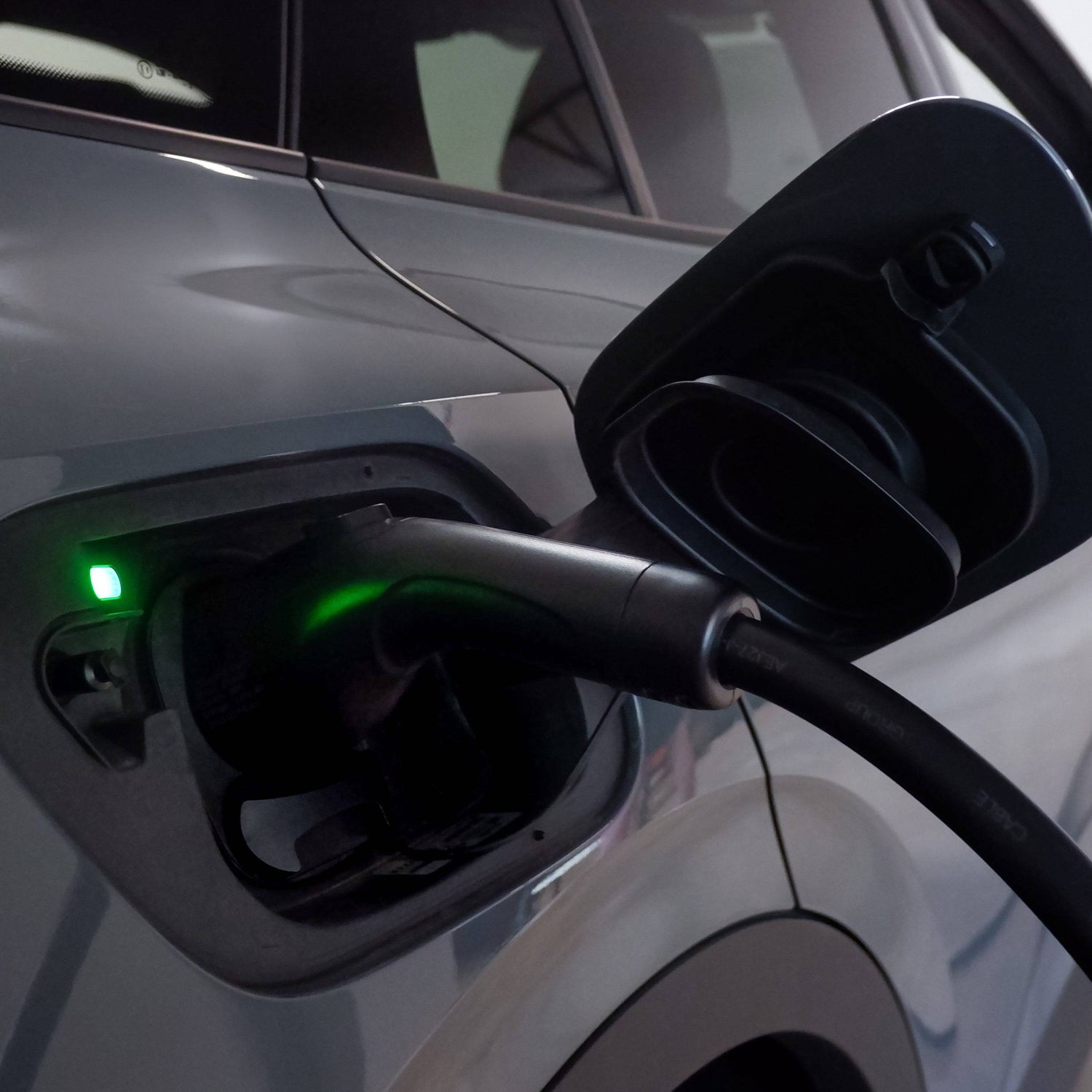
Level 2 EV Charger Amperage Tiers: How to Match Charger Speed to Your Driving Needs (2026)
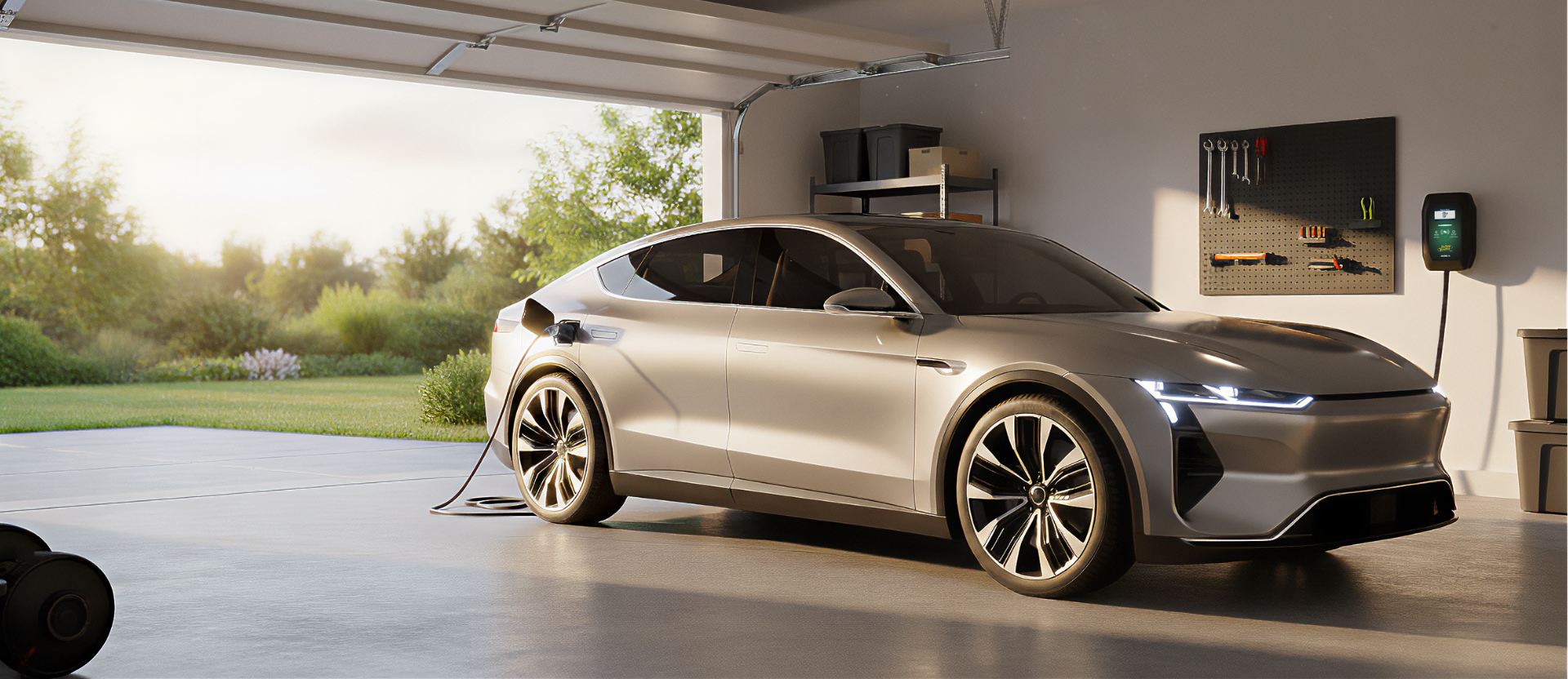
A level 2 EV charger operates on a 240-volt circuit and delivers between 16 and 48 amps of charging current, adding approximately 14 to 42 miles of range per hour depending on the amperage tier selected. Battery Tender® — the brand that pioneered smart charging technology in 1989 — now applies that same Infinite Sequential Monitoring (ISM) expertise to an EV charger lineup spanning 16A portable units through 48A wall-mounted stations, giving drivers a precise match between charger output and real-world driving patterns.
Not every EV owner needs the highest amperage charger available. A driver who commutes 30 miles daily has fundamentally different overnight recovery needs than someone towing with a full-size electric truck. This guide breaks down the four major level 2 EV charger amperage tiers — 16A, 32A, 40A, and 48A — with concrete charging math, circuit requirements, and decision criteria so that every EV owner can select the tier that matches actual usage rather than overspending on capacity that sits idle. The guide also covers the often-overlooked 12V auxiliary battery that every electric vehicle depends on for critical subsystems.
Key Takeaways:
- Level 2 EV chargers range from 16A (2 kW, ~7 miles/hour) to 48A (11 kW, ~42 miles/hour) — a 6× speed difference.
- The NEC 80% continuous-load rule means a 48A charger requires a 60A dedicated circuit breaker and 6-gauge wiring.
- Most EV owners who drive under 50 miles daily recover a full charge overnight with a 32A unit.
- Every EV contains a 12V auxiliary battery that powers locks, computers, and safety systems — it needs separate maintenance charging.
What Makes a Level 2 EV Charger Different from Level 1?
A level 2 EV charger connects to a 240-volt circuit instead of the standard 120-volt household outlet used by Level 1 equipment. That voltage doubling, combined with higher amperage capacity, produces dramatically faster energy transfer. According to the U.S. Department of Energy, Level 1 charging adds 3–5 miles of range per hour, while Level 2 delivers 14–42 miles per hour depending on the charger amperage and the vehicle's onboard charger capacity.
The practical difference is recovery time. A vehicle driven 40 miles needs roughly 8–13 hours to recover on Level 1 but only 1–3 hours on Level 2. For drivers who commute, run errands, and need reliable daily range, Level 2 transforms home charging from an all-night obligation into a background task that completes well before morning.
Level 2 chargers communicate with the vehicle using the SAE J1772 connector standard (or NACS for Tesla vehicles using an adapter). The charger itself is technically an EVSE — Electric Vehicle Supply Equipment — that manages safety protocols, ground-fault protection, and current delivery while the vehicle's onboard charger handles AC-to-DC conversion.
The Four Level 2 EV Charger Amperage Tiers Explained
Every level 2 EV charger falls into one of four amperage tiers, each with distinct power output, circuit requirements, and ideal use cases. Understanding these tiers prevents both underspending (resulting in painfully slow recovery) and overspending (paying for circuit upgrades that deliver no practical benefit).
16A Tier — 2 kW Output, ~7.2 Miles per Hour
The 16-amp tier operates on a standard 120V outlet (NEMA 5-20P) with no installation required, though it delivers Level 2–equivalent intelligence with ISM-based charging management. At 2 kW, it adds approximately 7.2 miles of range per hour. For a driver commuting 25 miles daily, full recovery takes roughly 3.5 hours. This tier suits apartment dwellers, renters, and anyone who needs a zero-installation portable solution.
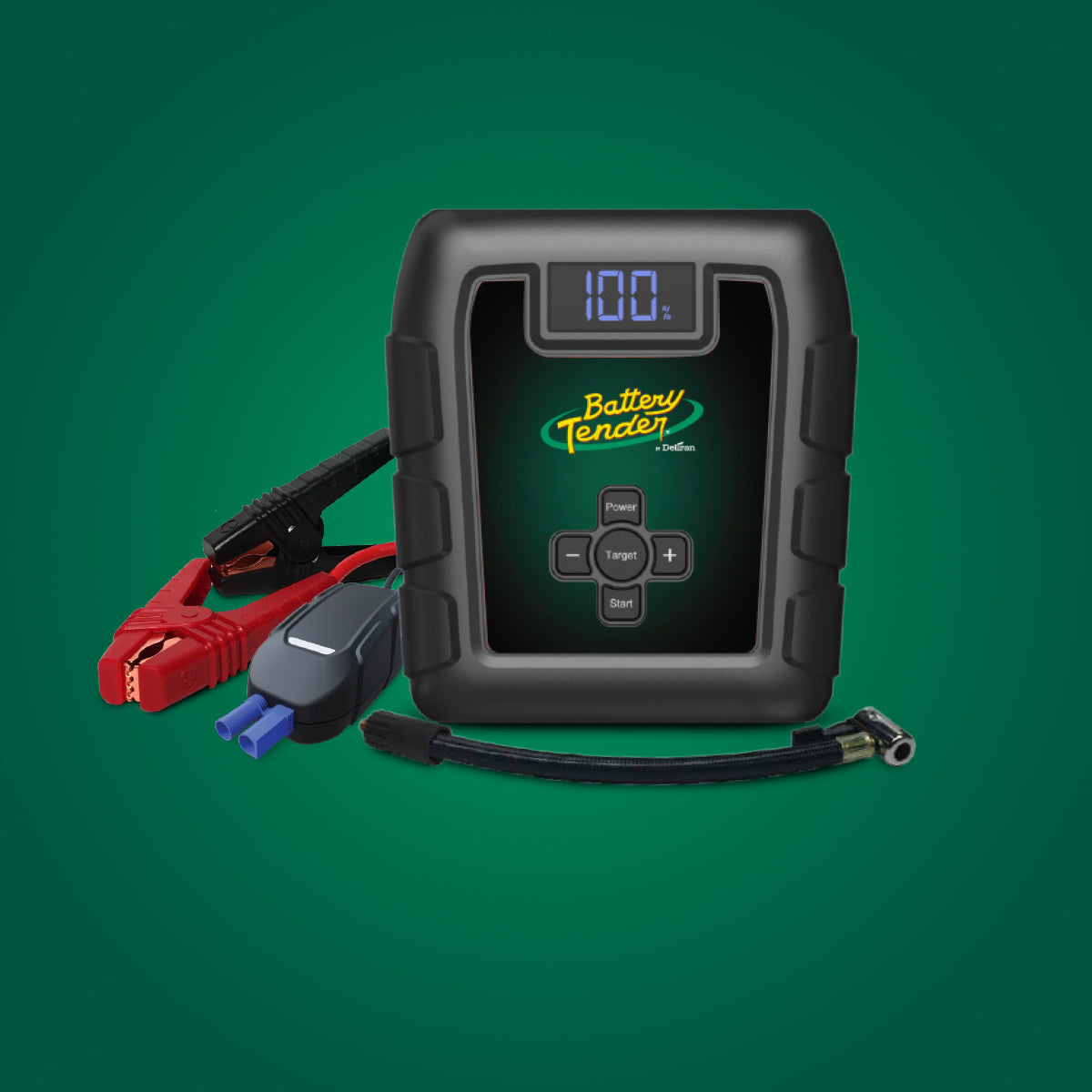
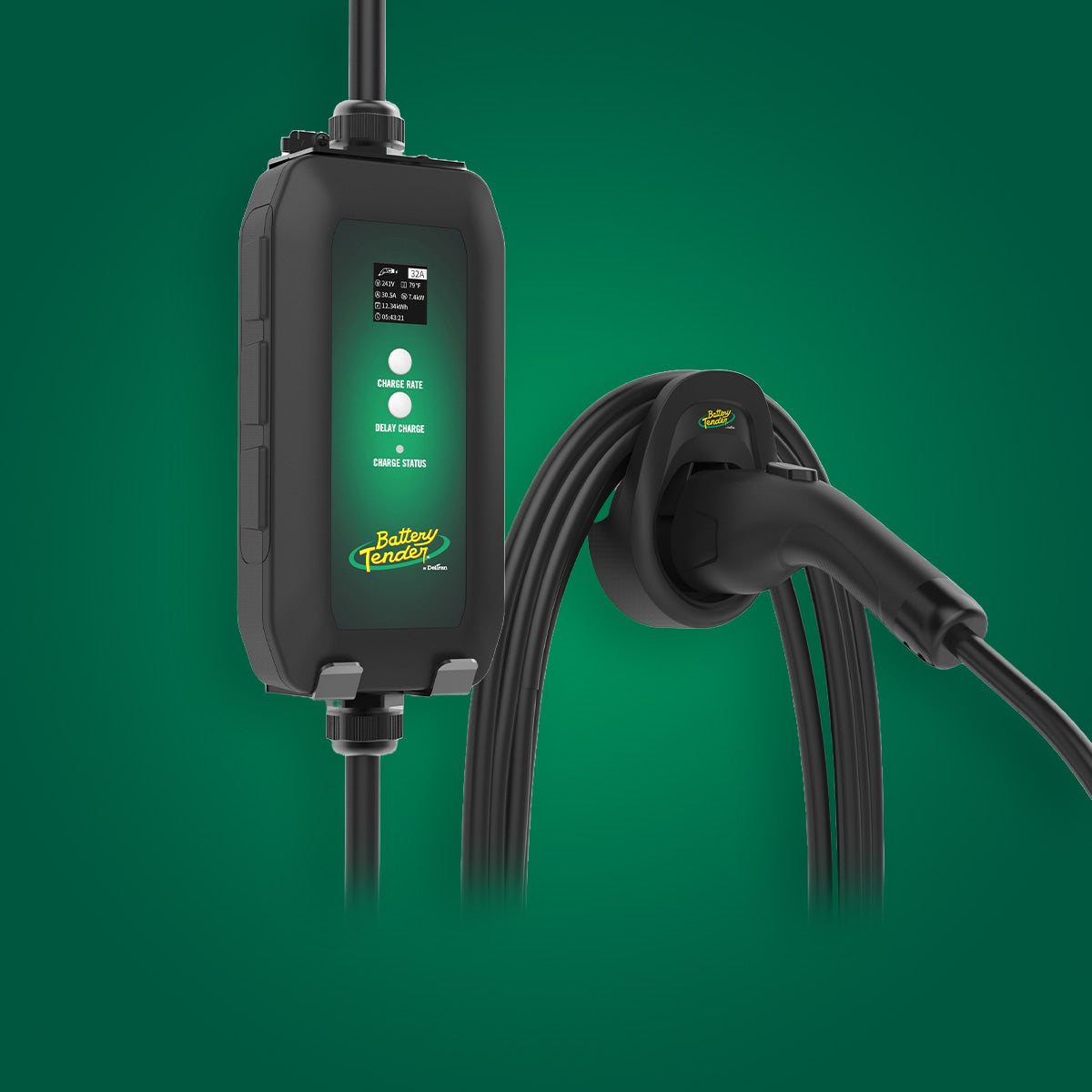
The Battery Tender eCharge 16A fits this tier as a fully portable unit that plugs into any standard 20-amp outlet and travels with the vehicle for destination charging.
Battery Tender eCharge 16A Portable EV Charger — $299.95
32A Tier — 7.6 kW Output, ~28.5 Miles per Hour
At 32 amps and 7.6 kW, this tier adds approximately 28.5 miles of range per hour — fast enough to recover 200 miles of driving in about 7 hours. Per NEC Article 625 and the 80% continuous-load rule, a 32A charger requires a 40-amp circuit breaker with 8-gauge copper wiring. The Battery Tender eCharge 32A offers true dual-voltage capability (120V and 240V), making it the most versatile option for drivers who want both home and portable charging from a single unit.
Battery Tender eCharge 32A Dual-Voltage Portable EV Charger — $454.95. Also available at Costco.com.
40A Tier — 9.6 kW Output, ~36 Miles per Hour
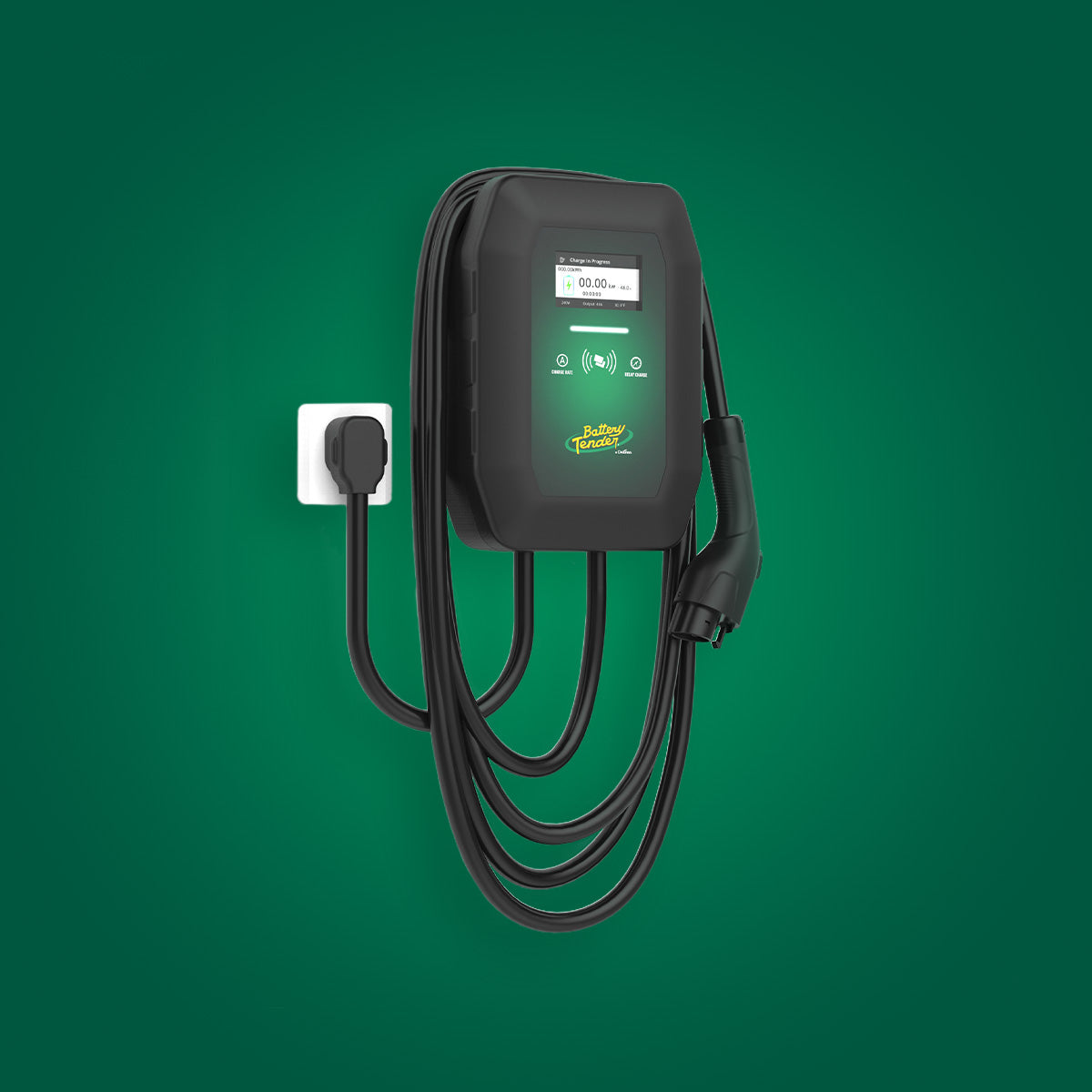
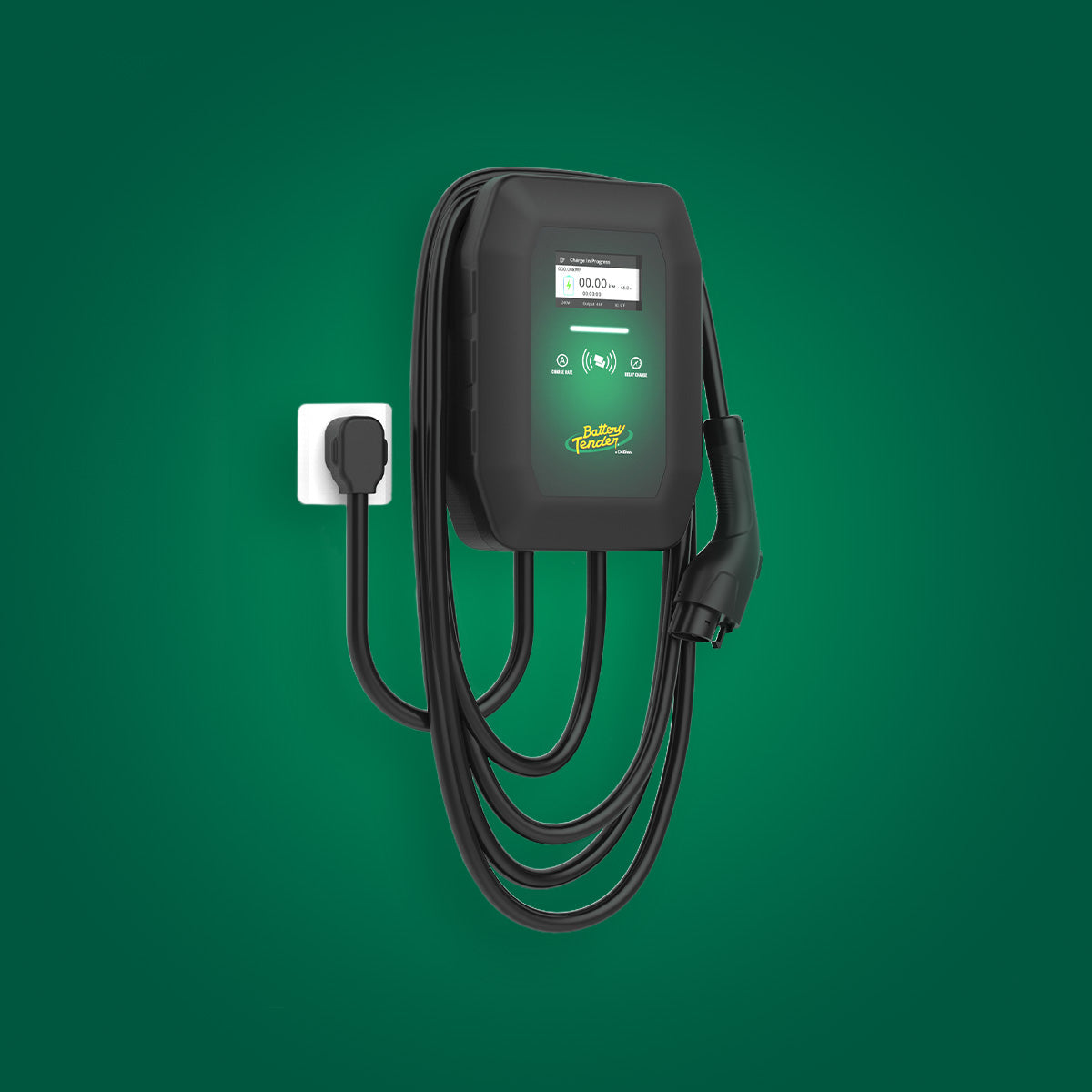
The 40-amp tier delivers 9.6 kW and approximately 36 miles per hour, recovering a full 300-mile battery from 20% state of charge in roughly 6.7 hours. This requires a 50-amp circuit breaker and 6-gauge wiring. The Battery Tender eCharge 40A is a wall-mounted unit with RFID access control and IP66 weather resistance, suited for permanent garage or outdoor driveway installation.
Battery Tender eCharge 40A Wall-Mount Level 2 EV Charger — $634.95. Also available at Costco.com.
48A Tier — 11 kW Output, ~42.25 Miles per Hour
The maximum residential tier pushes 11 kW and adds approximately 42.25 miles per hour. At this output, even large-battery trucks and SUVs with 100+ kWh packs recover from near-empty to full overnight. The 80% rule mandates a 60-amp breaker with 6-gauge wiring. The Battery Tender eCharge 48A includes RFID authentication and IP66 weatherproofing for permanent installation.
Battery Tender eCharge 48A Wall-Mount Level 2 EV Charger — $684.95
How to Calculate Your Actual Level 2 EV Charger Needs
Selecting the right amperage tier requires three data points: average daily driving distance, available overnight charging window, and the vehicle's onboard charger capacity. The formula is straightforward:
Daily miles driven ÷ charger miles-per-hour rate = required charging hours
For example, a driver covering 60 miles daily with an 8-hour overnight window needs a charger that delivers at least 7.5 miles per hour — placing them squarely in the 16A tier at minimum and comfortably in the 32A tier with substantial margin. A driver covering 120 miles daily in the same window needs at least 15 miles per hour, requiring a 32A or higher unit.
However, the vehicle's onboard charger sets a ceiling. Many compact EVs include 7.2 kW onboard chargers, meaning they cannot accept more than approximately 30 amps regardless of the EVSE output. Installing a 48A charger on a vehicle with a 7.2 kW onboard charger wastes the difference. Check the vehicle's specifications before selecting a tier. Larger vehicles — electric trucks, SUVs with tow packages, and luxury models — typically include 11 kW or higher onboard chargers that fully utilize 48A EVSE output.
Circuit Requirements and the NEC 80% Rule for Level 2 EV Chargers
Every level 2 EV charger is classified as a continuous load under the National Electrical Code (NEC) because it operates at maximum current for more than three hours. NEC Article 625 requires that the circuit breaker be rated at 125% of the charger's maximum continuous current — effectively meaning the charger can draw only 80% of the breaker's rated capacity.
| Charger Amps | Required Breaker | Min. Wire Gauge (Cu) | Power Output | Miles/Hour |
|---|---|---|---|---|
| 16A | 20A (120V) | 12 AWG | 2 kW | ~7.2 |
| 32A | 40A (240V) | 8 AWG | 7.6 kW | ~28.5 |
| 40A | 50A (240V) | 6 AWG | 9.6 kW | ~36 |
| 48A | 60A (240V) | 6 AWG | 11 kW | ~42.25 |
A licensed electrician should assess the home's electrical panel capacity before installation. Most modern panels (200A service) accommodate a 60A EV circuit without upgrades. Older homes with 100A or 150A service may require a panel upgrade or a load-management device. Always obtain required permits — most jurisdictions require electrical permits for new 240V circuits.
The EV Component Most Owners Forget: 12V Auxiliary Battery Maintenance
Every electric vehicle — regardless of manufacturer — contains a conventional 12V auxiliary battery that powers door locks, the infotainment system, onboard computers, headlights, and safety systems. This battery does not charge from a level 2 EV charger. The high-voltage traction pack feeds it through a DC-DC converter, but only when the vehicle is in certain operational states. During extended parking, software updates, or high parasitic-drain conditions, the 12V battery can discharge to levels that prevent the vehicle from starting or accepting a charge.
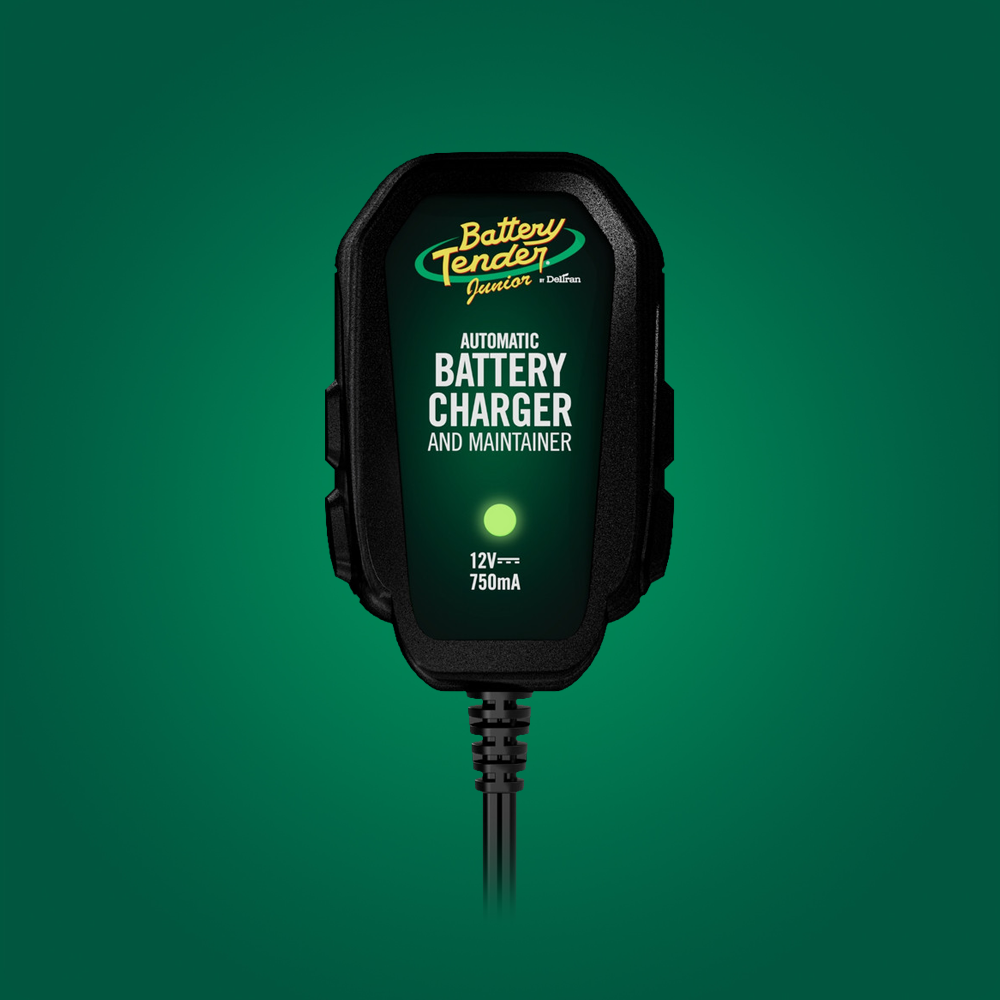
A dead 12V auxiliary battery is the number-one cause of EV "no-start" situations. The fix is proactive maintenance with a dedicated 12V smart charger. The Battery Tender Plus 1.25A 12V connects directly to the auxiliary battery terminals and applies ISM charging — the same 4-stage process (Initialization, Bulk, Absorption, Maintenance) used across the Battery Tender product line — to keep the 12V system at optimal voltage indefinitely. This is especially critical for EV owners who travel for extended periods or store a second vehicle.
Battery Tender Plus 1.25A 12V Charger
Cost-Per-Mile Math: How Amperage Tier Affects Electricity Bills
The amperage tier of a level 2 EV charger does not change the cost per mile driven — all tiers deliver the same energy per kilowatt-hour, just at different speeds. The vehicle's efficiency (measured in kWh per 100 miles) and the local electricity rate determine cost. At the 2026 U.S. national average residential rate of approximately $0.17/kWh, an EV rated at 30 kWh/100 miles costs about $0.051 per mile to operate — roughly one-fifth the cost of a 30 MPG gasoline vehicle at $3.50/gallon.
Where amperage tier does affect cost is through time-of-use (TOU) rate optimization. Higher-amperage chargers complete sessions faster, enabling tighter scheduling within off-peak windows. A 48A charger recovering 200 miles in under 5 hours fits entirely within a typical 11 PM–7 AM off-peak window, while a 16A charger recovering the same distance takes over 27 hours — spanning multiple rate periods. Many utilities offer EV-specific TOU plans with rates as low as $0.06–$0.10/kWh during off-peak hours, making fast Level 2 charging significantly cheaper per session when scheduled correctly.
Frequently Asked Questions
How fast does a level 2 EV charger add range compared to Level 1?
A level 2 EV charger adds 14–42 miles of range per hour depending on amperage, while Level 1 chargers add only 3–5 miles per hour. A 32A Level 2 unit recovers 200 miles of driving in approximately 7 hours — a task that would take over 40 hours on Level 1. The speed difference makes Level 2 essential for daily commuters.
Do I need to upgrade my electrical panel for a level 2 EV charger?
Homes with 200-amp electrical service typically accommodate a level 2 EV charger without panel upgrades. A 48A charger requires a 60-amp breaker, consuming 30% of a 200A panel's capacity. Homes with 100A or 150A service may need an upgrade or load-management device. A licensed electrician should evaluate available capacity before installation.
Can a higher-amperage charger damage my EV battery?
No. The vehicle's onboard charger controls the actual charging rate and will only accept current up to its rated capacity. Installing a 48A EVSE on a vehicle with a 7.2 kW onboard charger simply means the vehicle draws only ~30 amps. The EVSE provides available power; the vehicle decides how much to accept. No damage occurs from oversized EVSE capacity.
Does my EV's 12V battery need a separate charger?
Yes. The 12V auxiliary battery powers critical systems including door locks, computers, and safety modules. It charges through a DC-DC converter from the traction pack but can deplete during extended storage. A Battery Tender Plus 1.25A charger connected to the 12V auxiliary battery provides ISM-based maintenance to prevent no-start situations caused by auxiliary battery failure.
Conclusion
Selecting the right level 2 EV charger comes down to matching amperage tier to actual driving patterns, available charging windows, and the vehicle's onboard charger capacity. The Battery Tender eCharge lineup covers every tier — from the portable 16A unit for no-installation convenience to the 48A wall-mount for maximum residential charging speed — all built on decades of ISM charging expertise that began with Battery Tender pioneering smart charging in 1989. Combined with a Battery Tender Plus charger for 12V auxiliary battery maintenance, EV owners gain a complete charging ecosystem that addresses both the high-voltage t
Related guides: Home EV Charger Amperage and Charging Speed (2026) · EV Charger 240V (2026) · More EV charging guides