


EV Charger 240V: Understanding Amperage, Circuit Sizing, and Charge Speed (2026)
An EV charger 240V circuit delivers Level 2 charging speeds that are three to seven times faster than a standard 120V outlet, transforming overnight charging from a hopeful estimate into a mathematical certainty. Battery Tender® brings over three decades of smart charging expertise—dating back to pioneering the consumer smart charger category in 1989—to the EV space, offering Level 2 chargers rated from 32 amps to 48 amps that pair 240-volt power with intelligent charging management. For drivers who have outgrown the slow trickle of a Level 1 connection, understanding how 240V circuits, amperage ratings, and breaker sizing interact determines not just how fast a vehicle charges, but how safely and efficiently the entire electrical system operates.
This guide focuses on the electrical science behind 240V EV charging—the relationship between voltage, amperage, and kilowatt delivery—so that every EV owner can evaluate circuit requirements, calculate real-world charge times, and select equipment matched precisely to both vehicle capability and home electrical capacity. Unlike general installation overviews or product comparisons, this article breaks down the physics and math that govern every 240V charging session.
Why Does an EV Charger 240V Circuit Charge So Much Faster?
The speed advantage of a 240V EV charger comes down to a fundamental electrical relationship: Power (watts) = Voltage × Amperage. A standard 120V outlet on a 15-amp circuit delivers a maximum of 1,440 watts (1.44 kW) of continuous power, though the National Electrical Code (NEC) Section 210.23 limits continuous loads to 80% of breaker capacity, reducing usable power to approximately 1,152 watts. A 240V circuit operating at 40 amps continuous delivers 9,600 watts (9.6 kW)—more than eight times the power of that same 120V connection.
This power differential translates directly into miles of range added per hour of charging. A Level 1 charger on a 120V outlet typically adds 3 to 5 miles of range per hour. A 240V Level 2 charger rated at 40 amps adds approximately 36 miles per hour, while a 48-amp unit adds roughly 42 miles per hour. For an EV with a 77 kWh battery pack—common in vehicles like the Hyundai Ioniq 5 or Ford Mustang Mach-E Extended Range—the difference between Level 1 and Level 2 can mean 60+ hours versus under 10 hours for a full charge from near-empty.
The 240V advantage becomes even more significant when factoring in charging efficiency losses. All EV chargers lose some energy to heat during AC-to-DC conversion. A typical onboard charger operates at 85% to 92% efficiency. At Level 1 speeds, the vehicle's battery thermal management system, cooling pumps, and control electronics consume a disproportionate share of the already-limited incoming power. At Level 2 speeds, these parasitic loads represent a much smaller percentage of total power delivery, improving effective efficiency by 5% to 10% in real-world conditions.
How to Calculate Your EV Charger 240V Charge Time
Calculating charge time requires three variables: battery capacity in kilowatt-hours (kWh), depth of discharge (how empty the battery is), and the charger's power delivery in kilowatts. The formula is straightforward: (Battery kWh × Depth of Discharge) ÷ Charger kW = Approximate Hours.
For example, a 60 kWh battery at 20% state of charge (80% depth of discharge) connected to the Battery Tender eCharge 40A—which delivers 9.6 kW on a 240V circuit—requires approximately (60 × 0.80) ÷ 9.6 = 5.0 hours. The same battery connected to the Battery Tender eCharge 48A at 11 kW requires (60 × 0.80) ÷ 11.0 = 4.4 hours. Compare that to a 120V Level 1 charger at approximately 1.4 kW: (60 × 0.80) ÷ 1.4 = 34.3 hours.
One critical factor this formula does not capture is the onboard charger limit. Every EV has a maximum AC charging rate determined by its built-in rectifier. A vehicle with a 7.2 kW onboard charger cannot benefit from a 48-amp EVSE delivering 11 kW—the car's electronics will cap intake at 7.2 kW regardless. Before purchasing a 240V charger, check the vehicle's maximum AC charge rate in the owner's manual or on the manufacturer's specification sheet. Common onboard charger ratings include 7.2 kW (many entry-level EVs), 9.6 kW (mid-tier), and 11.5 kW (premium or optional upgrade).
Amperage Ratings and Circuit Breaker Sizing for 240V EV Charging
The NEC classifies EV charging as a continuous load, meaning the circuit breaker must be rated at 125% of the charger's maximum draw. A 40-amp charger requires a 50-amp breaker and 6-gauge copper wiring (or 4-gauge aluminum). A 48-amp charger requires a 60-amp breaker and 6-gauge copper wiring rated for the distance, though longer runs may require upsizing to 4-gauge to prevent voltage drop.
This 80% continuous-load rule—codified in NEC Article 625.41—is the single most important safety specification in EV charger installation. A 40-amp charger on a 40-amp breaker violates code and creates a fire risk because the wiring and breaker are not designed for sustained maximum-draw operation over multiple hours. Licensed electricians follow this requirement automatically, which is one reason professional installation is essential for any hardwired 240V EVSE.
Home electrical panels typically range from 100-amp to 200-amp total capacity. Adding a 50-amp or 60-amp breaker for EV charging consumes a significant portion of available capacity. A load calculation—performed by an electrician per NEC Article 220—determines whether the existing panel can support the new circuit or whether a panel upgrade is needed. Many homes built before 2000 with 100-amp panels will require an upgrade to 200 amps, which adds $1,500 to $3,000 to the project depending on local labor rates and utility requirements.
Choosing the Right 240V EV Charger Amperage
Selecting the right amperage requires balancing vehicle capability, electrical panel capacity, and future-proofing. The Battery Tender eCharge lineup illustrates this range clearly, offering 32-amp, 40-amp, and 48-amp options at progressively higher power outputs.
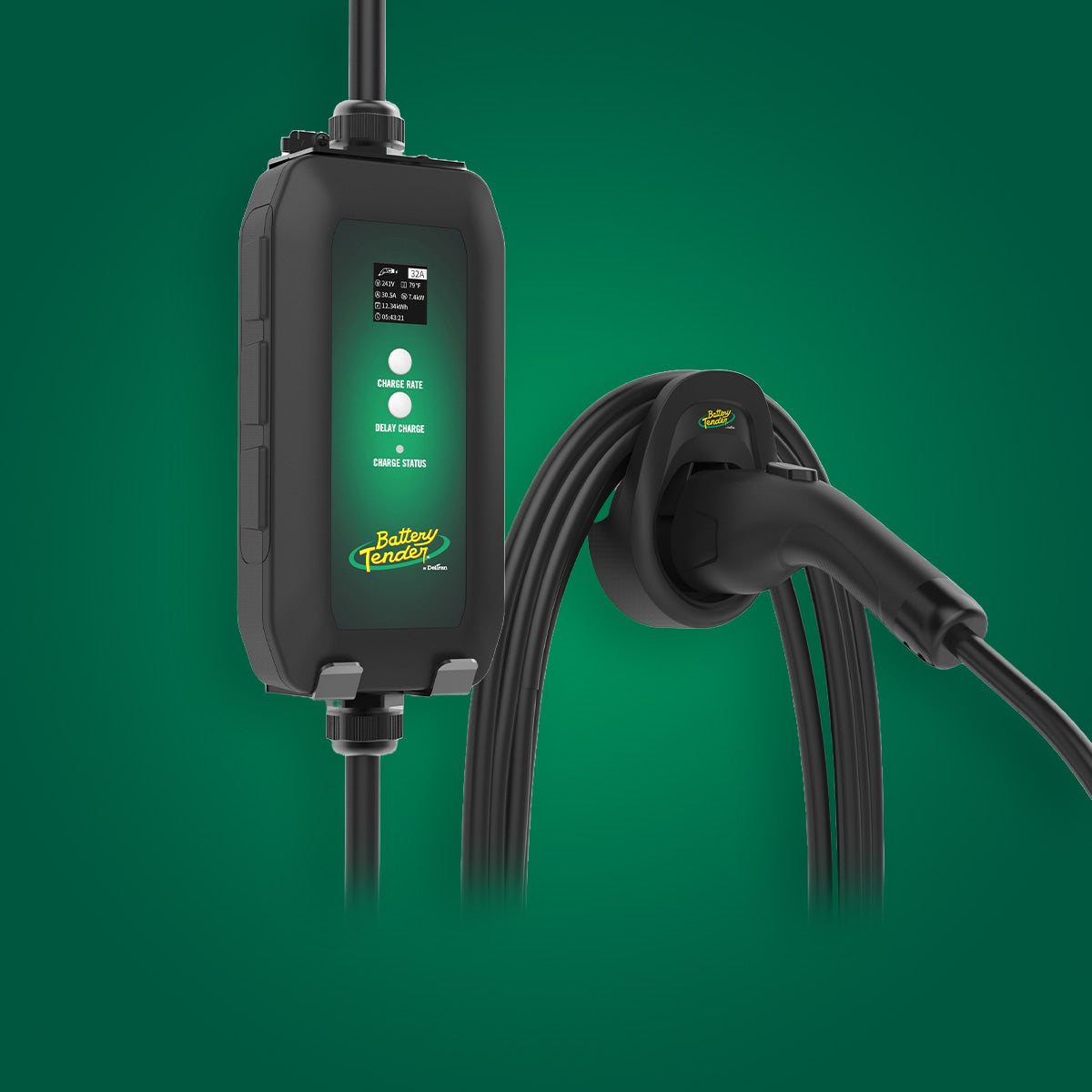
The Battery Tender eCharge 32A stands out as a uniquely versatile option. This unit operates as a true dual-voltage charger, functioning on both 120V and 240V circuits. On a 240V connection, the eCharge 32A delivers 7.6 kW—enough to add approximately 28.5 miles of range per hour. This makes it ideal for drivers whose vehicles have 7.2 kW onboard chargers, since a higher-amperage EVSE would provide no additional speed benefit.
Battery Tender eCharge 32A Portable EV Charger. Also available at Costco.com.
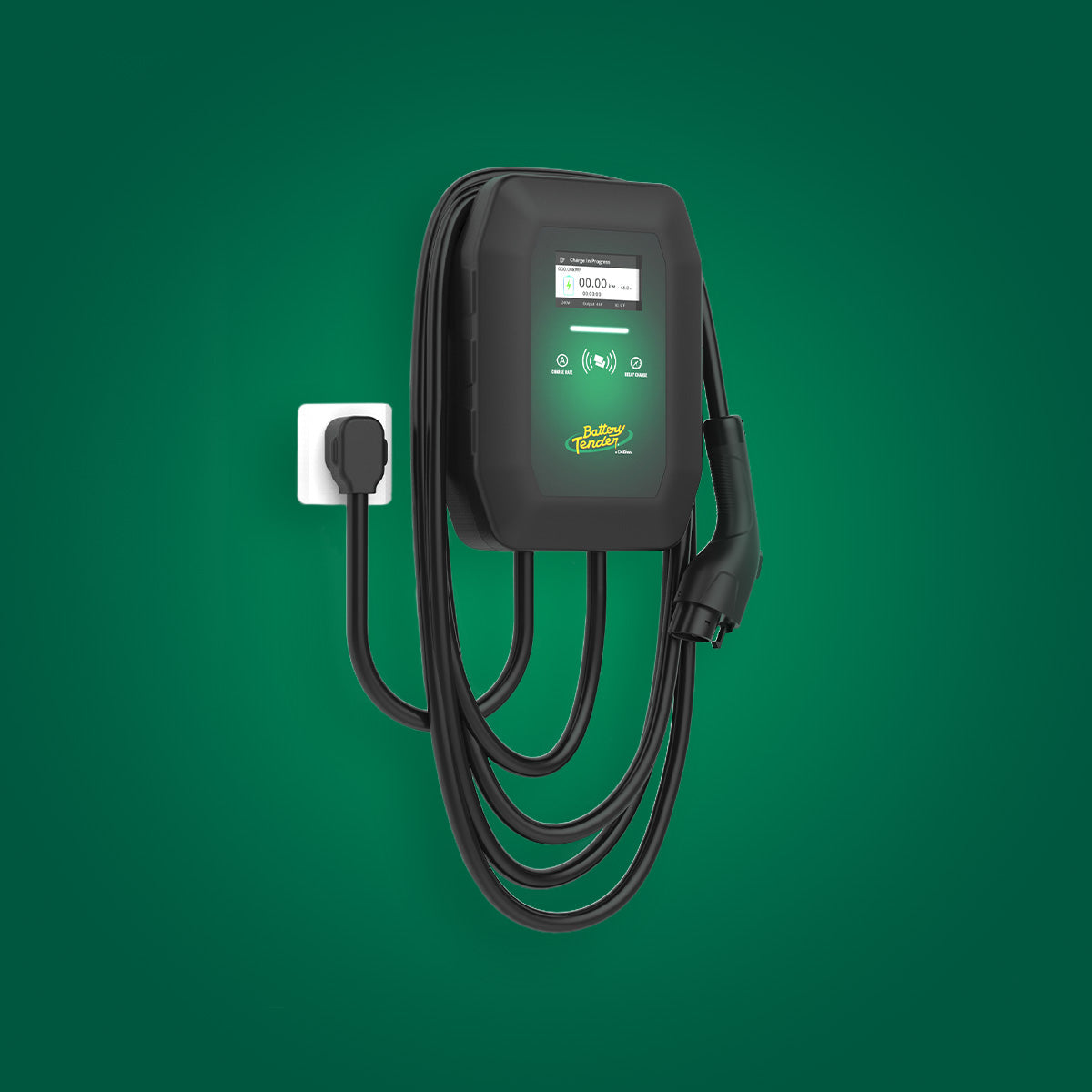
For vehicles equipped with 9.6 kW or higher onboard chargers, the Battery Tender eCharge 40A wall-mount unit delivers 9.6 kW at 240V and adds approximately 36 miles of range per hour. The IP66-rated enclosure and built-in RFID access control make this a strong choice for garage or outdoor installation where security and weather resistance matter. The 40A requires a dedicated 50-amp breaker.
Battery Tender eCharge 40A Level 2 Wall-Mount EV Charger. Also available at Costco.com.
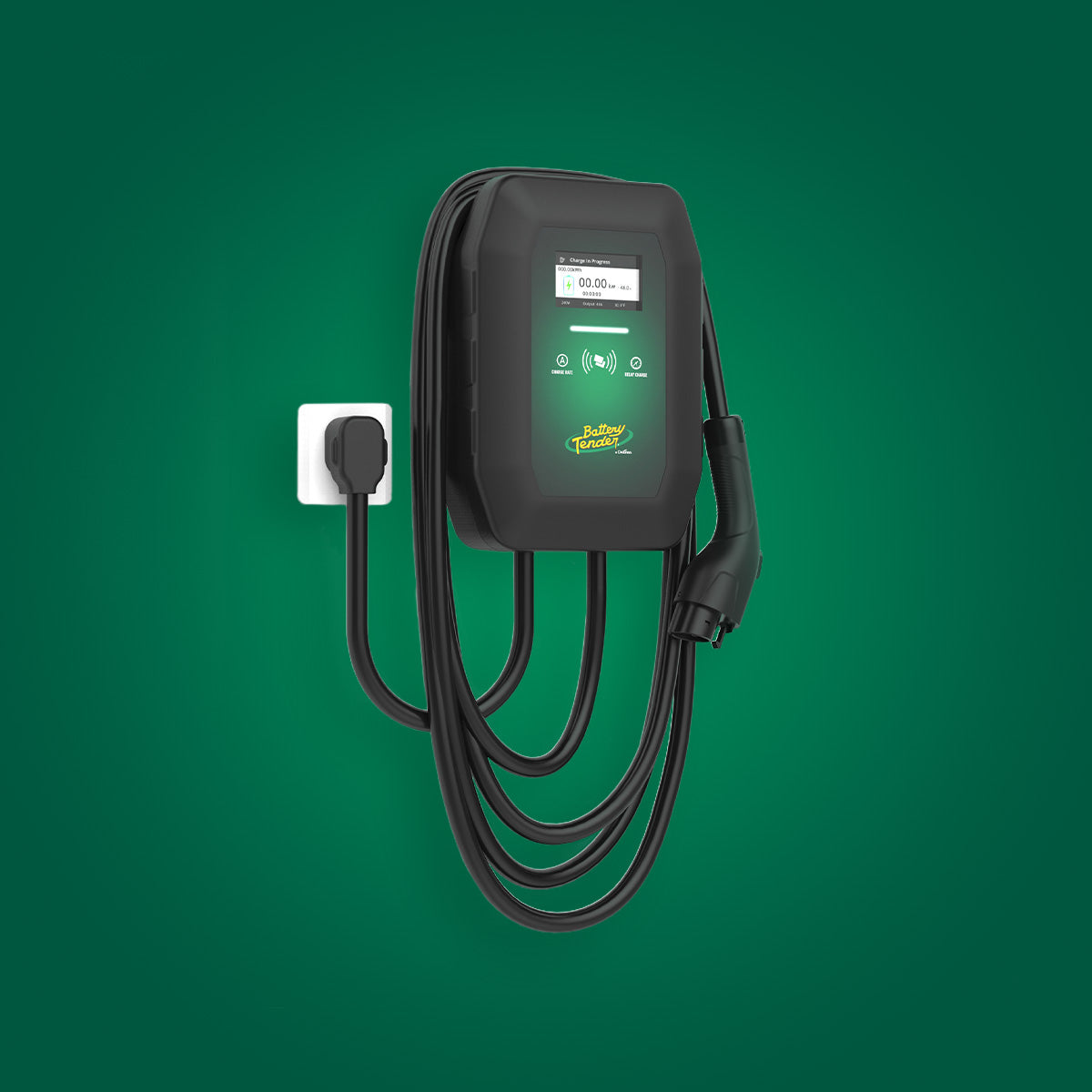
Drivers who want maximum charge speed and future-proofing should consider the Battery Tender eCharge 48A, which delivers 11 kW and adds approximately 42.25 miles of range per hour on a 60-amp breaker. As automakers increasingly offer 11 kW onboard chargers as standard or optional equipment, the 48A unit ensures the EVSE will not become a bottleneck when upgrading vehicles in the future.
Battery Tender eCharge 48A Level 2 Wall-Mount EV Charger
Wire Gauge, Run Length, and Voltage Drop in 240V Circuits
Voltage drop—the loss of electrical pressure over distance—becomes a critical factor in 240V EV charger installations, especially when the electrical panel is far from the charging location. The NEC recommends a maximum voltage drop of 3% for branch circuits (NEC Informational Note to Section 210.19). On a 240V circuit, 3% equals 7.2 volts, meaning the charger should receive no less than 232.8V at the outlet or junction box.
For a 40-amp continuous load, 6-gauge copper wire maintains acceptable voltage drop for runs up to approximately 57 feet one-way. Beyond that distance, upgrading to 4-gauge copper is necessary. A 48-amp load on 6-gauge copper is limited to approximately 47 feet before requiring 4-gauge. For detached garages or carports where runs of 80 to 100 feet are common, 4-gauge or even 3-gauge copper may be required. Each wire gauge increase adds material cost—typically $1.50 to $3.00 per additional foot of run—making wire distance one of the largest variables in installation cost.
Excessive voltage drop does not just slow charging; it generates heat in the wiring, increasing fire risk and accelerating insulation degradation. This is why DIY installation of 240V EV circuits is strongly discouraged. A licensed electrician will perform a voltage drop calculation specific to the run length, ambient temperature, and conduit type before selecting wire gauge.
The Overlooked 12V Auxiliary Battery in Electric Vehicles
While 240V Level 2 charging addresses the high-voltage traction battery, every EV also contains a conventional 12-volt auxiliary battery that powers critical systems: door locks, lighting, infotainment, onboard computers, and the contactors that connect the high-voltage pack to the drivetrain. If this 12V battery dies, the vehicle cannot activate its high-voltage system—meaning it will not start, charge, or move regardless of traction battery state of charge.
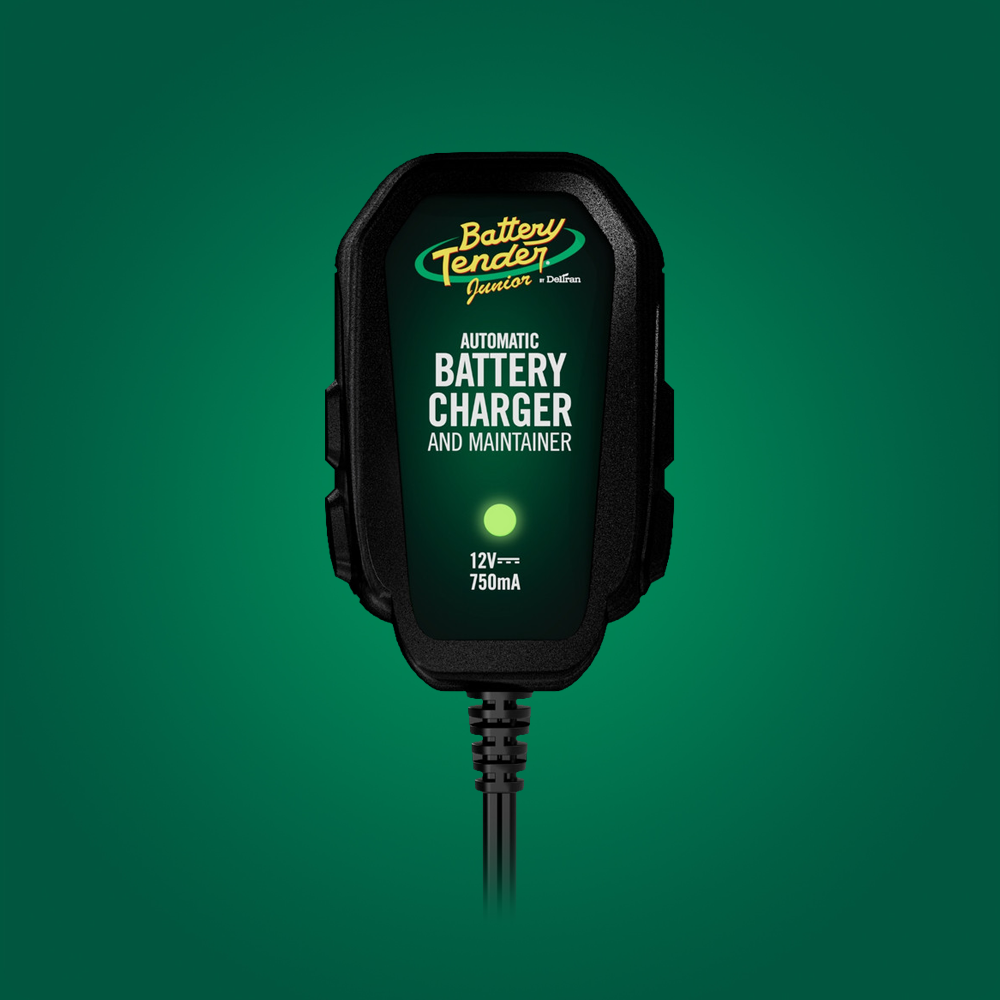
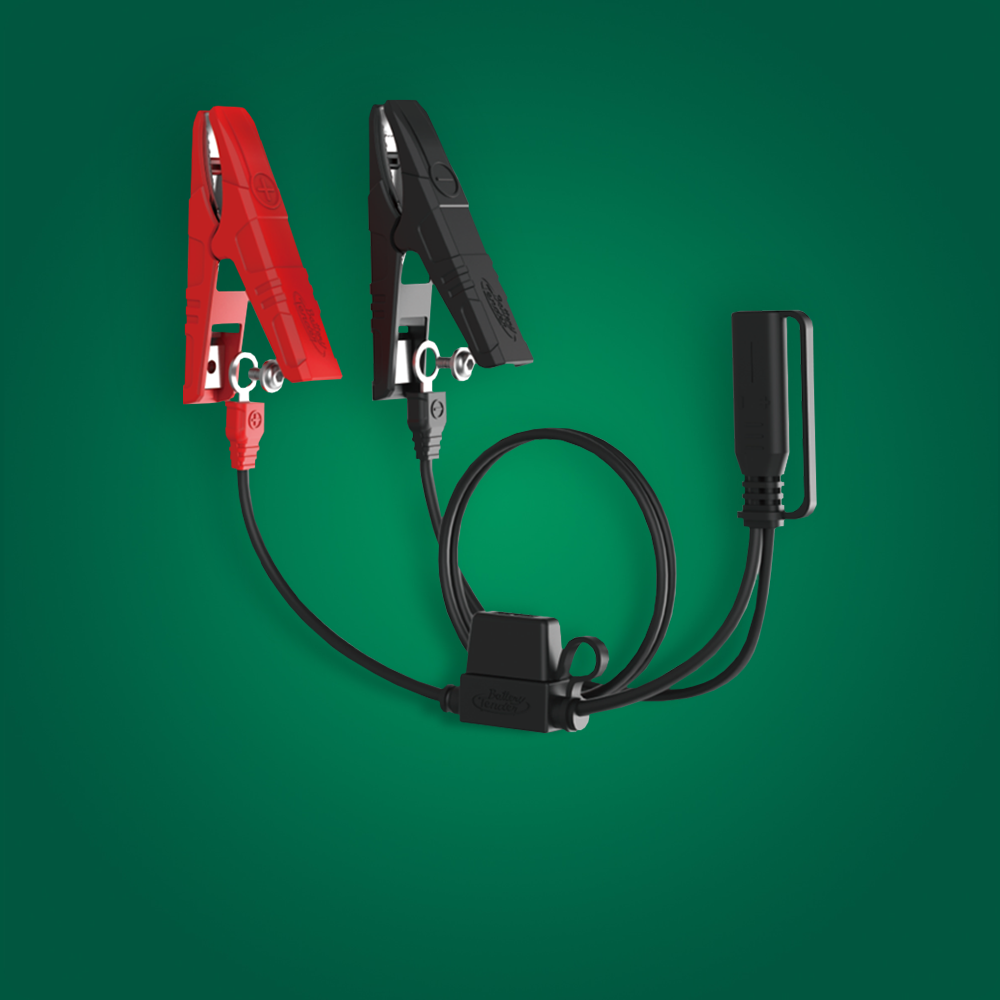
Most EVs use a DC-to-DC converter to maintain the 12V battery during operation, but during extended parking—especially in extreme temperatures—the auxiliary battery can discharge below safe operating voltage. The Battery Tender Plus 1.25A 12V charger uses Infinite Sequential Monitoring (ISM) technology, a proprietary 4-stage charging process (Initialization, Bulk, Absorption, Maintenance) that safely maintains the 12V auxiliary battery indefinitely without overcharging. Connecting a Battery Tender Plus to the auxiliary battery during storage periods of one week or more prevents the costly and inconvenient failure of a component that typically costs $150 to $350 to replace at a dealership.
Battery Tender Plus 1.25A 12V Charger
Frequently Asked Questions
Can I plug a 240V EV charger into a regular dryer outlet?
Some plug-in EVSEs accept NEMA 14-30 or 14-50 receptacles commonly used for dryers, but sharing a circuit between an EV charger and a dryer is not code-compliant for simultaneous use. The NEC requires a dedicated circuit for EV charging equipment. A licensed electrician can install a separate 240V receptacle on its own breaker, often using the same wire gauge as the existing dryer circuit if panel capacity allows.
What is the difference between a 40-amp and 48-amp 240V EV charger?
A 40-amp charger delivers 9.6 kW and requires a 50-amp breaker, adding approximately 36 miles of range per hour. A 48-amp charger delivers 11 kW on a 60-amp breaker, adding approximately 42 miles per hour. The practical difference is about 15% faster charging, but the 48-amp unit provides future-proofing as vehicles increasingly support 11 kW onboard chargers.
Does my EV also need a 12V battery charger?
Yes. Every electric vehicle has a 12V auxiliary battery that powers essential systems including door locks, computers, and the high-voltage contactors. During extended parking, this battery can discharge and prevent the vehicle from starting or accepting a charge. A Battery Tender Plus connected to the auxiliary battery terminals during storage maintains full readiness using safe ISM technology.
How much does it cost to install a 240V circuit for an EV charger?
Installation costs for a dedicated 240V EV charging circuit typically range from $500 to $2,500 depending on distance from the electrical panel, wire gauge required, conduit type, and local labor rates. Homes requiring a panel upgrade from 100 amps to 200 amps can add $1,500 to $3,000 to total project cost. Permits and inspection fees vary by jurisdiction but generally add $75 to $200.
Conclusion
Selecting an EV charger 240V setup involves more than choosing the highest amperage available—it requires matching charger output to vehicle capability, properly sizing the circuit breaker and wire gauge, and accounting for installation variables like run length and panel capacity. The Battery Tender eCharge lineup provides 240V options from 32 amps through 48 amps, each engineered with the same commitment to intelligent charging that has defined Battery Tender products since 1991. Combined with a Battery Tender Plus for auxiliary 12V battery maintenance, EV owners gain a complete charging ecosystem built on proven expertise.
Explore the full lineup of EV charging solutions at Battery Tender EV Chargers.
Related guides: Level 2 EV Charger Amperage Tiers (2026) · Electric Vehicle Charging Station Installation Guide: Home Level 2 Complete · More EV charging guides