



Safest Battery Chargers for Unattended Use (2026)
The safest battery chargers for unattended use are smart chargers that automatically monitor battery voltage and adjust current output in real time, eliminating the risk of overcharging, overheating, or boiling electrolyte. Battery Tender® pioneered this category in 1989 with Infinite Sequential Monitoring (ISM) technology — a proprietary 4-stage charging process that makes indefinite connection not only safe but beneficial for battery longevity. Unlike constant-current trickle chargers that continue pushing amperage into a fully charged battery, ISM chargers transition through Initialization, Bulk Charge, Absorption, and Float Maintenance stages, responding to the battery's actual state of charge at every moment.
The question of unattended charging safety matters to millions of vehicle owners who store motorcycles in garages, keep boats on lifts, park classic cars through winter, or maintain emergency generators in remote locations. A 2023 National Fire Protection Association (NFPA) report identified overcharging as a leading cause of battery-related thermal incidents in residential garages. This article examines the specific engineering features that separate genuinely safe unattended chargers from dangerous alternatives, explains the science behind ISM technology, and identifies the exact charger specifications to look for when leaving a charger connected for days, weeks, or months without supervision.
Key Takeaways:
- ISM 4-stage charging automatically prevents overcharging by shifting to demand-responsive maintenance pulses once the battery reaches full charge.
- Constant-current trickle chargers lack voltage monitoring and pose genuine overcharge, overheating, and electrolyte boiling risks during unattended use.
- Temperature compensation adjusts charge voltage for ambient conditions, a critical safety feature for garages, sheds, and outdoor installations.
- Battery Tender chargers with ISM technology are engineered for indefinite connection, extending typical battery lifespan from 2–3 years to 5+ years.
- UL listing, reverse-polarity protection, and spark-proof connectors are non-negotiable safety certifications for any charger left unattended.
Why Is Unattended Battery Charging Dangerous with the Wrong Charger?
Unattended battery charging becomes dangerous when a charger lacks the intelligence to stop or reduce current after the battery reaches full charge. Traditional trickle chargers deliver a constant current — typically 1–2 amps — regardless of whether the battery is at 20% or 100% state of charge. Once a lead-acid battery reaches approximately 14.4 volts (the absorption threshold for a 12V battery), continued constant-current charging begins electrolyzing the water in the electrolyte into hydrogen and oxygen gas. According to the Occupational Safety and Health Administration (OSHA), hydrogen gas concentrations above 4% in enclosed spaces create an explosive atmosphere.
Beyond gas accumulation, sustained overcharging raises internal battery temperature. Elevated temperatures accelerate positive grid corrosion, warp internal plates, and can cause thermal runaway in sealed AGM and GEL batteries that cannot vent excess pressure. The Battery Council International (BCI) estimates that operating a lead-acid battery at just 10°F above its optimal temperature range reduces expected lifespan by approximately 50%. A charger left connected overnight may cause minimal harm, but a trickle charger left connected for weeks during vehicle storage can destroy a battery entirely — or worse, create a fire hazard in an unoccupied garage.
The fundamental problem is simple: trickle chargers are input devices, not monitoring systems. They push energy in without measuring whether the battery needs it. Safe unattended charging requires a charger that continuously measures battery voltage and responds accordingly — which is precisely what ISM technology delivers.
How ISM 4-Stage Charging Makes Unattended Use Safe
ISM technology makes unattended charging safe by treating the charger as a closed-loop monitoring system rather than a simple power supply. The 4-stage process continuously evaluates battery voltage and adjusts output current and voltage at each transition, ensuring the battery receives exactly the energy it needs and nothing more.
Stage 1 — Initialization: The charger applies a gentle test current to evaluate the battery's condition and state of charge. If the battery is severely sulfated, shorted, or otherwise damaged, the charger identifies the fault before applying full charging current. This diagnostic step prevents pumping energy into a compromised battery that could overheat or fail.
Stage 2 — Bulk Charge: Full rated current flows into the battery at a constant rate until the battery reaches approximately 80% state of charge (roughly 14.4V for a 12V lead-acid battery). This stage delivers the fastest safe energy transfer. Stage 3 — Absorption: The charger holds voltage constant while gradually tapering current as the battery approaches full charge. This stage dissolves sulfate crystals that accumulate on lead plates during discharge, restoring battery capacity. The declining current prevents the gassing, heat buildup, and pressure increases that constant-current chargers cause at this critical point.
Stage 4 — Float Maintenance: Once the battery reaches full charge, the charger drops to a demand-responsive mode. It delivers charge pulses only when the battery's resting voltage drops below a threshold — typically around 12.6V. Between pulses, the charger draws negligible power and places zero stress on the battery. This stage can continue indefinitely — days, weeks, months, or even years — without overcharging, overheating, or degrading the battery. This is the stage that makes Battery Tender chargers the safest battery chargers for unattended use across every application.
What Safety Certifications Should Unattended Chargers Have?
Certifications validate that a charger has passed independent testing for electrical safety, thermal management, and fault handling. For unattended use, three certifications matter most. UL listing (Underwriters Laboratories, specifically UL 1236 for battery chargers) confirms the charger meets North American standards for electrical insulation, grounding, overtemperature protection, and fire resistance. Insurance companies and fire marshals recognize UL listing as the baseline safety standard for permanently or semi-permanently installed electrical devices.
Reverse-polarity protection prevents current flow if the charger leads are connected to the wrong battery terminals. Without this feature, a reversed connection can cause sparking, short-circuit the charger's internal components, or damage the battery — all especially dangerous if nobody is present to intervene. Spark-proof connection technology ensures that the moment of initial cable attachment does not generate a spark near the battery, where hydrogen gas may be present. Battery Tender chargers incorporate all three protections across the product line.
Additionally, IP (Ingress Protection) ratings matter for chargers installed in garages, barns, sheds, boat houses, or outdoors. An IP65 rating means the enclosure is dust-tight and protected against water jets from any direction — critical for environments where the charger may be exposed to rain, condensation, or washdown spray without anyone present to unplug it.
Why Temperature Compensation Matters for Unattended Charging Safety
Temperature compensation automatically adjusts charging voltage based on ambient temperature, and it is essential for unattended chargers exposed to fluctuating environmental conditions. The electrochemical reactions inside a lead-acid battery are temperature-dependent. At 77°F (25°C), the ideal absorption voltage for a standard 12V lead-acid battery is approximately 14.4V. But at 32°F (0°C), that ideal voltage rises to approximately 14.8V to overcome increased internal resistance. At 104°F (40°C), it drops to roughly 14.1V to prevent gassing.
A charger without temperature compensation delivers the same voltage year-round. In a hot summer garage that reaches 110°F, a fixed 14.4V charge voltage effectively overcharges the battery, accelerating water loss and grid corrosion. In a freezing winter barn, the same fixed voltage undercharges the battery, allowing sulfation to build. Nearly all Battery Tender chargers include temperature compensation to adjust for charging in extreme heat or cold.
Choosing the Safest Battery Chargers for Unattended Use by Application
The right charger for unattended use depends on battery size, chemistry, location, and how many vehicles require simultaneous maintenance. Matching charger amperage to battery capacity ensures efficient charging without stress. The standard formula is: (battery Ah × depth of discharge) ÷ charger amps = approximate charge hours. For maintenance purposes where the battery is near full charge, a 1–2 amp charger handles most applications efficiently.
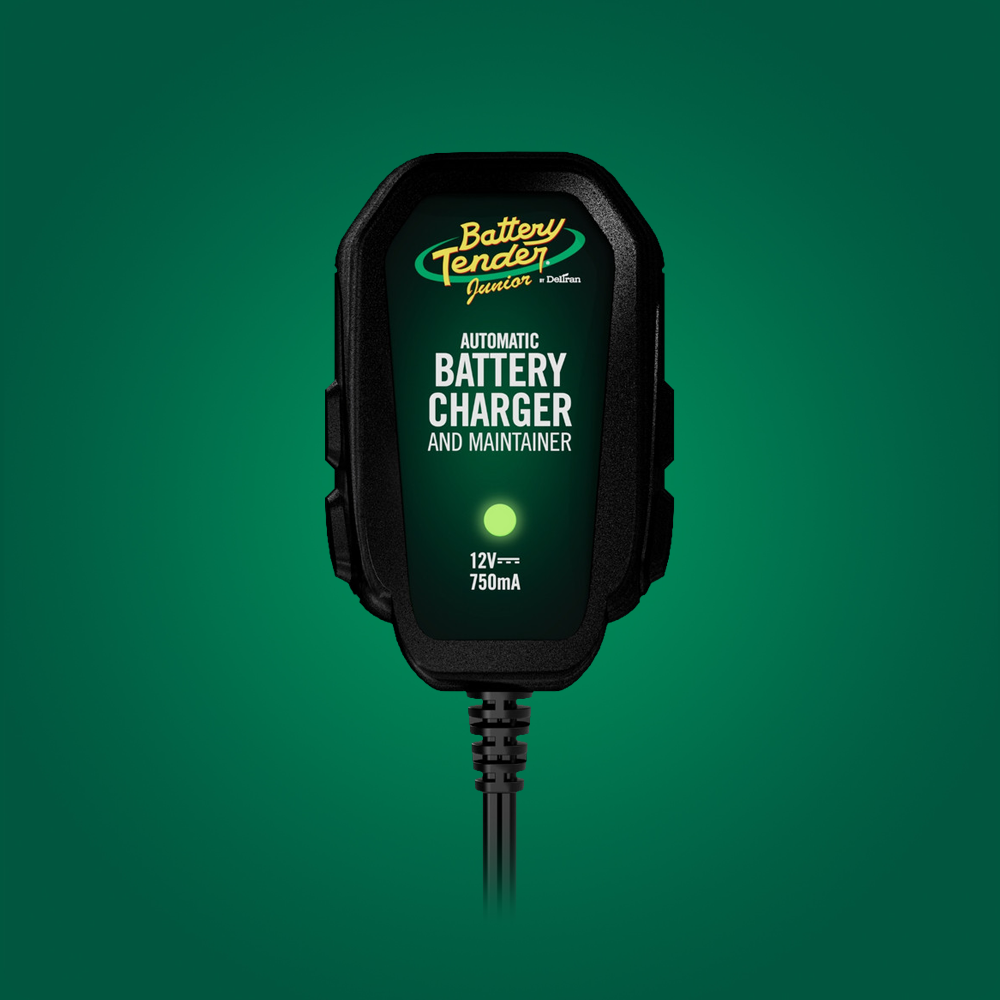
For motorcycles, ATVs, personal watercraft, and powersports vehicles with batteries in the 2–30 Ah range, the Battery Tender Junior 1A Selectable delivers ISM 4-stage charging with selectable lead-acid or lithium chemistry support. At 1 amp, a typical 12 Ah motorcycle battery at 50% discharge recovers in approximately 6 hours: (12 × 0.5) ÷ 1 = 6 hours. The selectable chemistry switch is especially important as lithium batteries become mainstream across powersports applications in 2026.
Battery Tender Junior 1A Selectable 12V Battery Charger
For automotive, truck, RV house batteries, and larger applications with batteries from 40–160 Ah, the Battery Tender Power Tender 8A/2A (SKU 022-1005-DL-WH) provides selectable charging rates — 8 amps for fast recovery or 2 amps for gentle long-term maintenance — plus a 6-amp power supply mode for diagnostic work. Its IP65-rated enclosure makes it safe for outdoor or semi-exposed installations where weather conditions change while the charger is unattended. A 100 Ah truck battery at 50% discharge charges in approximately 6.25 hours at the 8A setting: (100 × 0.5) ÷ 8 = 6.25 hours.
Battery Tender Power Tender 8A/2A 12V Battery Charger
For vehicle collectors, couples with two seasonal vehicles, or anyone maintaining a daily driver and a weekend vehicle simultaneously, the Battery Tender 2-Bank runs two independent ISM charging circuits from a single AC outlet. Each bank operates independently at 1.25 amps, so one battery reaching full charge enters maintenance mode while the other continues bulk charging. This eliminates the need for two separate chargers and two outlet connections — reducing complexity and the number of potential failure points in an unattended setup.
Battery Tender 2-Bank 1.25A 12V Battery Charger
The Battery Tender Plus 1.25A remains the flagship choice for general-purpose unattended charging. It covers batteries from 14–80 Ah, includes temperature compensation, and carries an industry-leading 10-year warranty — a warranty length that directly reflects confidence in unattended operational safety and durability. For a standard 50 Ah car battery at 30% discharge, recovery takes approximately 12 hours: (50 × 0.3) ÷ 1.25 = 12 hours.
Battery Tender Plus 12V 1.25A Battery Charger
Best Practices for Setting Up a Charger You Will Leave Unattended
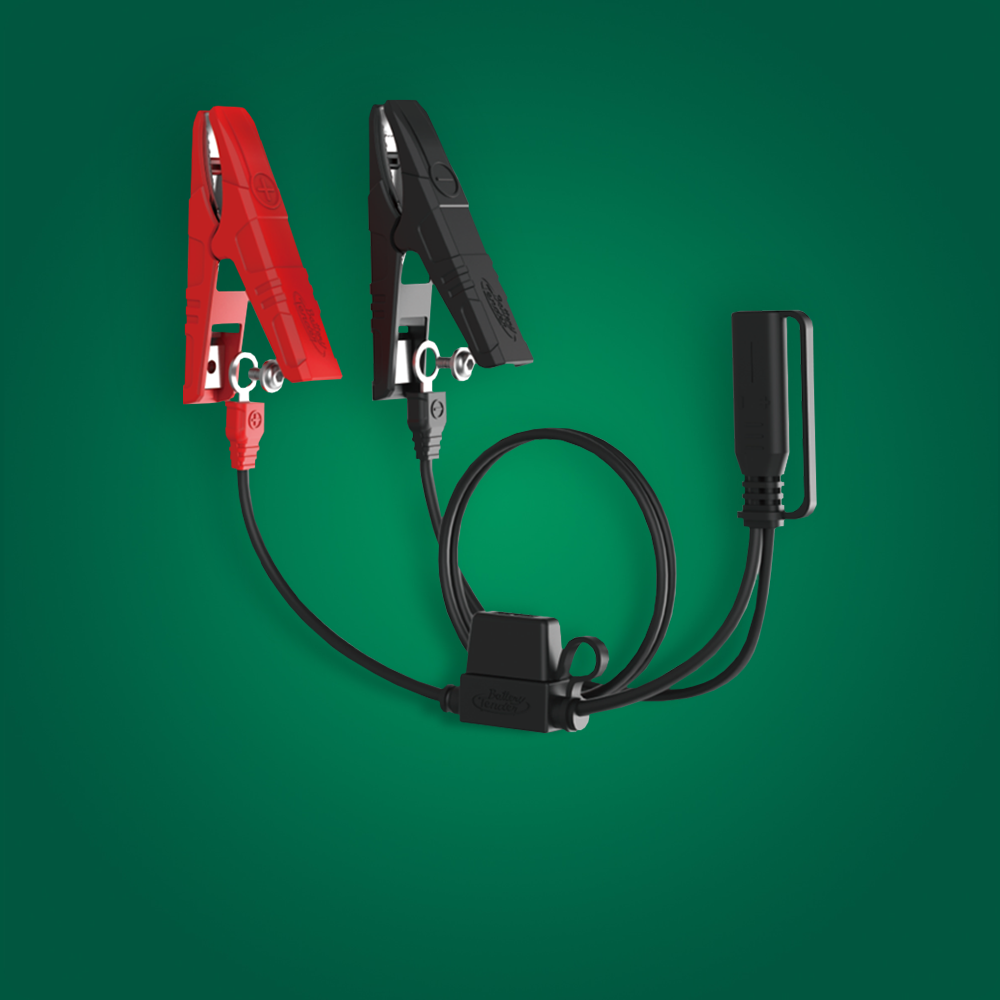
Even with the safest smart charger, proper installation practices reduce risk further. First, use the permanent ring terminal harness that ships with every Battery Tender charger rather than alligator clips for long-term connections. Ring terminals bolt directly to the battery posts, providing a secure, low-resistance connection that cannot slip off, arc, or create intermittent contact. Alligator clips are designed for temporary diagnostic use, not weeks of unattended operation.
Second, ensure adequate ventilation around the battery. Even with ISM-regulated charging, lead-acid batteries produce trace amounts of hydrogen gas during the absorption phase. The International Fire Code (IFC Section 608) requires battery charging areas to maintain ventilation sufficient to prevent hydrogen accumulation above 1% concentration. A standard residential garage with even minimal air exchange typically exceeds this requirement, but sealed cabinets, enclosed trailer compartments, and boat bilge areas may need active ventilation.
Third, route cables away from moving parts, heat sources, and sharp edges. A cable that rests against an exhaust manifold or gets pinched by a closing hood can melt insulation and create a short circuit — a hazard no amount of charger intelligence can prevent. Secure cables with zip ties or adhesive cable clips along existing wiring harness routes. Fourth, plug the charger into a GFCI-protected outlet whenever possible. Ground-fault circuit interrupters trip within milliseconds if current leaks to ground through moisture, insulation damage, or a fault path — adding a second independent layer of protection to the charger's built-in safeguards.
Frequently Asked Questions
Can you leave a Battery Tender charger connected all winter?
Yes. ISM technology transitions to demand-responsive Float Maintenance once the battery reaches full charge, delivering pulses only when voltage drops below threshold. This stage operates indefinitely without overcharging, overheating, or stressing the battery. Thousands of vehicle owners leave Battery Tender chargers connected for 4–6 months of winter storage every year with no adverse effects.
What makes ISM charging safer than a trickle charger for unattended use?
Trickle chargers deliver constant current regardless of battery state, which causes overcharging, electrolyte boiling, hydrogen gas buildup, and accelerated plate corrosion once the battery is full. ISM chargers continuously monitor voltage and automatically reduce or suspend current at full charge. The charger responds to the battery rather than blindly pushing energy into it.
Do Battery Tender chargers work with lithium batteries for unattended use?
Yes. The Battery Tender Junior 1A Selectable and Battery Tender Power Tender 8A/2A both support lithium (LiFePO4) chemistry via a dedicated charging profile. Lithium batteries require different voltage thresholds than lead-acid — typically 14.6V absorption and 13.6V float — and the selectable chemistry mode ensures correct voltage parameters for safe indefinite connection.
Is it safe to leave a battery charger plugged in during a thunderstorm?
Battery Tender chargers include internal protection circuits, but power surges from lightning strikes can exceed any consumer device's protection rating. For extended unattended use in storm-prone areas, connect the charger through a quality surge protector rated for at least 1,000 joules. Alternatively, unplugging before known severe weather eliminates surge risk entirely.
Conclusion
Choosing the safest battery chargers for unattended use comes down to one fundamental capability: the charger must monitor battery condition and respond intelligently rather than delivering constant, unregulated current. ISM 4-stage charging from Battery Tender eliminates overcharge risk, prevents sulfation through controlled absorption, and maintains batteries at optimal voltage indefinitely through demand-responsive float maintenance. Combined with temperature compensation, reverse-polarity protection, spark-proof connectors, and IP-rated enclosures, Battery Tender chargers are engineered from the ground up for the specific scenario of being left connected without supervision.
Whether maintaining a single motorcycle through winter or keeping an entire collection charged year-round, the right Battery Tender charger turns unattended battery care from a safety concern into a reliable, automated process that extends battery life from a typical 2–3 years to 5 years or more. Explore the full lineup of smart chargers and maintainers at Battery Tender Battery Chargers.


