



Golf Cart Battery Maintenance: Extending Pack Life with the Right Charger and Routine (2026)
Golf cart battery maintenance extending pack life requires a disciplined routine of proper charging, regular watering, terminal cleaning, and equalization cycles. A well-maintained lead-acid battery pack in a 48V golf cart can deliver 5–7 years and over 1,000 deep-discharge cycles, while a neglected pack often fails in just 2–3 years. Battery Tender® pioneered smart charging technology in 1989, and the Battery Tender PowerPlus line brings industrial-grade Infinite Sequential Monitoring (ISM) charging directly to the golf cart market — ensuring every charge cycle protects and extends battery life rather than degrading it.
Golf carts represent one of the most demanding battery use cases in the consumer world. Unlike a car battery that rarely drops below 95% state of charge, golf cart batteries routinely deep-discharge to 20–30% during an 18-hole round. That daily deep cycling accelerates sulfation, stratification, and plate degradation — unless every recharge is managed with a smart, multi-stage charging system. This guide covers every step of golf cart battery maintenance, from watering schedules to charger selection, so owners can protect a battery pack investment that typically costs $800–$2,000 to replace.
Key Takeaways:
- Charge golf cart batteries after every use — never store a discharged pack overnight.
- Proper watering, terminal cleaning, and equalization can double battery pack lifespan.
- ISM 4-stage charging prevents overcharging and actively reverses sulfation buildup.
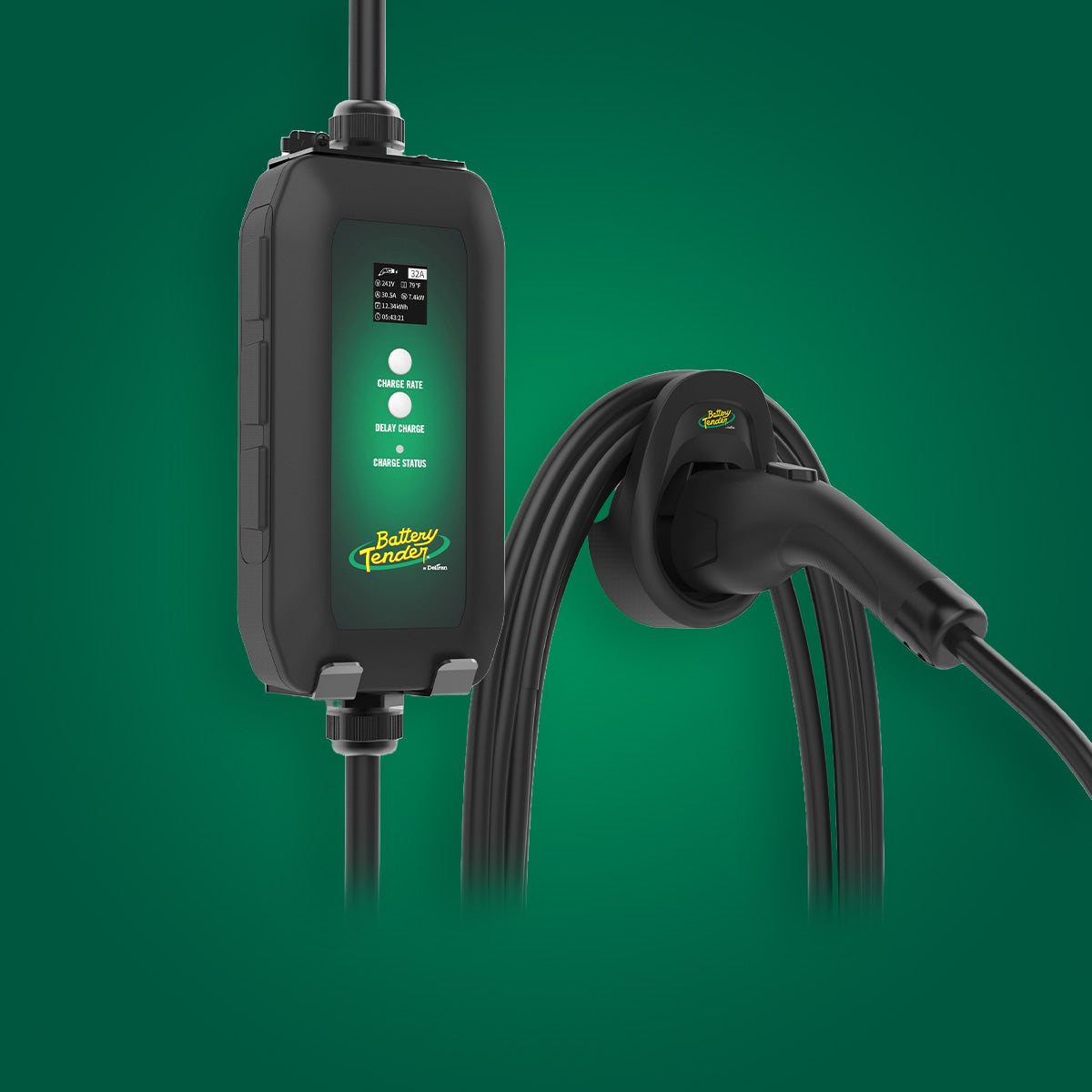
- A Battery Tender PowerPlus 48V charger delivers IP68-rated, permanently mountable smart charging designed for daily deep-cycle demands.
- The charging time formula — (Battery Ah × depth of discharge) ÷ charger amps — helps predict accurate recovery times.
Why Golf Cart Batteries Fail Early: The Deep-Discharge Problem
Golf cart batteries fail prematurely because daily deep discharges accelerate sulfation — the single largest killer of lead-acid battery packs. When a battery discharges below 50% state of charge, lead sulfate crystals form on the plates. If those crystals are not dissolved during the next charge cycle, they harden into a permanent, insulating layer that reduces capacity with every subsequent cycle.
According to research published by the Battery Council International (BCI), sulfation accounts for approximately 80% of lead-acid battery failures. A typical 48V golf cart pack using six 8V batteries rated at 150 Ah can lose 10–15% of its usable capacity within the first year if consistently recharged with a basic single-stage charger that lacks an absorption phase. The absorption stage — where voltage is held constant while current tapers — is what dissolves freshly formed sulfate crystals before they harden.
Additional factors that shorten pack life include electrolyte stratification (where acid concentration settles at the bottom of the cells), corrosion from acid mist on terminals, and chronic undercharging from undersized or outdated chargers. Every one of these problems is preventable with the right maintenance routine and the right charger.
Step-by-Step Golf Cart Battery Maintenance for Extending Pack Life
A complete golf cart battery maintenance routine for extending pack life involves five repeatable steps. Performing these consistently after every ride — or at minimum weekly for daily-use carts — is the foundation of a long-lasting battery pack.
Step 1: Charge Immediately After Every Use
Connect the charger as soon as the cart returns to its parking area. Sulfation begins forming within hours of discharge. A smart charger with ISM technology — which uses four stages: Initialization, Bulk, Absorption, and Maintenance — ensures each charge cycle fully recovers the battery and dissolves sulfate crystals during the critical Absorption phase. Never allow a discharged pack to sit overnight without charging.
Step 2: Check and Add Distilled Water
Flooded lead-acid batteries lose water through electrolysis during charging. Check electrolyte levels every 2–4 weeks (weekly for heavily used carts). Add only distilled water — never tap water, which contains minerals that contaminate plates. Fill each cell to approximately ¼ inch above the plate tops, but never above the fill ring. Always water after charging, not before, because electrolyte levels rise as the battery charges.
Step 3: Clean Terminals and Connections
Corrosion on battery terminals creates resistance that reduces charging efficiency and accelerates uneven cell degradation. Clean terminals every 1–2 months using a mixture of baking soda and water (one tablespoon per cup). Apply a thin coat of dielectric grease or terminal protectant spray after cleaning. Inspect all inter-battery cable connections for tightness — a loose connection causes localized heating and can damage both the cable and the terminal post.
Step 4: Equalize Monthly
Equalization is a controlled overcharge that brings all cells in a battery pack to the same state of charge and reverses electrolyte stratification. Most battery manufacturers — including Trojan, US Battery, and Crown — recommend equalizing every 30 days or every 10–15 discharge cycles. Equalization typically raises voltage 0.5–1.0V above normal full-charge voltage for 1–3 hours. Check the battery manufacturer datasheet for exact voltage and duration specifications.
Step 5: Inspect for Physical Damage
Cracked cases, bulging sides, and leaking electrolyte all indicate irreversible cell damage. A single failed battery in a series-connected pack drags down the performance of every other battery. Replace damaged batteries immediately and always replace in matched sets when possible, because mixing old and new batteries creates charge imbalances that shorten the life of the new batteries.
How ISM 4-Stage Charging Protects Golf Cart Battery Packs
ISM technology from Battery Tender delivers four distinct charging stages that match the electrochemical needs of the battery at each point in the charge cycle. This is fundamentally different from single-stage chargers — common in older golf carts — that apply a fixed current or voltage regardless of battery condition.
During Initialization, the charger tests the battery and applies a gentle current to assess condition. Bulk Charge delivers the full rated current until the battery reaches approximately 80% state of charge. Absorption holds voltage constant while tapering current — this is the stage that dissolves sulfate crystals and prevents capacity loss. Finally, Maintenance delivers demand-responsive charge pulses only when voltage drops, keeping the pack at full charge without overcharging.
The distinction matters most for golf carts because the daily deep-discharge cycle means batteries pass through all four stages during every charge. A charger that skips or abbreviates the Absorption stage leaves sulfate crystals intact — and those crystals accumulate ride after ride until the pack can no longer hold a useful charge.
Choosing the Right Battery Tender PowerPlus Charger for Golf Cart Battery Maintenance
The correct charger voltage must match the total system voltage of the golf cart. Using the wrong voltage charger will either undercharge (reducing capacity) or overcharge (boiling off electrolyte and warping plates). Here is a breakdown by system voltage.
48V Systems (Most Modern Golf Carts): The majority of golf carts manufactured since the early 2000s use 48V systems — typically six 8V batteries or four 12V batteries wired in series. The Battery Tender PowerPlus 48V delivers 15 amps of ISM-managed charging through an IP68-rated, fully waterproof housing designed for permanent on-board mounting in exposed outdoor environments. At 15A, a fully depleted 150 Ah pack recovers in approximately 10 hours using the charging time formula: (150 Ah × 1.0 depth of discharge) ÷ 15A = 10 hours.
Battery Tender PowerPlus 48V 15A IP68 Charger — $379.95
36V Systems: Older Club Car, E-Z-GO, and Yamaha models commonly use 36V configurations with six 6V batteries. The Battery Tender PowerPlus 36V delivers 18 amps with identical ISM technology and IP68 construction, making it the correct match for these legacy systems. Estimated recovery for a depleted 220 Ah 36V pack: (220 Ah × 1.0) ÷ 18A ≈ 12.2 hours.
Battery Tender PowerPlus 36V 18A IP68 Charger — $359.95
24V Systems: Some older industrial-style utility carts and certain specialty vehicles run 24V systems. The Battery Tender PowerPlus 24V provides 20 amps of smart charging in the same IP68 chassis, with UL marine ignition protection certification for use in enclosed battery compartments where hydrogen gas may accumulate.
Battery Tender PowerPlus 24V 20A IP68 Charger — $359.95
All three Battery Tender PowerPlus models share a unified chassis design, which means the same mounting hardware and footprint work across all voltage variants. For fleet operations managing carts with mixed voltages, this simplifies installation and spare-parts inventory.
Seasonal Storage Tips for Golf Cart Battery Packs
In climates with cold winters, many golf carts sit idle for 3–5 months. A lead-acid battery self-discharges at approximately 3–5% per month at 68°F (20°C) — and faster in warmer storage environments. A 150 Ah pack left unattended for four months can lose 12–20% of its charge, pushing it deep into sulfation territory.
Before seasonal storage, fully charge the battery pack, top off electrolyte levels with distilled water, clean all terminals, and leave the Battery Tender PowerPlus charger connected. The ISM Maintenance stage automatically monitors voltage and delivers charge pulses only when needed — preventing both self-discharge sulfation and the overcharging damage caused by older "always-on" trickle chargers. The IP68 waterproof rating means the charger can remain mounted on the cart in an unheated garage, carport, or outdoor shed without risk of moisture damage.
When spring arrives, inspect for corrosion that may have developed, check water levels, and perform an equalization charge before the first ride. This routine protects the pack investment and ensures full capacity is available from the first round of the season.
DC Plug Accessories for Simplified Charging Connections
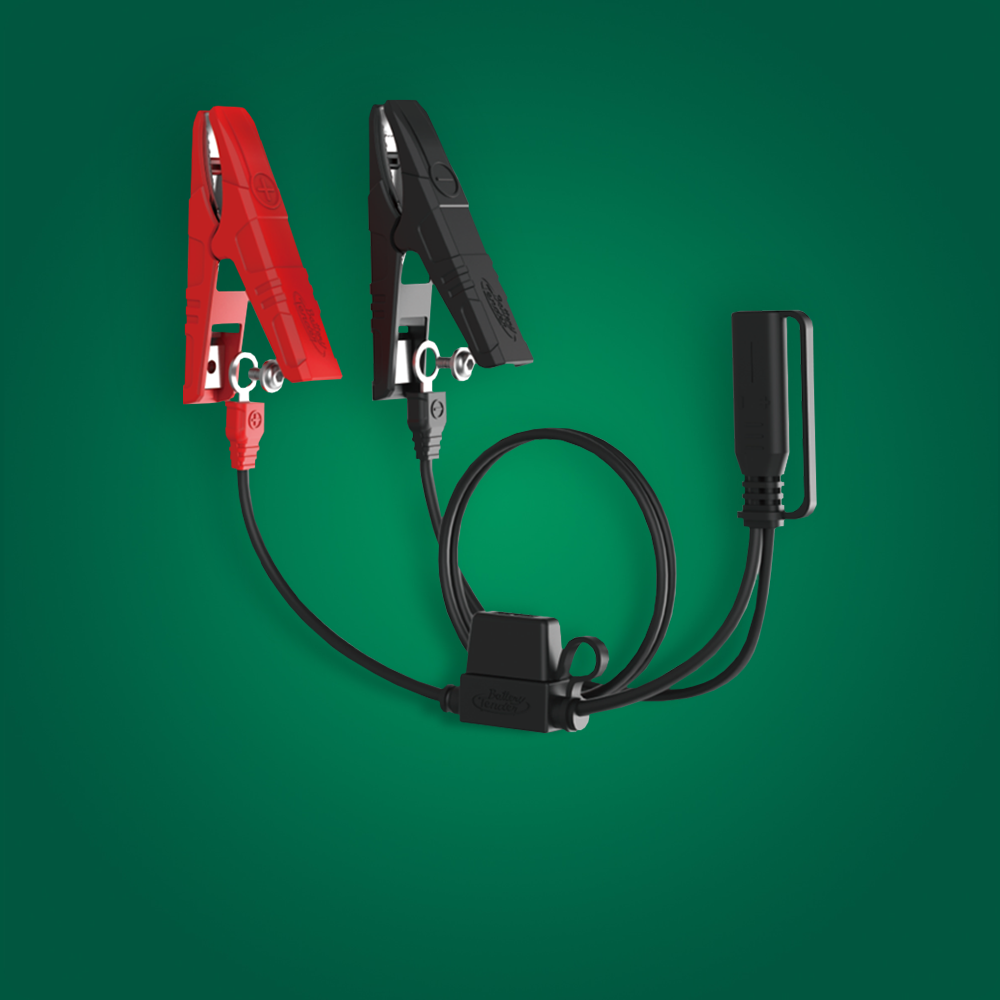
Battery Tender offers DC plug accessory cables designed to connect directly to the OEM charge receptacle on popular golf cart models. These cables eliminate the need to open battery compartments for every charge, reducing the risk of accidental terminal contact and simplifying daily charging into a single-plug operation.
Available DC plug cables cover 36V E-Z-GO Medalist/TXT configurations, 36V E-Z-GO crow foot connectors, 48V Club Car DS/Precedent models, 48V E-Z-GO TXT/RXV triangular connectors, and 48V Yamaha G19/G22/G29 models. Each cable is priced at $49.95 and is available through the Battery Tender golf cart accessories collection.
Browse All Battery Tender Golf Cart Chargers and Accessories
Frequently Asked Questions
How often should golf cart batteries be watered?
Check electrolyte levels every 2–4 weeks for standard use and weekly for daily-use carts. Add only distilled water after charging — never before — and fill each cell to approximately ¼ inch above the plate tops. Tap water contains minerals that coat battery plates and reduce capacity. Regular watering prevents plate exposure to air, which causes irreversible oxidation damage.
Can a smart charger like the Battery Tender PowerPlus be left connected indefinitely?
Yes. The ISM 4-stage charging process includes a Maintenance stage that delivers charge pulses only when battery voltage drops below a set threshold. Unlike trickle chargers that apply constant current regardless of state, ISM technology monitors the battery continuously and responds to actual demand. This makes the Battery Tender PowerPlus safe for indefinite connection during both daily use and long-term seasonal storage.
How long does it take to fully charge a golf cart battery pack?
Use the formula: (battery Ah × depth of discharge) ÷ charger amps = approximate hours. For example, a 48V pack with 150 Ah batteries discharged to 50% and charged at 15A: (150 × 0.5) ÷ 15 = 5 hours. A fully depleted pack at the same amperage takes approximately 10 hours. Higher-amp chargers like the Battery Tender PowerPlus reduce recovery time compared to standard 5–8A OEM chargers.
What voltage charger does a golf cart need?
The charger voltage must match the total system voltage — not individual battery voltage. Count the batteries and multiply by their individual voltage: six 8V batteries = 48V system; six 6V batteries = 36V system; four 6V batteries = 24V system. Battery Tender PowerPlus chargers are available in 24V, 36V, and 48V models, each engineered with ISM technology specifically for deep-cycle applications.
Conclusion
Golf cart battery maintenance extending pack life comes down to consistent habits — charge after every use, water regularly with distilled water, clean terminals monthly, and equalize every 30 days. These steps prevent the sulfation, stratification, and corrosion that cause premature pack failure. Pairing this routine with a Battery Tender PowerPlus charger equipped with ISM 4-stage technology ensures every charge cycle actively protects the battery pack, whether during daily use or months of seasonal storage. The IP68-rated, permanently mountable design means the charger withstands the same outdoor conditions as the cart itself.
Explore the complete lineup of chargers, DC plug accessories, and multi-bank solutions built for golf cart applications at the Battery Tender Golf Cart collection page.
Last updated: 2026