



Golf Cart Battery Charging: The Complete Guide for 36V and 48V Systems
Proper golf cart battery charging is the single most important factor in maximizing the life and performance of your cart's battery system. Whether you're running a traditional 36-volt flooded lead-acid bank, a 48-volt AGM setup, or a modern lithium pack, the charger you choose and how you use it determines how many seasons you get before replacement. Battery Tender® PowerPlus chargers deliver the high-voltage, high-amperage ISM charging that 36V and 48V golf cart systems require — and this guide covers everything you need to charge correctly, regardless of chemistry.
Understanding Golf Cart Battery Systems
A standard 36-volt golf cart carries six 6-volt flooded lead-acid batteries wired in series. A 48-volt golf cart carries either six 8-volt batteries or eight 6-volt batteries, also wired in series. These individual batteries must be maintained as a matched set to deliver reliable performance across a full round of driving.
Modern lithium golf cart batteries work differently. Rather than a bank of smaller batteries wired in series, a lithium system is typically a single self-contained 36V or 48V pack that replaces the entire lead-acid bank in one installation. This distinction matters significantly when selecting a charger — a multi-battery lead-acid bank and a single lithium pack have fundamentally different charging requirements, and mixing them up causes permanent damage.
The deep-cycle nature of golf cart operation — sustained current draw over extended driving sessions followed by a full recharge — demands batteries built for true deep-cycle construction and chargers matched precisely to their voltage and chemistry.
Golf Cart Battery Chemistry: FLA, AGM, and Lithium
Golf cart batteries come in three primary chemistries, each with distinct charging requirements and performance characteristics.
Flooded Lead-Acid (FLA) remains the dominant chemistry in traditional golf cart applications due to excellent cycle life, low cost, and tolerance for equalization charging. A quality 6-volt flooded golf cart battery maintained with proper charging and regular watering can achieve 600 to 800 charge cycles over four to six years of service. FLA batteries require periodic equalization — a controlled overcharge that balances voltage across all cells and reverses mild sulfation before it becomes permanent capacity loss.
AGM golf cart batteries are gaining ground in residential and resort applications where maintenance-free operation justifies the higher initial cost. No watering is required, there are no hydrogen venting concerns, and AGM batteries handle opportunity charging during breaks in use better than flooded batteries — making them practical for carts that see continuous daily operation. AGM batteries require the same multi-stage charging as FLA batteries but at slightly lower absorption voltages, and they must never be equalized.
Lithium golf cart batteries in most modern installations are a single self-contained 36V or 48V pack that replaces the entire lead-acid bank. They offer dramatically longer cycle life — 2,000 to 3,000 cycles versus 400 to 800 for lead-acid — significantly lighter weight, and faster charge acceptance. However, lithium packs require lithium-compatible chargers that deliver the correct charge profile. A lead-acid charger used on a lithium pack, or a lithium charger used on a lead-acid bank, risks damage to both the battery and the charger.
Why ISM Charging Matters for Golf Cart Batteries
Golf cart batteries are routinely discharged to 50% depth or deeper, then expected to accept a complete recharge before the next round. This demanding cycle pattern requires a charger capable of delivering a full, intelligent multi-stage charge — not a simple bulk charge that terminates at a fixed timer or voltage threshold.
Battery Tender PowerPlus chargers use ISM (Intelligent System Management) four-stage charging: a desulfation pulse stage that conditions sulfated plates, a bulk charge stage that restores the majority of capacity quickly, an absorption stage that completes the top 20% of capacity that bulk charging alone cannot reach, and a float maintenance stage that holds the battery at full charge without overcharging.
The absorption stage is particularly critical for deep-cycle golf cart batteries. Shortcutting absorption — which basic chargers do by stopping at bulk charge completion — is the single most common cause of premature capacity loss in regularly cycled golf cart batteries. Over time, consistently incomplete charges degrade plate structure and reduce usable capacity in ways that cannot be reversed.
Battery Tender PowerPlus Chargers for 36V and 48V Golf Carts
The Battery Tender PowerPlus 36V 18 AMP is the purpose-built charging solution for standard 36-volt golf cart systems. Its 18A output provides efficient charge times for a six-battery 36V bank, and the ISM four-stage process delivers the complete absorption stage that protects battery longevity. IP68 weatherproof construction allows outdoor cart charging without shelter concerns — a practical advantage for carts stored in open garages or under carport covers.
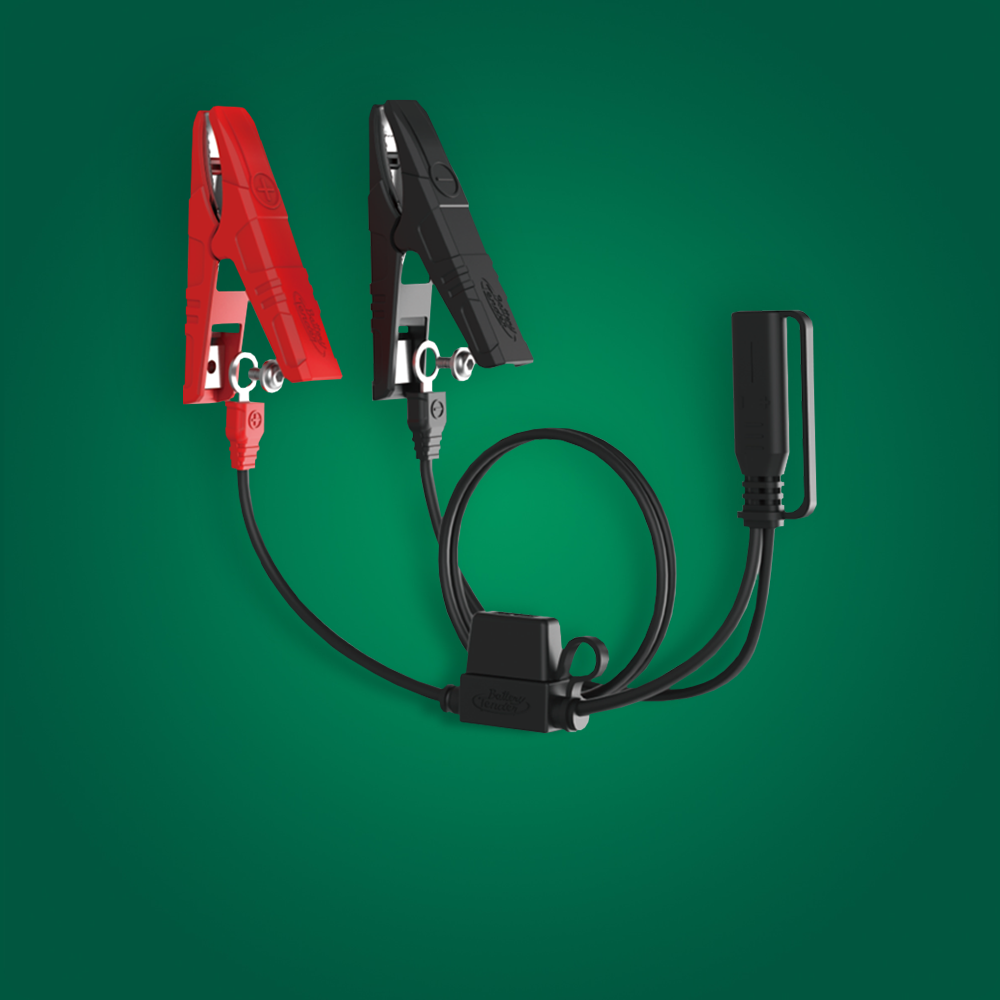
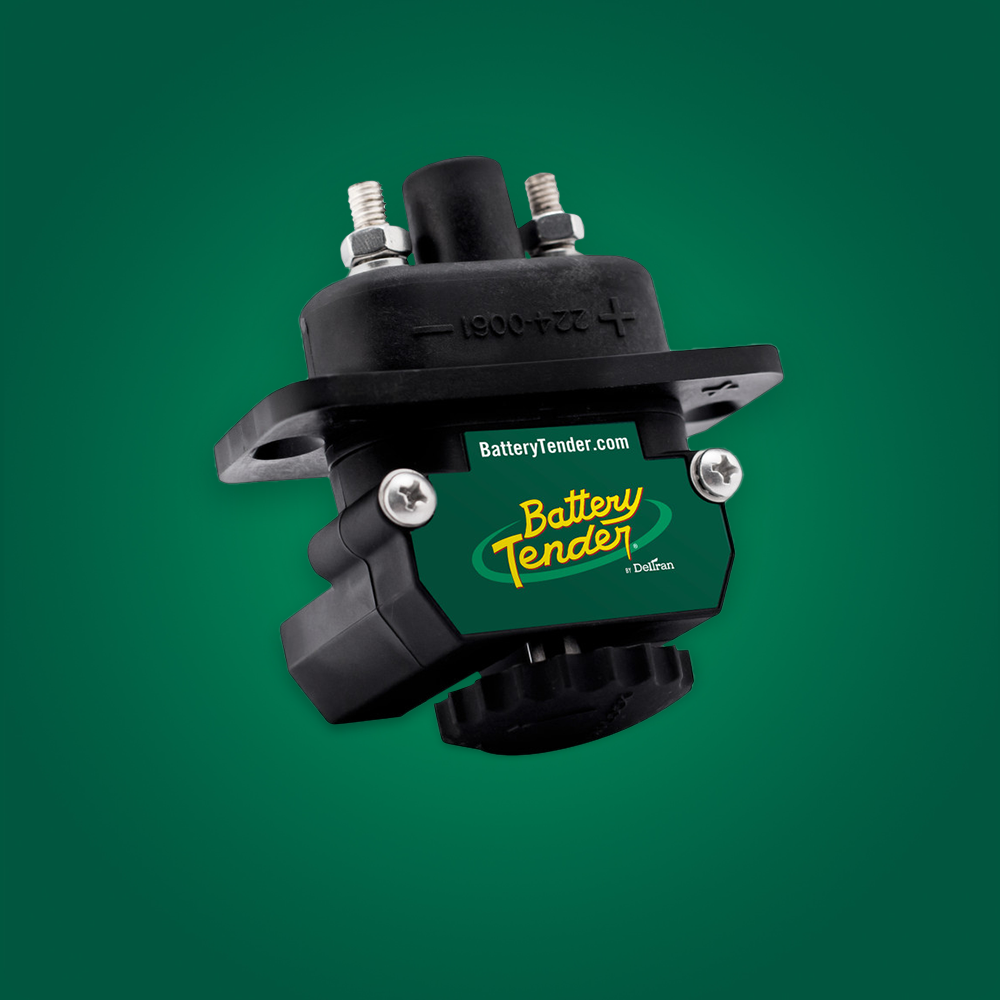
The Battery Tender PowerPlus 48V 15 AMP serves 48-volt systems with the same IP68-rated weatherproof construction and ISM charging intelligence. Both models connect directly to the golf cart's charging port — typically a Lester or SB50 Anderson connector — or through ring terminal connections to the battery bank.
Both PowerPlus models support FLA and AGM chemistry profiles. For carts equipped with a lithium pack, verify the pack manufacturer's recommended charge voltage and profile before selecting a charger. Many lithium golf cart packs include an integrated Battery Management System (BMS) that communicates with compatible chargers — confirm compatibility before purchase rather than assuming voltage match alone is sufficient.
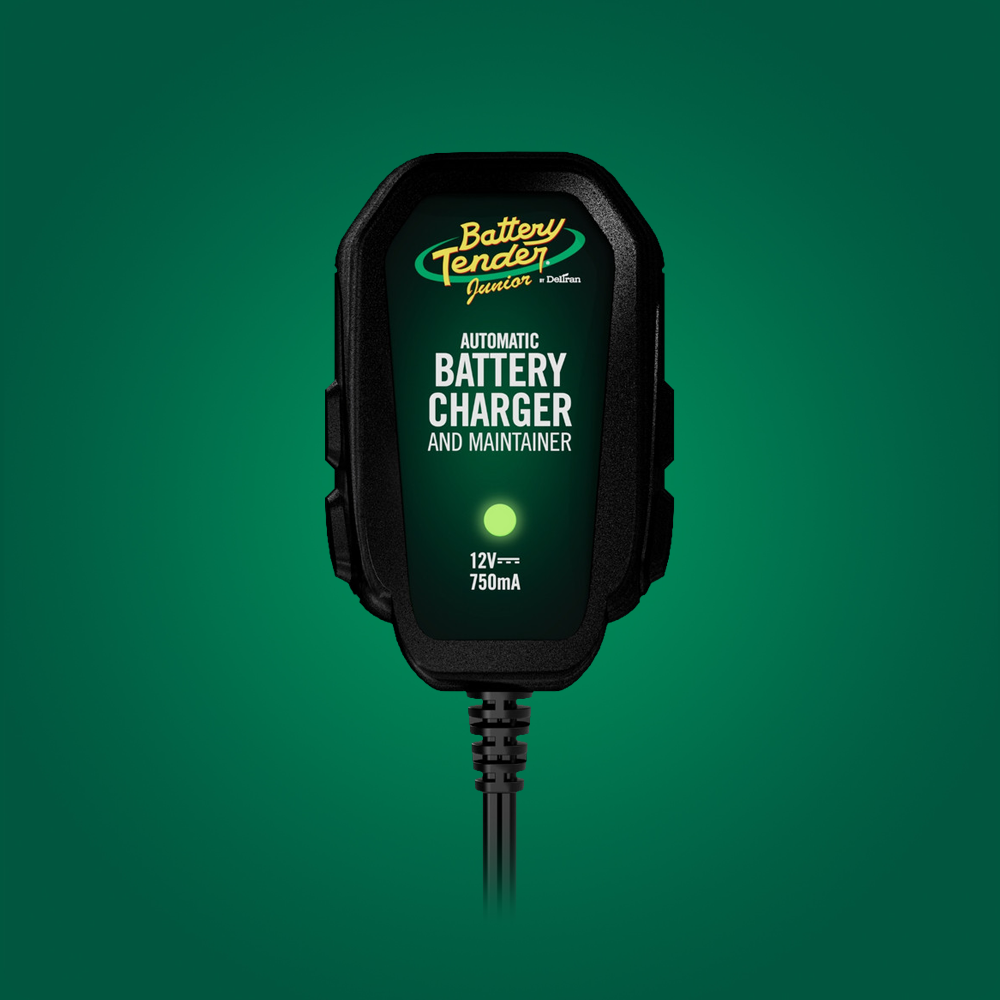
For individual battery maintenance within a lead-acid bank — particularly during seasonal storage or when one battery tests significantly weaker than the rest — the Battery Tender Plus 1.25 AMP Selectable 6V/12V Charger allows precise conditioning of individual 6-volt or 8-volt batteries independently. A single underperforming battery in a series bank reduces the entire bank's effective runtime and can accelerate degradation of the stronger batteries around it — catching and conditioning a weak battery early extends the life of the full bank.
Individual Battery Maintenance for Lead-Acid Banks
A series-wired lead-acid bank is only as strong as its weakest battery. Flooded lead-acid golf cart batteries benefit from periodic equalization charging — a controlled overcharge that balances voltage across all cells in the bank, reverses mild sulfation, and clears the stratification that develops in batteries cycled repeatedly without full charges.
Battery Tender PowerPlus chargers with equalization capability apply equalization at the correct voltage and duration without guesswork. For targeted conditioning of individual batteries outside the bank, connecting a dedicated charger to each battery independently gives you precise control over the weakest units in a set. This approach is particularly valuable in the weeks before and after seasonal storage, when individual battery state-of-health varies most within a bank that has seen a full season of use.
Never equalize AGM or lithium golf cart batteries. The elevated voltages used for FLA equalization will permanently damage AGM cells and will trigger protective shutdown — or cause irreversible damage — in lithium packs.
Golf Cart Battery Charging Best Practices
Consistent charging habits separate a battery bank that lasts five or six years from one that needs replacement in two. These practices apply regardless of cart model or battery chemistry:
- Charge after every use. Lead-acid batteries sulfate faster when left in a discharged state. Never store a cart with a partially or fully discharged bank, even overnight.
- Allow 30 minutes of cooling before charging. Batteries discharged under heavy load retain heat that accelerates plate stress during charging. Brief cooling before connecting the charger reduces long-term plate degradation.
- Check water levels monthly on flooded batteries. Exposed plates dry out and sulfate irreversibly. Always check water levels after a full charge, not before — charging causes electrolyte expansion that gives a false reading on an uncharged battery.
- Match charger voltage precisely to your system. Connecting a 48V charger to a 36V bank, or any lead-acid charger profile to a lithium pack, causes permanent damage. Voltage match is not optional.
- Use a maintenance charger during storage. During off-season storage, leaving a smart charger in float maintenance mode prevents self-discharge damage across months of inactivity. A battery stored discharged will sulfate to the point of permanent capacity loss.
- Test individual batteries annually. Load-test each battery in the bank at least once per season. Replacing a single failing battery before it damages the stronger batteries around it is far less expensive than replacing the entire bank.
Frequently Asked Questions About Golf Cart Battery Charging
What charger do I need for a 36-volt golf cart?
A 36-volt golf cart requires a charger specifically rated for 36V output. The Battery Tender PowerPlus 36V 18 AMP is purpose-built for this application. Using a 12V or 48V charger on a 36V bank will either fail to charge correctly or risk damaging the batteries. Always match charger output voltage to the total bank voltage, not to the voltage of individual batteries within the bank.
How long does golf cart battery charging take?
A deeply discharged 36V or 48V lead-acid golf cart bank typically takes 8 to 10 hours to reach full charge with a properly rated charger. Partially discharged batteries may reach full charge in 4 to 6 hours. Lithium packs charge significantly faster — often 2 to 4 hours — due to their ability to accept higher charge rates without heat stress or damage.
Why are my golf cart batteries not holding a charge?
The most common causes are sulfation from chronic undercharging, one or more weak batteries dragging down the bank, low water levels in flooded batteries leaving plates exposed to air, or a charger that is not completing the absorption stage. Test each battery individually with a load tester. A single failed battery in a series bank reduces the entire bank's effective capacity and runtime — isolating it early prevents cascading damage to the other batteries.
When should I equalize my golf cart batteries?
Flooded lead-acid golf cart batteries benefit from equalization every 30 to 60 days of regular use, or any time individual battery voltages vary by more than 0.05V after a full charge. Equalization should also be performed before and after seasonal storage. Never equalize AGM or lithium golf cart batteries — the voltages required for FLA equalization will permanently damage both chemistries.
Can I use a regular car charger on my golf cart batteries?
No. A standard automotive 12V charger cannot deliver the 36V or 48V output that a golf cart bank requires. Connecting a 12V charger across a full series bank will not charge the system. Connecting it across individual batteries one at a time is impractical and does not address the bank as a system. Golf cart batteries require a charger specifically rated for their bank voltage and deep-cycle chemistry.
How do I charge a lithium golf cart battery?
Lithium golf cart batteries require a lithium-compatible charger rated for the correct pack voltage — either 36V or 48V depending on your system. Most lithium packs include an integrated BMS that manages charge acceptance and protection. Check your pack manufacturer's specifications for the recommended charge voltage, amperage, and charger compatibility before purchasing. Do not use a standard lead-acid golf cart charger on a lithium pack.
Conclusion
Golf cart battery charging done correctly is straightforward — but the details matter. Matching charger voltage precisely to your system, selecting the right chemistry profile, completing full multi-stage charges after every use, and performing periodic equalization on flooded batteries are the practices that separate a battery bank that delivers five or six years of reliable service from one that fails in two. Battery Tender PowerPlus 36V and 48V chargers deliver the ISM charging intelligence, IP68 weatherproof durability, and correct voltage output that golf cart battery systems demand. Charge right, and your batteries will perform reliably round after round, season after season.