


Best Battery Charger: How to Match Amps to Your Battery (2026)
The best battery charger is the one sized to your battery's amp-hour (Ah) rating, matched to its chemistry, and able to stay connected safely for months. Battery Tender® chargers use a four-stage smart process, so a correctly sized unit can charge a depleted battery and then maintain it without overcharging.
Most buying guides rank chargers by price. A more reliable method starts with three facts: battery capacity in Ah, voltage, and how long the battery sits between uses. Those three numbers narrow dozens of options down to one or two. This guide walks through that process with sizing math, a comparison table, and specific recommendations for small engines, powersports, cars, and emergency-start situations.
Key Takeaways
- Pick charger amps from battery Ah: roughly 5–20% of capacity for charging, and as little as 1–5% for maintenance-only duty.
- Smart charging with Infinite Sequential Monitoring (ISM) adapts to battery condition. A conventional trickle charger pushes constant current regardless of state of charge.
- Check voltage and chemistry (standard lead-acid, AGM, GEL, lithium) before you buy. A mismatch is the most common sizing error.
- Use the formula (Ah × depth of discharge) ÷ charger amps to estimate charge time.
- Keep an emergency-start option in the garage in addition to a maintainer, because even a maintained battery eventually reaches the end of its life.
What Makes the Best Battery Charger? Four Criteria That Matter
The best battery charger meets four criteria: correct amperage, correct voltage and chemistry support, automatic multi-stage control, and a build suited to where it will live. Skip any one and the unit will either undercharge the battery or risk damaging it.
- Amperage: Too low and a large battery never reaches full charge. Too high and a small battery heats up during bulk charging.
- Voltage and chemistry: Most vehicles and small engines use 12V. Older classic cars and some tractors use 6V. Make sure the charger supports your chemistry, whether standard flooded, AGM, GEL, or lithium.
- Automatic staging: A charger that monitors the battery and changes its output can stay connected indefinitely. A charger without staging needs supervision.
- Environment: Garages, sheds, docks, and open trailers expose chargers to moisture and dust. Look for sealed or weather-resistant construction when the charger will not live indoors.
Temperature compensation is a fifth feature worth noting. It adjusts charge voltage to ambient temperature, which matters in an unheated garage that swings from 20°F in January to 90°F in August. Battery Tender chargers such as the Battery Tender Plus include it.
How to Choose the Best Battery Charger by Battery Size
Start with the amp-hour rating printed on the battery label, then choose charger amps from the table below. A motorcycle battery of 10Ah needs a very different charger than a 100Ah RV house battery, even though both are 12V.
| Battery Size | Typical Use | Suggested Charger | Example Charge Time (from 50% discharged) |
|---|---|---|---|
| 5–12Ah | Lawn mower, ATV, scooter | Battery Tender Weather Resistant 800mA | 10Ah: 5Ah ÷ 0.8A ≈ 6.3 hours |
| 12–30Ah | Motorcycle, snowmobile, lawn tractor | Battery Tender Junior Multi-Chemistry 1 Amp | 20Ah: 10Ah ÷ 1A = 10 hours |
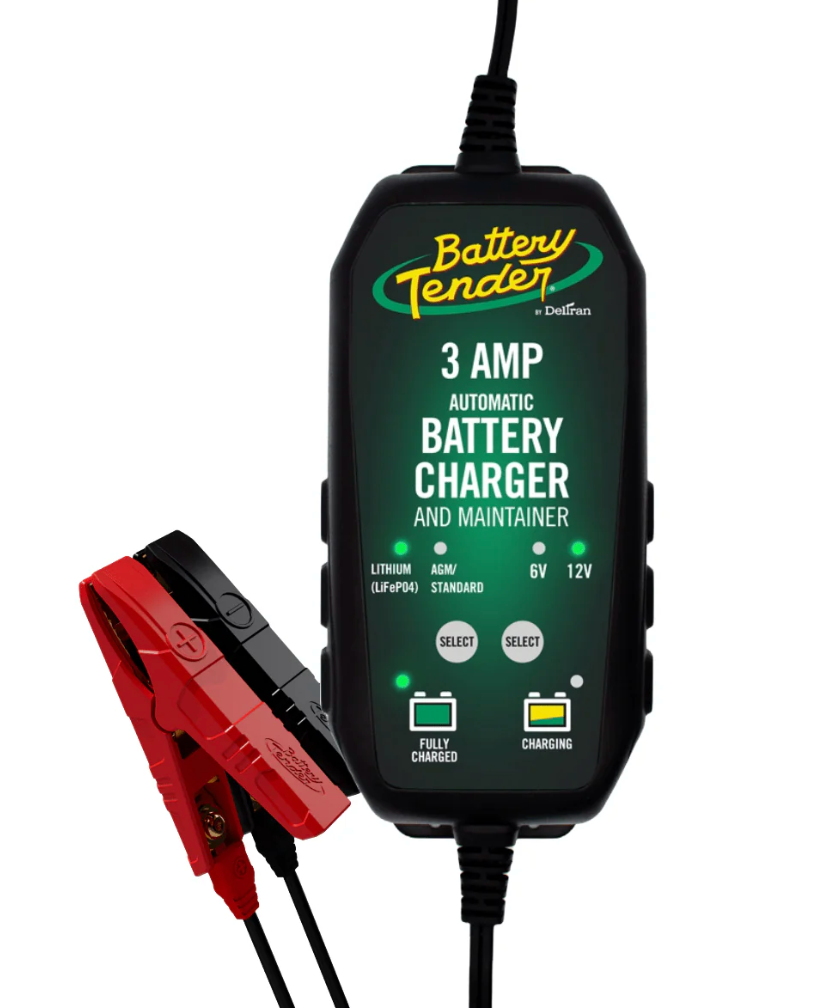
| 35–60Ah | Car, SUV, light truck | Battery Tender Power Tender 3 Amp | 50Ah: 25Ah ÷ 3A ≈ 8.3 hours |
| 60–100Ah | Large truck, small RV or marine house bank | Battery Tender Power Tender 3 Amp for maintenance; 4A–10A models for faster recovery | 100Ah on 3A: 50Ah ÷ 3A ≈ 16.7 hours |
| Any, with no-start risk | Garage, trailer, roadside | Battery Tender Charge N Start 1100 | 1A maintenance plus 1,000A jump starting |
Real-world times run 10–20% longer than the formula suggests because charge efficiency drops as the battery approaches full. Treat the numbers as planning estimates, not guarantees.
The Amp-Hour Formula
Use this formula for any battery: (Ah × depth of discharge) ÷ charger amps = approximate hours. A 50Ah battery that is 60% discharged holds 30Ah of missing capacity. A 3A charger needs about 10 hours to replace it. A 1A charger needs about 30.
Why Bigger Is Not Always Better
A 10A charger on a 7Ah motorcycle battery delivers more current than the battery can safely absorb. A smart charger limits the damage, but the battery still runs warmer than it should. Match the charger to the battery, not to the largest battery you might own someday.
ISM vs. Trickle Charging: Why Charging Method Matters More Than Amps
Smart charging beats trickle charging because it responds to the battery's actual condition. Battery Tender chargers use Infinite Sequential Monitoring (ISM), a four-stage process built around that idea.
- Initialization: The charger tests the battery and applies gentle current to judge its condition.
- Bulk: Full rated current flows until the battery reaches roughly 80% state of charge.
- Absorption: Voltage holds constant while current tapers, which helps dissolve sulfate crystals.
- Float Maintenance: The charger supplies pulses only when battery voltage drops, so it can stay connected indefinitely.
A conventional trickle charger delivers constant current whether the battery is empty or full. Left connected for weeks, it keeps pushing current into a full battery, which causes heat, water loss in flooded batteries, and plate corrosion. A float-only charger is safer but has no absorption stage, so it recovers a deeply discharged battery more slowly.
Sulfation is the practical reason this matters. Lead-acid batteries that sit partially discharged develop sulfate crystals on the plates, which reduces capacity permanently. Keeping the battery at full charge during storage is the best way to prevent it. Real-world battery life varies with climate, usage, and battery quality, but a battery held at full charge rather than left to self-discharge generally lasts noticeably longer. For a deeper breakdown of the process, see the guide to choosing the right smart charger for a car.
Best Battery Charger Picks by Situation
The best battery charger changes with the battery. These picks cover small engines, powersports, cars, and emergency starting.
Small Engines and Outdoor Storage
Lawn mowers, ATVs, and garden tractors often live in sheds or open carports where humidity and dust are constant. Their batteries are small, typically 5–20Ah, so a low-amp, sealed charger is the right match. The Battery Tender Weather Resistant 800mA maintainer is built for that environment and keeps a small battery topped off with no supervision.
Battery Tender Weather Resistant 12V 800mA Battery Charger and Maintainer
Motorcycles and Powersports
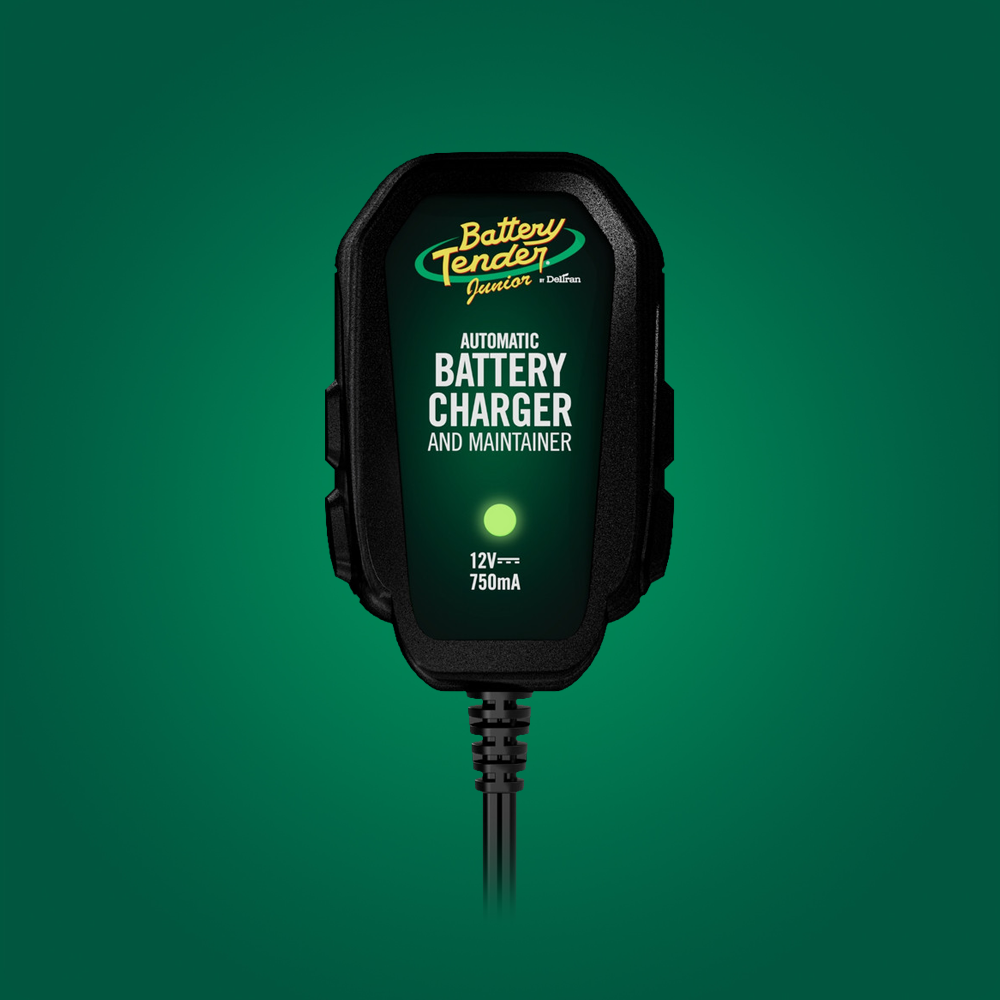
Motorcycle, snowmobile, and jet ski batteries usually fall between 12Ah and 30Ah. A 1A charger refills them overnight and maintains them through a winter. The Battery Tender Junior Multi-Chemistry 1 Amp charger supports both lead-acid and lithium, which helps if the bike has been upgraded to a lithium battery.
Battery Tender Junior Multi-Chemistry 12V 1 Amp Battery Charger and Maintainer
Cars, Trucks, and Classic Vehicles
A typical car battery is 40–60Ah, and a 1A charger would need more than a day to recover it from half empty. A 3A unit cuts that to roughly 8 hours, and the 6V/12V switch covers older vehicles too. For standby equipment such as generators, the same 3A class works well, as covered in the standby generator battery maintenance guide.
Battery Tender Power Tender 3 Amp 12V/6V Battery Charger and Maintainer
When the Battery Is Already Dead
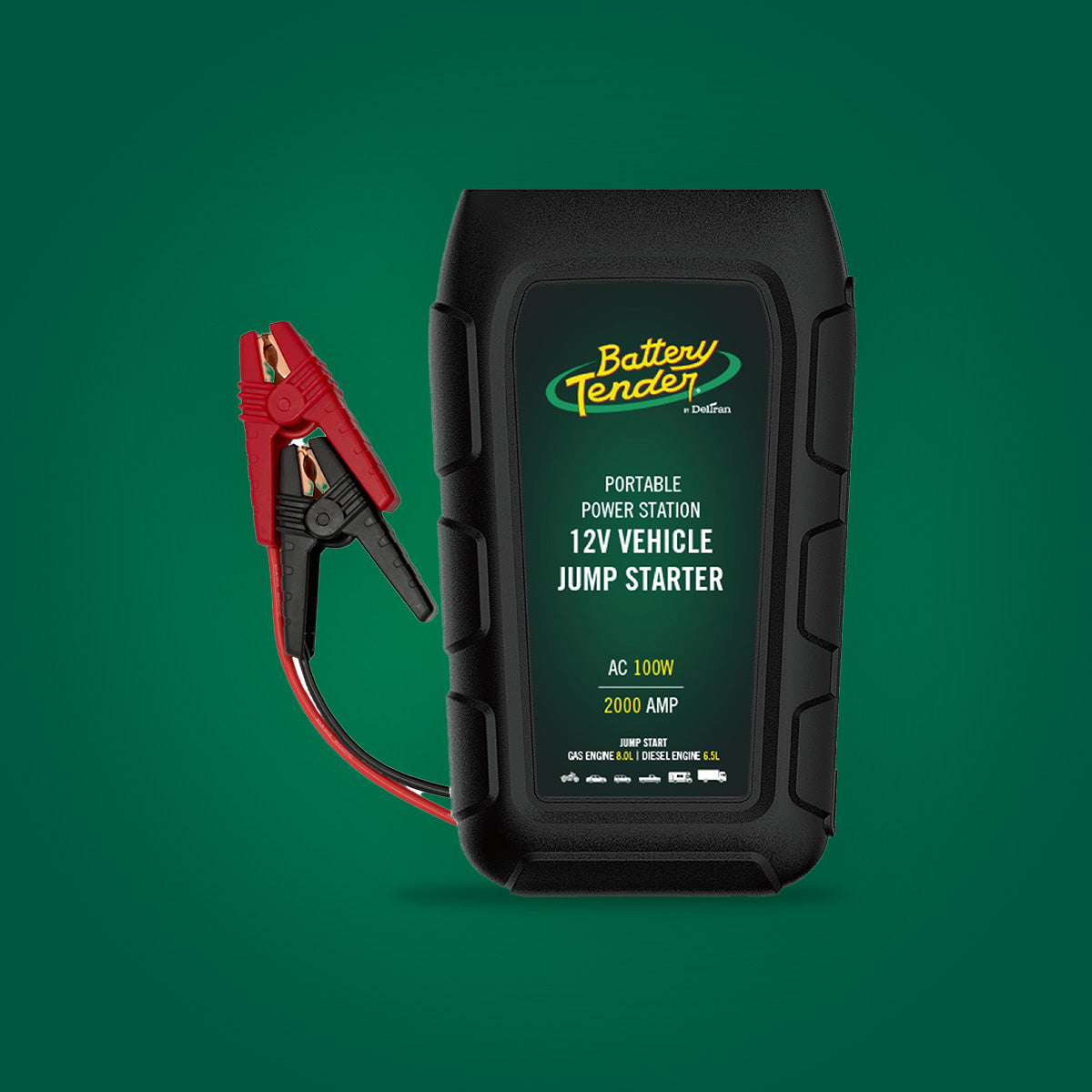
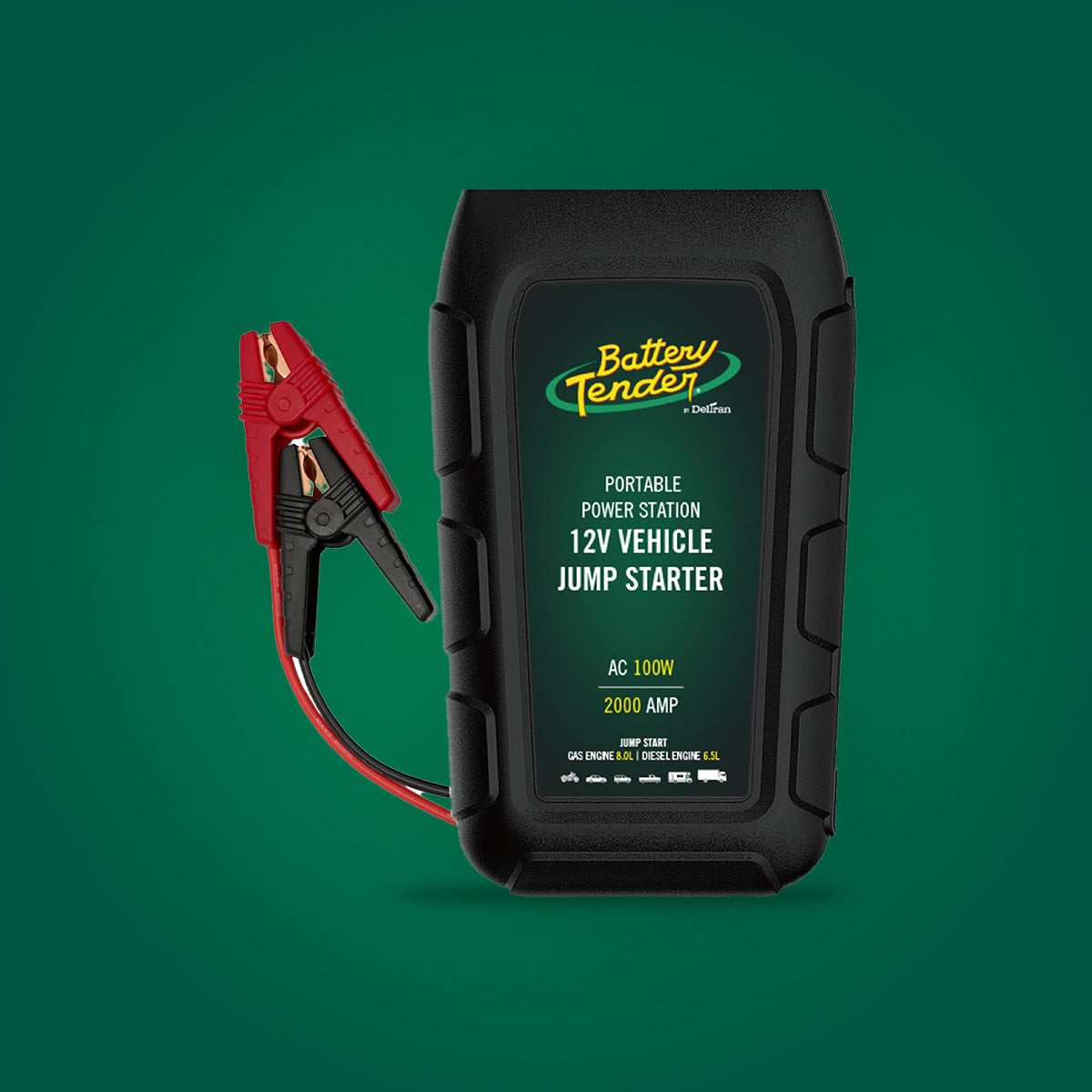
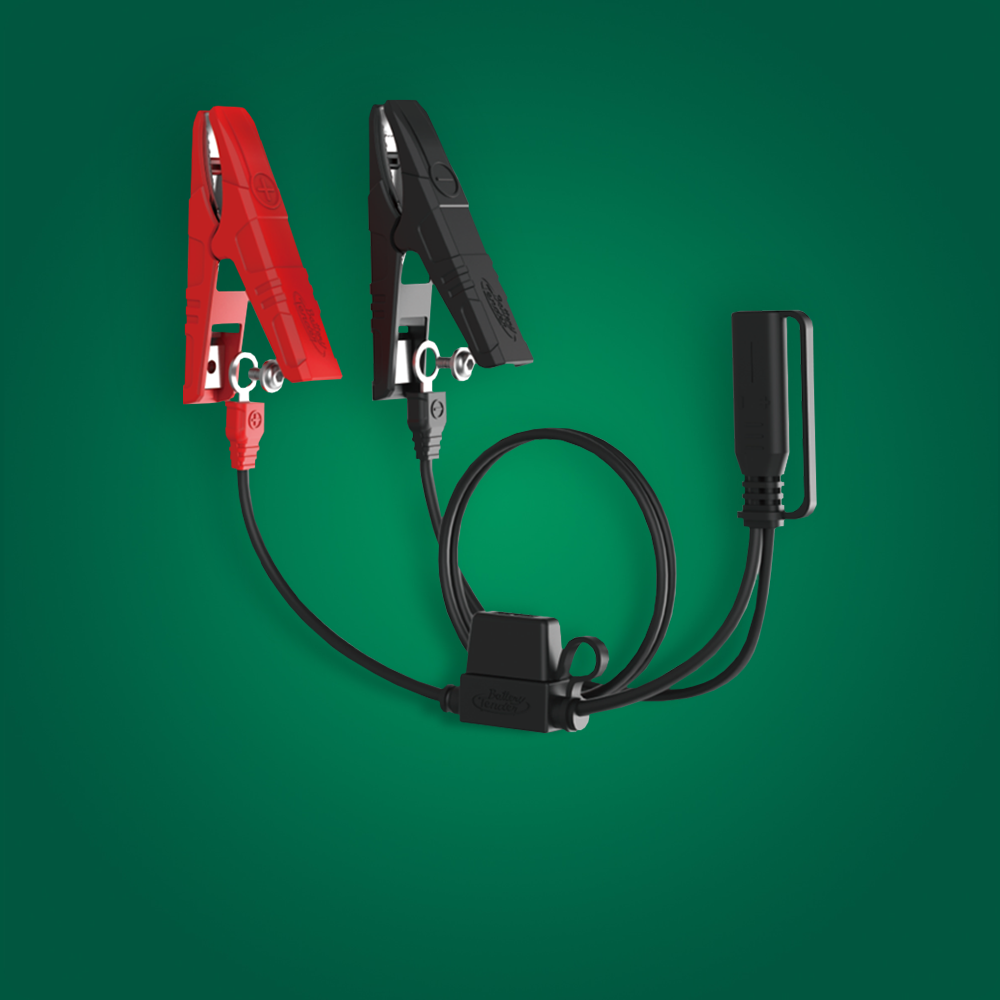
A maintainer prevents dead batteries, but it cannot help at the trailhead or on a cold morning two hours from home. The Battery Tender Charge N Start 1100 combines a 1A charger with a 1,000A lithium-ion jump starter rated for engines up to 5.0L gas or 3.0L diesel. The charger section works with all 12V battery types, including standard, AGM, GEL, and lithium. This bundle includes a ring terminal cable so the connection can stay on the battery permanently.
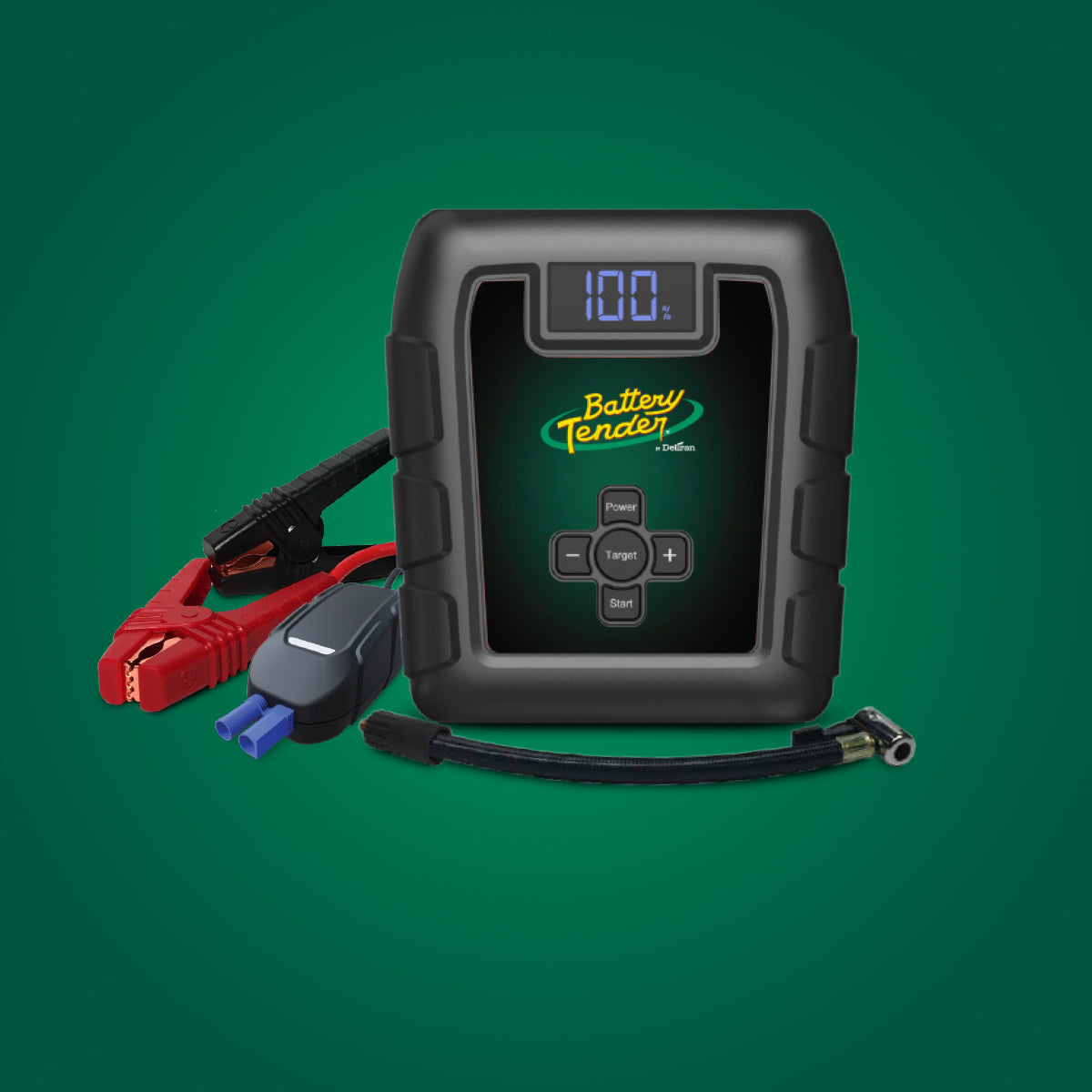
If your garage also keeps the larger 800A jump starter and tire inflator on the shelf, stock a spare hose. A cracked hose is the most common reason an inflator stops working.
Replacement Hose for 800 AMP Jump Starter and Tire Inflator
How to Set Up Your Charger: Step-by-Step
Follow these steps to size, connect, and verify any charger. The process takes about ten minutes.
- Read the battery label. Note voltage (6V or 12V), Ah rating, and chemistry.
- Calculate charging time. Use (Ah × depth of discharge) ÷ charger amps. If the answer is over 24 hours, step up one amperage class.
- Ventilate the area. Flooded lead-acid batteries release hydrogen while charging. Work in an open or well-ventilated space, away from sparks.
- Connect in the right order. Attach the red clamp to the positive terminal, then the black clamp to the negative terminal or a clean chassis ground. Plug the charger into the wall last.
- Confirm the indicator lights. The charger should show charging status within seconds. If it shows a fault, check the clamps and battery voltage.
- Leave the charger connected. Once ISM reaches Float Maintenance, the charger can stay on for the whole storage season.
Safety note: Never charge a frozen battery, and replace any battery that is swollen, leaking, or hot to the touch. A battery that will not hold a charge after a full cycle has reached the end of its service life, and no charger can reverse that.
Frequently Asked Questions
What is the best battery charger for a car battery?
For a typical 40–60Ah car battery, a 3A smart charger is a strong choice. It recovers a half-discharged battery in roughly 8 hours and maintains it between drives. Larger trucks and SUVs with 70–100Ah batteries benefit from 4A to 10A models for faster recovery.
Can I leave a smart battery charger connected all winter?
Yes, if it uses automatic staging. ISM ends in Float Maintenance, where the charger supplies current only when voltage drops. That allows indefinite connection without overcharging. A conventional trickle charger should not be left connected unattended, because it delivers constant current regardless of battery state.
How many amps do I need to charge a battery?
A general guide is 5–20% of the battery's Ah rating for charging. A 20Ah motorcycle battery works well with a 1A to 3A charger, and a 50Ah car battery works well with 3A to 10A. For maintenance only, even 1–5% of capacity is enough to offset normal self-discharge.
Does a battery charger work on lithium batteries?
Only if it supports lithium chemistry. Lithium batteries need different charge voltages than lead-acid, and the wrong profile can undercharge or damage them. Check the charger's specifications for lithium support, such as the Battery Tender Junior Multi-Chemistry 1 Amp charger or the charger section of the Battery Tender Charge N Start 1100.
How do I know when to replace a battery instead of charging it?
Replace the battery if it will not hold a charge after a full cycle, drops below about 12.4V within a day of being disconnected, or shows swelling or leaks. Age matters too. Most lead-acid batteries lose reliability after three to five years, even with good maintenance.
Conclusion
The best battery charger is the one matched to your battery's Ah rating, voltage, and chemistry, and built on a staged process like ISM that can stay connected through months of storage. Use the sizing table, run the charge-time formula, and choose the lowest amperage that finishes the job in a reasonable window. Pair that with an emergency-start option, since no charger prevents every failure.
Next step: read your battery's label, calculate your charge time, and compare matching models in the Battery Tender battery charger collection.