


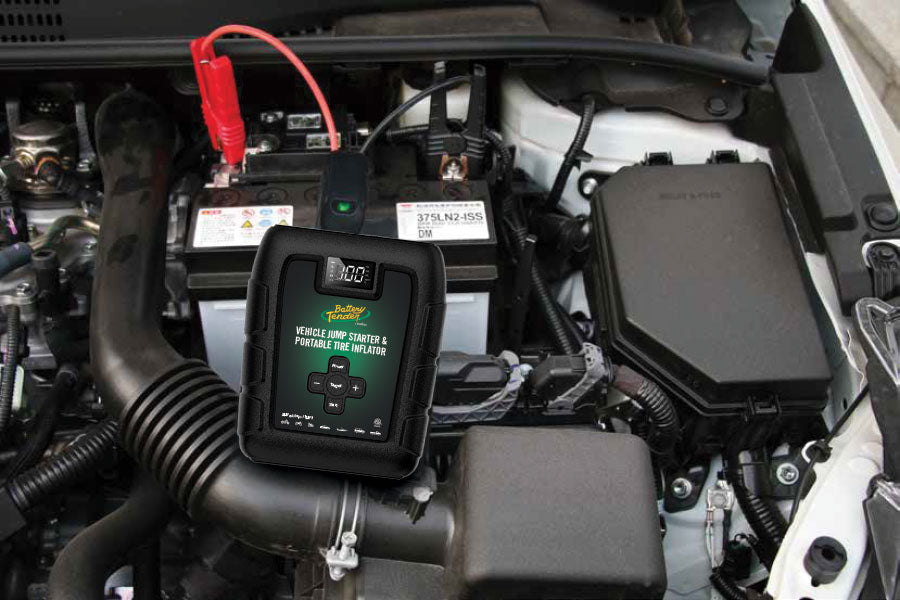
Battery Jumper Pack Guide: Portable Jump Starter Basics (2026)
A battery jumper pack is a portable lithium-ion battery with heavy-duty clamps that delivers a short burst of starting current to a dead 12V battery, so an engine starts without a second vehicle. Choose the pack by engine size, connect it in the right order, and recharge it every three months so it works when needed.
Battery Tender® has made battery charging products since 1989, and the Battery Tender Jump N Start line brings that experience to emergency starts. This guide covers what is inside a jumper pack, how to size one, how to use it safely, and why the dead battery still needs a proper charger afterward.
Key Takeaways
- A battery jumper pack starts the engine but does not recharge a depleted battery. A maintainer finishes that job.
- Size the pack by engine displacement and fuel type: 600A suits engines up to 4.0L gas, and 2000A suits up to 8.0L gas or 6.5L diesel.
- Peak amps decide whether the engine cranks. Milliamp-hours (mAh) decide how many starts one charge delivers.
- Recharge a stored jumper pack every three months and after every use.
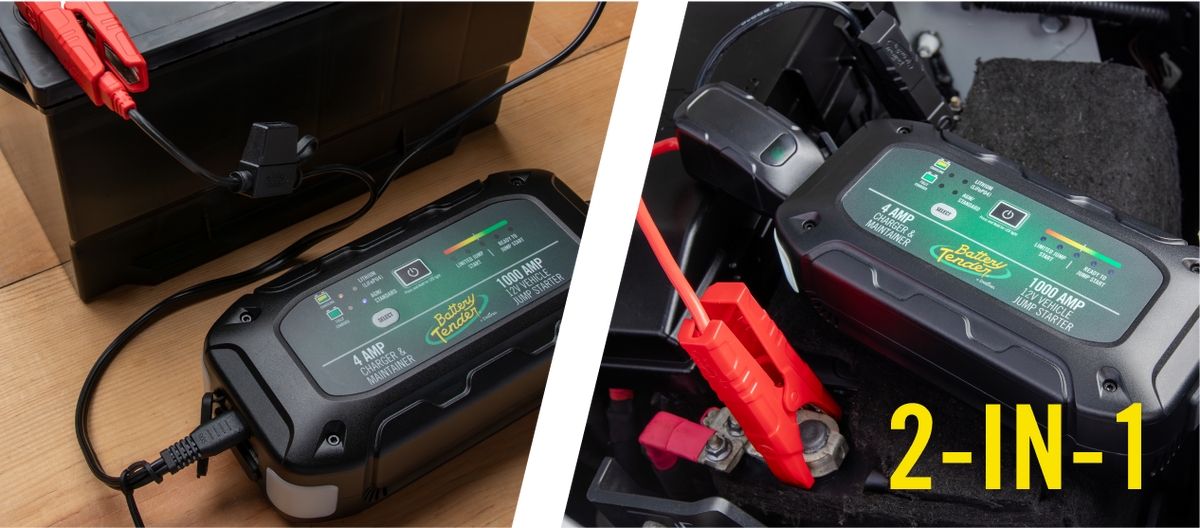
- A 2-in-1 Battery Tender Charge N Start unit combines a smart charger and a jump starter in one housing.
What Is a Battery Jumper Pack and What Is Inside It?
A battery jumper pack is a self-contained lithium-ion power source built to deliver hundreds of amps for a few seconds. It eliminates the need for jumper cables and a donor vehicle, which makes it the practical choice on a deserted road or in an empty parking garage.
The Three Core Components
Every pack has the same basic parts, and each affects how well it performs:
- Lithium-ion cells: These store the energy. A 12,000 mAh pack, such as the Battery Tender Jump N Start 1500 Amp Lithium Jump Starter, holds enough for roughly 40 starts per full charge. A 16,000 mAh pack, such as the Battery Tender Jump N Start 2000 Amp Lithium Jump Starter, is rated for roughly 50.
- Protection circuitry: Smart clamps check for reverse polarity, short circuits, and overheating before they let current flow.
- Clamps and cable: Thick copper cable carries the surge. Thin cable heats up and loses cranking power.
Battery Jumper Pack vs. Jumper Cables
Jumper cables only transfer power from a running vehicle, so they need a donor car, correct positioning, and a driver who knows the connection order. A battery jumper pack needs none of that. The trade-off is maintenance. A pack that sits in a glove box for 18 months with no recharge may be too depleted to start anything, while cables never need charging.
How Do You Size a Battery Jumper Pack by Engine?
Match the pack to the largest engine you will ever need to start, using displacement and fuel type. Diesel engines draw more current than gasoline engines of the same size, so their ratings run lower. Cold weather raises the current demand again, so pick one size above the minimum if winters are harsh.
| Battery Tender Jump Starter | Peak Amps | Max Gas Engine | Max Diesel Engine | Typical Use |
|---|---|---|---|---|
| Battery Tender Jump N Start 600 Amp | 600A | 4.0L | 2.0L | Motorcycles, small engines, compact cars |
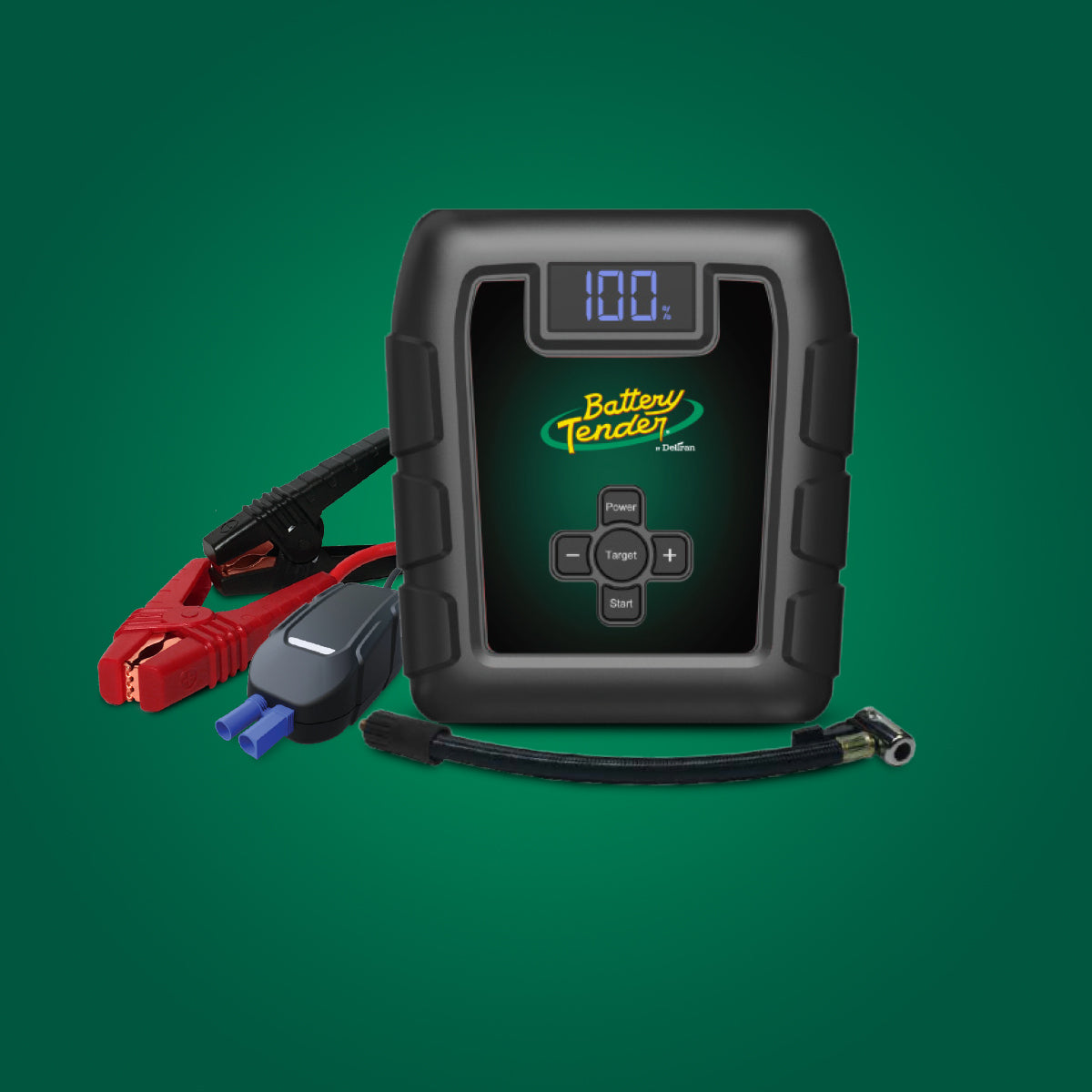
| Battery Tender Jump N Start 800 Amp + Tire Inflator | 800A | 4.0L | 2.0L | Cars, plus tire emergencies |
| Battery Tender Charge N Start 1100 | 1,000A | 5.0L | 3.0L | Powersports, compact cars |
| Battery Tender Charge N Start 1120 | 1,200A | 6.0L | 4.0L | Mid-size cars, SUVs, boats |
| Battery Tender Charge N Start 4120 | 1,200A | 6.0L | 4.0L | Trucks, RVs, heavy daily use |
| Battery Tender Jump N Start 1500 Amp | 1,500A | 7.0L | 5.5L | Most vehicles |
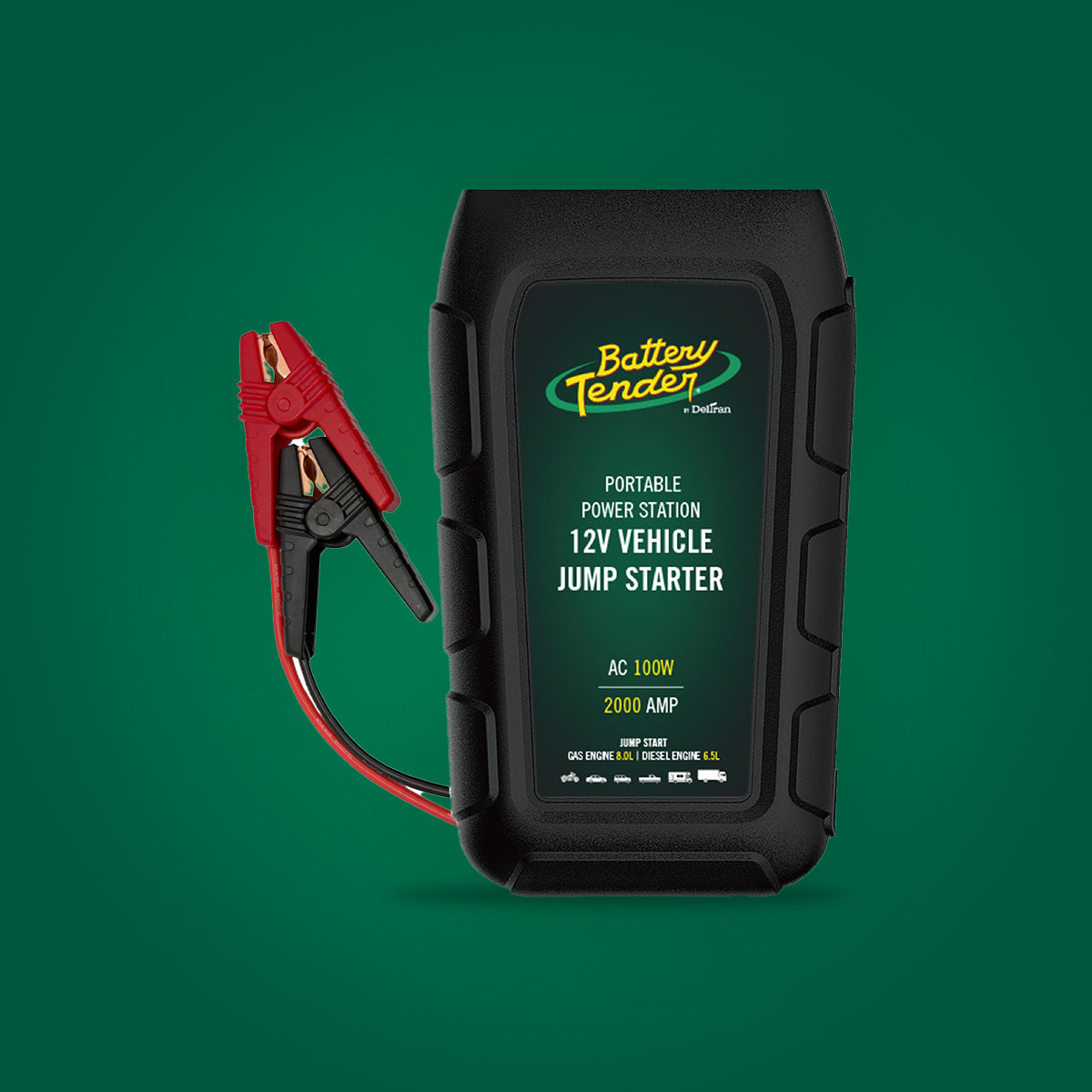
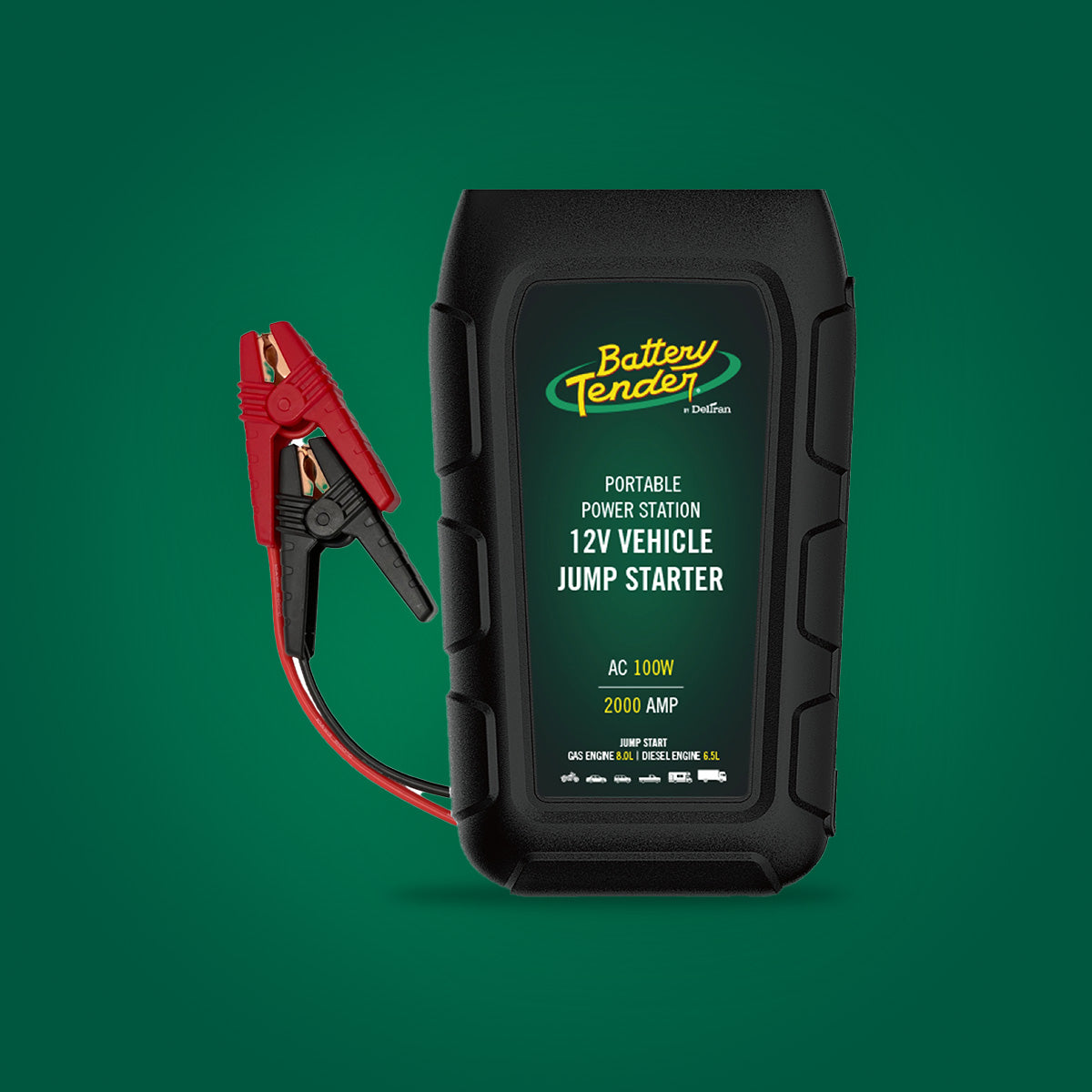
| Battery Tender Jump N Start 2000 Amp | 2,000A | 8.0L | 6.5L | Large trucks, heavy-duty gas and diesel |
Peak Amps vs. mAh: What the Numbers Mean
Peak amps measure the surge the pack can deliver at the instant of cranking. If the number is too low for the engine, the starter turns slowly or not at all. The mAh figure measures stored energy. It sets how many attempts you get before the pack needs a recharge, not how hard each attempt hits.
Two packs can share the same peak rating and still differ in mAh. The larger-capacity unit gives more starts and holds its charge better in storage. Buying on peak amps alone is a common mistake.
How to Use a Battery Jumper Pack Step by Step
The sequence matters more than speed. Always read the manual for the specific pack first, then follow these steps:
- Prepare the vehicle. Turn off the ignition, headlights, radio, and climate control. Set the parking brake.
- Check the pack. Confirm the charge indicator shows enough power for a start. Inspect the clamps and cable for damage.
- Inspect the battery. Do not jump a battery that is cracked, swollen, leaking, or frozen. Replace it instead.
- Connect the red clamp to the positive (+) terminal.
- Connect the black clamp to the negative (−) terminal, or to unpainted metal on the engine block away from the battery, as the manual directs.
- Power on the pack and wait for the ready indicator on smart clamps.
- Crank the engine for no more than a few seconds. If it does not start, wait about 30 to 60 seconds and try again. Stop after three attempts.
- Disconnect in reverse order once the engine runs: black clamp first, then red.
For a battery that will not respond even to a jump, the recovery guide for completely dead batteries covers the deeper steps. Many smart clamps will not energize if they cannot detect a minimum battery voltage, which is a safety feature, not a defect.
Safety note: Batteries can release hydrogen gas. Keep sparks, flames, and cigarettes away, and wear eye protection.
Why the Battery Still Needs a Maintainer After the Jump
A jump gets the engine running, but it does not restore the battery. A fully charged 12V lead-acid battery rests at about 12.6 to 12.8 volts. A battery that needed a jump is often near 12.0 volts or lower, which is roughly 25 percent charge. The alternator cannot fully recharge a depleted battery in a normal 20-minute drive, so the battery stays undercharged and sulfation sets in.
How Sulfation Shortens Battery Life
Sulfation is the buildup of lead sulfate crystals on the plates of a battery that stays partly discharged. It cuts capacity and makes the next dead battery more likely. Preventing sulfation is the most effective way a maintainer extends battery service life, often pushing it from the typical two to three years toward five or more.
Infinite Sequential Monitoring (ISM) vs. Conventional Trickle Chargers
Battery Tender chargers use Infinite Sequential Monitoring (ISM), a four-stage automatic process that adapts to the condition of the battery:
- Initialization: tests the battery and applies a gentle current to determine its condition.
- Bulk Charge: delivers full rated current until the battery reaches about 80 percent.
- Absorption: holds voltage constant while current tapers, which helps dissolve sulfate crystals.
- Float Maintenance: monitors the battery continuously and sends charge only when the voltage drops.
Conventional trickle chargers deliver constant current whatever the battery state, so a battery left connected can be overcharged. Basic float-only chargers hold a constant voltage and skip the Absorption stage, so they recover a depleted battery more slowly. Because ISM charges only when the battery needs it, a Battery Tender charger is safe to leave connected indefinitely, whether the vehicle sits for a week or an entire winter.
Charging Time: The Math
Use this formula: battery Ah × depth of discharge ÷ charger amps = approximate hours. A 60Ah battery at 50 percent discharge holds a 30Ah deficit. A 1.25A maintainer needs about 24 hours (30 ÷ 1.25). A 4A charger needs about 7.5 hours (30 ÷ 4).
A Jump Starter Built for a Maintainer Setup
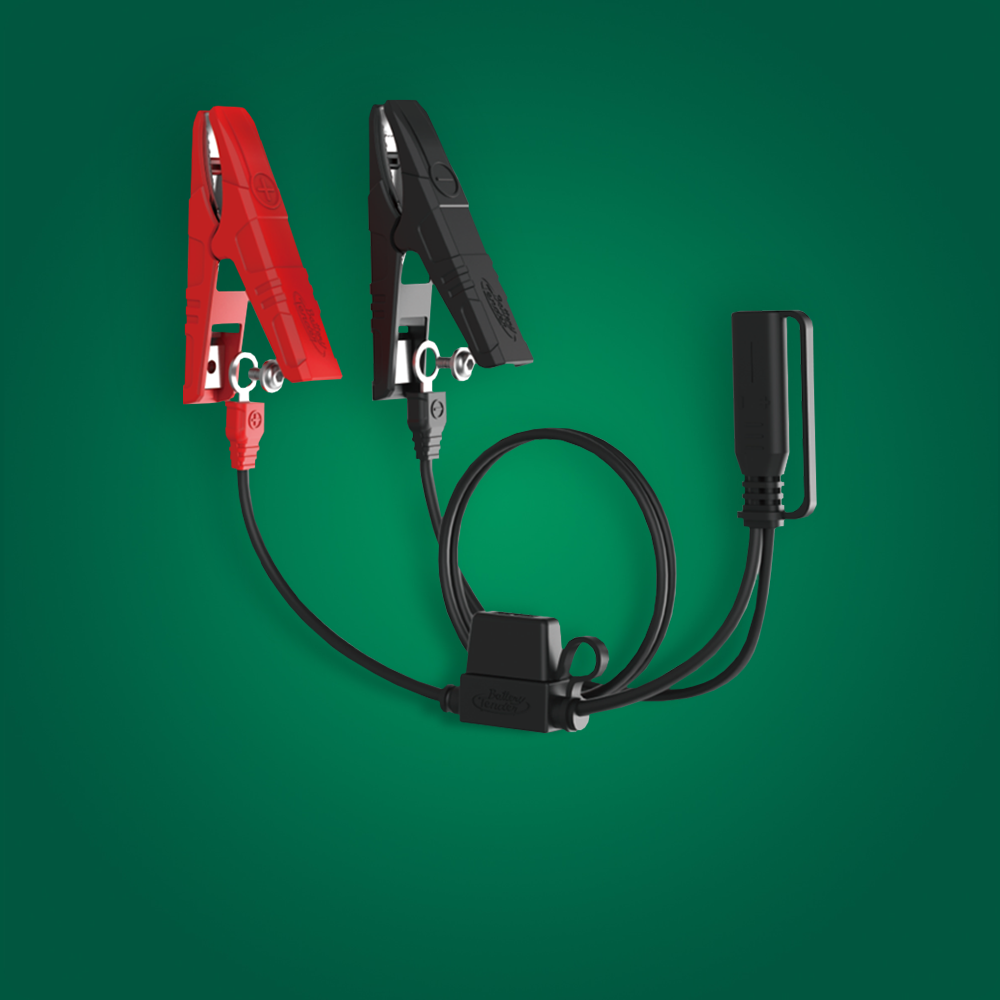
Powersports owners and anyone who stores a vehicle for months benefit most from a pack that lives permanently at the battery. The 1500A bundle includes a ring terminal cable that bolts to the battery terminals, so the jump connection is always ready. At 12,000 mAh and a 7.0L gas / 5.5L diesel rating, it covers motorcycles, ATVs, and most cars and trucks, and it sits alongside a maintainer on the same battery.
Battery Tender Jump N Start Motorcycle and Powersports Bundle (1500 Amps)
For a one-box solution, Battery Tender Charge N Start units contain a lithium-ion jump pack plus a smart charger that handles standard, AGM, GEL, and lithium 12V batteries. The Charge N Store function keeps the internal pack topped off, and SafeGuard protects against backfeed. The Battery Tender Charge N Start 4120 adds a 4A charger and a 1,200A jump, which suits trucks and RVs.
Keeping a Battery Jumper Pack Ready Between Emergencies
A battery jumper pack only helps if it has charge when the emergency comes. Lithium-ion cells self-discharge slowly, but a pack left untouched for a year can still end up too low to start an engine. Treat it like a smoke detector and test it on a schedule.
| Situation | Action | Frequency |
|---|---|---|
| After any jump | Recharge to full | Same day |
| Stored in a garage or trunk | Check indicator, top off | Every 3 months |
| Before winter or a long trip | Full charge, check clamps | Twice a year |
| Extreme temperatures | Move indoors | As needed |
Storage Rules
- Store the pack in a cool, dry place, ideally between 32°F and 104°F. Check the manual for exact limits.
- Avoid leaving it on a dashboard or in a closed car in summer, where cabin temperatures can climb well past 140°F.
- Do not charge a lithium-ion pack below freezing. Warm it indoors first.
- Keep the clamps clean and the cable free of kinks.
For a model comparison, see the best battery jumper guide or the walkthrough in how to jumpstart a battery with a portable jump starter.
Frequently Asked Questions
How long does a battery jumper pack hold its charge?
A lithium-ion battery jumper pack loses charge slowly, but it should not be ignored. Check the indicator and top it off every three months, and recharge it fully after every use. A pack left in a hot or freezing vehicle will discharge faster and may deliver less power when needed.
Can a battery jumper pack recharge a dead car battery?
No. A battery jumper pack delivers a short burst of current to start the engine, not a sustained charge. After the jump, the battery is still depleted. Use a smart charger or maintainer to restore it fully, which also helps prevent sulfation and a repeat failure.
What size battery jumper pack do I need for a V8 truck?
A 5.7L gas V8 fits within the 7.0L gas rating of a 1500A pack. A 6.0L diesel needs a 2000A pack, rated up to 6.5L diesel. Cold climates and older, weaker batteries add load, so choose the larger size when you are between two.
Is it safe to leave a battery jumper pack plugged in?
Standalone packs vary, so follow the manual and unplug once the pack is full. Battery Tender Charge N Start units are the exception: the Charge N Store function maintains the internal lithium-ion pack automatically, which makes long-term connection safe.
Why won't my battery jumper pack start a completely dead battery?
Smart clamps often need to sense a minimum battery voltage before they send power, to guard against faults. If the battery is deeply discharged, damaged, or frozen, the pack may refuse to energize. Charge the battery slowly with a maintainer first, or replace it if it will not hold a charge.
Conclusion
A battery jumper pack is the fastest way to recover from a dead battery, but it solves only half the problem. Size it to the engine, follow the connection order, and recharge it every three months. Then restore the battery itself with a Battery Tender ISM maintainer so the next failure is far less likely. As a next step, check your engine size against the sizing table and pair the right pack with a maintainer. Browse the full lineup of Battery Tender battery chargers and maintainers to complete the setup.