


Battery Inverter Guide: Sizing a Battery Tender® Power Inverter (2026)
A battery inverter converts 12V DC power from a battery into 120V AC household power. To size one, divide the load in watts by 12, then divide again by about 0.85 to account for inverter efficiency. The result is the DC amps the battery must deliver.
Most failures with a battery inverter trace back to the battery, not the inverter. An undersized battery sags under load, a deeply drained battery sulfates, and a drained starting battery strands the vehicle. This guide covers the sizing math, runtime calculations, safe installation, and the charging routine that keeps the battery behind the inverter healthy. The examples use the Battery Tender Power Inverter 120 Watt and 400 Watt models.
Key Takeaways
- DC amps = watts ÷ 12 ÷ 0.85. A 400W load pulls about 39A from the battery.
- Choose a battery rated at roughly 2.5 times the DC amp draw. That means about 100Ah for a 400W inverter at full load.
- Lead-acid batteries should not be discharged below 50% (about 12.2V resting) if you want them to last.
- Recharge fully after every inverter session. Partial charging causes sulfation and shortens battery life.
- A Battery Tender charger running Infinite Sequential Monitoring (ISM) can stay connected indefinitely between uses.
What Is a Battery Inverter and How Does It Work?
A battery inverter is an electronic converter that switches DC from a 12V battery into AC at household voltage (120V in North America). It lets a battery run laptops, phone chargers, LED work lights, small tools, and similar loads where no outlet exists.
Inside the unit, a switching circuit chops the DC input at high frequency. A transformer and output stage then shape it into AC. Cheaper units produce a modified sine wave. Better units produce a pure sine wave, which sensitive electronics handle more reliably. Every conversion wastes some energy as heat, so most inverters run at 80% to 90% efficiency. That loss is why the sizing formula includes the 0.85 factor.
The inverter does not store energy. The battery does. A 12V, 100Ah battery holds about 1,200 watt-hours (Wh) on paper, and the usable portion is smaller. Treat the inverter and battery as one system, because the weaker half sets the performance.
How to Size a Battery Inverter: Watts, Amps, and Battery Capacity
Size a battery inverter by adding up the running watts of everything you will plug in at once, then adding a 20% margin. Check the startup (surge) rating for motor loads, since motors can briefly draw several times their running wattage.
Step-by-step sizing
- List each device and its running watts (printed on the label).
- Add the loads that will operate at the same time.
- Add 20% headroom. A 300W load needs a 360W minimum, which points to a 400W inverter.
- Divide by 12, then by 0.85, to get DC amps.
- Multiply the DC amps by 2.5 for a minimum battery size in amp-hours. This is a rule of thumb that keeps the discharge rate gentle.
Inverter size versus battery size
| Inverter Size | DC Amps at Full Load | Minimum Battery | Typical Loads |
|---|---|---|---|
| 100W | about 9.8A | 25Ah | Phone, tablet, camera battery chargers |
| 120W | about 11.8A | 30Ah | Laptop plus LED light, small fan |
| 400W | about 39A | 100Ah | Small power tools, TV and game console, soldering station |
Cable and fuse sizing matter just as much. A 400W inverter at full load pulls nearly 40A on the DC side, so use the cable gauge and fuse rating listed in the inverter manual, and keep the cable runs short.
How Long Will a Battery Inverter Run? Runtime Math
Runtime equals usable battery watt-hours divided by the load in watts. Usable watt-hours are battery amp-hours × 12V × allowed depth of discharge × inverter efficiency.
For a 100Ah lead-acid battery limited to 50% discharge, the math is 100 × 12 × 0.5 × 0.85 = 510Wh. A 400W load drains that in about 1.3 hours (510 ÷ 400). A 100W load runs about 5 hours. A lithium battery of the same size, discharged to 80%, gives 100 × 12 × 0.8 × 0.85 = 816Wh, or about 2 hours at 400W.
Battery voltage as a fuel gauge
Resting voltage (battery disconnected from loads for at least an hour) gives a rough state of charge for a 12V lead-acid battery:
- 12.6V or higher: about 100%
- 12.4V: about 75%
- 12.2V: about 50%, the practical stopping point
- 12.0V: about 25%, with damage risk rising
Most inverters sound a low-voltage alarm near 10.5V under load. That is a protection limit, not a target. Stop well before it.
Choosing and Installing a Battery Inverter Safely
Choose the smallest battery inverter that covers your load. An oversized unit wastes standby power and encourages overloading the battery.
120W for small electronics
Laptop work, phone charging, and LED lighting rarely exceed 100W combined. The 120W unit draws under 12A at full load and fits on a modest 30Ah battery, so it suits a small auxiliary battery or a compact power setup.
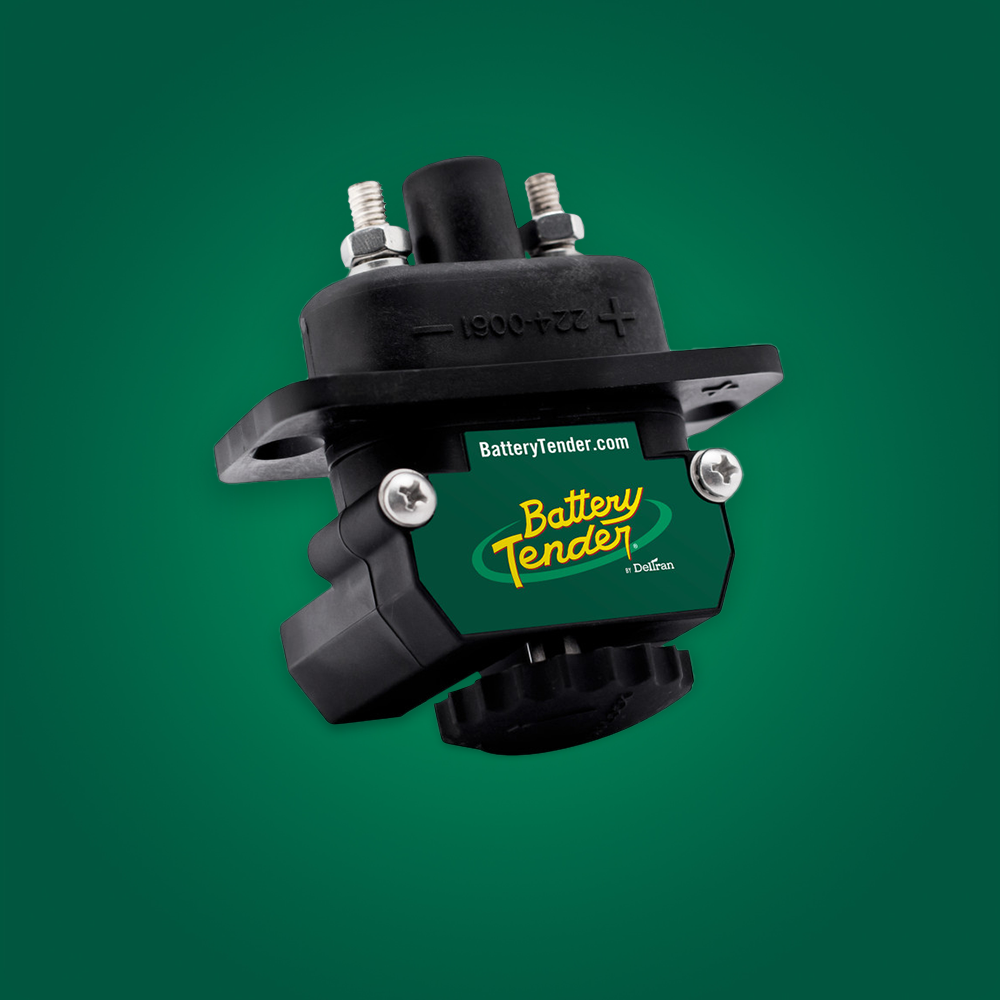
Battery Tender Power Inverter 120 Watt 12V
400W for tools and larger loads
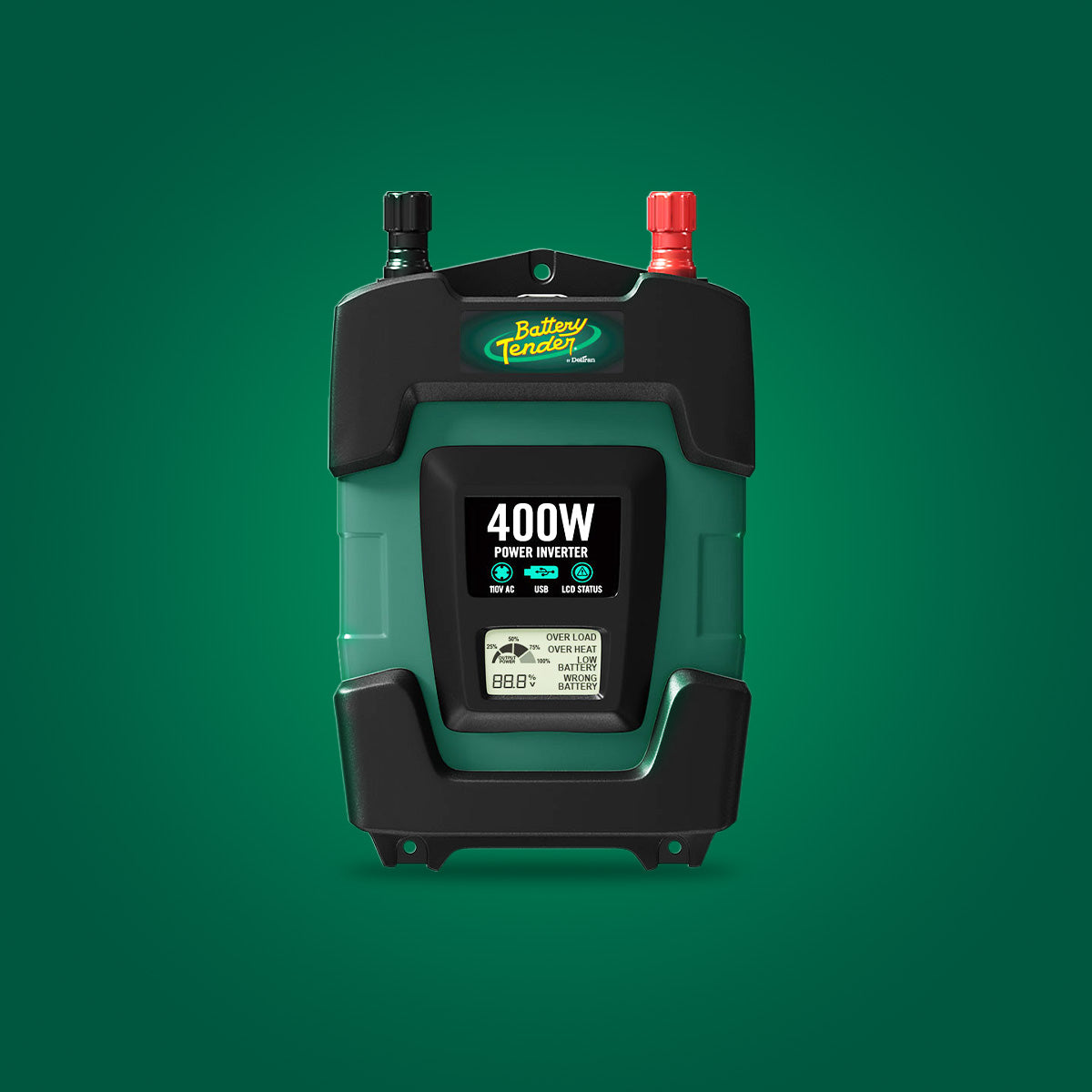
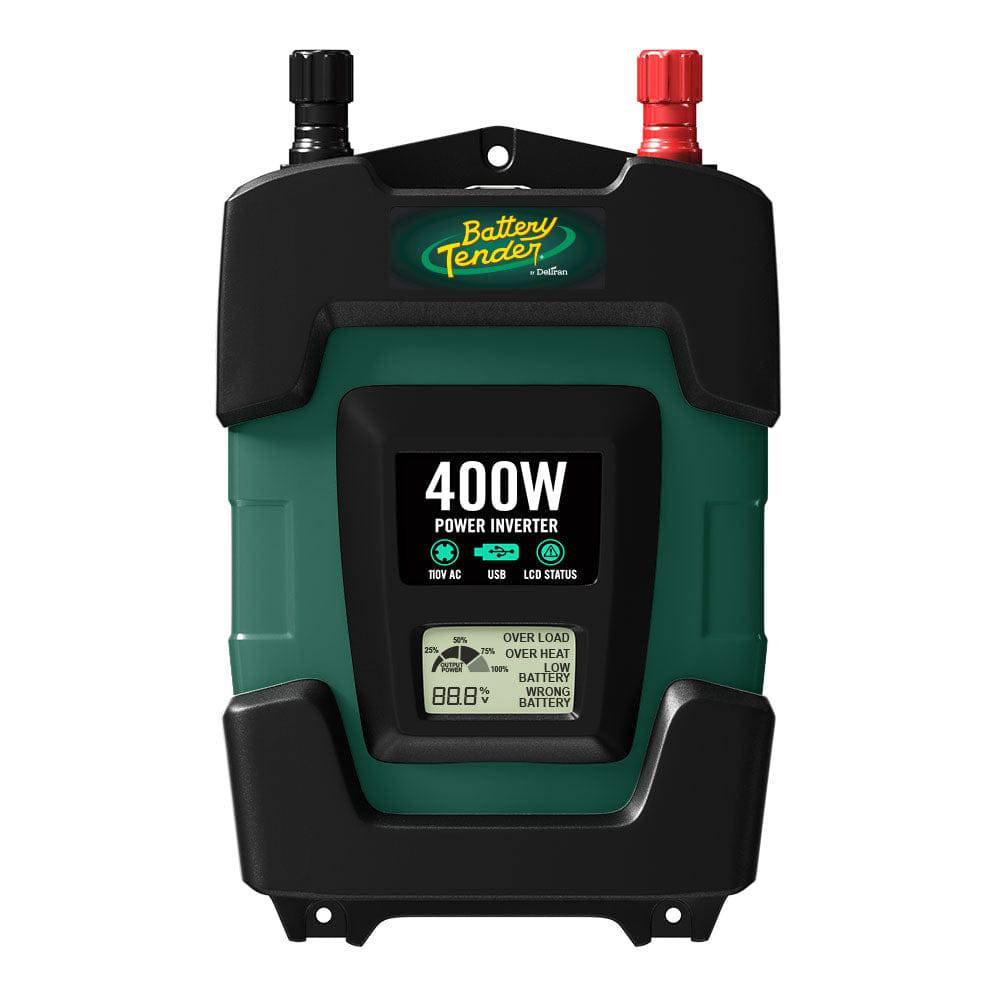
Anyone running a small power tool, a TV and console, or a 300W appliance needs the headroom of a 400W unit. The inverter pulls about 39A at full load, so pair it with a 100Ah battery and short, properly sized cables. It is the better fit for truck beds, work sites, and campsites with a deep-cycle battery.
Battery Tender Power Inverter 400 Watt 12V
Portable option with jump-start backup
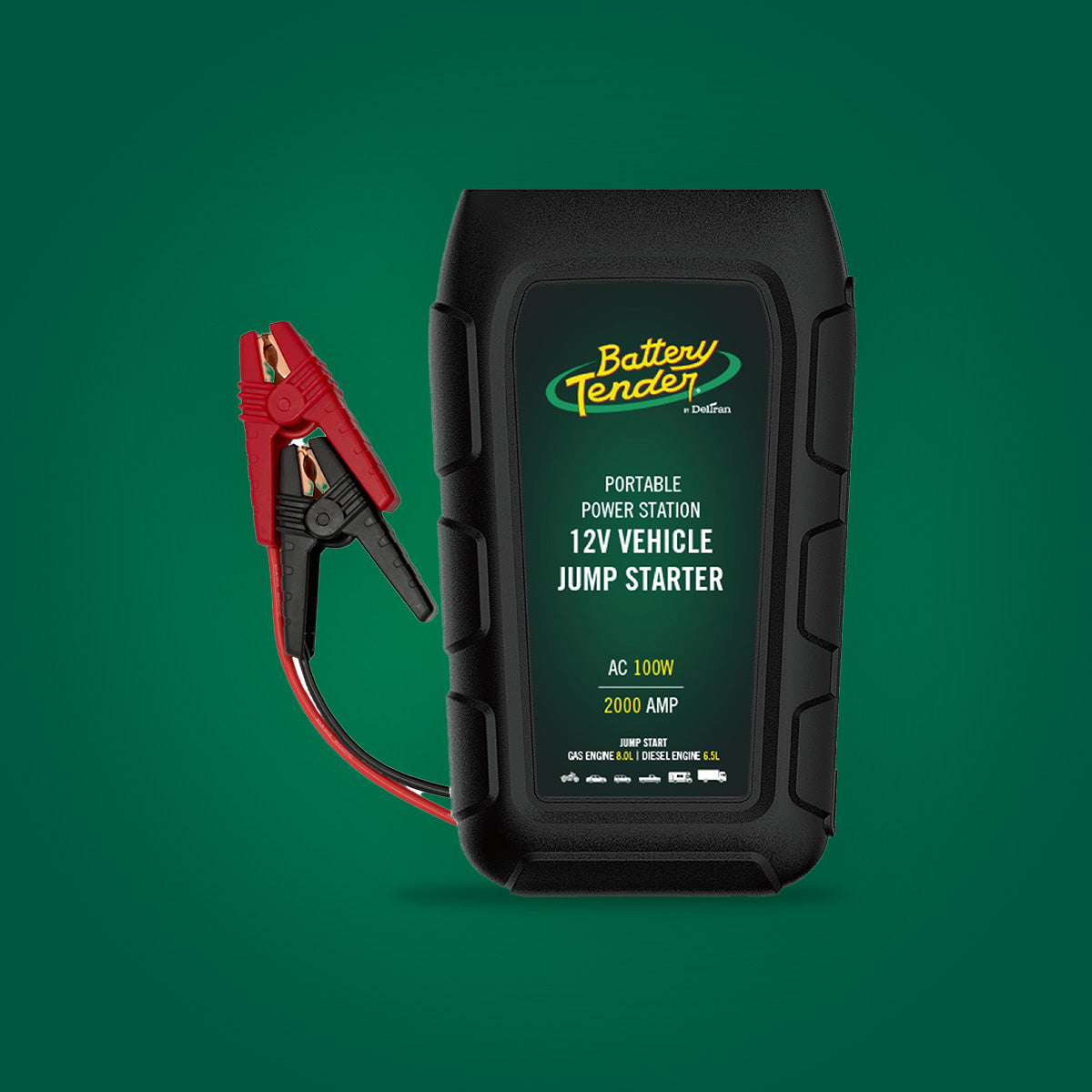
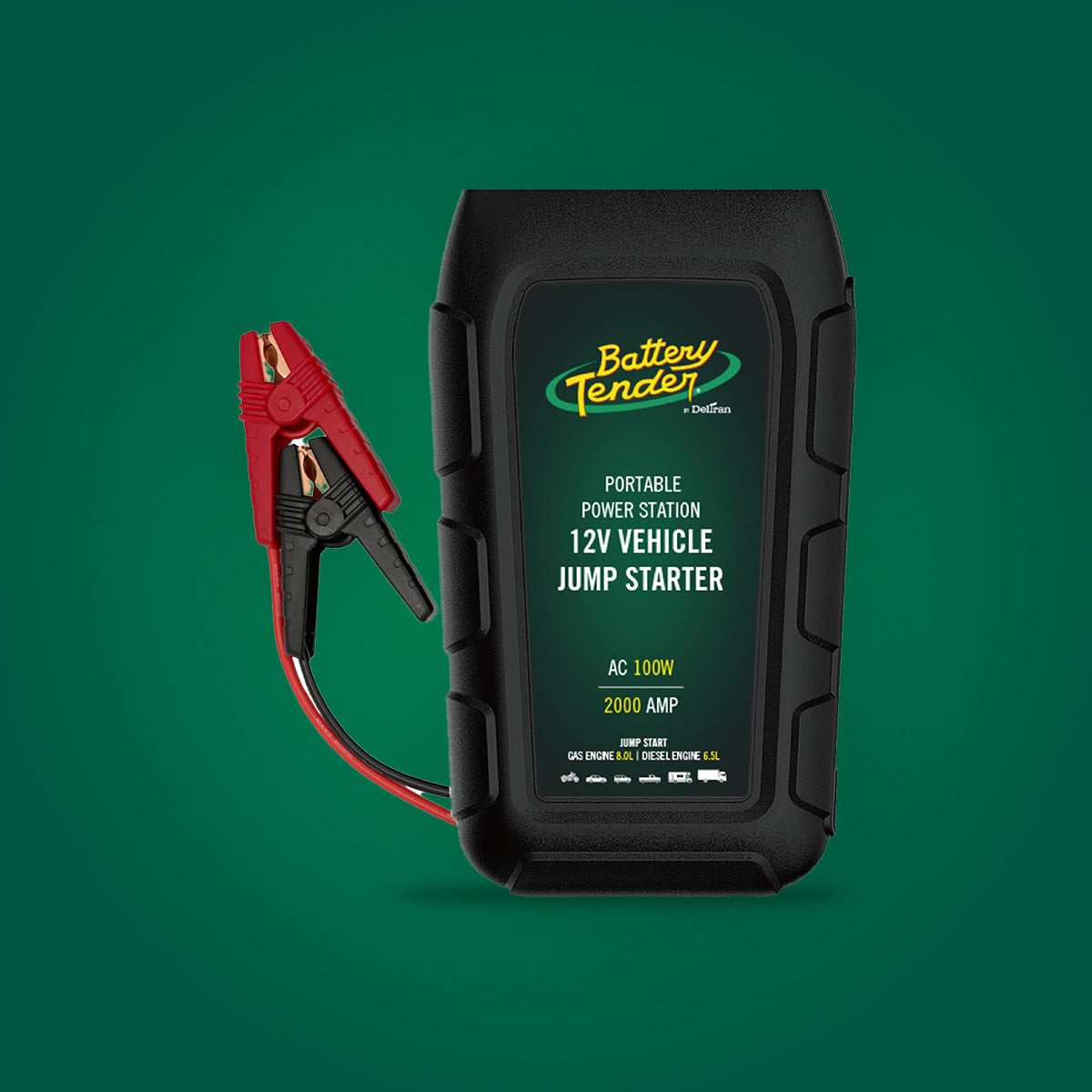
Anyone who wants AC power without wiring anything to a vehicle can use a self-contained unit instead. The Battery Tender Jump N Start 2000 Amp Power Station includes a 100W inverter, a built-in power bank, and 2000A of jump-start capacity. That covers phone, laptop, and light loads, plus an emergency start for a dead vehicle, without touching the vehicle battery for AC power.
Installation steps
- Mount the inverter on a flat, ventilated surface, away from moisture and fuel vapors.
- Turn the inverter off and disconnect all loads before making connections.
- Install an inline fuse on the positive cable, as close to the battery as practical.
- Connect positive to positive and negative to negative, keeping cables as short as possible.
- Tighten terminals firmly. Loose connections cause heat and voltage drop.
- Switch the inverter on, then add loads one at a time.
Never run a larger inverter off a vehicle starting battery with the engine off. A deep draw on that battery can leave too little power to crank the engine.
Keeping the Battery Behind Your Battery Inverter Healthy
The fastest way to ruin the battery behind a battery inverter is to leave it partially discharged. Lead-acid batteries that sit below full charge develop sulfate crystals on the plates. Sulfation reduces capacity, and that cuts inverter runtime every season.
Recharge fully after every session. Use this formula to estimate time: amp-hours used ÷ charger amps × 1.2 for charging losses. A 30Ah battery drawn down 50% (15Ah) on a 1A charger needs about 18 hours (15 ÷ 1 × 1.2). A higher-amp charger shortens that time proportionally.
Why ISM beats a constant-current charger
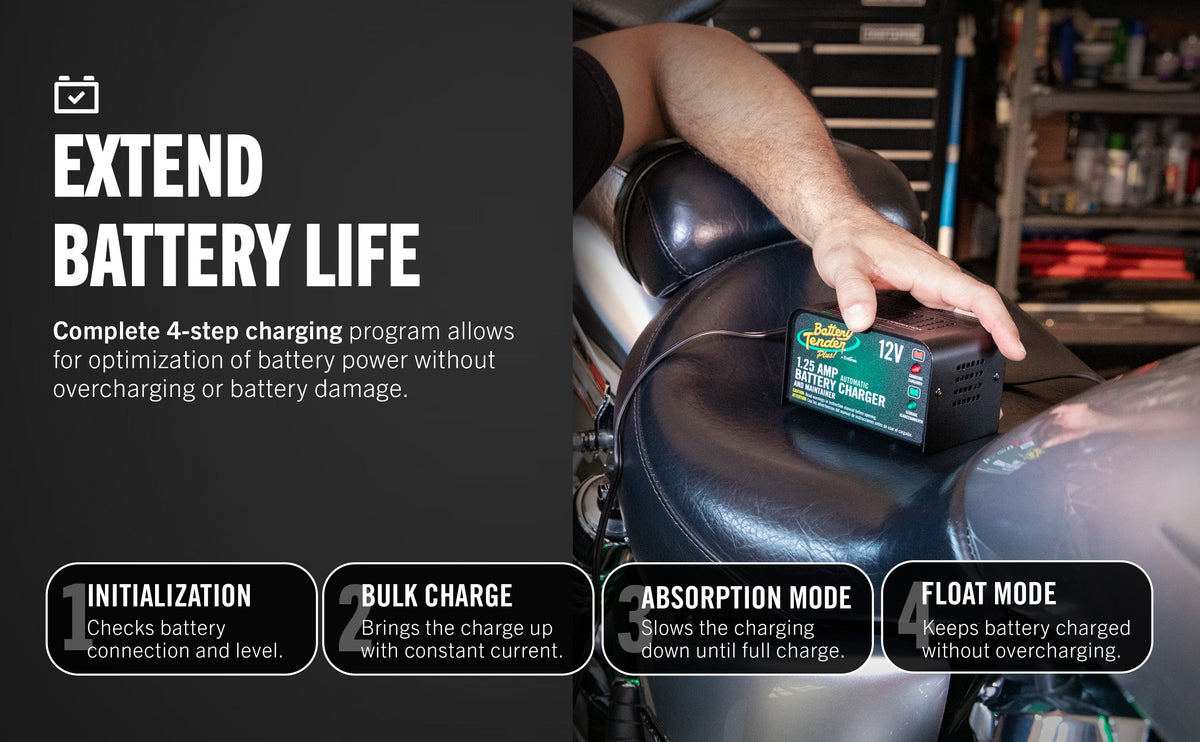
Battery Tender chargers use Infinite Sequential Monitoring (ISM), a four-stage process:
- Initialization: tests the battery and applies a gentle current to judge its condition.
- Bulk Charge: delivers full rated current until the battery reaches roughly 80% state of charge.
- Absorption: holds voltage constant while current tapers, which helps dissolve sulfate crystals.
- Float Maintenance: delivers charge only when voltage drops, so the charger can stay connected indefinitely.
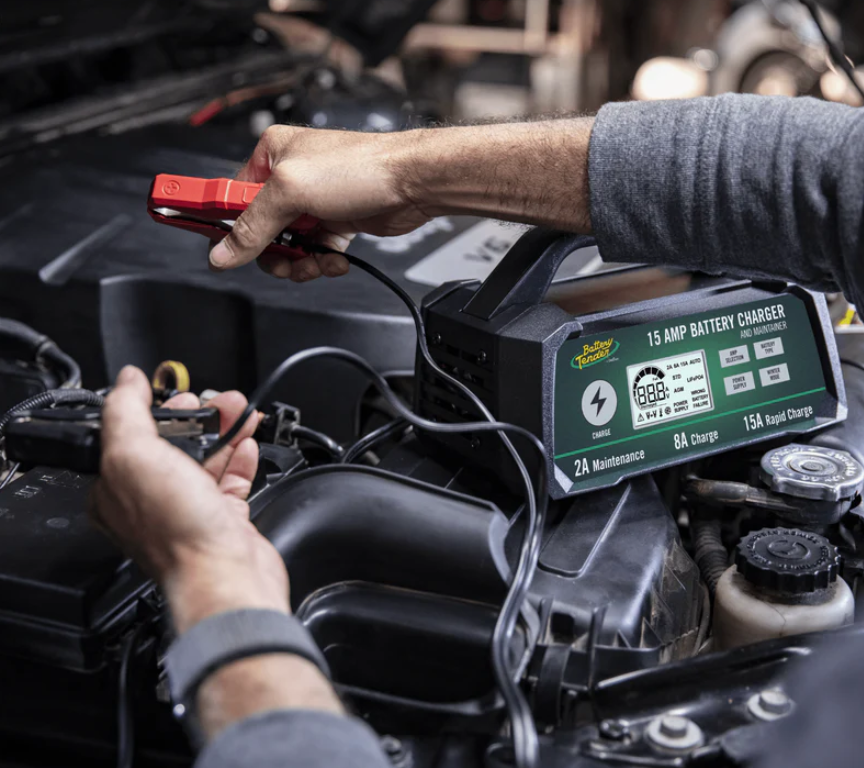
Conventional trickle chargers push constant current regardless of battery state, which risks overcharging over weeks of storage. ISM adapts instead. Battery Tender chargers such as the Battery Tender Plus also include temperature compensation, which adjusts the charge voltage for hot or cold conditions. For best results during storage, keep your battery and charger in a moderate-temperature location.
A maintainer for small inverter batteries
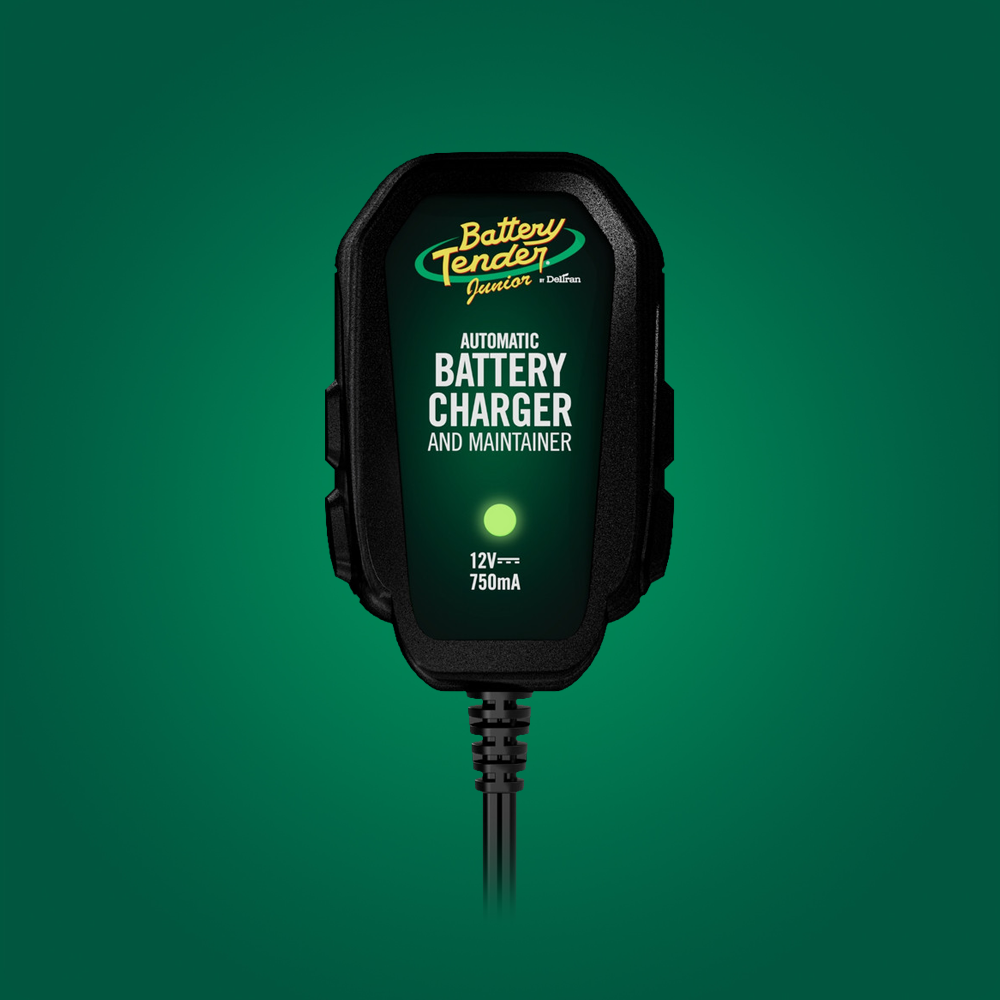
Small batteries in the 2Ah to 30Ah range, such as those in motorcycles, mowers, and compact auxiliary setups, pair well with a 1A maintainer. The Battery Tender Junior 12V 1 Amp suits a battery feeding a 120W inverter. It recharges the battery after use and then holds it at full charge between jobs.
Battery Tender Junior 12V, 1AMP Battery Charger - Available at Walmart
Standby batteries and EV owners
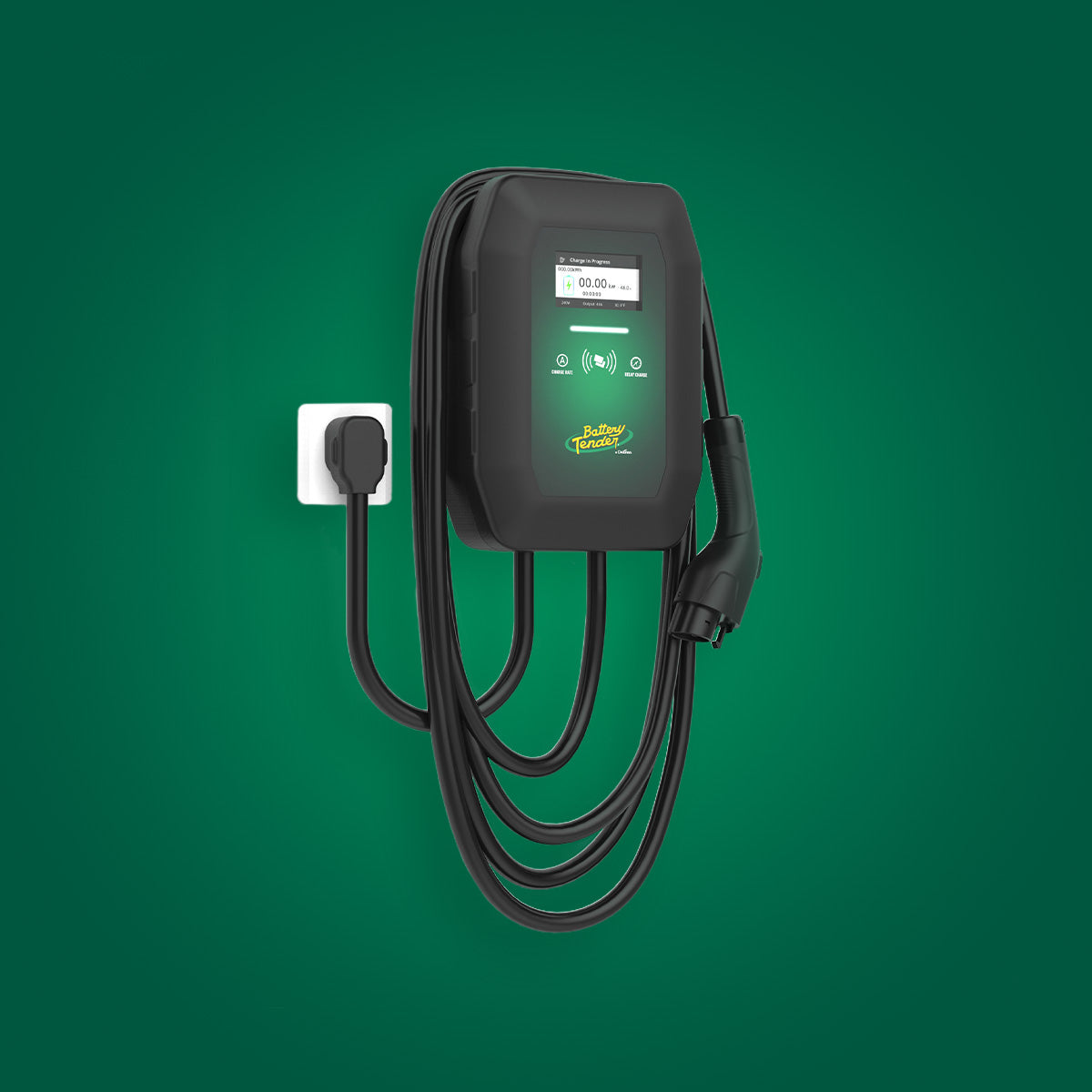
The same logic applies to standby systems. A generator or backup battery that sits idle needs a connected maintainer, and the Generac Generator Battery Maintenance: Standby Power Guide explains how to set up a permanent connection. Tesla owners who charge at J1772 stations can use an adapter to connect. That adapter serves the vehicle's traction battery, not an inverter, but it belongs in the same power-planning kit.
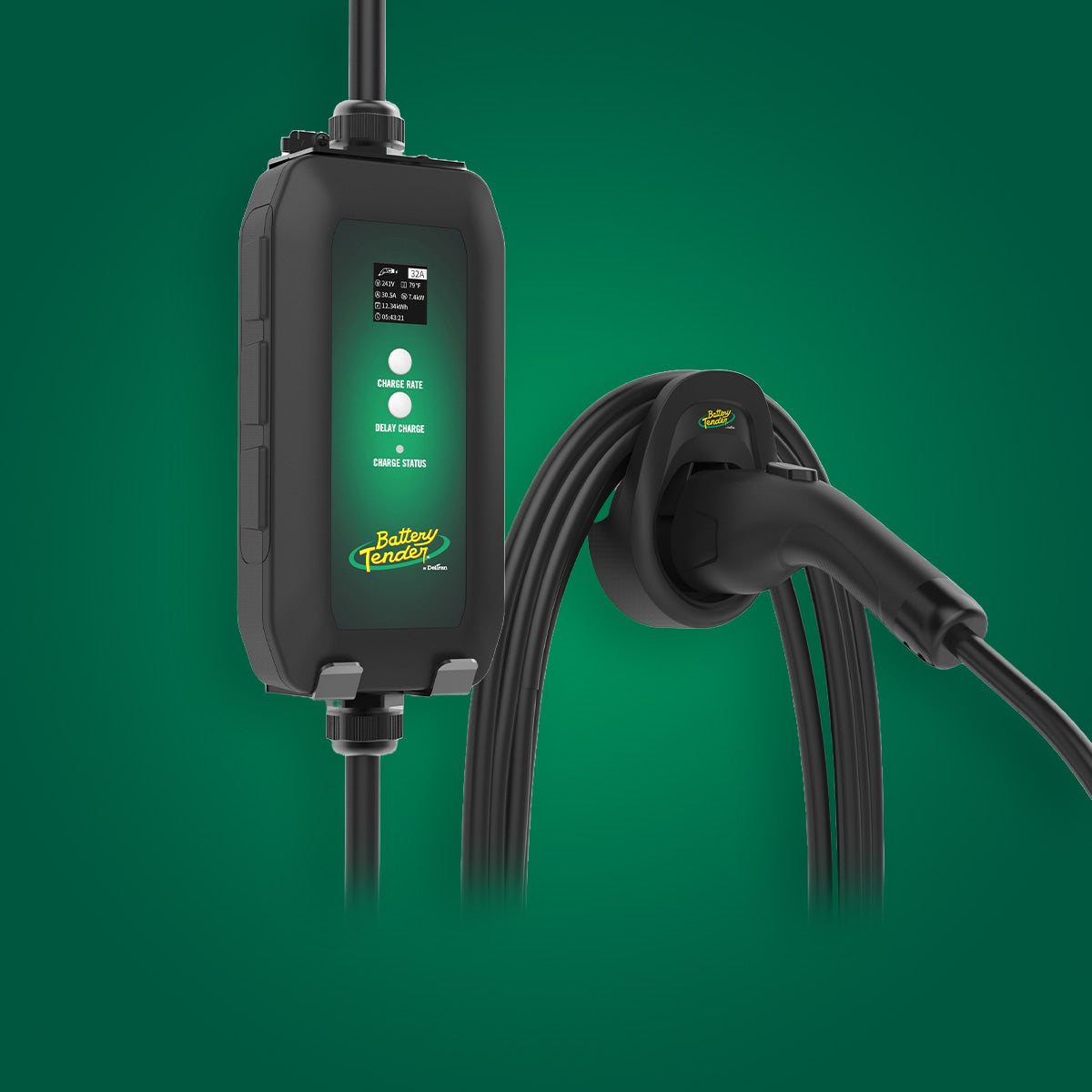
Battery Tender J1772 to Tesla Adapter
Frequently Asked Questions
Can a battery inverter drain my car battery?
Yes. An inverter draws current from the battery whenever it is switched on, even with no load connected. A car starting battery has limited reserve, and a deep draw with the engine off can leave too little power to crank. Use a separate deep-cycle battery for extended inverter use, or keep the engine running.
What size battery inverter do I need for a laptop?
Most laptops draw 45W to 100W, so a 120W inverter covers a laptop with room to spare. Check the charger label for the exact wattage, add 20% headroom, and confirm the inverter's continuous rating. A 120W unit draws under 12A from the battery at full load.
Can I leave a battery inverter connected to the battery all the time?
It is safer to switch the inverter off when it is not in use, because many units draw standby current even with no load. Over days or weeks, that idle draw can discharge a battery. Disconnect the inverter or switch it off during storage, and keep the battery on a maintainer.
Can I charge the battery while the inverter is running?
Yes, but the charger feeds the inverter load first, and only the surplus reaches the battery. A 1A charger cannot keep up with a 100W load, which draws about 10A, so the battery keeps discharging. Switch off the load to let the battery recharge fully.
What is the difference between a battery inverter and a battery charger?
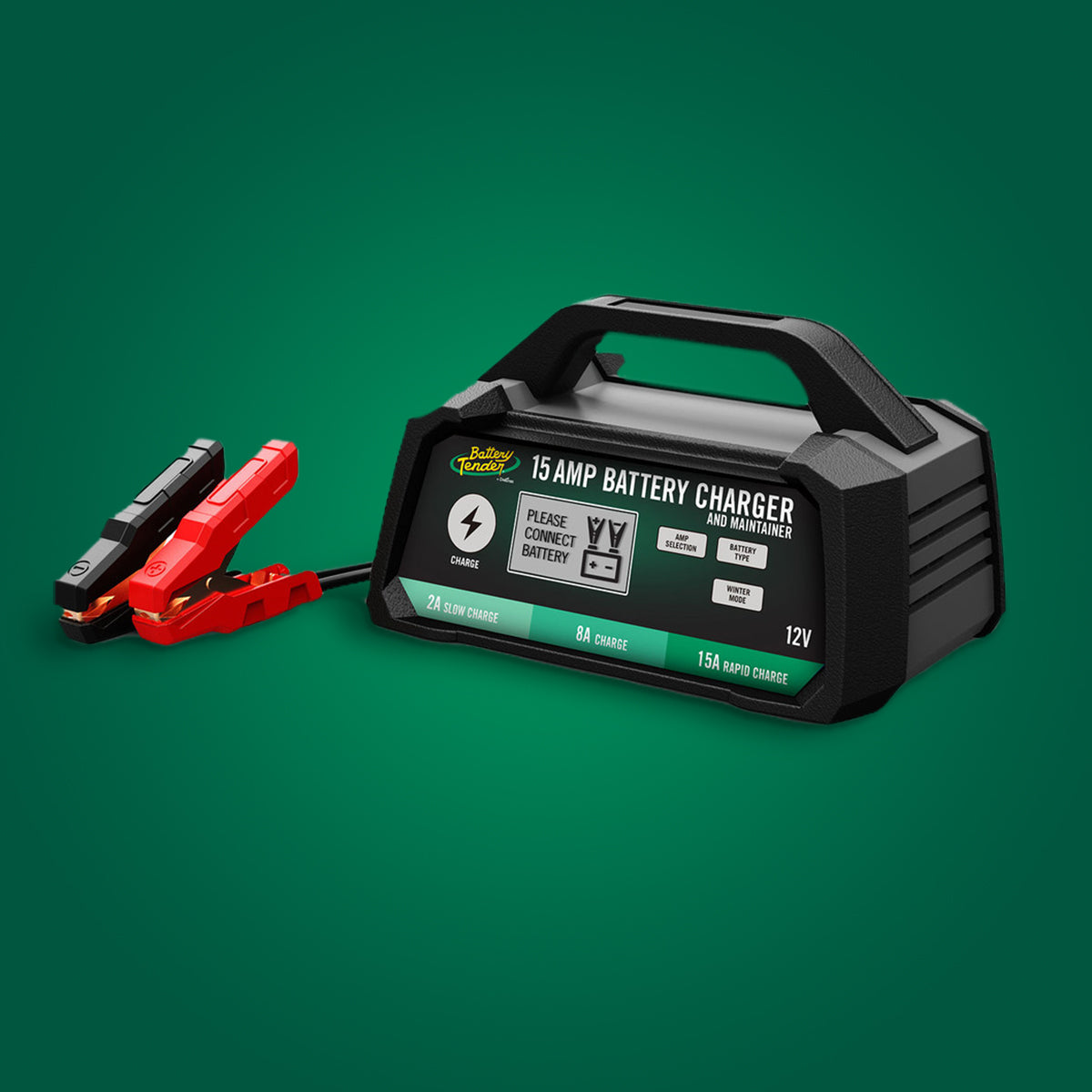
An inverter converts DC from a battery into AC for household devices, while a charger converts AC into DC to restore a battery. They work in opposite directions. A complete setup uses both: the inverter powers loads from the battery, and a charger such as a Battery Tender maintainer refills it afterward.
Conclusion
A battery inverter works well when the sizing math is right: watts ÷ 12 ÷ 0.85 for amps, 2.5 times the amps for battery size, and no deeper than 50% discharge for lead-acid. The battery behind the inverter then needs a full recharge after every use, followed by ISM maintenance charging to prevent sulfation. Calculate your load, pick the matching inverter, and browse the full range of Battery Tender chargers and maintainers to choose a charger for your battery.