

Portable Jump Starter Comparison: Which Battery Tender Jump N Start Model Is Right for Your Vehicle?
A dead battery doesn't announce itself — it happens in parking garages, on remote highways, and in subzero temperatures when you can least afford the delay. This portable jump starter comparison starts with one question: does your jump starter have enough peak amperage to reliably crank your specific engine under the worst conditions you're likely to face? Battery Tender® has engineered the Jump N Start lineup — 600, 800, 1500, and 2000 AMP configurations — each targeting a defined segment of the vehicle landscape. And for drivers who want to eliminate dead batteries entirely before they happen, the Charge N Start line combines a smart battery charger with built-in jump starting capability. This guide breaks down exactly what separates every option, who each one serves, and how to make the right call without second-guessing yourself.
Portable Jump Starter Comparison: Understanding Peak Amperage and What Else Matters
Peak amperage is the headline figure on every jump starter, and it matters enormously — but it's only one axis of a multivariable decision. Cold cranking requirements scale with engine displacement, cylinder count, compression ratio, and ambient temperature. A gasoline engine in moderate climates needs far less peak output than a large diesel engine at freezing temperatures, where battery chemistry slows and oil viscosity increases simultaneously.
Beyond raw amperage, the practical variables that determine which unit belongs in your vehicle include battery capacity in mAh — which governs how many jump starts you get per charge and whether the unit doubles as a useful power bank — physical size, and supplemental features like integrated tire inflators or USB-C fast charging. Understanding these factors as a system rather than fixating on a single number is what separates a well-matched purchase from one that disappoints in the field. The following breakdown applies that thinking to every Battery Tender Jump N Start and Charge N Start model.
Jump N Start 600 AMP: Maximum Portability for Compact Vehicles
The Jump N Start 600 AMP is engineered around a single design priority: being with you when you need it. A jump starter left at home because it was too bulky to carry is functionally useless. This unit resolves that problem by achieving dimensions smaller than most large smartphones and a weight lighter than a full water bottle — it disappears into a glove compartment, coat pocket, or day bag without friction.
The 600A peak output is calibrated for gasoline engines up to approximately 4.0L and small diesel engines up to 2.0L. That specification covers a substantial portion of the passenger vehicle fleet: compact cars, subcompacts, mid-size sedans, standard crossovers, and most hatchbacks. The 6,400 mAh internal battery provides enough reserve for multiple jump attempts and doubles as a USB power bank capable of charging phones and small devices — a genuinely useful secondary function given that a dead car battery often correlates with a low phone battery from navigation use.
Best for: Compact car owners, city drivers, commuters who want emergency capability without trunk space commitment, and anyone who prioritizes everyday carry.
Jump N Start 800 AMP with Tire Inflator: The Practical All-in-One Solution
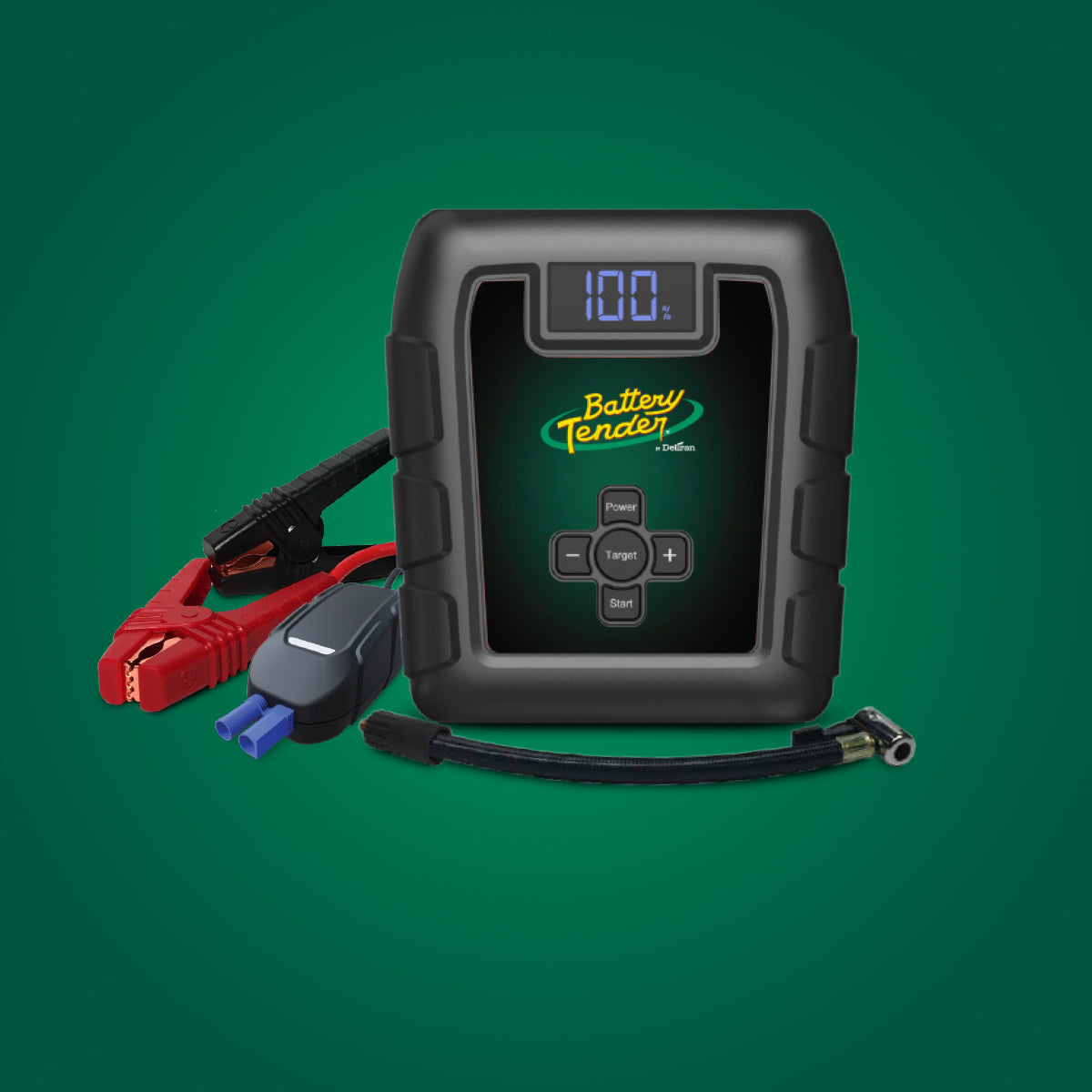
The Jump N Start 800 AMP Jump Starter and Tire Inflator addresses a straightforward observation: the two most common automotive roadside situations are a dead battery and a flat or underinflated tire. Combining both solutions in a single compact unit removes a second piece of equipment from your emergency kit without meaningful compromise on either function.
The 800A peak output extends engine coverage beyond the 600 AMP model, comfortably handling larger four-cylinder engines, most V6 engines up to approximately 5.0L displacement, and providing meaningful cold-weather margin for vehicles that the 600 AMP model also covers at moderate temperatures. Cold starting is where peak amperage headroom earns its keep — an engine that cranks reluctantly at 40°F may refuse entirely at 10°F with a marginal unit, while the additional output of the 800 AMP model absorbs that degradation.
The integrated tire inflator brings a standard passenger car tire to 36 PSI from flat in approximately 10 minutes. For slow leaks, seasonal pressure adjustments, and the statistically far more common low-pressure situation, the inflator handles the job without requiring a separate compressor. The combined unit remains compact enough for consistent trunk storage.
Best for: Drivers who want consolidated emergency capability, owners of mid-size vehicles and crossovers, anyone in variable climate regions where temperature swings affect battery performance, and drivers who currently carry both a jump starter and a separate inflator.
Jump N Start 1500 AMP: The Standard for Full-Size Vehicles
The Jump N Start 1500 AMP represents the convergence point where output capability, battery capacity, and practical portability balance most effectively for the broadest range of full-size vehicle owners. If you drive a full-size pickup truck, a large SUV, a performance vehicle, or any passenger car with a displacement above 5.0L, this is the model against which the others should be measured.
The 1,500A peak output handles gasoline engines up to approximately 7.0L and diesel engines up to 5.5L — a specification that covers virtually every standard passenger car, full-size half-ton truck, and large consumer SUV on the road today. The 12,000 mAh lithium battery provides up to 40 jump starts per charge, meaning this unit can be deployed across multiple emergency situations over an entire season without requiring a recharge between uses. That characteristic matters significantly for emergency scenarios: a unit that loses its charge while sitting in a trunk is not a reliable tool.
The USB power bank function at this capacity level delivers meaningful device charging rather than the limited top-up that smaller units provide. For owners who also use their jump starter during camping, overlanding, or extended work site use, the 12,000 mAh reserve translates to multiple full phone charges.
Best for: Full-size truck owners, large SUV drivers, performance car owners, V8 engine vehicles, and drivers in consistently cold climates where cold cranking demands push requirements upward across all engine sizes.
Jump N Start 2000 AMP: Heavy-Duty, Fleet, and Commercial Applications
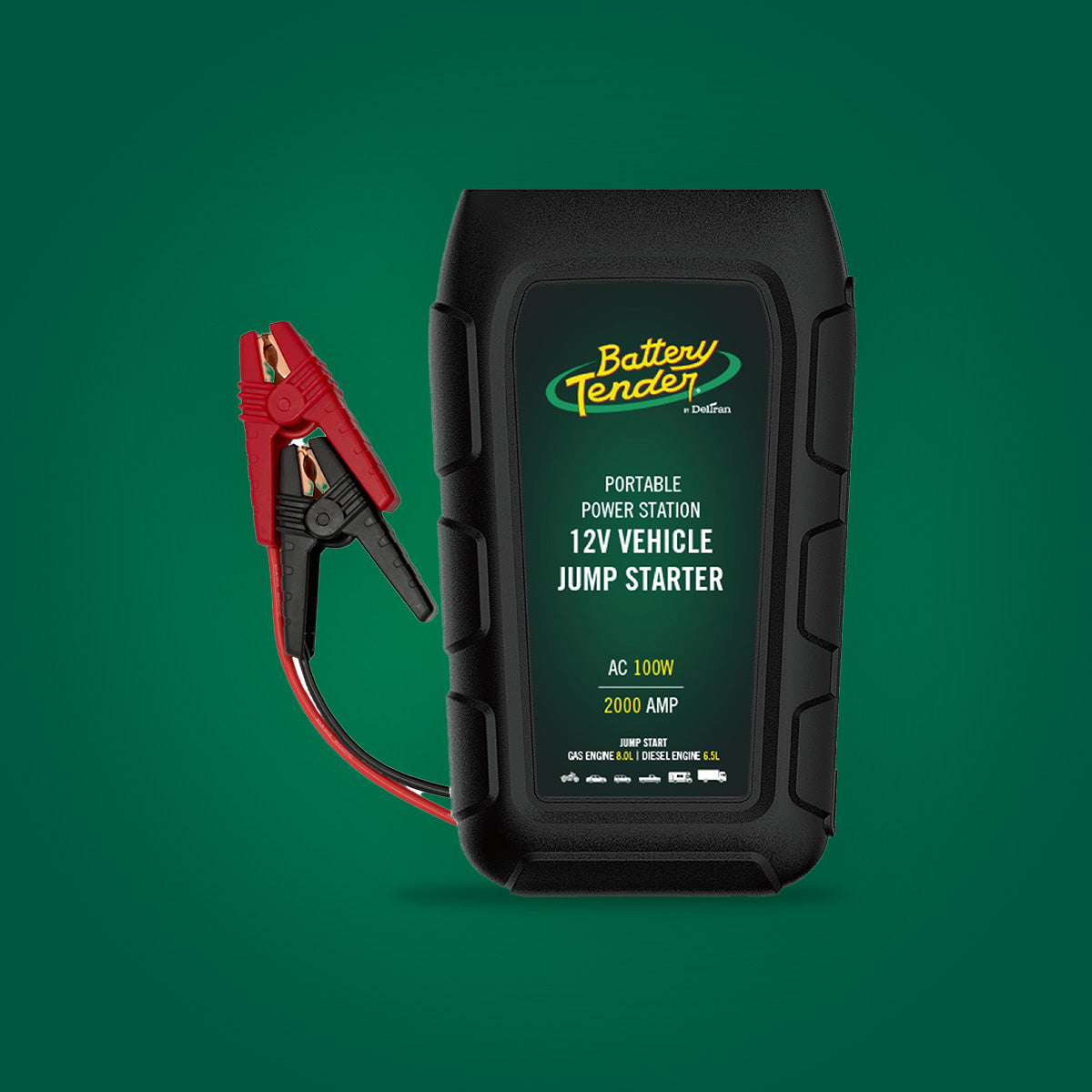
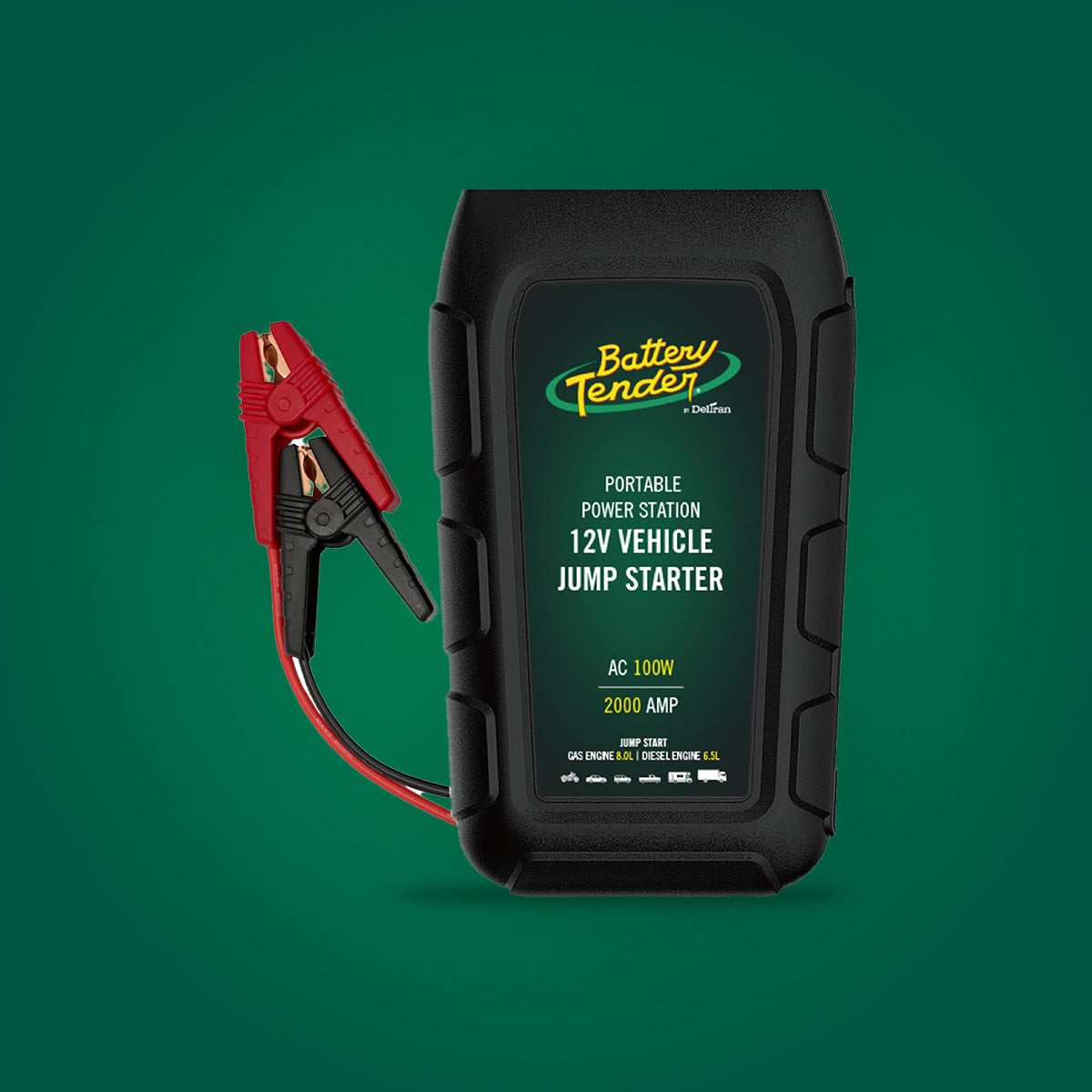
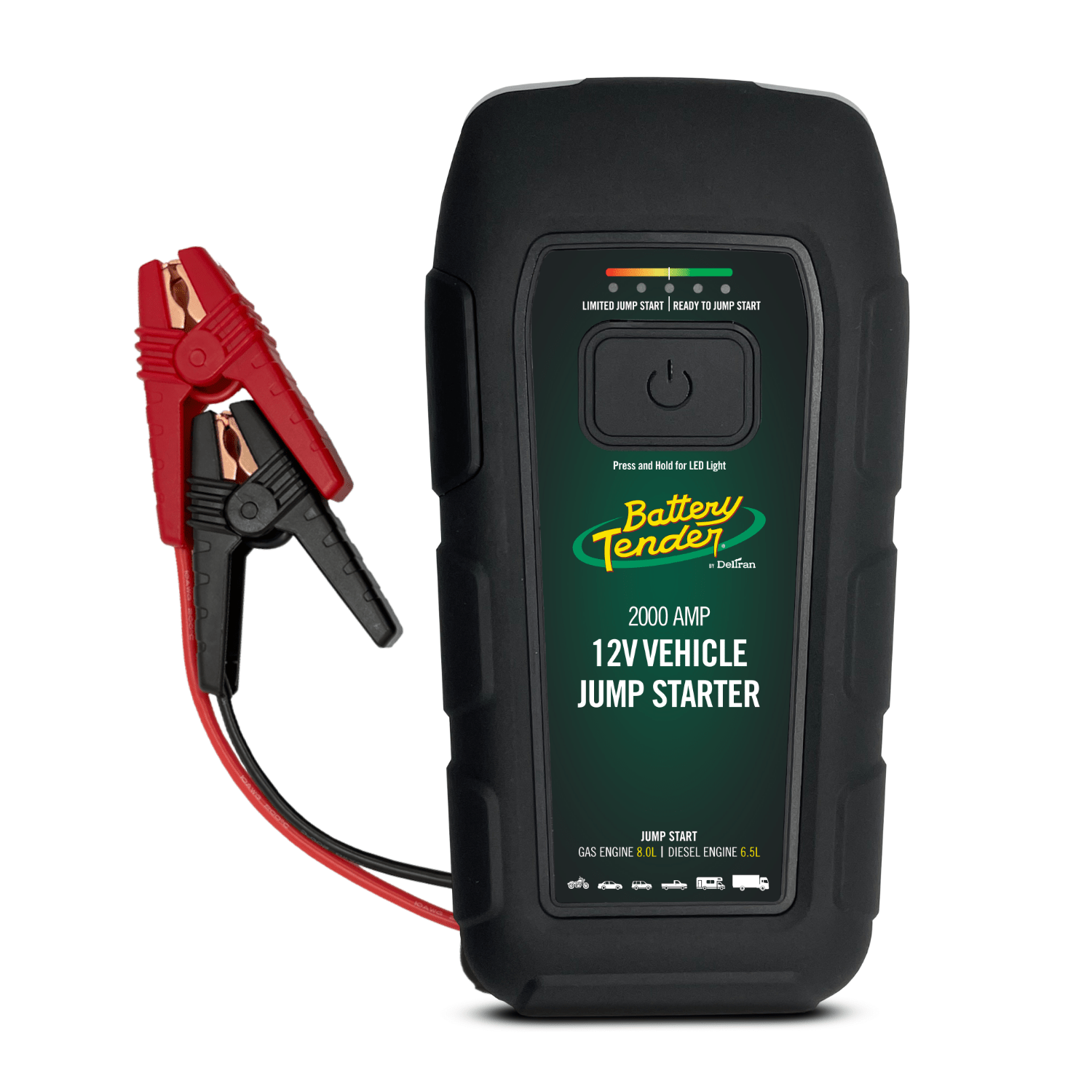
The Jump N Start 2000 AMP exists for a specific and demanding segment: large diesel trucks, heavy-duty three-quarter-ton and one-ton pickups, vehicles equipped with dual battery systems, and commercial fleet applications where reliability under demanding conditions is non-negotiable. The 2,000A peak output and 16,000 mAh battery capacity represent the top of the consumer and light commercial portable jump starter category.
Engine coverage extends to gasoline engines up to 8.0L and diesel engines up to 6.5L — the specification required for large-displacement diesel pickups, work trucks, and commercial vehicles that fleet operators run in continuous service. Up to 50 jump starts per charge means a fleet operator can deploy this unit across a full working day of vehicle checks and emergency starts without returning to a charger. For diesel engines specifically — which require higher compression and therefore greater cranking force than equivalent-displacement gasoline engines — the 2,000A peak output provides the margin that ensures reliable starts rather than marginal attempts.
The 16,000 mAh battery also serves as a substantial power bank, relevant for work site applications where device charging and equipment power are operational requirements rather than conveniences.
Best for: Diesel truck owners, fleet managers, commercial vehicle operators, large-displacement engine applications, and professionals who need the highest available output in a portable form factor.
Charge N Start: Eliminate Dead Batteries Before They Happen
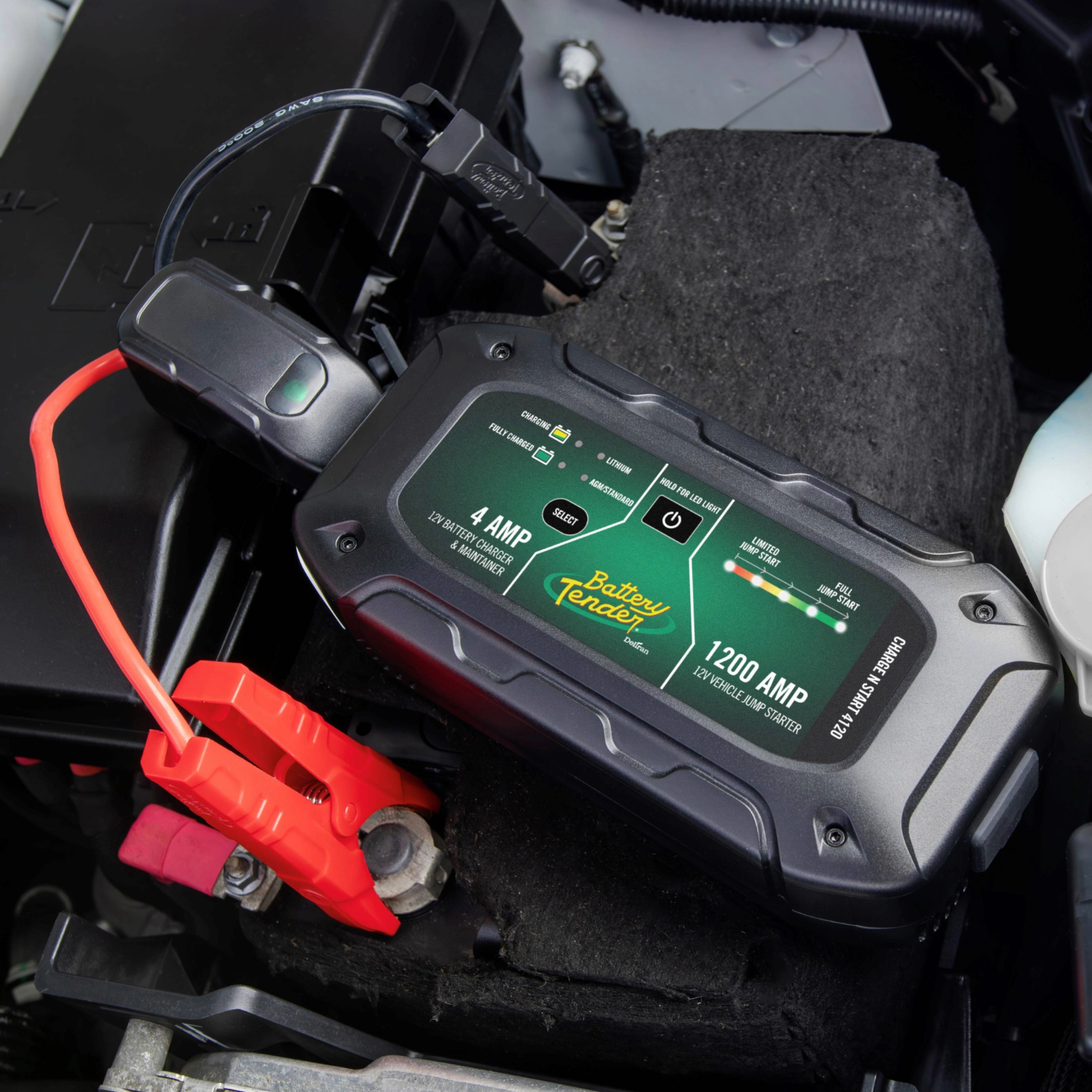
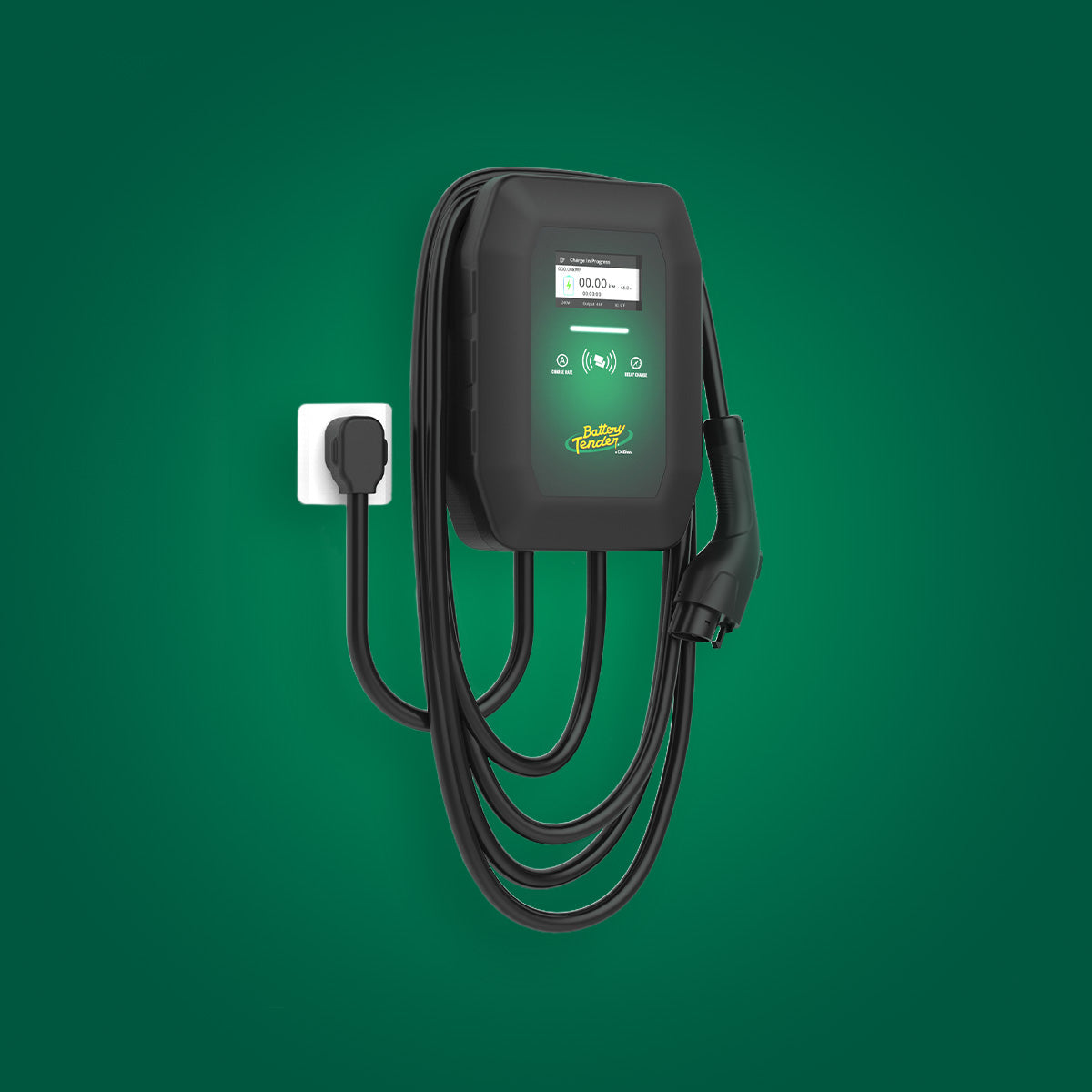
The Jump N Start lineup handles dead batteries after they occur. The Battery Tender Charge N Start line takes a different and complementary approach: it keeps your battery fully conditioned so emergency jump starting becomes the exception rather than the rule. Every Charge N Start unit is a fully automatic smart battery charger and maintainer that also incorporates jump starting capability — two functions in one connected device.
The Charge N Start lineup includes multiple configurations to match different vehicles and charging environments. The Charge N Start 1120 delivers 1,100 peak amps of jump starting output alongside its full smart charging and maintenance functionality, making it an ideal solution for garage-stored vehicles, seasonal equipment, motorcycles, powersports, and any application where a battery sits unused for extended periods. By maintaining the battery at optimal charge continuously, Charge N Start units eliminate the gradual self-discharge that leaves drivers stranded after a vehicle sits for a few weeks.
Additional Charge N Start models address higher-output and multi-bank charging needs, including options suited for larger vehicles and fleet environments where multiple batteries need simultaneous maintenance. The defining characteristic of the entire Charge N Start line is the combination of proactive battery health management with the jump starting capability to handle the unexpected — a complete battery solution rather than a single-function tool.
Best for: Garage-stored vehicles, seasonal equipment, motorcycles and powersports, collectors, fleet managers maintaining vehicles between deployments, and anyone who wants to address battery health proactively rather than reactively. Explore the full Charge N Start lineup to find the right configuration for your application.
Side-by-Side Portable Jump Starter Comparison: Specification Summary
For direct comparison across the four Jump N Start models, the key specifications align as follows. The 600 AMP unit delivers 600A peak output with 6,400 mAh capacity, suited for engines up to 4.0L gasoline and 2.0L diesel. The 800 AMP Tire Inflator model delivers 800A peak output with an integrated inflator, extending to 5.0L gasoline coverage with added cold-weather margin. The 1500 AMP unit delivers 1,500A peak output with 12,000 mAh capacity and up to 40 jump starts per charge, covering engines up to 7.0L gasoline and 5.5L diesel. The 2000 AMP unit delivers 2,000A peak output with 16,000 mAh capacity and up to 50 jump starts per charge, covering engines up to 8.0L gasoline and 6.5L diesel.
Each step up in the Jump N Start line reflects a genuine increase in real-world capability. The correct unit is the one that matches your engine specification with appropriate headroom for the coldest conditions you routinely encounter. And for applications where preventing the dead battery is the priority, the Charge N Start line works alongside your Jump N Start unit as a complete battery management system.
Cold Weather Performance: What the Specifications Don't Tell You
One factor that rarely appears prominently in product specifications deserves direct attention in any portable jump starter comparison: ambient temperature degrades both the jump starter's lithium battery output and the vehicle battery's ability to accept a charge simultaneously. At 0°F, a lithium jump starter may deliver meaningfully less than its rated peak amperage, while the vehicle battery requires more cranking current than it would at 70°F due to increased oil viscosity and slowed electrochemical reaction rates.
The practical implication is that drivers in consistently cold climates benefit from selecting one tier up from what engine displacement alone would suggest. A 4.0L gasoline engine owner who experiences regular sub-freezing temperatures will find additional margin in the 800 AMP model — not because the 600 AMP is inadequate at rated conditions, but because the combined degradation of cold weather on both battery systems reduces effective headroom. Treat the engine coverage specifications as moderate-temperature baselines and factor in climate accordingly throughout the entire product range.
This is also where the Charge N Start line earns its place in a complete battery strategy. A battery maintained at full charge by a Charge N Start unit starts with maximum cold cranking capacity rather than the partially depleted state that makes cold-weather starting most difficult.
Frequently Asked Questions
What is a portable jump starter and how does it work?
A portable jump starter is a self-contained lithium battery pack that delivers a high-amperage burst of current directly to a vehicle's dead battery, providing enough power to crank the engine and start the vehicle. You connect the included clamps to the battery terminals — red to positive, black to negative — activate the unit, and start the vehicle normally. No second vehicle is required, making portable jump starters a faster and safer alternative to traditional jumper cables.
How do I know which Jump N Start peak amperage is right for my vehicle?
Start with your vehicle's engine displacement, listed in liters in your owner's manual. Match that figure to the Jump N Start coverage specifications: 600 AMP for engines up to 4.0L gasoline, 800 AMP for up to 5.0L gasoline, 1500 AMP for up to 7.0L gasoline and 5.5L diesel, and 2000 AMP for up to 8.0L gasoline and 6.5L diesel. Drivers in cold climates should select the next tier up to account for temperature-related output reduction in both the jump starter and the vehicle battery.
Can I use a higher-amperage Jump N Start on a smaller vehicle?
Yes, without concern. A higher-rated Jump N Start will not damage a smaller vehicle's electrical system. The vehicle draws only what it needs — the jump starter simply has additional capacity available. The primary trade-off when using a higher-rated unit on a smaller vehicle is increased weight and size, but there is no electrical risk. Many drivers intentionally select a higher-output model to build in cold-weather margin and long-term reliability.
What is the difference between the Jump N Start line and the Charge N Start line?
Jump N Start units are portable, self-contained jump starters designed to start a dead battery anywhere — no power outlet required. Charge N Start units are plug-in smart battery chargers that also incorporate jump starting capability, designed for garage and home use. Charge N Start products keep your battery fully conditioned so it never reaches the dead state in the first place, while Jump N Start products handle the emergency when it does occur. Together, they form a complete battery management strategy.
How often should I recharge my Jump N Start portable jump starter?
Recharge your Jump N Start every three to six months during storage to maintain full capacity. Before each cold season — or after any period of extended storage — run a full charge cycle to confirm the unit is ready. Storing a lithium jump starter at partial charge for extended periods can gradually reduce long-term battery capacity. Most Jump N Start models charge via USB-C, making it straightforward to top off the unit at the same time you charge other devices.
What is the difference between peak amps and cold cranking amps?
Peak amps represent the maximum instantaneous output the Jump N Start unit can deliver during the engine cranking event. Cold cranking amps (CCA) refer to a vehicle battery's sustained output rating measured at 0°F for 30 seconds. For jump starting purposes, peak amperage is the relevant specification because engine cranking is a high-draw, short-duration event. A Jump N Start unit's peak amp rating should meet or exceed the cranking demands of your specific engine under the coldest conditions you encounter.
Conclusion
A thorough portable jump starter comparison comes down to honest alignment between your vehicle's actual demands and the unit's rated capabilities — with appropriate margin for the real-world conditions you face. Battery Tender's Jump N Start lineup covers the full spectrum: the Jump N Start 600 AMP for compact vehicle owners who prioritize everyday portability, the Jump N Start 800 AMP Tire Inflator for all-in-one roadside coverage, the Jump N Start 1500 AMP for full-size trucks and SUVs, and the Jump N Start 2000 AMP for heavy-duty diesel and commercial applications. Pair the right Jump N Start model with a Charge N Start unit for proactive battery maintenance, and you have a complete strategy that handles both prevention and emergency response — so the conditions that killed your battery are never working against your jump starter at the same time.
Related guides: How to Jump Start a Car Safely: The Complete Step-by-Step Guide (2026) · Battery Tender Charge N Start Complete Guide · More automotive battery care guides