

How to Jump Start a Car Safely: The Complete Step-by-Step Guide (2026)
Knowing how to jump start a car is one of the most essential roadside skills any driver can have. Battery Tender® offers a full line of lithium-powered portable jump starters and hybrid charger-jump starter units that make the process safer, faster, and more reliable than traditional jumper cables ever could. Whether a battery dies in a grocery store parking lot, at a trailhead, or in a home garage after weeks of sitting, a confident understanding of the correct procedure prevents damage to sensitive vehicle electronics and eliminates the risk of sparks near a vented battery.
This guide walks through every step required to jump start a car using both traditional jumper cables and a modern portable jump starter. It covers the exact cable connection sequence, critical safety precautions that most guides skip, common mistakes that destroy alternators and ECUs, and how to determine whether a battery needs a jump, a full recharge, or a complete replacement. The goal is not just to get a vehicle running once — it is to handle the situation correctly so the battery recovers fully and the vehicle stays running.
Why Do Car Batteries Go Dead in the First Place?
A car battery dies when its state of charge drops below the threshold needed to spin the starter motor — typically below 12.0 volts for a 12V battery that reads 12.6V when fully charged. The most common cause is parasitic drain: modern vehicles draw 25–75 milliamps continuously for alarm systems, keyless entry modules, and onboard computers. A vehicle parked for two to three weeks can lose enough charge to prevent starting, especially if the battery is older than three years.
Other frequent causes include leaving headlights or interior lights on, short trips that never allow the alternator to fully recharge the battery, extreme temperatures (both hot and cold), and corroded terminal connections that increase resistance. According to the American Automobile Association (AAA), battery-related problems account for the single largest category of roadside assistance calls, representing roughly 30% of all service requests annually.
Understanding why a battery failed matters because it determines what happens after the jump start. A battery drained by an interior light left on overnight may recover fully with 30 minutes of highway driving. A battery that died due to internal cell degradation will fail again within hours and needs replacement.
What You Need Before You Jump Start a Car
Before connecting anything, gather the right equipment and perform a quick safety assessment. Two options exist for providing the external power needed to crank a dead battery: a second running vehicle with jumper cables, or a self-contained portable jump starter pack.
Option 1: Jumper Cables and a Donor Vehicle
Use 4-gauge or 6-gauge cables at least 16 feet long. Thinner cables (8- or 10-gauge) restrict current flow and may not deliver the 200–400 amps a starter motor requires. Both vehicles must be in park (or neutral for manual transmissions), ignitions off, and positioned close enough for cables to reach without stretching. Never allow the vehicles to touch each other — metal-to-metal contact creates an uncontrolled ground path.
Option 2: Portable Lithium Jump Starter (Recommended)
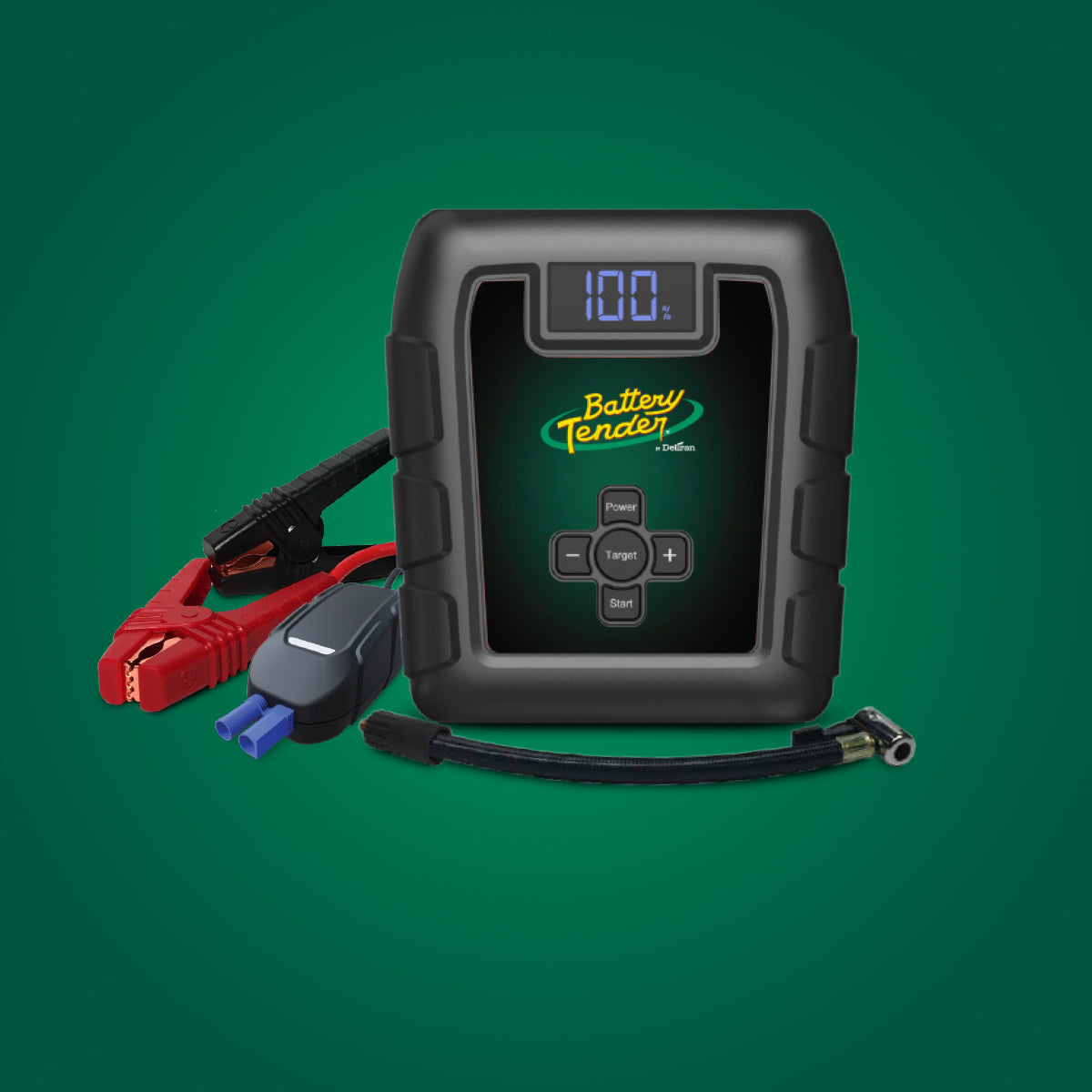
A portable jump starter eliminates the need for a second vehicle entirely. Modern lithium-ion jump packs weigh under three pounds, fit in a glove box, and hold a charge for months between uses. They also include built-in safety features — spark-proof clamps, reverse polarity protection, and short circuit protection — that jumper cables simply do not have. For drivers who want a single device that both maintains battery health during storage and delivers emergency jump-starting power, the Battery Tender Charge N Start 1100 combines a 1-amp Infinite Sequential Monitoring (ISM) smart charger with a 1,000-amp lithium jump starter in one compact unit. The ISM charger keeps the internal lithium-ion battery topped off and ready, so the jump function works reliably even after months on a shelf.
The Battery Tender Charge N Start 1100 starts gas engines up to 5.0 liters and diesel engines up to 3.0 liters, covering the vast majority of passenger cars, crossovers, and small SUVs.
Battery Tender Charge N Start 1100 — 1A Charger + 1000A Jump Starter ($139.95)
How to Jump Start a Car: Step-by-Step Cable Connection Sequence
The connection sequence matters. Reversing even one step can produce dangerous sparks near hydrogen gas vented by lead-acid batteries. Follow this exact order whether using jumper cables from a donor vehicle or clamps from a portable jump starter.
Step 1: Identify Battery Terminals
Locate the positive (+) terminal, typically marked with a red cover or "+" symbol, and the negative (−) terminal, marked with black or "−." If corrosion obscures the markings, trace the cables: the positive cable runs to the starter motor or fuse box; the negative cable connects to the engine block or chassis ground. Some vehicles (many BMWs, some Chevrolets) mount the battery in the trunk or under the rear seat but provide remote jump-start terminals under the hood — always use those designated points.
Step 2: Connect the Red (Positive) Clamp First
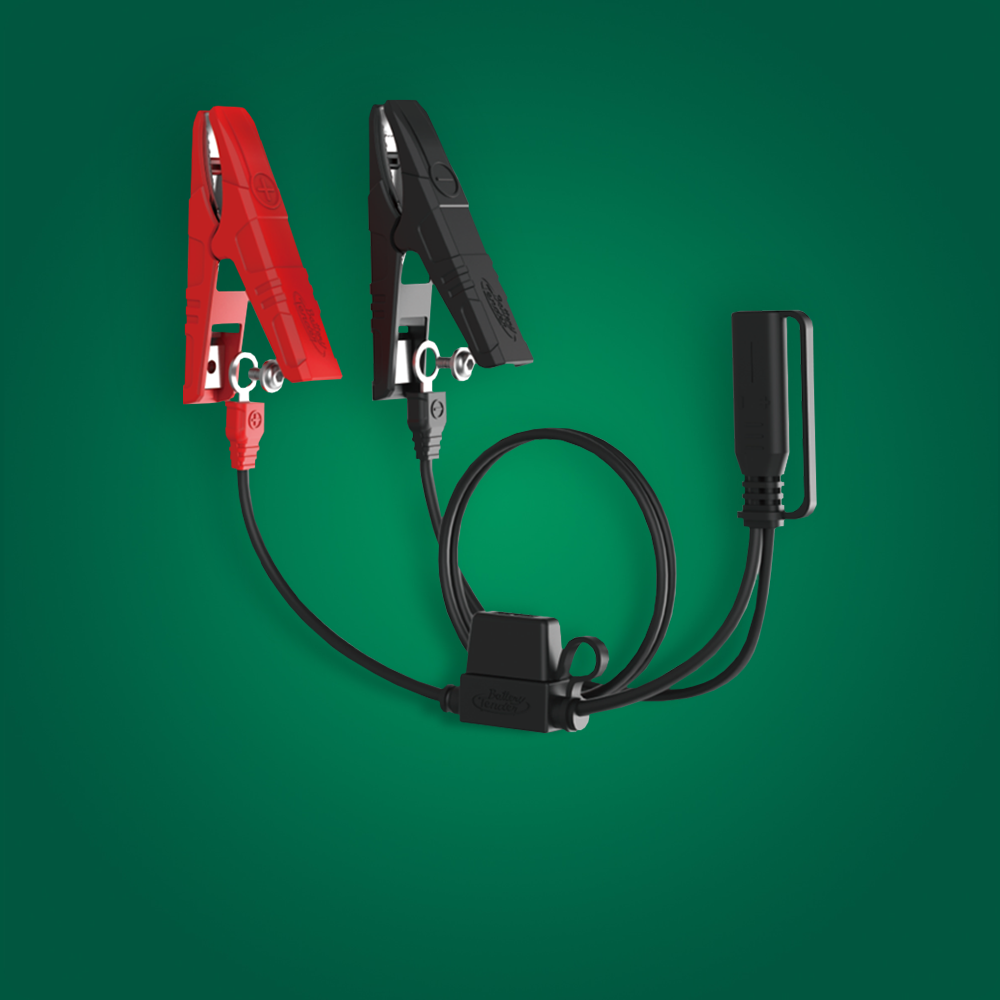
Attach one red clamp to the positive (+) terminal of the dead battery. If using a donor vehicle, attach the other red clamp to the positive (+) terminal of the good battery. Ensure the clamp bites directly onto clean metal — push through any light corrosion to establish solid contact.
Step 3: Connect the Black (Negative) Clamp to the Ground Point
This is the step most people get wrong. Attach the black clamp on the donor side to the donor battery negative (−) terminal. Then attach the final black clamp to an unpainted metal surface on the dead vehicle's engine block — a bolt, bracket, or engine lift point — not to the dead battery negative terminal. This prevents sparks at the battery, where hydrogen gas may be present. The Society of Automotive Engineers (SAE) standard J1494 specifies this grounding procedure for exactly this reason.
Step 4: Start the Vehicle
If using a donor vehicle, start the donor first and let it idle for two to three minutes to build surface charge in the dead battery. Then attempt to start the dead vehicle. Crank for no more than five seconds at a time, waiting 30 seconds between attempts. If using a portable jump starter, simply turn the unit on, verify the indicator confirms correct polarity, and crank. Most lithium jump packs deliver peak current instantly without needing a warm-up period.
Step 5: Disconnect in Reverse Order
Remove clamps in the exact reverse of the connection order: ground clamp from the previously-dead vehicle first, then negative from donor, then positive from donor, then positive from the revived vehicle. Never allow clamp ends to touch each other or any metal surface during removal.
What to Do Immediately After the Jump Start
Getting the engine running is only half the process. A jumped battery typically sits at 40–60% state of charge and needs sustained recharging to recover fully. Drive the vehicle for at least 30 minutes at highway speeds (sustained RPM above 1,500) to allow the alternator to push charge back into the battery. Short trips at idle speeds may not restore enough charge to restart the vehicle once the engine is shut off.
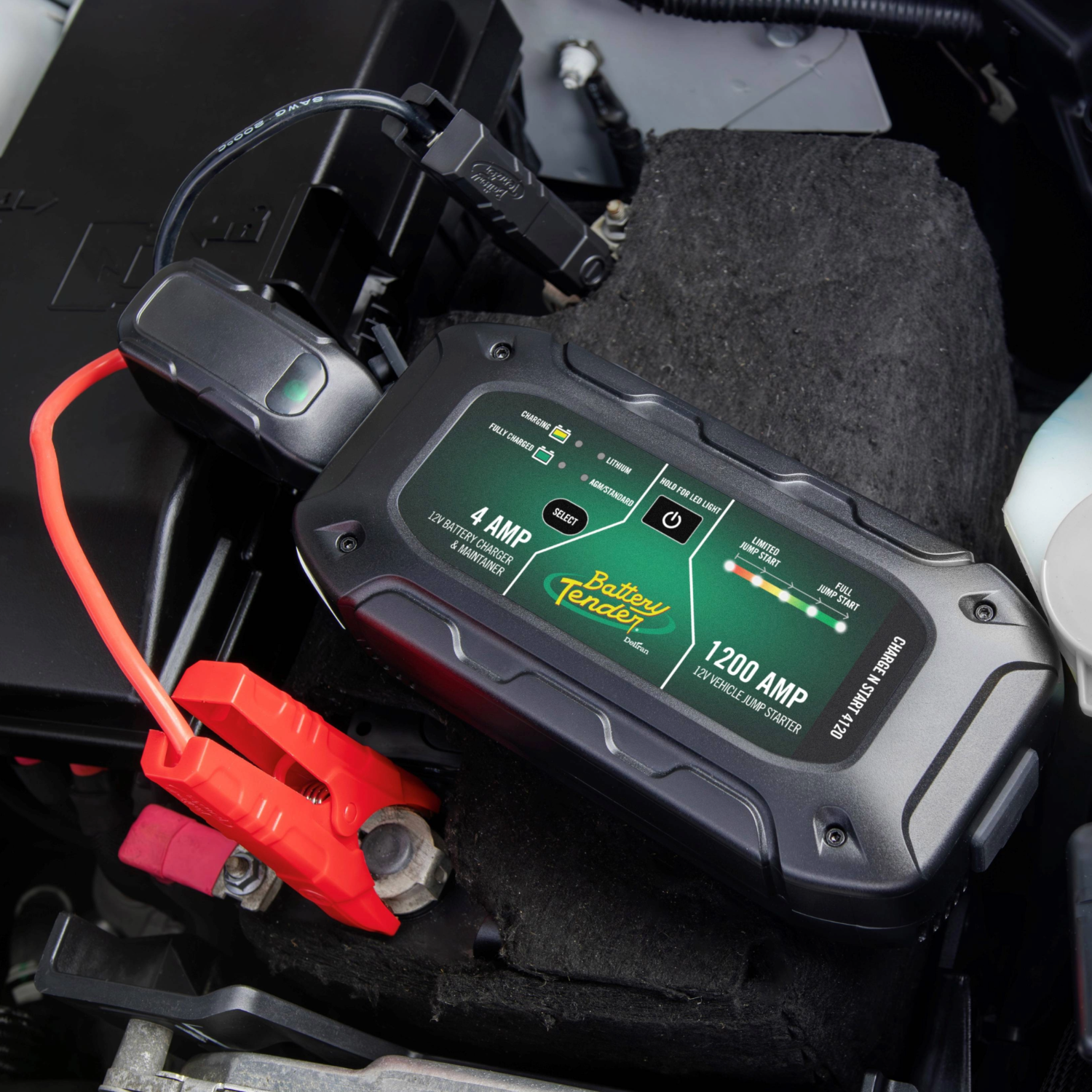
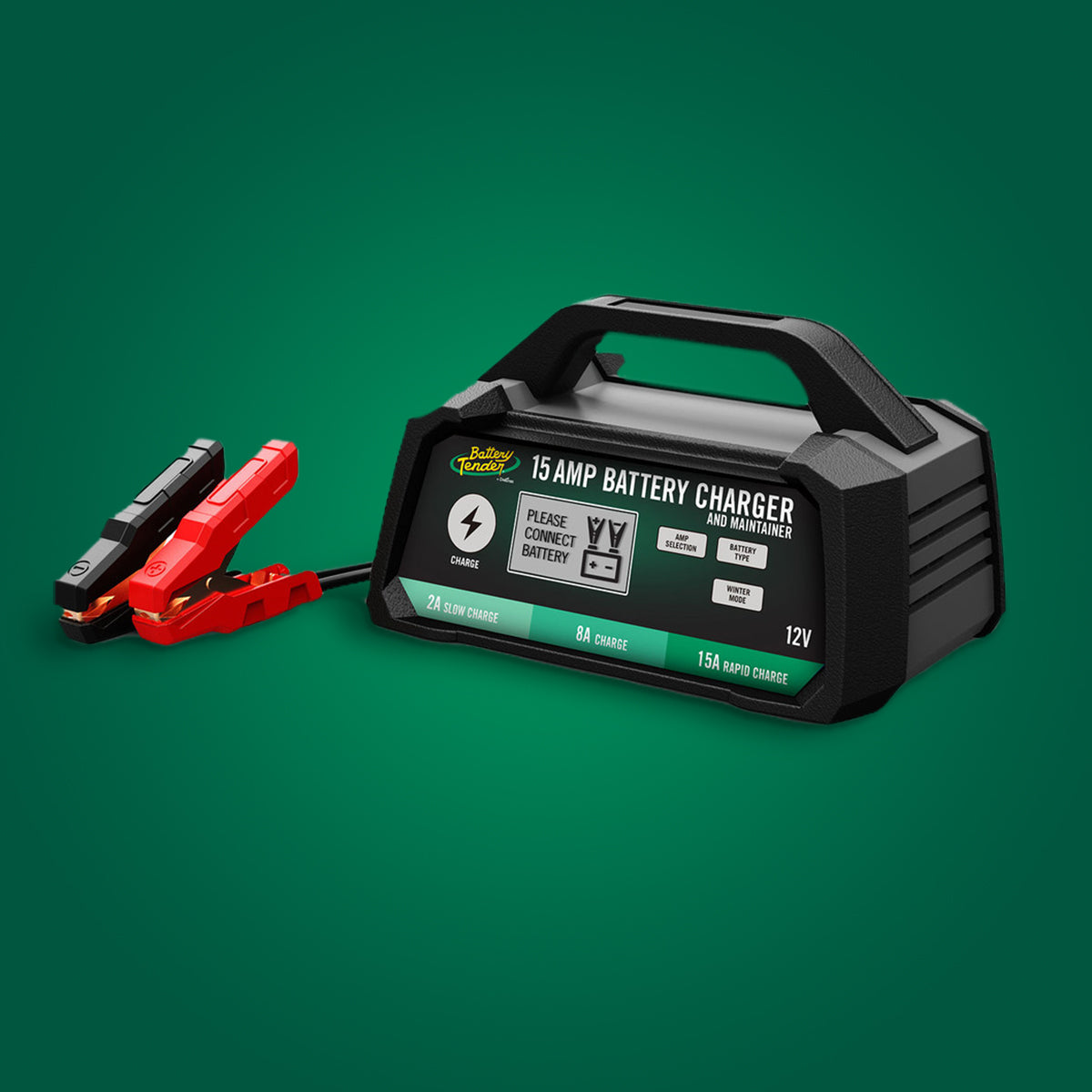
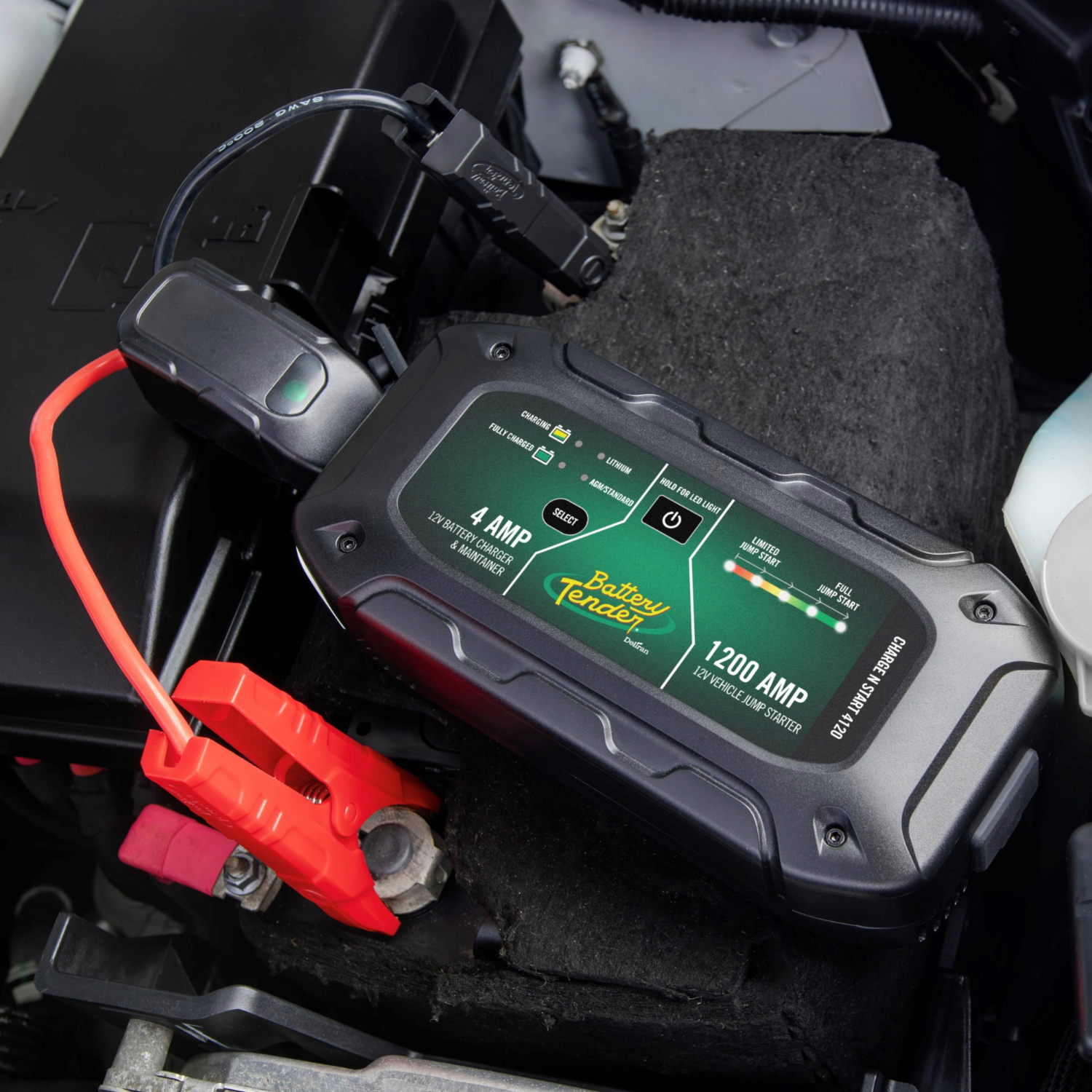
For a more reliable recovery, connect a dedicated smart charger overnight. A Battery Tender charger using ISM technology progresses through four stages — Initialization, Bulk Charge, Absorption, and Float Maintenance — to fully restore the battery and dissolve sulfate crystal buildup that accumulates during deep discharge events. Drivers who own both a vehicle and a motorcycle, ATV, or seasonal car benefit from the Battery Tender Charge N Start 4120, which pairs a 4-amp ISM charger with a 1,200-amp jump starter capable of starting gas engines up to 6.0 liters and diesel engines up to 4.0 liters.
Battery Tender Charge N Start 4120 — 4A Charger + 1200A Jump Starter ($179.95)
How to Size a Jump Starter Correctly for Any Vehicle
Choosing the wrong amperage rating is the most common reason a jump start fails. Starter motors in modern vehicles draw between 150 amps (small four-cylinder) and 500+ amps (diesel truck). The jump starter must deliver peak amps well above the starter draw to overcome internal resistance in a depleted battery.
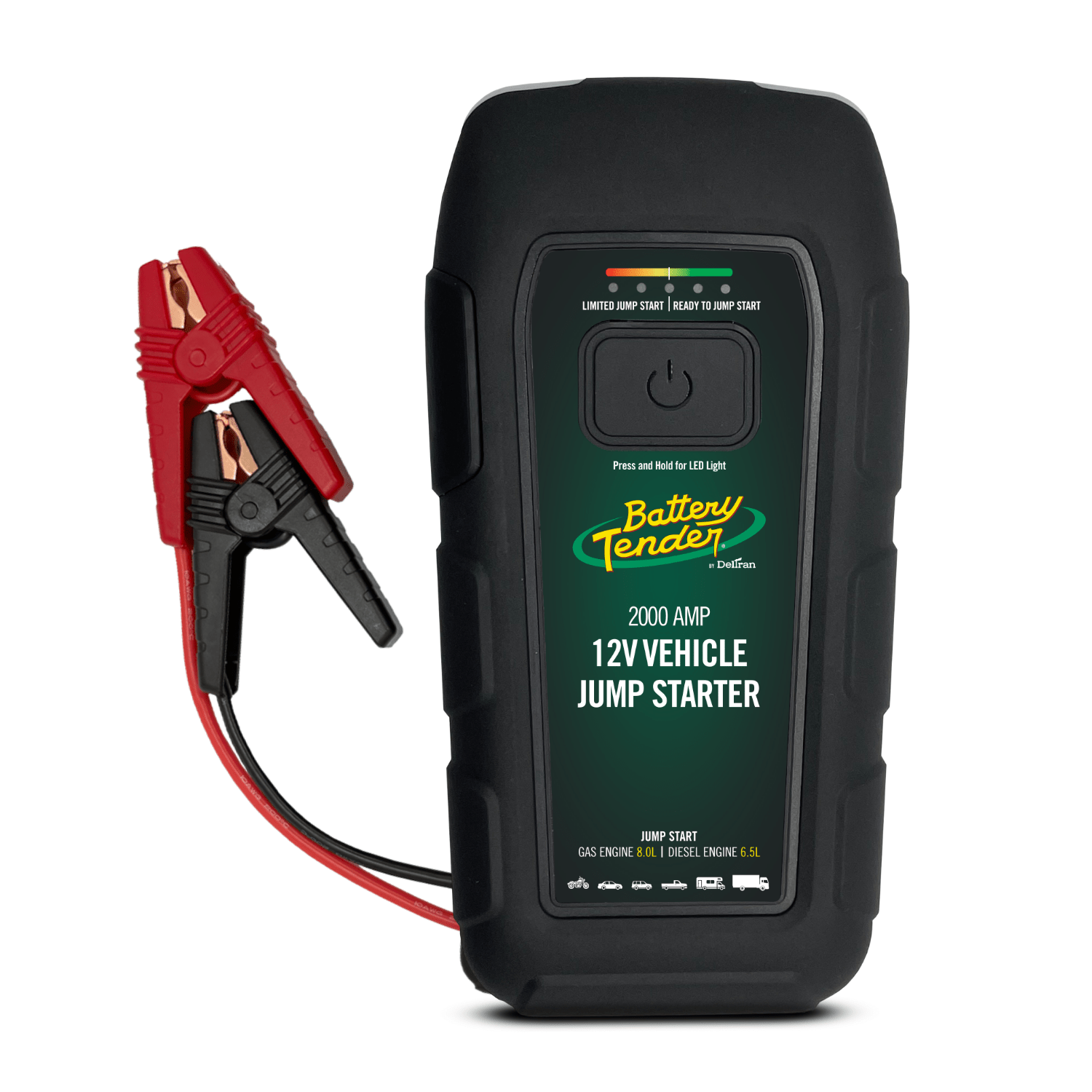
- Motorcycles and small engines (under 1.5L): 600A is sufficient. The Battery Tender 600A Jump Starter ($114.95) weighs just a few ounces and fits in a saddlebag or tool kit. Its 6,400 mAh lithium-ion pack starts engines up to 4.0L gas and 2.0L diesel.
- Passenger cars, crossovers, and SUVs (2.0L–6.0L gas): 1,000A to 1,500A. The Battery Tender Charge N Start 1100 (1,000A) or the Battery Tender 1500A Jump Starter ($152.95) cover this range with margin to spare. The 1500A model holds 12,000 mAh and delivers up to 40 jump starts on a single charge.
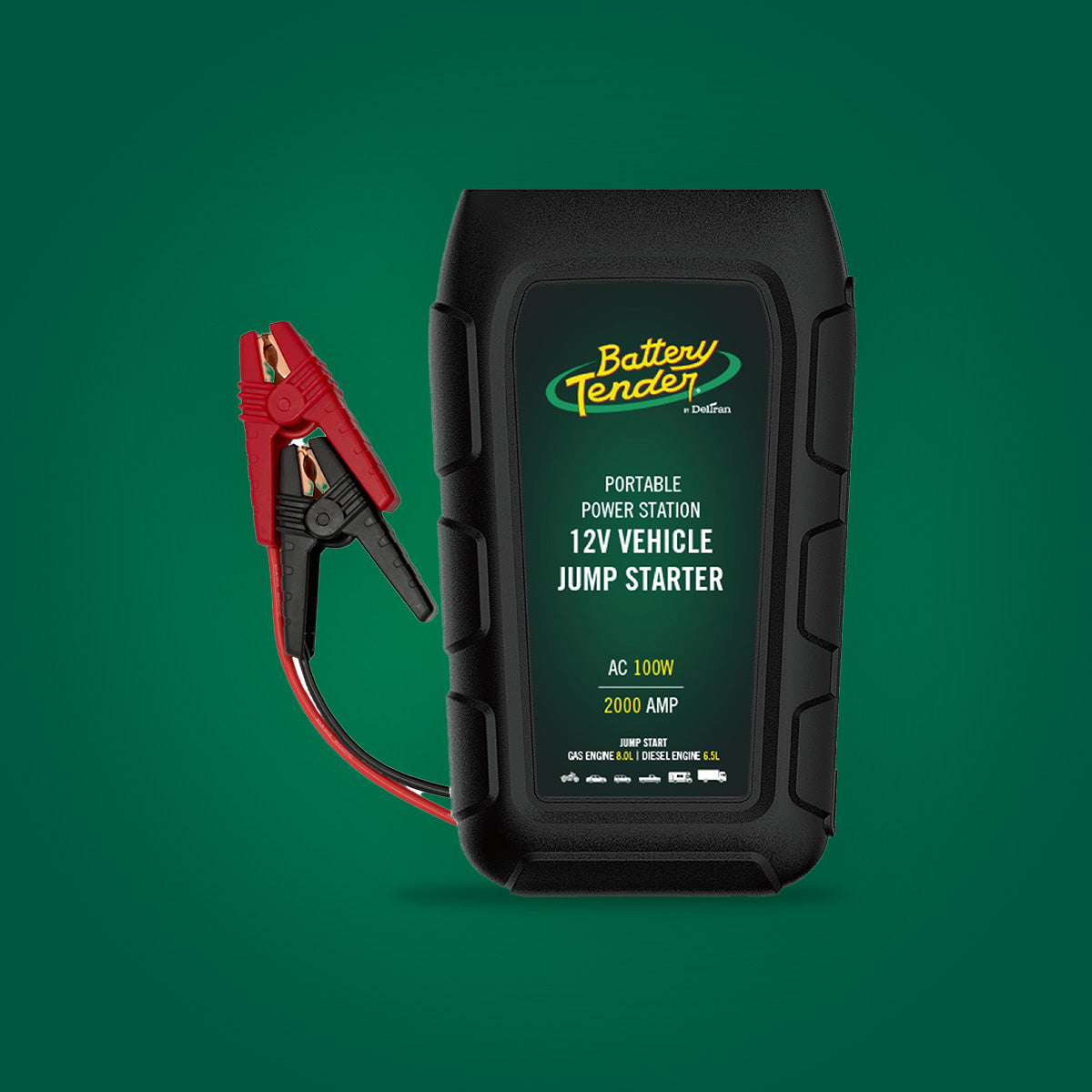
- Full-size trucks and diesel engines (6.0L+ gas, 4.0L+ diesel): 2,000A. Diesel engines use higher compression ratios and require significantly more cranking current, especially in cold weather.
A general rule: choose a jump starter rated at least 2× the expected cranking draw of the vehicle. Oversizing provides a safety margin for cold temperatures, aging batteries, and thick engine oil — all of which increase starting resistance.
Five Critical Mistakes That Damage Vehicles During a Jump Start
Jump starting a car incorrectly can destroy components far more expensive than the battery itself. Avoid these five errors that cause real, documented damage.
- Connecting negative directly to the dead battery terminal. This creates sparks at the battery, risking hydrogen gas ignition. Always ground to the engine block.
- Reversing polarity. Connecting positive to negative sends current backward through the electrical system, destroying diodes in the alternator, frying the ECU, and potentially causing airbag deployment in some vehicles. Portable jump starters from Battery Tender include reverse polarity protection that prevents current flow if clamps are connected incorrectly.
- Cranking for more than 10 seconds continuously. Extended cranking overheats the starter motor windings. Five-second bursts with 30-second rest periods protect both the starter and the jump source.
- Revving the donor vehicle during the jump. High-RPM charging from the donor alternator can send voltage spikes above 15V into the dead vehicle, damaging sensitive modules. Idle only.
- Disconnecting cables while the engine is running at high RPM. This causes a load dump — a sudden voltage spike that can reach 40V+ and destroy electronic modules. Reduce to idle before removing clamps.
When a Jump Start Will Not Work: Recognizing Battery Replacement Signals
Not every dead battery can be revived. If a battery shows any of the following signs, a jump start may get the engine running temporarily, but the battery requires replacement:
- Swollen or bulging case — indicates internal short circuit or overcharging damage
- Rotten-egg smell (sulfur) — signals electrolyte boiling from a shorted cell
- Open-circuit voltage below 10.5V — a 12V battery below this threshold has at least one dead cell and cannot recover
- Battery is more than 4–5 years old — the average lead-acid automotive battery life is 3–5 years according to the Battery Council International (BCI)
- Vehicle dies again within minutes of disconnecting the jump source — the battery cannot hold charge
A smart charger can confirm battery condition. Battery Tender chargers with ISM technology run an Initialization diagnostic before charging begins. If the battery fails this initial assessment, the charger will not proceed — a clear signal that the battery needs replacement rather than another jump.
Frequently Asked Questions
Can you jump start a car with a completely dead battery?
Yes, in most cases. If the battery voltage has dropped below 2V or shows physical damage (swelling, leaking), a jump start may not work and the battery needs replacement. However, a battery at 6–11V can typically accept a jump from a sufficiently powerful source. A 1,000A or higher portable jump starter delivers enough current to bypass the depleted battery and spin the starter motor directly. After starting, drive for 30+ minutes or connect a smart charger to restore state of charge.
How long should you let a car run after a jump start?
Drive for a minimum of 30 minutes at speeds above 30 mph (engine RPM above 1,500). Idling alone produces only 40–60 amps from the alternator, while highway driving generates 80–120 amps. A deeply discharged 60Ah battery needs approximately 30–40 amp-hours returned to restart reliably: (60Ah × 0.6 depth of discharge) ÷ 80 amps ≈ 0.45 hours, or roughly 27 minutes at highway alternator output.
Is it safe to jump start a car in the rain?
Yes. The 12V DC voltage used in jump starting is well below the threshold for electrical shock through skin contact. Water does not create a significant shock hazard at 12V. However, ensure clamp connections are firm and free of standing water to prevent poor conductivity. Portable jump starters with insulated, spark-proof clamps — standard on all Battery Tender jump starter models — provide an additional safety margin in wet conditions.
What is the difference between a jump starter and a battery charger?
A jump starter delivers a massive burst of current (600–2,000 amps) for a few seconds to crank a starter motor. A battery charger delivers low, sustained current (0.75–15 amps) over hours to restore a battery to full charge. The Battery Tender Charge N Start line combines both functions in a single device — the internal ISM charger maintains batteries during storage while the lithium-ion jump pack provides emergency starting power on demand.
Conclusion
Learning how to jump start a car correctly protects both the vehicle and the person performing the procedure. The cable connection sequence — positive first, ground to engine block last — exists for safety reasons backed by SAE standards. Disconnecting in reverse order prevents voltage spikes. And choosing the right tool for the job — whether a compact 600A pack for a motorcycle or a 1,200A Battery Tender Charge N Start hybrid unit for a family SUV — means the difference between a quick recovery and a frustrating failure. Investing in a portable jump starter and a Battery Tender smart charger together ensures that dead-battery situations become minor inconveniences rather than emergencies.
Browse the full lineup of portable jump starters and hybrid charger-jump starter units to find the right model for every vehicle in the garage:
Battery Tender Jump Starters — Complete Collection
Last updated: 2026
Related guides: How to Jump Start a Completely Dead Battery: Recovery Guide · Battery Tender Charge N Start Complete Guide · More automotive battery care guides