



10 Warning Signs Your Car Battery Is About to Fail
A car battery rarely dies without warning. The problem is that most drivers never learn to read the signals — slow cranks, dim lights, terminal corrosion — until they are already stranded in a parking lot at 7 a.m. The 10 warning signs your car battery is about to fail typically appear weeks or even months before the final no-start event. Recognizing them early and responding with a Battery Tender® smart charger or a professional load test can eliminate the most inconvenient battery failures entirely. Here is exactly what to watch for, what each sign means, and what to do about it.
Warning Sign 1: Slow or Labored Engine Cranking
This is the most reliable early indicator of battery degradation. When you turn the key or press the start button, the engine cranks noticeably slower than normal — a longer, lower-pitched grinding sound before the engine catches. Technicians call this a "slow crank," and it indicates either reduced battery capacity, increased internal resistance, or both.
What makes this warning especially important is the cold-weather amplification effect. A battery that cranks sluggishly on a mild October morning will frequently fail to crank at all on a cold January morning. Freezing temperatures reduce battery capacity by 20 to 40 percent depending on battery chemistry and age. A slow crank in fall is a reliable preview of a no-start in winter. Do not dismiss it.
Warning Sign 2: The Battery or Charging System Warning Light
The battery-shaped warning light on your dashboard does not specifically indicate a dead battery — it indicates that the charging system is not maintaining proper voltage. A healthy charging system keeps voltage between 13.8V and 14.7V while the engine is running. When voltage drops below that threshold, the warning light activates.
The underlying cause could be a failing battery that the alternator can no longer charge efficiently, a failing alternator, a worn serpentine belt, or loose connections. Regardless of the cause, this light demands prompt attention. Have the charging system tested at an auto parts store — many offer this service free of charge.
Warning Sign 3: You Have Needed a Jump Start More Than Once
A single jump start can be an isolated incident — a door left ajar overnight, an interior light left on, or an unusually long period of inactivity. But needing jump starts repeatedly over the course of days or weeks is a definitive signal that the battery has lost the capacity to hold a sufficient charge for reliable starting.
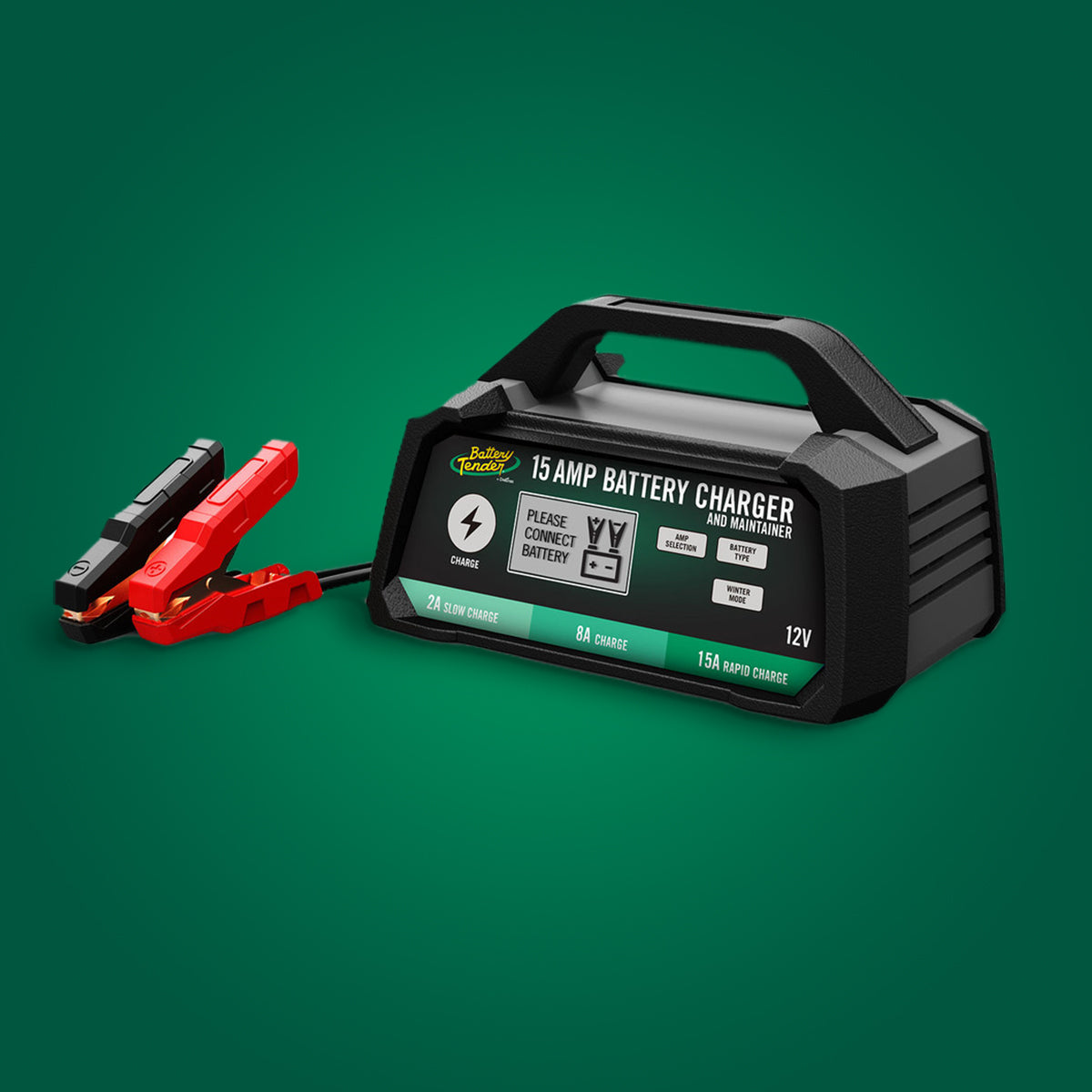
After each jump start, the alternator attempts to recharge the battery through normal driving. But a deeply degraded battery cannot accept or hold a full charge from the alternator alone. The solution is to connect a proper smart charger. The Battery Tender 8A/2A Selectable Charger (SKU 022-1005-DL-WH) delivers a complete multi-stage charge cycle that genuinely recovers depleted battery capacity — something a short commute cannot accomplish. After a full charge cycle, have the battery load-tested to determine whether replacement is warranted.
Warning Sign 4: Swollen, Rounded, or Visibly Deformed Battery Case
A healthy battery case has flat, squared sides. A battery case that appears swollen, bowed outward, or rounded at the sides has experienced internal gas buildup caused by overcharging, excessive heat exposure, or an internal short. This physical deformation is a serious safety indicator — not just a performance warning.
A swollen battery can leak corrosive electrolyte, emit flammable hydrogen gas, and in extreme cases rupture. Replace a swollen battery immediately, regardless of whether the vehicle still starts. No diagnostic test or charging session changes the safety calculus when physical deformation is present.
Warning Sign 5: Visible Corrosion on Battery Terminals
White, blue, or gray powdery deposits around the battery terminals are a byproduct of electrolyte outgassing — hydrogen gas escaping from the battery reacting with the metal terminals and surrounding air. Minor terminal corrosion is common and manageable. Clean the terminals with a baking soda and water solution and a wire brush, then apply a thin coat of dielectric grease to slow recurrence.
Heavy corrosion that returns quickly after cleaning — within weeks rather than months — is a stronger warning. It indicates the battery is outgassing excessively, which points to overcharging, elevated internal temperature, or a battery nearing the end of its service life. At that point, corrosion management is a temporary measure, not a solution.
Warning Sign 6: Dimming Headlights and Unexplained Electrical Glitches
Headlights that visibly dim when the engine drops to idle, interior lights that pulse or flicker when the blower motor activates, or infotainment and safety systems that reset unexpectedly all point to voltage instability in the electrical system. Modern vehicles are particularly sensitive to this — many electronic control modules have minimum voltage thresholds below which they reset or behave erratically.
Voltage instability at idle typically means the battery can no longer buffer the alternator's output effectively, or the alternator itself is struggling to maintain output under load. Either scenario requires diagnosis. A battery that cannot maintain stable voltage under normal electrical loads is a battery that is failing — even if the engine still starts reliably in mild weather.
Warning Sign 7: The Battery Is More Than Four Years Old
Age alone is a warning sign when combined with any of the symptoms described here. The average car battery lifespan in the United States is 3 to 5 years, with meaningful regional variation. Batteries in hot southern climates frequently last only 2 to 3 years because heat accelerates the sulfation and plate degradation that reduce capacity. Batteries in cooler northern climates often reach 4 to 5 years before failure — though they face more severe consequences when they do fail.
A battery over 4 years old that also exhibits slow cranking, terminal corrosion, or any other sign on this list is a strong candidate for proactive replacement. The cost of a new battery is far less than the cost and inconvenience of a roadside failure. If you are uncertain of your battery's age, look for a date code on the battery label — most manufacturers stamp a month and year directly on the case.
Warning Sign 8: Sulfur or Rotten Egg Smell Near the Battery
A sulfur smell — accurately described as rotten eggs — near the battery area is hydrogen sulfide gas, produced when battery electrolyte breaks down under severe overcharging. This is simultaneously a battery failure warning and a safety hazard. Hydrogen gas accumulates in enclosed spaces and is flammable at relatively low concentrations.
If you detect this smell, ventilate the area immediately, do not create sparks near the battery, and have the charging system inspected for overcharging. A faulty voltage regulator is the most common underlying cause. The battery itself will almost certainly require replacement — electrolyte breakdown at this stage means the battery has sustained irreversible internal damage.
Warning Sign 9: The Vehicle Sits Unused for Two Weeks or More at a Time
This sign differs from the others: it is not a symptom of battery failure already in progress — it is a reliable predictor of premature battery failure if no action is taken. Every vehicle has a parasitic draw — the electrical current consumed by security systems, clocks, keep-alive memory circuits, and other always-on electronics even when the ignition is off. On most modern vehicles, this parasitic draw is between 20 and 50 milliamps. Over two weeks, that draw can discharge a battery to a level that causes sulfation — irreversible crystalline deposits on the battery plates that permanently reduce capacity.
The solution is straightforward. Connect a Battery Tender smart charger whenever the vehicle will sit for more than two weeks. The Battery Tender Plus 12V 1.25A is purpose-built for exactly this scenario — it delivers a full charge cycle and then automatically transitions to a float maintenance mode that keeps the battery at full charge indefinitely without overcharging. Vehicles in seasonal storage, motorcycles, boats, and fleet vehicles benefit especially from this type of ongoing maintenance charging.
Warning Sign 10: The Battery Just Survived an Extreme Weather Season
A battery that has just endured an unusually hot summer or an unusually cold winter has likely lost more capacity than it would have during a typical year. Heat is the primary long-term killer of lead-acid batteries — it accelerates water loss from the electrolyte and speeds plate degradation. Cold is the more immediately dangerous threat — it reduces available cranking power at the exact moment maximum demand is placed on the battery.
Any battery over 3 years old that has just come through a weather extreme deserves a professional load test before the next season arrives. A load test measures how much current the battery can deliver under a simulated starting load — it is the most accurate field assessment of actual remaining capacity, and it reveals degraded batteries that still measure acceptable open-circuit voltage.
What to Do When You Recognize These 10 Warning Signs
The sequence is straightforward. First, connect a Battery Tender smart charger to perform a complete charge recovery before any testing. A battery that has been partially discharged will fail a load test it would otherwise pass — always test from a full charge.
The Battery Tender 8A/2A Selectable Charger is the right tool for rapid recovery charging on a degraded battery. Its multi-stage ISM charging algorithm assesses battery condition during initialization, delivers a full bulk charge, and completes with an absorption stage that brings the battery to a true 100 percent — not the 80 to 85 percent that a short drive provides.
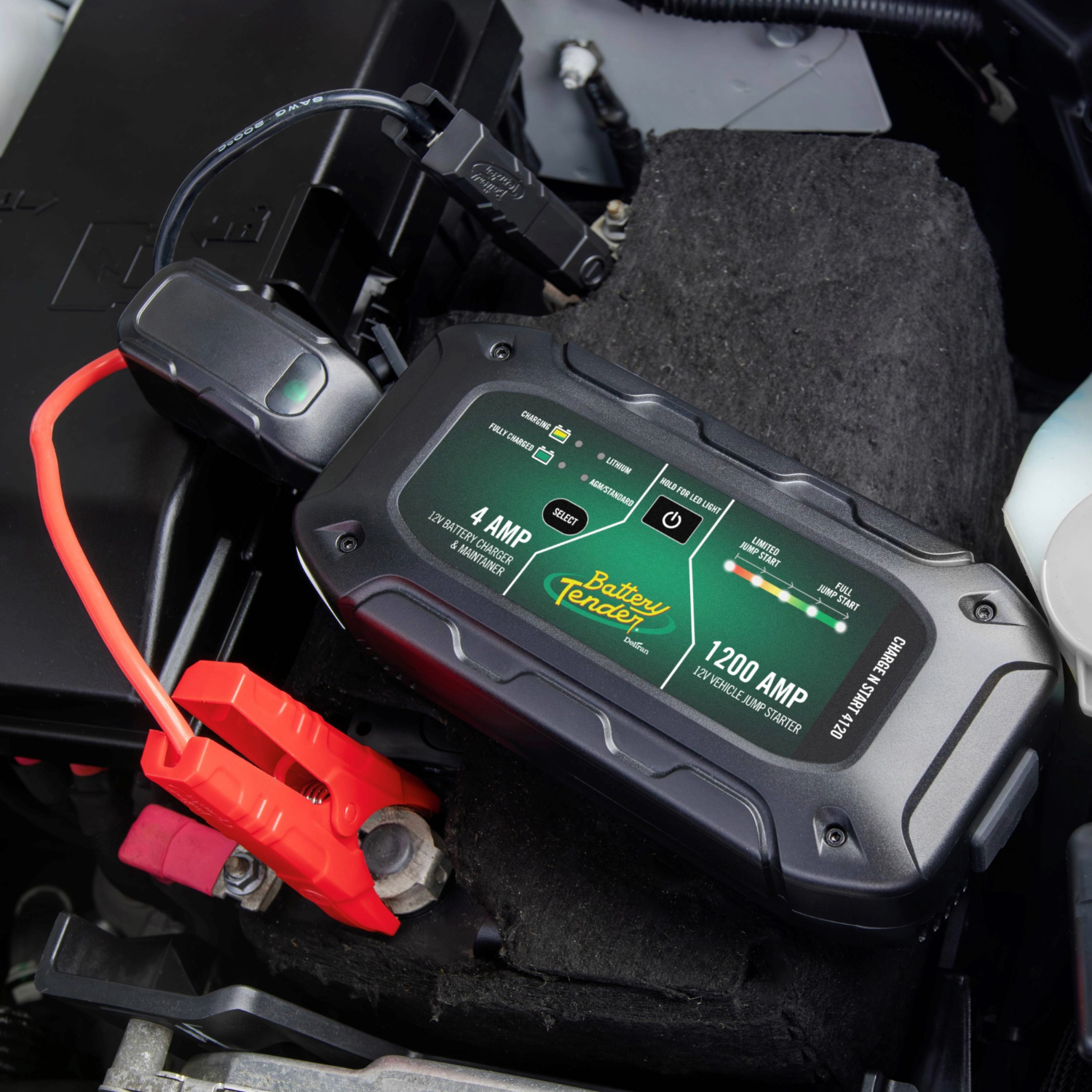
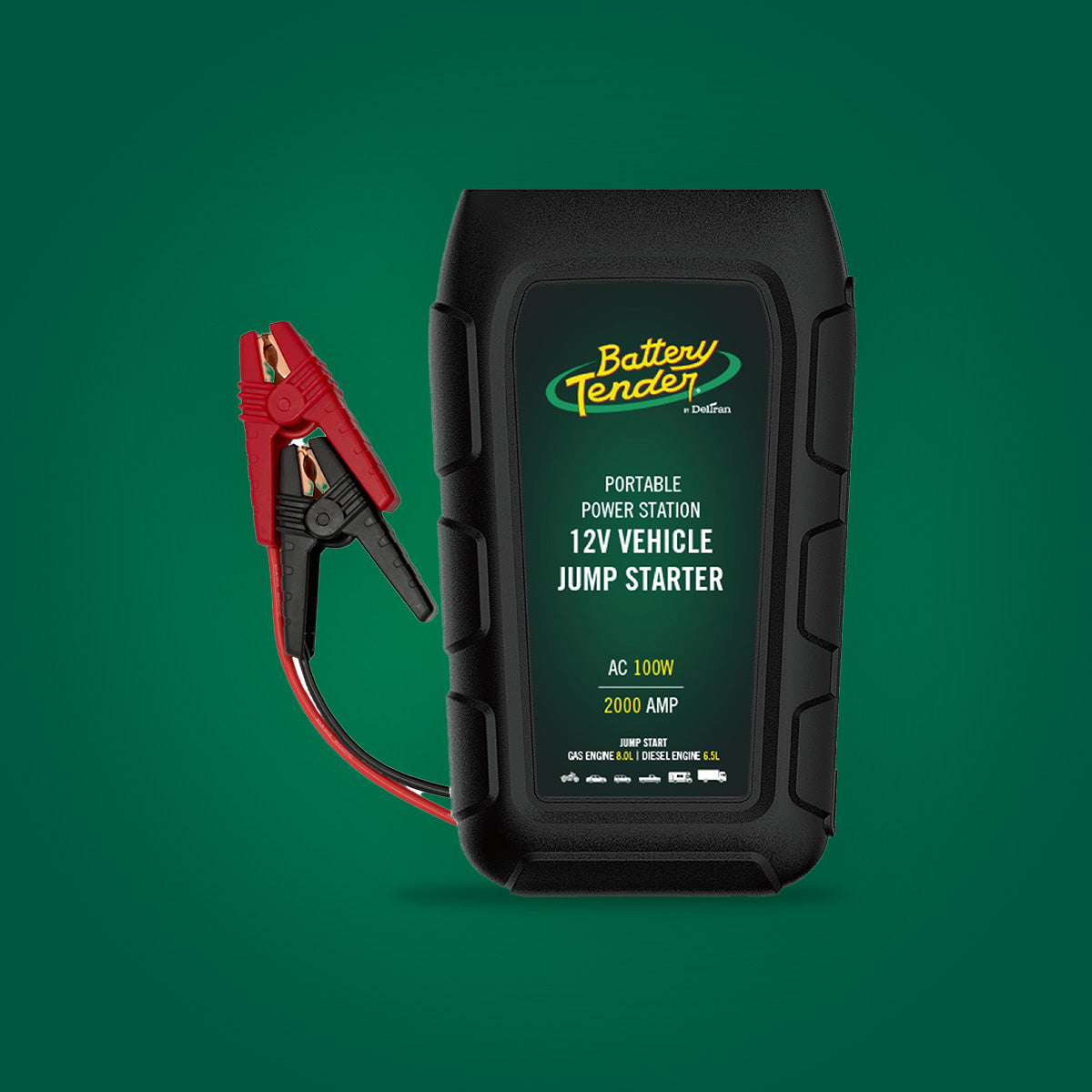
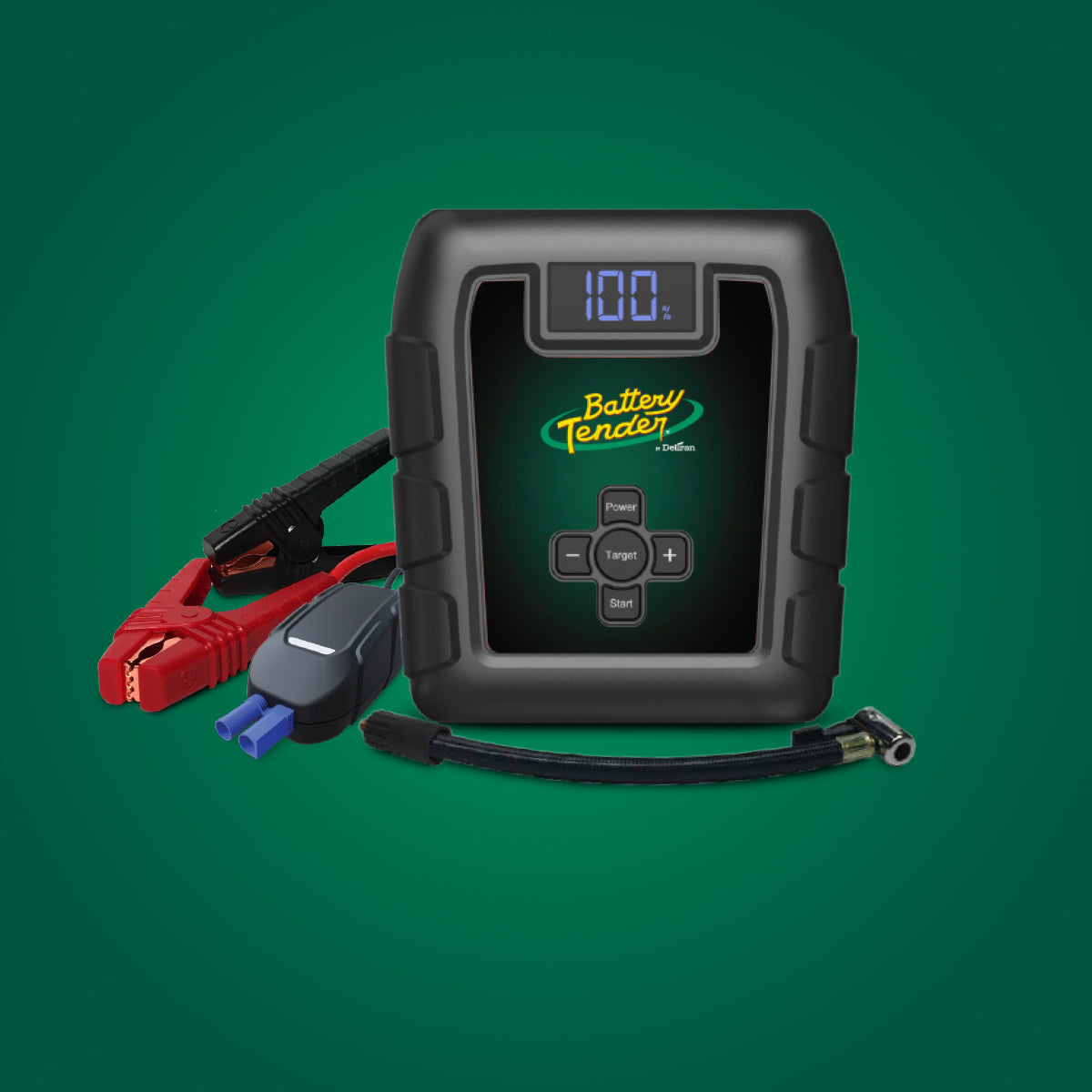
If you want a single device that covers both maintenance charging and emergency starting capability, the Charge N Start 4120 — 4 Amp Charger with 1200A Jump Starter provides both functions. It charges and maintains the battery through normal use and delivers 1,200 peak amps of jump-starting power when needed. This is an especially practical solution for drivers who want coverage across both prevention and emergency response without carrying two separate devices.
After a complete charge cycle, take the vehicle to any auto parts retailer for a free battery load test. A battery that passes the load test after a full charge has a problem elsewhere — parasitic drain, a charging system fault, or a driving pattern too short to allow adequate alternator recovery. Each of those conditions has a direct solution. A battery that fails the load test should be replaced promptly rather than monitored for further decline.
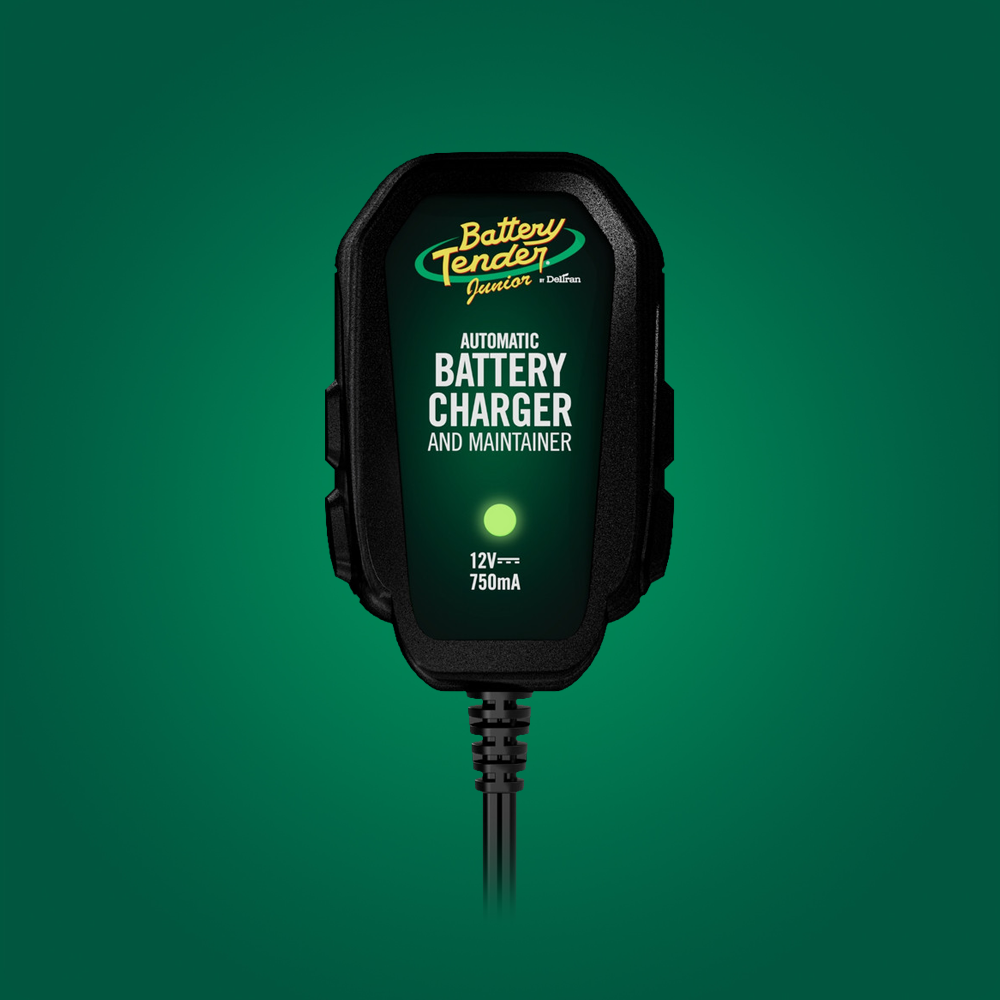
For ongoing maintenance between driving seasons or during extended storage, the Battery Tender Plus 12V 1.25A provides reliable float maintenance that extends battery service life measurably. For vehicles or equipment requiring a lighter-duty maintenance option, the Battery Tender Junior 12V 0.75A handles smaller batteries and trickle maintenance charging with the same automatic multi-stage control.
Frequently Asked Questions
How many warning signs need to be present before I should replace my car battery?
Any single sign from this list justifies a professional load test. Two or more signs appearing simultaneously — especially when the battery is over 3 years old — make a strong case for proactive replacement rather than waiting for confirmation through a no-start event. Replacing a battery on your schedule costs far less in time and money than managing an unexpected roadside failure.
What can a Battery Tender smart charger actually fix when these warning signs appear?
A smart charger can fully recover a battery that has been discharged due to inactivity or a minor parasitic drain event. It cannot reverse physical degradation — sulfation, plate corrosion, or electrolyte loss — that has already reduced internal capacity. A complete charge cycle followed by a professional load test determines which situation you are dealing with and whether replacement is necessary.
When is it unsafe to continue driving a car showing battery warning signs?
Most battery warning signs allow continued driving with awareness, but severe voltage instability can affect electronic systems including power steering and braking on some modern vehicles. A swollen battery or a sulfur smell near the battery compartment requires immediate attention before driving. In all other cases, address warning signs promptly rather than deferring until a failure forces the issue.
Why do car batteries fail faster in hot climates than in cold ones?
Heat accelerates two damaging processes inside a lead-acid battery: water loss from the electrolyte and oxidation of the positive plates. Both processes permanently reduce the battery's capacity to store and deliver charge. Southern climates routinely shorten battery lifespan to 2 to 3 years compared with 4 to 5 years in cooler regions, making post-summer load testing especially important for drivers in warm areas.
Who should I contact to have my battery load-tested?
Most major auto parts retailers perform battery load tests at no charge — no appointment required. Dealerships and independent repair shops also offer this service, typically as part of a broader charging system inspection. Annual load testing is reasonable practice for any battery over 2 years old, even when no warning signs are present, so that capacity decline is caught before a failure occurs.
How often should I use a maintenance charger if my vehicle sits unused regularly?
Connect a Battery Tender smart charger any time the vehicle will sit unused for more than two weeks. The charger should remain connected throughout the storage period — it will complete a full charge cycle and hold the battery at 100 percent in float mode indefinitely without overcharging. Vehicles in seasonal storage, motorcycles, boats, and infrequently used fleet vehicles benefit most from this continuous maintenance approach.
Conclusion
The 10 warning signs your car battery is about to fail are not subtle once you know what to look for — slow cranks, dashboard warnings, repeated jump starts, physical case damage, terminal corrosion, electrical instability, advancing age, unusual smells, extended inactivity, and post-extreme-weather degradation all point to a battery that deserves immediate attention. The drivers who avoid roadside failures are not lucky — they respond to these signals with a Battery Tender smart charger, a professional load test, and, when the evidence calls for it, a timely battery replacement before the car decides the timing for them.
Related guides: How to Jump Start a Completely Dead Battery: Recovery Guide · How to Jump Start a Car Safely: The Complete Step-by-Step Guide (2026) · More automotive battery care guides