


Level 2 Charger Amps: How to Choose 16A, 32A, 40A, or 48A (2026)
Most EV owners are well served by a Level 2 charger rated between 32 and 40 amps. The right level 2 charger amps figure depends on how much current the vehicle's onboard charger accepts, how many miles you drive daily, and what the home circuit can safely carry. Buying more amps than the car can use adds cost without adding speed.
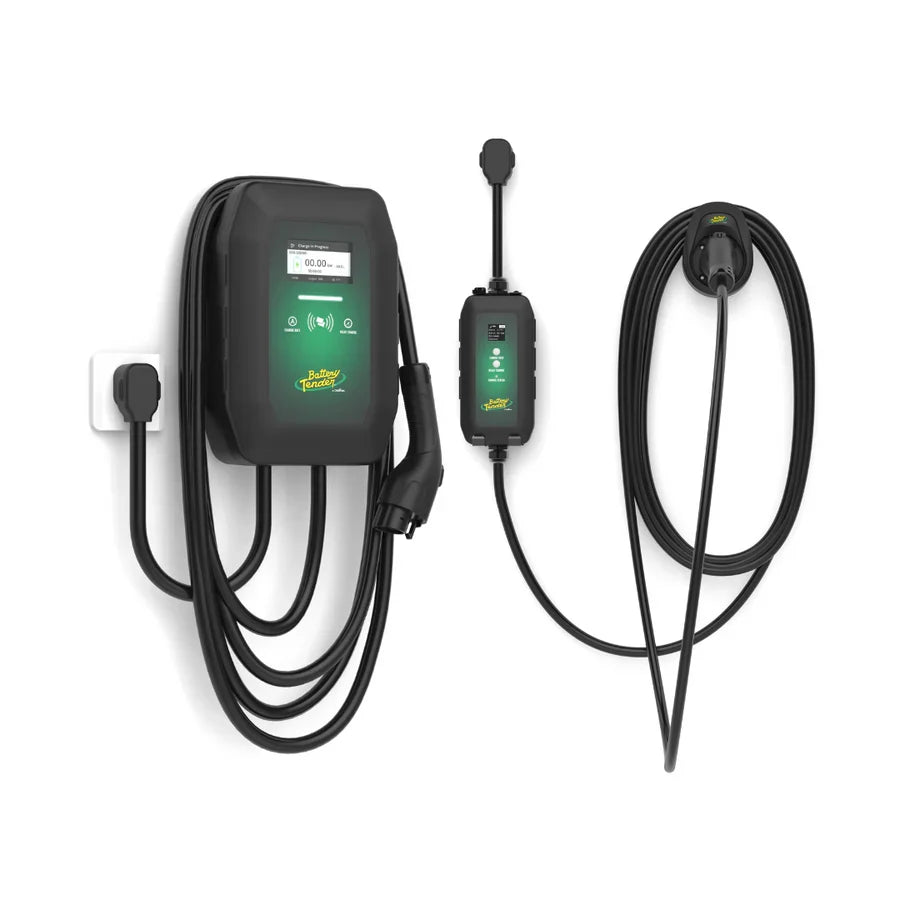
Battery Tender® pioneered smart charging in 1989, and the same current-matching principle applies to EV charging today: deliver what the battery can accept, no more. This guide explains how to convert amps into kilowatts and miles per hour, how to size the breaker, and how to pick among the Battery Tender eCharge 16A, 32A, 40A, and 48A models.
Key Takeaways
- Amps multiplied by volts equals watts. A 32A charger on 240V delivers about 7.7 kW, or roughly 28.5 miles of range per hour.
- The vehicle's onboard charger caps real charging speed. A 48A charger cannot push a car that accepts only 32A any faster.
- The breaker must be rated at 125% of the charger's continuous output: 40A for a 32A charger, 50A for 40A, 60A for 48A.
- Most drivers cover 30 to 60 miles a day, which a 32A charger replaces in about two hours or less.
- The 12V auxiliary battery in an EV is a separate system that still needs its own maintenance.
What Level 2 Charger Amps Mean for Real Charging Speed
Level 2 charger amps determine power delivery, and power determines speed. The formula is simple: amps × volts = watts. A 32A charger on a 240V circuit delivers 32 × 240 = 7,680 watts, or 7.7 kW. A 48A charger delivers about 11.5 kW at the same voltage.
Range per hour follows from the vehicle's efficiency. Most EVs travel 3 to 4 miles per kWh, so each kW of charging power adds roughly 3 to 4 miles of range every hour. That is why the charger specifications translate directly into miles per hour.
Level 1 charging works differently. It uses a standard 120V outlet and delivers about 12 to 16 amps, which is around 1.4 to 1.9 kW. That equals roughly 4 to 7 miles of range per hour. Level 2 uses 240V, which doubles the voltage and allows much higher current, so charging speed rises several times over.
Why Amps Are Not the Whole Story
Voltage matters as much as amperage. A 16A charger on 120V delivers about 2 kW, while a 16A charger on 240V would deliver about 3.8 kW. Amps alone never describe speed. Always read the kW rating or the miles-per-hour figure alongside the amp rating.
Level 2 Charger Amps Chart: Breaker, kW, and Miles per Hour
The table below lists the Battery Tender eCharge lineup with the matching breaker size and charging speed for each model. Breaker sizes follow the 125% continuous-load rule found in NEC Article 625 and Section 210.20.
| Battery Tender eCharge Model | Output Amps | Voltage | Power | Range Added per Hour | Minimum Breaker |
|---|---|---|---|---|---|
| 16A Level 1 | 16A | 120V | 2 kW | 7.2 miles | 20A (NEMA 5-20 outlet) |
| 32A Level 1+2 | 32A | 120V/240V | 7.7 kW | 28.5 miles | 40A at 240V |
| 40A Level 2 | 40A | 240V | 9.6 kW | 36 miles | 50A |
| 48A Level 2 | 48A | 240V | 11.5 kW | 42.25 miles | 60A |
Two patterns stand out. Above 32A, each 8A step adds about 6 to 8 miles of range per hour. Each step also demands a larger breaker, heavier wire, and usually a higher installation cost.
Wire Gauge Follows the Breaker
Copper wire sizing follows the breaker rating. A 40A breaker typically uses 8 AWG copper, a 50A breaker uses 6 AWG, and a 60A breaker uses 6 AWG or heavier, depending on run length and local code. A licensed electrician must confirm the exact specification. For the full panel-load process, see the home Level 2 installation guide.
Matching Level 2 Charger Amps to Your Vehicle's Onboard Charger
The onboard charger inside the vehicle converts AC power to DC for the battery, and it sets the maximum AC current the car accepts. A compact EV with a 7.2 kW onboard charger accepts about 30A. Pairing it with a 48A charger leaves 18A unused, because the car simply draws less.
Onboard charger limits vary widely. Many compact and mid-size EVs accept 7.2 kW to 11 kW. Some large pickups and SUVs accept 19.2 kW, which requires an 80A charger on a 100A circuit. Check the owner's manual or the charging specification listing for the AC charging maximum before choosing a charger.
How to Calculate the Amps You Need
- Estimate daily miles. Use the actual average, such as 45 miles per day.
- Convert miles to kWh. At 3.5 miles per kWh, 45 miles needs about 12.9 kWh.
- Count available hours. A typical overnight window runs 8 to 10 hours.
- Divide kWh by hours. 12.9 kWh over 8 hours requires only 1.6 kW, though real-world losses push that to around 1.9 kW.
- Add headroom. Size up for road trips, a second EV, or a future vehicle with a bigger battery.
A driver with a 60-mile commute needs about 17 kWh daily. A 32A charger replaces that in roughly 2.3 hours. A full recharge of a 75 kWh pack from 20% to 100% needs 60 kWh. At 7.2 kW effective output, that takes about 8.3 hours. At 11 kW with a compatible car, it drops to about 5.5 hours.
Choosing Among Level 2 Charger Amps at Home
The best amperage balances speed, installation cost, and flexibility. Each Battery Tender eCharge model fits a distinct situation.
16A for Apartments and Low-Mileage Drivers
Renters with a dedicated 20A outlet and short daily drives need no installation at all. The 16A model plugs into a NEMA 5-20 outlet and adds about 7.2 miles per hour. Over 10 overnight hours, that is roughly 72 miles of range, which covers most commutes.
Battery Tender eCharge 16 Amp Level 1 EV Charger
32A for Most Households
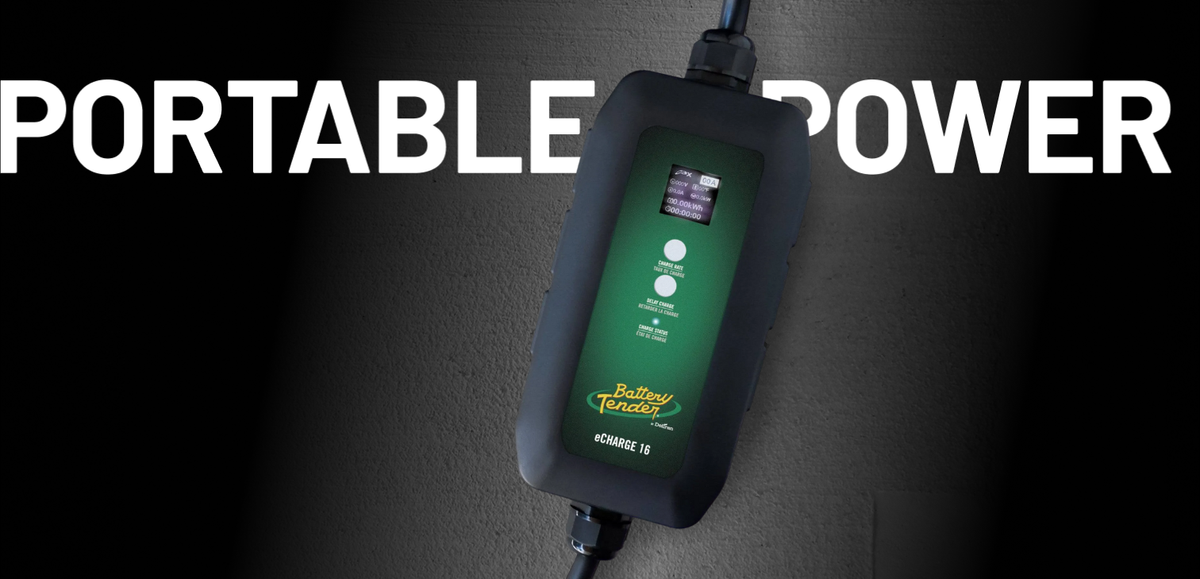
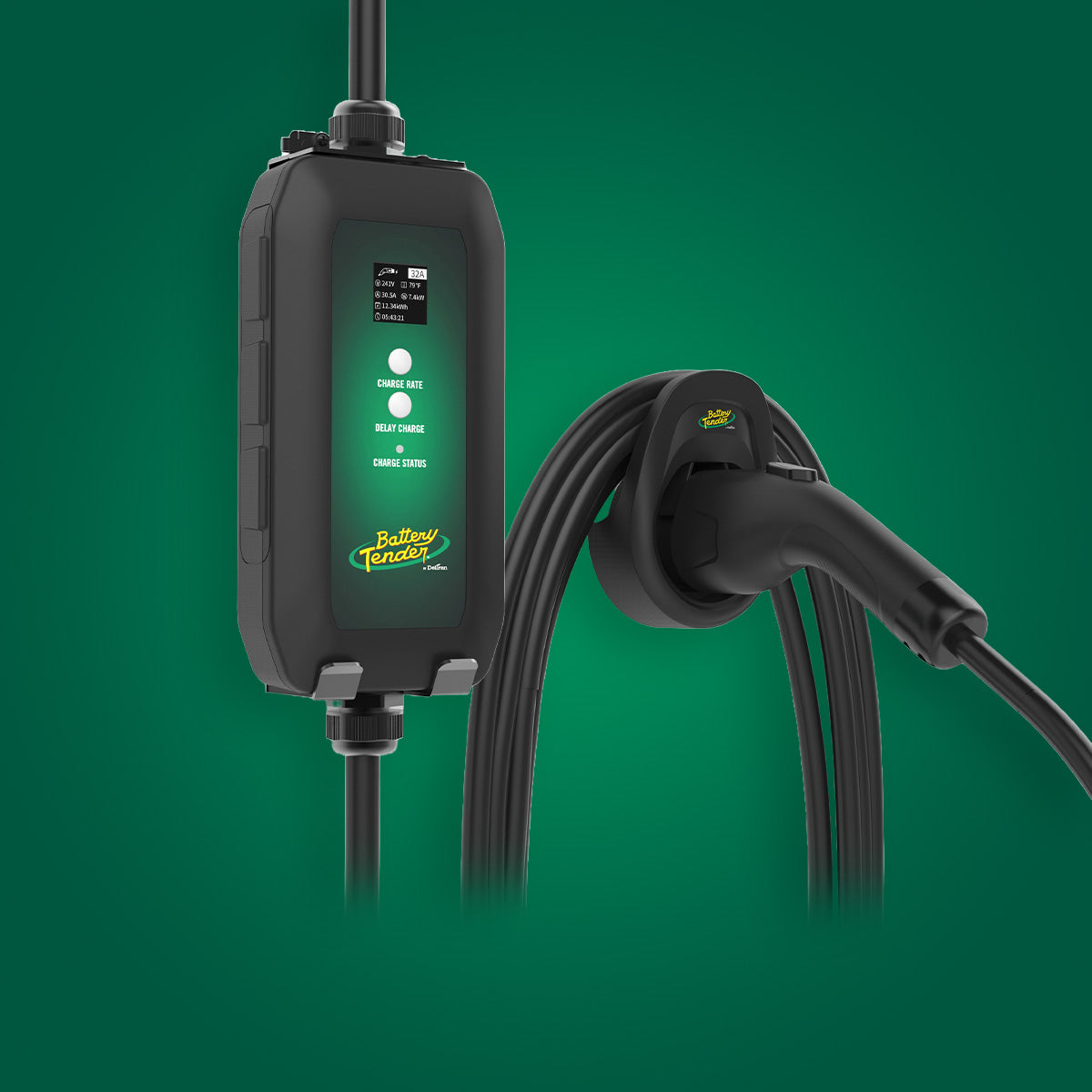
A 32A model offers the best balance for typical homes. It runs on 240V with a 40A breaker and adds 28.5 miles per hour. It also works on 120V, which helps when traveling or visiting a relative without a 240V outlet. Its portability suits drivers who may move or change vehicles. The Battery Tender eCharge 32 Amp Portable EV Charger is also sold at Costco.com.
Battery Tender eCharge 32 Amp Level 1+2 EV Charger
40A for Faster Wall-Mounted Charging
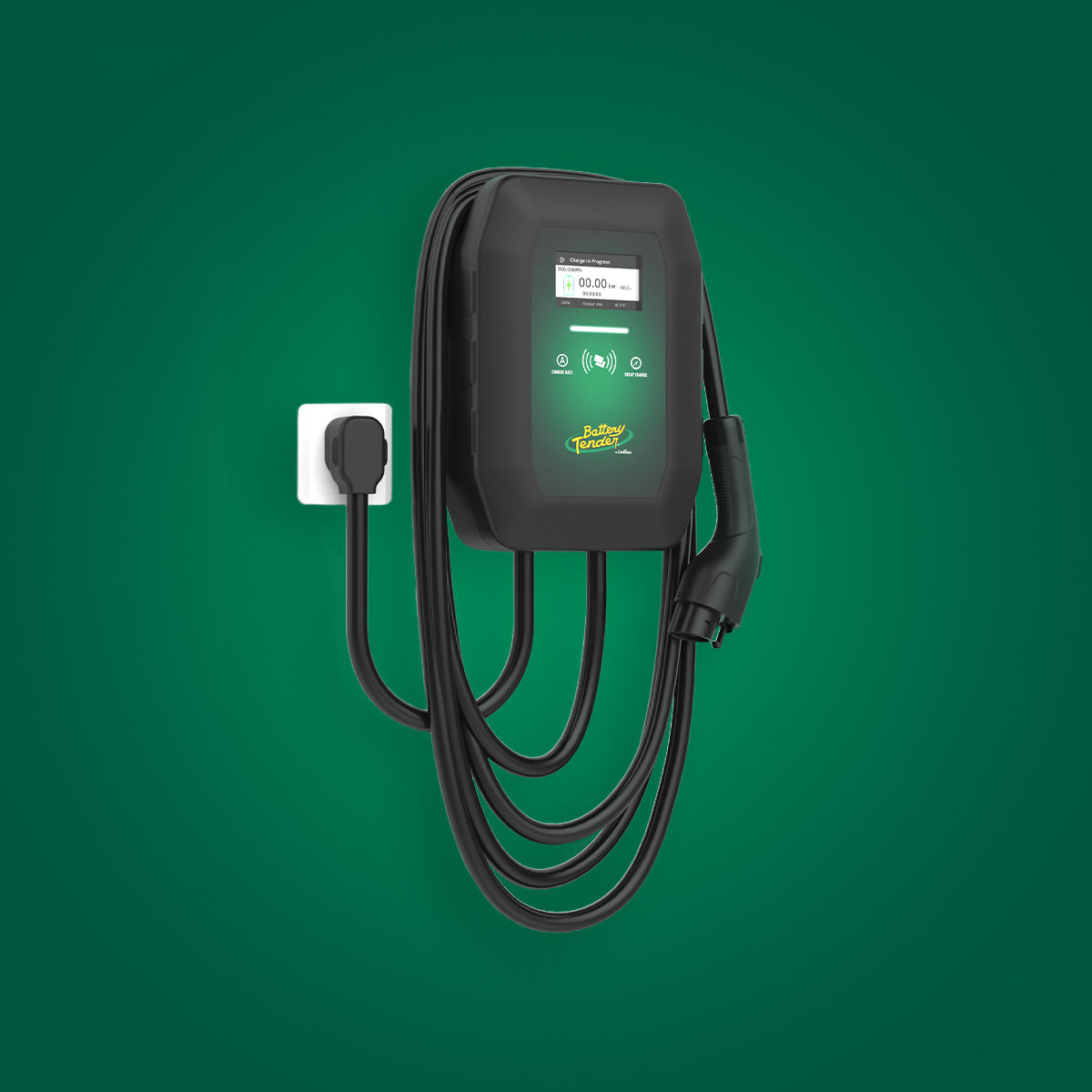
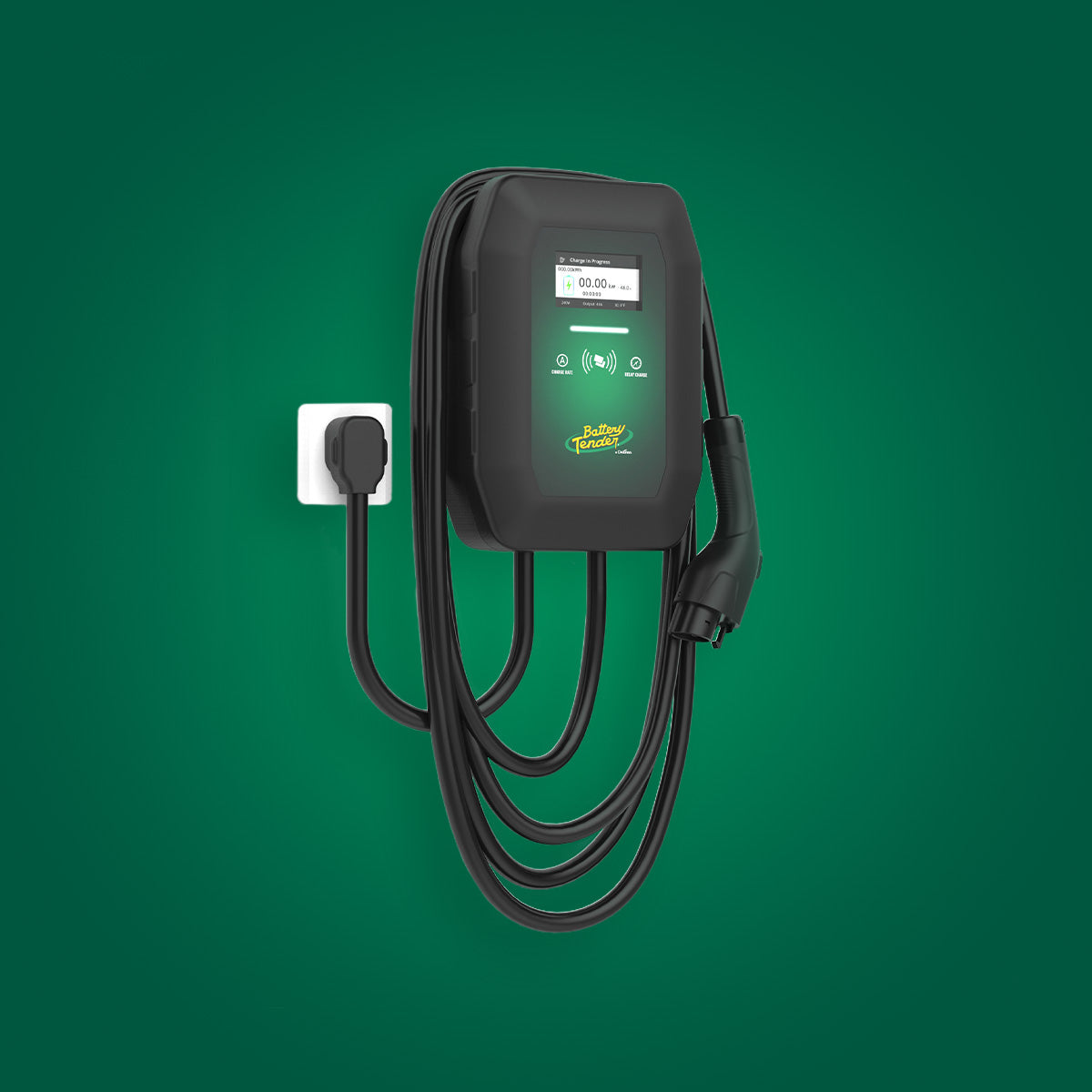
The Battery Tender eCharge 40A wall-mount unit delivers 9.6 kW with RFID access and an IP66 rating. It suits homes with two EVs sharing a garage or vehicles with 9.6 kW onboard chargers. It needs a 50A breaker, so confirm the panel has spare capacity.
Battery Tender eCharge 40 Amp Level 2 EV Charger. Also available at Costco.com.
48A for Maximum Home Speed
Choose the 48A model only when the vehicle accepts 11 kW or more. It adds 42.25 miles per hour, which helps large-battery trucks and SUVs recover quickly between long trips. It requires a 60A breaker. Owners of large pickups can review the F-150 Lightning home charging setup for high-amperage context.
Battery Tender eCharge 48 Amp Level 2 EV Charger
Connector Compatibility
All Battery Tender eCharge models use the J1772 connector. A Tesla owner needs an adapter, because Tesla vehicles use a different port. The adapter bridges that gap without changing charging speed.
Battery Tender J1772 to Tesla Adapter
Safety note: A licensed electrician must install any 240V circuit. Never splice, extend, or modify the charger cord, and follow local permit requirements.
The 12V Battery Still Needs Attention at Any Amp Rating
Every EV carries a 12V auxiliary battery that powers door locks, computers, and the contactors that close the high-voltage system. A weak 12V battery can leave an EV unresponsive even with a full traction battery. Level 2 charger amps have no direct effect on this battery. Many EVs keep the 12V battery topped up while driving or charging, but long parking periods can still drain it. For model-specific care, see the Ioniq 5 and EV6 battery maintenance guide.
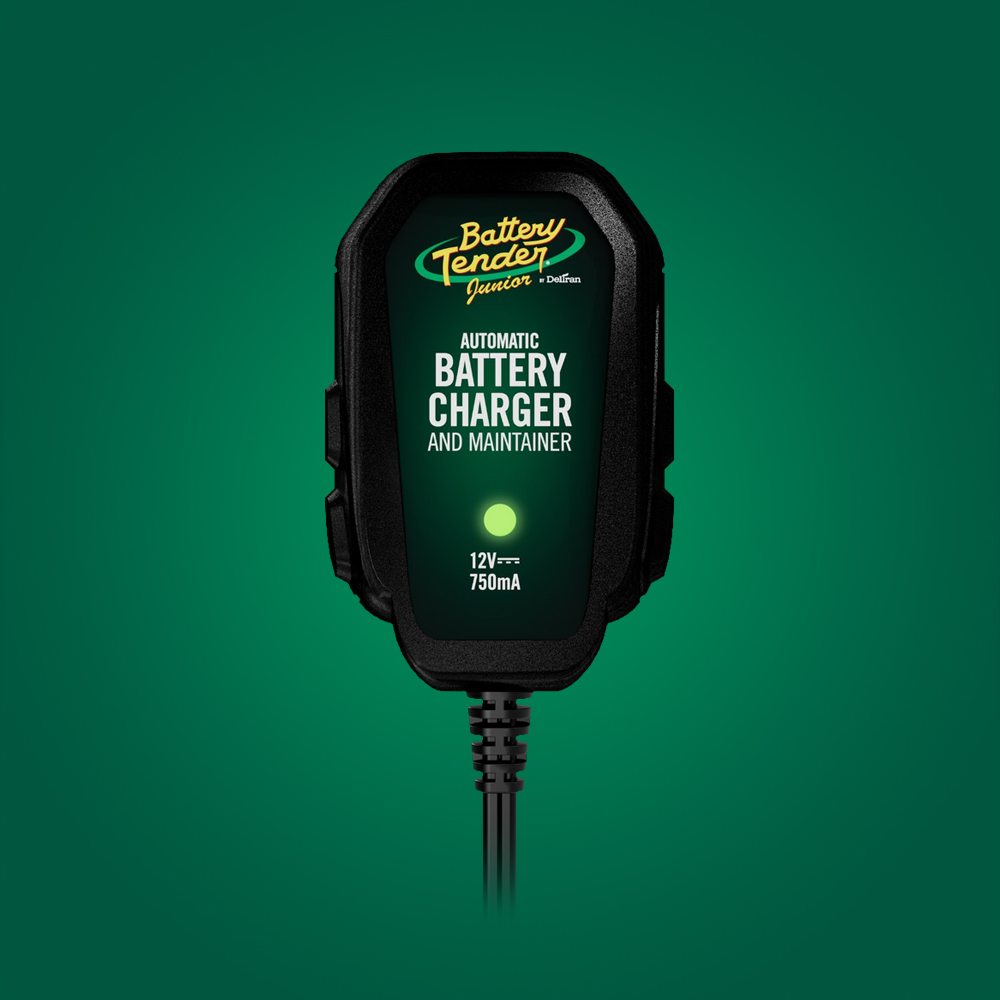
A Battery Tender Plus 1.25 AMP 12V Battery Charger and Maintainer suits this job. Its Infinite Sequential Monitoring (ISM) process runs four automatic stages: Initialization, Bulk Charge, Absorption, and Float Maintenance. In Float Maintenance, ISM monitors voltage and delivers charge only when it drops, so the charger can stay connected for months without overcharging. Check the vehicle's manual first, as some EVs specify exact terminals for external charging.
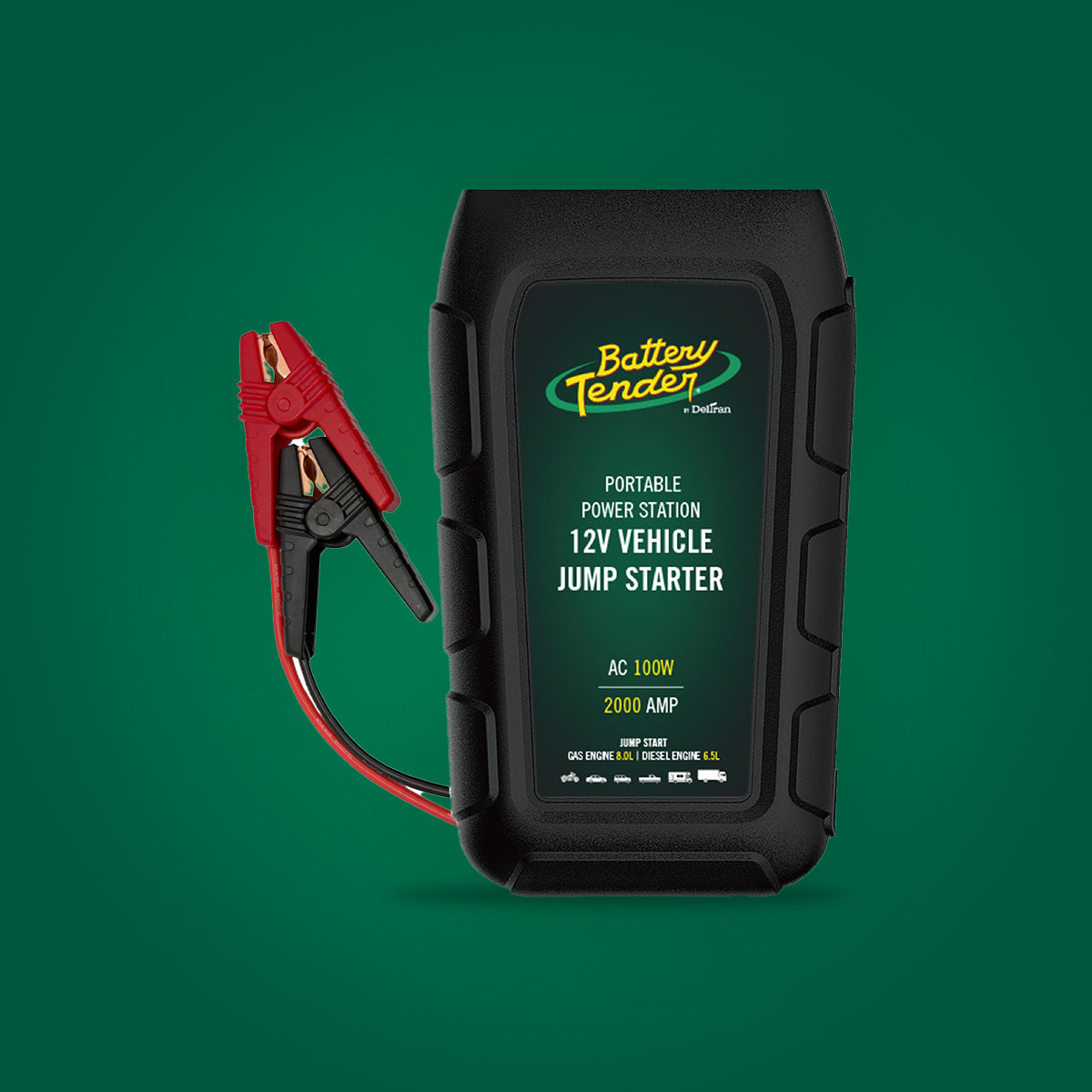
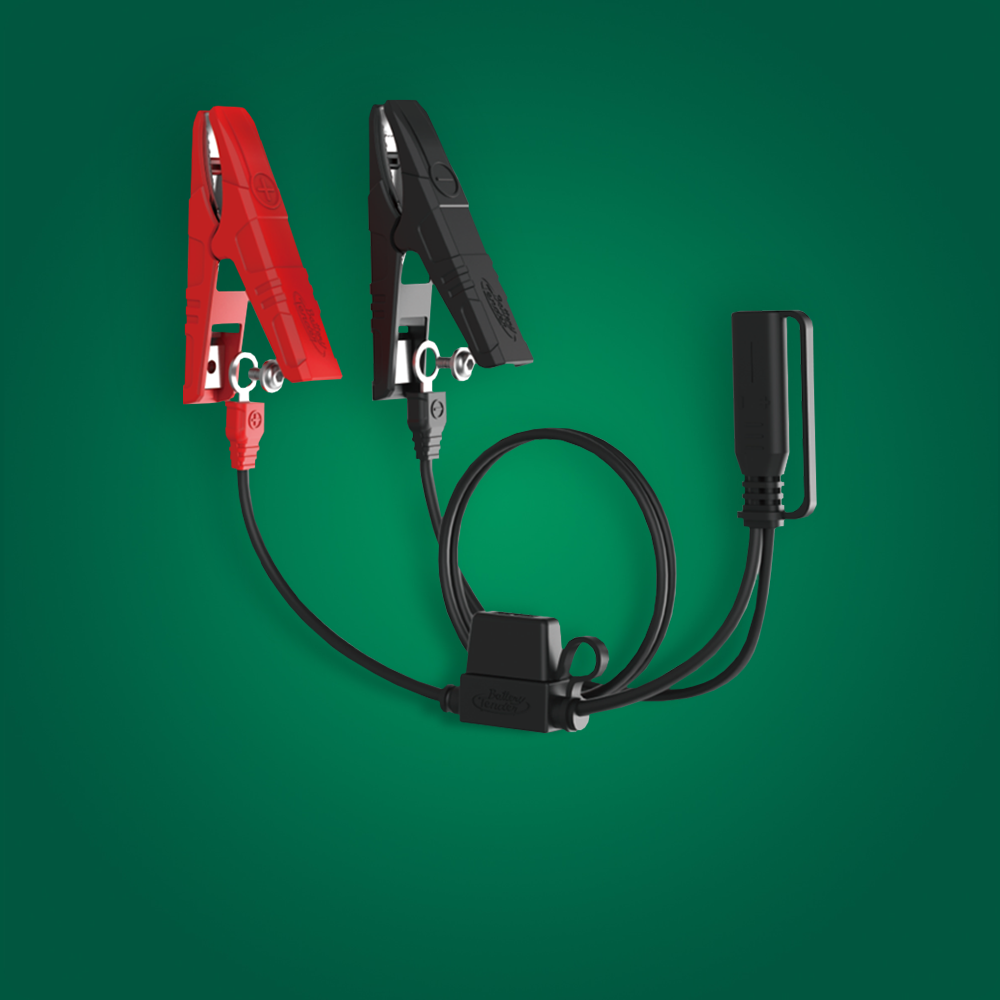
For roadside failures, a Battery Tender Jump N Start 2000 amp bundle provides a lithium-ion jump starter with a ring terminal cable for quick connections. It carries ample reserve for larger 12V batteries, and many EVs provide a dedicated jump point under the hood or in the frunk.
Battery Tender Jump N Start Motorcycle & Powersports Bundle (2000 Amps)
Frequently Asked Questions
How many amps do I need for a Level 2 EV charger?
Most homes do well with 32 to 40 amps. A 32A charger adds about 28.5 miles of range per hour, which covers typical daily driving in under two hours. Choose 48A only when the vehicle accepts 11 kW or more, because the car's onboard charger limits actual speed.
Is a 48-amp charger worth it over a 32-amp charger?
A 48A charger adds roughly 14 more miles of range per hour, but only if the vehicle accepts 11 kW or higher. It also requires a 60A breaker and heavier wiring. For cars limited to 7.2 kW, a 32A charger delivers the same speed at lower installation cost.
What size breaker does a 32-amp Level 2 charger need?
A 32A charger needs a 40A breaker. Electrical code treats EV charging as a continuous load, so the breaker must be rated at 125% of the charger's output: 32 × 1.25 = 40 amps. A licensed electrician should confirm wire gauge and panel capacity before installation.
Can a car use more amps than its onboard charger allows?
No. The onboard charger sets the maximum AC current the vehicle draws. A car with a 32A limit connected to a 48A charger still pulls only 32A. The charger negotiates with the car, and the lower limit always wins.
Does a higher amp Level 2 charger damage the battery?
No. The vehicle controls how much current it draws, so a higher-amp charger cannot force extra current into the battery. Slower charging is not required for battery health during normal home use. Regular use of Level 2 AC charging is considered gentler than frequent DC fast charging.
Conclusion
Level 2 charger amps come down to three checks: the onboard charger limit in the vehicle, the daily miles to replace, and the breaker capacity at the panel. For most drivers, 32A to 40A is the sweet spot, while 48A makes sense only for vehicles that can use 11 kW or more. Start by finding the vehicle's AC charging maximum, then match the charger and breaker to it with a licensed electrician.
Browse the full Battery Tender EV charger collection to compare Battery Tender eCharge models side by side.