


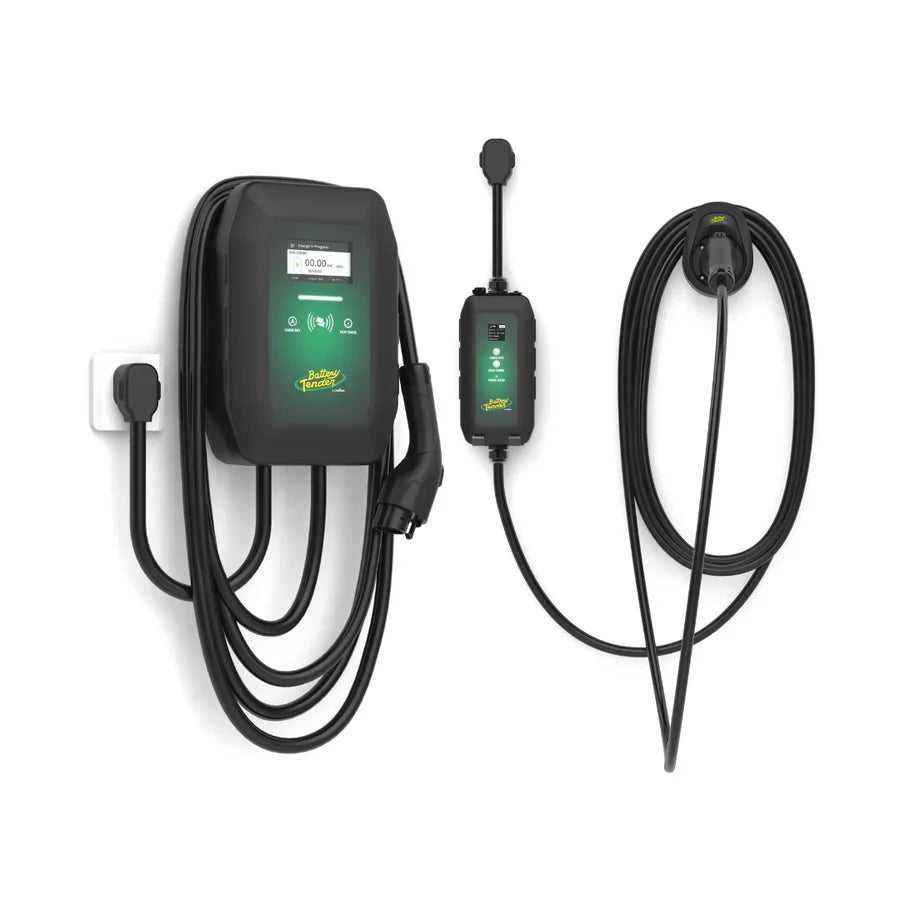
EV Charger Sizing Guide 2026: Match Amps to Your Daily Miles
The right EV charger replaces your daily driving miles while the vehicle sits parked. A driver covering 40 miles a day needs about 5.6 hours on a 16-amp Level 1 unit, or about 1.4 hours on a 32-amp Level 2 unit. Size your EV charger by daily miles, not by the biggest number on the box, and you avoid paying for circuit capacity you never use. The Battery Tender® brand invented the smart float maintainer category in 1965. The Battery Tender eCharge lineup applies the same principle to electric vehicles: match the charger to the job.
This guide covers the sizing math and shows charging times by daily mileage. It also explains the dedicated circuit each unit requires and lists where to buy the 32-amp and 40-amp models, including Costco.com. Finally, it covers the 12V auxiliary battery. A home EV charging unit does not reliably maintain that battery during storage.
Key Takeaways
- Divide daily miles by the charger's miles-per-hour rating, then compare the result to your parked hours.
- A 16-amp Level 1 unit adds about 7.2 miles per hour. A 32-amp unit adds about 28.5, and a 40-amp unit adds about 36.
- Every EV charger needs a circuit rated at 125% of its output because it is a continuous load.
- The vehicle's onboard charger caps the real charging rate, so check its kW rating before you buy.
- The Battery Tender eCharge 32 Amp and 40 Amp units are sold at batterytender.com and Costco.com.
- The 12V auxiliary battery still needs separate maintenance, no matter which unit is mounted on the wall.
What Does an EV Charger Actually Do?
An EV charger is a safety-controlled power supply. The technical term is EVSE (electric vehicle supply equipment), and it delivers AC power to the vehicle. The car's onboard charger then converts that AC to DC for the high-voltage pack, so the unit on your wall or in your trunk never charges the battery directly. It uses the SAE J1772 control pilot, a pulse-width-modulated signal, to tell the car how much current is available. The contactors in the EVSE stay open until the car confirms a secure connection. As a result, the plug carries no live power until the handshake is complete.
This matters because the onboard charger sets the speed limit. A car with a 7.2 kW onboard charger gains nothing from a wall unit rated for 11 kW. The car draws only what its hardware accepts. Look up the onboard charger rating in the owner's manual or on the window sticker before you choose an EV charger.
Three numbers define any unit:
- Volts: 120V for Level 1 and 240V for Level 2.
- Amps: the continuous current the unit delivers, such as 16, 32, or 40.
- Kilowatts: volts × amps ÷ 1,000. A 240V, 40A unit delivers 9.6 kW.
Miles per hour of charging follows from kilowatts and the vehicle's efficiency. Most EVs return roughly 3.5 to 4 miles per kWh, and the figures in this guide use about 3.75. A large pickup or SUV may manage only 2 to 2.5 miles per kWh. If you drive one, scale your numbers down to match.
How to Size an EV Charger Using Daily Miles
Sizing an EV charger takes five steps and one division problem. Follow them in order:
- Measure daily miles. Record odometer readings for one typical week and use the average weekday figure.
- Count parked hours. Most home drivers have 8 to 12 hours overnight. Time-of-use rate plans can shrink the usable window to 4 to 6 hours.
- Divide. Daily miles ÷ miles-per-hour rating = hours needed.
- Add a 25% winter margin. Cold weather raises energy use per mile because of cabin heat, battery conditioning, and slower cold-pack chemistry.
- Choose the lowest level that fits the window. Extra speed costs more in equipment and electrical work.
The table below applies that division to the Battery Tender eCharge lineup. It uses each unit's rated miles per hour at its full-speed voltage.
| Daily Miles | 16A Level 1 (7.2 mi/hr) | 32A Level 2 (28.5 mi/hr) | 40A Level 2 (36 mi/hr) |
|---|---|---|---|
| 20 | 2.8 hours | 42 minutes | 33 minutes |
| 40 | 5.6 hours | 1.4 hours | 1.1 hours |
| 60 | 8.3 hours | 2.1 hours | 1.7 hours |
| 100 | 13.9 hours | 3.5 hours | 2.8 hours |
| 150 | 20.8 hours | 5.3 hours | 4.2 hours |
Read the table against your parked hours. A 60-mile commuter needs 8.3 hours on Level 1, which fits a 10-hour night in mild weather. Add the 25% winter margin and the requirement climbs to about 10.4 hours, which no longer fits. At 100 miles a day, Level 1 cannot keep up in any season, and a Level 2 EV charger becomes necessary.
Level 1 vs Level 2: Which EV Charger Fits Your Situation?
Level 1 suits drivers who cover less than about 50 miles a day. Level 2 suits everyone else. The three Battery Tender eCharge models below cover that range.
Level 1 for Short Commutes
A 16-amp Level 1 unit plugs into a standard 120V outlet with no installation, and it adds about 7.2 miles per hour. Over a 10-hour night, that is roughly 72 miles. That covers most short commutes and plug-in hybrids. It also works for apartments and temporary parking where no 240V circuit exists. The outlet must be on a dedicated 20A circuit with a NEMA 5-20R receptacle.
Shop the Battery Tender eCharge 16 Amp Level 1 unit at batterytender.com
Dual-Voltage Flexibility for Changing Needs
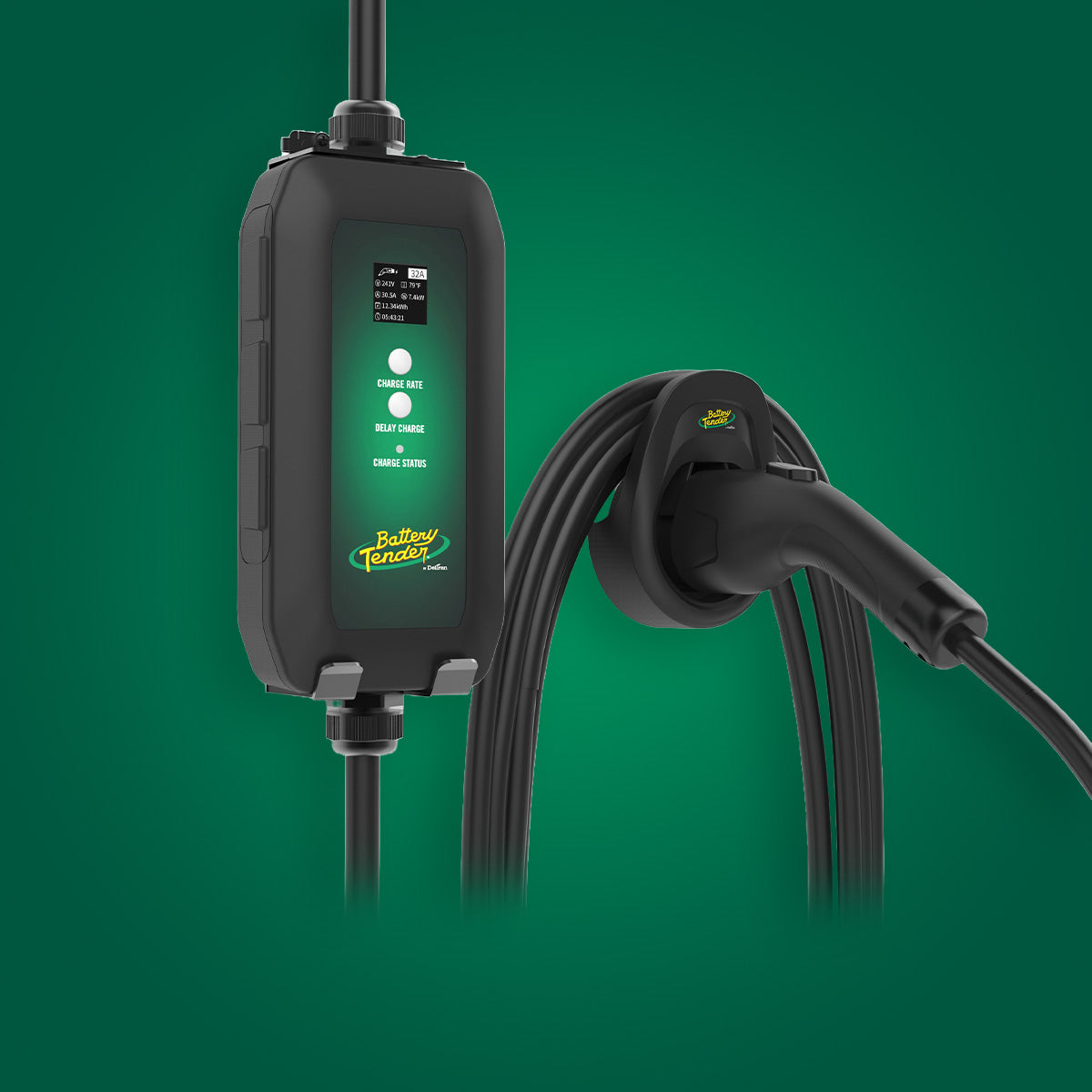
A 32-amp dual-voltage unit runs on either 120V or 240V. At 240V it delivers 7.6 kW, or about 28.5 miles per hour, so a 10-hour night restores roughly 285 miles. Because it is portable, it suits renters, households that may move, and drivers who want Level 1 now and Level 2 after an electrician adds a circuit. For full speed, it needs a dedicated 40A, 240V circuit.
Buy the Battery Tender eCharge 32 Amp Portable EV Charger at Costco.com, or shop the Battery Tender eCharge 32 Amp Level 1+2 unit at batterytender.com.
Wall-Mount Level 2 for Long Days and Large Packs
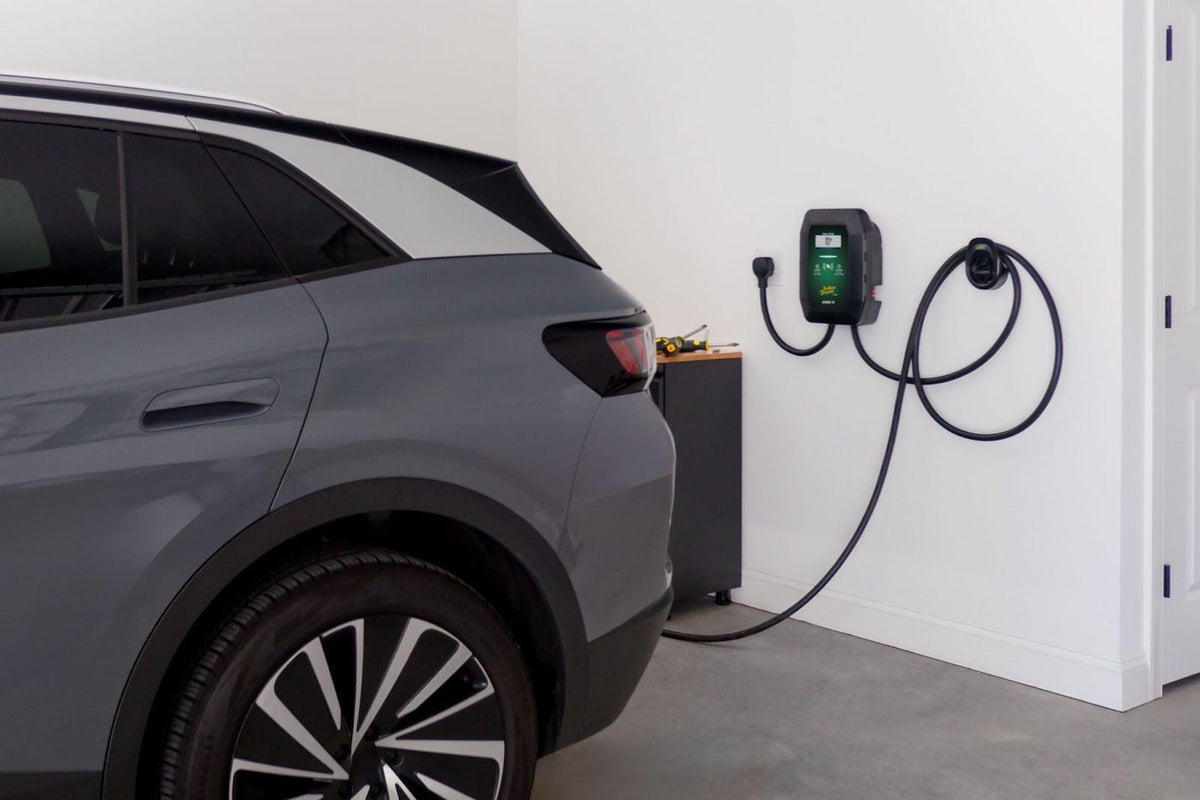
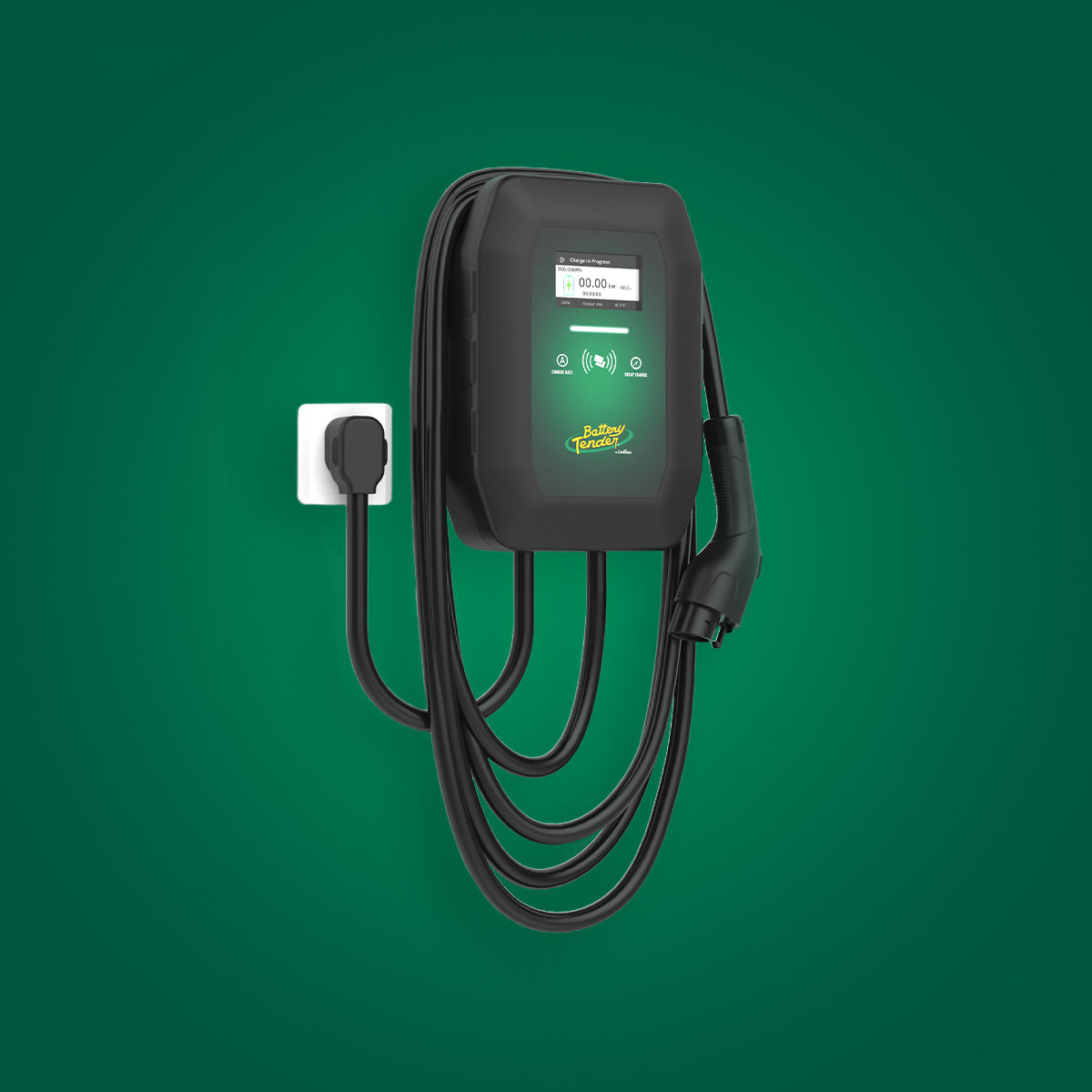
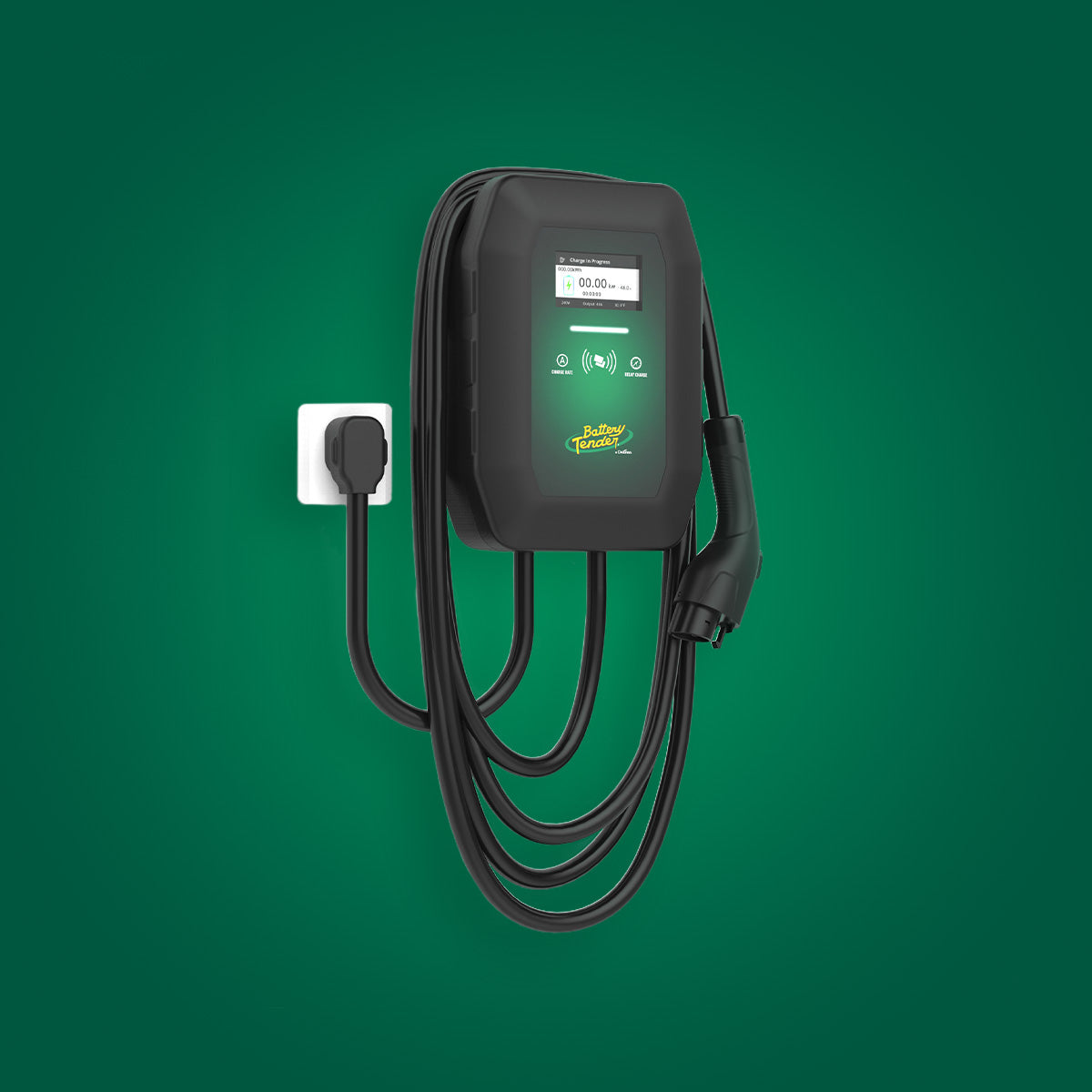
A 40-amp wall-mount unit delivers 9.6 kW, or about 36 miles per hour. It suits drivers covering 100 miles or more a day, trucks with large packs, and two-EV households that share one overnight window. It carries an IP66 rating for outdoor mounting. It also includes RFID access control, which keeps neighbors and guests from using your power. It needs a dedicated 50A, 240V circuit installed by a licensed electrician.
Buy the Battery Tender eCharge 40 Amp EV Charger at Costco.com, or shop the Battery Tender eCharge 40 Amp Level 2 unit at batterytender.com.
Tesla owners can add the Battery Tender J1772 to Tesla Adapter. It connects a J1772 plug to a Tesla charge port, so all three Battery Tender eCharge units work with Tesla vehicles.
Circuit Requirements for Any EV Charger
Every EV charger runs as a continuous load, so the circuit must be rated at 125% of the charger's output. That requirement comes from National Electrical Code (NEC) Article 625 and the continuous-load rule in NEC 210.19. The unit should also carry a UL listing, such as UL 2594 for EV supply equipment.
| Charger | Voltage | Output | Minimum Circuit | Installation |
|---|---|---|---|---|
| Battery Tender eCharge 16A | 120V | 16A (about 2 kW) | 20A dedicated | Plug into NEMA 5-20R outlet |
| Battery Tender eCharge 32A | 120/240V | 32A (7.6 kW at 240V) | 40A dedicated at 240V | Electrician adds 240V circuit |
| Battery Tender eCharge 40A | 240V | 40A (9.6 kW) | 50A dedicated | Wall-mount, electrician installed |
Wire gauge follows breaker size, cable type, and run length. A 40A circuit commonly uses 8 AWG copper, and a 50A circuit commonly uses 6 AWG copper. Long runs may need a heavier gauge to control voltage drop. Before you call an electrician, gather these items:
- Your main panel's amperage rating and the number of open breaker slots.
- The distance from the panel to the mounting spot.
- Your vehicle's onboard charger rating in kW.
- Local permit requirements. Most jurisdictions require a permit for a new 240V circuit.
A 100A service panel that already runs electric heat, a range, and a dryer may not pass a load calculation for a new 50A circuit. In that case, the 32-amp unit on a 40A circuit is often the practical choice. Never run a Level 2 EV charger from an extension cord or an undersized circuit. Overheated connections are a leading cause of home EV charging fires.
Where to Buy a Battery Tender eCharge EV Charger
The Battery Tender eCharge lineup is sold directly at batterytender.com. The two Level 2-capable models are also sold at Costco.com. Costco members can order either unit online and have it shipped to their home before the electrician arrives.
- 32 Amp portable (Level 1+2): Battery Tender 32 Amp Portable EV Charger on Costco.com. This is the best fit for renters, drivers who may relocate, and anyone who wants one unit for home and travel.
- 40 Amp wall-mount (Level 2): Battery Tender 40 Amp EV Charger on Costco.com. This is the best fit for high-mileage drivers, full-size electric trucks, and two-EV households.
- 16 Amp Level 1 and the full lineup: browse every Battery Tender charger at batterytender.com, including the J1772 to Tesla Adapter.
Whichever retailer you choose, finish the sizing math first. Buying the 40-amp unit and then learning your panel supports only a 40A breaker turns a one-day install into a service upgrade. Confirm your daily miles, parked hours, onboard charger rating, and panel capacity before you place the order.
Why an EV Charger Won't Maintain Your 12V Battery
A home EV charger refills the traction battery, but it does not dependably maintain the 12V auxiliary battery. That small battery powers door locks, displays, and the control modules. It also energizes the contactors that close the high-voltage circuit. A weak 12V battery can leave an EV with a fully charged pack unable to start.
The vehicle's DC-DC converter tops up the 12V battery only while the high-voltage system is awake. Automakers keep that window short to save energy. During long storage, airport parking, or winter layups, software wake-ups and telematics steadily drain the 12V battery. Many EVs use a lead-acid or AGM battery of roughly 30 to 60Ah, and some newer models use lithium.
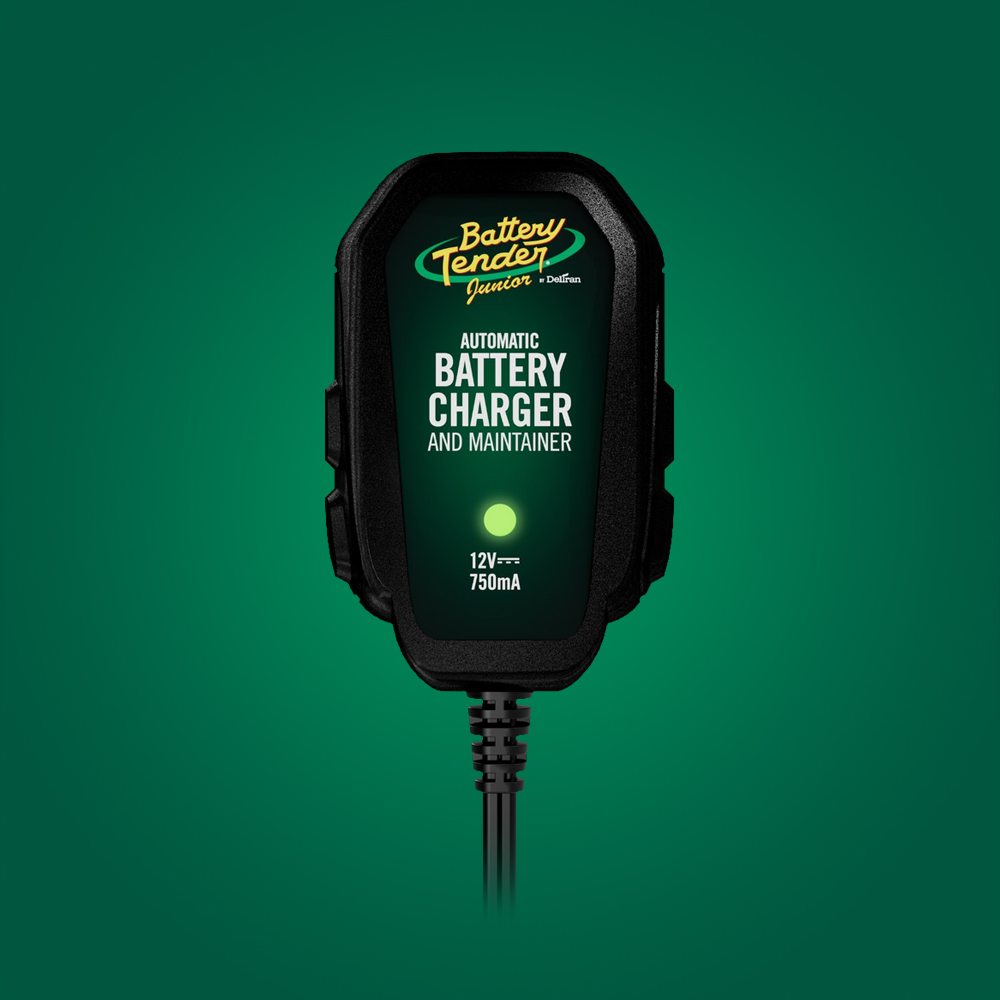
The Battery Tender Plus 1.25 Amp 12V Battery Charger and Maintainer handles lead-acid and AGM 12V batteries. It runs a multi-stage cycle of initialization, bulk, absorption, and float maintenance. In float, the Battery Tender Plus charger monitors voltage and delivers current only when voltage drops. It can stay connected for months without overcharging. Temperature compensation adjusts the charge voltage as garage temperatures swing, which protects the battery in both summer heat and winter cold.
Choosing the Right 12V Maintainer for EV Owners
Match the maintainer to your battery chemistry and your garage setup:
- Carport or exposed parking: the Battery Tender Plus 1.25 Amp 12V IP65 weather-resistant maintainer.
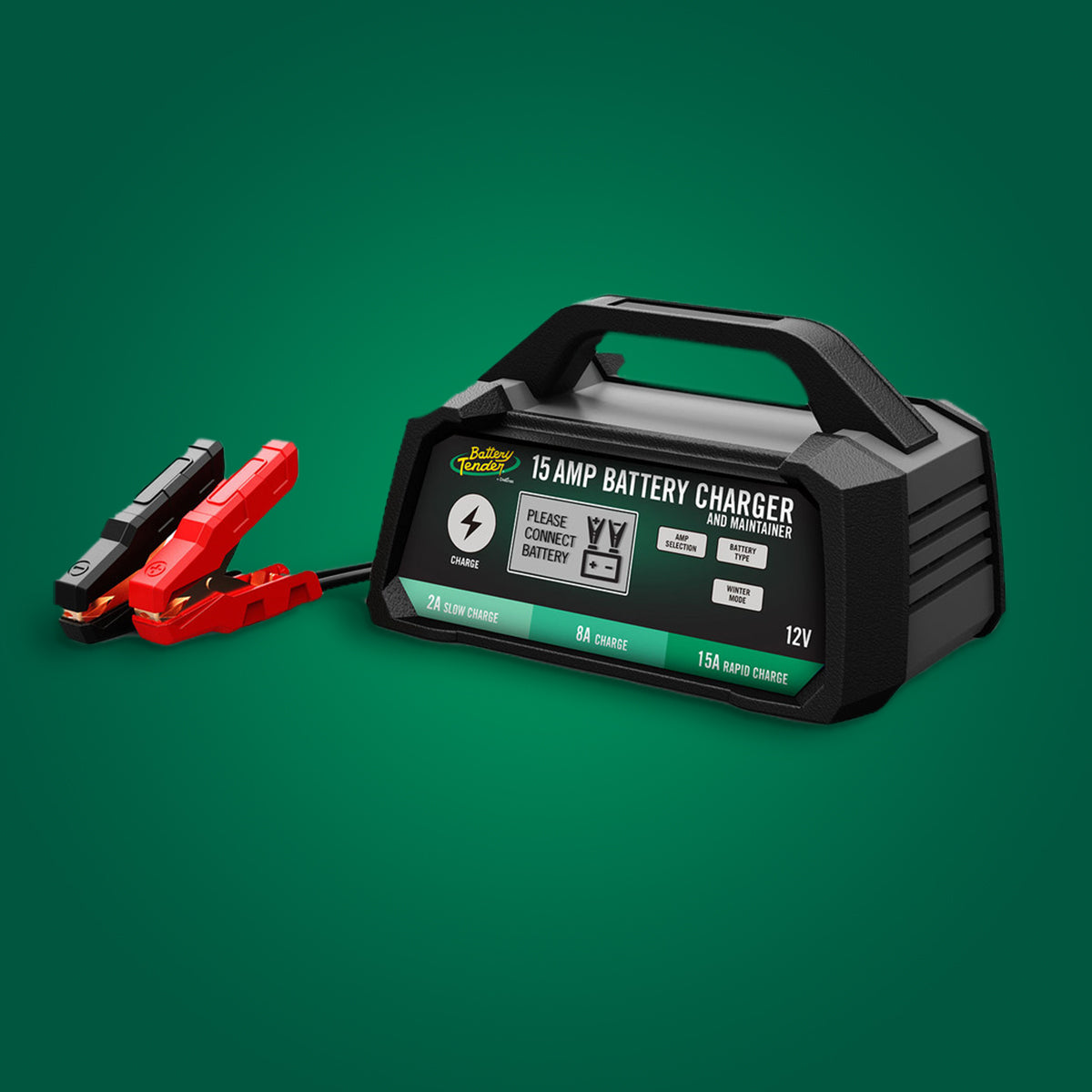
- Lithium 12V or faster recovery: the Battery Tender PowerTender® 10 Amp Multi-Chemistry 12V Battery Charger and Maintainer, which supports AGM, gel, lead-acid, and lithium.
- Two-EV households: the Battery Tender 2-Bank 12V 1.25 Amp Battery Charger and Maintainer, from the brand that pioneered multi-bank charging, with independent monitoring per bank.
- Dead 12V roadside backup: the Battery Tender Charge N Start® 4120 4 Amp Battery Charger and 1200 Amp Jump Starter.
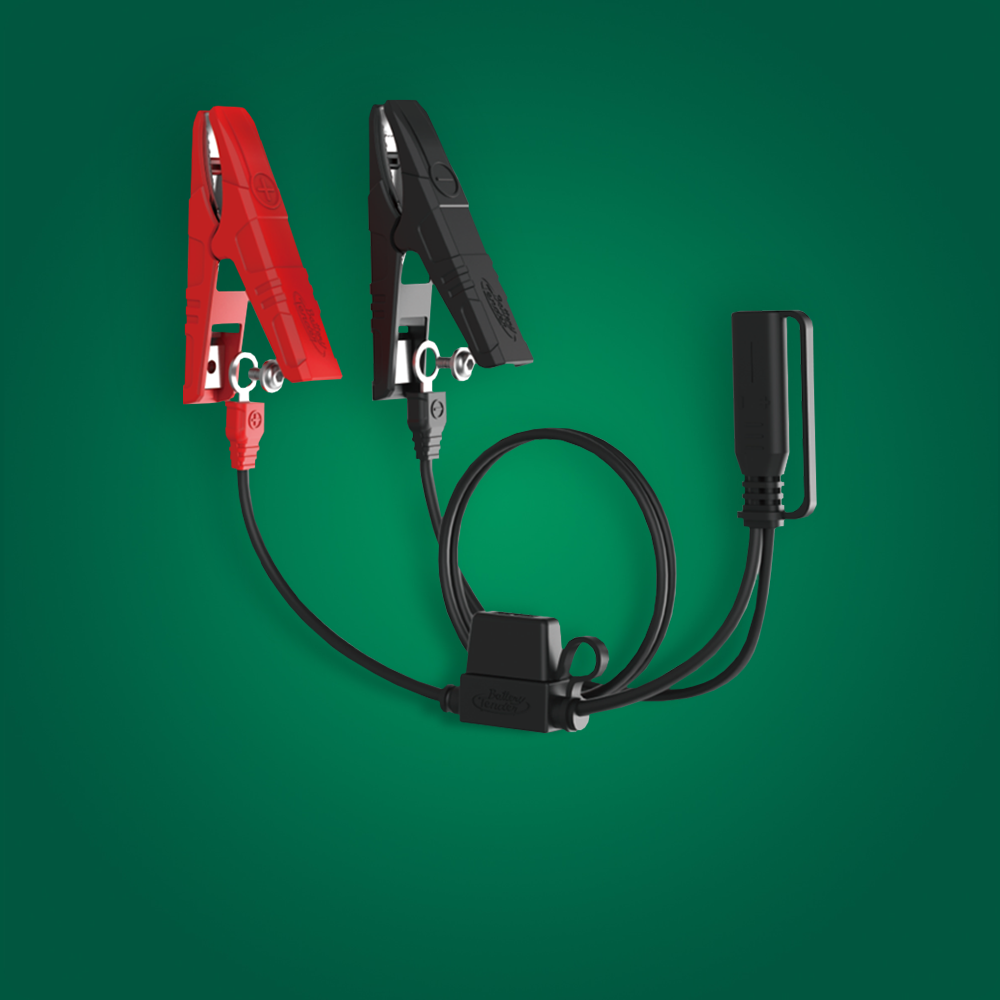
- Plug-in convenience: the Battery Tender Ring Terminal Harness with Quick Disconnect, the original quick-connect system that is now an industry standard.
Some newer EVs use a 16V lithium-ion low-voltage battery. Never connect a 12V charger to one of those, and follow the manufacturer's guidance instead. Recovery math for a 12V battery is simple. A 40Ah battery at 50% charge has a 20Ah deficit, and 20Ah ÷ 1.25A works out to about 16 hours, or closer to 18 to 20 hours after charging losses. To connect a maintainer:
- Switch the EV off and close all doors so the modules go to sleep.
- Connect the red clamp to the positive terminal or the designated jump post.
- Connect the black clamp to the negative terminal or the designated chassis ground point.
- Plug in the maintainer and confirm the charging indicator lights up.
Check the owner's manual first, because some manufacturers restrict where a charger may connect.
Frequently Asked Questions
What size EV charger do I need for a 60-mile daily commute?
A 60-mile commute needs about 8.3 hours on a 16-amp Level 1 unit, 2.1 hours on a 32-amp unit, or 1.7 hours on a 40-amp unit. Level 1 fits a 10-hour night in mild weather. Add a 25% winter margin, however, and it needs about 10.4 hours. A 32-amp Level 2 unit gives comfortable headroom without requiring the largest circuit.
Is a Level 1 EV charger enough for an electric car?
Level 1 is enough when you drive less than about 50 miles a day and the car stays parked for 10 or more hours. A 16-amp unit adds roughly 72 miles overnight. It falls short for long commutes, large electric trucks, cold climates, and time-of-use rate plans that shorten your charging window to 4 to 6 hours.
Does a faster EV charger damage the battery?
No. The vehicle's battery management system controls charging current, and the onboard charger limits AC intake to its design rating. A 40-amp Level 2 unit cannot push more current than the car accepts. Home AC charging is gentle on the pack compared with heavy, repeated DC fast charging, which generates far more heat.
Where can I buy a Battery Tender eCharge unit?
All three Battery Tender eCharge models are available at batterytender.com. The 32 Amp Portable and 40 Amp wall-mount units are also sold at Costco.com, where members can order online for home delivery. Before buying from either retailer, confirm your daily miles, onboard charger rating, and panel capacity so the unit matches your circuit.
Does an EV still need a 12V battery maintainer?
Yes. Home charging feeds the high-voltage pack, but the 12V auxiliary battery can still drain from software wake-ups, telematics, and long storage. A Battery Tender Plus maintainer holds lead-acid and AGM batteries at proper voltage. It prevents the no-start condition that a depleted 12V battery causes, even when the traction pack is full.
Do I need an electrician to install an EV charger?
A Level 1 unit needs only a properly rated 120V outlet on a dedicated 20A circuit. Any Level 2 unit needs a dedicated 240V circuit. A licensed electrician should install it, pull the permit, and run a panel load calculation. That protects against overheating and keeps the installation compliant with NEC Article 625.
Conclusion
Choosing the right EV charger comes down to one calculation: daily miles divided by miles per hour, checked against your parked hours with a 25% winter margin. Level 1 covers short commutes. The 32-amp dual-voltage unit adds flexibility for renters and growing needs. The 40-amp wall-mount unit handles long days, big packs, and two-EV garages. Keep a Battery Tender Plus charger on the 12V battery, because the traction pack is only half of an EV's power system.
Next step: write down your average daily miles and parked hours, run the division, and pick the unit that fits. Then shop the full Battery Tender charger lineup at batterytender.com. You can also order the 32 Amp Portable EV Charger or the 40 Amp EV Charger on Costco.com.