

Adventure touring — the art of riding large-displacement motorcycles across continents, through remote wilderness, and far from the nearest dealership — places unique demands on electrical systems. Your BMW GS, KTM Adventure, Honda Africa Twin, or Yamaha Tenere is your shelter, your navigation, and your lifeline. Understanding and managing its battery is not optional.
Battery Tender® has been supporting powersports riders since the brand's earliest days. This guide addresses the specific electrical management challenges that distinguish adventure riding from standard motorcycle ownership.
The ADV Electrical Load Reality
Modern adventure (ADV) bikes carry substantial electrical loads that their predecessors never had. A fully equipped long-distance touring setup might include a GPS navigation unit (2 to 5W), a USB power hub for device charging (5 to 20W), electrically heated grips (20 to 50W), heated jacket liner and glove connectors (30 to 100W), a satellite communicator (2 to 3W), driving lights or auxiliary LED lightbar (30 to 80W), and a dash-mounted smartphone (5 to 15W).
At highway speeds with the alternator producing full output, most modern ADV bikes handle this load without issue. At idle in traffic or slow technical sections, the balance tips toward consumption. Know your bike's alternator output and your accessory load. Most 1000cc+ adventure bikes produce 400 to 600 watts at cruising RPM. If your accessory load exceeds 60% of alternator output, you risk a net negative charge state during extended slow riding, campsite accessory use, or charging stops where you run accessories without the engine running.
Battery Selection for Adventure Bikes
Factory batteries in adventure bikes are typically maintenance-free AGM units sized for the bike's CCA requirements. Many riders upgrade to higher-capacity AGM batteries for longer reserve capacity. Lithium iron phosphate (LiFePO4 battery) options have become increasingly popular in the ADV community for their significant weight savings — often 6 to 10 pounds — which matters enormously on overland routes where every kilogram of bike weight affects handling and fuel consumption.
Lithium batteries charge differently from lead acid and require a charger with a lithium-specific charging profile. Battery Tender chargers with lithium mode provide the correct constant-current, constant-voltage profile without the float maintenance stage that lithium chemistry does not require. Always verify your charger is compatible with lithium chemistry before using it on a LiFePO4 battery.
Charging Strategies on the Road
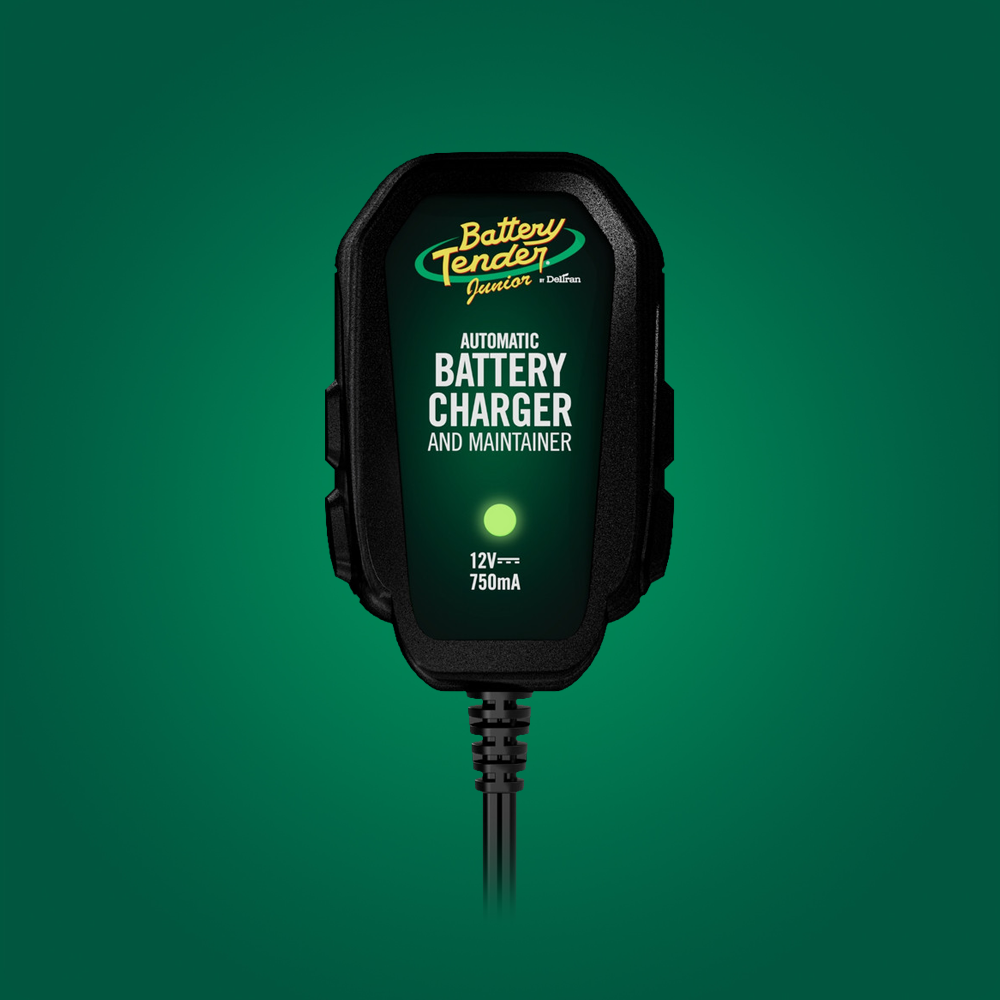
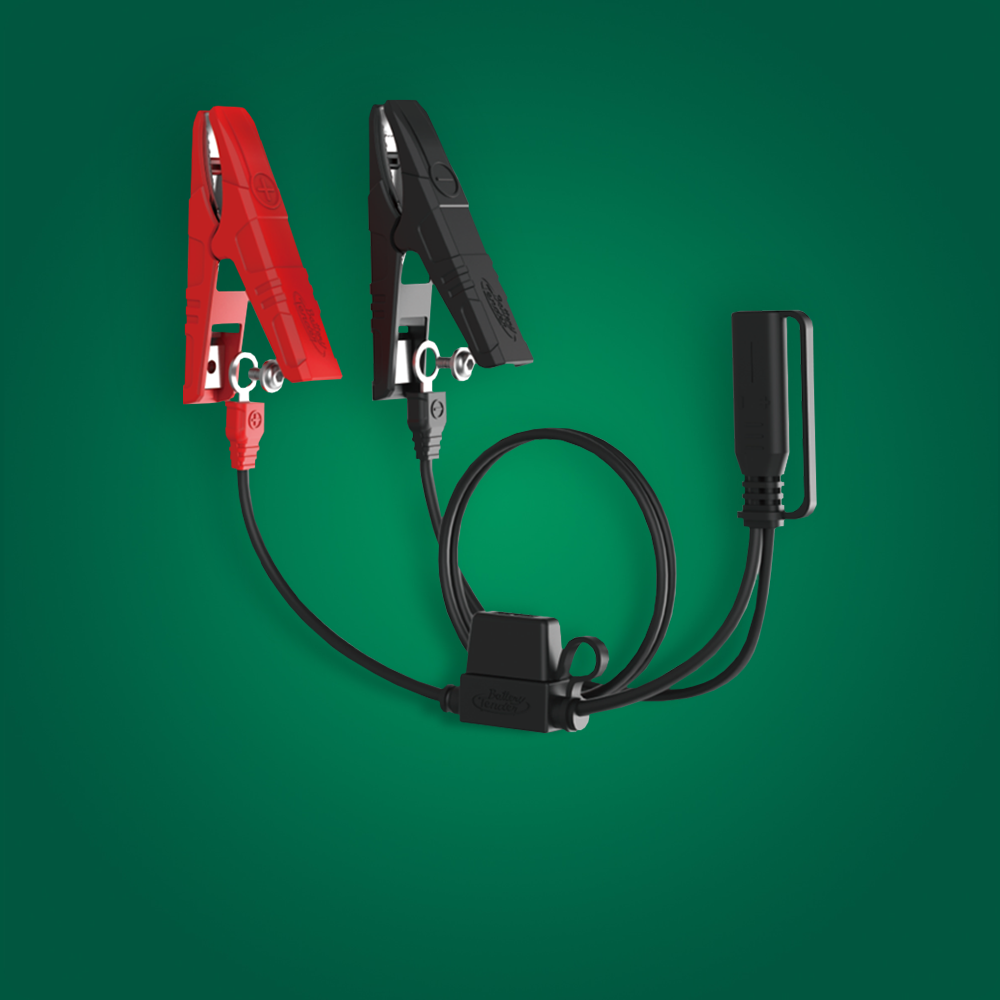
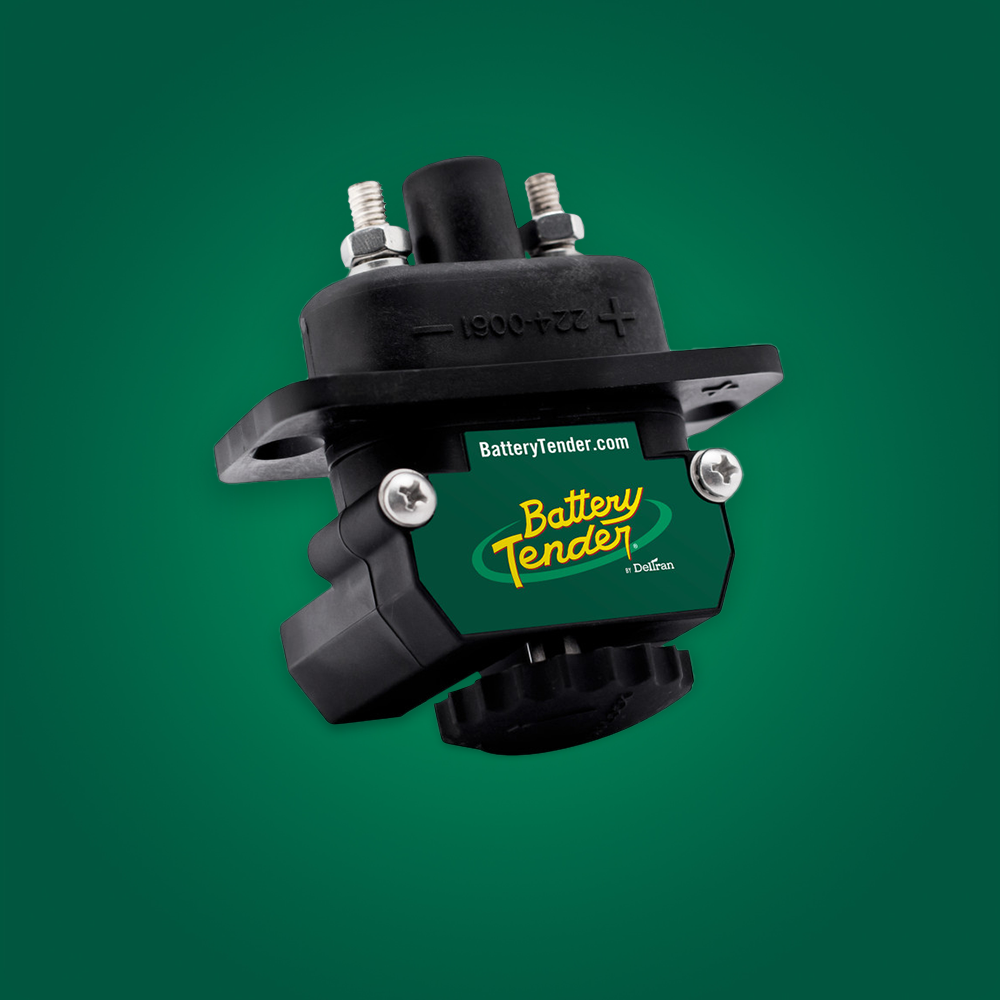
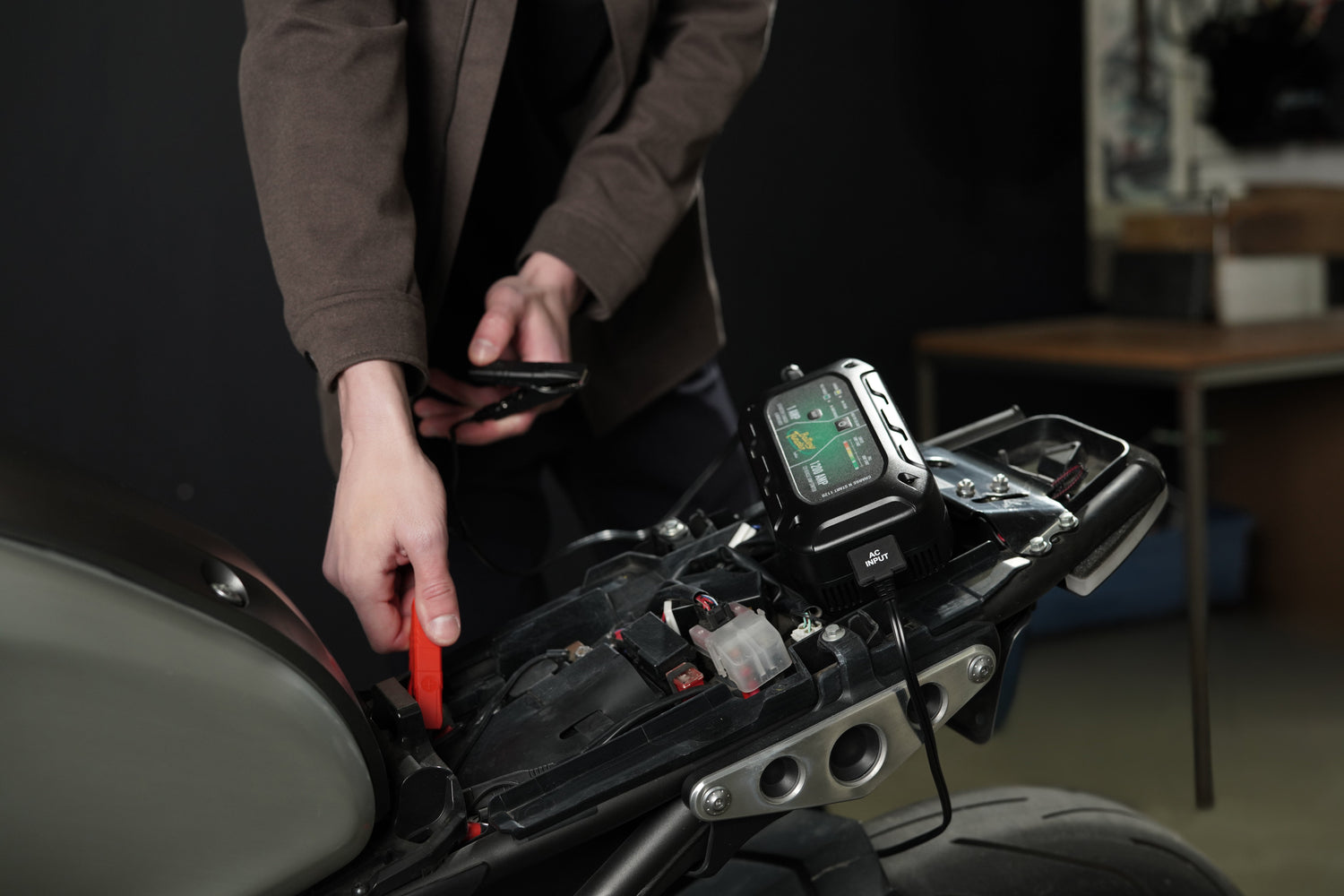
Overnight accommodation provides the primary charging opportunity on multi-day tours. A Battery Tender compact charger packed in your luggage — the Junior at just a few ounces, or the Plus for slightly faster recovery — connects to a standard outlet and maintains or fully recharges your battery overnight. If you use a quick disconnect ring terminal, the process takes seconds: plug in, leave overnight, disconnect and go.
For remote areas without reliable accommodation or power, solar-assist charging is an option. Small 10 to 20-watt folding panels produce 0.5 to 1.2 amps of charge in good sunlight. This is not enough for rapid recovery of a significantly discharged battery, but it maintains a healthy battery during extended daytime rest stops. Battery Tender solar controllers ensure the trickle current is properly regulated to avoid overcharge.
Preventing Discharge During Rest Stops and Camping
The greatest risk to an adventure bike battery is not riding — it is stopping. Extended border crossings, campsite evenings with navigation running, or photography stops where you leave devices plugged in while the engine is off can collectively drain significant capacity.
Practice good electrical hygiene: disconnect USB loads when the engine is off, shut off auxiliary lights you are not using, and monitor battery voltage if your bike has a display for it. A low-voltage cutoff device wired between your accessory circuit and your battery protects against draining below starting voltage. These simple devices disconnect the accessory circuit when voltage falls below a threshold — typically 11.8 to 12.0 volts — ensuring you always have enough reserve to start. Combined with a compact Battery Tender charger in your kit, you have both prevention and recovery covered.
Recovery from Deep Discharge
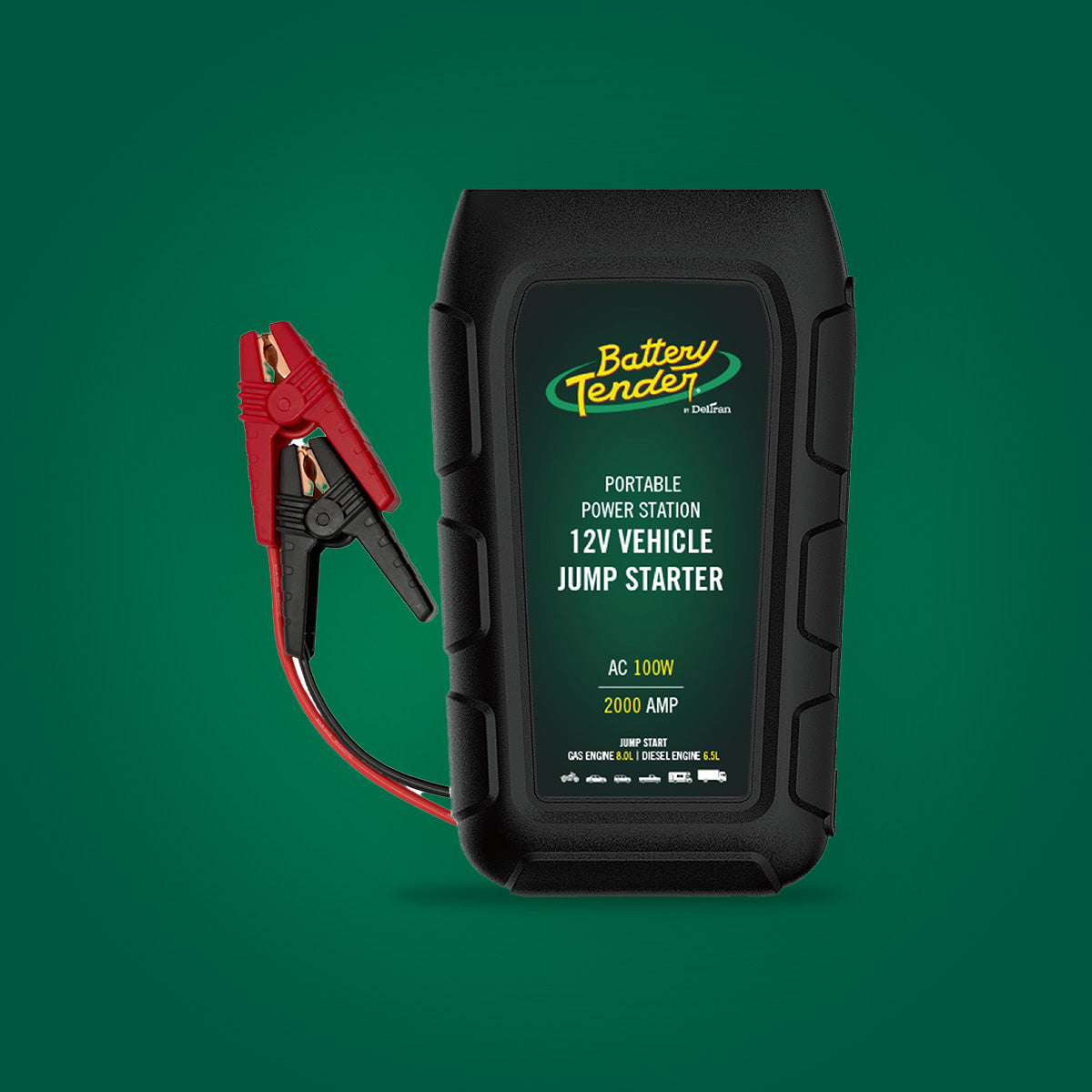
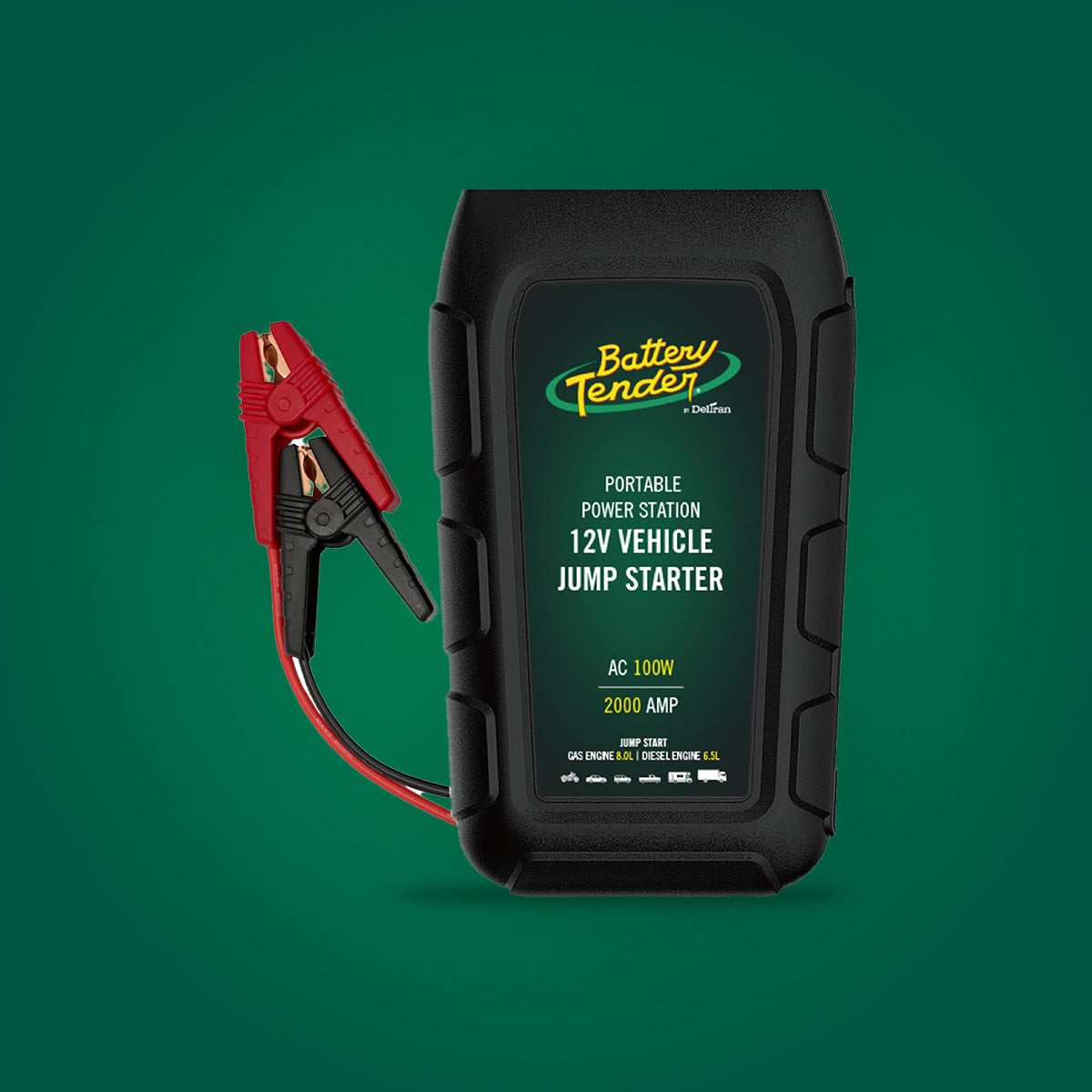
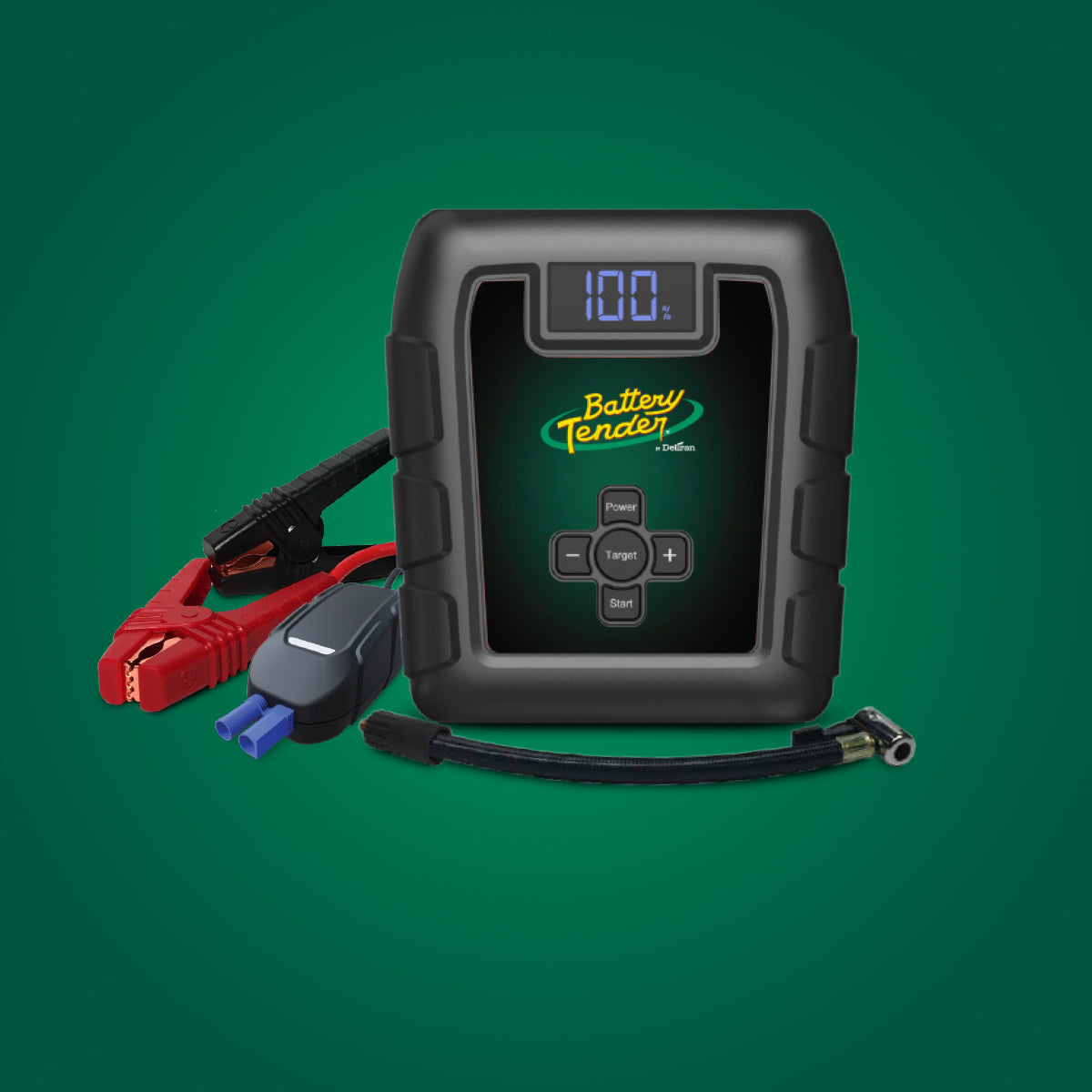
If your battery goes flat in the field, a portable jump starter from Battery Tender provides the quickest path back to the road. Compact lithium jump starters fit in a tankbag or small soft luggage, weigh under two pounds, and deliver enough peak amps to start most adventure bikes reliably.
The Battery Tender Charge N Start series provides both jump-starting capability and a built-in USB power bank, offering dual utility in a compact package ideal for touring. For overnight recovery in a location with power, connecting a Battery Tender charger allows the ISM desulfation stage to address any sulfation that may have occurred during the discharge event. A battery that gets discharged and immediately recharged with a quality smart charger typically recovers fully. A battery that sits discharged for days suffers more significant sulfation that may permanently reduce capacity.