



Level 1 Charger Guide: 120V EV Charging Explained (2026)
A level 1 charger plugs into a standard 120V household outlet and adds roughly 3 to 7 miles of range per hour to an electric vehicle. It is the slowest charging level, but for drivers who cover under 40 miles a day it refills the pack overnight with no installation. It also does little to protect the vehicle's separate 12V battery during long parking periods, a gap most guides skip.
Battery Tender® has built smart charging products since 1989, and the same principle applies at every level: match the charging method to the battery's real condition. This guide covers how a level 1 charger works, how long it takes, which circuits it can safely use, and how to protect the 12V auxiliary battery that a level 1 charger leaves unattended. It also clears up a common mix-up between a level 1 charger and a 1-amp 12V battery charger.
Key Takeaways
- A level 1 charger delivers 120V AC at 12A to 16A, which is about 1.4 kW to 1.9 kW.
- Expect about 40 to 50 miles of range from a 10-hour overnight session on a 12A unit.
- Use a dedicated outlet and never an extension cord or inverter. A 15A circuit supports 12A continuous, and a 20A circuit supports 16A.
- A level 1 charger fills the traction pack only. The 12V auxiliary battery still needs a smart maintainer during long parking periods.
- A level 1 charger is not a 1-amp 12V battery charger. They serve different batteries.
What Is a Level 1 Charger and How Does It Work?
A level 1 charger is the cord set that connects an EV to a 120V outlet. The cord set contains the safety electronics (ground-fault detection and a pilot signal) defined in the SAE J1772 plug standard. The vehicle's onboard charger then converts AC to DC for the traction battery.
Because the outlet limits power, the charger cannot go faster. A standard NEMA 5-15 outlet on a 15A circuit supports a 12A continuous draw. That is 120V × 12A = 1,440W. A 16A unit on a NEMA 5-20 outlet delivers 120V × 16A = 1,920W.
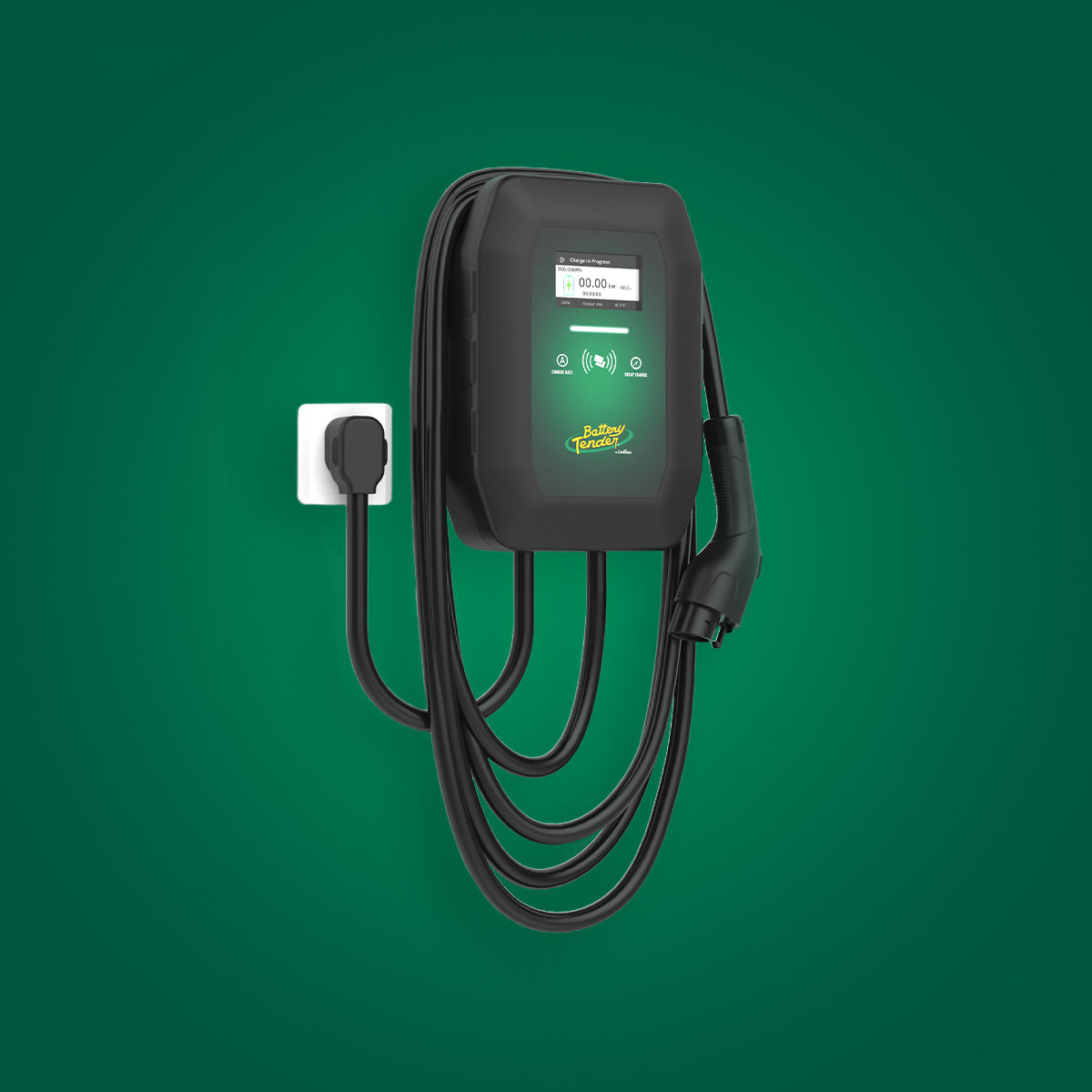
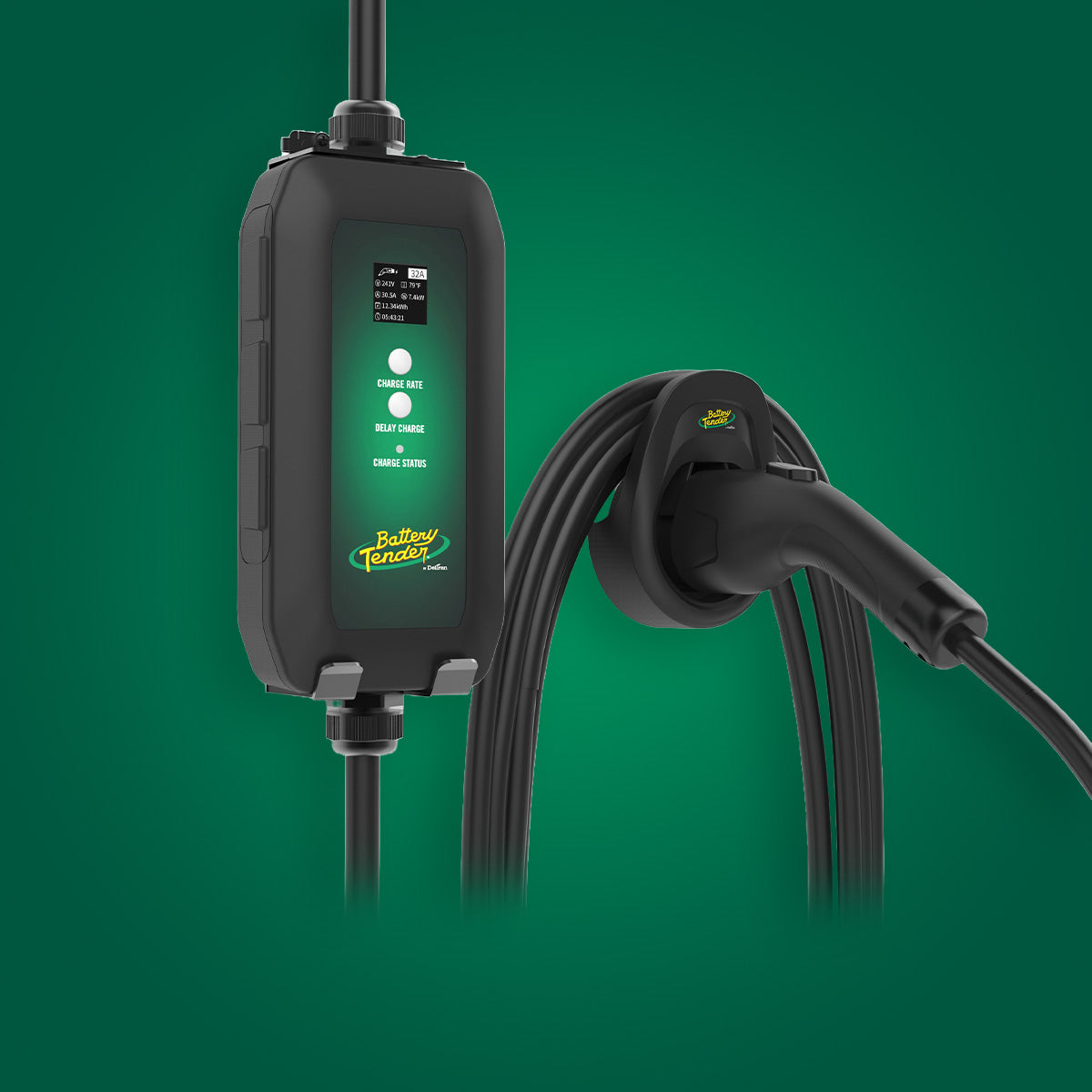
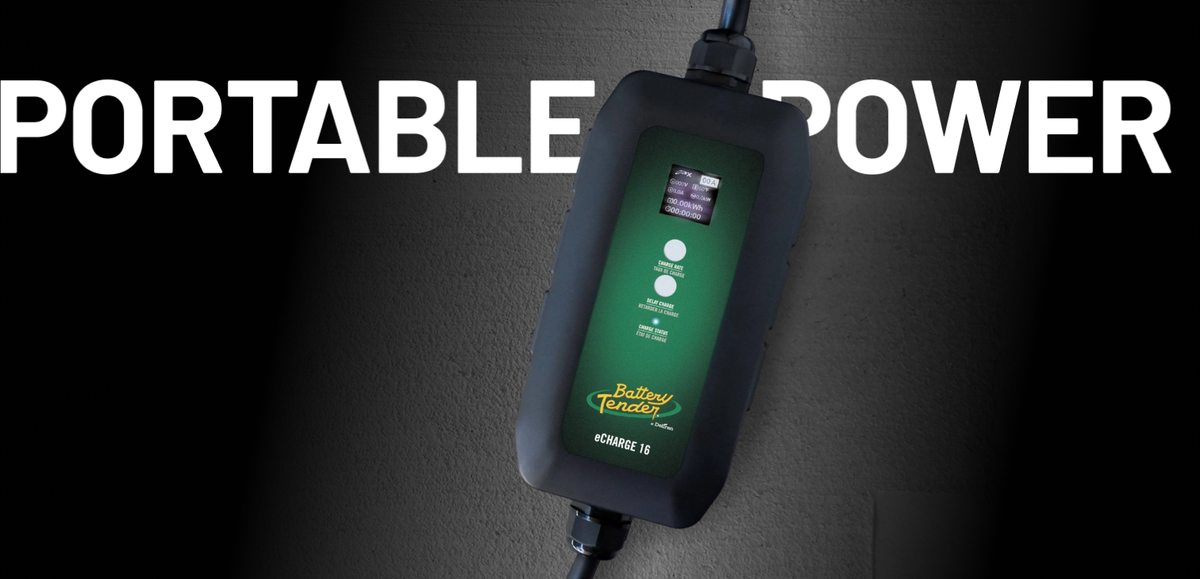
The Battery Tender eCharge 16 Amp Level 1 EV Charger is a portable example. It is a 2 kW unit with a NEMA 5-20P plug, rated at about 7.2 miles of range per hour. It suits apartments, rental garages, and anyone who wants a portable cord that travels with the vehicle.
How Fast Is a Level 1 Charger Compared With Level 2?
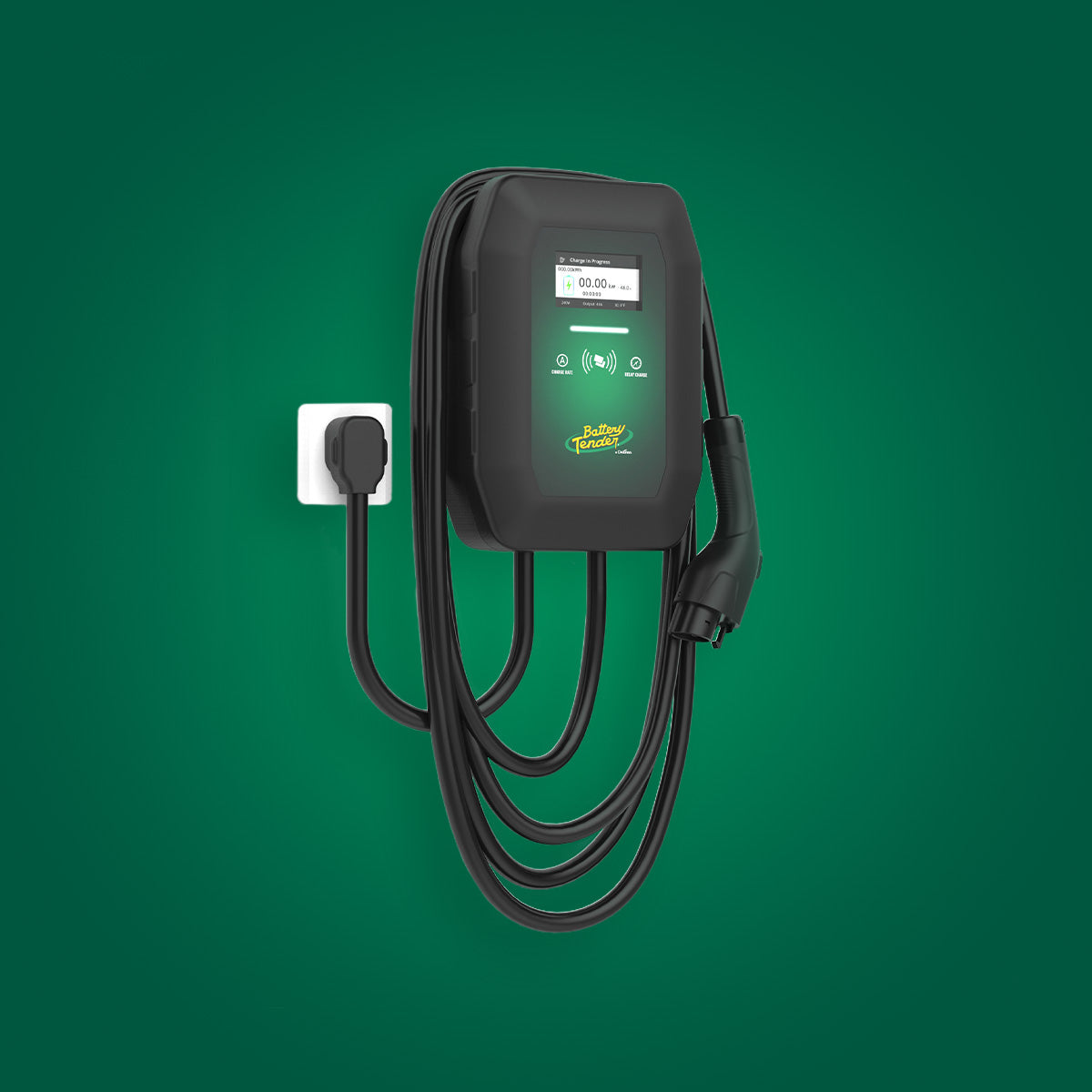
A level 1 charger adds roughly 3 to 7 miles of range per hour, versus about 28 to 42 miles per hour for Battery Tender eCharge Level 2 models. Charging power is volts times amps, so moving to 240V at higher amperage raises speed roughly four to eight times.
| Charger | Voltage | Power | Approx. range per hour |
|---|---|---|---|
| Generic level 1 charger, 12A | 120V | 1.4 kW | About 4 to 5 miles |
| Battery Tender eCharge 16 Amp (Level 1) | 120V | 2 kW | 7.2 miles |
| Battery Tender eCharge 32 Amp (Level 1+2) | 120/240V | 7.6 kW | 28.5 miles |
| Battery Tender eCharge 40 Amp (Level 2) | 240V | 9.6 kW | 36 miles |
| Battery Tender eCharge 48 Amp (Level 2) | 240V | 11 kW | 42.25 miles |
Charging Time Math
Use this formula: energy needed (kWh) ÷ (charger kW × efficiency) = hours. Assume about 90% efficiency after conversion losses.
- Example pack: 60 kWh, charging from 20% to 80%, which is 36 kWh.
- 12A level 1 charger (1.4 kW): 36 ÷ (1.4 × 0.9) ≈ 28.6 hours.
- 16A level 1 charger (2 kW): 36 ÷ (2 × 0.9) = 20 hours.
- Overnight, 10 hours at 12A: about 12.6 kWh stored, or roughly 40 to 50 miles at 3.5 miles per kWh.
Is a Level 1 Charger Enough for Your Driving?
A level 1 charger is enough if your daily mileage is under about 40 miles and the car sits parked 10 or more hours each night. Average daily driving for many commuters falls inside that window, so the slow rate rarely matters.
It works well in these situations:
- Daily commute under 40 miles with overnight parking at home.
- Plug-in hybrids with packs under 20 kWh, which fill in 8 to 12 hours.
- Rental homes or apartments where a 240V circuit is not allowed.
- A backup cord kept in the trunk for travel and visits.
It falls short when you drive 80 or more miles daily, own a large-pack truck, or need a full recharge in under 8 hours. In those cases a 240V Level 2 charger is the practical fix.
How to Set Up a Level 1 Charger Safely
- Confirm the outlet is a grounded, dedicated circuit rated 15A (for 12A charging) or 20A (for 16A charging).
- Inspect the outlet and plug for discoloration, looseness, or heat marks.
- Plug the cord set directly into the wall. Do not use extension cords, power strips, or adapters.
- Connect the J1772 plug to the vehicle and confirm the status light shows charging.
- Check the plug and outlet by touch after 30 minutes. Warmth is normal, but heat that is uncomfortable to touch means stop and call an electrician.
Level 1 Charger Safety: Circuits, Cords, and Limits
The main safety rule is that a level 1 charger is a continuous load, so the circuit must handle it for hours. The National Electrical Code treats loads running three hours or more as continuous and limits them to 80% of the breaker rating. That is why 12A is the cap on a 15A circuit and 16A is the cap on a 20A circuit.
Look for equipment listed to UL 2594, the safety standard for EV supply equipment. Home installation of new outlets falls under NEC Article 625, so a licensed electrician should handle any new circuit.
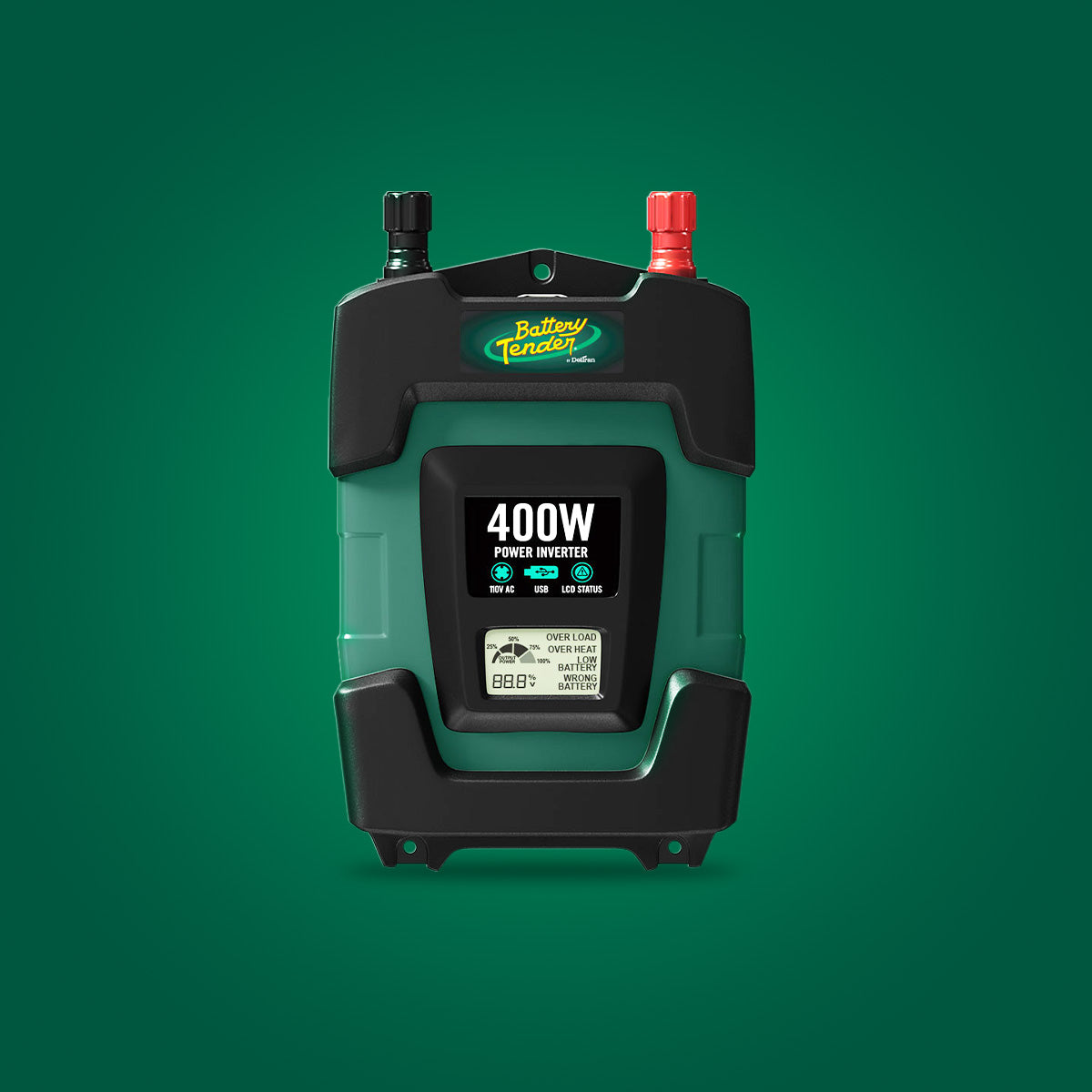
A power inverter is never a substitute. A level 1 charger draws 1,440W to 1,920W, while the Battery Tender Power Inverter 120 Watt 12V supplies only 120W. Its job is small AC loads such as a phone, a laptop, or an LED work light during garage or roadside work. Treat it as a convenience tool and never connect an EV charger to it.
Battery Tender Power Inverter 120 Watt 12V
Last updated: May 2026. Electrical codes vary by jurisdiction, so confirm local requirements before adding or changing a circuit.
The Gap a Level 1 Charger Leaves: The 12V Auxiliary Battery
A level 1 charger refills the high-voltage traction pack, but every EV also carries a small 12V battery that runs door locks, computers, and the contactors that wake the car. In most EVs a DC-to-DC converter keeps the 12V battery topped up while the vehicle is awake or charging. After weeks of parking with the vehicle asleep, parasitic drain can still run it flat, and a dead 12V battery can leave the car unable to start.
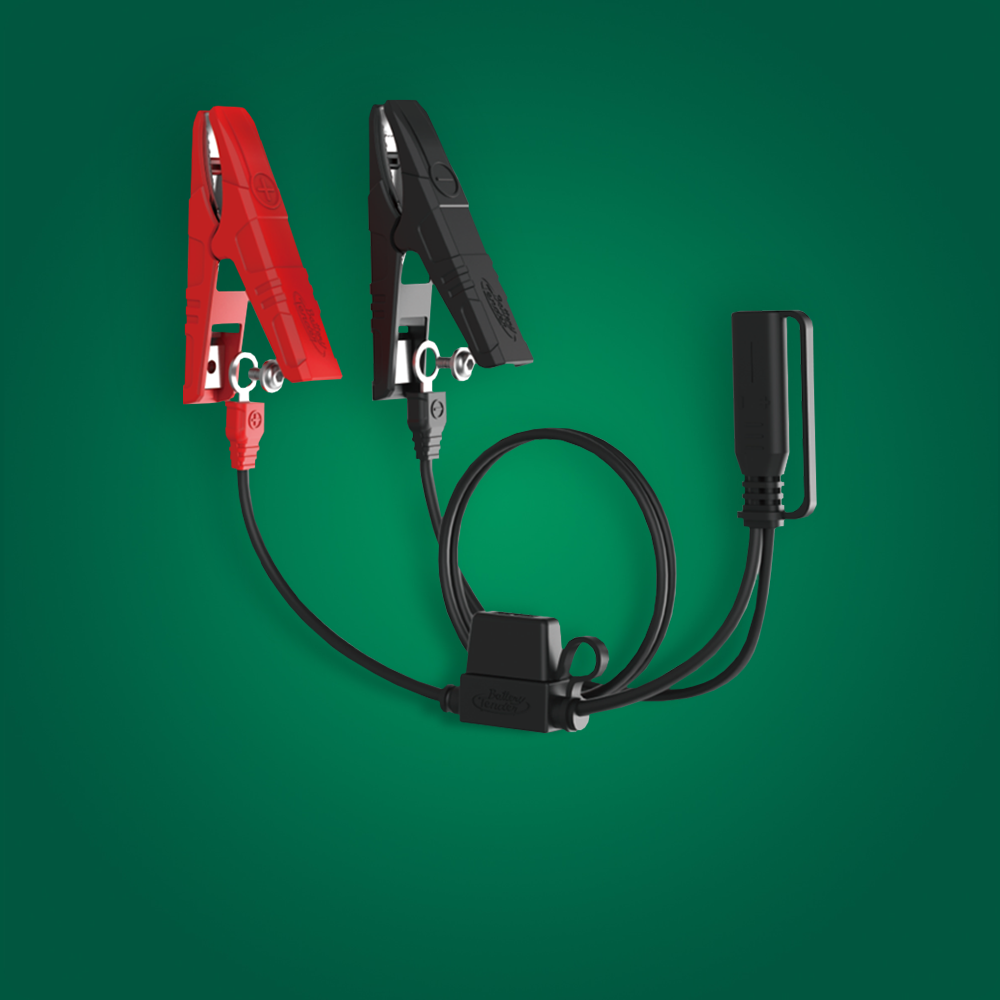
This is where a Battery Tender smart maintainer fits. Check the owner's manual first for the approved connection points, since some EVs have specific jump terminals and procedures.
Why Infinite Sequential Monitoring (ISM) Beats a Conventional Trickle Charger
A conventional trickle charger pushes constant current whether the battery needs it or not, which risks overcharging a small 12V battery. Battery Tender chargers use ISM instead, a proprietary 4-stage automatic charging process.
- Initialization: tests the battery and applies gentle current to judge its condition.
- Bulk Charge: delivers full rated current until the battery reaches about 80% state of charge.
- Absorption: holds voltage constant, tapers current, and helps dissolve sulfate crystals.
- Float Maintenance: monitors voltage and sends charge only when it drops.
Because ISM responds to battery state, it is safe to leave connected indefinitely. Preventing sulfation is also why batteries maintained this way often last 5 or more years rather than 2 to 3.
Battery Tender Weather Resistant 1 Amp: For Cold, Damp Garages
Level 1 charging usually happens in a garage, carport, or driveway where damp air and temperature swings are common. The Battery Tender Weather Resistant 1 Amp 12V charger is sealed against moisture, so it suits exactly that environment. On a 40Ah auxiliary battery at 50% discharge, the math is (40 × 0.5) ÷ 1A = 20 hours, so it is a maintenance tool and not a quick charger.
Battery Tender Weather Resistant 1 Amp 12V Battery Charger
Battery Tender Junior: For Small Batteries and Multiple Chemistries
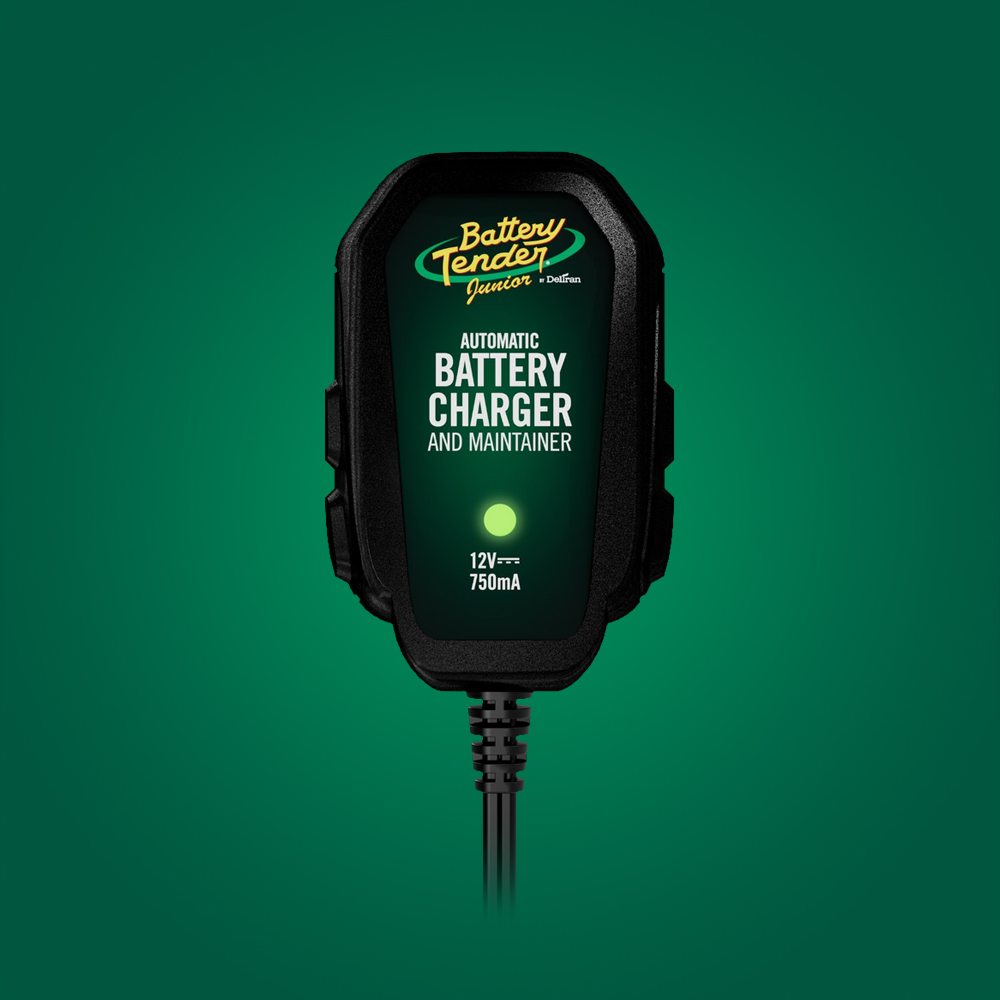
The Battery Tender Junior Multi-Chemistry 12V 1 Amp charger is a compact, affordable option for small batteries in the 2Ah to 30Ah range, such as a motorcycle, a mower, or a small auxiliary battery on a plug-in hybrid. It offers selectable lead-acid and lithium modes. Mount it in a dry, ventilated spot near the vehicle for long-term maintenance.
Battery Tender Junior Multi-Chemistry 12V 1 Amp Battery Charger and Maintainer
Battery Tender Charge N Start 1120: Backup for a Dead 12V Battery
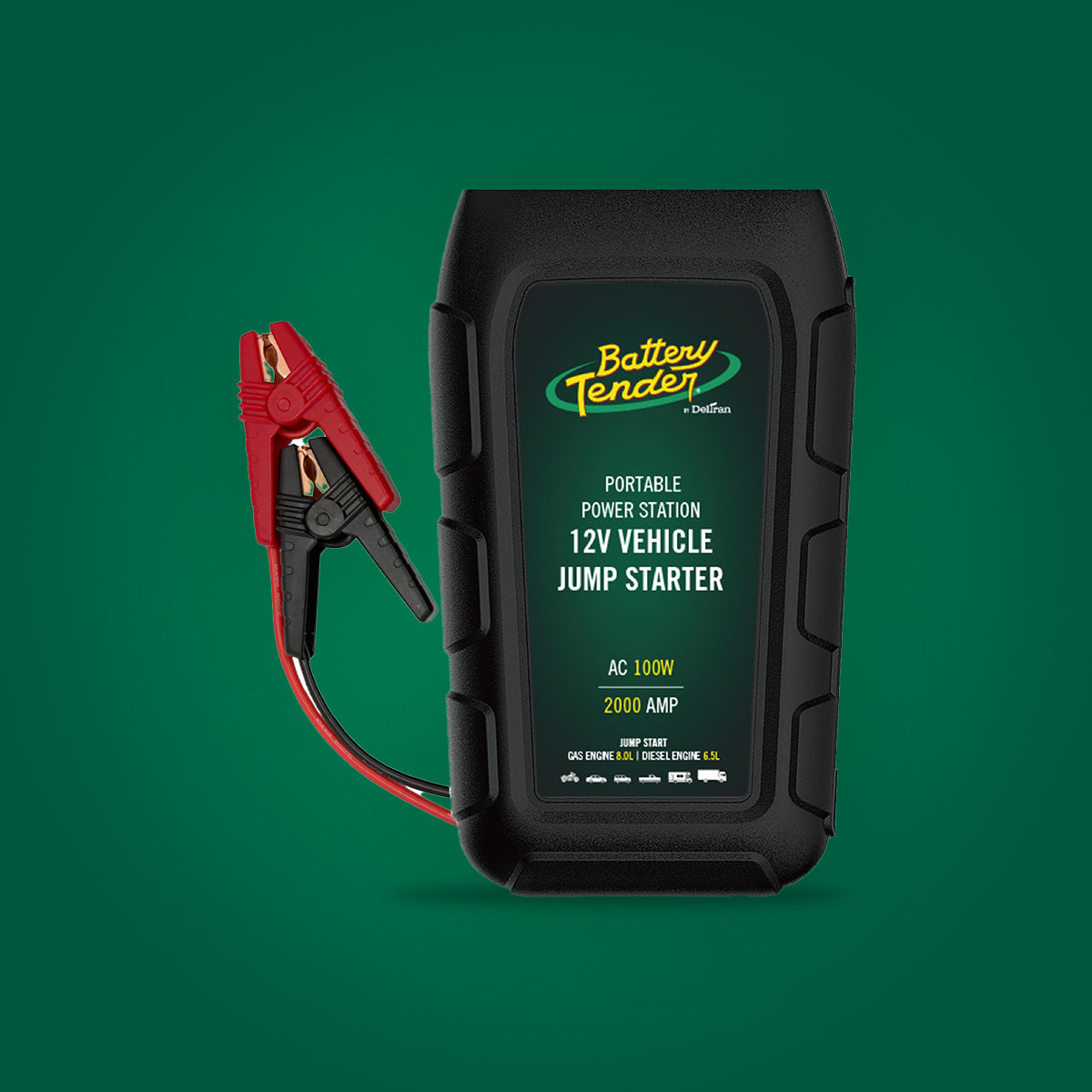
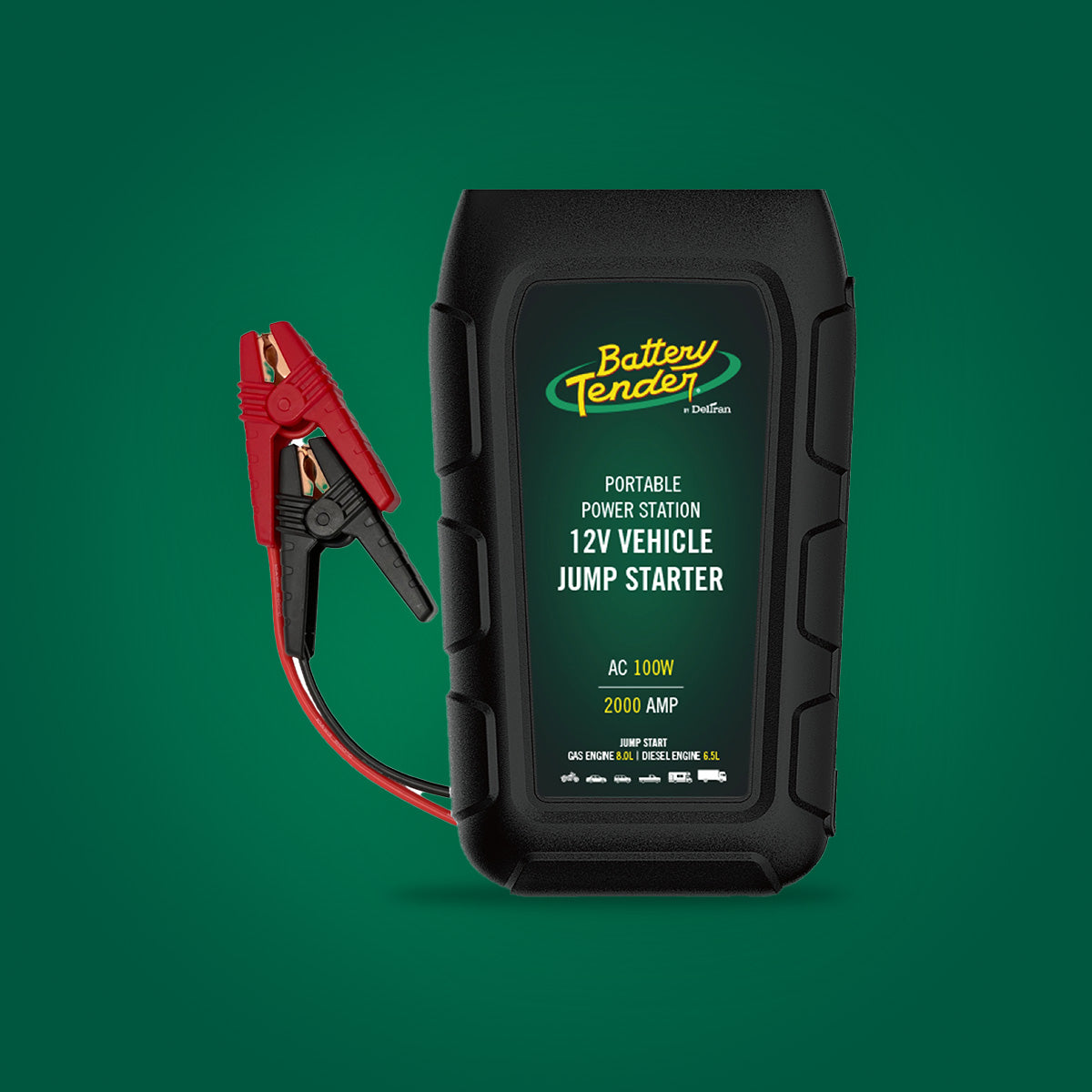
When the 12V battery is already flat, a maintainer cannot help quickly. The Battery Tender Charge N Start 1120 combines a 1A charger with a 1,200A jump starter, so one unit covers both jobs. The jump pack is lithium-ion, the charger section handles standard, AGM, GEL, and lithium 12V batteries, and Charge N Store keeps the internal pack topped up. This bundle includes a ring terminal cable for a permanent connection point.
Tire Pressure and Range: Keep the Inflator Ready
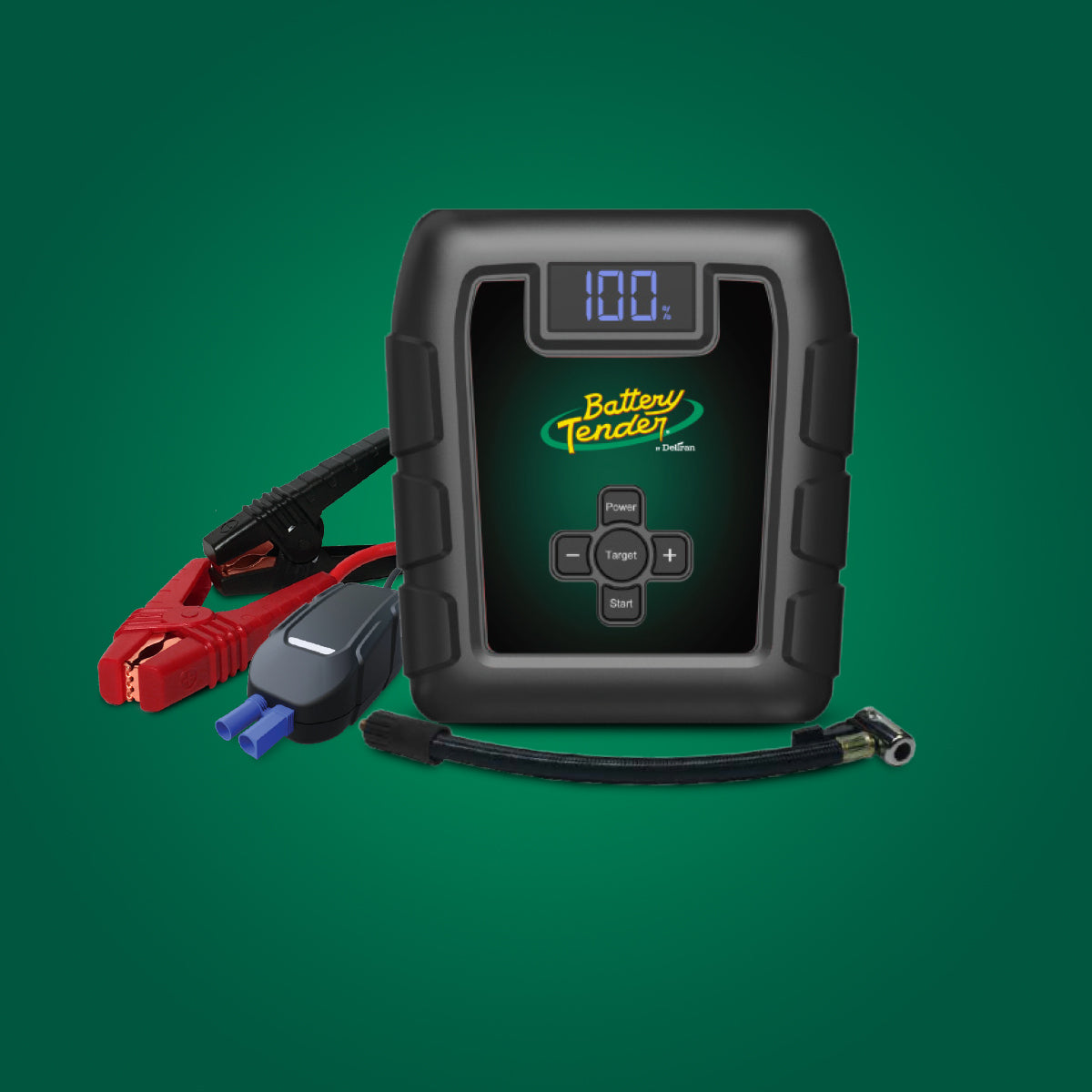
Low tire pressure reduces EV range, which matters when a level 1 charger already adds miles slowly. Owners of the Battery Tender Jump N Start 800 Amp Jump Starter and Tire Inflator can keep a spare hose on hand, since the hose takes the most handling and flexing.
Replacement Hose for 800 AMP Jump Starter and Tire Inflator
Level 1 Charger vs. 1-Amp 12V Charger: Don't Confuse Them
A level 1 charger and a 1-amp 12V battery charger share a number but serve different batteries. The first refills an EV traction pack from 120V AC. The second maintains a small 12V lead-acid or lithium battery.
| Feature | Level 1 EV charger | 1-amp 12V charger |
|---|---|---|
| Battery served | EV traction pack (200V+) | 12V starting or auxiliary battery |
| Input power | 120V, 12A to 16A | 120V, under 1A draw |
| Output | 1.4 to 2 kW | About 14W |
| Typical use | Overnight range recovery | Storage and maintenance |
For sizing ideas on other 12V equipment, see the cart charger guide and the classic car battery maintenance guide.
Frequently Asked Questions
What is a level 1 charger?
A level 1 charger is an EV charging cord that runs from a standard 120V household outlet. It delivers 12A to 16A, or about 1.4 to 2 kW, which adds roughly 3 to 7 miles of range per hour. It needs no installation, which makes it the simplest and slowest way to charge an electric vehicle at home.
How long does a level 1 charger take to charge an EV?
Charging time depends on pack size. A 60 kWh pack going from 20% to 80% needs 36 kWh, which takes about 29 hours at 1.4 kW and about 20 hours at 2 kW after losses. A plug-in hybrid with a pack under 20 kWh typically fills in 8 to 12 hours.
Can I use an extension cord with a level 1 charger?
No. A level 1 charger is a continuous load of 1,440W to 1,920W, and ordinary extension cords can overheat under that draw. Plug the cord set directly into a grounded, dedicated outlet. If the outlet is too far, have an electrician add one closer to the parking spot.
Does a level 1 charger charge the 12V battery?
Indirectly. While the car is awake or charging, the DC-to-DC converter tops up the 12V battery from the traction pack. During long parking periods with the vehicle asleep, the 12V battery can still run down, so a smart maintainer on the 12V battery is a sensible safeguard. Check the owner's manual for approved connection points.
Is a level 1 charger safe to leave plugged in overnight?
Yes, when the circuit is rated for the load and the equipment is listed to UL 2594. Use a dedicated 15A circuit for 12A charging or a 20A circuit for 16A charging. Inspect the plug and outlet regularly for heat or discoloration, and stop using any outlet that feels hot.
Conclusion
A level 1 charger is the simplest way to charge an EV: plug into a grounded 120V outlet, expect 3 to 7 miles of range per hour, and keep the circuit within its continuous-load limit. It works well for short commutes and overnight parking, and a Level 2 unit is the upgrade for heavier driving. Protect the 12V auxiliary battery separately, since a level 1 charger does not maintain it while the vehicle sleeps in long-term storage.
Next step: check your outlet's amp rating, then choose a smart maintainer for the 12V battery. Browse the full Battery Tender battery charger collection.