
Las mañanas de invierno revelan una cruda verdad sobre las baterías de los automóviles: el clima frío es su enemigo natural. Una batería que arranca su motor de forma fiable en julio puede fallar por completo a -18°C en enero. Esto no es mala suerte, es electroquímica.
Battery Tender® ha pasado 60 años estudiando cómo la temperatura afecta el rendimiento de la batería. Desde la introducción del primer cargador inteligente para consumidores en 1989, hemos ayudado a millones de conductores a comprender y superar los desafíos de las baterías en climas fríos. Esta guía completa explica exactamente por qué las baterías mueren en climas fríos y qué puede hacer al respecto.
Tabla de Contenidos
- La electroquímica de la falla de la batería
- Cómo la temperatura afecta la química de la batería
- Por qué su motor necesita más potencia en clima frío
- Congelación de la batería: cuándo y por qué ocurre
- Medición del impacto del clima frío: CCA y pérdida de capacidad
- Por qué los daños del verano causan fallas en invierno
- Estrategias de prevención y protección
- Preguntas frecuentes
La electroquímica de la falla de la batería
Comprendiendo el funcionamiento de las baterías de plomo-ácido
La batería de su automóvil convierte la energía química en energía eléctrica a través de reacciones electroquímicas. Dentro de la batería, las placas de dióxido de plomo (PbO2) sirven como electrodo positivo, mientras que las placas de plomo esponjoso (Pb) sirven como electrodo negativo. Estas placas están sumergidas en un electrolito de ácido sulfúrico (H2SO4).
Cuando arranca su motor, ocurre esta reacción química:
En la placa negativa:
Pb + HSO4− → PbSO4 + H+ + 2e−
En la placa positiva:
PbO2 + HSO4− + 3H+ + 2e− → PbSO4 + 2H2O
Esta reacción libera electrones que fluyen a través del sistema eléctrico de su vehículo, proporcionando los cientos de amperios necesarios para girar el motor de arranque.
El papel de la temperatura en las reacciones químicas
Cada reacción química tiene un rango de temperatura óptimo. La ecuación de Arrhenius rige las velocidades de reacción, mostrando que las reacciones químicas se ralentizan exponencialmente a medida que disminuye la temperatura. Para las baterías de plomo-ácido, esta relación es dramática:
- A 27°C (80°F): 100% de rendimiento nominal
- A 0°C (32°F): 65% de rendimiento
- A -18°C (0°F): 40-50% de rendimiento
- A -30°C (-22°F): 25% de rendimiento o menos
La viscosidad de la solución electrolítica aumenta en temperaturas frías, haciendo que el movimiento de los iones sea lento. Las moléculas de ácido sulfúrico se mueven más lentamente a través del electrolito espesado, reduciendo la velocidad de las reacciones electroquímicas que producen corriente eléctrica.
Aumenta la resistencia interna
Las bajas temperaturas aumentan drásticamente la resistencia interna de la batería. La resistencia se opone al flujo de corriente, convirtiendo la energía eléctrica en calor en lugar de trabajo útil. En frío extremo, la resistencia interna puede duplicarse o triplicarse, lo que significa que su batería desperdicia una energía significativa solo tratando de suministrar corriente.
Este aumento de resistencia se manifiesta como:
- Voltaje reducido bajo carga
- Velocidades de reacción química más lentas
- Generación de calor dentro de las celdas de la batería
- Disminución de la corriente de arranque disponible
Cómo la temperatura afecta la química de la batería
Disminución de la conductividad del electrolito
El electrolito de ácido sulfúrico conduce la electricidad permitiendo que los iones se muevan entre las placas de la batería. Las bajas temperaturas reducen drásticamente la conductividad del electrolito a través de dos mecanismos:
-
Aumento de la viscosidad:
El electrolito frío se vuelve más denso, similar a cómo se espesa el aceite de motor. Un líquido más denso resiste el movimiento de los iones, lo que ralentiza las reacciones químicas que generan electricidad. -
Movilidad iónica reducida:
Incluso más allá de los efectos de la viscosidad, los iones simplemente se mueven más lentamente en condiciones frías. La relación de Nernst-Einstein vincula la movilidad con la conductividad; cuando la movilidad iónica disminuye, también lo hace la conductividad del electrolito.
A -20°C (-4°F), la conductividad del electrolito puede disminuir en un 60% en comparación con el rendimiento a temperatura ambiente.
Limitaciones de difusión
Las reacciones químicas en las placas de la batería requieren un suministro continuo de especies reactivas. En condiciones cálidas, la difusión suministra fácilmente moléculas de ácido sulfúrico a las superficies de las placas. Las bajas temperaturas ralentizan drásticamente la difusión.
La difusión reducida crea gradientes de concentración cerca de los electrodos. A medida que las reacciones consumen el ácido sulfúrico local, la difusión insuficiente impide un reemplazo rápido. Esta sobretensión de concentración reduce el voltaje de la celda y limita el suministro de corriente sostenida.
Barreras de energía de activación
Cada reacción electroquímica requiere una energía de activación mínima para proceder. Las bajas temperaturas hacen que sea más difícil alcanzar este umbral de energía de activación. Piense en la energía de activación como una colina que los reactivos químicos deben escalar: las bajas temperaturas hacen que esa colina sea más empinada.
La ecuación de Butler-Volmer describe cómo la cinética de los electrodos depende de la temperatura. A medida que la temperatura disminuye, las velocidades de reacción en ambos electrodos disminuyen exponencialmente. Esta es la razón por la que el rendimiento de la batería no disminuye linealmente con la temperatura, sino que colapsa drásticamente por debajo de ciertos umbrales.
Por qué su motor necesita más potencia en clima frío
Viscosidad del aceite del motor
El clima frío no solo afecta a las baterías, sino que también aumenta la energía necesaria para arrancar los motores. El aceite del motor se espesa drásticamente a temperaturas bajo cero.
A -18°C (0°F), el aceite de motor convencional 10W-30 puede ser 10-20 veces más viscoso que a la temperatura de funcionamiento. Su motor de arranque debe desplazar este aceite espeso para girar el cigüeñal, lo que requiere sustancialmente más potencia.
Los aceites modernos de viscosidad múltiple (0W-20, 5W-30) fluyen mejor en condiciones frías, pero aún se espesan considerablemente por debajo del punto de congelación.
Resistencia mecánica
Más allá de la viscosidad del aceite, el frío afecta a otros componentes del motor:
- Grasa espesada: Los cojinetes de las ruedas, la bomba de agua y los cojinetes de los accesorios contienen grasa que se endurece con el frío, lo que aumenta la resistencia.
- Holguras ajustadas: El metal se contrae con el frío. Las piezas del motor con holguras precisas tienen menos espacio de lubricación, lo que aumenta la fricción.
- Sellos rígidos: Los sellos y juntas de goma pierden flexibilidad con el frío, lo que aumenta la resistencia.
- Combustible espeso: El diésel puede gelificarse en frío extremo, e incluso la gasolina se vuelve más viscosa.
Los ingenieros estiman que los motores requieren del 150 al 200% de la energía de arranque normal en condiciones extremadamente frías. Su batería debe proporcionar esta energía adicional precisamente cuando su propia capacidad se reduce severamente.
Congelación de la batería: cuándo y por qué ocurre
La relación entre la carga y el punto de congelación
Las baterías de plomo-ácido completamente cargadas resisten la congelación notablemente bien. Una batería con carga completa (12.65V, gravedad específica 1.265) no se congelará hasta aproximadamente -60°C (-76°F).
Sin embargo, la descarga de la batería eleva drásticamente el punto de congelación:
| Estado de carga | Gravedad específica | Punto de congelación |
|---|---|---|
| 100% (lleno) | 1.265 | −60°C (−76°F) |
| 75% | 1.225 | −37°C (−35°F) |
| 50% | 1.190 | −23°C (−10°F) |
| 25% | 1.155 | −15°C (5°F) |
| 0% (descargado) | 1.120 | −7°C (20°F) |
Una batería parcialmente descargada que permanece a -18°C corre el riesgo de sufrir daños por congelación. Cuando el electrolito se congela, se expande aproximadamente un 9%, lo que puede agrietar las cajas de la batería y dañar las placas internas.
Daños físicos por congelación
El electrolito congelado causa daños catastróficos a la batería:
- Cajas agrietadas: La expansión del hielo agrieta las cajas de plástico, provocando fugas de electrolito.
- Placas abombadas: El hielo que se expande abomba y rompe las placas internas de plomo.
- Daño a los separadores: El hielo perfora los delgados separadores entre las placas positivas y negativas.
- Cortocircuitos: Los separadores dañados permiten que las placas se toquen, creando celdas muertas.
Una batería que se congela por completo generalmente está más allá de toda reparación. Incluso si se descongela, el daño interno impide el funcionamiento normal.
Por qué el calor del verano contribuye a la congelación en invierno
La mayoría de las fallas de baterías en invierno en realidad comienzan en verano. Las altas temperaturas aceleran las reacciones químicas dentro de las baterías, pero también aceleran la degradación de la batería.
El calor del verano causa:
- Evaporación más rápida del agua del electrolito
- Corrosión acelerada de la rejilla en las placas positivas
- Desprendimiento de material activo de las placas
- Aumento de la sulfatación por microdescargas
Para el invierno, estas baterías dañadas por el calor tienen una capacidad reducida. No pueden mantener la carga completa, lo que las hace vulnerables a la congelación cuando las temperaturas caen en picado. La tecnología de carga de mantenimiento de Battery Tender previene tanto los daños por calor en verano como la congelación en invierno al mantener las baterías en una carga óptima durante todo el año.
Medición del impacto del clima frío: CCA y pérdida de capacidad
Definición de amperios de arranque en frío (CCA)
Los amperios de arranque en frío (CCA) miden la capacidad de una batería para arrancar un motor en condiciones frías. Específicamente, el CCA indica cuántos amperios puede suministrar una batería completamente cargada durante 30 segundos a 0°F mientras mantiene al menos 7.2 voltios (1.2V por celda).
Mayores calificaciones de CCA indican un mejor rendimiento en clima frío:
- Coche compacto: 400–600 CCA
- Sedán de tamaño medio: 550–750 CCA
- Camioneta de tamaño completo: 650–850 CCA
- Vehículo diésel: 850–1000+ CCA
La clasificación CCA de una batería asume condiciones óptimas. El rendimiento real en clima frío depende de la edad, el estado y el estado de carga de la batería.
Pérdida de capacidad a bajas temperaturas
La capacidad de la batería representa el almacenamiento total de energía, los amperios-hora disponibles antes de la descarga completa. El clima frío reduce drásticamente la capacidad efectiva:
- A 27°C: 100% de capacidad nominal
- A 0°C: 80% de capacidad
- A -18°C: 50-60% de capacidad
- A -29°C: 40% de capacidad
Esta pérdida de capacidad significa un tiempo de reserva más corto si su alternador falla o si necesita alimentar accesorios sin que el motor esté en marcha. Una batería con 100 minutos de capacidad de reserva a 27°C podría proporcionar solo 50 minutos a -18°C.
Importancia de la capacidad de reserva
La capacidad de reserva (RC) mide cuántos minutos una batería completamente cargada puede entregar 25 amperios a 80°F mientras mantiene más de 10.5 voltios. Esta especificación indica cuánto tiempo su batería puede alimentar los sistemas esenciales si su alternador falla.
En situaciones de emergencia invernal, como esperar una grúa con las luces de emergencia encendidas, una mayor capacidad de reserva proporciona un mayor margen de seguridad. Busque baterías con más de 100 minutos de RC para una confiabilidad en climas fríos.
Por qué los daños del verano causan fallas en invierno
El calor acelera el envejecimiento de la batería
Las altas temperaturas aceleran todos los procesos químicos en las baterías, incluidos los procesos destructivos. Por cada aumento de 8.3°C por encima de los 25°C, las tasas de reacción química de la batería se duplican. Esto incluye las reacciones que degradan el rendimiento de la batería.
Los daños por calor en verano incluyen:
- Corrosión de la rejilla: Las rejillas de la placa positiva se corroen más rápido, aumentando la resistencia interna.
- Pérdida de agua: El agua del electrolito se evapora, exponiendo las placas y causando una sulfatación permanente.
- Ablandamiento del material activo: El dióxido de plomo en las placas positivas se ablanda y se desprende.
- Degradación del separador: Los delgados separadores entre las placas se debilitan y se agrietan.
Sulfatación por carga parcial
Los vehículos que recorren distancias cortas en verano (tráfico intermitente, recados cortos) pueden no recargar completamente las baterías entre arranques. Los estados de carga parcial permiten que crezcan cristales de sulfato de plomo en las placas, un proceso llamado sulfatación.
Los cristales pequeños de sulfato son normales y reversibles. Los cristales grandes de la subcarga crónica se vuelven permanentes, reduciendo la capacidad de la batería. Estas baterías sulfatadas entran en invierno ya debilitadas.
Pruebas antes del invierno
Dado que el verano debilita las baterías, las pruebas de finales de otoño son cruciales. Las pruebas de carga profesionales revelan la pérdida de capacidad antes de que el estrés invernal provoque fallas.
La mayoría de las tiendas de autopartes ofrecen pruebas de batería gratuitas. Realizar pruebas en octubre o noviembre permite un reemplazo proactivo antes de que llegue el clima severo. Las baterías que arrojen resultados marginales en otoño casi con certeza fallarán durante la primera ola de frío del invierno.
Estrategias de prevención y protección
Mantener la carga completa
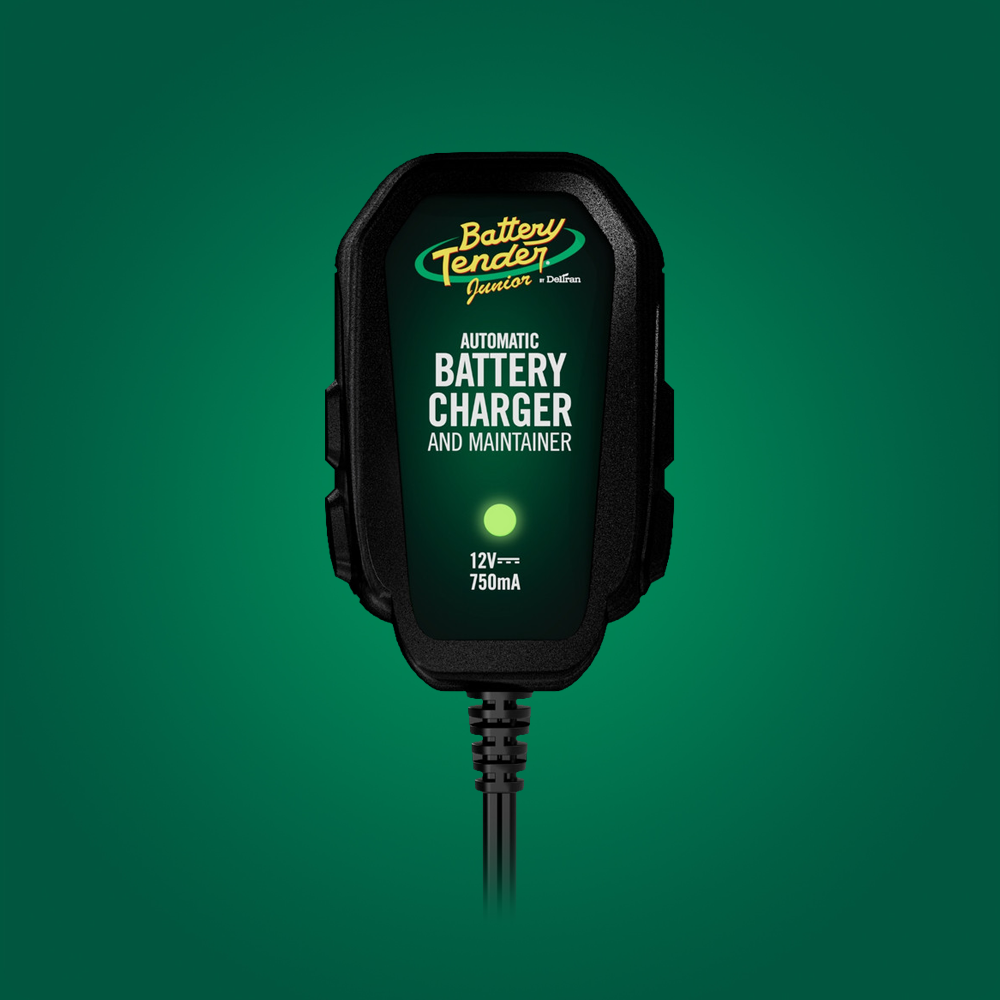
La protección más eficaz contra el frío es mantener la batería completamente cargada. La tecnología de carga inteligente de Battery Tender previene la sulfatación y mantiene una carga óptima sin sobrecargarla.
Nuestros cargadores controlados por microprocesador automáticamente:
- Detectan el voltaje y la química de la batería
- Suministran la corriente de carga óptima
- Cambian al modo flotante cuando la carga está completa
- Mantienen la carga indefinidamente sin dañar la batería
Modelos recomendados
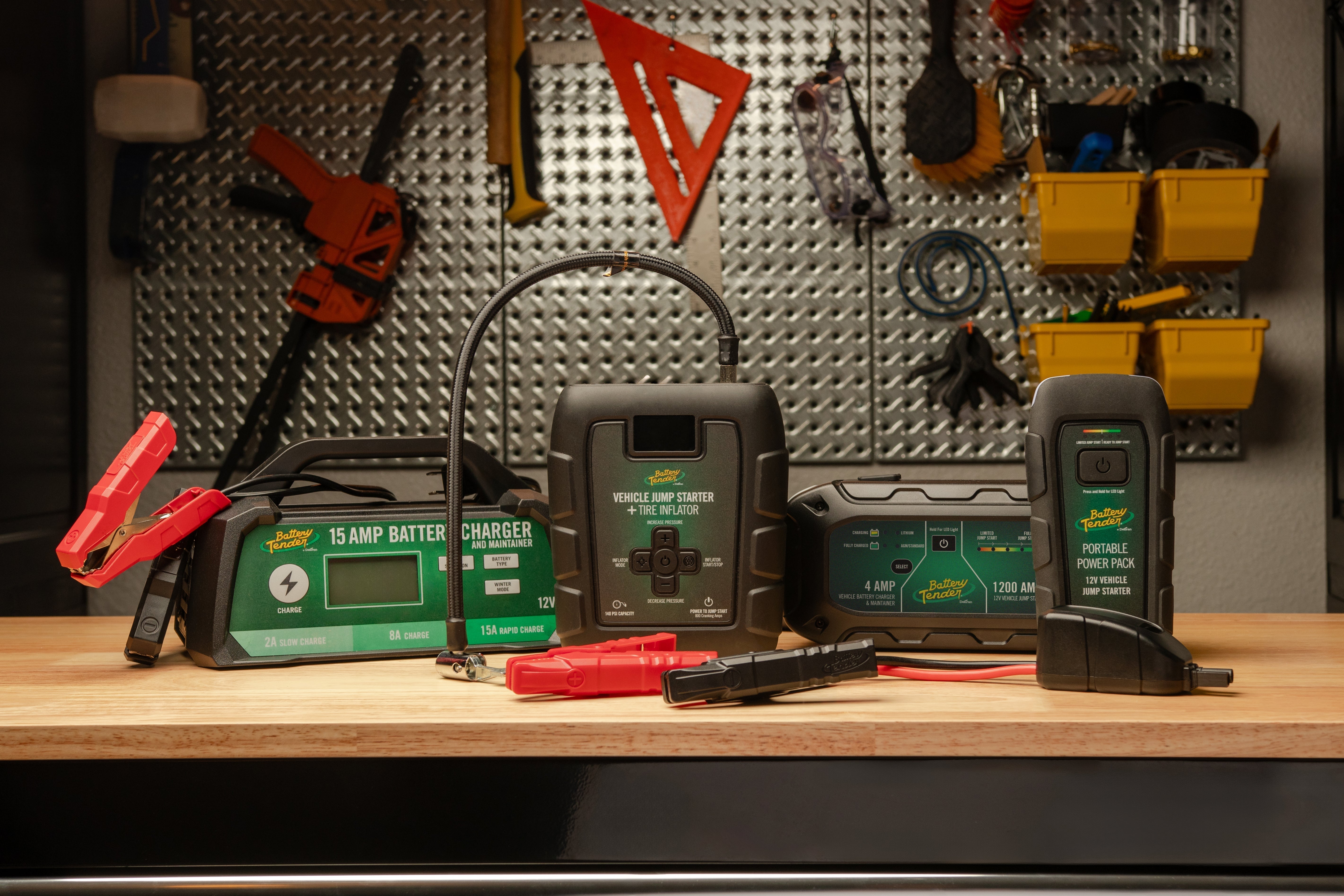
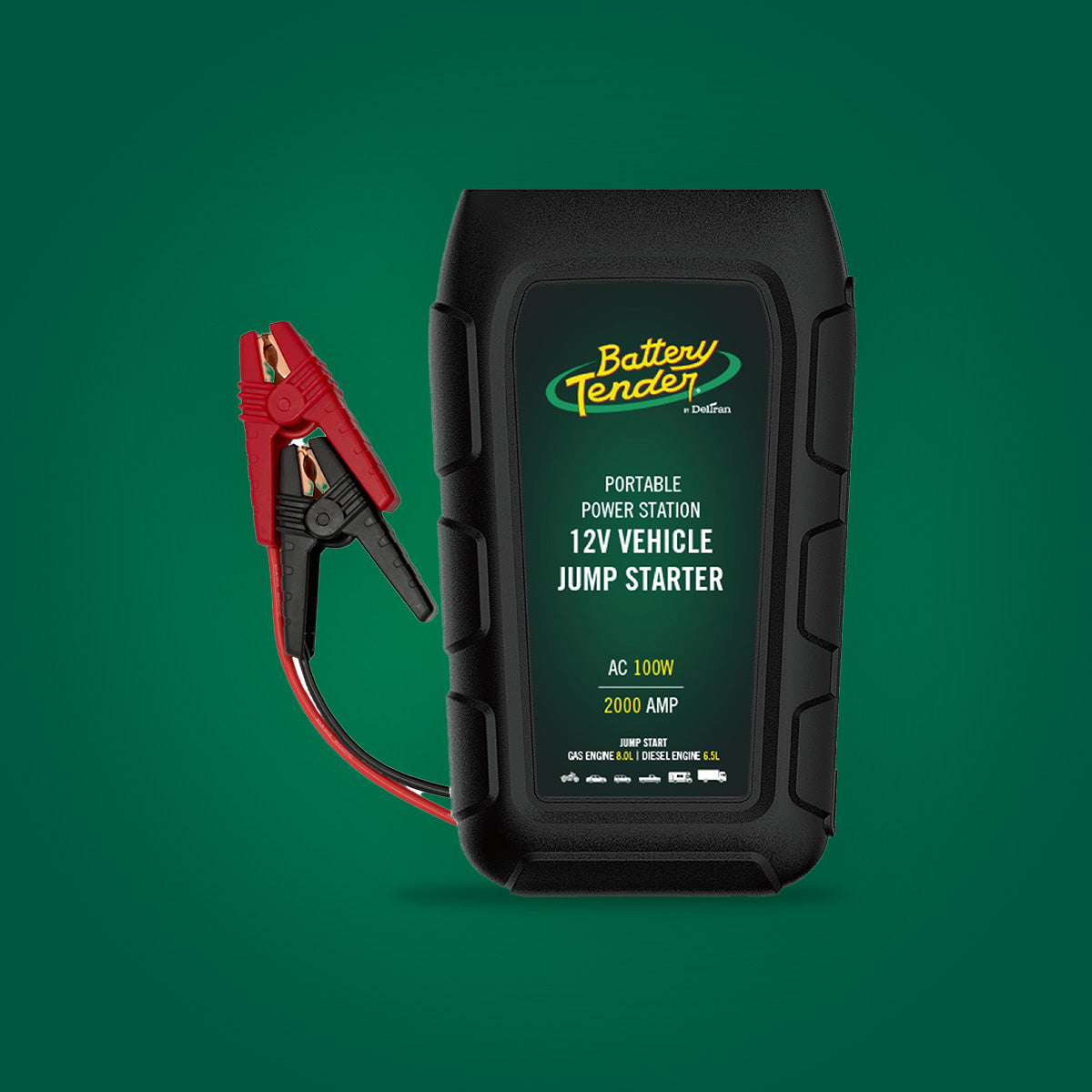
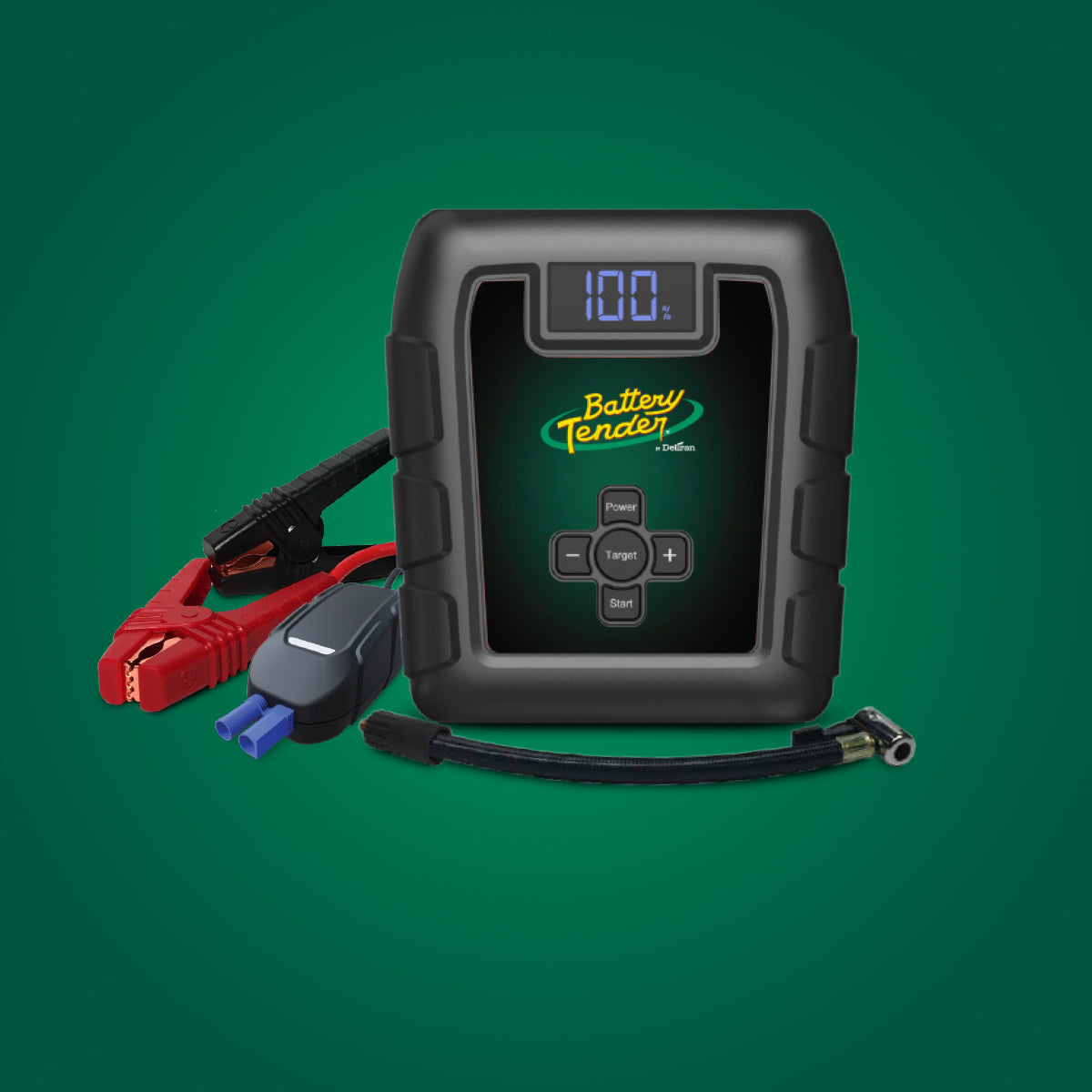
- Cargador de batería Charge N Start 4120 de 4 amperios y arrancador de emergencia de 1200 amperios — La solución de energía 2 en 1 definitiva que combina la tecnología de carga de 4 amperios con la potencia de arranque de emergencia de 1200 amperios en una unidad portátil.
- Cargador de batería Power Tender® seleccionable de 8/2 amperios para 12V — Cargador seleccionable de 8 o 2 amperios para carga rápida y mantenimiento a largo plazo, con fuente de alimentación incorporada de 6 amperios para mantener el voltaje del sistema durante el diagnóstico.
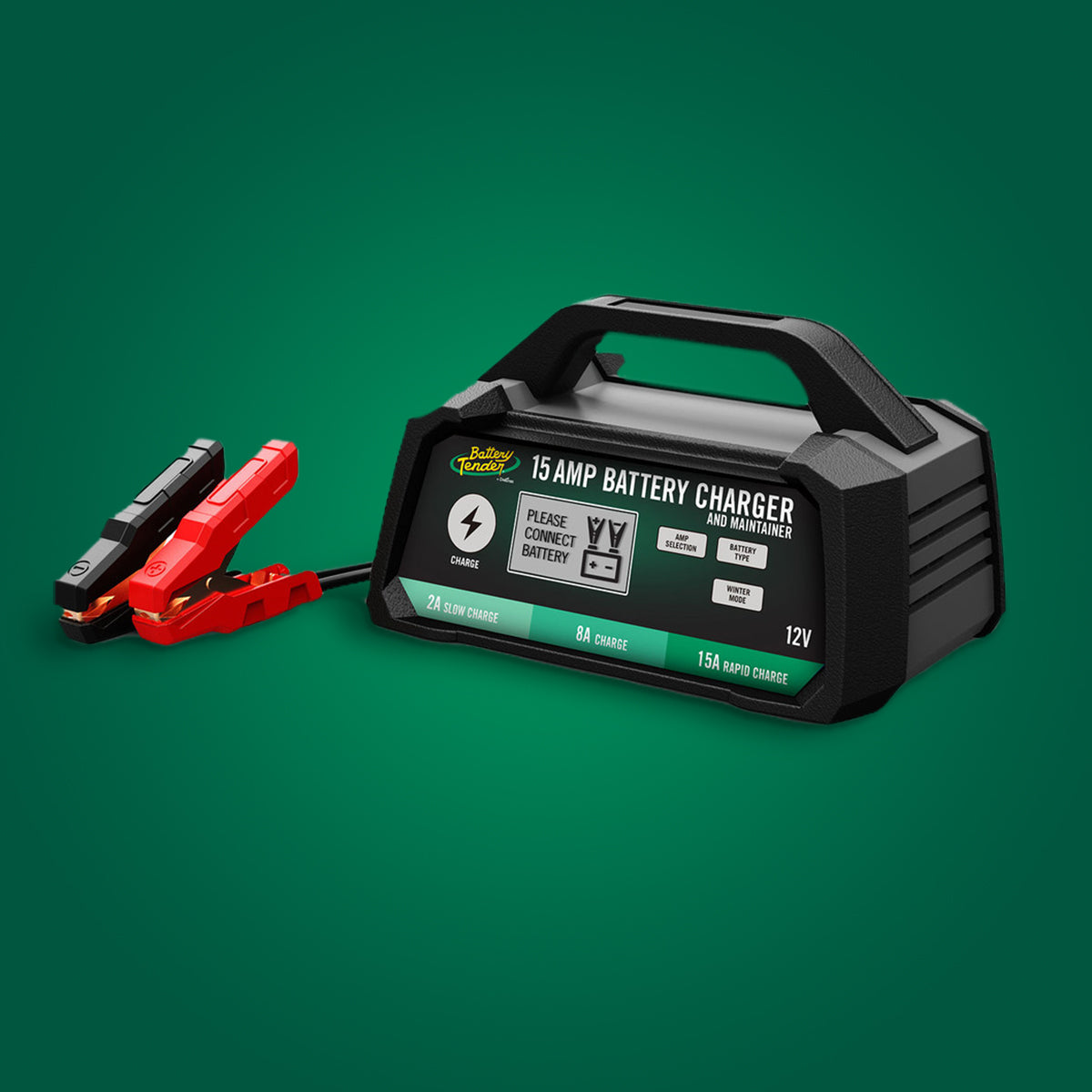
- Cargador de batería Power Tender® seleccionable de 15/8/2 amperios para 12V — Potente y versátil con tres velocidades de carga seleccionables (15/8/2 amperios) para baterías de cualquier tamaño, desde cortacéspedes hasta vehículos recreativos, con pantalla LCD para monitoreo en tiempo real.
Mantenga los terminales limpios
Los terminales corroídos aumentan la resistencia, reduciendo la potencia de arranque efectiva. Limpie los terminales mensualmente durante el invierno utilizando:
- Solución de bicarbonato de sodio y agua (proporción 1:1)
- Cepillo para terminales de alambre
- Grasa dieléctrica o protector de terminales después de la limpieza
Considere el calentamiento de la batería
Para climas fríos extremos, las opciones de calentamiento de la batería incluyen:
- Mantas para batería: Calentadores envolventes que mantienen la temperatura por encima del punto de congelación.
- Calentadores de bloque de motor: Reducen la carga de arranque, ayudando indirectamente a la batería.
- Almacenamiento en garaje: Incluso los garajes sin calefacción moderan las temperaturas extremas.
Supervisar la edad de la batería
Reemplace las baterías de forma proactiva según su edad:
- 0-3 años: Poca preocupación con el mantenimiento adecuado
- 4-5 años: Realice pruebas anualmente, reemplace si la capacidad disminuye
- Más de 6 años: Alto riesgo de falla, reemplace antes del invierno
El mantenimiento con Battery Tender extiende la vida útil de la batería de 2 a 3 años más allá de la vida útil típica, pero todas las baterías eventualmente se desgastan.
Preguntas frecuentes
¿Puedo evitar que la batería falle a -20°F?
Sí, con la preparación adecuada. Mantenga la carga completa utilizando los cargadores inteligentes Battery Tender, asegúrese de que los terminales estén limpios y ajustados, use la viscosidad de aceite de motor adecuada y considere soluciones de calentamiento de batería para climas extremos.
¿Por qué falló mi batería a pesar de tener solo 2 años?
Las baterías nuevas pueden fallar por:
- Defectos de fabricación (poco comunes pero posibles)
- Subcarga crónica por conducción de trayectos cortos
- Drenajes eléctricos parásitos que agotan la batería
- Daños por calor en verano que debilitan la estructura interna
- Carga incorrecta por alternador defectuoso
¿Las baterías AGM rinden mejor en clima frío?
Las baterías AGM generalmente rinden un poco mejor que las baterías de plomo-ácido inundadas en frío, principalmente debido a una menor resistencia interna. Sin embargo, todas las baterías de plomo-ácido pierden capacidad en frío. La principal ventaja de las AGM es una recarga más rápida, lo que permite una recuperación más pronta después de arranques en frío.
¿Cuánto tiempo debo dejar mi coche al ralentí para recargar la batería?
El ralentí es ineficiente para recargar. Su alternador produce la máxima potencia solo cuando aumentan las RPM del motor. Conduzca durante 20 a 30 minutos a velocidades de autopista para una carga efectiva, o use un cargador Battery Tender para una recarga completa y controlada.
¿Pueden los cargadores Battery Tender restaurar una batería que no arranca en clima frío?
Si la batería tiene capacidad restante, sí. Los cargadores inteligentes Battery Tender a menudo pueden restaurar las baterías a plena carga, permitiendo el arranque en clima frío. Sin embargo, las baterías con daños internos (carcasa agrietada, celdas muertas, sulfatación severa) no se pueden restaurar y requieren reemplazo.
Conclusión
El clima frío no mata las baterías al azar, sino que expone las debilidades creadas por el calor del verano, la carga inadecuada y el envejecimiento natural. Comprender la electroquímica detrás de las fallas en clima frío le permite tomar medidas preventivas.
La tecnología de carga de mantenimiento de Battery Tender aborda directamente las causas principales de las fallas de la batería en invierno: sulfatación, carga incompleta y pérdida de capacidad. Desde que fuimos pioneros en los cargadores inteligentes para consumidores en 1989, hemos prevenido millones de fallas de baterías en clima frío a través del mantenimiento adecuado.
No espere a un fracaso en una fría mañana. Conecte un cargador inteligente Battery Tender hoy mismo y elimine la ansiedad por la batería en invierno.
Explore nuestra línea completa de cargadores de batería y accesorios.