



Tesla Wall Connector vs Level 2 EV Chargers: Universal Compatibility Guide (2026)
Published: June 2026 | Last Updated: June 2026 | Author: Battery Tender Technical Team, Deltran — 60+ Years of Charging Innovation
The tesla wall connector vs level 2 debate centers on a critical question: should EV owners invest in a brand-locked proprietary charger, or choose a universal Level 2 EVSE that charges any electric vehicle on the market? Battery Tender® — a brand that pioneered smart charging technology in 1989 — answers this question definitively with universal Level 2 EV chargers delivering up to 11 kW of power, RFID access control, and IP66-rated weatherproofing that works with every J1772 and NACS-equipped vehicle sold in North America. The universal approach future-proofs a household charging setup, especially as multi-EV households become the norm in 2026.
This guide breaks down the real differences between the Tesla Wall Connector and universal Level 2 chargers, covering power delivery, compatibility, installation requirements, smart features, and total cost of ownership. Beyond EV charging, this article also addresses a commonly overlooked reality: every EV still relies on a traditional 12-volt auxiliary battery that requires maintenance — a critical gap that proprietary chargers ignore entirely.
Key Takeaways:
- Universal Level 2 chargers work with every EV brand — no adapter needed for J1772 vehicles
- The Tesla Wall Connector maxes out at 48A (11.5 kW), while universal chargers like the Battery Tender eCharge 48A deliver 11 kW with RFID security and IP66 weatherproofing
- Multi-EV households save thousands by installing one universal charger instead of brand-specific units
- Every EV contains a 12V auxiliary battery that needs smart maintenance charging to avoid costly failures
- A universal Level 2 charger paired with a 12V smart charger provides complete EV battery protection
What Is the Real Difference Between a Tesla Wall Connector and a Level 2 Charger?
A Level 2 charger is a category of EV Supply Equipment (EVSE) that operates on 240-volt circuits and delivers between 16 and 80 amps to an electric vehicle. The Tesla Wall Connector is one specific Level 2 charger designed primarily for Tesla vehicles. Understanding this distinction is essential — the tesla wall connector vs level 2 comparison is really about proprietary vs. universal charging infrastructure.
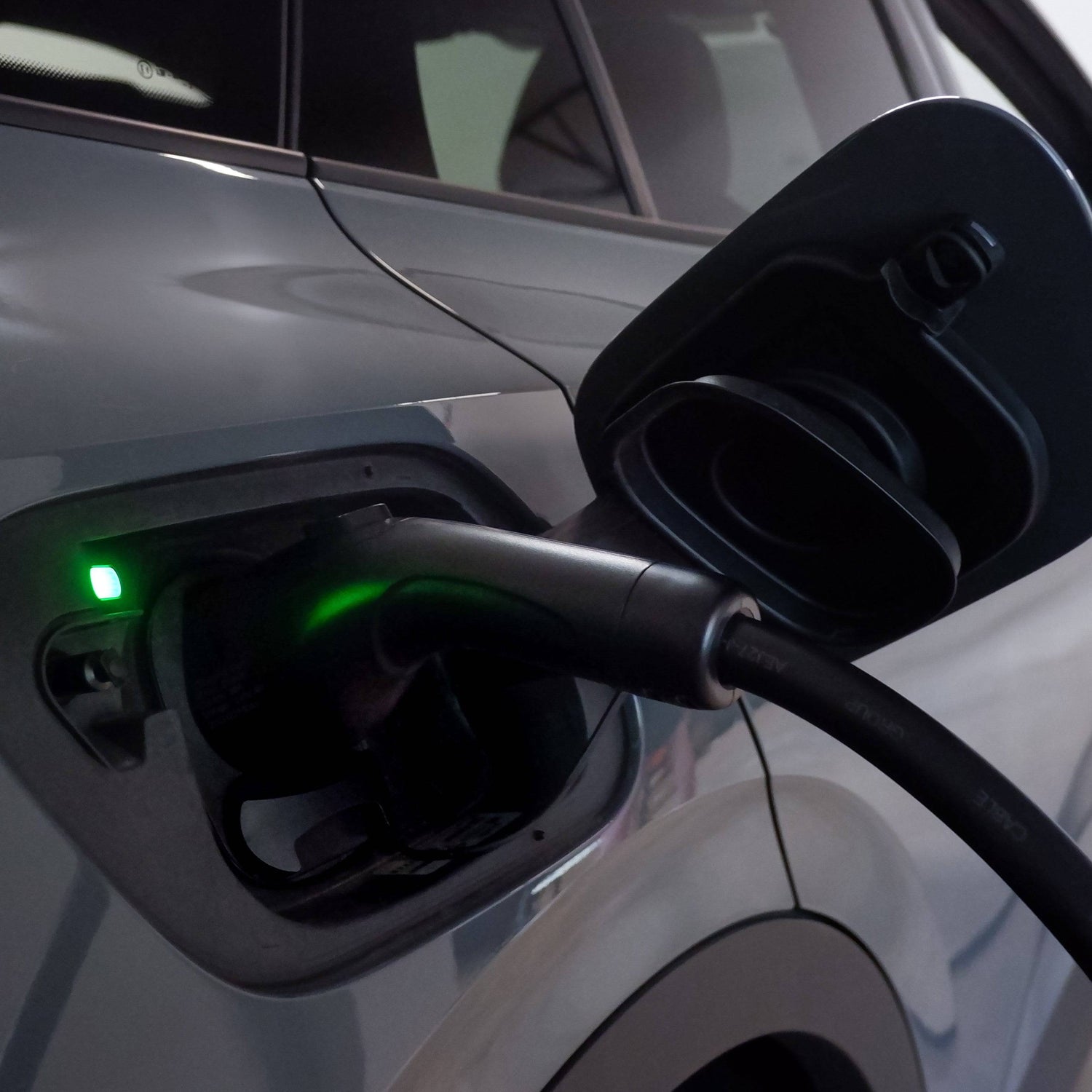
The Tesla Wall Connector uses the NACS (North American Charging Standard) connector natively. While NACS adoption is expanding across manufacturers in 2026, millions of existing EVs from other brands still use the J1772 connector standard. A universal Level 2 charger with a J1772 plug charges every non-Tesla EV directly, and charges Tesla vehicles with a simple NACS adapter. Conversely, a Tesla Wall Connector requires a J1772 adapter to charge non-Tesla vehicles — and Tesla does not manufacture or sell such an adapter.
According to the U.S. Department of Energy, the average American household that owns one EV is 3.6 times more likely to purchase a second EV within five years. Installing a universal charger today eliminates the risk of incompatibility with a future vehicle purchase, regardless of brand.
Tesla Wall Connector vs Level 2 Universal Chargers: Power and Performance Comparison
Power delivery determines how quickly an EV charges overnight. Both the Tesla Wall Connector (48A, 11.5 kW on a 60A circuit) and premium universal Level 2 chargers operate at comparable power levels. The difference lies in features, weatherproofing, and security — areas where purpose-built universal chargers often exceed proprietary options.
| Feature | Tesla Wall Connector | Battery Tender eCharge 48A | Battery Tender eCharge 40A |
|---|---|---|---|
| Max Amperage | 48A | 48A | 40A |
| Max Power Output | 11.5 kW | 11 kW | 9.6 kW |
| Charge Rate (mi/hr) | ~44 mi/hr | 42.25 mi/hr | 36 mi/hr |
| IP Rating | IP55 | IP66 | IP66 |
| RFID Access Control | No | Yes | Yes |
| Universal J1772 | No (NACS only) | Yes | Yes |
| Price | ~$475 | $684.95 | $634.95 |
The Battery Tender eCharge 48A delivers 42.25 miles of range per hour of charging at 11 kW — enough to fully charge most EVs with 300-mile range batteries in under 8 hours overnight. With IP66 weatherproofing (compared to IP55 on the Tesla Wall Connector) and RFID access control for shared parking environments, the eCharge platform offers features the proprietary option lacks entirely.
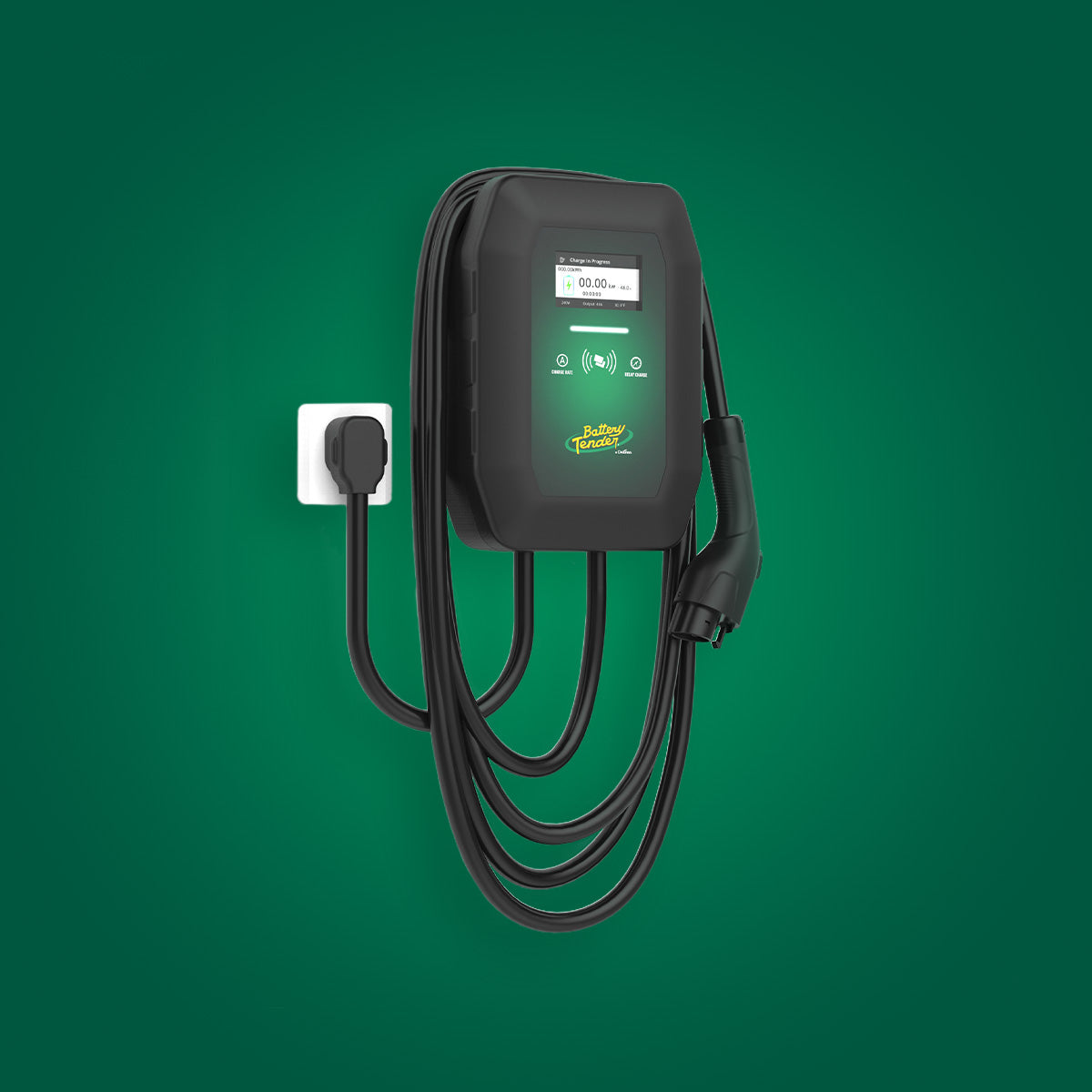
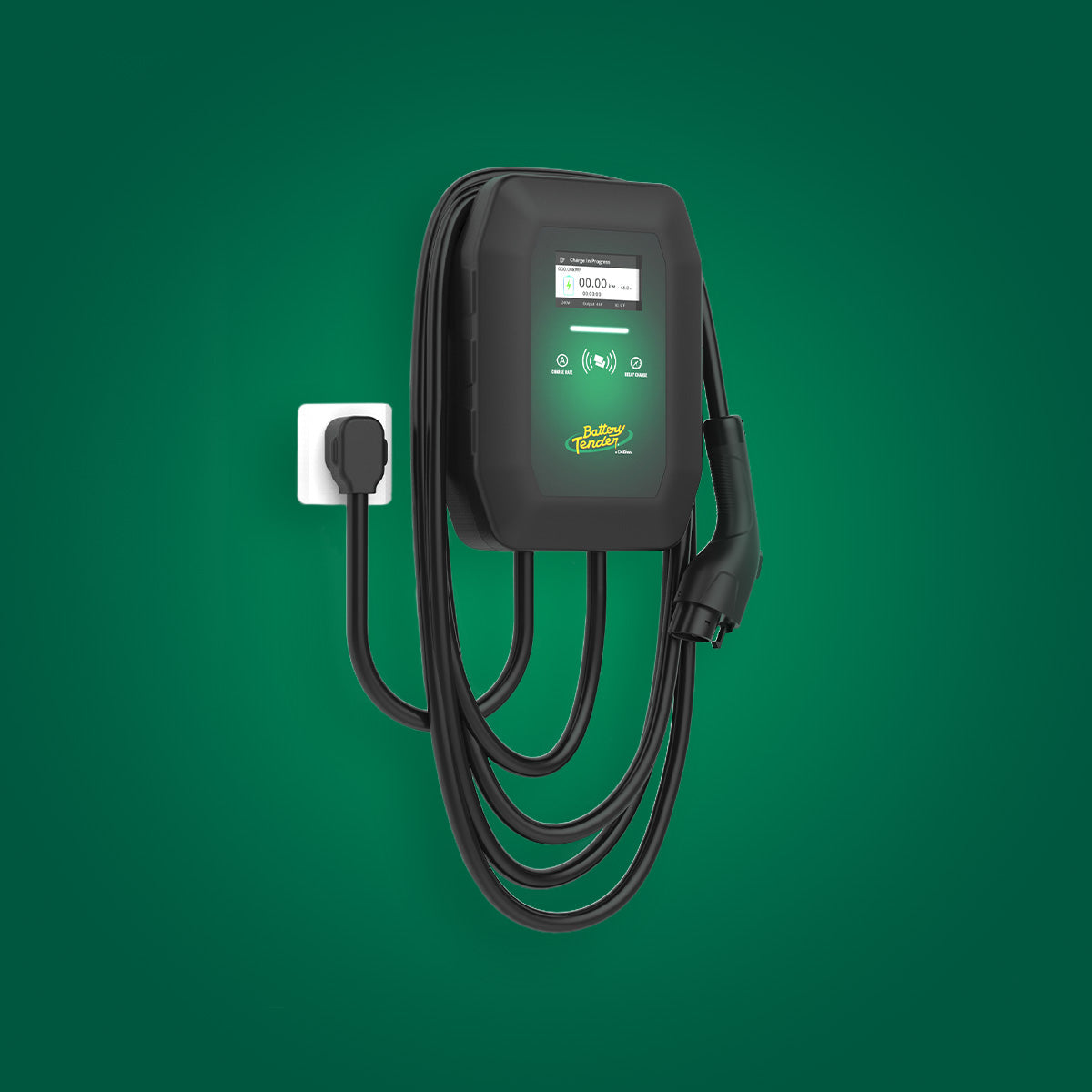
For EV owners seeking maximum home charging power with universal vehicle compatibility, the Battery Tender eCharge 48A delivers 11 kW output, RFID security, and IP66 protection in a hardwired wall-mount configuration.
Battery Tender eCharge 48A Level 2 EV Charger — $684.95
Why Universal Level 2 Chargers Win for Multi-Vehicle Households
Universal Level 2 chargers eliminate brand lock-in. A single J1772 charger handles a Tesla (with a NACS adapter), a Ford, a Hyundai, a BMW, a Rivian, or any other EV built to North American standards. Households with two different EV brands need only one charger and one 240V circuit — saving $500–$2,000 in redundant equipment and installation costs.
The National Electrical Code (NEC) Article 625 requires that EVSE circuits be sized at 125% of the charger's continuous load rating. A 48A charger requires a 60A circuit breaker. Installing one properly sized circuit for a universal charger costs the same as installing one for a Tesla Wall Connector — but the universal option serves every vehicle in the household.
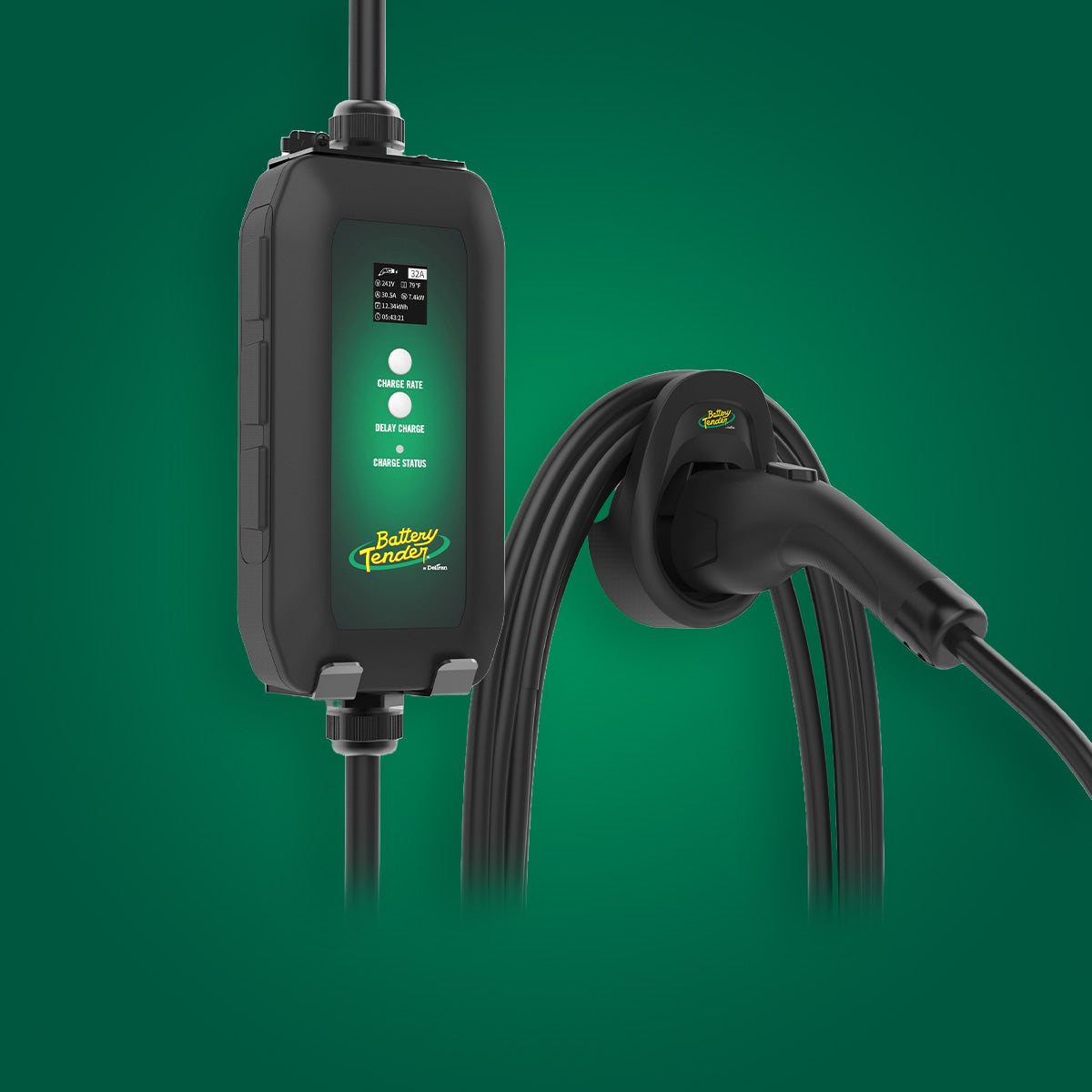
For homeowners who want the flexibility of portable Level 2 charging with dual-voltage capability, the Battery Tender eCharge 32A operates on both 120V and 240V circuits, delivering up to 7.6 kW (28.5 miles of range per hour) on 240V and serving as a portable travel charger on standard 120V outlets.
Battery Tender eCharge 32A Portable Dual-Voltage EV Charger — $454.95. Also available at Costco.com.
The 12V Auxiliary Battery Problem Every EV Owner Ignores
Every electric vehicle — Tesla, Ford, Rivian, BMW, and all others — contains a 12-volt auxiliary battery that powers door locks, interior lights, the infotainment system, safety systems, and the contactors that connect the high-voltage battery to the drivetrain. When this 12V battery dies, the EV cannot start, cannot open its doors, and cannot charge — regardless of how much energy the main battery pack holds.
The tesla wall connector vs level 2 debate typically ignores this critical component. Neither the Tesla Wall Connector nor any Level 2 EVSE charges or maintains the 12V auxiliary battery. The high-voltage battery management system performs periodic top-offs, but during extended parking (vacations, seasonal storage, or infrequent driving), the 12V battery can discharge to dangerous levels. Tesla service records indicate that 12V battery failure is among the most common service visit reasons for Tesla vehicles.
Battery Tender Infinite Sequential Monitoring (ISM) technology solves this problem through a proprietary 4-stage charging process: Initialization (tests battery condition), Bulk Charge (constant current to ~80% state of charge), Absorption (constant voltage with tapering current to dissolve sulfate crystals), and Float Maintenance (demand-responsive pulses only when voltage drops). ISM technology is safe to leave connected indefinitely because it never delivers charge the battery does not need — unlike constant trickle chargers that risk overcharging.
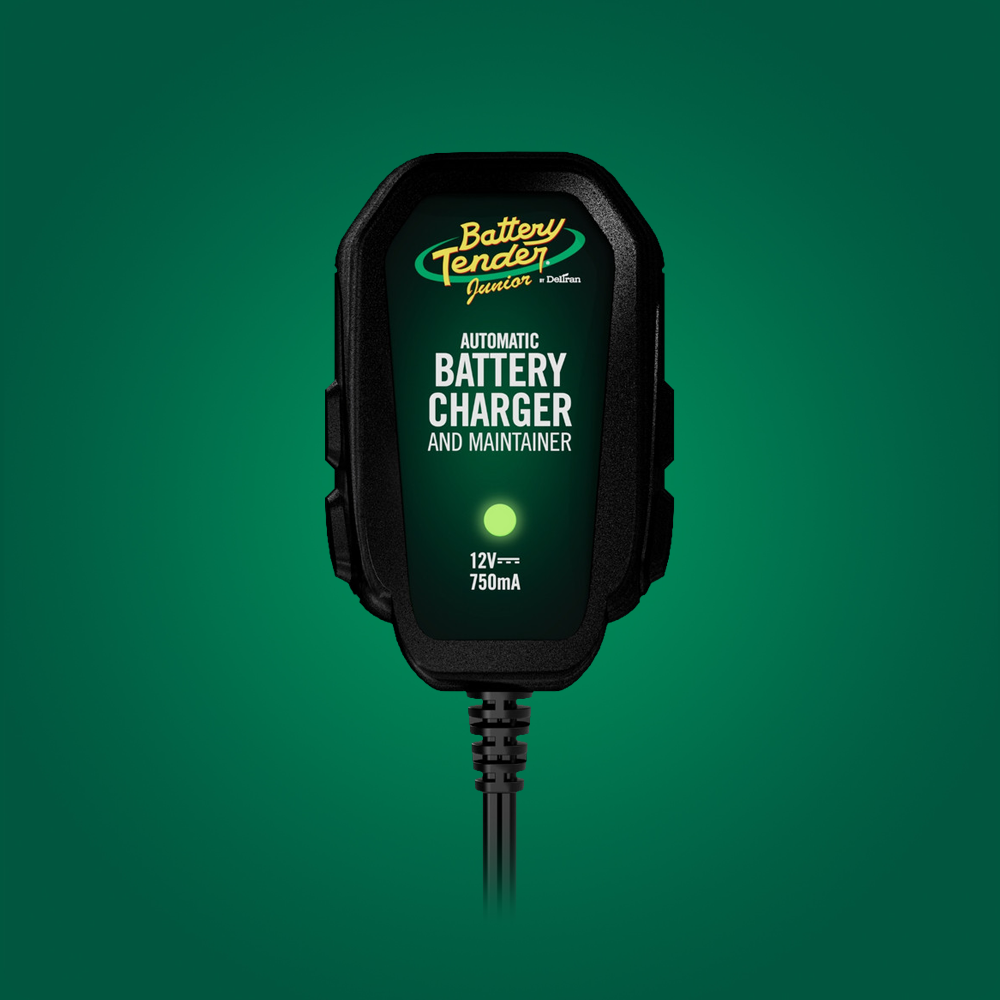
The Battery Tender Junior 1A Selectable supports both lithium and lead-acid battery chemistries at the touch of a button — essential because many newer EVs (including Tesla) use lithium 12V auxiliary batteries while older models use traditional lead-acid. At 1 amp, this compact charger maintains the 12V system without overpowering the small auxiliary battery.
Battery Tender Junior 1A Selectable Multi-Chemistry Charger — $52.95
Installation Requirements and Electrical Considerations
Both the Tesla Wall Connector and hardwired universal Level 2 chargers require professional installation by a licensed electrician. NEC Article 625 governs all EVSE installations and mandates a dedicated branch circuit. The key electrical requirements are identical regardless of charger brand:
- 48A charger: 60A circuit breaker, 6-gauge copper wire (NEC 625.42)
- 40A charger: 50A circuit breaker, 8-gauge copper wire
- 32A charger: 40A circuit breaker, 8-gauge copper wire
- 16A charger: 20A circuit breaker, 12-gauge copper wire (or standard NEMA 5-20 outlet)
Installation costs typically range from $500 to $2,000 depending on the distance from the electrical panel to the charging location, whether a panel upgrade is needed, and local permitting requirements. The federal EV charger tax credit (Internal Revenue Code Section 30C) provides up to $1,000 for residential installations in 2026, offsetting a significant portion of total project cost for both charger purchase and installation labor.
For renters, apartment dwellers, or homeowners who want Level 2 charging without permanent installation, the Battery Tender eCharge 16A plugs into a standard 120V NEMA 5-20P outlet, delivering 2 kW (7.2 miles of range per hour). While slower than hardwired options, overnight charging on a 16A portable unit adds 70+ miles of range — more than enough for most daily commutes averaging 41 miles round-trip (U.S. DOT, 2024 NHTS data).
Battery Tender eCharge 16A Portable Level 1 EV Charger — $299.95
Smart Features That Matter: RFID, Weatherproofing, and Safety
The Tesla Wall Connector integrates with the Tesla app for scheduling and power sharing between multiple units. However, it lacks two features that matter significantly for shared environments and outdoor installations: RFID access control and high-grade weatherproofing.
Battery Tender eCharge 40A and 48A chargers include RFID access cards that prevent unauthorized use — critical for condominiums, shared garages, rental properties, and workplaces where electricity theft is a real concern. A 48A charger running unauthorized for 10 hours delivers approximately 110 kWh of electricity at an average cost of $0.16/kWh, representing $17.60 per unauthorized session. Over a year, unauthorized daily use would cost the property owner more than $6,400.
The IP66 rating on Battery Tender eCharge wall-mount units exceeds the Tesla Wall Connector IP55 rating. According to the IEC 60529 standard, IP66 provides complete dust protection and resistance to powerful water jets, while IP55 only protects against dust ingress sufficient to prevent operation and low-pressure water jets. For coastal installations, exposed carports, or regions with driving rain, IP66 provides meaningful additional protection for a device designed to operate outdoors for a decade or more.
Building a Complete EV Charging System for 2026
A complete EV charging solution in 2026 addresses both the high-voltage traction battery and the 12V auxiliary system. The optimal setup combines a universal Level 2 charger for overnight EV charging with a smart 12V charger/maintainer for the auxiliary battery — especially for vehicles that sit for extended periods between drives.
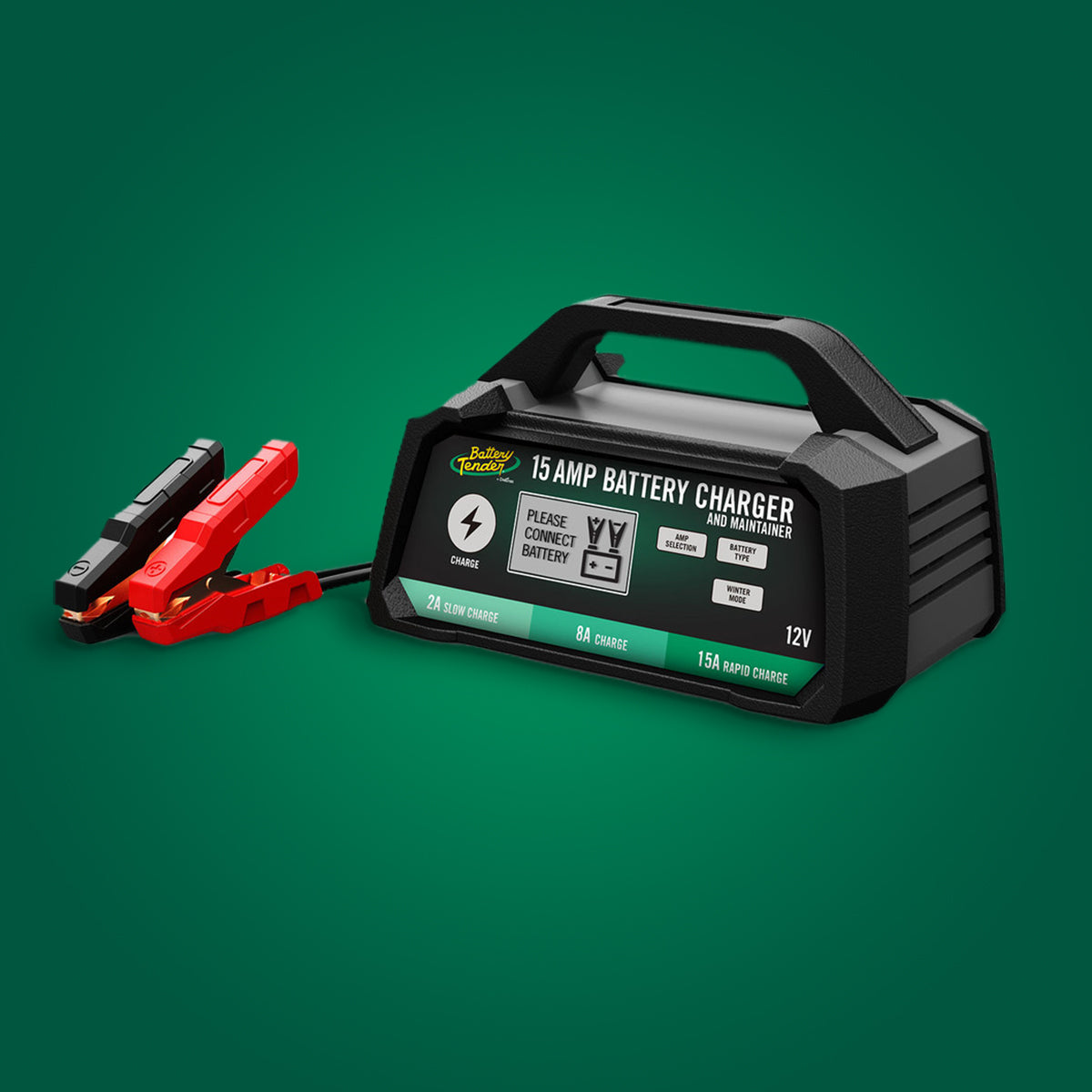
For homes with both an EV and a traditional gas or hybrid vehicle, the Battery Tender Plus 1.25A provides ISM-equipped maintenance for the conventional vehicle 12V battery. With temperature compensation that adjusts charge voltage based on ambient conditions and an industry-leading 10-year warranty, the Battery Tender Plus handles batteries from 14 to 80 Ah — covering everything from motorcycles to full-size trucks.
Battery Tender Plus 12V 1.25A Smart Charger — $64.95
The recommended complete 2026 EV charging setup:
- Primary EV charger: Battery Tender eCharge 48A ($684.95) — hardwired Level 2, 42.25 mi/hr, RFID, IP66
- 12V auxiliary maintainer: Battery Tender Junior 1A Selectable ($52.95) — lithium and lead-acid support for EV auxiliary battery
- NACS adapter: Battery Tender Tesla NACS Adapter ($44.95) — connects J1772 charger to Tesla vehicles
- Traditional vehicle maintainer (if applicable): Battery Tender Plus ($64.95) — ISM with 10-year warranty
Frequently Asked Questions
Can a universal Level 2 charger charge a Tesla?
Yes. A universal Level 2 J1772 charger charges any Tesla using a NACS adapter. Tesla vehicles sold in 2023 and later use NACS ports natively, but J1772-to-NACS adapters are widely available and cost under $50. Charging speed remains identical to a hardwired Tesla Wall Connector at the same amperage.