



El invierno es la estación más cruel para las baterías de los coches. Las bajas temperaturas reducen los amperios de arranque disponibles precisamente cuando el motor más los necesita, y el ciclo repetido de arranque en frío, combinado con viajes más cortos que no pueden reponer completamente la carga que consumió el motor de arranque, agota progresivamente la capacidad de la batería a lo largo de los meses. Cuando llega la primavera, muchas baterías que sobrevivieron al invierno funcionan al 60-70% de su capacidad original y están a un día caluroso de verano de fallar por completo. El calor es la principal causa de fallo de las baterías, y una batería debilitada por el invierno que entra en un verano de Florida o un julio de Texas rara vez sobrevive hasta el otoño.
La revisión de la batería en primavera es su oportunidad de detectar y abordar este daño antes de que le afecte. Battery Tender® ha estado ayudando a los propietarios de vehículos a prolongar la vida útil de sus baterías durante más de 60 años, y esta guía le explica un protocolo completo de inspección y recuperación de la batería después del invierno.
Por qué el invierno daña las baterías de los coches
El frío reduce la potencia de arranque disponible
La capacidad de las baterías de plomo-ácido depende de la temperatura. A 32°F (0°C), una batería completamente cargada entrega aproximadamente el 80% de sus amperios de arranque en frío nominales. A 0°F (-18°C), eso se reduce a alrededor del 40%. Esto significa que una batería más antigua con capacidad reducida debido a la edad o la sulfatación puede fallar por completo en frío extremo, aunque pareciera funcional en los meses más cálidos.
Los viajes cortos agravan el problema
Los patrones de conducción invernales a menudo implican más viajes cortos: raspar hielo, calentar el coche, llevar a los niños al colegio, paradas breves para comprar. Cada arranque consume una ráfaga significativa de corriente, y el alternador necesita 20-30 minutos de conducción para reponerla. Múltiples viajes cortos durante semanas agotan gradualmente una batería a la que nunca se le da tiempo para recargarse por completo. Para la primavera, la batería puede estar crónicamente descargada.
Sulfatación por bajo estado de carga
Una batería que pasa mucho tiempo por debajo de la carga completa sufre una sulfatación progresiva: se forman cristales endurecidos de sulfato de plomo en las placas y reducen la superficie activa. Esto es acumulativo y parcialmente irreversible. Una batería que pasó el invierno funcionando por debajo del 75% de estado de carga tiene una capacidad notablemente menor que en octubre, y ningún cargador puede deshacer completamente la sulfatación severa.
Lista de verificación de la inspección de la batería en primavera
Paso 1: Inspección visual
Antes de cualquier prueba eléctrica, inspeccione la batería físicamente:
- Estado de la carcasa: Busque grietas, hinchazón o abultamientos; todos indican una falla interna y requieren un reemplazo inmediato.
- Estado de los terminales: La corrosión blanca o verdosa en los terminales aumenta la resistencia y causa problemas de arranque incluso con la batería cargada.
- Nivel de electrolito (solo baterías inundadas): Si la batería tiene tapas extraíbles, compruebe que el electrolito cubra las placas; un nivel bajo de electrolito indica una gasificación excesiva, probablemente por sobrecarga.
- Seguridad de la sujeción: La vibración de una batería suelta acelera el daño interno de la placa; asegúrese de que el soporte de sujeción esté apretado.
Paso 2: Prueba de voltaje
Con el vehículo apagado y la batería reposada durante al menos dos horas después de cualquier conducción reciente, mida el voltaje con un multímetro digital en los terminales de la batería:
| Voltaje en reposo | Estado de carga de la batería |
|---|---|
| 12.6V o superior | 100% — completamente cargada |
| 12.4V | 75% — necesita carga |
| 12.2V | 50% — significativamente descargada |
| 12.0V | 25% — severamente descargada |
| Por debajo de 11.8V | Casi muerta o dañada internamente |
Una batería que marca por debajo de 12.4V necesita cargarse antes de realizar más pruebas. Conecte un cargador inteligente y permita un ciclo de carga completo antes de volver a evaluar.
Paso 3: Carga completa a través de un cargador inteligente
Si la batería marca por debajo de 12.6V, conecte un cargador inteligente y deje que complete su ciclo ISM completo de 4 etapas: Inicialización, Bulk, Absorción y Flotación. Evalúe el estado de la batería solo después de una carga completa. Una batería con 12.2V parece fallida; la misma batería después de una carga adecuada puede pasar la prueba de carga perfectamente.
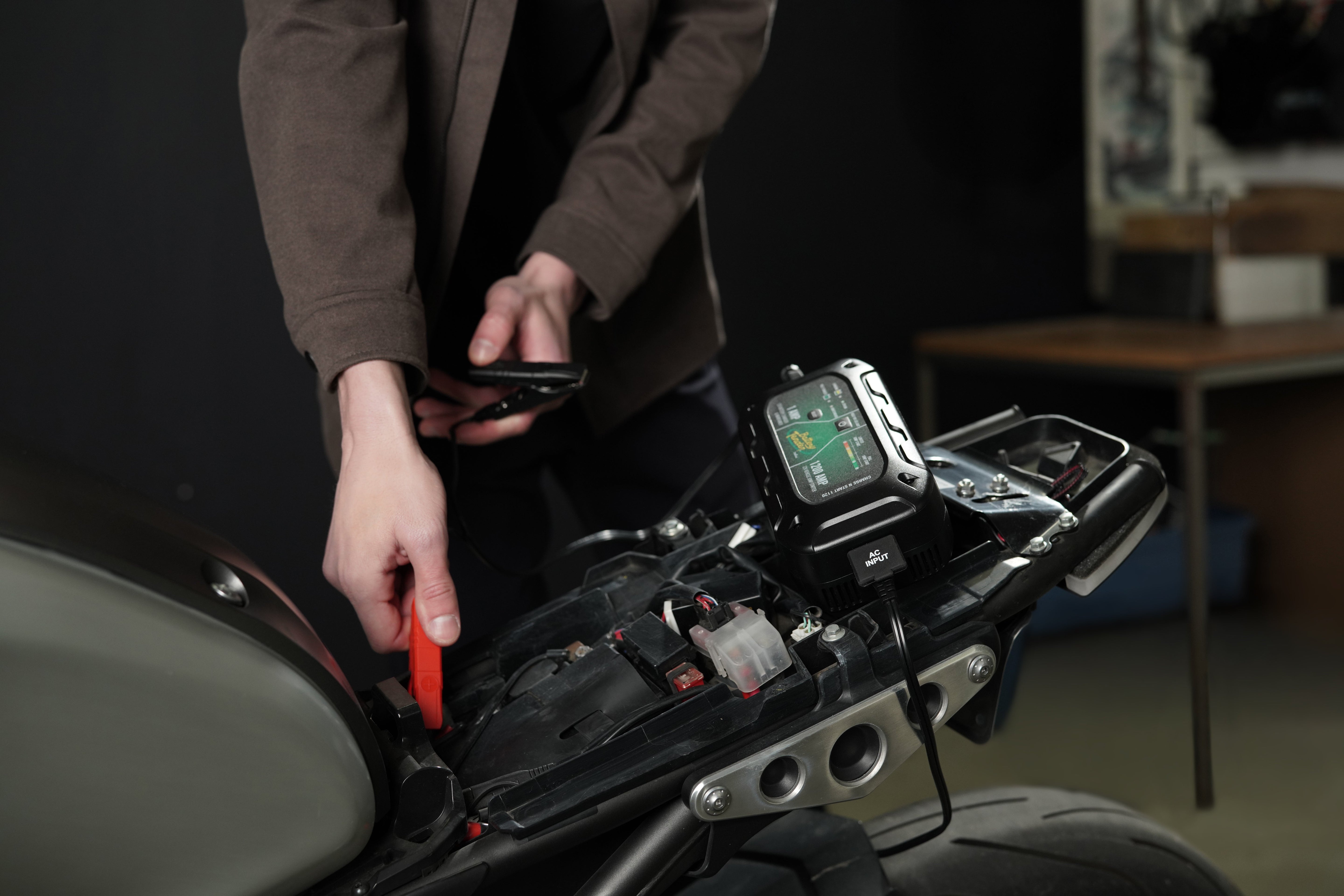
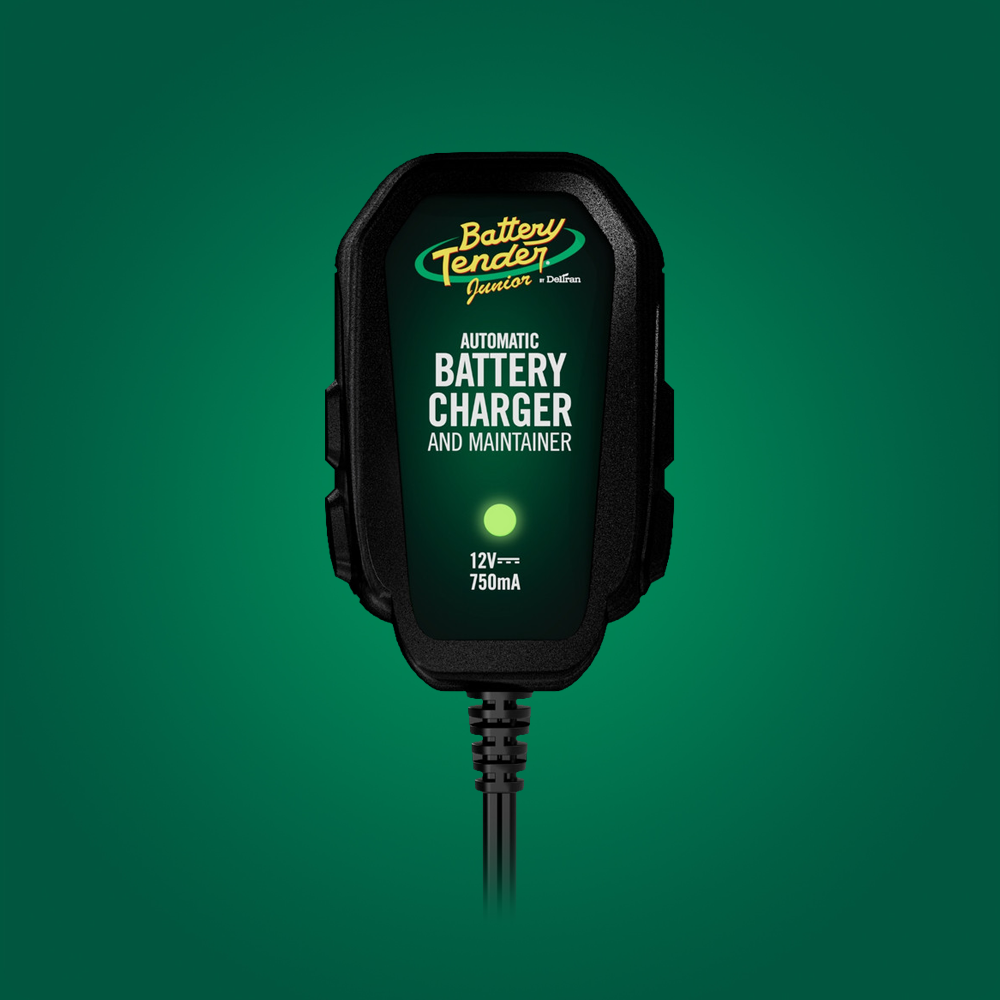
El cargador Battery Tender Plus de 1.25 AMP 12V (SKU: 021-0128) ofrece una carga completa de 4 etapas y luego mantiene la batería en modo de mantenimiento. Déjelo conectado durante la noche o durante un fin de semana para obtener los mejores resultados.
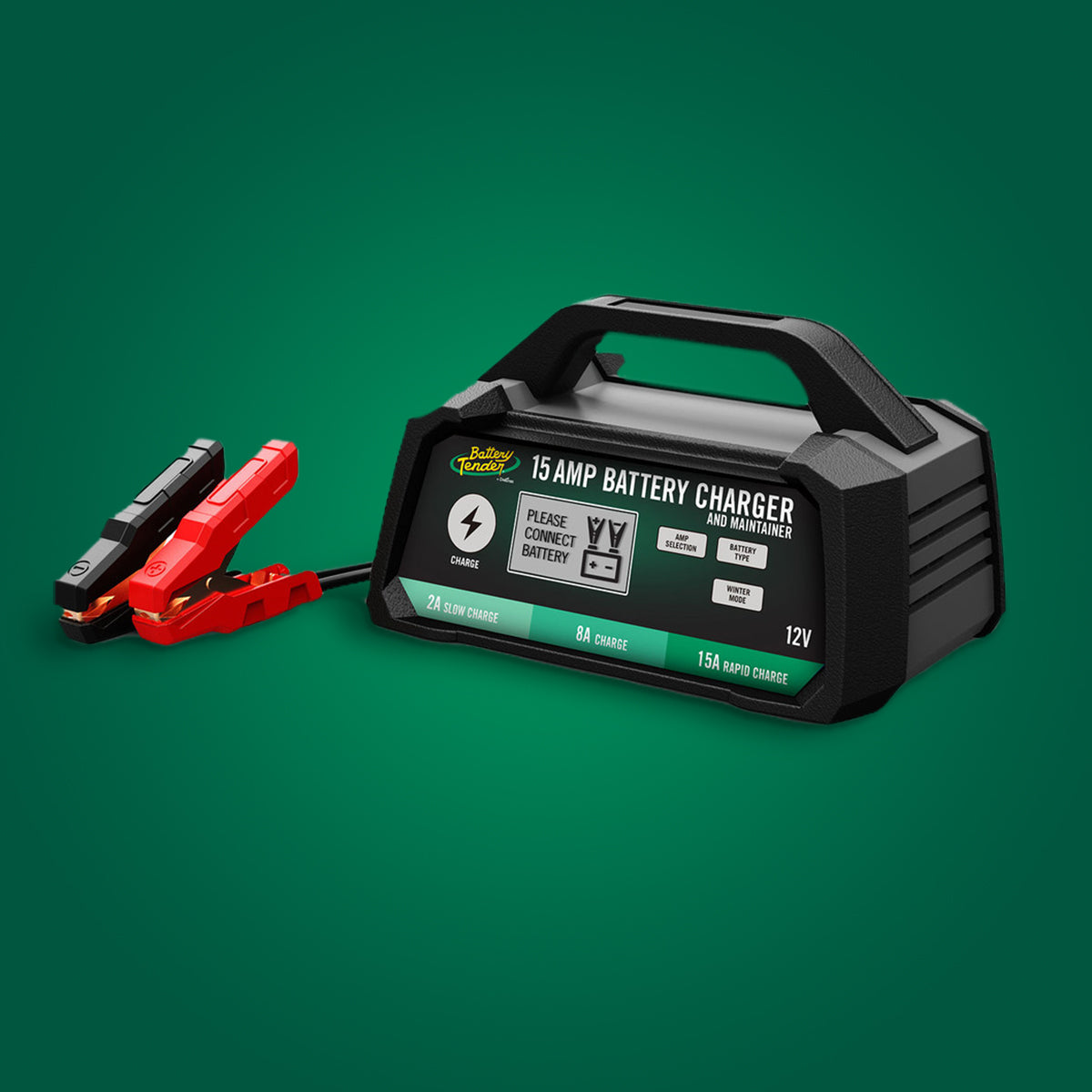
Para baterías que se han descargado severamente durante el invierno, el cargador seleccionable de 8 AMP / 2 AMP recarga más rápido e incluye un modo de recuperación para baterías que bajan demasiado como para aceptar una carga estándar.
Compre el Power Tender Selectable de 8 AMP / 2 AMP 12V (SKU: 022-1005-DL-WH).
Paso 4: Prueba de carga
Esta es la prueba más importante, y el voltaje por sí solo no puede sustituirla. Una batería puede marcar 12.6V en reposo y aún así fallar bajo la carga real de arrancar el motor. La prueba de carga aplica un consumo de corriente controlado, típicamente la mitad de la clasificación CCA de la batería, y mide cuánto cae el voltaje bajo esa carga. Una batería sana mantiene 9.6V o más bajo carga durante 10-15 segundos. Una que cae por debajo de 9.6V tiene una capacidad insuficiente para un arranque fiable y debe ser reemplazada.
La mayoría de las tiendas de autopartes ofrecen pruebas de carga gratuitas. Si prefiere probar en casa, un probador de carga de batería es una inversión que vale la pena de $40 a $60 para un hogar con varios vehículos.
Paso 5: Comprobación del sistema de carga
Una batería puede estar en perfectas condiciones y aún así fallar si el alternador no la recarga correctamente. Con el motor en marcha, mida el voltaje en los terminales de la batería. La lectura debe ser de 13.7–14.7V, esto indica que el alternador está cargando. Por debajo de 13.5V sugiere una condición de carga insuficiente; por encima de 14.8V sugiere sobrecarga. Cualquiera de estas condiciones daña la batería con el tiempo.
Cuándo reemplazar la batería
Reemplace la batería inmediatamente si se cumple alguna de las siguientes condiciones:
- La batería falla una prueba de carga después de un ciclo de carga completo.
- La batería tiene 5 o más años en un clima cálido, o más de 6 años en un clima moderado.
- La caja está agrietada, hinchada o tiene fugas.
- La batería marca menos de 10V después de la carga y no acepta una carga.
- El vehículo ha requerido un arranque con pinzas más de dos veces en la última temporada.
El reemplazo proactivo antes de que una batería falle por completo evita la inconveniencia de una batería muerta en el peor momento posible. Una batería de reemplazo de calidad cuesta $80-$180; una grúa y el servicio de asistencia en carretera de emergencia suelen costar $100-$250 antes de la propia batería.
Post-revisión: Preparación para el éxito del verano
Instale un cable con conector rápido
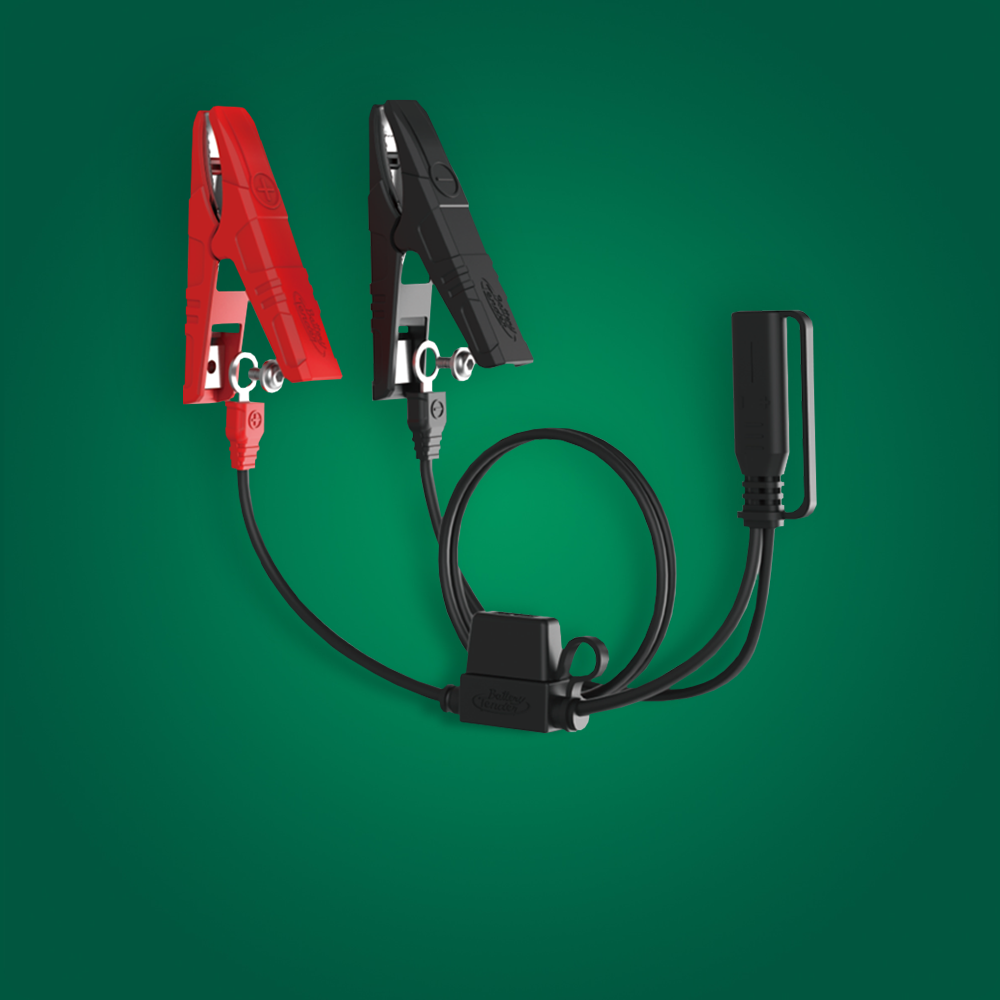
Un terminal de anillo instalado permanentemente y un cable con conector rápido facilitan la conexión de un cargador inteligente cada vez que el vehículo se detiene por más de unos pocos días. Esta instalación única de 10 minutos elimina la barrera de abrir el capó y conectar clips que impide que muchos conductores mantengan las baterías de forma constante.
El Combo de pinzas de cocodrilo y terminal de anillo con desconexión rápida (SKU: 081-0180) incluye ambos métodos de conexión en un solo accesorio.
Tenga un arrancador de baterías listo
Incluso con un mantenimiento perfecto, surgen situaciones inesperadas. El Charge N Start es un complemento ideal para la primavera, ya que combina la carga inteligente de mantenimiento de la batería con 1200 amperios de potencia de arranque en una sola unidad. Carga la batería en el garaje y maneja emergencias en la carretera.
Explore el Charge N Start 4120 — Cargador de 4 AMP + Arrancador de 1200 AMP (SKU: 030-7020-WH).
Preguntas frecuentes
¿Cómo sé si mi batería murió por el invierno o por otra cosa?
Si la batería muestra una falla repentina después del período más frío del invierno, el estrés invernal es la causa probable. Si falla gradualmente durante la primavera con síntomas repetidos de arranque lento, es más probable la sulfatación por descarga insuficiente. Si la batería se agota repetidamente pero pasa las pruebas de carga, busque un consumo parásito.
¿Puedo recuperar una batería dañada por el invierno solo con carga?
A veces. Las baterías que se descargaron pero no se dejaron así durante meses a menudo se recuperan por completo después de un ciclo de carga adecuado. Las baterías con sulfatación severa a largo plazo tienen una reducción permanente de la capacidad que la carga no puede revertir. La prueba de carga después de la carga le indica en qué situación se encuentra.
¿Es normal que el voltaje de la batería sea más bajo en primavera que en otoño?
Sí, si el vehículo se utilizó principalmente en trayectos cortos durante el invierno. La descarga insuficiente acumulada por muchos trayectos cortos provoca un voltaje en reposo más bajo. Un ciclo de carga completo y una prueba de carga después del invierno es la forma adecuada de establecer la verdadera salud de la batería.
¿Debo reemplazar mi batería preventivamente cada 4 años?
En climas cálidos (Florida, Texas, Arizona, suroeste), un reemplazo proactivo cada 4-5 años es razonable porque el calor acelera el fallo y las baterías mueren rutinariamente en verano. En climas moderados, las pruebas anuales y el reemplazo basado en la condición a los 5-6 años son apropiados.
Conclusión
La revisión de la batería en primavera es una inversión de 30 minutos que evita un día de interrupción, una factura de grúa y un reemplazo de batería de emergencia. El invierno cobra un precio considerable en cada batería de cada vehículo; detectar y abordar ese daño en marzo o abril lo protege de una batería agotada en julio. Los cargadores inteligentes Battery Tender, utilizados constantemente durante todo el año, eliminan gran parte del daño invernal en primer lugar al mantener las baterías completamente cargadas cada vez que el vehículo está parado.
Compre la línea completa de cargadores y mantenedores de baterías para automóviles y empiece la primavera con buen pie.