


Portable Car Battery Charger: The Complete Travel-Ready Charging Guide (2026)
A portable car battery charger is a compact, self-contained charging unit that connects directly to a 12V battery to restore and maintain charge anywhere — at home, in a parking garage, at a campsite, or inside a storage facility with limited outlet access. The best portable car battery charger units use Infinite Sequential Monitoring (ISM) smart technology to cycle through four charging stages automatically, delivering only the current a battery needs at any given moment. Battery Tender® pioneered this category in 1991, and ISM-equipped chargers can safely remain connected indefinitely — preventing the sulfation damage that kills conventional batteries in just two to three years and extending usable battery life to five years or more.
This guide focuses on a specific challenge that existing content overlooks: using a portable charger across multiple locations and scenarios — not just stationary garage use or long-term storage, but the practical realities of portability, outlet constraints, cable management, and multi-vehicle flexibility. Whether a vehicle sits in an airport parking structure for two weeks, a weekend cabin with only one exterior outlet, or a shared garage in an apartment complex, the right portable car battery charger eliminates dead-battery anxiety entirely.
Key Takeaways:
- ISM 4-stage technology makes portable car battery chargers safe to leave connected for weeks or months without overcharging risk.
- Portable chargers with IP65 or higher weather ratings work outdoors, in carports, and in exposed parking areas.
- Charging time follows a simple formula: (battery Ah × depth of discharge) ÷ charger amps = approximate hours.
- Temperature-compensated chargers adjust voltage output automatically in heat or cold, protecting battery chemistry.
- A portable charger paired with a jump starter covers both prevention and emergency recovery in any location.
What Makes a Portable Car Battery Charger Different from a Stationary Unit?
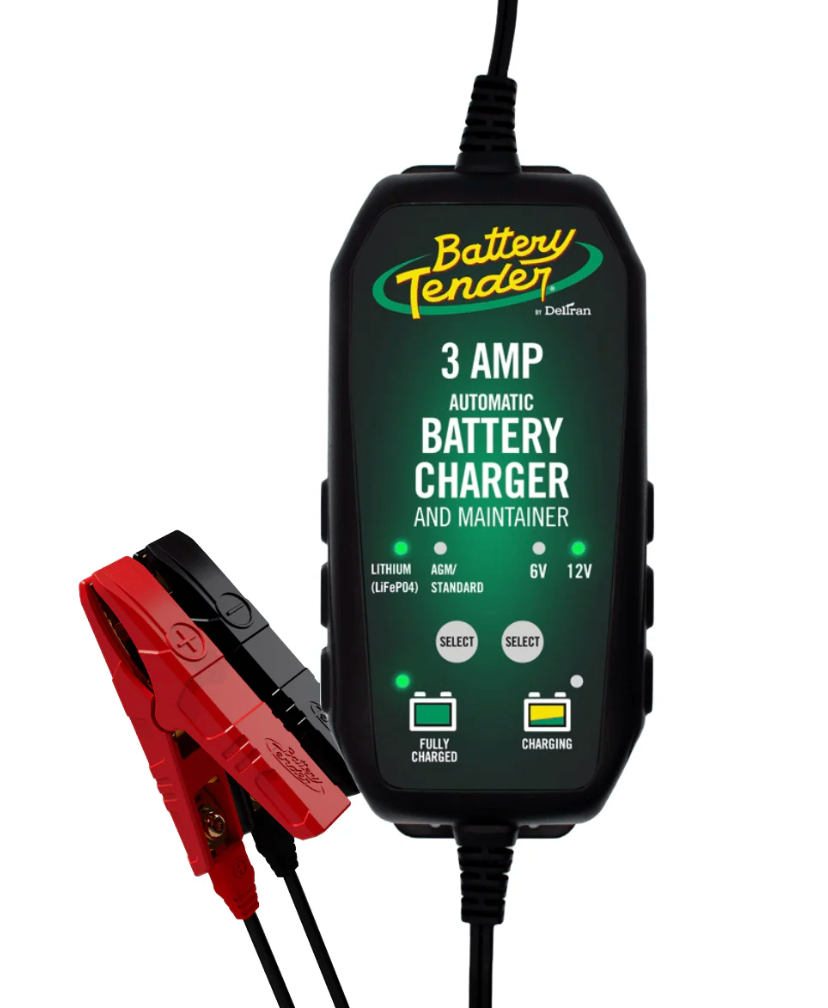
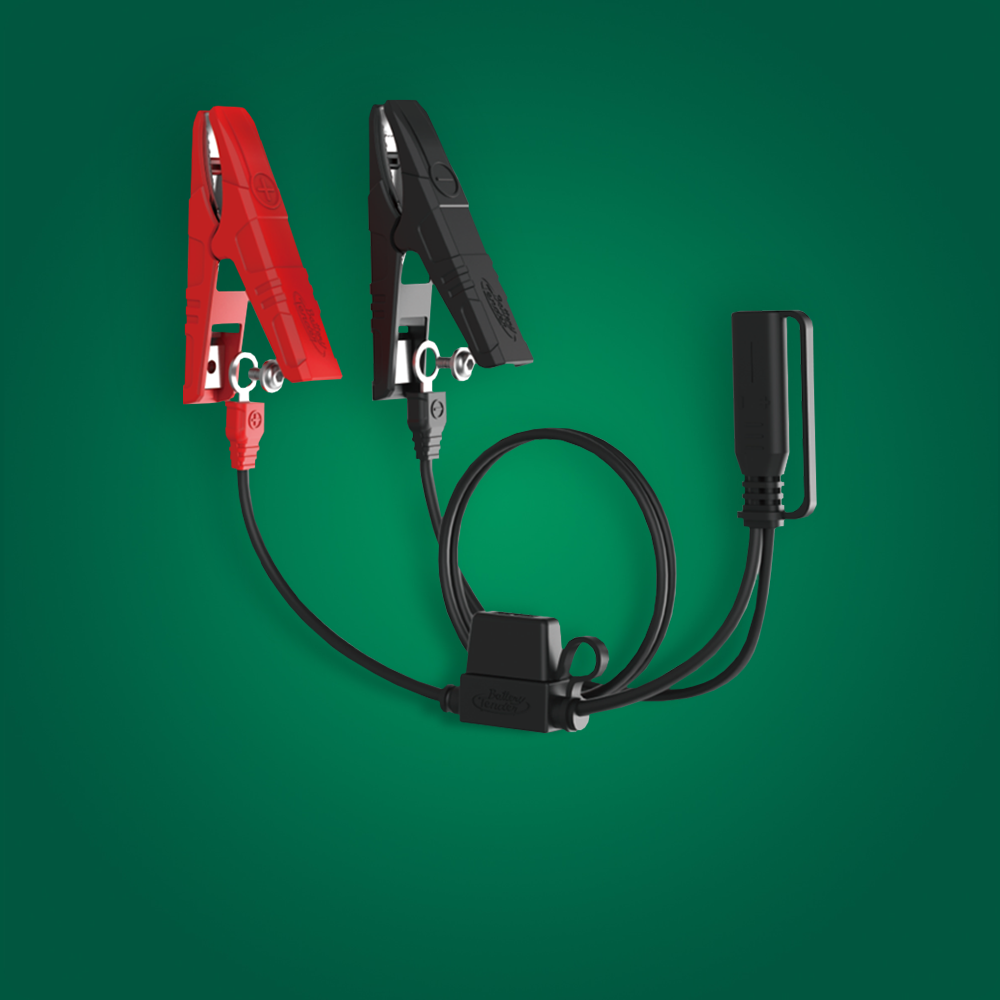
A portable car battery charger is designed for transport between vehicles and locations, not permanent mounting. True portability means lightweight construction (typically under 3 lbs), compact dimensions that fit in a glove box or trunk organizer, a standard 120V AC input plug, and quick-connect output cables with ring terminals or alligator clips. The charger travels with the driver — not the vehicle.
Stationary chargers, by contrast, include permanently mounted marine onboard units and hardwired industrial systems. Both categories can use identical ISM charging technology, but portable units prioritize a specific set of design features:
- Weight under 3 lbs — easy to carry in a bag, toolbox, or trunk
- Universal AC input — standard wall outlet, no hardwiring required
- Quick-connect cables — ring terminals for semi-permanent installation or alligator clips for temporary connection
- Weather resistance — IP65 or higher for outdoor outlet use in carports, driveways, and uncovered parking
- Chemistry selection — selectable modes for standard lead-acid, AGM, GEL, and lithium batteries
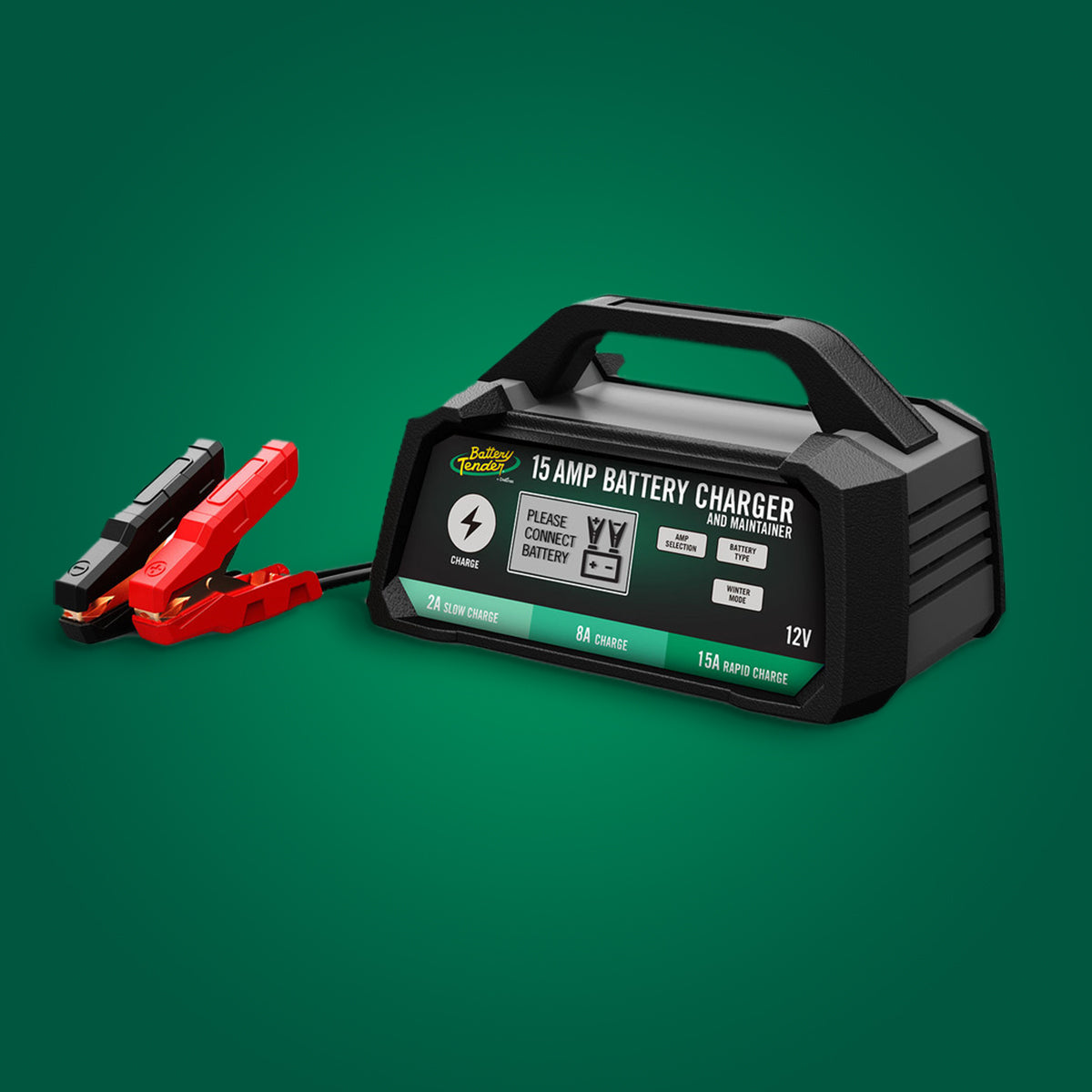
The Battery Tender 8A/2A Battery Tender Power Tender (SKU 022-1005-DL-WH) exemplifies modern portable design. At 8 amps in fast-charge mode and 2 amps in maintenance mode, it handles everything from a deeply discharged truck battery to overnight float maintenance — with IP65 weather resistance for exposed installations. The selectable chemistry switch covers standard, AGM, and lithium batteries in a single portable unit.
Battery Tender 8A/2A Battery Tender Power Tender — 12V IP65 Selectable Chemistry Charger
How ISM Technology Prevents the #1 Portable Car Battery Charger Mistake
The most common mistake with a portable car battery charger is leaving a constant-current trickle charger connected and walking away. Traditional trickle chargers push 1–2 amps continuously regardless of battery state. After the battery reaches full charge, that current continues flowing — electrolyzing water out of the electrolyte, generating heat, warping plates, and accelerating corrosion. According to BCI (Battery Council International) data, overcharging reduces lead-acid battery life by 30–50%.
ISM — Infinite Sequential Monitoring — eliminates this risk entirely through a four-stage process that Battery Tender chargers execute automatically:
- Initialization — The charger tests the battery with a gentle current to assess condition and voltage. If the battery is below a safe threshold (indicating possible damage or a dead short), the charger will not proceed, protecting both charger and battery.
- Bulk Charge (Constant Current) — Full rated amperage flows into the battery until it reaches approximately 80% state of charge. This is where the majority of energy transfer occurs. An 8-amp charger at this stage can recover a 60 Ah battery from 50% depth of discharge in roughly 3.75 hours: (60 Ah × 0.50) ÷ 8A = 3.75 hours.
- Absorption (Constant Voltage) — Voltage holds steady while current gradually tapers. This stage dissolves sulfate crystals that formed on the plates during discharge — the primary mechanism by which ISM extends battery life beyond the typical 2–3 year replacement cycle.
- Float Maintenance — The charger monitors voltage and delivers demand-responsive charge pulses only when voltage drops below a set threshold. Power draw drops to near zero. The battery stays at 100% indefinitely without overcharge stress.
This four-stage cycle is why Battery Tender chargers can be left connected for weeks, months, or even an entire storage season. A trickle charger cannot do this safely — it lacks the Absorption stage that reverses sulfation and the intelligent Float stage that prevents overcharging.
Choosing the Right Portable Car Battery Charger Amperage for Your Vehicle
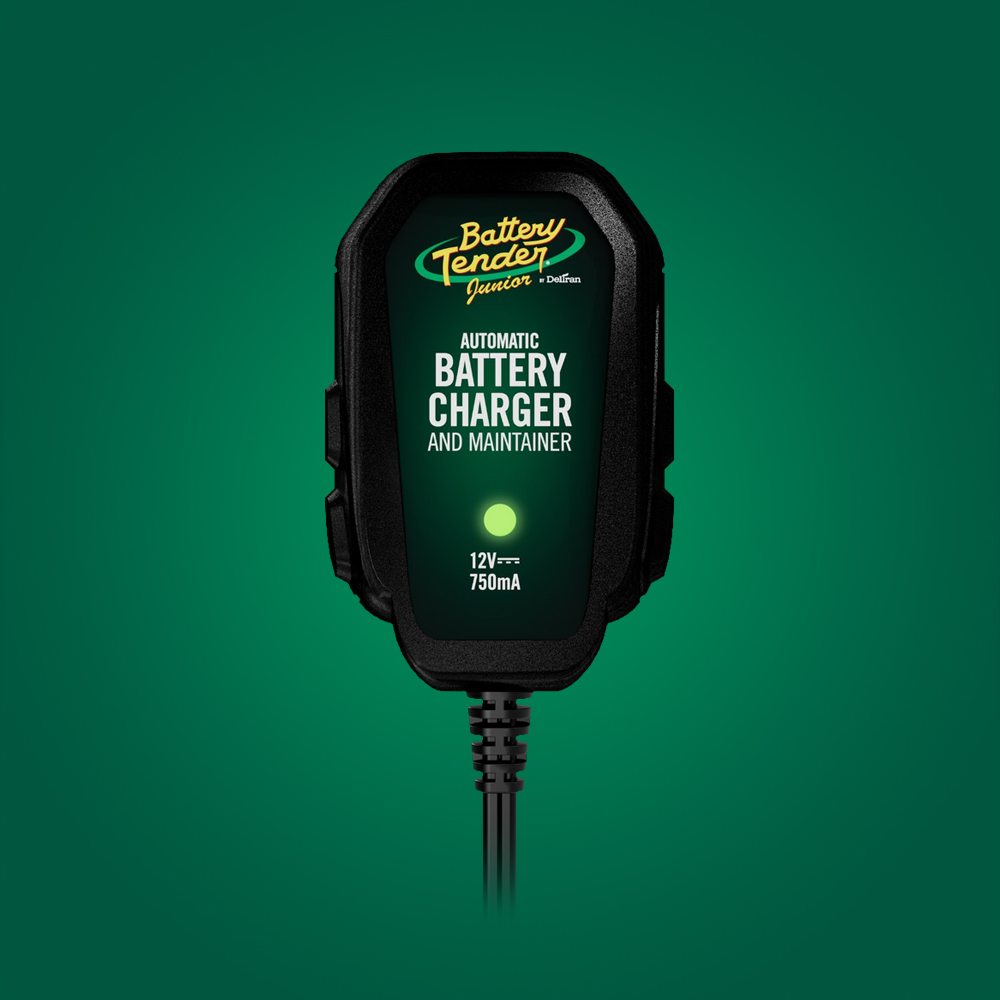
Amperage determines how fast a portable car battery charger recovers a depleted battery. Higher amps mean faster charging, but the charger must also match the battery capacity range. Charging a small 18 Ah motorcycle battery with a 15-amp charger can damage cells, while charging a 100 Ah truck battery with a 750 mA unit takes over five days from 50% discharge.
Use this formula to estimate charging time for any combination:
(Battery Ah × Depth of Discharge) ÷ Charger Amps = Approximate Hours
| Vehicle Type | Typical Battery Ah | Recommended Charger | Recovery Time (50% DOD) |
|---|---|---|---|
| Compact car | 40–50 Ah | Battery Tender Plus 1.25A | 16–20 hours |
| Midsize sedan | 50–65 Ah | Battery Tender Plus 1.25A | 20–26 hours |
| Full-size truck/SUV | 70–100 Ah | Battery Tender 8A/2A Battery Tender Power Tender | 4.4–6.25 hours (8A mode) |
| Two vehicles simultaneously | Any 12V | Battery Tender 2-Bank 1.25A | Varies per bank (independent ISM) |
The Battery Tender Plus 1.25A (SKU 021-0128) remains the flagship portable option for cars and motorcycles in the 14–80 Ah range. It includes temperature compensation — meaning the charger automatically adjusts output voltage based on ambient temperature to prevent overcharging in summer heat or undercharging in winter cold. The 10-year warranty — the longest in the industry for this category — reflects the confidence Battery Tender places in this unit.
Battery Tender Plus 12V 1.25A — Flagship Smart Charger with 10-Year Warranty
Portable Charging Scenarios: From Airport Parking to Off-Grid Cabins
Portability only matters when matched to real-world scenarios. Here are the five most common situations where a portable car battery charger proves essential — and the setup considerations for each:
Extended Airport or Travel Parking
A car sitting in covered parking for 7–21 days can lose 25–75% of its charge depending on parasitic draws from alarm systems, keyless entry modules, and onboard computers. Pre-install ring terminals on the battery (a one-time 5-minute task), connect the Battery Tender Plus, plug into a garage outlet, and the ISM float stage keeps the battery at 100% until return. The unit draws minimal power — roughly equivalent to a nightlight — during float maintenance.
Outdoor and Carport Installations
Vehicles parked in driveways, carports, or uncovered lots need weather-resistant chargers. The Battery Tender Plus IP65 1.25A (SKU 022-0185G-DL-WH) provides the same ISM technology and temperature compensation as the standard Plus model, wrapped in an IP65-rated enclosure that withstands rain, dust, humidity, and temperature swings from −4°F to 122°F (−20°C to 50°C).
Battery Tender Plus IP65 1.25A — Weatherproof Outdoor Portable Charger
Multi-Vehicle Households and Shared Garages
Households with two vehicles and only one available outlet benefit from the Battery Tender 2-Bank 1.25A charger, which runs independent ISM cycles on each bank simultaneously. Each output channel monitors its connected battery separately — one bank can be in Absorption while the other is in Float, accommodating batteries at different states of charge from a single portable unit and a single outlet.
Battery Tender 2-Bank 1.25A 12V — Dual-Output Portable Smart Charger
What to Do When a Portable Car Battery Charger Is Not Enough: Jump Start Backup
Prevention is the primary mission of a portable car battery charger — but emergencies still happen. A battery may fail suddenly from an internal short, extreme cold snap, or an accidental dome-light drain when the charger was not connected. For these situations, pairing a smart charger with a portable jump starter creates a complete battery management system.
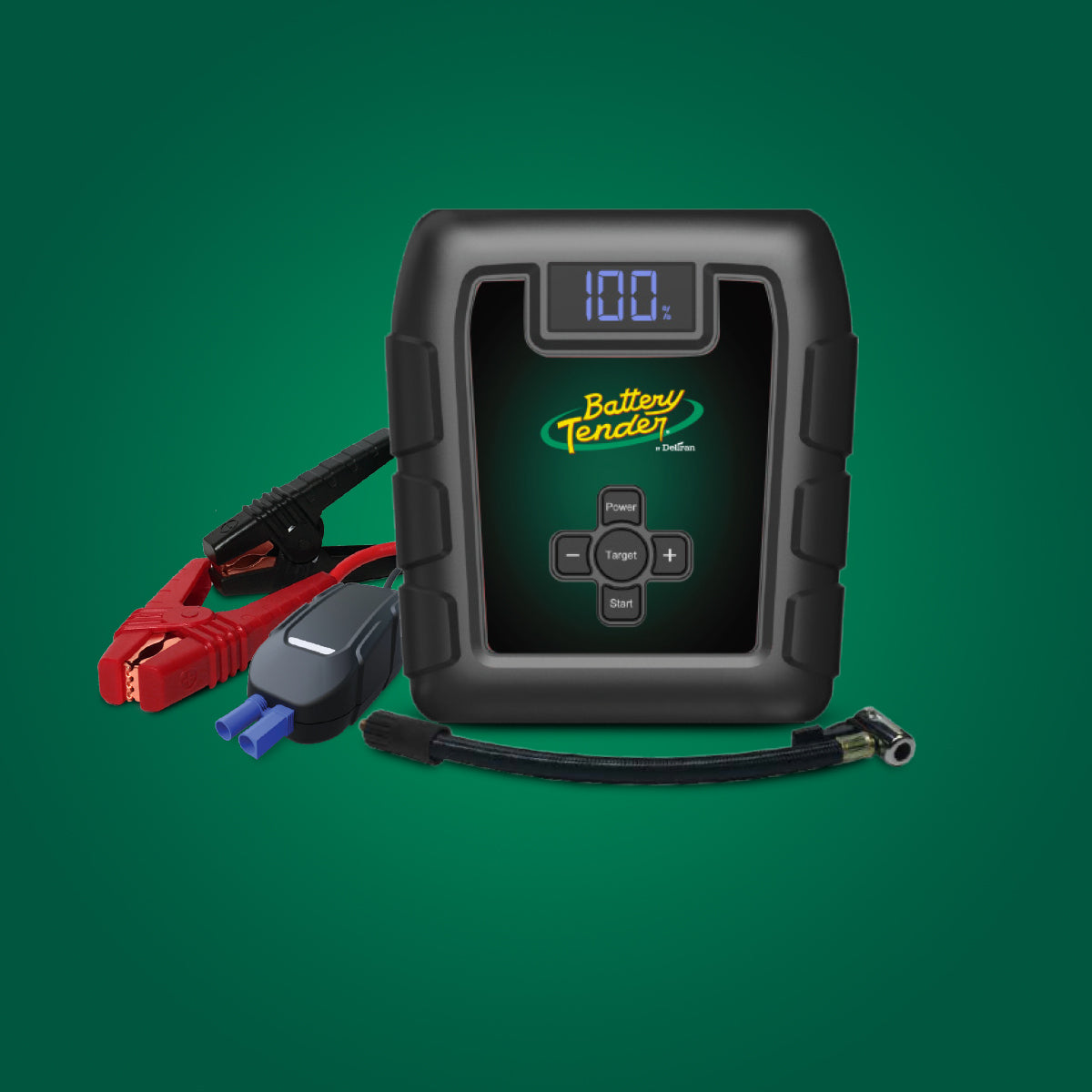
The Battery Tender Charge N Start 4120 bridges both categories in a single device. It combines a 4-amp ISM charger (for daily maintenance and recovery charging of any 12V lead-acid, AGM, GEL, or lithium battery) with a 1,200-amp lithium-ion jump starter capable of starting engines up to 6.0L gas or 4.0L diesel. The internal lithium-ion battery uses proprietary Charge N Store technology to maintain its own charge over months of storage, ensuring jump-start readiness when needed. SafeGuard anti-backfeed circuitry protects the internal pack from connected-vehicle electrical faults.
Battery Tender Charge N Start 4120 — 4A Charger + 1,200A Jump Starter
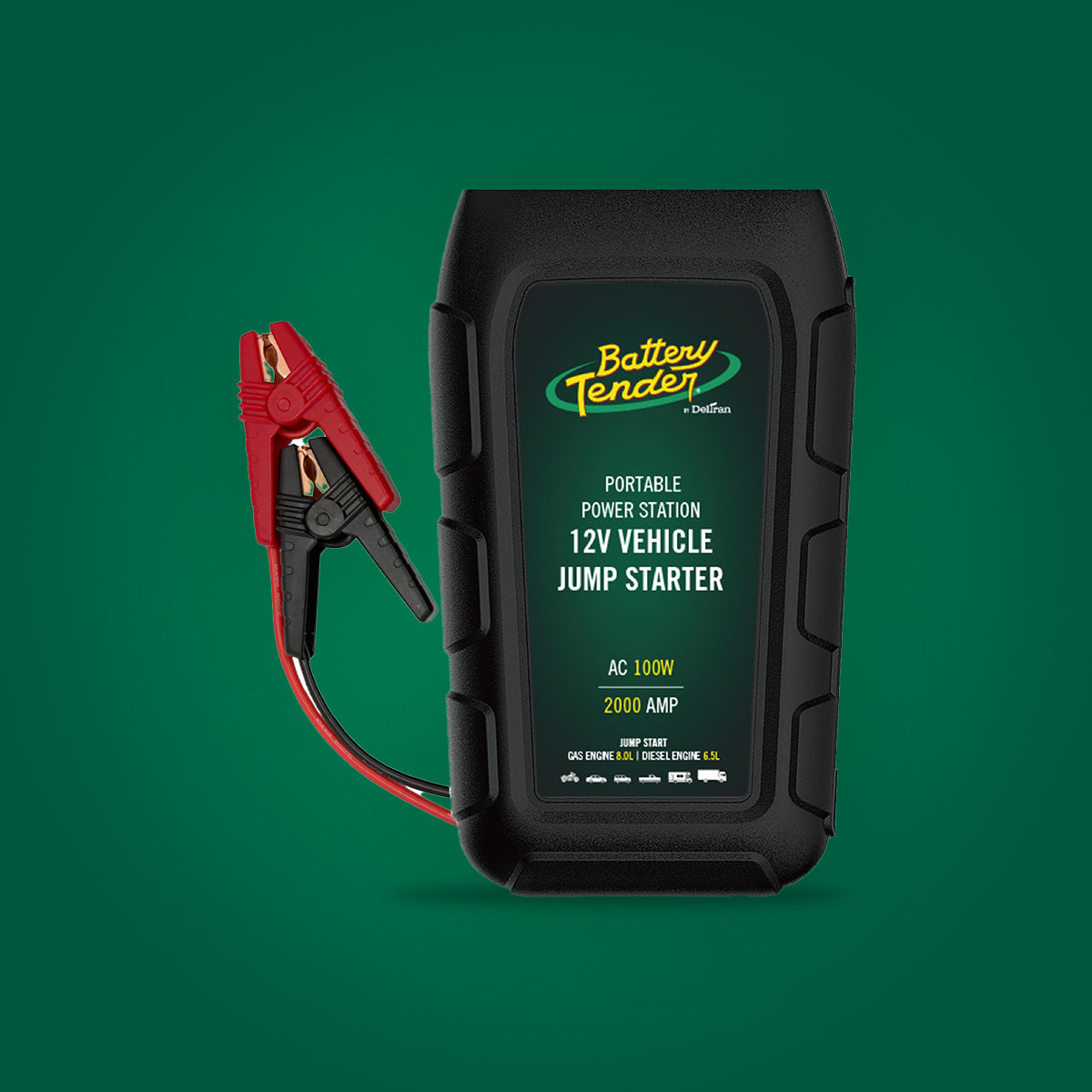
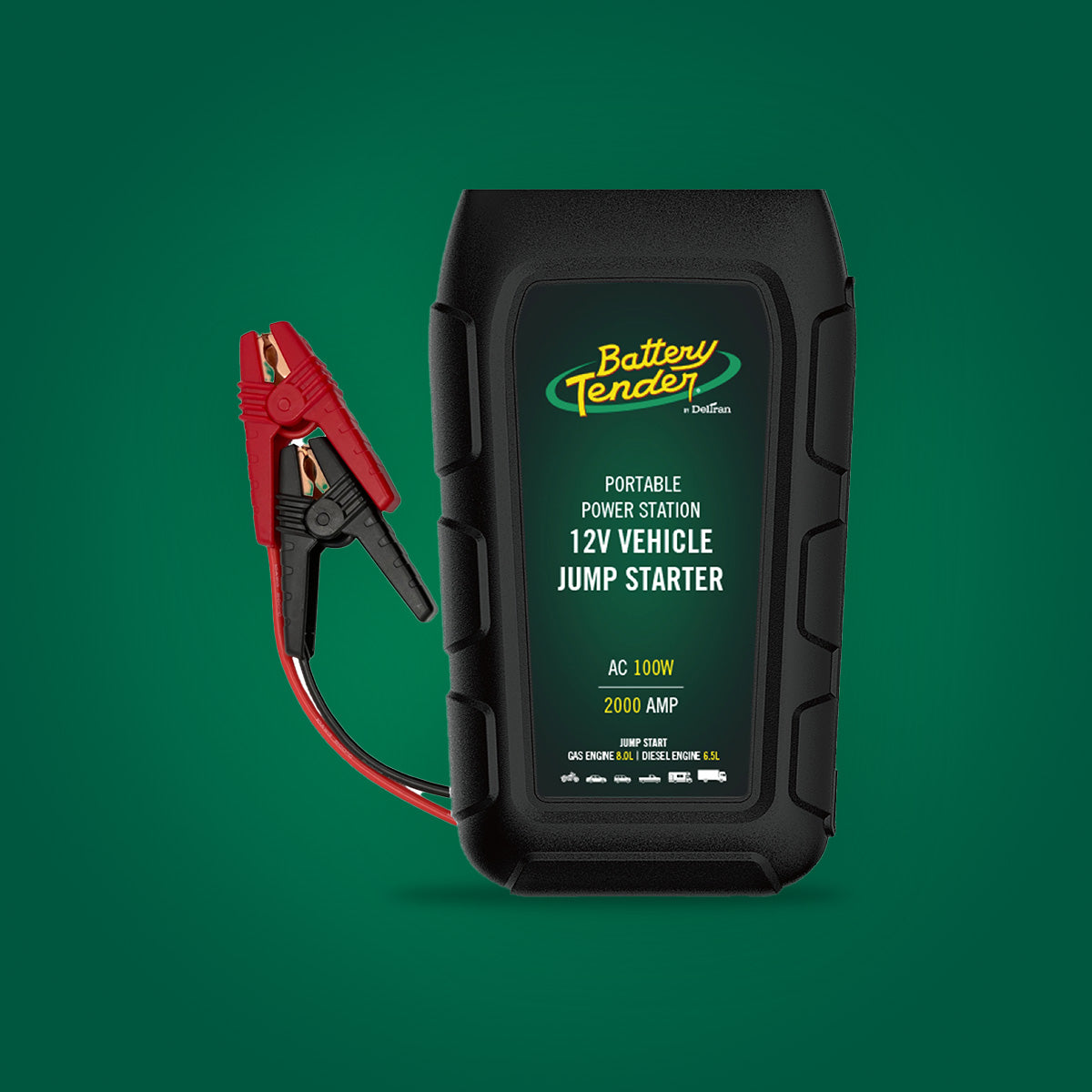
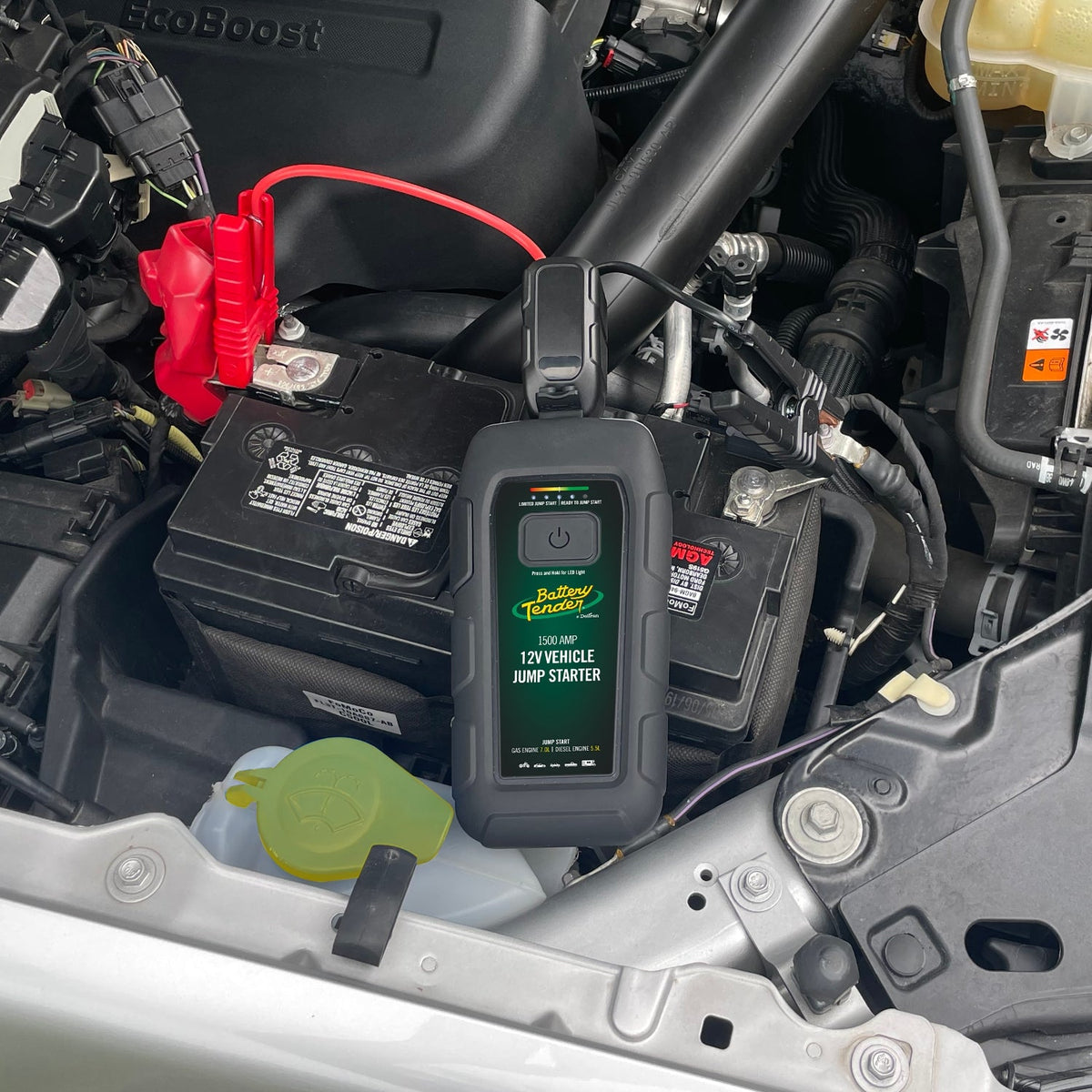
For drivers who already own a Battery Tender charger and want a standalone emergency backup, the Battery Tender 1500A Jump Starter offers 12,000 mAh capacity, approximately 40 starts per charge, and compatibility with engines up to 7.0L gas or 5.5L diesel — covering virtually every passenger vehicle on the road.
Battery Tender 1500A Jump Starter — 12,000 mAh Portable Emergency Starter
Portable Car Battery Charger Setup: Step-by-Step Connection Guide
Proper connection takes under five minutes and ensures safe, efficient charging every time. Follow these steps for any Battery Tender portable charger:
- Turn off the vehicle ignition and remove the key. Ensure all lights, radio, and accessories are off.
- Locate the battery. In vehicles with trunk-mounted or under-seat batteries, use the under-hood remote positive terminal and a solid chassis ground point.
- Connect the red (positive) lead to the battery positive terminal or remote positive post.
- Connect the black (negative) lead to the battery negative terminal or an unpainted chassis ground bolt — never to fuel lines, brake lines, or near the battery vent.
- Plug the charger into a grounded 120V AC outlet. The ISM Initialization stage begins automatically — the charger indicator shows the current stage.
- Walk away. ISM cycles through Bulk, Absorption, and Float without intervention. Disconnection is safe at any time by unplugging AC power first, then removing leads (negative first, then positive).
⚠️ Safety Note: Always connect DC leads before plugging in AC power, and unplug AC power before disconnecting DC leads. This sequence prevents sparking at the battery terminal. Never charge a frozen battery — allow it to thaw to at least 32°F (0°C) before connecting a charger. If the charger Initialization stage indicates a fault (flashing red on most Battery Tender models), the battery may have an internal short and should be tested by a professional before further charging.
Frequently Asked Questions
Can a portable car battery charger be left connected indefinitely?
Yes — when the charger uses ISM technology. Battery Tender chargers with Infinite Sequential Monitoring automatically transition to a Float Maintenance stage after the battery reaches full charge. In this stage, the charger delivers small charge pulses only when battery voltage drops below a set threshold, drawing near-zero power from the outlet. There is no overcharge risk, making indefinite connection safe for weeks, months, or entire storage seasons.
What size portable car battery charger do I need for a truck or SUV?
Trucks and SUVs typically use 70–100 Ah batteries. The Battery Tender 8A/2A Battery Tender Power Tender (SKU 022-1005-DL-WH) is the optimal choice — at 8 amps, it recovers a 100 Ah battery from 50% discharge in approximately 6.25 hours. For smaller sedans with 40–65 Ah batteries, the Battery Tender Plus at 1.25 amps provides reliable overnight recovery and long-term maintenance with a 10-year warranty.
Will a portable car battery charger work on lithium batteries?
Only if the charger has a selectable lithium mode. Lithium-iron-phosphate (LiFePO4) batteries require a different charge voltage profile than lead-acid, AGM, or GEL batteries. The Battery Tender 8A/2A Battery Tender Power Tender includes a lithium-selectable switch that adjusts both Bulk and Float voltages to match lithium chemistry. The Battery Tender Plus (SKU 021-0128) is designed for lead-acid and AGM batteries in the 14–80 Ah range and does not include a lithium mode.