


Lithium Battery Charger Guide: Charge LiFePO4 Safely (2026)
A lithium battery charger delivers a LiFePO4-specific charge profile, typically 14.2–14.6V at full charge for a 12V pack, and stops once the pack is full. A charger built only for lead-acid chemistry can trip the battery management system (BMS) or shorten lithium cycle life.
Lithium iron phosphate (LiFePO4) batteries are now common in motorcycles, boats, RVs, and powersports vehicles, and many garages hold both lithium and lead-acid batteries. Battery Tender® pioneered smart charging in 1989, and the same principle applies to lithium: match the charger to the chemistry, size the current to the capacity, and let the charger terminate on its own. This guide covers voltage, sizing, temperature limits, and a step-by-step charging routine.
Last updated: May 2026.
Key Takeaways
- A 12V LiFePO4 battery has a nominal 12.8V and charges to roughly 14.2–14.6V. Lead-acid profiles with desulfation or equalization modes can exceed what the BMS accepts.
- Size charger current at roughly 0.1C to 0.5C of battery capacity, and never above the maximum charge rate printed on the battery.
- Do not charge lithium below 32°F (0°C) unless the battery has built-in low-temperature protection.
- Confirm that the charger lists a lithium or multi-chemistry mode on its product page before connecting a LiFePO4 pack.
- Constant-current trickle chargers are a poor match for lithium. A charger that monitors the battery and terminates is the safer choice.
What Makes a Lithium Battery Charger Different From a Lead-Acid Charger?
A lithium battery charger uses constant current followed by constant voltage, then stops. A lead-acid charger adds float voltage, desulfation pulses, and temperature compensation, features that LiFePO4 chemistry does not require.
Four LiFePO4 cells in series produce a 12.8V nominal pack, with each cell topping out near 3.65V. That puts the full-charge ceiling around 14.6V. Lead-acid charging often reaches 14.4–14.8V in absorption, and some repair modes go higher still.
| Characteristic | 12V Lead-Acid (Flooded/AGM/GEL) | 12V LiFePO4 |
|---|---|---|
| Nominal voltage | 12.0–12.7V | 12.8V |
| Full-charge voltage | 14.4–14.8V (absorption) | 14.2–14.6V |
| Long-term maintenance voltage | 13.2–13.8V float | Per battery maker, often 13.5–13.8V or no float |
| Sulfation risk | High when left discharged | None |
| Cold-charging limit | Charges below freezing with compensation | Avoid below 32°F (0°C) without protection |
The two chemistries want different things. Lead-acid batteries need a full charge on a regular basis to prevent sulfation. Lithium batteries tolerate partial states of charge, so the goal is a clean, bounded charge cycle with no excess voltage.
Battery Tender chargers use Infinite Sequential Monitoring (ISM) technology, a four-stage automatic process: Initialization, Bulk Charge, Absorption, and Float Maintenance. Each model applies that sequence to the chemistries it supports, which is why lithium compatibility depends on the specific model and mode. The ISM charging technology deep dive explains each stage in detail.
How to Size a Lithium Battery Charger to Your Battery
Size a lithium battery charger so its output falls between 0.1C and 0.5C, where C is the battery capacity in amp-hours. A 20Ah battery therefore suits a 2A to 10A charger, though smaller batteries do better at the lower end.
Many LiFePO4 batteries accept 0.5C or more, but a conservative current produces less heat and gentler BMS balancing. Check the label or datasheet for the maximum charge current and treat it as a hard limit.
| LiFePO4 Capacity | Typical Use | Suggested Charger Current | Approx. Time From 50% |
|---|---|---|---|
| 10Ah | Motorcycle, scooter | 1–2A | 2.5–5 hours |
| 20Ah | ATV, lawn tractor, PWC | 3–4A | 2.5–3.5 hours |
| 50Ah | Trolling motor, small RV | 5–10A | 2.5–5 hours |
| 100Ah | RV house bank, off-grid | 10–20A | 2.5–5 hours |
Use this formula: (battery Ah × depth of discharge) ÷ charger amps = approximate hours. A 20Ah pack at 50% discharge needs 10Ah, and 10Ah ÷ 4A is 2.5 hours. A 100Ah pack at 50% on a 10A charger needs 50Ah ÷ 10A, or 5 hours. Lithium accepts charge efficiently, so add only about 5% for losses. Lead-acid batteries often need 20–30% more.
What Features Should a Lithium Battery Charger Have?
A good lithium battery charger needs a lithium or multi-chemistry mode, a defined voltage ceiling, and automatic termination. Reverse-polarity and spark protection are also worth having.
- Chemistry selection: The product page should state that it supports LiFePO4 or lithium. Do not assume that "smart" means lithium-compatible.
- Voltage match: 12V, 24V, and 48V packs need chargers of the same nominal voltage.
- Automatic termination: The charger should stop or drop to a safe maintenance voltage without user input.
- Protection circuits: Reverse-polarity protection is essential, since lithium packs can deliver very high short-circuit current.
Temperature Limits and Temperature Compensation
Lithium cells should not be charged below 32°F (0°C) unless the battery includes heating or low-temperature cutoff. Charging below freezing can cause lithium plating, which permanently reduces capacity. Many BMS units block charging in the cold, so a battery that refuses to accept current in January is usually working correctly.
Temperature compensation on lead-acid chargers raises charge voltage as temperature falls, which does not suit lithium chemistry. Lead-acid batteries benefit from that feature, but for a lithium pack, a dedicated lithium mode matters more.
Waking a Low-Voltage Lithium Battery
A deeply discharged LiFePO4 battery may disconnect its output through the BMS, leaving 0V at the terminals. Many chargers need to detect battery voltage before they start. In that case, check the battery maker's instructions for a wake-up procedure before attempting a recovery charge. Never bypass the BMS.
How to Charge a Lithium Battery With a Smart Charger, Step by Step
Connect the charger to the battery before plugging it into the wall, confirm the chemistry mode, and let the charger finish its cycle. Use this sequence for any LiFePO4 battery.
- Check temperature. Make sure the battery is above 32°F (0°C). Bring it indoors if needed and let it warm up.
- Read the label. Note voltage, capacity, and maximum charge current.
- Confirm charger compatibility. The charger must list lithium or multi-chemistry support at the matching voltage.
- Connect the leads. Attach red to positive and black to negative with the charger unplugged.
- Select lithium mode. Choose the correct chemistry if the charger has a selector.
- Plug in and monitor. Check the first 15 minutes for warmth or error indicators. A slightly warm battery is normal. A hot one is not.
- Verify full charge. A resting LiFePO4 battery reads about 13.3–13.6V when full.
- Disconnect safely. Unplug the charger from the wall first, then remove the clamps.
Safety note: Charge in a ventilated area, away from flammable materials. A swollen, hot, or smoking lithium battery should be disconnected only if it is safe to do so, and moved outdoors.
Which Chargers and Accessories Fit a Mixed Lithium and Lead-Acid Garage?
Most households run both chemistries: a lithium battery in the motorcycle or boat and lead-acid batteries in the car, truck, and tractor. Each battery needs a charger matched to its chemistry.
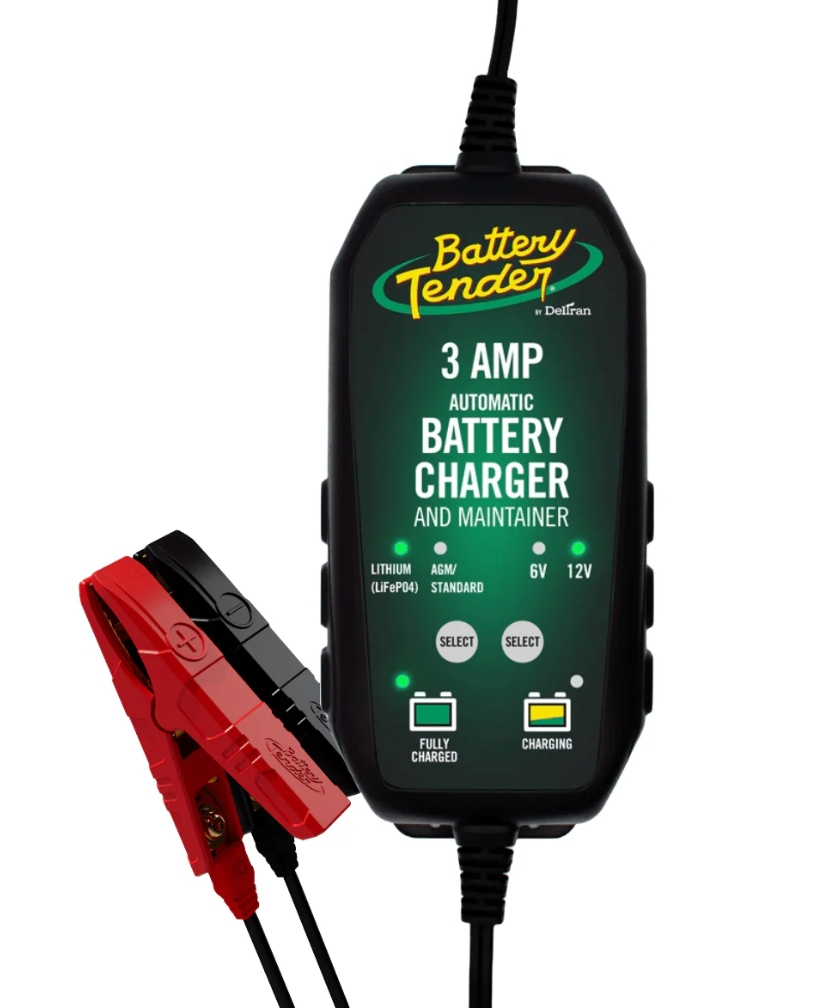
For 12V and 6V lead-acid batteries in cars, classic vehicles, and light trucks, the Battery Tender Power Tender 3 Amp charger covers batteries from about 20Ah to 60Ah. Its switchable voltage handles both modern 12V and vintage 6V systems. Confirm the available chemistry modes on the product page if a lithium pack will share the charger.
Battery Tender Power Tender 3 Amp 12V/6V Battery Charger and Maintainer
For larger lead-acid batteries in pickups, SUVs, and light commercial vehicles, the Battery Tender Power Tender 4 Amp charger recovers a depleted 50–75Ah battery faster than a 1A or 3A unit. A 60Ah battery at 50% needs 30Ah, and 30Ah ÷ 4A is roughly 7.5 hours.
Battery Tender Power Tender 4 Amp 12V/6V Battery Charger and Maintainer
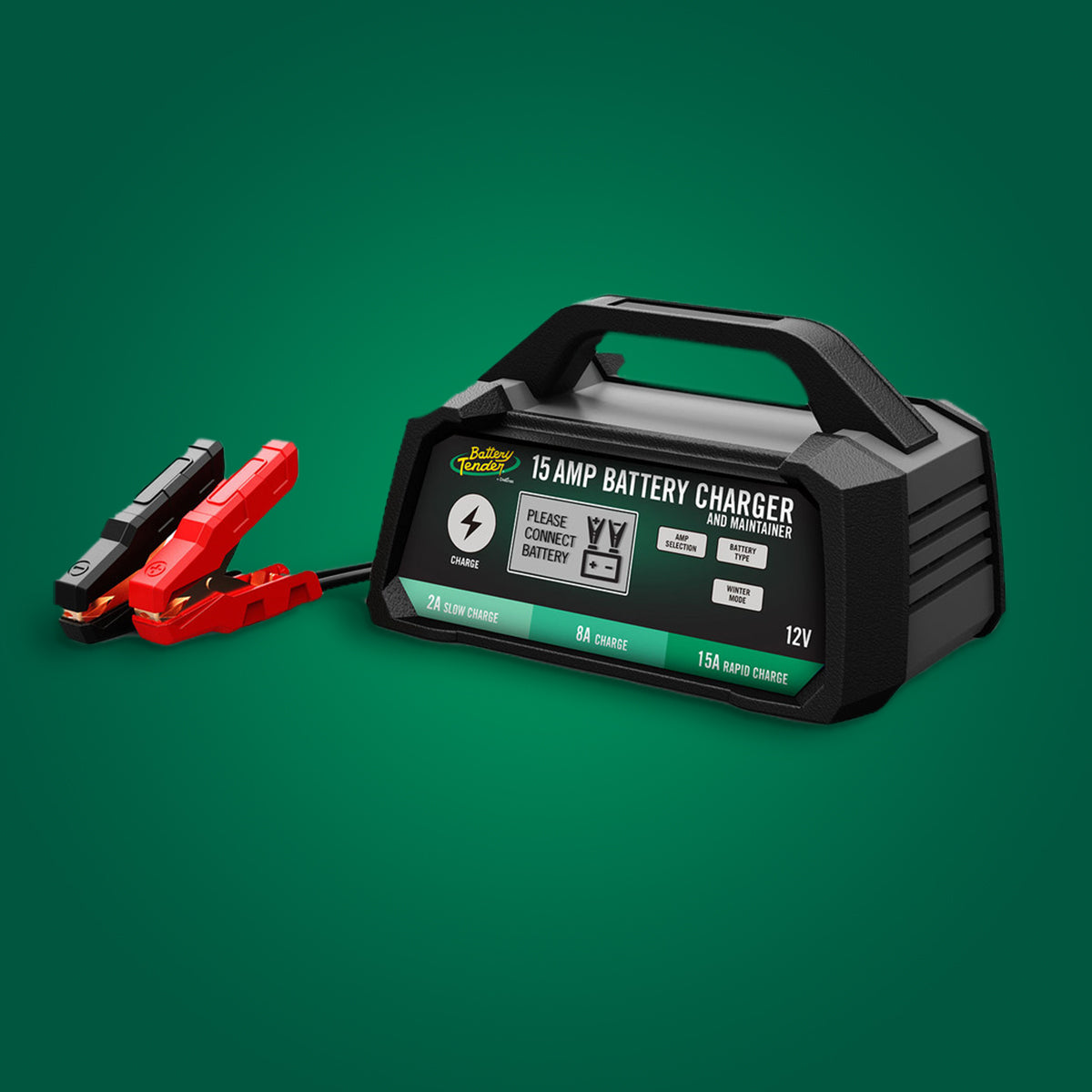
For 50–100Ah banks in RVs, boats, and off-grid setups, the Battery Tender Power Tender 10 Amp Multi-Chemistry charger is the best fit. A 100Ah battery at 50% needs about 5 hours at full rate. The multi-chemistry designation matters for mixed fleets, but check the product page for the exact lithium mode and voltage settings before connecting a LiFePO4 pack.
Battery Tender Power Tender 10 Amp Multi-Chemistry 12V Battery Charger and Maintainer
Standby equipment has its own weak point: a dead starting battery on the day it is needed. For generators, the Generac generator battery maintenance guide covers keeping those starting batteries ready.
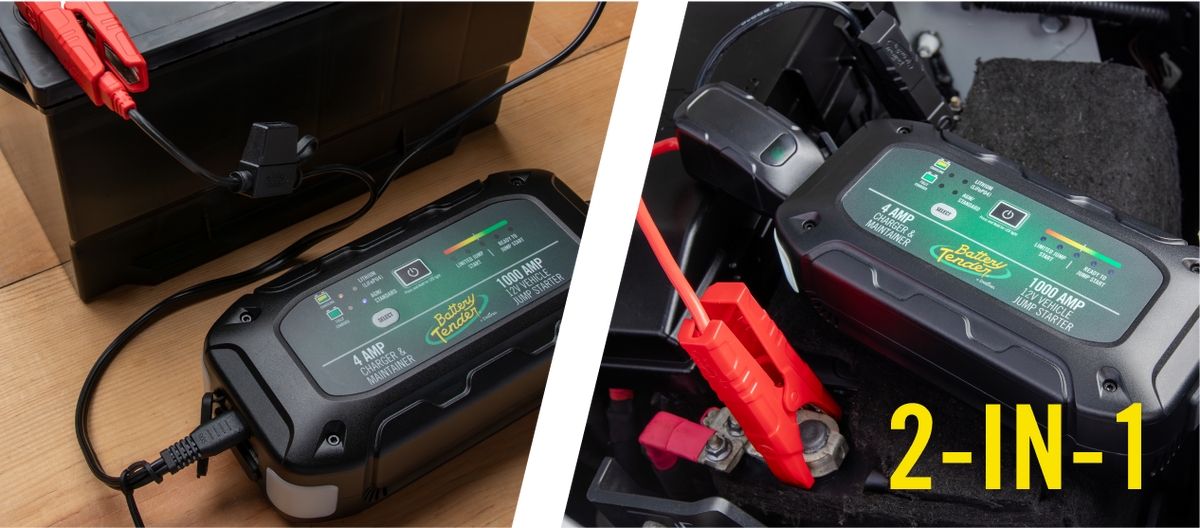
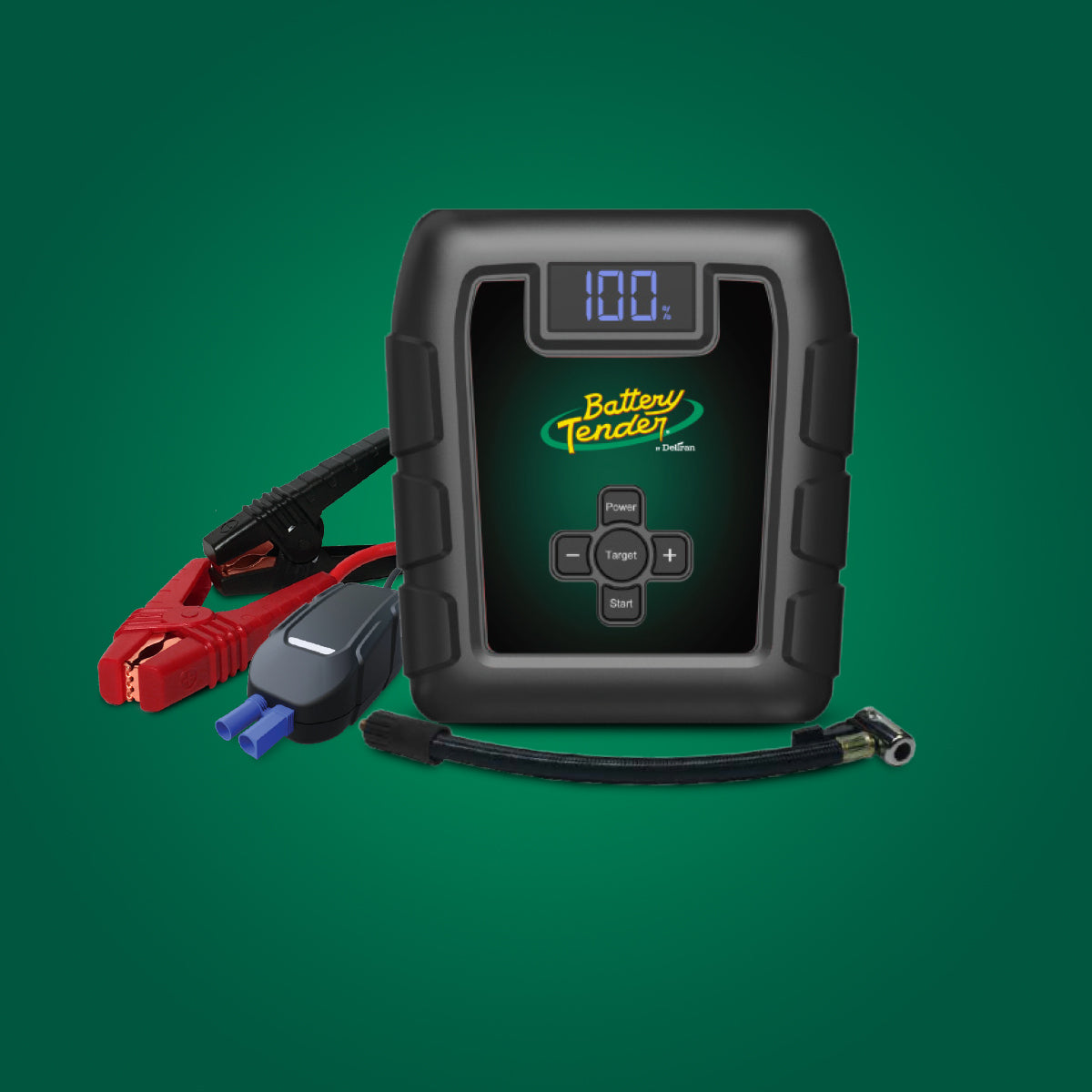
For an emergency start, the Battery Tender Jump N Start 600 Amp Lithium Jump Starter uses an internal lithium-ion pack (6,400 mAh), starts 4.0L gas or 2.0L diesel engines, and fits in a saddlebag or glove box. It suits motorcycles, small engines, and compact cars, and it works when a lead-acid starter battery dies away from home.
Battery Tender Jump N Start 600 Amp Lithium Jump Starter
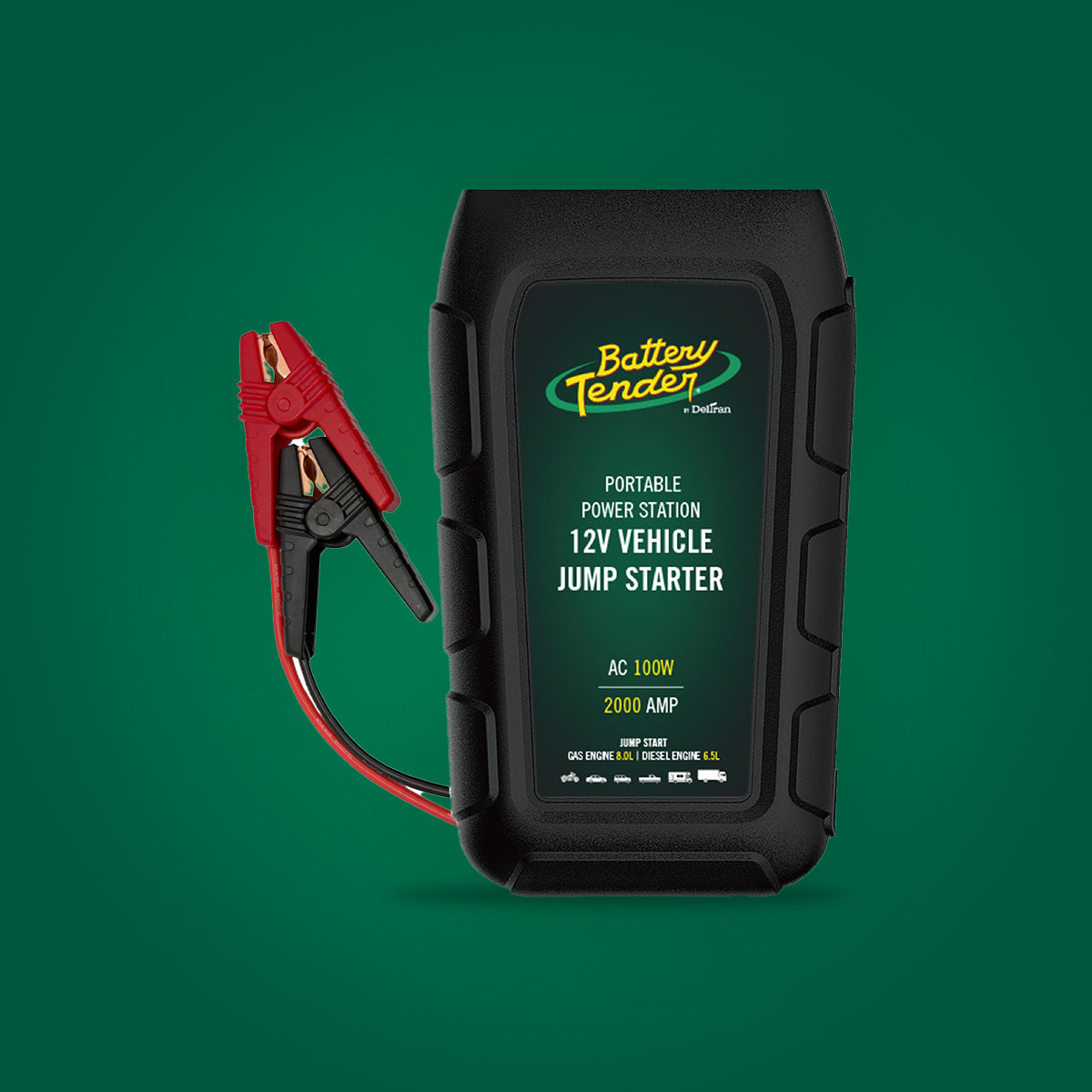
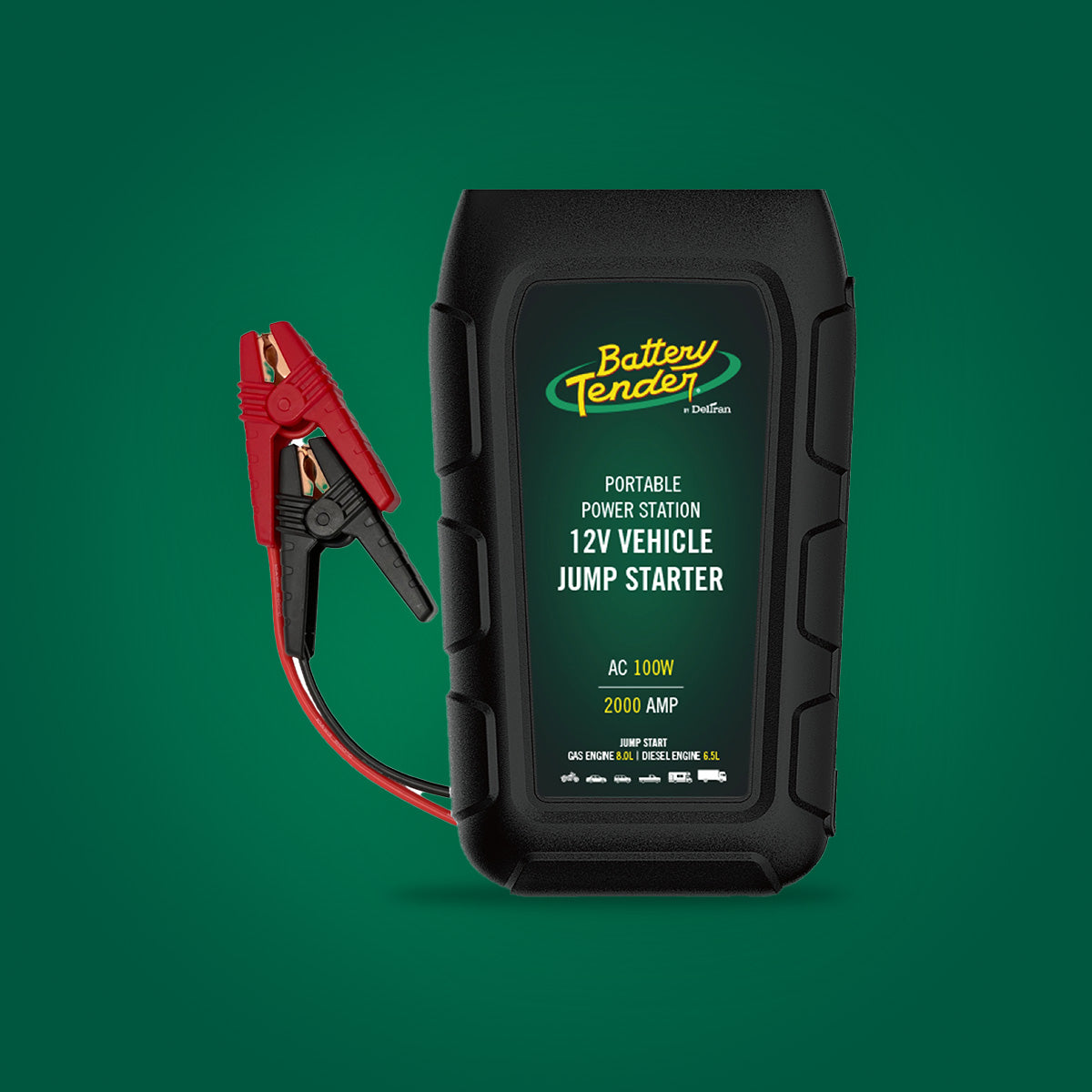
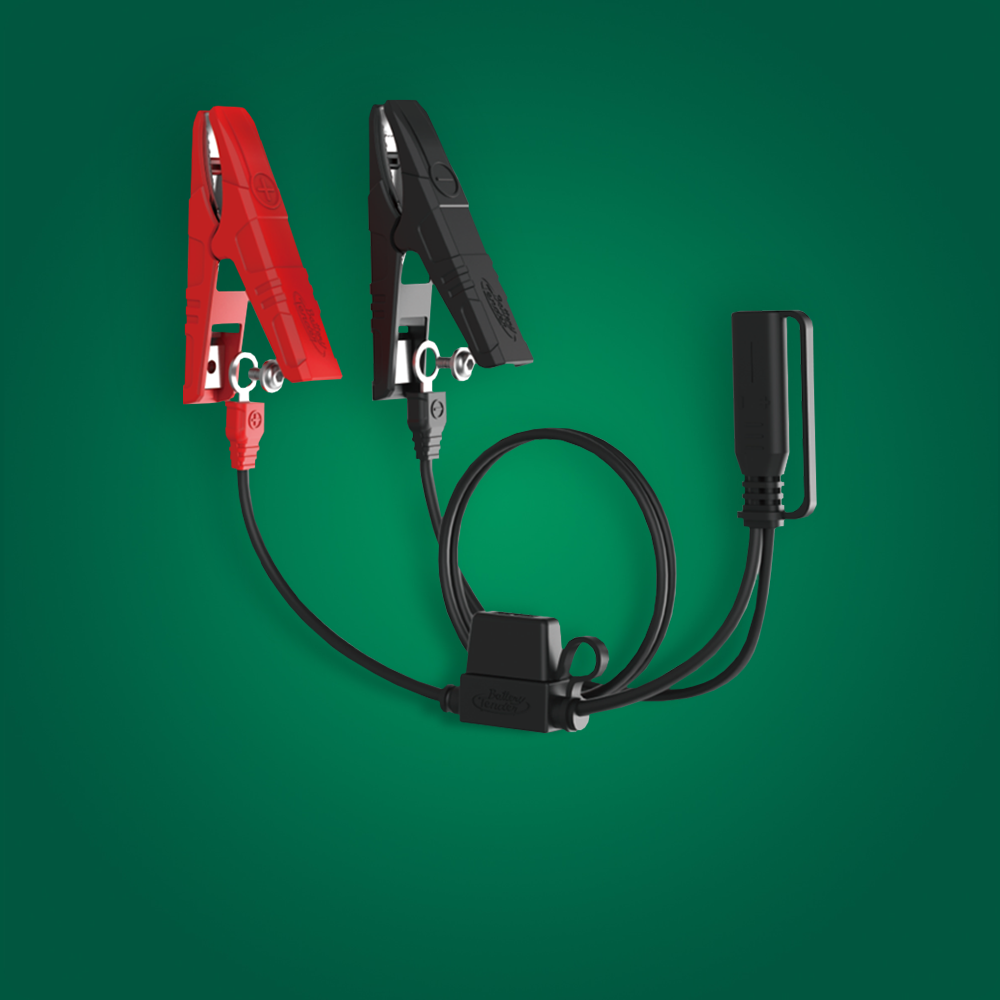
Owners of larger jump starters in the 800–2000A range can add Battery Tender Smart Alligator Clips for better connection and polarity protection. These clips fit the 800, 1000, 1500, and 2000 amp units, not the 600 amp model.
Smart Alligator Clips for Jump Starters - 800, 1000, 1500, & 2000 AMP
Frequently Asked Questions
Can I use a regular battery charger on a lithium battery?
Only if the charger lists a lithium or multi-chemistry mode. Standard lead-acid profiles may use absorption or desulfation voltages above what a 12V LiFePO4 pack accepts, which can trip the BMS or shorten cycle life. Check the product page for lithium compatibility and match the voltage before connecting.
What voltage should a lithium battery charger deliver for a 12V LiFePO4 battery?
A 12V LiFePO4 battery charges to about 14.2–14.6V during the constant-voltage stage. That equals 3.55–3.65V per cell across four cells. Follow the battery maker's specification, since some manufacturers recommend a lower ceiling to extend cycle life.
How long does it take to charge a lithium battery?
Use (battery Ah × depth of discharge) ÷ charger amps. A 100Ah battery at 50% discharge on a 10A charger needs 50Ah ÷ 10A, about 5 hours, plus roughly 5% for losses. A 20Ah battery at 50% on a 4A charger takes about 2.5 hours.
Is it safe to leave a lithium battery connected to a charger?
It depends on the charger and battery. A charger with automatic termination or a lithium-appropriate maintenance voltage is generally safe, and a BMS adds a protective layer. Constant-current trickle chargers are not suitable. For storage longer than a month, follow the battery maker's guidance, since many recommend 50–80% charge.
Can a lithium battery charger charge a lead-acid battery?
Not reliably. A lithium-only charger usually lacks the float and absorption profile that lead-acid batteries need, so they stay undercharged and sulfate over time. Use a multi-chemistry charger with a lead-acid mode, or keep a separate charger for each chemistry.
Conclusion
The right lithium battery charger matches voltage, current, and chemistry, and stops on its own. Measure the battery in amp-hours, pick a current between 0.1C and 0.5C, and keep the pack above 32°F (0°C) while charging. Next step: look up the capacity and maximum charge current on the battery label, then compare that against the lithium or multi-chemistry modes listed on each product page in the Battery Tender battery charger collection.