

Harley Davidson Battery Charger: How to Choose the Right Smart Charger for Your Ride (2026)
A Harley Davidson battery charger must do more than deliver current — it must match the specific electrical demands of heavyweight V-twin motorcycles that spend weeks or months between rides. Battery Tender® pioneered smart charging technology in 1989, and the proprietary Infinite Sequential Monitoring (ISM) 4-stage charging process remains the safest, most effective way to maintain a Harley Davidson battery through riding season and long-term storage alike. Unlike constant-current trickle chargers that risk overcharging and boiling electrolyte, ISM technology automatically adapts output based on real-time battery condition, making it safe to leave connected indefinitely.
Harley Davidson motorcycles present unique charging challenges that generic automotive chargers cannot address. Modern Harley models use sealed AGM batteries ranging from 12 Ah to 28 Ah, while older models may still run conventional flooded lead-acid cells. Many riders also upgrade to lithium-ion batteries for weight savings. A properly matched Harley Davidson battery charger accounts for these chemistry differences, delivers the correct amperage for mid-range battery capacities, and compensates for temperature swings inside garages and sheds. This guide covers exactly what Harley owners need to know about charger selection, installation, and year-round battery maintenance in 2026.
Why Harley Davidson Motorcycles Need a Dedicated Battery Charger
Harley Davidson motorcycles are not daily commuters for most owners. According to the Motorcycle Industry Council, the average American motorcycle rider logs approximately 3,000 miles per year, meaning weeks or even months can pass between rides. During those idle periods, the battery loses approximately 1–3% of its charge per day through natural self-discharge, parasitic draw from security systems, and the ECU memory circuits found on fuel-injected Harley models from 2007 onward.
A 12V AGM battery sitting at partial charge develops lead sulfate crystals on its plates within two to four weeks. This sulfation process is the leading cause of premature motorcycle battery failure, reducing what should be a 5–7 year battery lifespan down to just 2–3 years. A standard automotive trickle charger compounds the problem: it delivers a fixed current of 1–2 amps regardless of battery state, which can overcharge a fully topped-off Harley battery and cause irreversible plate damage, electrolyte loss, and thermal runaway in extreme cases.
A smart Harley Davidson battery charger with ISM technology solves both problems. The 4-stage process — Initialization, Bulk Charge, Absorption, and Float Maintenance — reads voltage and adjusts output continuously. During the Absorption stage, the charger holds voltage constant while tapering current, which actively dissolves early-stage sulfate crystals. Once the battery reaches full charge, ISM drops to Float Maintenance and delivers demand-responsive pulses only when voltage dips below threshold. No overcharging. No sulfation. No dead battery on the first warm Saturday of spring.
Matching Charger Amperage to Your Harley Davidson Battery Size
Selecting the correct amperage is the most critical factor when choosing a Harley Davidson battery charger. The general rule: charge rate should be 10–20% of the battery's amp-hour (Ah) capacity. Most Harley Davidson Touring models (Road King, Street Glide, Electra Glide) use 28 Ah AGM batteries. Softail and Sportster models typically run 12–19 Ah batteries. Smaller Sportster S and Street models may use batteries as small as 8–12 Ah.
To calculate approximate charge time, use the formula: (Battery Ah × depth of discharge) ÷ charger amps = hours. A completely dead 19 Ah Softail battery charged at 1.25 amps takes roughly 15.2 hours (19 × 1.0 ÷ 1.25 = 15.2). That same battery at 50% discharge takes approximately 7.6 hours. These numbers matter because too-fast charging generates excess heat that shortens battery life, while too-slow charging may never reach full charge before the next ride.
For most Harley Davidson applications, a charger in the 0.75A–1.25A range provides the ideal balance between recovery speed and gentle, battery-safe operation. Owners who ride Touring models with accessory-heavy electrical loads — heated grips, GPS units, amplified audio systems — may benefit from a higher-output option that can recover larger batteries faster without sacrificing smart charging protection.
The Best Harley Davidson Battery Charger for Every Riding Style
The ideal charger depends on battery chemistry, capacity, and whether the motorcycle is stored indoors or in an unheated garage. Battery Tender offers purpose-built options that cover every Harley Davidson model year and riding scenario.
Best Overall for Harley Touring and Softail Models
The Battery Tender Plus 1.25A 12V is the top recommendation for Harley Davidson owners. At 1.25 amps, it falls within the optimal 10–20% charge rate for batteries between 14 Ah and 80 Ah — covering every Harley battery from the smallest Sportster to the largest Touring model. The unit includes temperature compensation, which adjusts charging voltage automatically based on ambient temperature. This feature is essential for motorcycles stored in unheated garages where winter temperatures can drop below freezing and summer heat can exceed 100°F. The IP65-rated weatherproof housing allows permanent outdoor installation without corrosion risk.
Battery Tender Plus 1.25A 12V Battery Charger
Best Budget Option for Sportster and Street Models
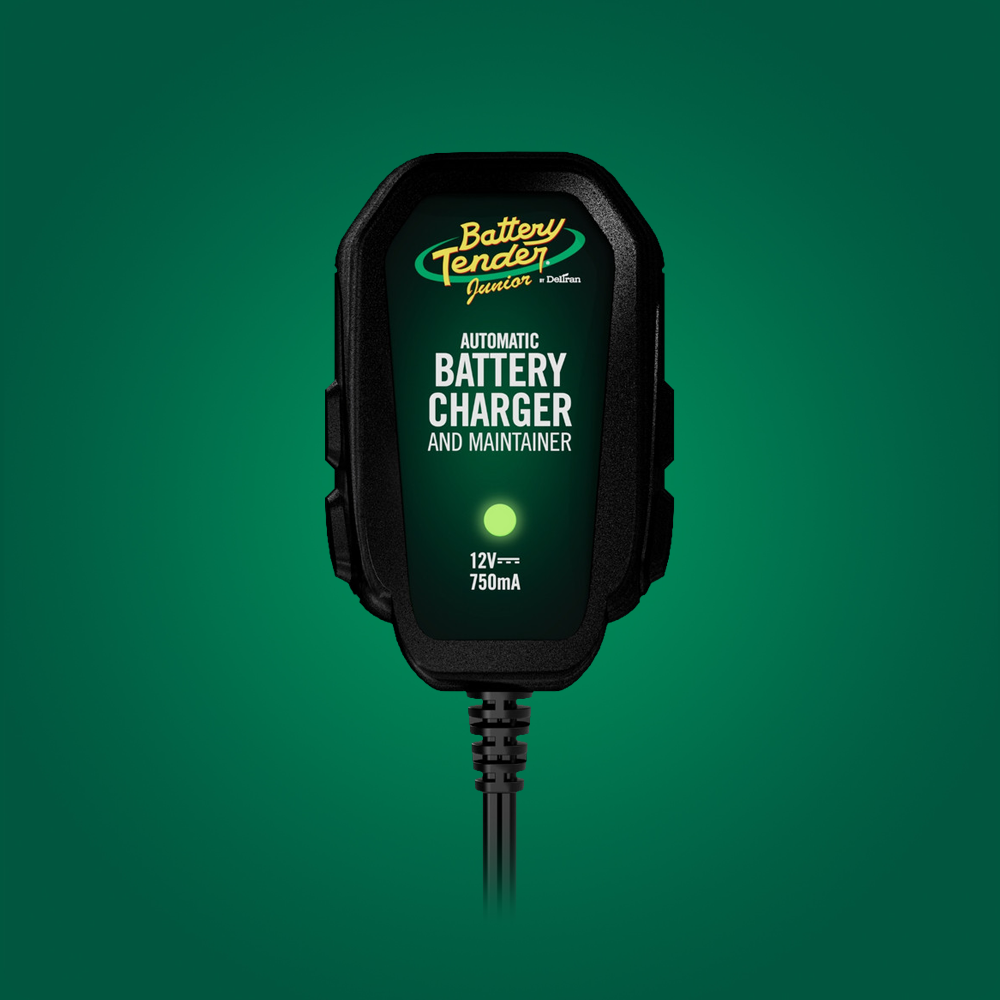
For Sportster, Street, and Nightster riders with smaller batteries in the 8–18 Ah range, the Battery Tender Junior 750mA provides reliable ISM 4-stage charging at a lower price point. At 0.75 amps, it delivers a gentle charge rate perfectly suited to smaller-capacity batteries. The compact form factor stores easily in a saddlebag or under a workbench. The unit carries a 5-year warranty and is rated for batteries between 2 Ah and 30 Ah.
Battery Tender Junior 12V 750mA Battery Charger
Best for Lithium Battery Upgrades
Harley riders who have upgraded to lithium-iron-phosphate (LiFePO4) batteries for weight reduction need a charger specifically designed for lithium chemistry. Lithium batteries require different charge voltage profiles — typically 14.4V–14.6V versus 14.7V–14.8V for lead-acid — and cannot tolerate trickle charge voltages designed for AGM cells. The Battery Tender Junior 1A Selectable features a dedicated lithium charging mode alongside its standard lead-acid mode. The simple toggle switch ensures the correct voltage curve is applied based on battery chemistry, eliminating the risk of undercharging lithium or overcharging lead-acid.
Battery Tender Junior 1A Selectable Multi-Chemistry Battery Charger
How to Install a Harley Davidson Battery Charger with Quick-Connect Harness
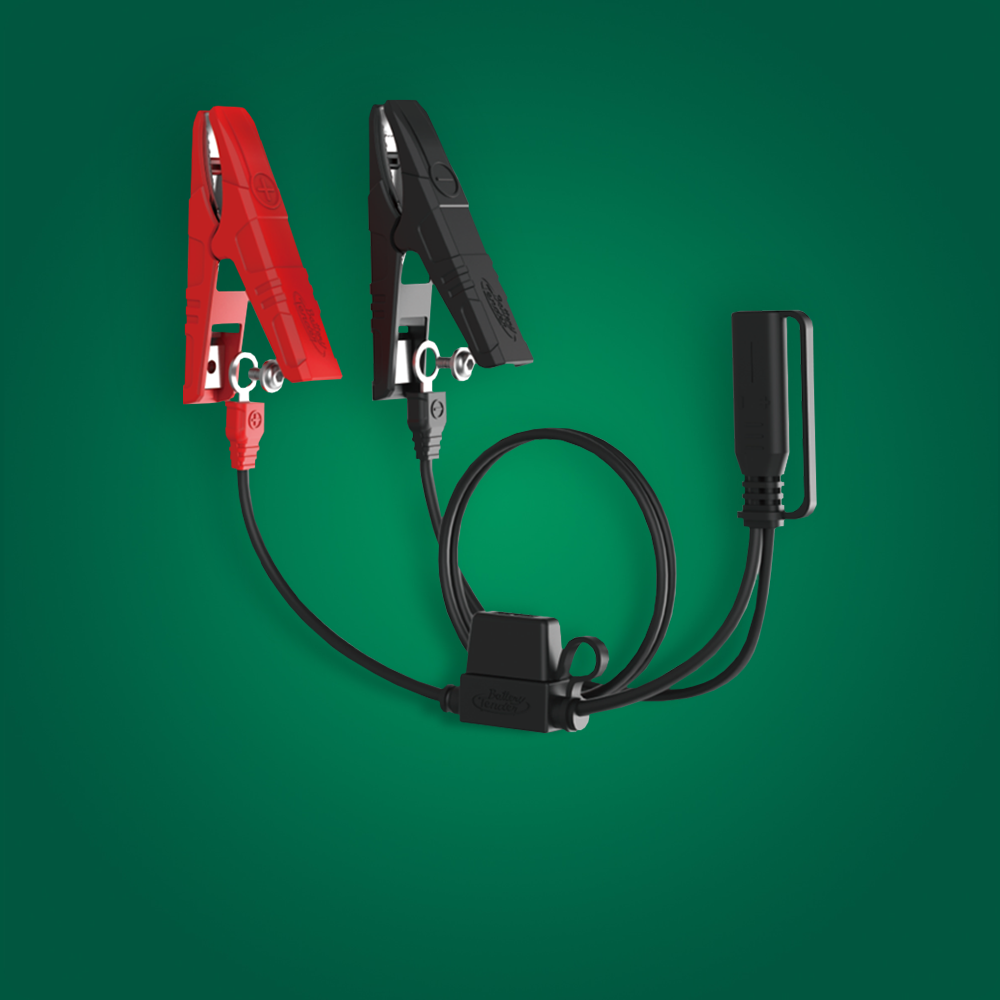
Every Battery Tender charger ships with a ring terminal harness that provides a permanent, clean connection to the motorcycle battery. Proper installation takes approximately 10 minutes and eliminates the need to remove seats or access panels for every charge session.
Step 1: Disconnect the negative (black) battery cable from the Harley battery terminal. On most Harley Davidson models, the battery is located under the seat or behind a side cover.
Step 2: Attach the red ring terminal from the Battery Tender harness to the positive (+) battery post, then attach the black ring terminal to the negative (−) post. Tighten securely — loose connections create resistance heat.
Step 3: Route the SAE quick-connect plug to an accessible location, such as under the seat edge or through the frame near the steering neck. Avoid routing near exhaust pipes, drive belt, or moving suspension components.
Step 4: Reconnect the negative battery cable. When ready to charge, simply plug the Battery Tender charger SAE connector into the installed harness. The charger begins ISM charging automatically — no switches, no settings to configure.
This quick-connect setup is especially valuable for Harley Touring models where battery access requires removing the seat and potentially a support bracket. Once installed, charging takes three seconds: walk in, plug in, walk away.
Winter Storage Charging Protocol for Harley Davidson Motorcycles
Winter storage is the highest-risk period for Harley Davidson batteries. In northern climates, motorcycles may sit unused from November through March or April — up to five months. Without active maintenance charging, a fully charged 12.7V AGM battery can drop below 12.0V within 30–60 days, entering the sulfation danger zone. A battery that drops below 10.5V may suffer permanent capacity loss and refuse to accept a full charge.
The recommended protocol is simple: connect a Battery Tender charger to the quick-connect harness at the start of storage and leave it connected for the entire off-season. ISM technology makes this safe. The Float Maintenance stage delivers micro-pulses of current only when battery voltage drops below the maintenance threshold, which may happen only a few times per day depending on temperature and parasitic draw. This approach maintains the battery at 100% state of charge through the entire winter without any risk of overcharging.
For Harley owners storing in unheated garages where temperatures regularly drop below 32°F (0°C), the Battery Tender Plus with temperature compensation is strongly recommended. Cold temperatures increase internal battery resistance, which requires slightly higher charging voltage to achieve full charge. Temperature compensation adjusts voltage automatically — typically increasing by approximately 18 mV per degree Celsius below 25°C — ensuring the battery reaches true full charge regardless of ambient conditions.
When Your Harley Needs More Than a Charger: Jump Start Capability
A smart charger maintains batteries over time, but it cannot deliver the 200+ cranking amps a Harley Davidson V-twin demands at startup. When a battery is deeply discharged or conditions prevent connection to a wall outlet — rally campgrounds, roadside situations, or remote riding destinations — a portable jump starter provides immediate cranking power.
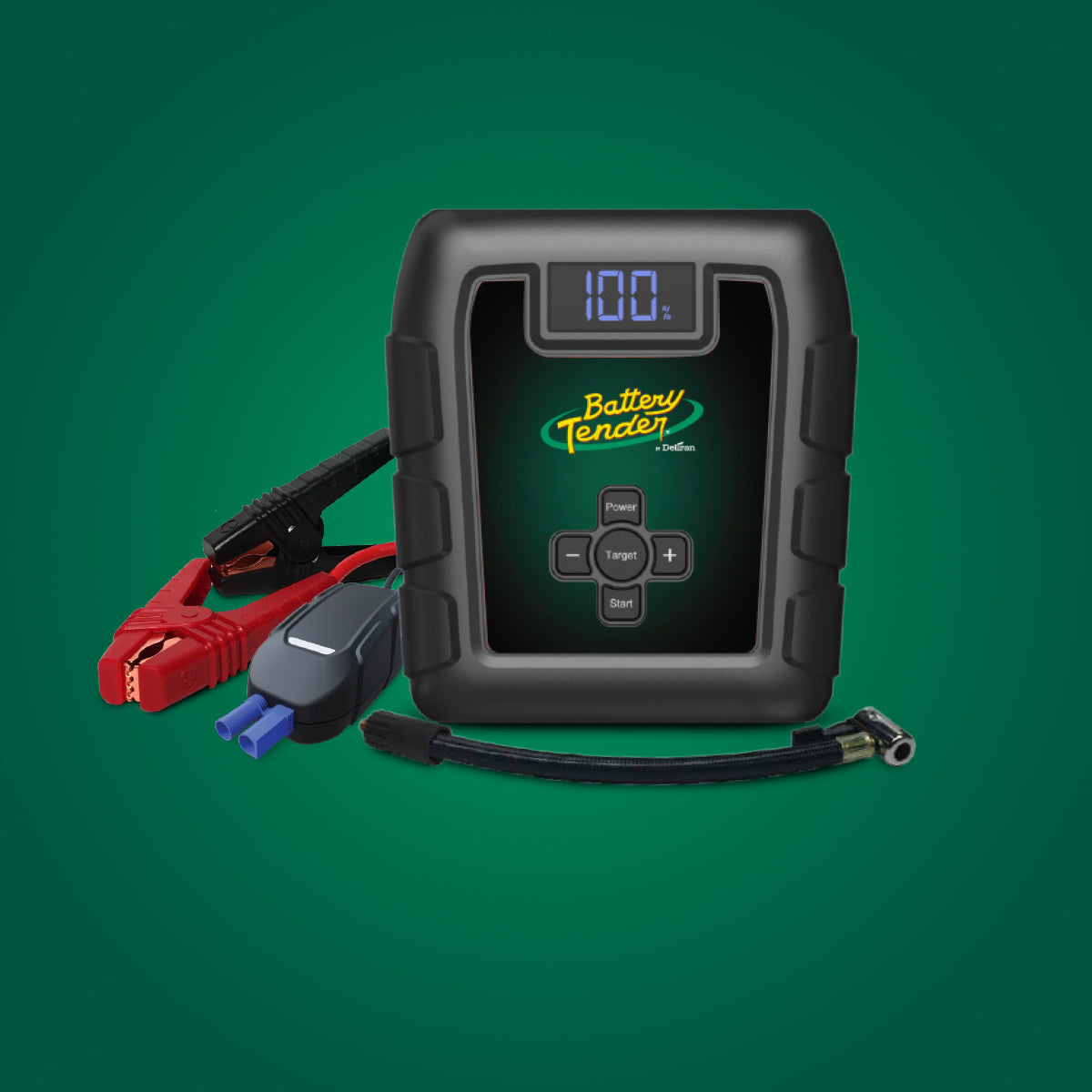
The Battery Tender Charge N Start 1100 combines both functions in a single unit: a 1A ISM smart charger for home maintenance and a 1,000-amp lithium-ion jump starter for emergency starting. The internal lithium-ion battery pack can start engines up to 5.0L gas or 3.0L diesel — more than sufficient for any Harley Davidson engine. The Charge N Store feature maintains the internal battery pack at ready status, and the SafeGuard anti-backfeed circuit prevents electrical damage during the jump-start process. At $139.95, it eliminates the need to carry separate devices.
Battery Tender Charge N Start 1100 — 1A Charger + 1000A Jump Starter
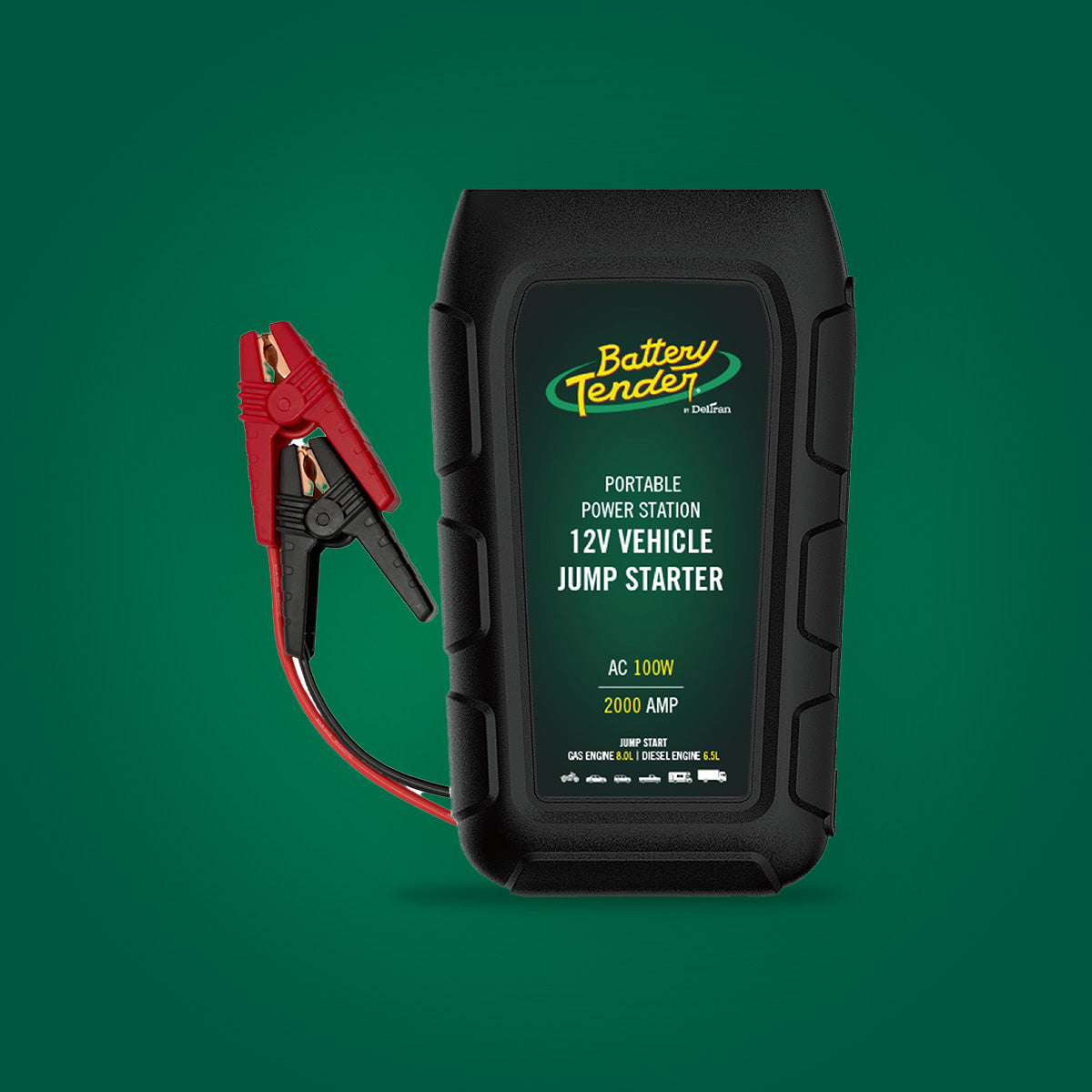
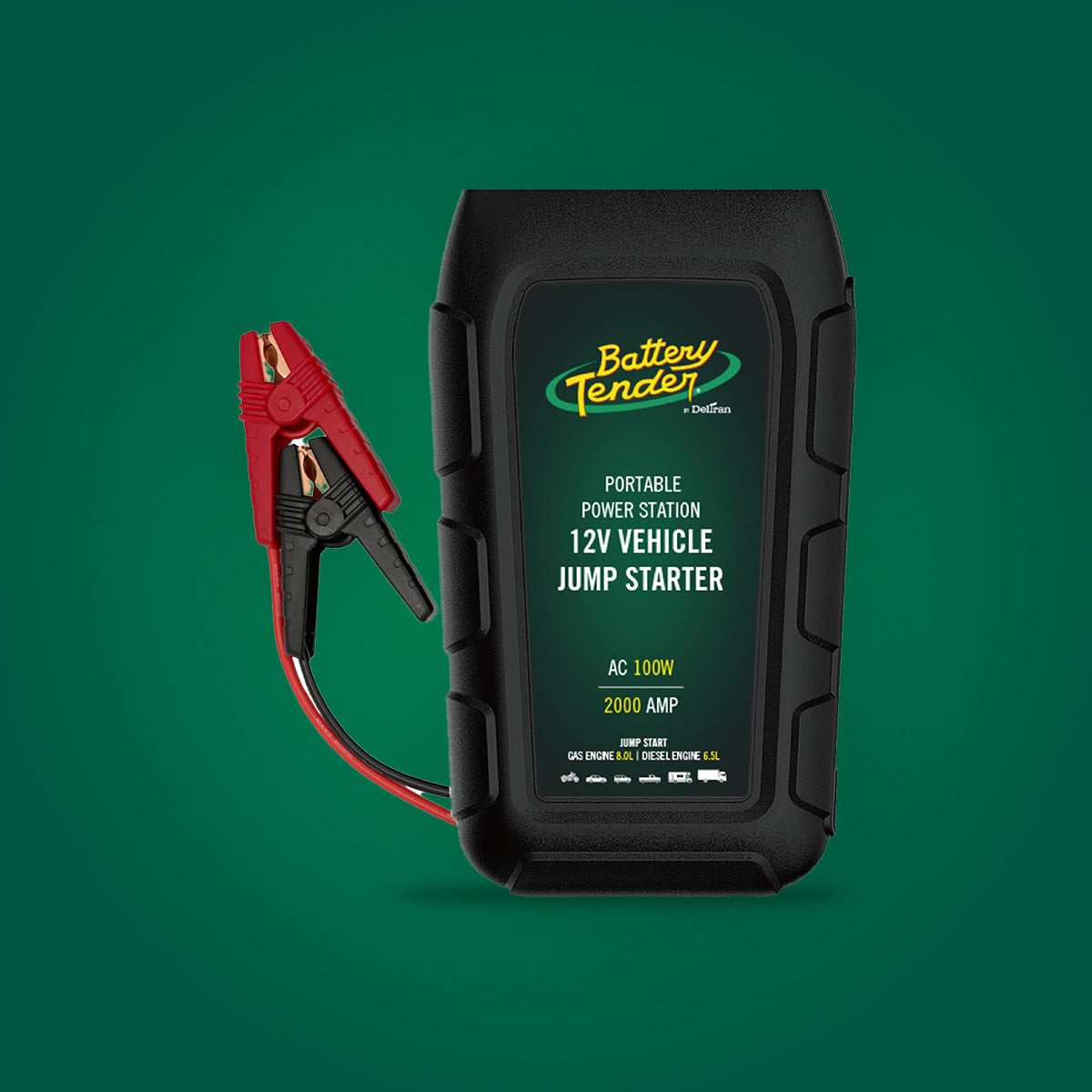
For riders who want a more compact emergency-only option to carry in a saddlebag, the Battery Tender 600A Jump Starter weighs under a pound, holds 6,400 mAh of capacity, and delivers 600 peak amps — enough to crank any Harley engine multiple times on a single charge.
Battery Tender 600A Portable Jump Starter
Common Harley Davidson Battery Charger Mistakes to Avoid
Using an automotive trickle charger: A constant-current trickle charger rated at 2+ amps can overcharge a 12–19 Ah Harley battery in hours. Once electrolyte boils off in a sealed AGM cell, the battery is destroyed — there is no way to add water. ISM chargers eliminate this risk entirely by monitoring voltage and adjusting current throughout the charge cycle.
Choosing the wrong chemistry setting: Connecting a lead-acid-only charger to a lithium battery delivers incorrect float voltage (typically 13.6V for lead-acid versus 13.2V or lower for lithium), which can damage lithium cells over time. Always verify the charger supports the installed battery chemistry and select the correct mode before connecting.
Ignoring parasitic draw: Harley Davidson security systems, ECU memory, and aftermarket accessories like alarm systems draw 15–30 mA continuously. Over 30 days, a 20 mA draw consumes approximately 14.4 Ah (0.020A × 720 hours) — nearly the entire capacity of a Sportster battery. A Battery Tender charger connected via the quick-connect harness offsets this drain automatically.
Disconnecting the battery instead of maintaining it: Some owners disconnect the negative cable during storage to prevent drain. While this stops parasitic draw, the battery still self-discharges at 1–3% per day and receives no sulfation prevention. Active ISM maintenance charging is superior to disconnection in every measurable way.
Frequently Asked Questions
Can I leave a Battery Tender charger connected to my Harley Davidson all winter?
Yes. Battery Tender chargers use ISM 4-stage technology that automatically transitions to Float Maintenance once the battery reaches full charge. The charger delivers demand-responsive micro-pulses only when voltage drops below threshold, preventing overcharging. It is safe to leave connected for the entire off-season — weeks, months, or indefinitely.
What size charger does a Harley Davidson need?
Most Harley Davidson motorcycles use 12V AGM batteries between 12 Ah and 28 Ah. A charger rated at 0.75A–1.25A falls within the recommended 10–20% charge rate for these capacities. The Battery Tender Plus at 1.25A handles all Harley models from Sportster through Touring, while the Battery Tender Junior at 750mA suits smaller Sportster and Street batteries.
Will a Battery Tender charger work with a lithium battery in my Harley?
The Battery Tender Junior 1A Selectable supports both lead-acid and lithium-iron-phosphate (LiFePO4) batteries with a dedicated chemistry toggle switch. Lithium batteries require different charge voltage profiles than AGM or flooded lead-acid, so selecting the correct mode before connecting is essential. The selectable design ensures proper voltage curves for either chemistry.
How long does it take to charge a dead Harley Davidson battery?
Use the formula: battery Ah × depth of discharge ÷ charger amps. A fully dead 19 Ah Sportster battery charged at 1.25A takes approximately 15.2 hours. A 28 Ah Touring battery at 50% discharge charged at 1.25A takes approximately 11.2 hours (28 × 0.5 ÷ 1.25). ISM technology optimizes this process through the Bulk and Absorption stages for safe, complete recovery.
Conclusion
Choosing the right Harley Davidson battery charger comes down to matching charger amperage to battery capacity, selecting the correct chemistry mode, and using ISM technology to eliminate sulfation and overcharging risks. The Battery Tender Plus 1.25A remains the top all-around choice for its temperature compensation, weatherproof construction, and compatibility with every Harley battery from 14 Ah to 80 Ah. For lithium-upgraded bikes, the Battery Tender Junior 1A Selectable provides dedicated chemistry support. And for riders who want maintenance charging plus emergency jump-start capability, the Battery Tender Charge N Start 1100 delivers both in a single unit.
Every Battery Tender charger uses the same ISM 4-stage process that has defined smart charging since 1989 — safe to connect, safe to leave, and proven to extend battery life from 2–3 years to 5 years or more. Explore the full lineup of motorcycle-compatible chargers and find the right match for every Harley in the garage.
Browse All Battery Tender Powersports Chargers
Last updated: 2026


