


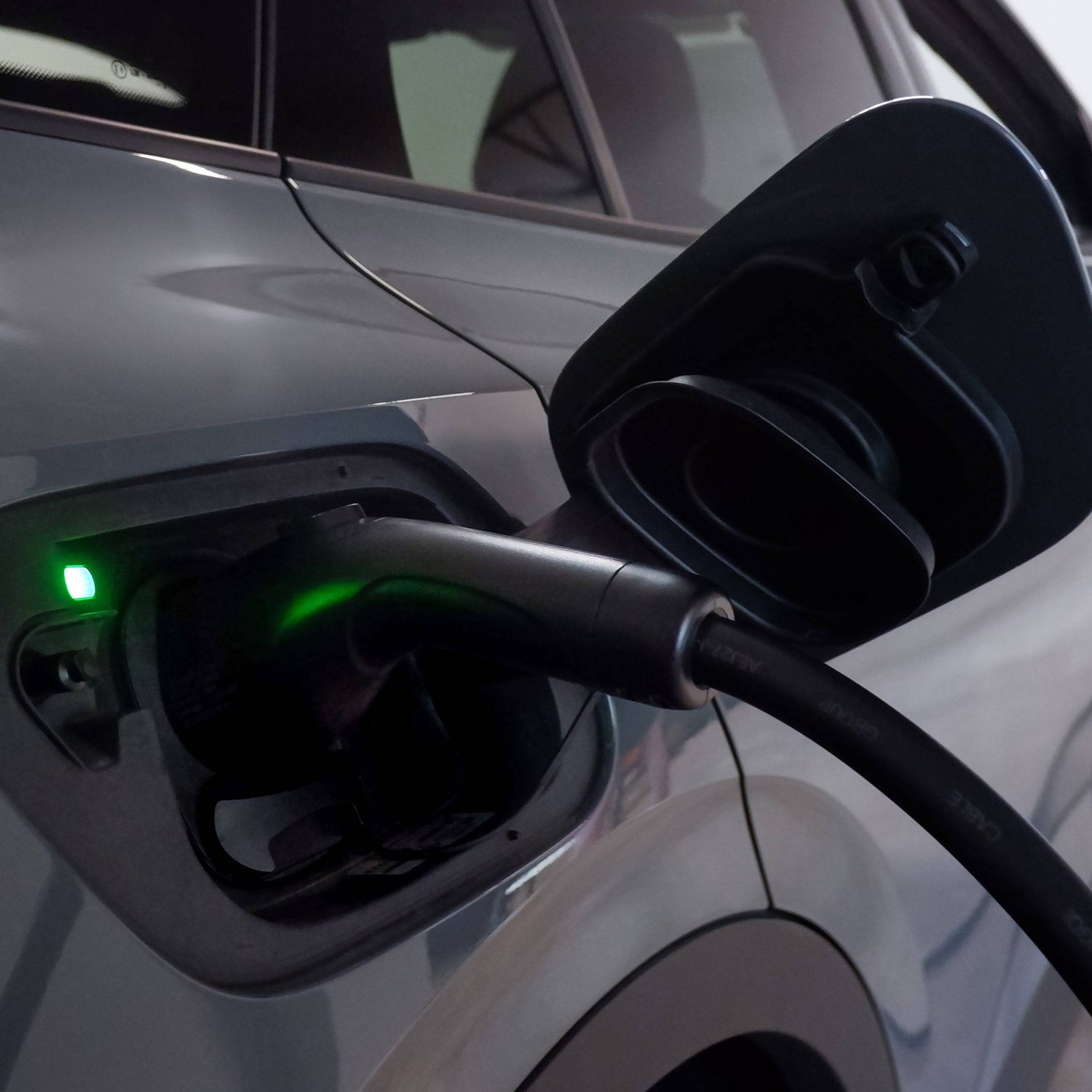
La promesa de poseer un vehículo eléctrico es recargarlo en casa: despertarse cada mañana con la batería llena sin tener que ir a una gasolinera. Cumplir esa promesa plenamente depende de elegir la configuración de carga doméstica adecuada. ¿Conduce menos de 64 kilómetros al día y lo enchufa a una toma de corriente estándar por la noche? La carga de nivel 1 puede ser perfecta para usted. ¿Tiene un vehículo eléctrico con una batería grande y necesita regularmente el máximo alcance? El nivel 2 no es opcional, es esencial.
La gama de cargadores de vehículos eléctricos Battery Tender® eCharge abarca desde cargadores portátiles de nivel 1 hasta cargadores montados de alta potencia de nivel 2, construidos con la misma excelencia en ingeniería que ha definido el nombre Battery Tender en la carga de baterías durante más de 60 años. Esta guía explica las diferencias prácticas y le ayuda a determinar qué solución se adapta a su patrón de conducción y a su infraestructura eléctrica.
Comprensión de los niveles de carga de vehículos eléctricos
Nivel 1: Carga con toma de corriente estándar de 120 V
La carga de nivel 1 utiliza una toma de corriente doméstica estándar de 120 V, la misma que usan su lámpara y el cargador de su teléfono. No requiere una instalación especial, un electricista ni equipo adicional más allá del cargador portátil que viene con la mayoría de los vehículos eléctricos o un cargador portátil dedicado de nivel 1.
| Especificación de nivel 1 | Valores típicos |
|---|---|
| Voltaje | 120 V CA |
| Amperaje | 12–16 amperios |
| Potencia de salida | 1.4–1.9 kW |
| Kilómetros añadidos por hora | 5–8 kilómetros |
| Tiempo de carga completa (batería típica de 60 kWh) | 30–45 horas |
| Mejor para | Bajo kilometraje diario; PHEV; recarga nocturna |
El nivel 1 es totalmente adecuado para vehículos híbridos enchufables (PHEV) con autonomías eléctricas de 24 a 48 kilómetros; se puede lograr una carga completa durante la noche. Para vehículos eléctricos de batería completa que se conducen menos de 48 a 64 kilómetros al día, el nivel 1 puede mantener el ritmo con la carga nocturna. Para los propietarios que conducen más o poseen vehículos eléctricos con baterías de 60 kWh o más, la lenta velocidad del nivel 1 se convierte en una limitación genuina.
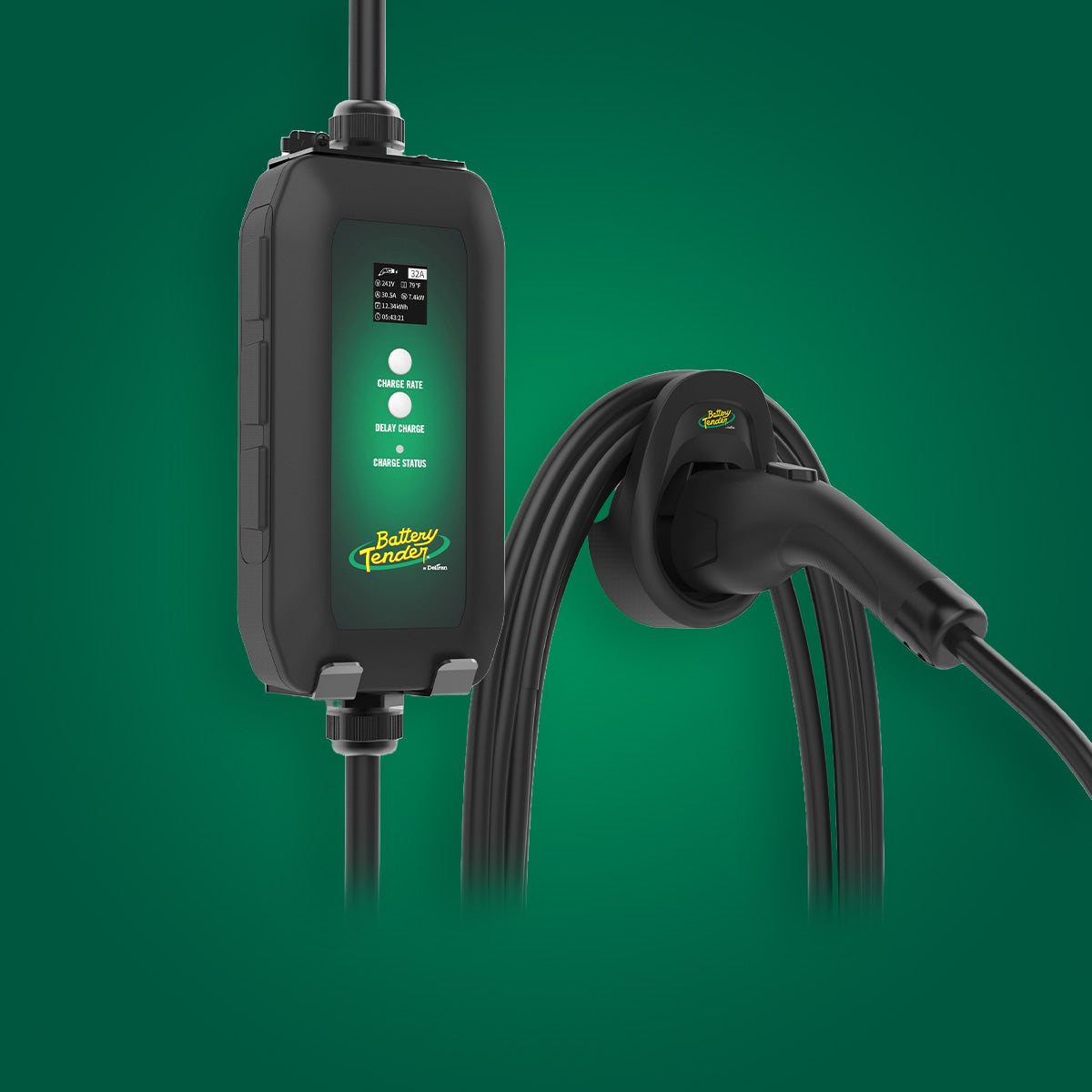
El cargador portátil de nivel 1 para vehículos eléctricos Battery Tender eCharge de 16 amperios ofrece 11.6 kilómetros de carga por hora, la opción portátil premium de nivel 1 para propietarios de vehículos eléctricos y PHEV.
Nivel 2: Carga doméstica de alta velocidad de 240 V
La carga de nivel 2 utiliza una potencia de 240 V, el mismo voltaje que una secadora o una estufa eléctrica. Requiere un circuito dedicado y, por lo general, una toma de corriente 14-50 (NEMA 14-50) o 6-50, o se puede conectar directamente. El resultado es una carga dramáticamente más rápida: la mayoría de los vehículos eléctricos se cargan completamente durante la noche desde cualquier estado razonable de agotamiento.
| Especificación de nivel 2 | eCharge 32 | eCharge 40 | eCharge 48 |
|---|---|---|---|
| Amperaje | 32A | 40A | 48A |
| Potencia de salida | 7.6 kW | 9.6 kW | 11 kW |
| Kilómetros añadidos por hora | ~45.8 | ~54.7 | ~67.6 |
| Carga completa (60 kWh) | ~8 horas | ~6.5 horas | ~5.5 horas |
| Ideal para | Portátil / hogar | Hogar permanente | Alto kilometraje / rápido |
El nivel 2 es la solución de carga doméstica estándar para propietarios de vehículos eléctricos de batería completa que conducen más de 64 kilómetros al día, necesitan una capacidad de carga completa durante la noche confiable o desean la velocidad de carga doméstica más rápida y práctica sin infraestructura comercial.
Comprar el cargador portátil de nivel 1+2 para vehículos eléctricos eCharge de 32 amperios: carga flexible portátil de nivel 1 y nivel 2 en una sola unidad, ideal para propietarios que necesitan flexibilidad en casa y en los viajes.
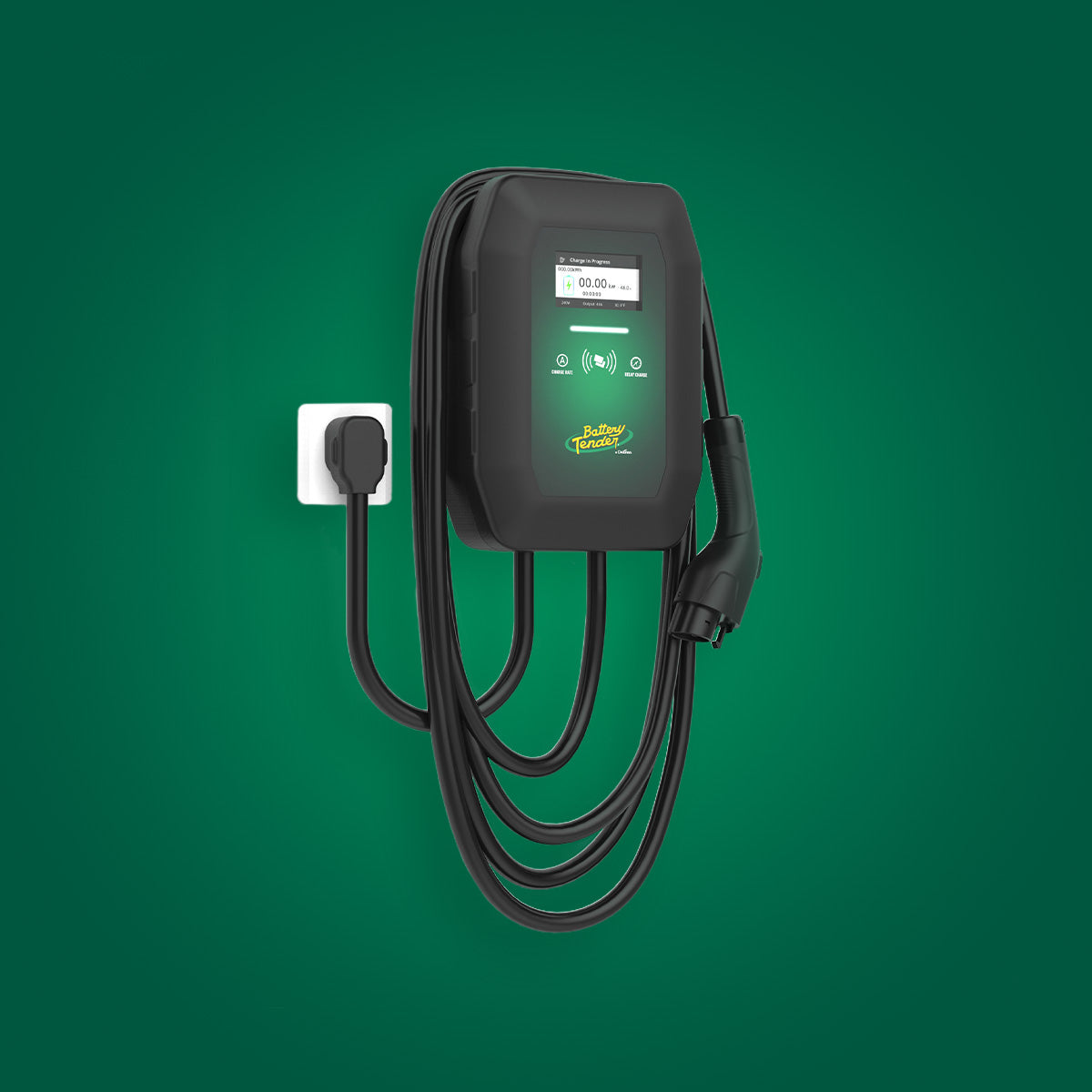
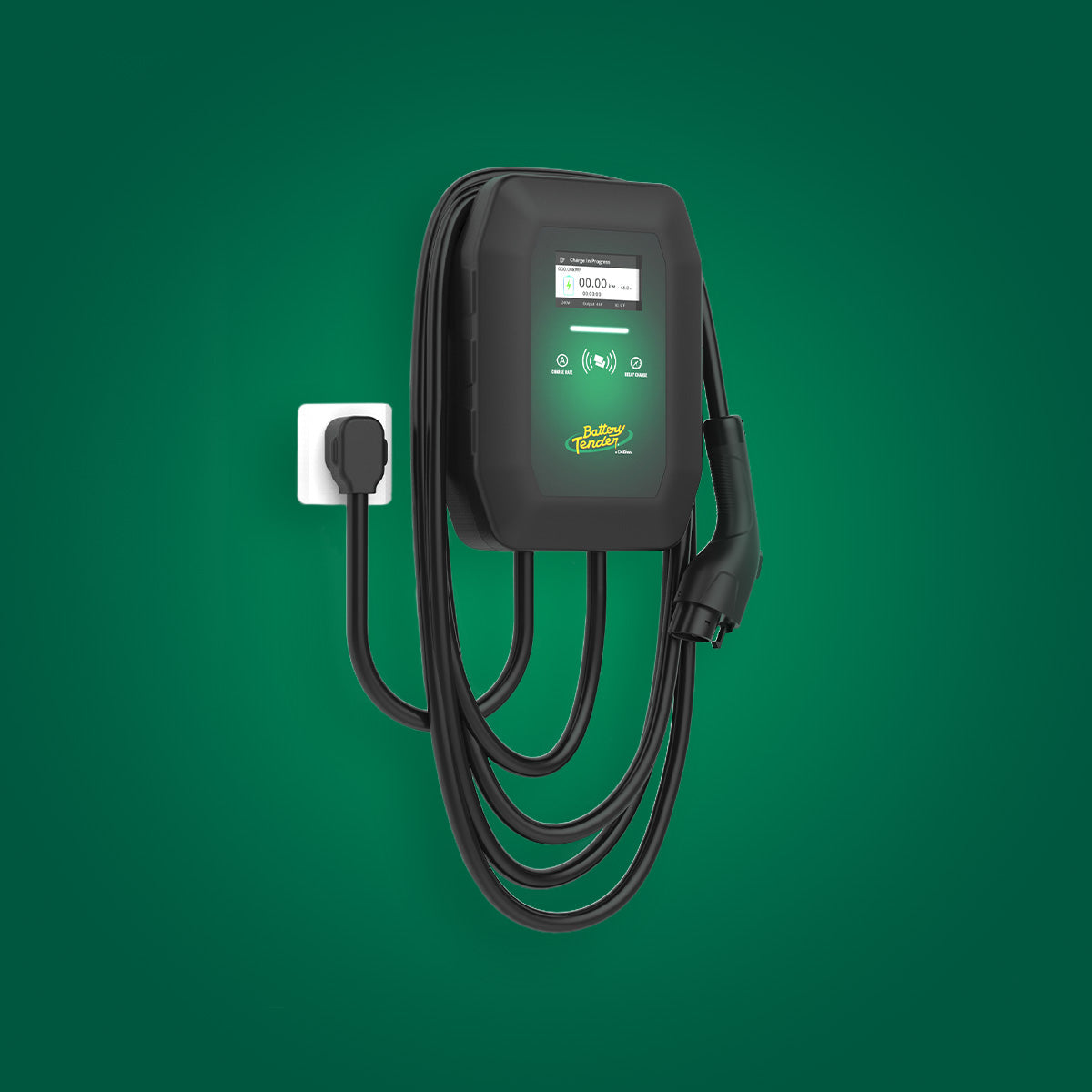
Comprar el cargador de vehículos eléctricos Battery Tender® de nivel 2 y 40 amperios para interiores/exteriores: montado permanentemente para máxima comodidad en un garaje o marquesina.
Comprar el cargador de vehículos eléctricos Battery Tender® de nivel 2 y 48 amperios para interiores/exteriores: la velocidad de carga doméstica más alta, ideal para vehículos eléctricos de largo alcance y conductores con alto kilometraje diario.
Elegir el cargador de nivel 2 adecuado
Portátil vs. Montado
Los cargadores portátiles de nivel 2 (como el eCharge 32) se conectan a una toma de corriente NEMA 14-50 y se pueden mover entre ubicaciones: casa, una propiedad vacacional, un hotel con una toma de corriente para vehículos recreativos o cualquier lugar donde exista una toma de corriente de 240 V. Ofrecen flexibilidad, pero ocupan una toma de corriente y requieren transportar la unidad cuando se viaja.
Los cargadores de nivel 2 montados (eCharge 40 y 48) se conectan directamente o se enchufan a una toma de corriente dedicada y se montan permanentemente en una pared del garaje o en una superficie de montaje exterior. Ofrecen la máxima comodidad (el cable de carga siempre está listo en la misma ubicación) sin necesidad de guardar o mover la unidad.
Requisitos de la infraestructura eléctrica
Los requisitos de instalación de nivel 2 dependen del amperaje del cargador:
- Cargador de 32 A: requiere un circuito dedicado de 40 A (los circuitos se dimensionan al 80 % de la capacidad del disyuntor).
- Cargador de 40 A: requiere un circuito dedicado de 50 A.
- Cargador de 48 A: requiere un circuito dedicado de 60 A.
Antes de comprar un cargador de nivel 2, evalúe su panel eléctrico: ¿tiene capacidad para un circuito adicional de 40 a 60 A? Un electricista puede evaluar esto a un costo relativamente bajo e instalar el circuito dedicado. La mayoría de las casas residenciales construidas en los últimos 20 años tienen capacidad de panel adecuada para la carga de vehículos eléctricos de nivel 2.
La batería auxiliar de 12 V del VE
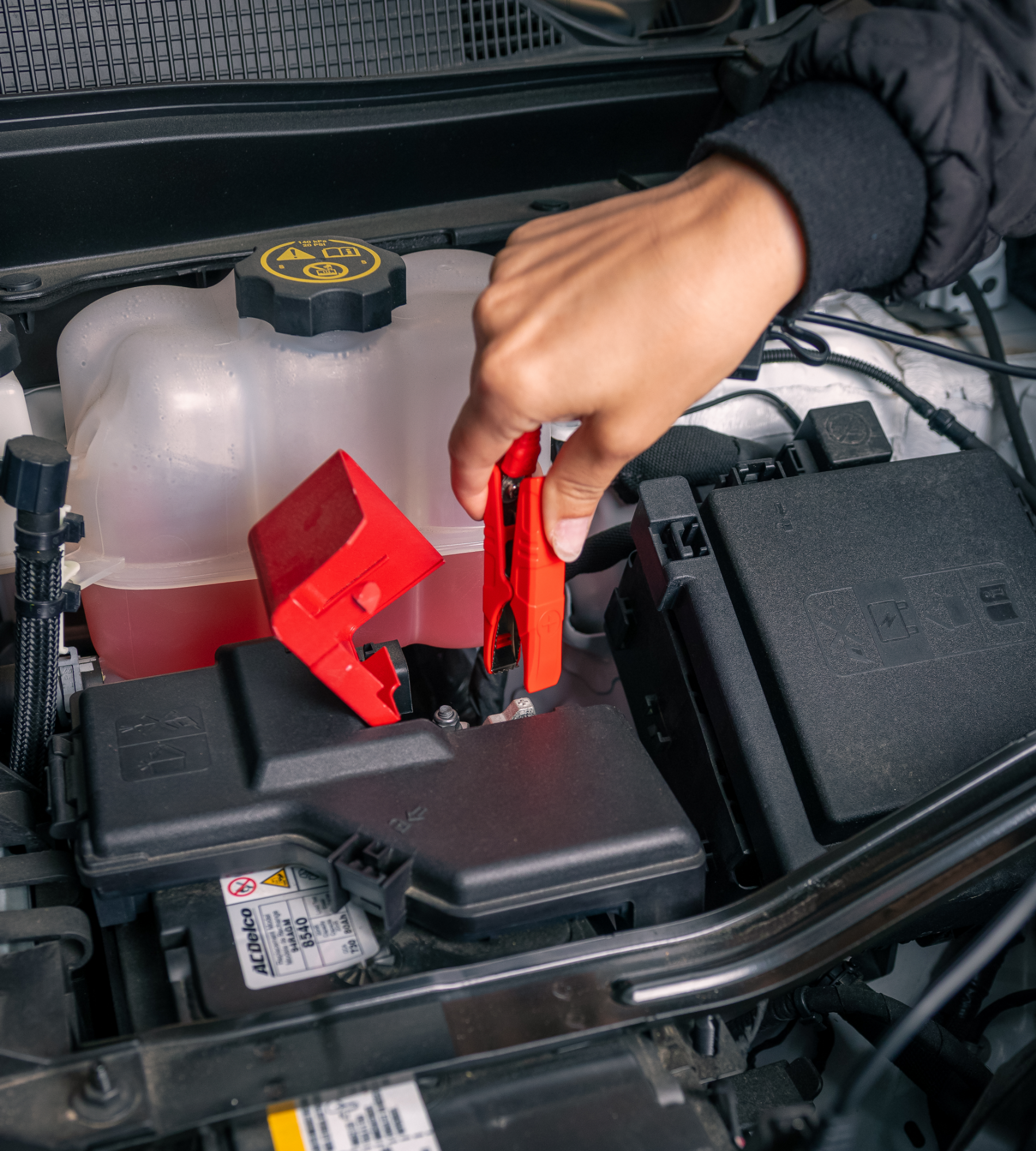
Cada VE tiene una batería auxiliar separada de 12 V, una segunda batería a menudo olvidada que alimenta los accesorios convencionales de 12 V: luces, infoentretenimiento, accesorios y la electrónica de control del sistema de alto voltaje. Esta batería auxiliar de 12 V es una batería estándar de plomo-ácido o AGM que se carga desde el paquete de alto voltaje a través de un convertidor CC-CC durante la conducción normal.
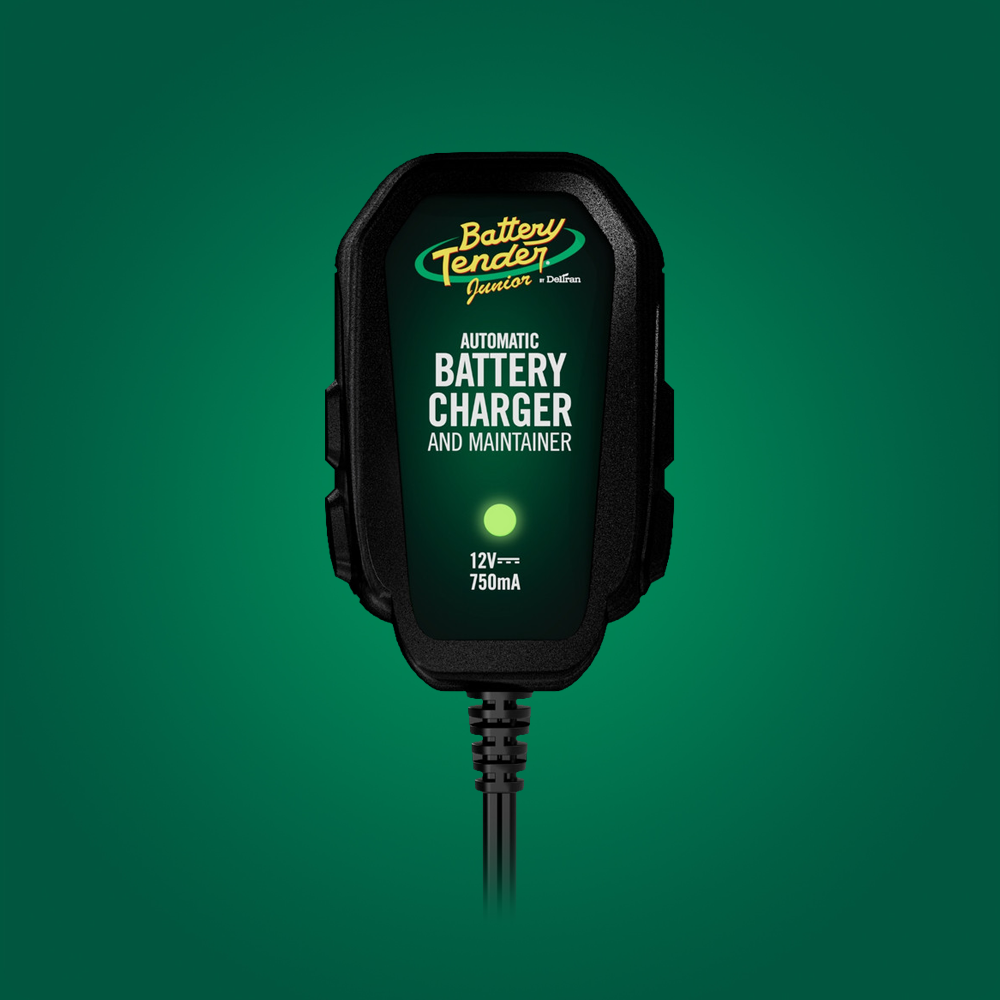
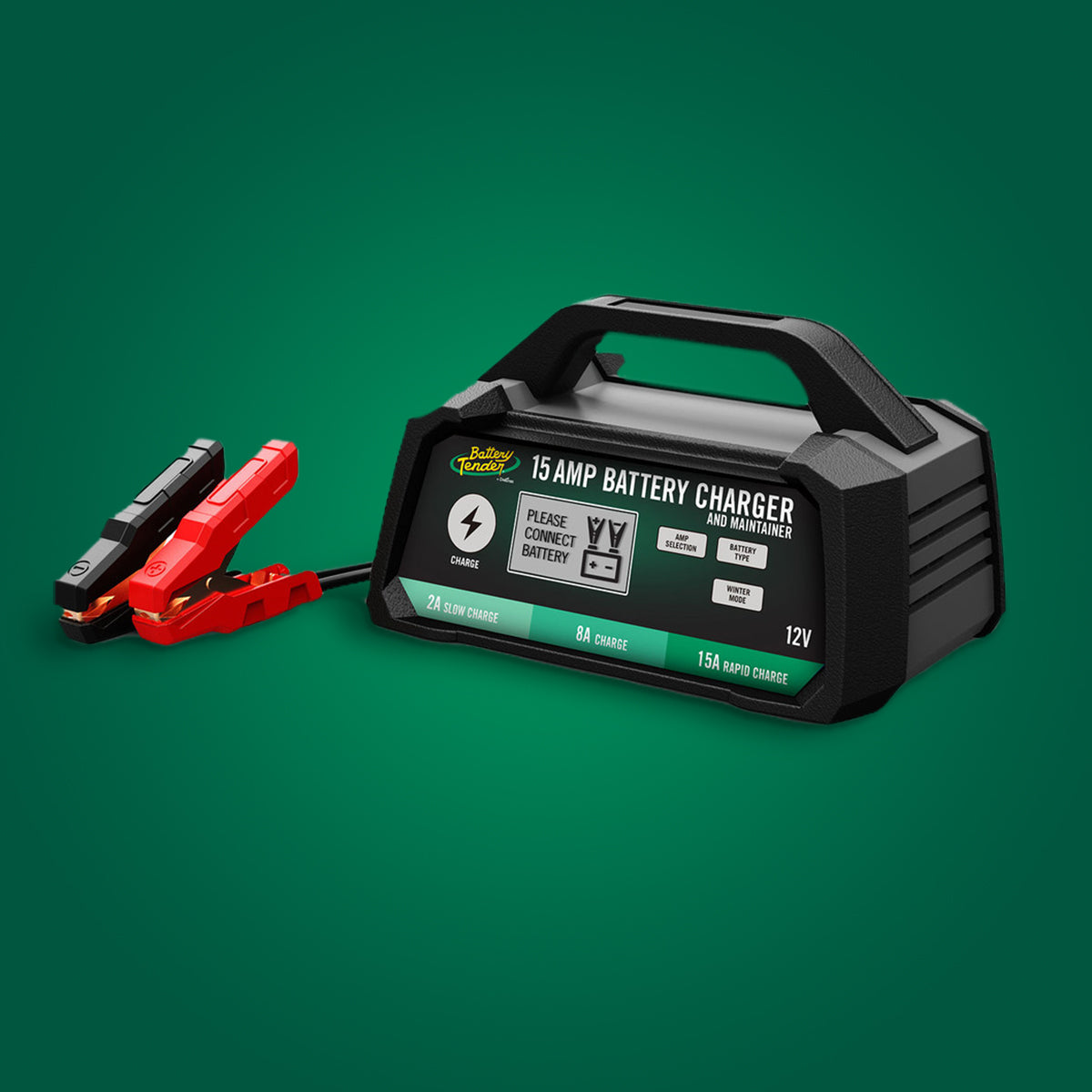
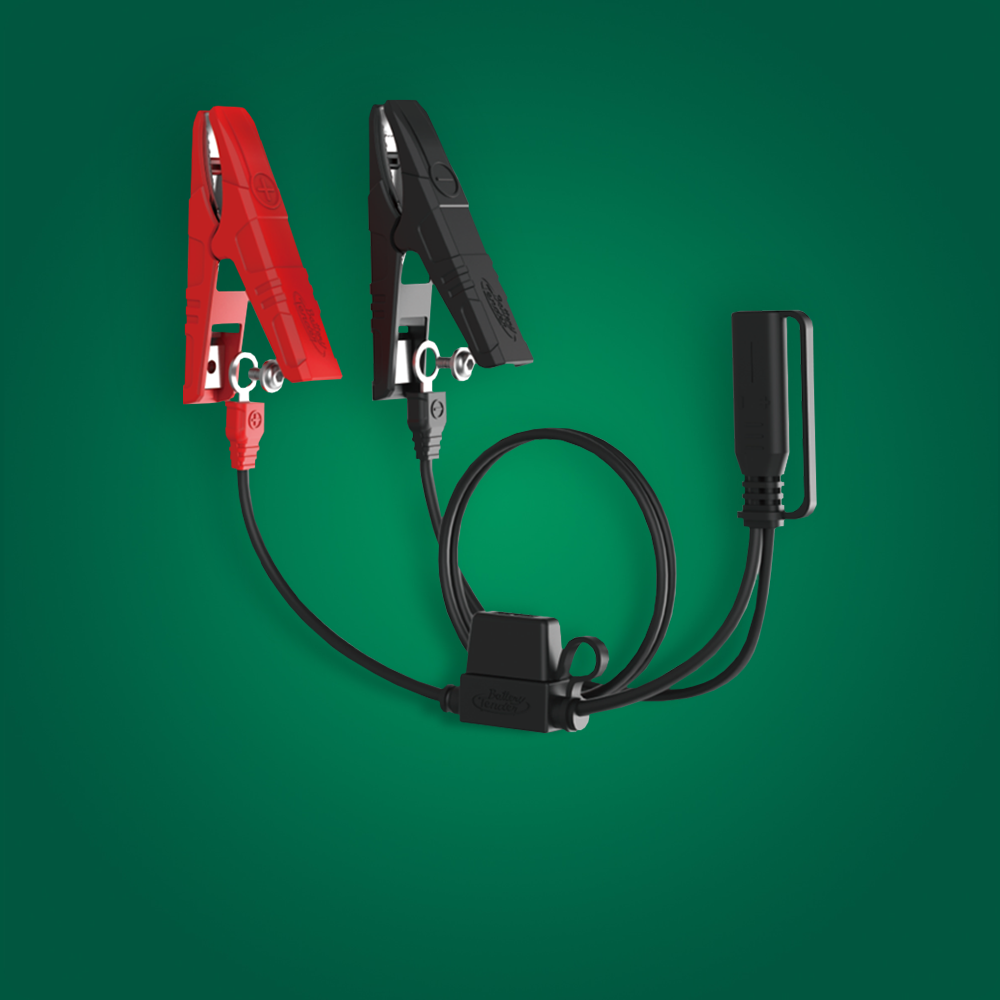
Cuando un VE permanece inactivo durante períodos prolongados sin conducir (estacionado durante semanas, durante un viaje largo o almacenado), la batería auxiliar de 12 V puede descargarse como cualquier batería de vehículo convencional. Un cargador inteligente Battery Tender convencional conectado a la batería auxiliar de 12 V la mantiene durante el almacenamiento; el sistema eCharge se encarga de la batería de tracción de alto voltaje mediante la carga normal, y un Battery Tender Plus se encarga de la auxiliar.
El Battery Tender Plus de 1,25 amperios y 12 V (SKU: 021-0128) es el cargador adecuado para el mantenimiento de la batería auxiliar de 12 V del VE durante el almacenamiento.
Preguntas frecuentes
¿Necesito instalar un circuito nuevo para un cargador de nivel 2?
Casi siempre, sí. Los cargadores de nivel 2 requieren un circuito dedicado; compartirlo con otros electrodomésticos no es seguro ni cumple con la normativa. Un electricista calificado instala el circuito dedicado, lo que lleva de 2 a 4 horas en la mayoría de los hogares con capacidad de panel adecuada. Este es un costo de instalación único que generalmente oscila entre $300 y $700.
¿Cuánto tiempo se tarda en cargar completamente mi VE en el nivel 2?
Divida la capacidad de su batería (kWh) por la potencia de salida del cargador (kW). Ejemplo: batería de 75 kWh ÷ 9,6 kW (eCharge 40) = aproximadamente 7,8 horas para una carga completa desde vacío. La mayoría de la conducción diaria nunca requiere una carga completa: la carga del 20 % al 80 % tarda aproximadamente 4,5 horas con el eCharge 40.
¿Puedo usar cualquier cargador J1772 de nivel 2 con mi VE?
Todos los vehículos eléctricos no Tesla que se venden en Norteamérica utilizan el conector estándar J1772, que utilizan todos los modelos Battery Tender eCharge. Los vehículos Tesla incluyen un adaptador J1772 y son compatibles. Para vehículos con conectores CCS (Sistema de carga combinada), J1772 de nivel 2 sigue siendo compatible para la carga doméstica: los puertos CCS aceptan J1772 para la carga de CA de nivel 2.
Conclusión
La carga doméstica es la base de la propiedad de vehículos eléctricos: proporciona la comodidad que hace que los vehículos eléctricos sean realmente atractivos para el uso diario. El cargador adecuado para su situación depende de su kilometraje diario, el tamaño de la batería y la infraestructura eléctrica. La línea Battery Tender eCharge cubre todo el espectro, desde el nivel 1 portátil para PHEV de uso ligero hasta el nivel 2 de 48 amperios para la máxima velocidad de carga doméstica, todo construido con la calidad y fiabilidad que ha definido el nombre Battery Tender durante más de 60 años.
Explore la línea completa de cargadores de vehículos eléctricos eCharge y encuentre la solución de carga doméstica adecuada para su vehículo eléctrico.