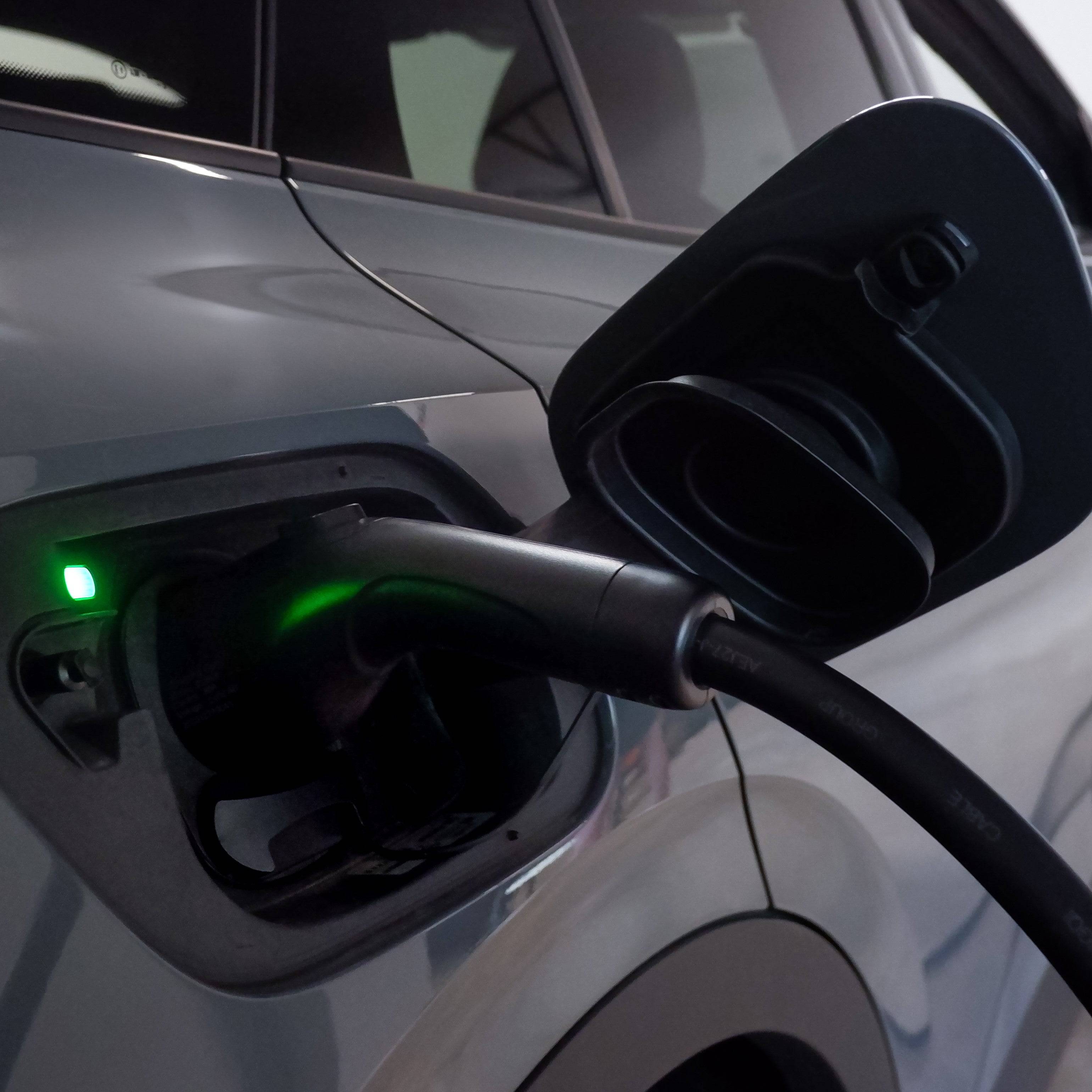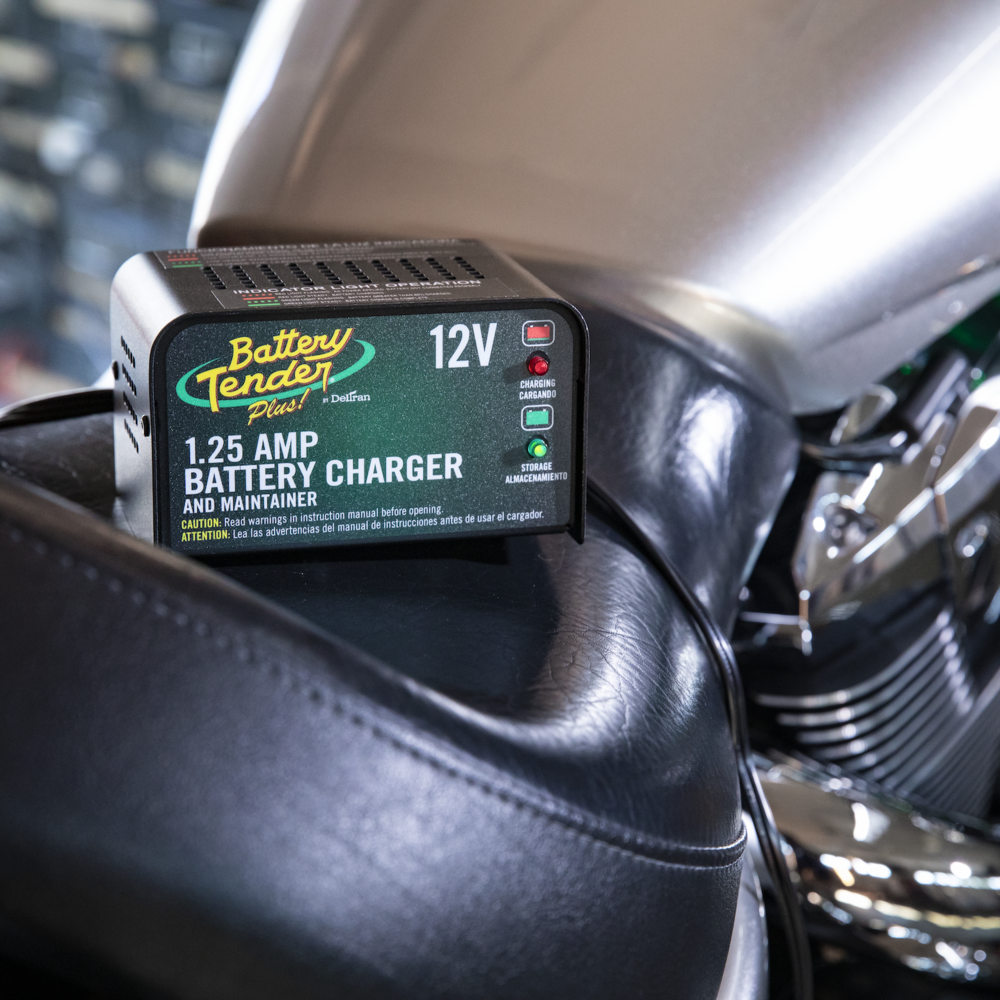
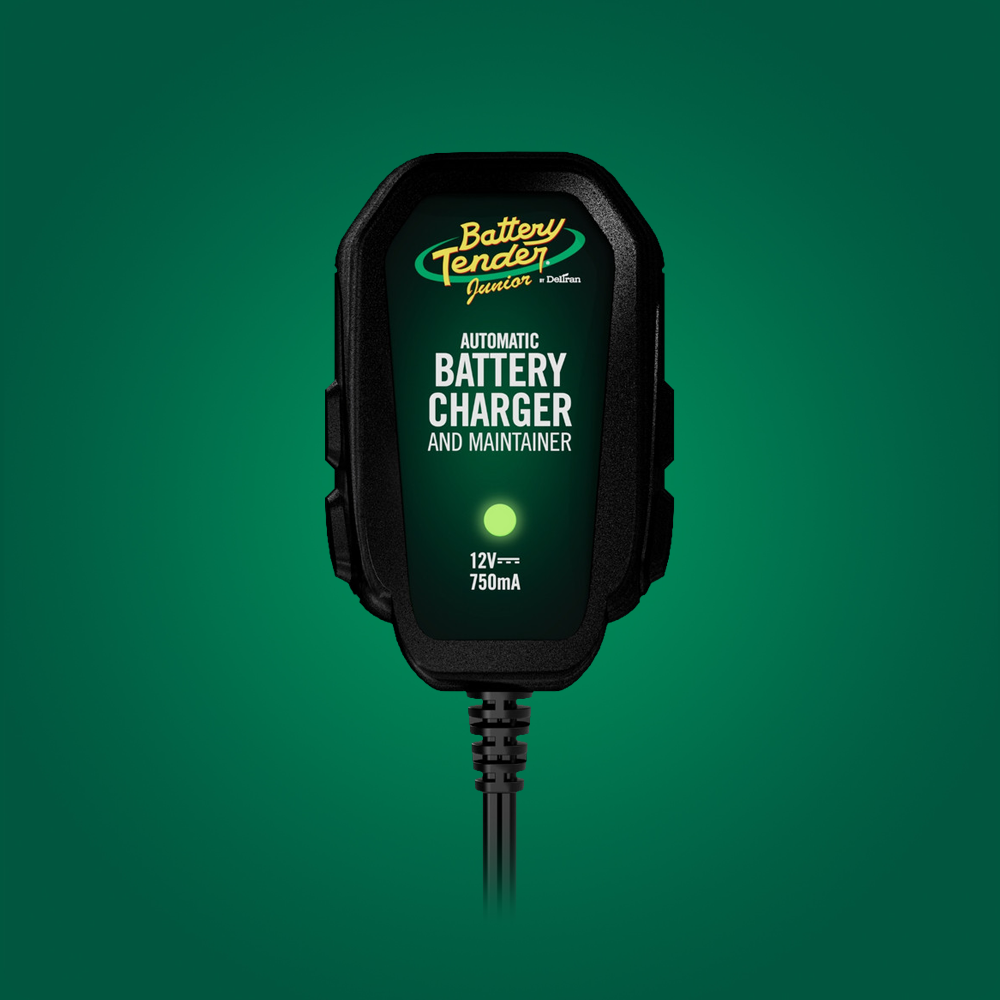
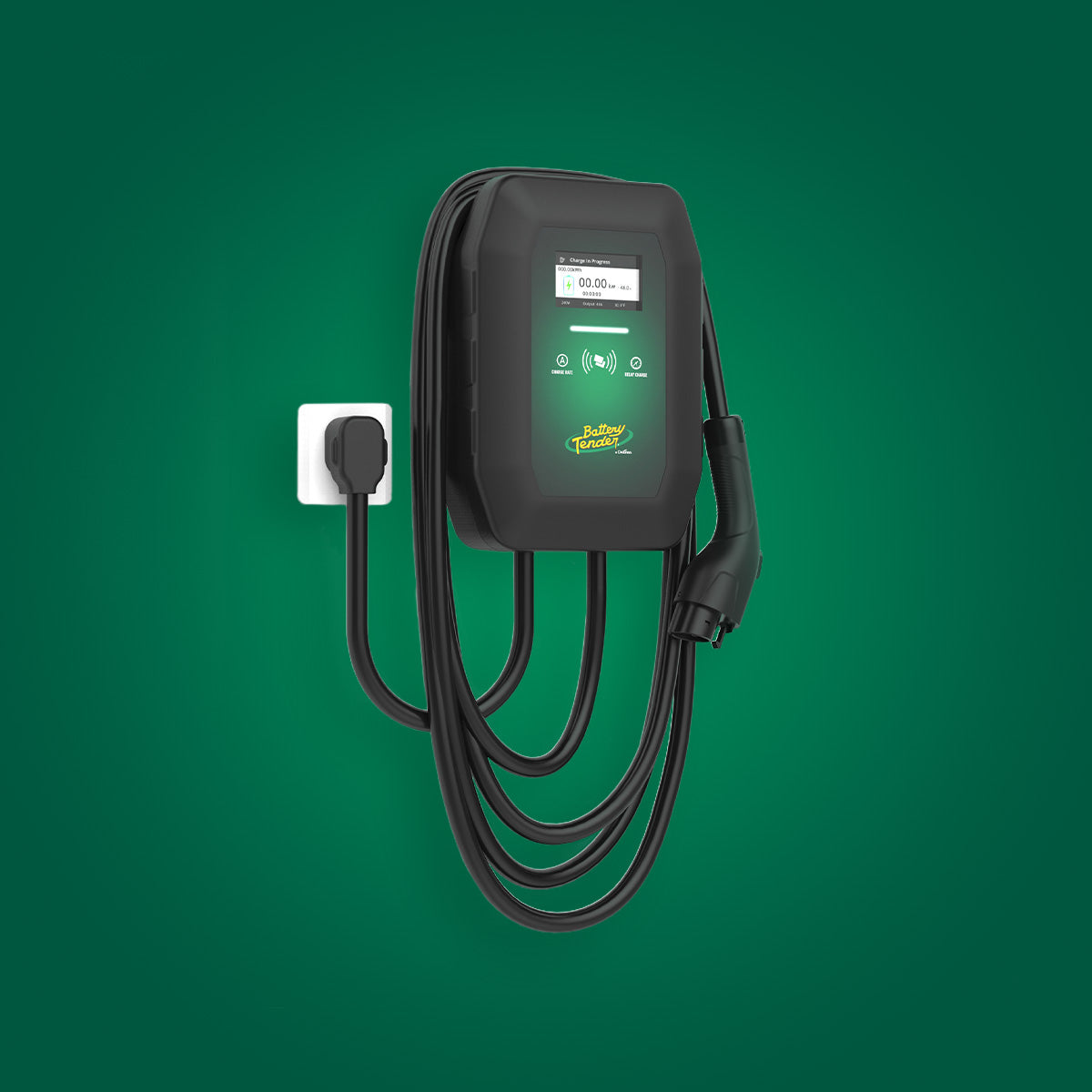





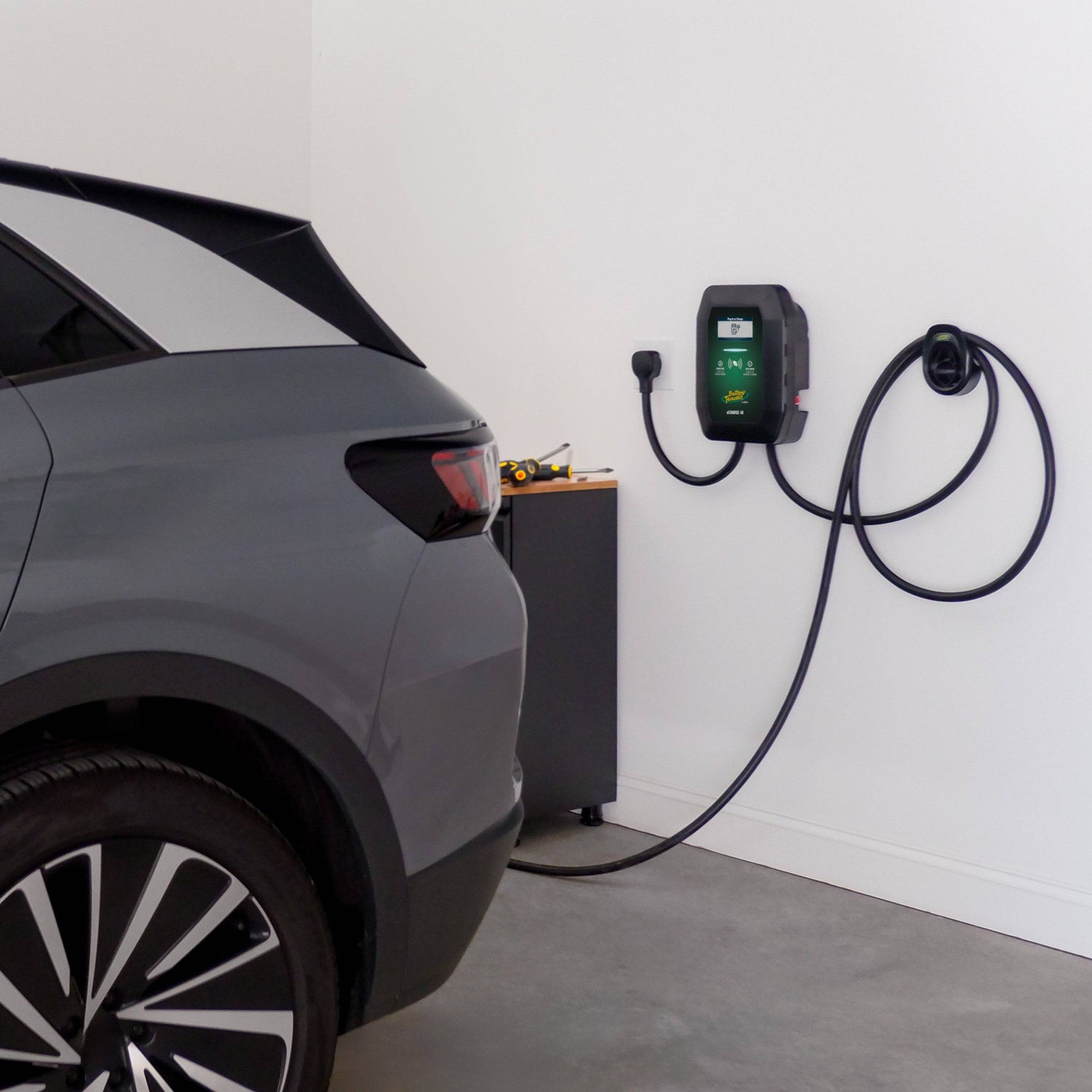
Los vehículos eléctricos exigen una infraestructura de carga doméstica fiable. Si bien las redes públicas de carga se expanden, el 80% de la carga de vehículos eléctricos ocurre en casa, durante la noche, mientras están estacionados, convirtiendo su garaje en una "gasolinera" personal. La instalación de equipos de carga doméstica transforma la propiedad de un vehículo eléctrico de inconveniente a fluida, pero requiere comprender los requisitos eléctricos, la selección de equipos, los procesos de instalación y la optimización de costos.
Battery Tender® ha pasado 60 años diseñando soluciones de carga desde que fue pionero en los cargadores inteligentes de consumo en 1989. Esta guía completa comparte conocimientos esenciales para establecer sistemas de carga de vehículos eléctricos domésticos seguros y eficientes.
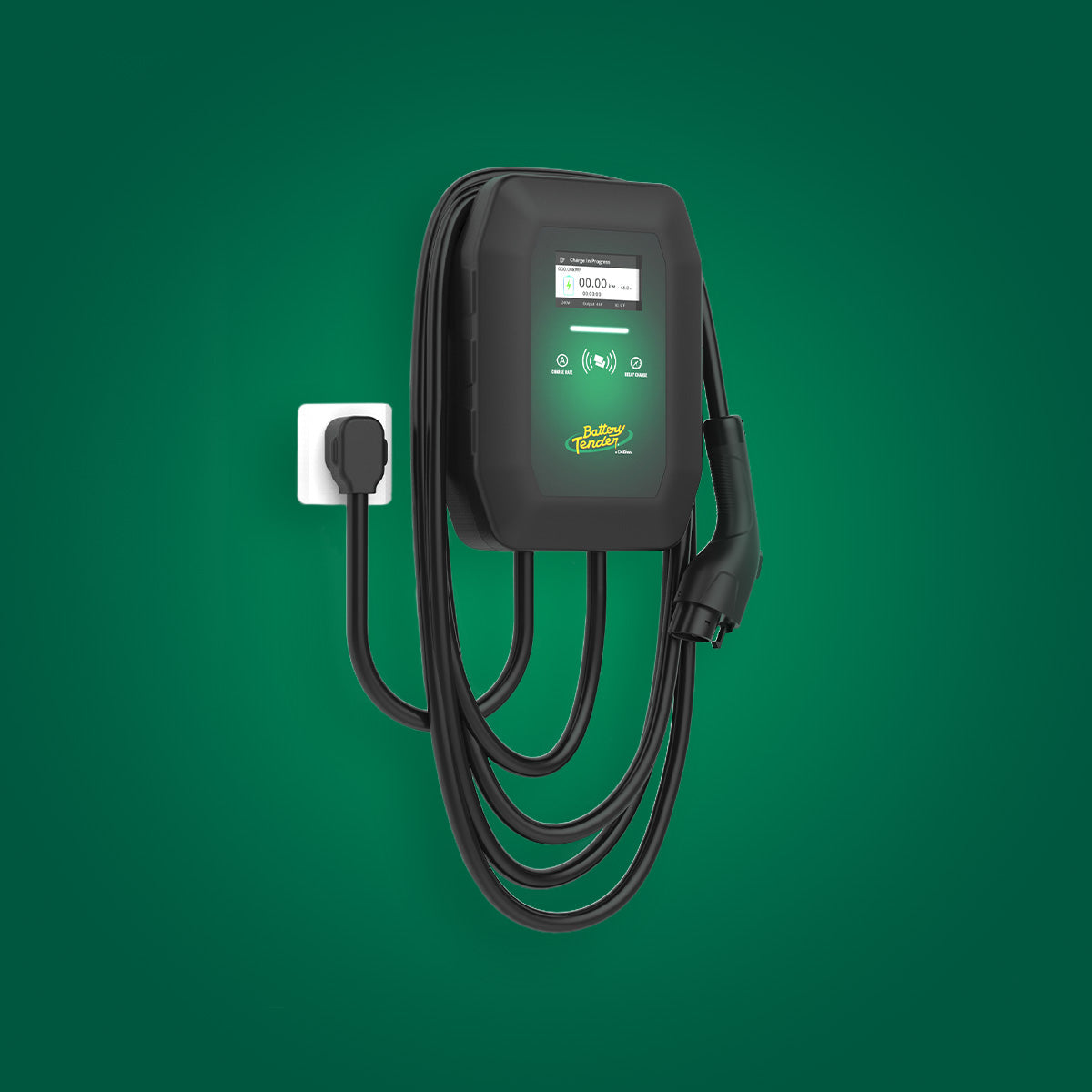
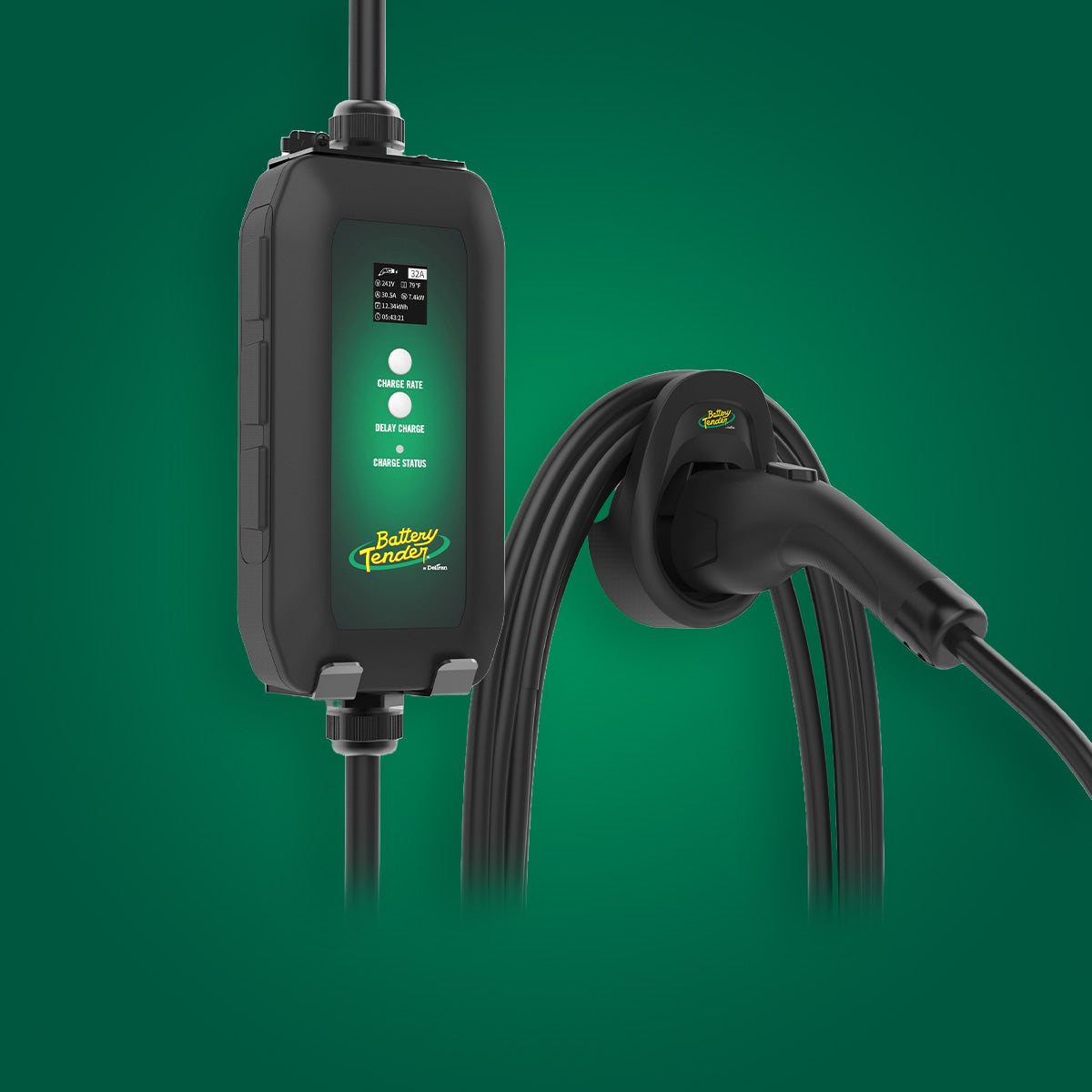
Obtenga más información sobre las opciones de cargadores de vehículos eléctricos aquí: Cargadores de vehículos eléctricos Battery Tender.
Comprensión de los niveles de carga de vehículos eléctricos
Carga de nivel 1 (toma estándar de 120 V)
Qué es
- Toma doméstica estándar de 120 V
- Circuito típico de 15 a 20 amperios
- "Cargador lento" portátil incluido con la mayoría de los vehículos eléctricos
- No requiere instalación
Velocidad de carga
- 3 a 5 millas de autonomía por hora
- Tasa de carga típica de 1,4 kW
- Carga nocturna completa: se añaden 30 a 50 millas de autonomía
- Carga de 12 horas: ~40 a 60 millas de autonomía
Mejor para
- Híbridos enchufables (batería pequeña)
- Bajo kilometraje diario (<40 millas/día)
- Carga de respaldo de emergencia
- Inquilinos de apartamentos (sin instalación)
Limitaciones
- Demasiado lento para la mayoría de los usos de BEV (vehículos eléctricos de batería)
- No recuperará el viaje diario (más de 50 millas) durante la noche
- Ineficiente para baterías grandes (más de 75 kWh)
- El circuito puede sobrecargarse con otros dispositivos
Carga de nivel 2 (circuito dedicado de 240 V)
Qué es
- Circuito dedicado de 240 V (como una secadora eléctrica)
- Circuito típico de 32 a 40 amperios (algunos de 48 a 60 amperios)
- Cargador cableado o enchufable (EVSE)
- Se requiere instalación profesional
Velocidad de carga
- 25 a 60 millas de autonomía por hora
- Velocidad de carga de 7,7 a 19,2 kW
- Carga nocturna completa: se añaden 200 a 300 millas de autonomía
- Carga de 8 horas: más de 200 millas de autonomía típica
Mejor para
- Uso diario de BEV (la mayoría de los propietarios de vehículos eléctricos)
- Viajes de 50 a 100 millas/día
- Vehículos con baterías grandes (más de 75 kWh)
- El hogar como lugar principal de carga
Costo
- Cargador (EVSE): $400–$1,200
- Instalación: $500–$2,000
- Total: $900–$3,200
Carga rápida de CC de nivel 3 (solo comercial)
Qué es
- Potencia de CC de 400 V+ (omite el cargador del vehículo)
- Velocidad de carga de 50 a 350 kW
- Solo estaciones de carga públicas
- NO disponible para instalación doméstica
Por qué no en casa
- Requiere energía comercial trifásica (no residencial)
- Costo del equipo: $50,000–$150,000
- Costo de instalación: $50,000–$200,000
- Servicio eléctrico: 200–800 amperios (excede con creces lo residencial)
- Reduce la vida útil de la batería (estrés por calor)
El nivel 3 es para carga en corredores comerciales, no para uso doméstico. Esta guía se centra en la carga residencial de nivel 1 y 2.
Evaluación del sistema eléctrico doméstico
Capacidad de servicio eléctrico actual
Servicio residencial estándar
- Servicio de 100 amperios: Casas antiguas (anteriores a 1970)
- Servicio de 150 a 200 amperios: Casas modernas (estándar)
- Servicio de 400 amperios: Grandes casas personalizadas (raro)
Necesidad de actualización del servicio
Servicio de 100 amperios + Carga de nivel 2:
- Marginal—puede requerir actualización
- Depende de la carga eléctrica del hogar
- Evaluación profesional crítica
- Costo de actualización: $1,500–$3,000
Servicio de 200 amperios + Carga de nivel 2:
- Generalmente suficiente
- No suele ser necesaria una actualización
- Puede soportar EVSE de 40 a 50 amperios
- Además de toda la electricidad normal del hogar
Cómo encontrar su clasificación de servicio
- Compruebe el disyuntor principal en el panel
- Números como "100", "150", "200"
- Ubicado en la parte superior del panel de disyuntores
- O estampado en la base del medidor exterior
Disponibilidad de espacio en el panel
Requisitos del disyuntor
- EVSE de nivel 2: Disyuntor bipolar de 40 a 60 amperios
- Requiere 2 ranuras adyacentes en el panel
- Se requiere disyuntor GFCI (código)
- Algunos paneles carecen de espacio físico
Si el panel está lleno
- Los disyuntores tándem pueden funcionar (si el panel está clasificado)
- Es posible añadir un subpanel
- Reemplazo del panel si es muy antiguo
- Costo: $500–$2,500 según la solución
Distancia desde el panel al estacionamiento
Costo de cableado por distancia
- 0 a 25 pies: $300–$600 de instalación
- 26 a 50 pies: $600–$1,200 de instalación
- 51 a 100 pies: $1,200–$2,500 de instalación
- Más de 100 pies: más de $2,500 de instalación
Por qué importa la distancia
- El cable de cobre es caro ($2–$5/pie para #6 AWG)
- La instalación de conductos requiere mucha mano de obra
- Preocupaciones por la caída de tensión a distancia
- Puede requerir un calibre de cable más grande
Ubicación óptima
- Pared del garaje cerca del panel (recorrido más corto)
- O pared exterior cerca del panel
- Evite el enrutamiento a través de varias habitaciones
- Considere la expansión futura
Conexión a tierra y unión
Requisitos del código
- Es esencial una conexión a tierra adecuada del equipo
- Se requiere protección GFCI (seguridad)
- La protección contra fallas a tierra evita la electrocución
- Una conexión a tierra inadecuada puede ser mortal
Por qué esto es importante
- Los vehículos eléctricos son objetos metálicos grandes
- Se involucra una corriente alta (30–50 amperios continuos)
- Es común la operación en clima húmedo
- La protección contra fallas salva vidas
Instalación profesional crítica: Los electricistas con licencia entienden los códigos. La conexión a tierra adecuada no es negociable. La instalación de bricolaje es peligrosa e ilegal en la mayoría de las áreas.
Selección de cargador de nivel 2 (EVSE)
Cableado vs. Enchufable
EVSE cableado
- Instalado permanentemente en la pared
- Conexión eléctrica directa (sin enchufe)
- No se puede mover
- A menudo requerido por el código para circuitos de más de 50 amperios
Ventajas:
- Opciones más potentes disponibles (48–60 amperios)
- Aspecto más limpio (sin toma de corriente)
- No hay toma de corriente que pueda fallar
- Requerido para algunas instalaciones
Desventajas:
- No se puede llevar consigo si se muda
- Menos flexible
- Más difícil de actualizar/reemplazar
EVSE enchufable (toma NEMA 14-50 o 6-50)
- Se enchufa en una toma de corriente dedicada
- Se puede desenchufar y mover
- Toma de corriente estilo RV de 50 amperios típica
- Limitado a carga de 40 amperios (80% de un circuito de 50 amperios)
Ventajas:
- Portátil (se puede llevar al mudarse)
- Fácil reemplazo si se actualiza
- Se puede usar en otros lugares
- Toma de corriente útil para otros equipos
Desventajas:
- Costo adicional de la toma de corriente ($100–$200)
- Posible desgaste de la toma de corriente con el tiempo
- Ligeramente menos potencia que los cableados
Recomendación: Enchufable para la mayoría de los propietarios (flexibilidad). Cableado para instalaciones permanentes de alta potencia.
Selección de amperaje
Velocidad de carga por amperaje
EVSE de 32 amperios (circuito de 40 amperios):
- Potencia de carga de 7,7 kW
- ~25–30 millas por hora
- 8 horas = 200–240 millas
- Suficiente para la mayoría de los usuarios
EVSE de 40 amperios (circuito de 50 amperios):
- Potencia de carga de 9,6 kW
- ~30–35 millas por hora
- 8 horas = 240–280 millas
- Instalación común (toma NEMA 14-50)
EVSE de 48 amperios (circuito de 60 amperios):
- Potencia de carga de 11,5 kW
- ~35–45 millas por hora
- 8 horas = 280–360 millas
- Para usuarios intensivos o baterías grandes
Más alto no siempre es mejor
- Verifique el límite del cargador a bordo del vehículo eléctrico (muchos 7,2 kW máx.)
- Instalar un EVSE de 48 amperios cuando el vehículo está limitado a carga de 32 amperios es una pérdida de dinero
- La previsión puede ser importante si el próximo vehículo eléctrico admite mayor potencia
Límites del cargador a bordo del vehículo
- Vehículos eléctricos de entrada: 7,2 kW (32 amperios) típico
- Vehículos eléctricos de gama media: 11 kW (48 amperios) común
- Vehículos eléctricos premium: 19 kW+ (80 amperios) algunos modelos
Haga coincidir el EVSE con el vehículo: No hay ningún beneficio en exceder la capacidad del vehículo.
Funciones inteligentes
Conectividad Wi-Fi/aplicación
- Monitorear el estado de carga de forma remota
- Programar la carga para tarifas fuera de horas pico
- Rastrear el consumo de energía
- Recibir notificaciones de finalización
Monitoreo de energía
- Seguimiento del uso de kWh
- Estimación de costos (con entrada de tarifa)
- Historial de sesiones de carga
- Útil para la optimización del tiempo de uso
Gestión de carga
- Reduce la energía durante el uso máximo del hogar
- Evita la sobrecarga del panel de servicio
- Crítico para hogares cerca del límite de capacidad
- Puede integrarse con la gestión de energía del hogar
Carga programada
- Iniciar la carga en un momento específico
- Aprovechar las tarifas de electricidad fuera de horas pico
- Muchas empresas de servicios públicos ofrecen descuentos del 50% fuera de horas pico
- ROI: $200–$600/año de ahorro típico
Integración de asistente de voz
- Comandos de Alexa/Google Home
- "Iniciar/detener la carga del vehículo eléctrico"
- Consultar el estado por voz
- Factor de conveniencia
Valor de las funciones inteligentes
- EVSE básico: $400–$600
- EVSE inteligente: $600–$1,200
- Ahorros por tiempo de uso: $200–$600/año
- ROI: 1–3 años para usuarios intensivos
Clasificaciones de clima y durabilidad
Clasificaciones NEMA
- NEMA 3R: Resistente a la intemperie (lluvia/nieve), uso exterior
- NEMA 4: Hermético, resistente al lavado
- NEMA 4X: Resistente a la corrosión, zonas costeras
Interior vs. Exterior
- Instalación en garaje: NEMA 3R suficiente
- Pared exterior: NEMA 4 recomendado
- Costero/corrosivo: NEMA 4X requerido
Rango de temperatura
- Verifique el rango de temperatura de funcionamiento
- -22 °F a 122 °F típico
- Clima frío: verifique la clasificación de baja temperatura
- Clima cálido: verifique la clasificación de alta temperatura
Longitud del cable
- 18–25 pies típico
- Cable más largo = flexibilidad de estacionamiento
- Pero: consideraciones de gestión de cables
- Opciones de cable retráctil disponibles (premium)
Proceso de instalación
Encontrar un electricista calificado
Requisitos
- Electricista con licencia (requerido por el código)
- Experiencia en instalación de carga de vehículos eléctricos preferida
- Cobertura de seguro adecuada
- Permisos obtenidos (requisito del código)
- Inspección programada (requisito del código)
Obtención de cotizaciones
- Se recomiendan 3 cotizaciones
- Proporcione: Foto del panel, ubicación del estacionamiento, distancia
- Pregunte: Costo total incluyendo permiso e inspección
- Verifique: Número de licencia, seguro, referencias
Señales de advertencia
- Ofrece omitir el permiso/inspección (ilegal, peligroso)
- Oferta dramáticamente baja (se están recortando gastos)
- No hay verificación de licencia
- No proporcionará un presupuesto por escrito
Requisitos de permiso e inspección
Se requiere permiso
- Todas las instalaciones de cargadores de vehículos eléctricos (prácticamente en todas partes)
- Generalmente tramitado por el electricista
- Costo: $50–$300 dependiendo de la jurisdicción
- Tiempo de procesamiento: 1–7 días
Se requiere inspección
- Después de la instalación, antes de usar
- El inspector del departamento de construcción verifica
- Comprueba: tamaño de cable adecuado, GFCI, puesta a tierra, holguras
- Programación: 1–7 días típicamente
Por qué importan los permisos
- Garantiza el cumplimiento del código (seguridad)
- Requerido para la cobertura del seguro
- Protege el valor de reventa de la vivienda
- Requisito legal (posibles multas)
Instalación de bricolaje
- Ilegal en la mayoría de las jurisdicciones sin licencia
- Anula la garantía del equipo
- El seguro no cubrirá daños/lesiones
- Complicaciones en la reventa
- No recomendado
Plazo de instalación
Cronología típica
- Día 1: Visita inicial del electricista, cotización
- Días 3-7: Permiso tramitado y aprobado
- Día 8: Instalación (2-6 horas típicas)
- Días 10-14: Inspección programada y aprobada
- Total: ~2 semanas típicas de principio a fin
Más rápido posible
- Permiso el mismo día en algunas áreas
- Instalación al día siguiente posible
- Inspección la misma semana a veces
- Cronología de urgencia: 3-5 días posible
Posibles retrasos
- Necesidad de actualización del panel (añadir 1-2 semanas)
- Actualización del servicio (añadir 3-4 semanas)
- Problemas en la cadena de suministro de materiales
- Retraso en las inspecciones
Desglose del costo de instalación
Instalación básica (cerca del panel, 40 amperios)
- Permiso: $100
- Disyuntor: $50–$100
- Cable (25 pies): $100–$200
- Conduit/materiales: $50–$100
- Mano de obra: $300–$800
- EVSE: $500–$800
- Total: $1,100–$2,100
Instalación compleja (más de 50 pies, 60 amperios)
- Permiso: $150
- Disyuntor: $100–$150
- Cable (75 pies): $300–$500
- Conduit/materiales: $150–$300
- Mano de obra: $800–$1,500
- EVSE: $800–$1,200
- Total: $2,300–$3,650
Con actualización de servicio
- Agregar $1,500–$3,000 (actualización de 100 a 200 amperios)
- Total: $3,500–$6,000+
Consideraciones e incentivos de servicios públicos
Programas de tarifas por tiempo de uso (TOU)
Cómo funciona TOU
- Electricidad más barata fuera de horas punta (típicamente de 9 PM a 7 AM)
- Más cara en horas punta (típicamente de 4 PM a 9 PM)
- Descuento fuera de horas punta: 30–60% común
- Carga toda la casa en TOU (no solo el VE)
Ejemplo de tarifa TOU
- Fuera de horas punta: $0.08/kWh (9 PM – 7 AM)
- Horas medias: $0.15/kWh (7 AM – 4 PM, 9 PM – medianoche)
- Horas punta: $0.25/kWh (4 PM – 9 PM)
Comparación de costos de carga de vehículos eléctricos
Tarifa estándar ($0.14/kWh):
- Carga de 50 kWh = $7.00
- 15,000 millas/año = ~$900/año
Carga TOU fuera de horas punta ($0.08/kWh):
- Carga de 50 kWh = $4.00
- 15,000 millas/año = ~$500/año
- Ahorro: $400/año
¿Vale la pena el TOU?
- Depende de los patrones de uso del hogar
- Bueno si hay flexibilidad en los horarios de carga
- Malo si hay un alto consumo de electricidad por la noche
- Analice el impacto total de la factura (las empresas de servicios públicos proporcionan calculadoras)
Programas de tarifas dedicadas para vehículos eléctricos
Tarifas específicas para vehículos eléctricos
- Algunas empresas de servicios públicos ofrecen tarifas dedicadas para vehículos eléctricos
- Medidor separado para la carga de vehículos eléctricos
- Tarifas muy bajas fuera de las horas pico ($0.04–$0.06/kWh)
- Requiere la instalación de un segundo medidor ($500–$1,500)
Beneficios
- Costo de carga más bajo posible
- No afecta la estructura tarifaria del hogar
- Incentivo simple para la carga fuera de las horas pico
Desventajas
- Costo de instalación del segundo medidor
- Tarifa mensual adicional por medidor ($5–$10)
- No disponible en todas las áreas
- El ROI requiere un alto kilometraje anual
Incentivos federales y estatales
Crédito fiscal federal (2024–2025)
- 30% del costo de instalación
- Crédito máximo de $1,000
- Se aplica a hardware e instalación
- Se aplican límites de ingresos (eliminación gradual)
Ejemplo
- $2,000 costo total de instalación
- $600 de crédito fiscal federal (30%)
- Costo neto: $1,400
Incentivos estatales y locales
- Varían ampliamente según la ubicación
- Algunos estados: $500–$1,000 de reembolsos adicionales
- Algunas empresas de servicios públicos: $200–$500 de reembolsos
Referencia mencionada en el PDF: Base de datos de incentivos estatales para energías renovables y eficiencia (referencia DSIRE).
Programas para empleados
- Algunos empleadores reembolsan la carga en el hogar
- Consulte con el departamento de recursos humanos/beneficios
- Típicamente $500–$1,000
Aumento de las expectativas de la factura eléctrica
Costo mensual adicional
15,000 millas/año (típico):
- Energía requerida: ~4,200 kWh/año
- A una tarifa estándar de $0.14/kWh: $588/año ($49/mes)
- A una tarifa TOU de $0.08/kWh: $336/año ($28/mes)
Comparado con la gasolina:
- Vehículo de 30 MPG a $3.50/galón: $1,750/año
- Ahorro en vehículos eléctricos: $1,162–$1,414/año
- Mensual: $97–$118 de ahorro
Alto kilometraje (25,000 millas/año):
- Energía requerida: ~7,000 kWh/año
- A $0.14/kWh: $980/año ($82/mes)
- A $0.08/kWh: $560/año ($47/mes)
Operación de su cargador doméstico
Rutina de carga diaria
Estrategia de carga óptima
- Enchufar al llegar a casa (conveniencia)
- Configurar la carga para que comience fuera de las horas pico (si hay tarifas TOU)
- Cargar al 80% diariamente (longevidad de la batería)
- Cargar al 100% solo para viajes (según sea necesario)
¿Por qué el 80% diario?
- La longevidad de la batería de litio se maximiza entre el 20% y el 80%
- La mayoría de los vehículos eléctricos recomiendan un límite diario del 80%
- Las cargas al 100% son aceptables ocasionalmente para las necesidades de autonomía
- La degradación de la batería se ralentiza significativamente con la rutina del 80%
Expectativas de velocidad de carga
Tiempos de carga en el mundo real (EVSE de 40 amperios)
Batería pequeña (40–50 kWh) — Nissan Leaf, Chevy Bolt:
- 20% a 80%: 4–5 horas
- 20% a 100%: 6–7 horas
- Viaje diario (30–40 millas): 2–3 horas
Batería mediana (60–75 kWh) — Tesla Model 3, Hyundai Ioniq:
- 20% a 80%: 6–7 horas
- 20% a 100%: 8–10 horas
- Viaje diario (30–40 millas): 2–3 horas
Batería grande (90–100 kWh) — Tesla Model S/X, Rivian:
- 20% a 80%: 8–9 horas
- 20% a 100%: 11–13 horas
- Viaje diario (30–40 millas): 2–3 horas
Durante la noche (8 horas):
- Recupera completamente el 99% de los escenarios de conducción diaria
- 200–300 millas de autonomía adicional típica
- Suficiente para viajeros
Consideraciones de carga estacional
Clima frío (invierno)
- La carga de la batería es más lenta cuando hace frío
- El vehículo puede preacondicionar la batería (consume energía)
- El precalentamiento de la cabina consume mucha energía
- Espere tiempos de carga 20–30% más largos
Clima cálido (verano)
- Condiciones de carga óptimas
- La batería acepta la carga rápidamente
- Se necesita un preacondicionamiento mínimo
- Velocidades de carga más rápidas
Calor extremo
- Enfriamiento de la batería durante la carga (reduce la velocidad)
- La carga puede ralentizarse para proteger la batería
- Estacione a la sombra para minimizar la demanda de enfriamiento
Resolución de problemas comunes
El cargador no arranca
Lista de verificación:
- Verifique que la puerta de carga del vehículo esté abierta
- Verifique que el vehículo esté en Estacionamiento
- Verifique que el cargador esté enchufado (toma de corriente/cableado)
- Verifique que el disyuntor no se haya disparado
- Verifique que el vehículo esté configurado para cargar (no retrasado)
- Verifique la aplicación en busca de mensajes de error
Si aún no funciona:
- Apague y encienda el cargador (desenchufar/volver a enchufar o disyuntor)
- Comprobar los códigos de error del LED (consultar el manual)
- Ponerse en contacto con el soporte técnico del fabricante del cargador
Referencia de solución de problemas relacionada mencionada en el PDF: Luces de Battery Tender y lo que significan.
Velocidad de carga lenta
Causas:
- Límite de carga del vehículo configurado en un valor bajo (comprobar la configuración del vehículo)
- Disyuntor GFCI parcialmente disparado (restablecer completamente)
- Caída de voltaje debido a un calibre de cable demasiado pequeño
- Temperatura ambiente alta (limitación automática)
- Batería casi llena (la reducción gradual es normal)
Diagnóstico:
- Comprobar los kW en la pantalla del vehículo (deben coincidir con la clasificación del EVSE)
- Si es significativamente menor, problema eléctrico
- Contactar a un electricista para realizar pruebas de voltaje
Disparo del disyuntor
Causas inmediatas:
- Circuito sobrecargado (otros dispositivos en el mismo circuito)
- EVSE defectuoso
- Fallo a tierra (problema de detección del disyuntor GFCI)
- Conexión de cableado suelta
Resolución:
- Retirar todas las demás cargas del circuito
- Si sigue disparándose, problema del EVSE o del cableado
- Contactar a un electricista inmediatamente
- No restablecer el disyuntor repetidamente
Seguridad:
- Los disyuntores se disparan por protección
- El disparo repetido del disyuntor indica un problema real
- Se requiere un diagnóstico profesional
Consideraciones para el futuro
Instalación para el próximo VE
Consideraciones de sobredimensionamiento
- Instalar un circuito de 60 amperios aunque el vehículo actual sea de 32 amperios
- Calibre de cable más grande (capacidad futura)
- Ubicación premium del EVSE (accesible para cualquier vehículo)
- Cableado para múltiples plazas de estacionamiento (a prueba de futuro)
Diferencia de costo
- Circuito de 40 amperios: $1,200–2,000
- Circuito de 60 amperios: $1,500–2,500
- Costo marginal: $300–500
- Evitar la reinstalación posterior (ahorra más de $1,000)
Hogares con varios vehículos
Opciones para hogares con dos VE
Opción 1: Dos circuitos separados
- Cada vehículo con su EVSE dedicado
- No se requiere compartir/programar
- Requiere suficiente capacidad de servicio
- Costo: 2× instalación ($2,400–4,000)
Opción 2: EVSE con gestión de carga
- Circuito único, reparto automático de carga
- Distribución inteligente de energía
- Requiere EVSE compatibles
- Costo: ~$1,500–3,000 en total
Opción 3: Carga secuencial
- EVSE único, cambio manual de vehículo
- La más económica
- Requiere disciplina (orden de conexión)
- Costo: Instalación única ($1,200–2,000)
Preguntas frecuentes
¿Puedo instalar un cargador de nivel 2 yo mismo?
No recomendado e ilegal en la mayoría de las áreas sin una licencia eléctrica. La instalación incorrecta conlleva riesgos de electrocución, incendio, violaciones de códigos y problemas con el seguro. Se requiere instalación profesional.
¿La carga doméstica dañará mi batería?
No. La carga doméstica de nivel 2 es ideal para la longevidad de la batería. Cargar al 80% diariamente, y al 100% ocasionalmente para viajes. La carga rápida de CC (Nivel 3) estresa más las baterías, pero la carga doméstica es suave.
¿Cuánto aumentará mi factura de electricidad?
Conductor típico (15,000 millas/año): aumento de $30–50/mes dependiendo de las tarifas. Con tarifas por hora de uso: $25–35/mes. Aún mucho más barato que la gasolina (~$150/mes para un vehículo de 30 MPG).
¿Puedo usar un cable de extensión con un cargador de nivel 1?
No recomendado. Si es inevitable, use un cable de calibre 12 o más grueso, apto para exteriores, de un máximo de 25 pies. Mejor solución: instalar una carga de nivel 2 adecuada.
¿Qué pasa si alquilo mi casa?
Hablar con el propietario. Muchos están dispuestos si el inquilino paga la instalación. Algunas jurisdicciones requieren que el propietario proporcione alojamiento (California). Los EVSE portátiles de nivel 2 pueden moverse con usted.
¿Necesito un circuito separado para el cargador de VE?
Sí. El código requiere un circuito dedicado. La carga de VE es una carga continua de alto amperaje. Compartir un circuito no es seguro y es una violación del código.
Conclusión
La carga doméstica de VE transforma la propiedad de vehículos eléctricos de inconveniente a perfecta. Comprender los requisitos eléctricos, seleccionar el equipo EVSE adecuado, asegurar la instalación profesional y optimizar las tarifas de servicios públicos crea "estaciones de combustible domésticas" confiables y rentables.
La carga de nivel 2 (240 V, 32–48 amperios) se adapta a la mayoría de los propietarios de VE, proporcionando la recuperación nocturna de la conducción diaria. La instalación profesional garantiza la seguridad, el cumplimiento del código y el rendimiento óptimo. Las tarifas por hora de uso y los incentivos reducen aún más los costos.
Battery Tender aporta 60 años de experiencia en carga, siendo pionero en cargadores inteligentes para el consumidor en 1989, a la tecnología de baterías moderna. Nuestra comprensión de los protocolos de carga adecuados garantiza que la batería de su VE reciba un cuidado óptimo.
Planifique cuidadosamente la instalación de su cargador de VE doméstico. El equipo adecuado, correctamente instalado, proporciona años de servicio confiable para respaldar su viaje en vehículo eléctrico.
Explore cargadores y accesorios para VE: Cargadores para VE y Accesorios para cargadores de VE.