






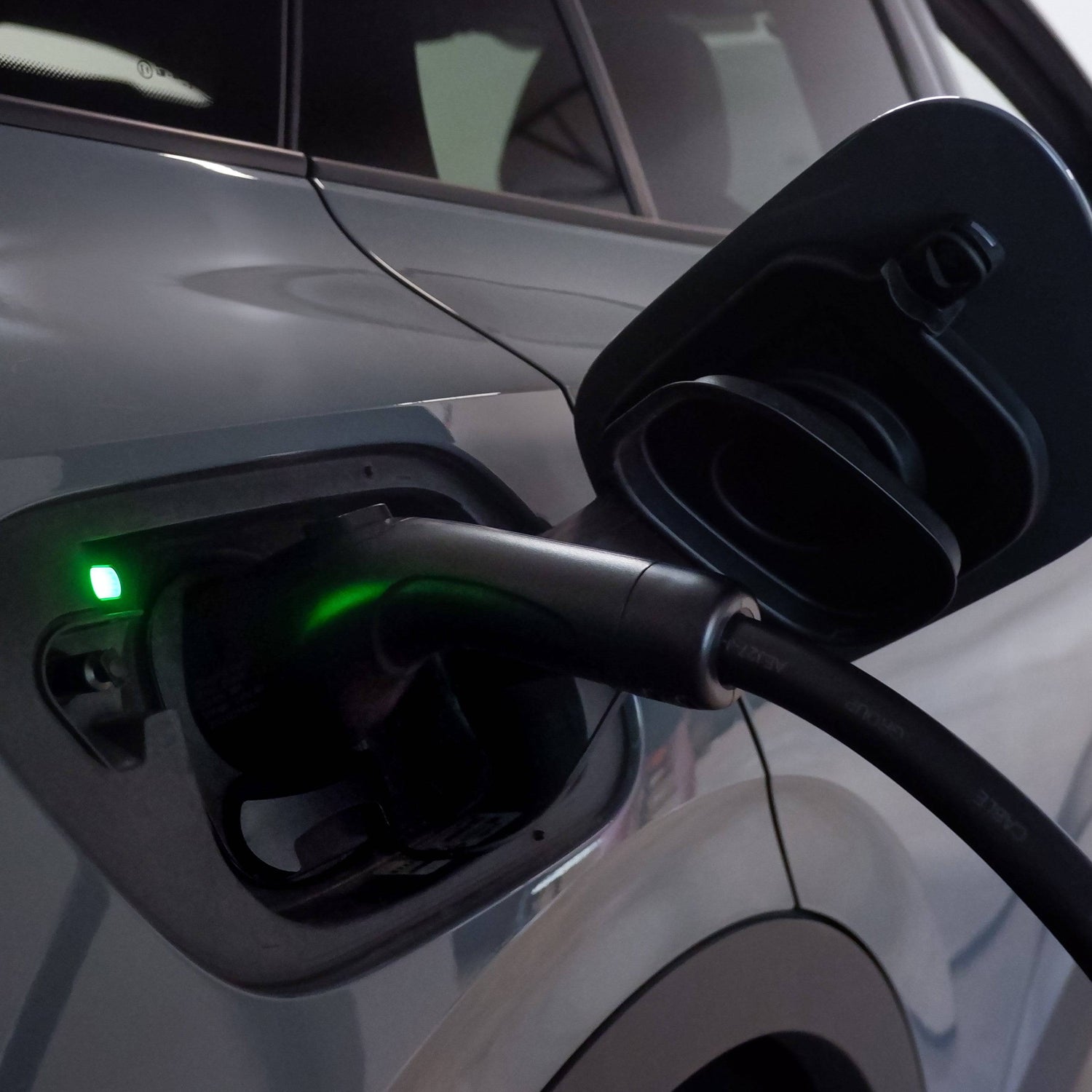
EV Charging Cost Per Mile: Complete Breakdown and Calculator Guide (2026)
The average EV charging cost per mile in the United States ranges from $0.03 to $0.05 for home charging in 2026, compared to $0.12 to $0.18 per mile for a gasoline vehicle. That difference means a typical EV driver saves between $800 and $1,400 annually on fuel costs alone. Battery Tender® brings decades of smart charging expertise to the EV market, and understanding exactly what each mile costs — and how to reduce that figure — starts with the math behind your electricity rate, your vehicle's efficiency, and the charger you use at home.
This guide breaks down EV charging cost per mile using real electricity rates, actual vehicle efficiency numbers, and a simple formula anyone can apply to their own situation. Beyond the per-mile calculation, the guide covers how Level 1 versus Level 2 charging affects your total electricity bill, how time-of-use (TOU) rate plans can cut charging costs by 30% to 60%, and why the charger hardware itself plays a role in long-term savings. Whether driving a compact EV averaging 3.5 miles per kWh or a full-size electric truck at 2.0 miles per kWh, these calculations apply universally.
Key Takeaways:
- Home EV charging costs $0.03–$0.05 per mile at average U.S. electricity rates — roughly one-third the cost of gasoline.
- The formula is simple: electricity rate ($/kWh) ÷ vehicle efficiency (miles/kWh) = cost per mile.
- Level 2 chargers reduce energy waste by 10%–15% compared to Level 1, lowering actual cost per mile.
- Time-of-use electricity plans can drop overnight charging rates to $0.05–$0.08/kWh in many markets.
- EV 12V auxiliary batteries still require maintenance charging — a detail many owners overlook.
How to Calculate Your EV Charging Cost Per Mile
The cost per mile for any electric vehicle depends on exactly two variables: the price of electricity and the vehicle's energy efficiency. The formula is straightforward and applies to every EV on the road.
Cost per mile = Electricity rate ($/kWh) ÷ Vehicle efficiency (miles per kWh)
According to the U.S. Energy Information Administration (EIA), the national average residential electricity rate in early 2026 is approximately $0.167 per kWh. The U.S. Department of Energy's fueleconomy.gov lists average EV efficiency at approximately 3.0 miles per kWh (equivalent to roughly 100 MPGe). Applying the formula: $0.167 ÷ 3.0 = $0.056 per mile. For comparison, a 30 MPG gasoline vehicle at $3.50 per gallon costs $0.117 per mile — more than double.
The table below illustrates how cost per mile shifts across different electricity rates and vehicle efficiencies:
| Electricity Rate ($/kWh) | 2.0 mi/kWh (Trucks) | 3.0 mi/kWh (Midsize) | 4.0 mi/kWh (Compact) |
|---|---|---|---|
| $0.08 (off-peak TOU) | $0.040 | $0.027 | $0.020 |
| $0.12 (low-cost state) | $0.060 | $0.040 | $0.030 |
| $0.167 (national avg) | $0.084 | $0.056 | $0.042 |
| $0.25 (high-cost state) | $0.125 | $0.083 | $0.063 |
| $0.35 (peak TOU, expensive markets) | $0.175 | $0.117 | $0.088 |
Notice that even at $0.25/kWh — typical in states like California, Connecticut, and Massachusetts — a midsize EV still costs less per mile than a gasoline vehicle. The savings only disappear when charging at public DC fast chargers, where rates often reach $0.40–$0.60/kWh.
How Does Charger Level Affect Your EV Charging Cost Per Mile?
Charger level directly impacts cost per mile because of a factor most guides overlook: charging efficiency losses. Every charger converts AC power from the grid into DC power stored in the battery, and that conversion is never 100% efficient. The slower the charge rate, the longer the onboard charger and battery thermal management systems run, and the more energy is lost as heat.
Level 1 charging (120V, typically 1.0–1.4 kW) operates at approximately 80%–85% efficiency according to data from Idaho National Laboratory's Advanced Vehicle Testing Activity. That means for every 1.0 kWh drawn from the wall, only 0.80–0.85 kWh reaches the battery. Level 2 charging (240V, 7.2–11.5 kW) achieves 87%–93% efficiency because the higher power throughput completes the charge faster, reducing the proportional overhead of thermal management and parasitic electronics.
In practical terms, a vehicle rated at 3.0 mi/kWh effectively delivers only 2.4–2.55 mi/kWh on Level 1 when accounting for wall-to-battery losses — raising the true cost per mile from $0.056 to approximately $0.065–$0.070 at the national average rate. On Level 2, the effective efficiency stays closer to 2.7–2.8 mi/kWh, keeping cost per mile near $0.060. Over 12,000 miles per year, that 10%–15% efficiency gap adds $50–$120 annually to electricity costs for Level 1 users.
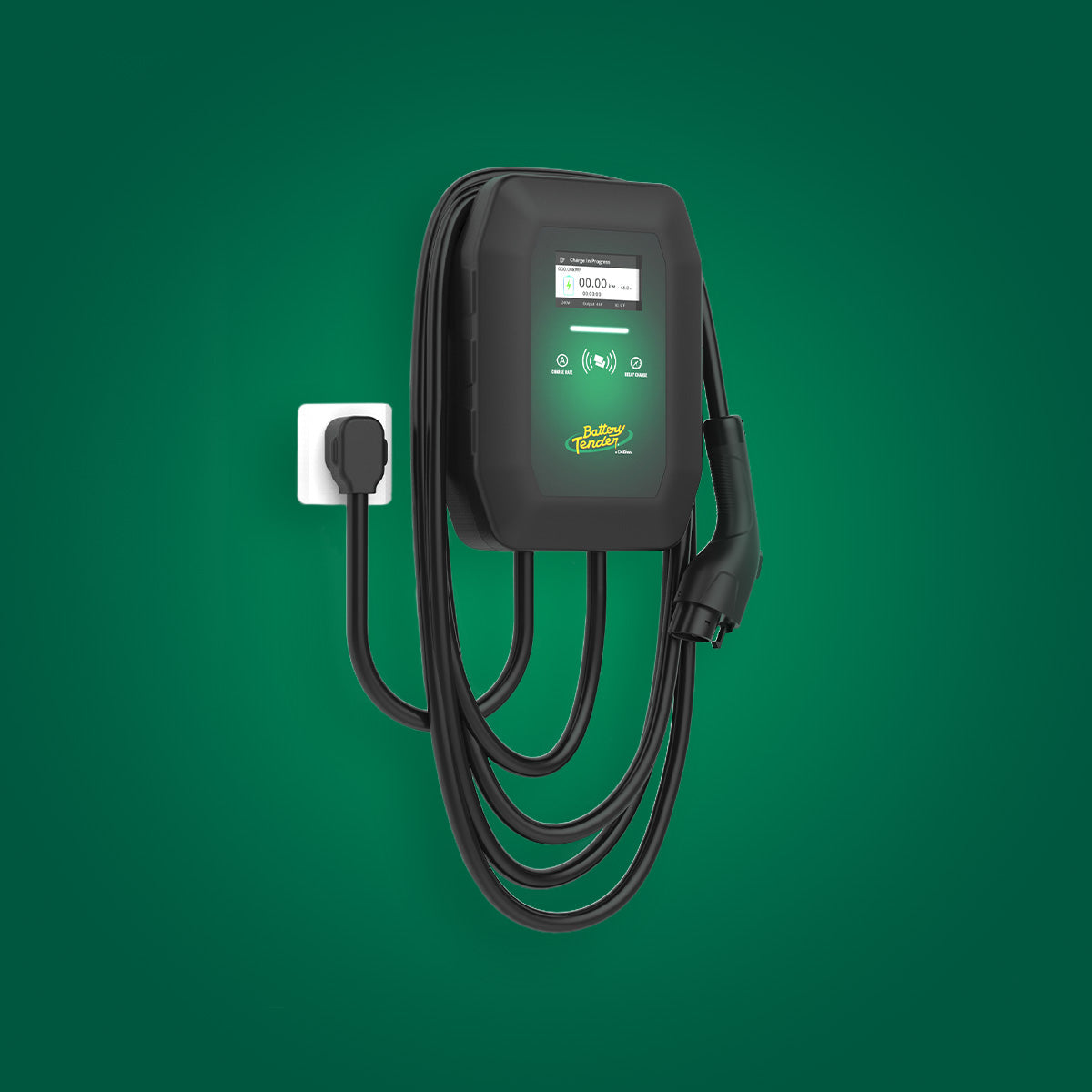
For EV owners who want maximum charging speed and minimum energy waste from a portable unit, the Battery Tender eCharge 16A Level 1 charger delivers up to 2 kW from a standard 120V NEMA 5-20 outlet — significantly faster than the 1.0 kW trickle chargers included with many vehicles. The higher power throughput improves charging efficiency while requiring zero installation.
Battery Tender eCharge 16A Level 1 EV Charger
Time-of-Use Rates: The Biggest Lever for Reducing Cost Per Mile
Time-of-use (TOU) electricity plans offer the single most impactful way to reduce EV charging cost per mile without changing vehicles or driving habits. TOU plans charge different rates depending on when electricity is consumed. Peak hours (typically 4:00 PM–9:00 PM) carry the highest rates, while off-peak hours (usually 11:00 PM–7:00 AM) offer rates 30%–60% below the standard flat rate.
According to rate schedules published by major utilities, off-peak TOU rates in 2026 range from $0.05/kWh (parts of the Southeast and Midwest) to $0.12/kWh (California, Northeast). Compared to flat-rate plans averaging $0.167/kWh nationally, scheduling all EV charging during off-peak windows reduces cost per mile from $0.056 to as low as $0.017–$0.040 depending on region and vehicle efficiency.
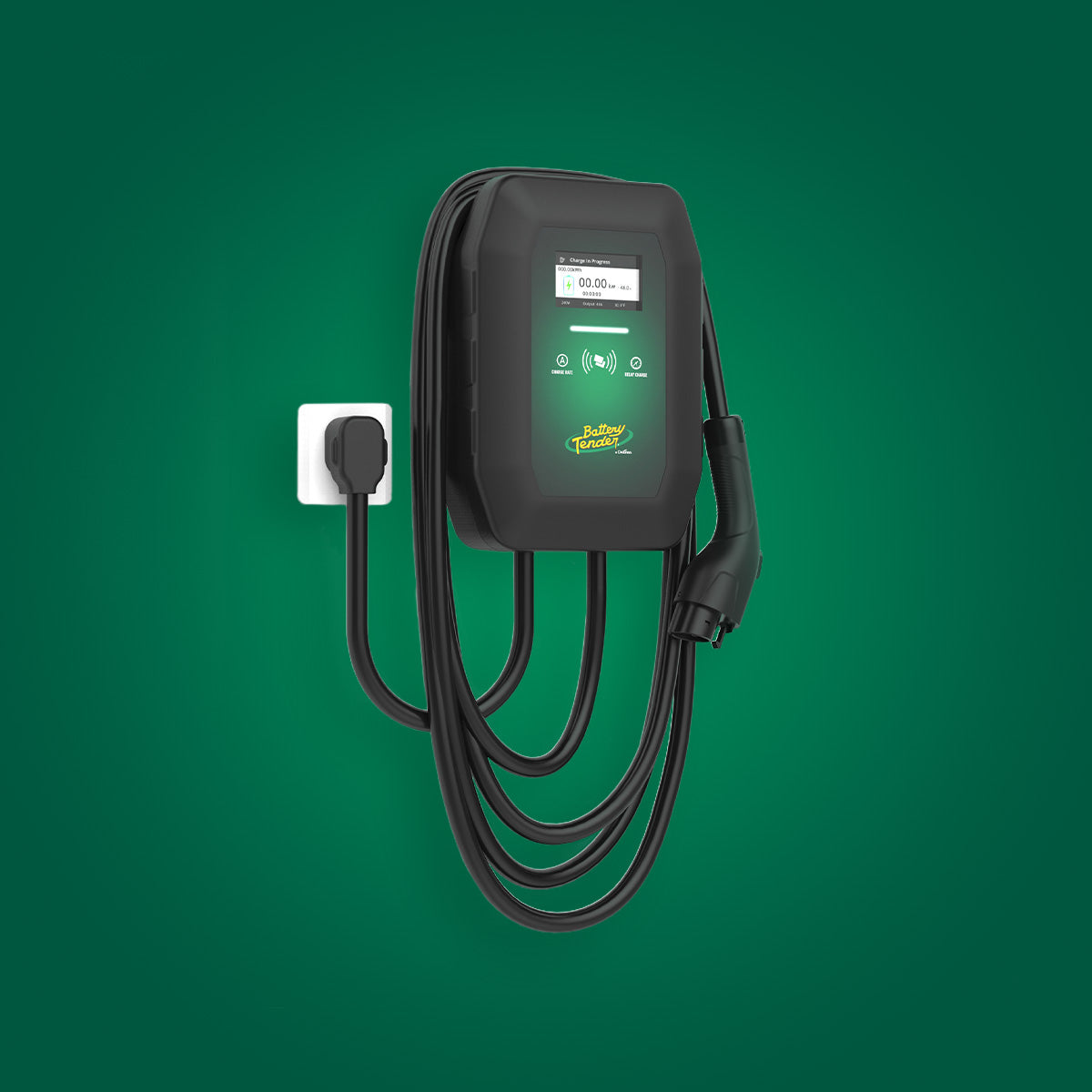
Most modern EVs include scheduled charging features that allow owners to plug in immediately but delay charging until off-peak hours begin. A Level 2 charger makes this strategy especially effective because the higher charge rate means the vehicle can fully replenish during a compressed off-peak window. The Battery Tender eCharge 48A delivers 11 kW of power, adding approximately 42.25 miles of range per hour — enough to add over 250 miles of range during a 6-hour off-peak window.
Battery Tender eCharge 48A Level 2 EV Charger
Monthly and Annual Cost Projections by Vehicle Type
Knowing the cost per mile is most useful when projected across real-world driving patterns. The average American drives approximately 13,500 miles per year (1,125 miles per month) according to the Federal Highway Administration. The following projections use the national average electricity rate of $0.167/kWh with Level 2 charging efficiency.
- Compact EV (4.0 mi/kWh): $0.042/mile × 13,500 miles = $567/year ($47/month)
- Midsize sedan/SUV (3.0 mi/kWh): $0.056/mile × 13,500 miles = $756/year ($63/month)
- Full-size SUV (2.5 mi/kWh): $0.067/mile × 13,500 miles = $905/year ($75/month)
- Electric truck (2.0 mi/kWh): $0.084/mile × 13,500 miles = $1,134/year ($95/month)
For context, fueling a 28 MPG gasoline vehicle at $3.50/gallon for 13,500 miles costs approximately $1,688 per year. Even the least efficient electric truck category saves over $550 annually compared to gasoline, and a compact EV saves over $1,100 per year. On a TOU off-peak plan at $0.08/kWh, a midsize EV drops to just $360 per year — a savings of nearly $1,330 versus gasoline.
How Level 2 Charger Selection Impacts Long-Term Charging Costs
Not all Level 2 chargers deliver identical cost-per-mile outcomes. The amperage rating of the charger determines charge speed, which in turn affects how efficiently the vehicle completes each session. A 16A Level 2 charger delivers 3.8 kW on a 240V circuit, while a 48A unit delivers 11 kW — nearly three times the power. Higher power means shorter sessions, less thermal management overhead, and better wall-to-battery efficiency.
The Battery Tender eCharge 40A provides 9.6 kW of charging power and adds approximately 36 miles of range per hour. With RFID access control and IP66 weather resistance, it serves as a permanent wall-mounted installation suitable for garages, carports, and outdoor driveways. For households with two EVs or drivers with longer commutes, the higher charging speed ensures the vehicle fully charges during the cheapest off-peak hours rather than extending into mid-peak rate windows.
Battery Tender eCharge 40A Level 2 EV Charger. Also available at Costco.com.
Charger hardware cost also factors into total cost of ownership. The Battery Tender eCharge lineup ranges from $299.95 for the portable 16A Level 1 unit to $684.95 for the 48A Level 2. At a savings of $900+ per year versus gasoline, most EV owners recoup charger costs within the first 4–9 months of ownership. The federal 30C tax credit (currently providing up to 30% or $1,000 for qualified charger installations) can further accelerate payback.
The Hidden Cost Most EV Owners Forget: 12V Auxiliary Battery Maintenance
Every electric vehicle — regardless of manufacturer — contains a 12V auxiliary battery that powers door locks, lights, infotainment, alarm systems, and the contactors that connect the high-voltage traction pack. When this 12V battery fails, the vehicle becomes completely inoperable even with a fully charged main battery. Roadside assistance calls for dead 12V batteries represent a significant and avoidable cost that most EV cost-per-mile calculations ignore.
The 12V auxiliary battery in most EVs is a small AGM unit (typically 35–50 Ah) that receives charge from a DC-DC converter while the vehicle is running or actively charging. During extended periods of inactivity — vacations, seasonal storage, or simply leaving the vehicle unplugged for a week or more — the 12V battery can discharge below safe levels. Replacement costs range from $200 to $400 for OEM units, not including service fees.
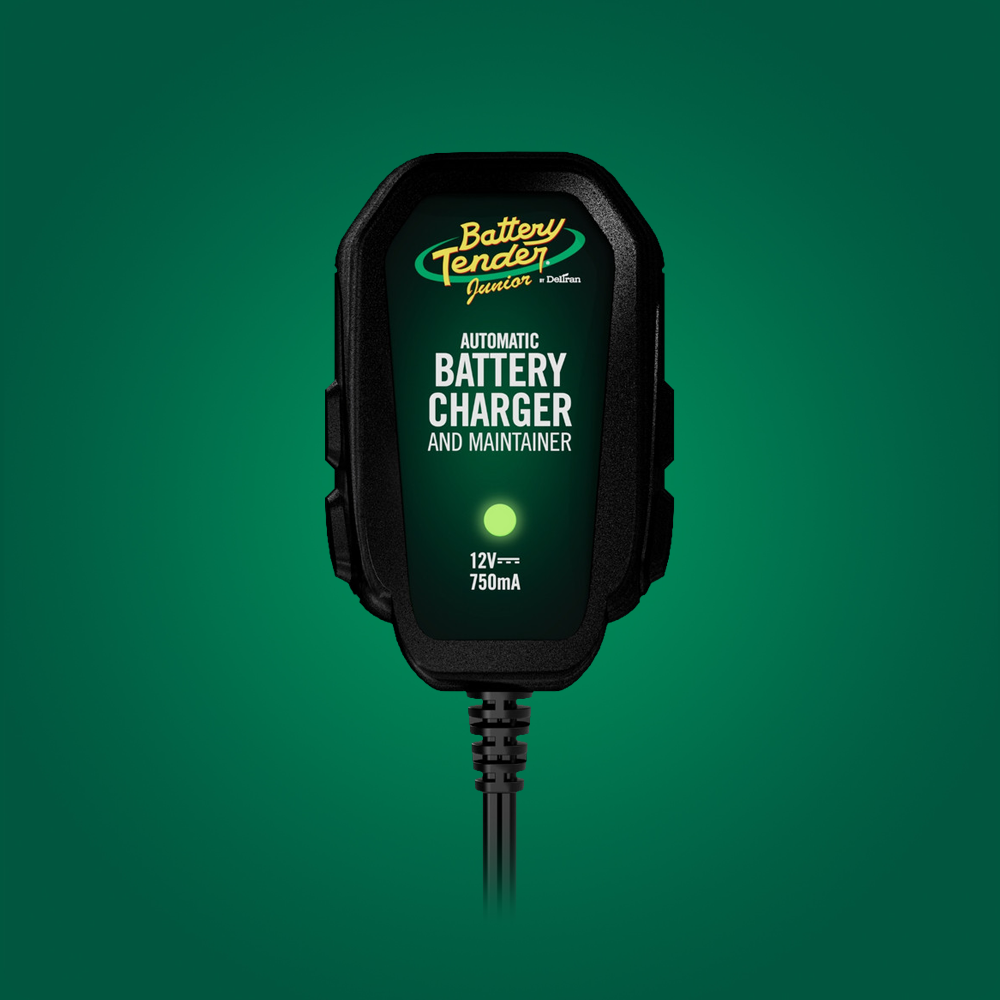
The Battery Tender Plus 1.25A charger connects directly to the 12V auxiliary battery through the engine bay or designated service terminals. Infinite Sequential Monitoring (ISM) technology maintains the battery through a proprietary 4-stage process — Initialization, Bulk Charge, Absorption, and Float Maintenance — ensuring the 12V system stays at full charge without risk of overcharging. Temperature compensation adjusts voltage output based on ambient conditions, protecting the battery across seasonal temperature swings.
Battery Tender Plus 1.25A 12V Charger
Public Charging vs. Home Charging: The Cost Per Mile Comparison
Home charging delivers the lowest possible EV charging cost per mile, and the gap between home and public charging is substantial. Public Level 2 stations typically charge $0.20–$0.35/kWh, while DC fast chargers range from $0.40–$0.60/kWh in 2026. Some networks also add session fees ($1.00–$2.50) or idle fees for occupying a charger after the session completes.
For a midsize EV at 3.0 mi/kWh, the cost per mile breakdown by charging source looks like this:
- Home Level 2 (off-peak TOU at $0.08/kWh): $0.027/mile
- Home Level 2 (flat rate at $0.167/kWh): $0.056/mile
- Public Level 2 ($0.30/kWh): $0.100/mile
- DC fast charger ($0.50/kWh): $0.167/mile
- Gasoline equivalent (30 MPG, $3.50/gal): $0.117/mile
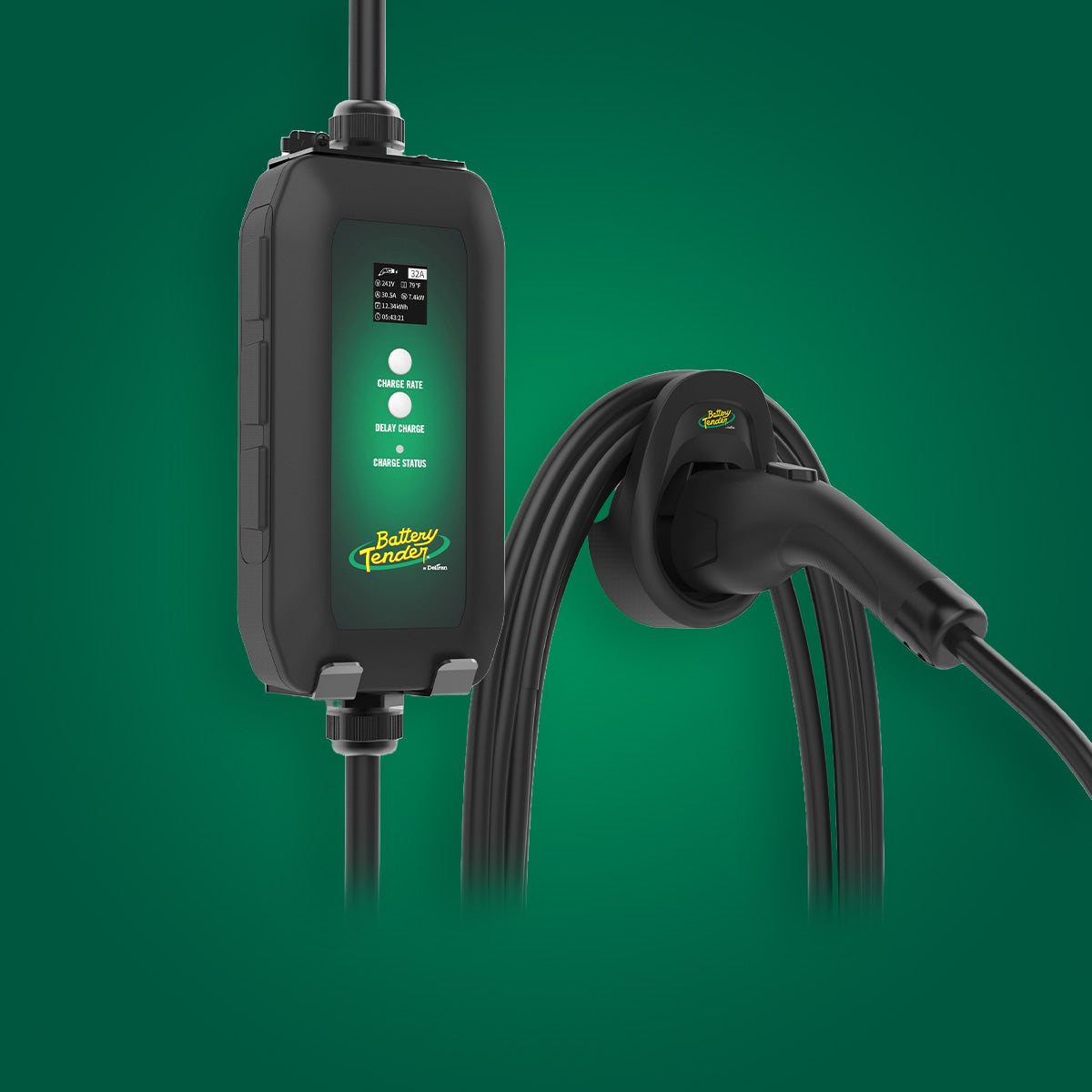
DC fast charging actually costs more per mile than gasoline in many scenarios. This underscores why a dedicated home charger is the most critical investment for maximizing EV cost savings. The Battery Tender eCharge 32A offers a unique advantage as a true dual-voltage portable charger — it operates on both 120V and 240V circuits, delivering up to 7.6 kW and 28.5 miles of range per hour on 240V. For renters, multi-home families, or owners who travel frequently, the portability eliminates the need for permanent installations at every location.
Battery Tender eCharge 32A Dual-Voltage Portable EV Charger. Also available at Costco.com.
Frequently Asked Questions
How much does it cost to charge an EV per mile at home?
At the 2026 national average electricity rate of $0.167/kWh, home EV charging costs approximately $0.04–$0.08 per mile depending on vehicle efficiency. Compact EVs averaging 4.0 mi/kWh cost about $0.04/mile, while electric trucks averaging 2.0 mi/kWh cost closer to $0.08/mile. Off-peak TOU rates can reduce these figures by 30%–60%.