




Classic Car Battery Tender Charger: Protect Your Investment (2026)
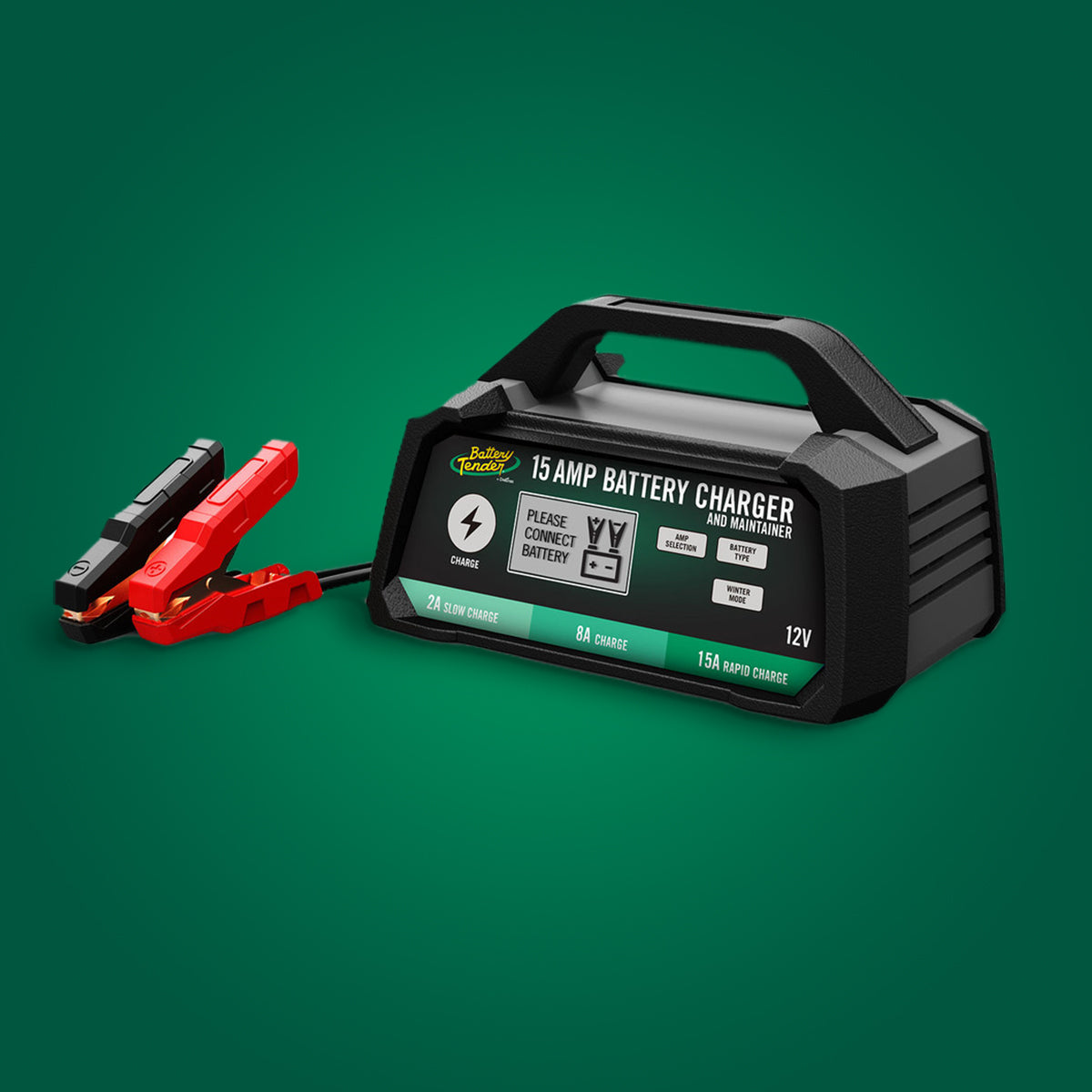
A classic car battery maintainer keeps stored collector vehicles charged, healthy, and ready to drive — protecting investments worth $20,000 to $500,000 or more with a device that costs less than a tank of premium fuel. Battery Tender® chargers use proprietary Infinite Sequential Monitoring (ISM) technology, a 4-stage charging process that delivers precisely the current a battery needs, then shifts to a demand-responsive maintenance mode safe for year-round connection. For classic and vintage vehicles that may sit six to twelve months between drives, ISM charging is the single most effective defense against sulfation — the number-one cause of battery failure in stored cars.
Whether the collection includes a 1957 Chevrolet Bel Air with a 6-volt electrical system or a 1970 Plymouth 'Cuda running 12 volts, the right Battery Tender charger matches the battery chemistry, voltage, and storage environment. This guide explains exactly how ISM technology protects classic car batteries, how to select the correct charger for any vintage vehicle, and how to install a maintenance charging system that works unattended for months at a time.
Key Takeaways:
- Sulfation begins forming on lead-acid batteries within 30 days of sitting idle — ISM technology reverses early sulfate crystal buildup during the Absorption stage.
- Pre-1960s classic cars typically use 6-volt positive-ground electrical systems, requiring a dedicated 6V charger or a selectable-voltage unit.
- ISM float maintenance delivers charge pulses only when battery voltage drops, making indefinite connection safe and eliminating overcharge risk.
- A Battery Tender Plus charger with a 10-year warranty protects a vehicle worth hundreds of times the charger cost.
Why Does a Classic Car Battery Tender Charger Matter More Than Any Other Accessory?
A classic car battery maintainer matters because stored vehicles lose battery charge at a rate of 1–3% per week through natural self-discharge, parasitic draws from clocks and alarm systems, and temperature fluctuations in unheated garages. Within 30 days, a fully charged lead-acid battery can drop below 12.4 volts — the threshold where lead sulfate crystals begin hardening on the plates. According to research published by the Society of Automotive Engineers (SAE), sulfation accounts for approximately 80% of premature lead-acid battery failures.
For a collector car owner, a dead battery is never just a dead battery. A deeply discharged battery that sits for months develops permanent sulfation, reducing capacity by 20–40%. Replacing the battery in a vintage vehicle may require sourcing period-correct group sizes, custom hold-down brackets, or positive-ground configurations — turning a $150 battery into a $400 project. Meanwhile, the vehicle itself remains immobile, accumulating flat spots on tires and allowing seals to dry out.
Traditional trickle chargers deliver constant current regardless of battery state, which causes electrolyte boiling, plate warping, and hydrogen gas accumulation in enclosed garages. ISM technology from Battery Tender eliminates this risk entirely. The 4-stage process — Initialization, Bulk Charge, Absorption, and Maintenance — adjusts output in real time based on battery voltage, temperature, and internal resistance. Once the battery reaches full charge, the charger enters float maintenance mode and delivers current only when voltage naturally drops. There is no overcharge. There is no boiling. The battery stays at optimal charge indefinitely.
How ISM Technology Protects Classic Car Batteries During Long-Term Storage
ISM technology protects stored batteries through four distinct stages that work sequentially and then cycle indefinitely. Understanding each stage clarifies why ISM is fundamentally different from float-only chargers or constant-current trickle chargers.
Stage 1 — Initialization: The charger tests the battery with a gentle current to determine its condition, state of charge, and ability to accept charging current. If the battery is severely damaged or shorted, the charger will not proceed — preventing energy from being pumped into a defective cell. Stage 2 — Bulk Charge: Full rated current (1.25 amps on Battery Tender Plus models) flows into the battery until it reaches approximately 80% state of charge. This stage recovers the majority of lost capacity efficiently. Stage 3 — Absorption: Voltage is held constant while current tapers gradually. This stage dissolves soft sulfate crystals that formed during storage, restoring plate surface area and battery capacity. Stage 4 — Float Maintenance: The charger monitors voltage continuously and delivers demand-responsive charge pulses only when voltage drops below a preset threshold. Current flows for minutes or hours, then stops completely until needed again.
This four-stage cycle repeats automatically. A Battery Tender charger connected in November will still be maintaining the battery perfectly the following April — no intervention required. For classic car owners who store vehicles through entire winter seasons, this unattended operation eliminates the need for monthly garage visits to check battery voltage.
Which Classic Car Battery Tender battery charger Fits a 6-Volt Vintage Vehicle?
Pre-1960s American vehicles — including most cars built by GM, Ford, and Chrysler before 1955–1956 — use 6-volt positive-ground electrical systems. European vehicles from the same era, such as early Volkswagen Beetles and MG TDs, also run 6-volt systems. Connecting a 12-volt charger to a 6-volt battery will damage the battery, potentially rupture the case, and risk harming irreplaceable original wiring harnesses.
The best solution for collectors with a mixed-era garage is a voltage-selectable charger that handles both 6V and 12V batteries from a single unit. The Battery Tender Plus Selectable 6V/12V delivers 1.25 amps of ISM-controlled charging current at either voltage, switched via a simple selector. This single charger can maintain a 1948 Ford F-1 pickup (6V) one month and a 1969 Camaro Z/28 (12V) the next — with full ISM protection at both settings.
For collectors focused exclusively on pre-1960s vehicles, the dedicated Battery Tender Plus 6V delivers 1.25 amps at 6 volts only, optimized for the smaller-capacity batteries typical in vintage applications. A 6-volt Group 1 battery rated at 70 Ah and discharged to 50% would require approximately 28 hours to reach full charge: (70 Ah × 0.50) ÷ 1.25A = 28 hours.
For collectors who need 6V capability as part of a broader garage:
Battery Tender Plus Selectable 6V/12V 1.25A — $84.95
For dedicated 6V-only vintage vehicle owners:
Battery Tender Plus 6V 1.25A — $54.95
Setting Up a Classic Car Battery Tender Charger for Unattended Storage
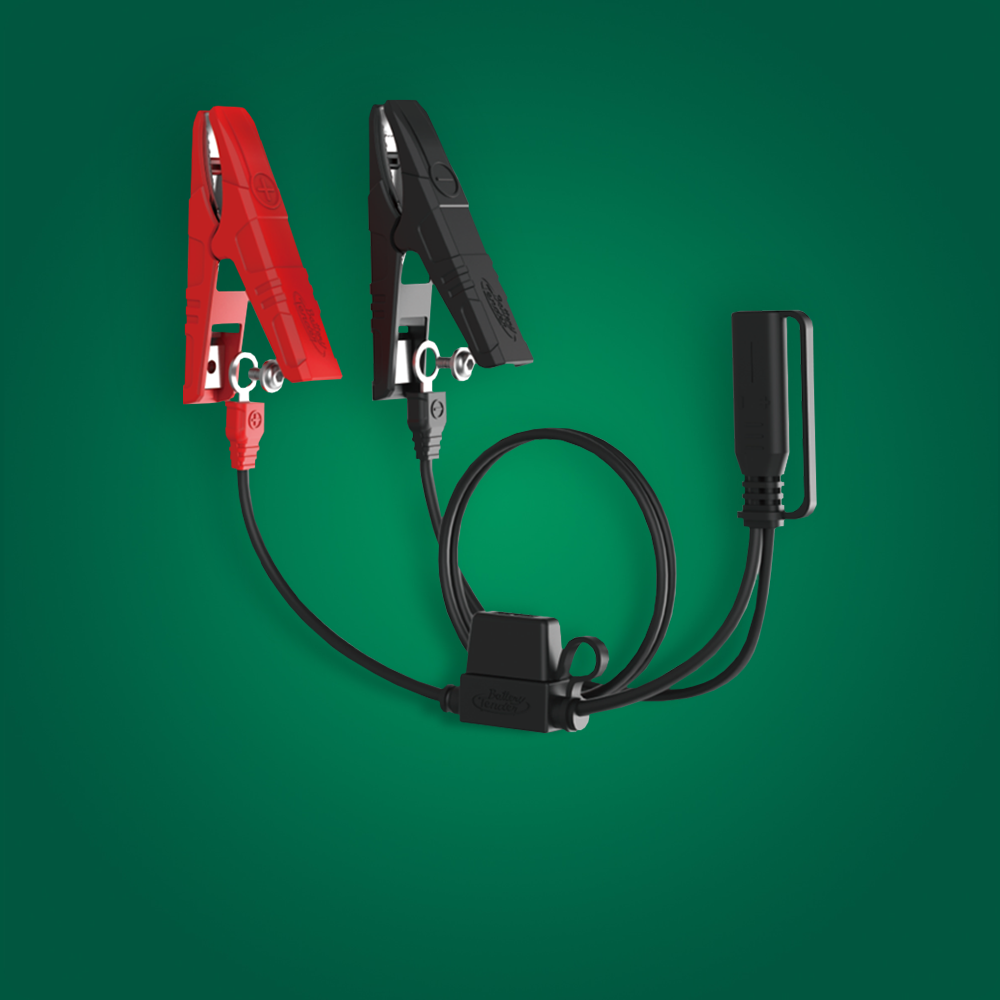
Proper installation takes approximately 15 minutes and creates a permanent quick-connect system that makes seasonal maintenance effortless. Every Battery Tender charger ships with both alligator clips for temporary use and a ring terminal harness for permanent installation.
Step 1: Disconnect the negative battery cable from the battery terminal. This prevents parasitic draws from the vehicle electrical system and isolates the battery for direct charging. Step 2: Attach the included ring terminal harness directly to the battery posts — red to positive, black to negative. Secure the ring terminals under the battery post nuts and tighten firmly. Step 3: Route the quick-connect plug through the engine bay to an accessible location — many collectors route it through the grille opening or along a fender edge. Step 4: Connect the Battery Tender charger output cable to the quick-connect plug. The charger LED will turn red during Bulk Charge, shift to yellow during Absorption, and turn green when the battery reaches full maintenance mode.
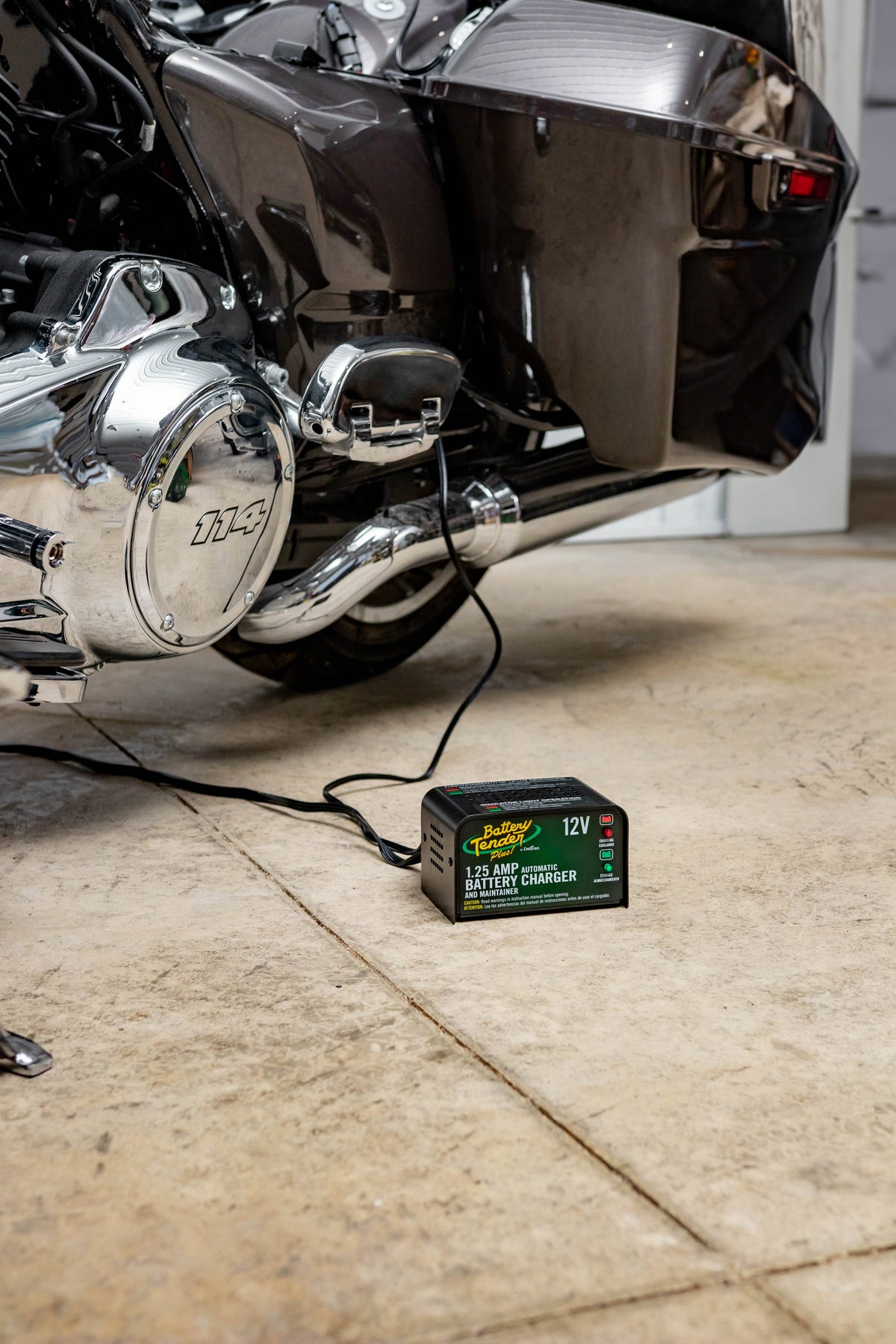
For classics stored in unheated garages, barns, or outdoor carports where moisture and temperature swings are factors, the IP65-rated Battery Tender Plus provides sealed protection against dust ingress and water jets. Note that Battery Tender chargers such as the Battery Tender Plus include temperature compensation — the charger automatically adjusts voltage setpoints based on ambient temperature to prevent undercharging in cold environments or overcharging in heat.
For unheated or outdoor classic car storage environments:
Battery Tender Plus IP65 1.25A — $84.95
How to Maintain Multiple Classic Cars with a Single Charging System
Serious collectors rarely own just one vehicle. A four-car collection with individually purchased chargers requires four wall outlets, four chargers to monitor, and four separate points of failure. The Battery Tender 4-Bank charger solves this by maintaining up to four batteries simultaneously from a single AC input, with independent ISM circuits for each bank. Every bank operates at 1.25 amps with fully independent charge control — a 6V battery on bank one and three 12V batteries on banks two through four all receive individualized ISM charging simultaneously.
Each bank has its own LED status indicator, so a quick glance confirms every vehicle in the collection is receiving proper maintenance. The 4-Bank unit reduces outlet congestion, simplifies wiring in the garage, and ensures consistent ISM-quality charging across every vehicle. For a four-car collection valued at $200,000 collectively, the Battery Tender 4-Bank represents an investment of approximately $0.0012 per dollar of protected assets.
For multi-vehicle classic car collections:
Battery Tender 4-Bank 1.25A Selectable — $234.95
Classic Car Battery Tender Safety Considerations for Vintage Wiring
Vintage vehicles present unique electrical safety concerns that modern cars do not. Original cloth-wrapped wiring degrades over decades, insulation becomes brittle, and corroded connections create resistance points that generate heat. According to the National Fire Protection Association (NFPA), electrical faults are a leading cause of vehicle fires in stored collector cars.
ISM technology mitigates charging-related fire risk in three critical ways. First, the Initialization stage tests the battery before delivering full current — a shorted cell or reversed polarity connection halts the charging process immediately. Second, the Absorption stage tapers current as the battery approaches full charge, eliminating the sustained high-current conditions that stress aged wiring. Third, the Maintenance stage delivers current in brief pulses measured in milliamps, producing negligible heat in any connected wiring.
Always connect the Battery Tender charger directly to the battery terminals using the supplied ring terminal harness — never through the vehicle wiring harness. Disconnecting the negative battery cable before storage isolates the battery from vintage wiring entirely, providing a dedicated charging circuit that bypasses any compromised factory wiring. For positive-ground 6V systems, note that the positive terminal connects to the chassis; follow the charger instructions carefully to ensure correct polarity.
Emergency Starting for Classic Cars That Have Been Sitting
Even with a classic car battery maintainer connected, situations arise where a battery needs immediate attention — a recent acquisition sitting in a barn, a vehicle transported to a show, or a battery that was accidentally left disconnected. A portable jump starter paired with a maintenance charger creates a complete battery management system for collector vehicles.
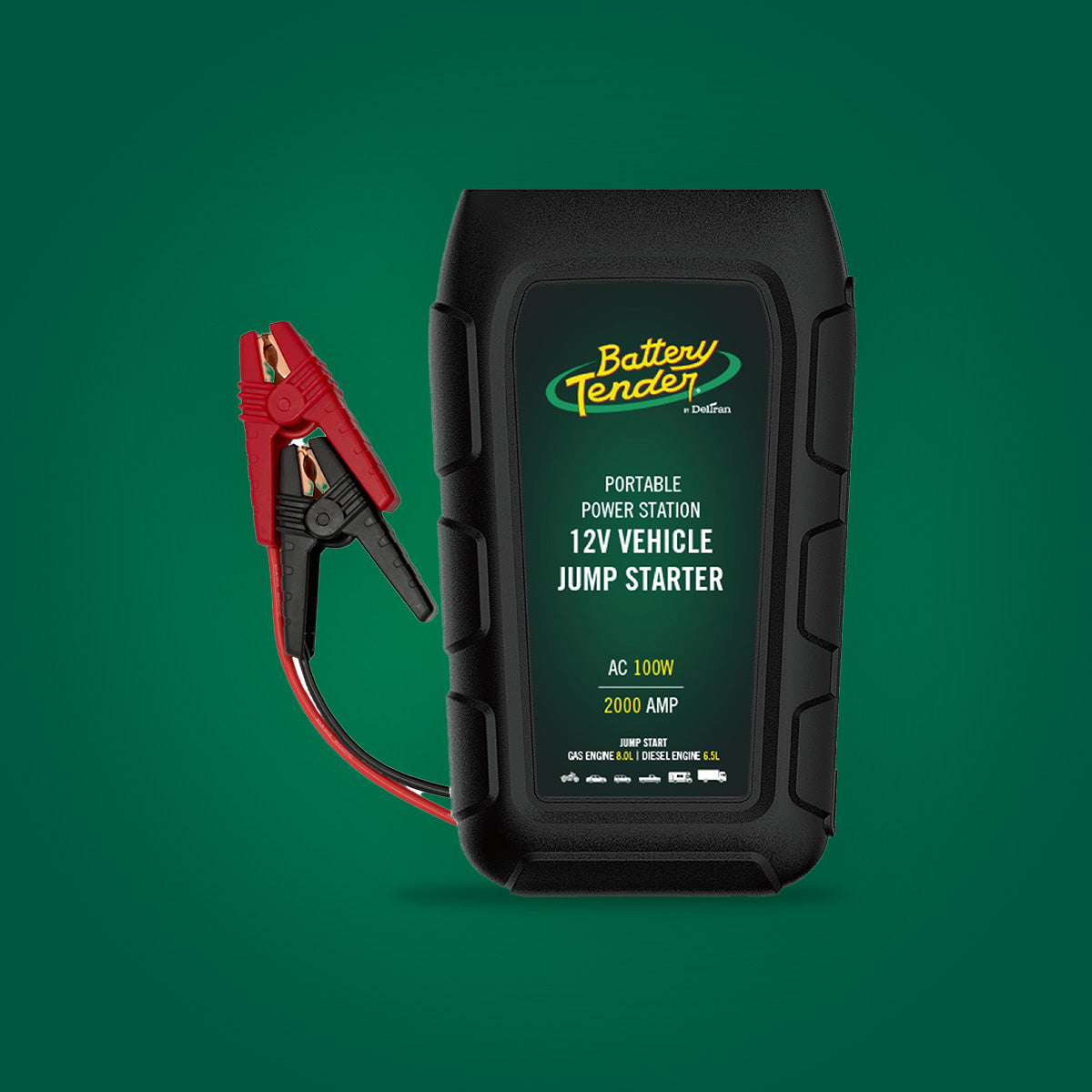
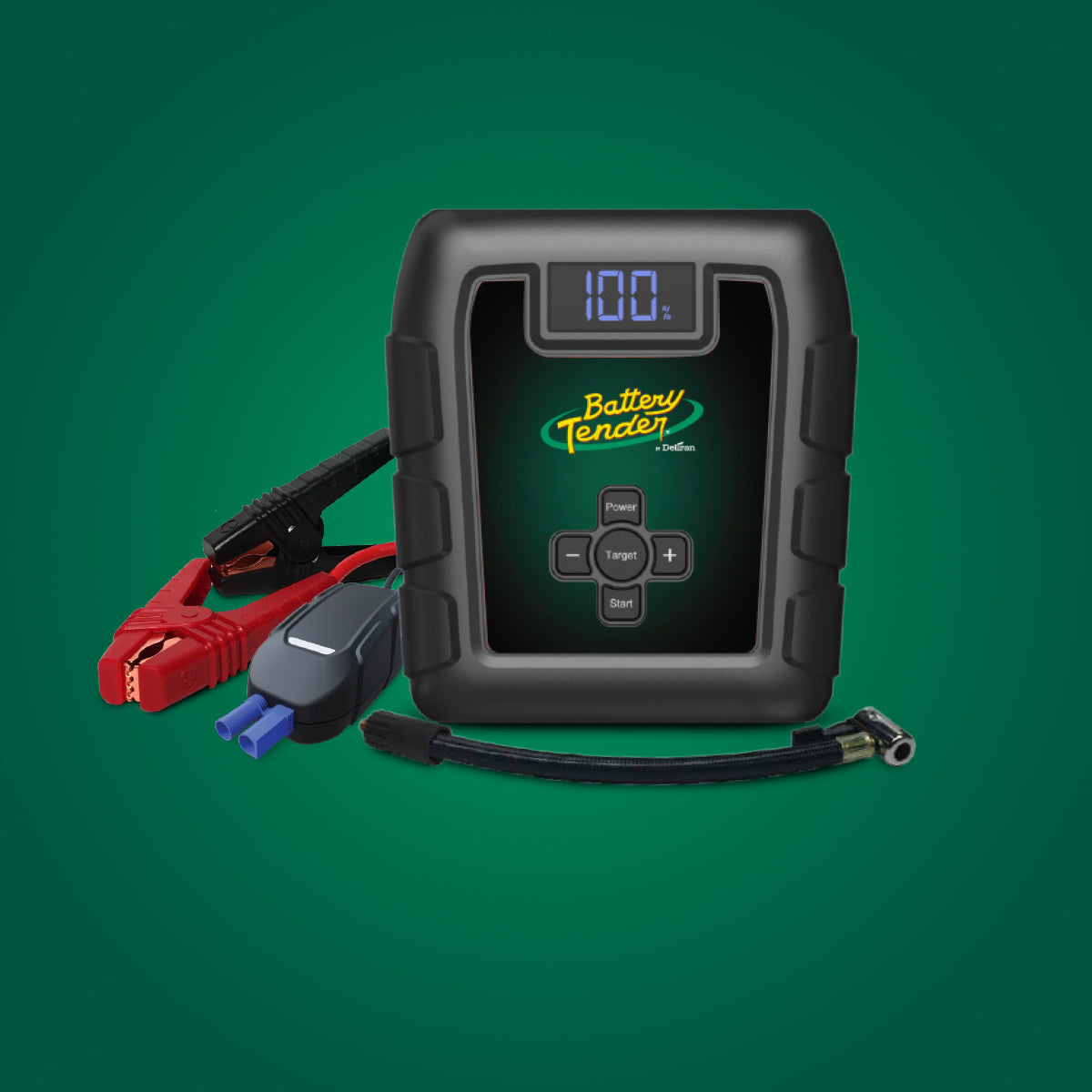
The Battery Tender Charge N Start 1100 combines a 1-amp ISM charger with a 1,000-amp lithium-ion jump starter in one portable unit. The charger section handles standard, AGM, GEL, and lithium 12V batteries, while the jump-start function can crank engines up to 5.0 liters gasoline or 3.0 liters diesel. For classic cars, the 1-amp charging rate is gentle enough for smaller vintage batteries, and the integrated Charge N Store technology keeps the internal lithium-ion pack maintained when plugged in between uses.
For portable charging and emergency starting at shows or during transport:
Battery Tender Charge N Start 1100 — 1A Charger + 1,000A Jump Starter — $139.95
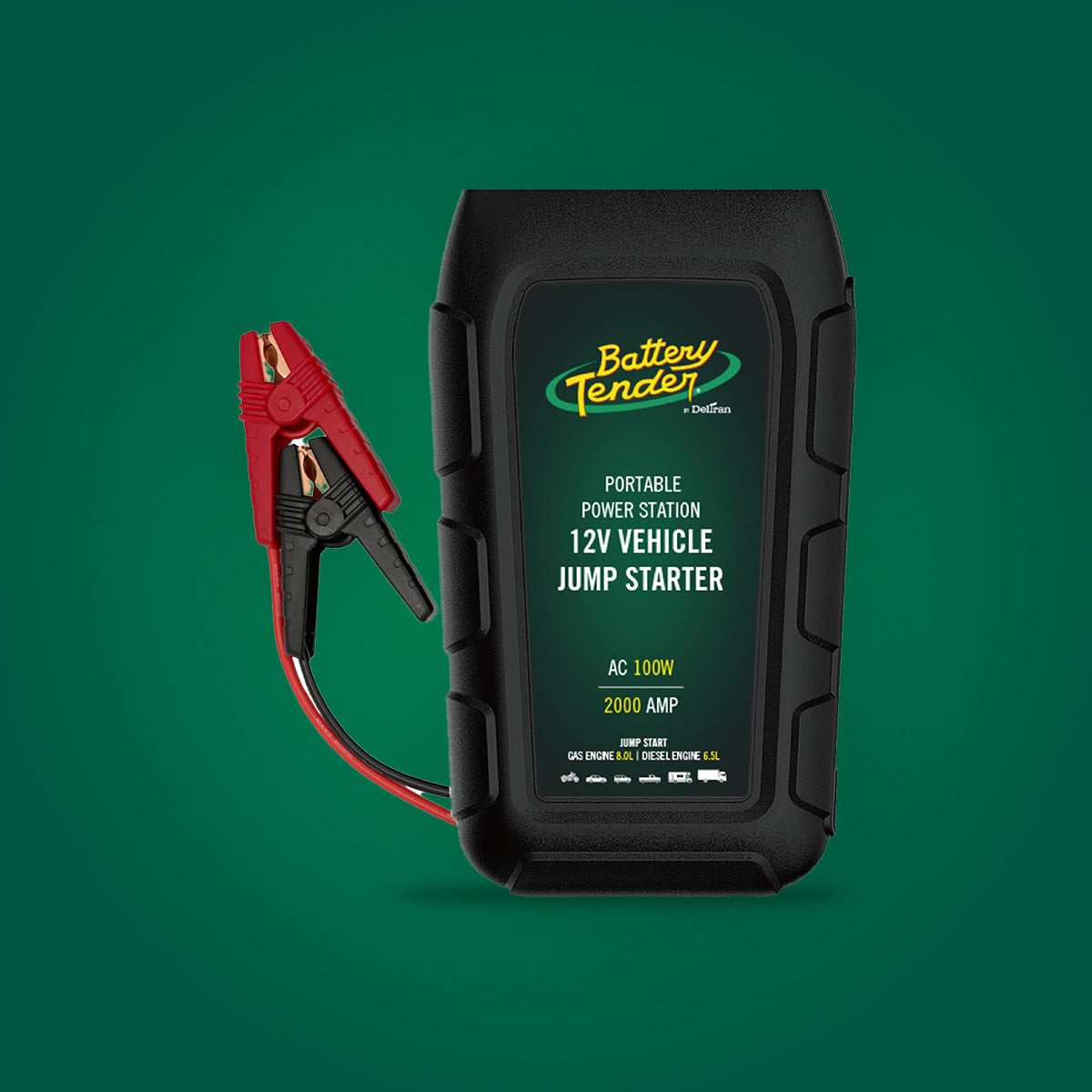
Collectors who attend shows regularly should also consider the Battery Tender 1500A Jump Starter as a dedicated portable emergency unit. With 12,000 mAh capacity and the ability to start engines up to 7.0 liters gasoline, this unit handles everything from a four-cylinder MGB to a big-block Corvette.
Battery Tender 1500A Jump Starter — $152.95
Frequently Asked Questions
Can a classic car battery maintainer stay connected all winter without supervision?
Yes. Battery Tender chargers with ISM technology are designed for indefinite connection. The 4-stage charging process transitions to float maintenance mode once the battery is fully charged, delivering demand-responsive pulses only when voltage drops. There is no risk of overcharging, boiling electrolyte, or plate damage. Thousands of collector car owners leave Battery Tender chargers connected from October through April without intervention.
Does a classic car with a 6-volt system need a special charger?
Yes. A 6-volt battery requires a charger specifically rated for 6V output. Connecting a 12V-only charger to a 6V battery will overcharge and damage it. The Battery Tender Plus Selectable 6V/12V switches between both voltages, making it ideal for collectors with both pre-1960s and post-1960s vehicles. A dedicated Battery Tender Plus 6V 1.25A is available for exclusively 6-volt collections.
How long does a Battery Tender charger take to fully charge a dead classic car battery?
Charging time depends on battery capacity and depth of discharge. Using the formula (Ah × depth of discharge) ÷ charger amps, a typical 60 Ah classic car battery discharged to 50% would take approximately 24 hours with a 1.25A Battery Tender Plus: (60 × 0.50) ÷ 1.25 = 24 hours. A completely dead 60 Ah battery would require approximately 48 hours. The charger manages the entire process automatically.
Is a Battery Tender charger safe for use on original, unrestored classic car wiring?
When connected directly to the battery terminals using the included ring terminal harness — with the negative battery cable disconnected — the charger bypasses the vehicle wiring entirely. This isolation method is recommended for all stored classics, especially those with original cloth-wrapped wiring. ISM Initialization also tests the battery before applying full current, adding an additional layer of fault protection.
Conclusion
A classic car battery maintainer is the most cost-effective protection available for any collector vehicle. Whether the garage holds a single 6-volt prewar restoration or a dozen muscle cars spanning three decades, Battery Tender chargers with ISM technology deliver precisely calibrated, temperature-compensated, maintenance-mode charging that keeps batteries healthy through months of storage. The charger cost represents a fraction of one percent of the vehicle value — and prevents sulfation damage that leads to costly battery replacements, failed starting attempts, and unnecessary stress on irreplaceable vintage electrical systems.
Explore the complete lineup of classic car battery chargers, multi-bank systems, and portable jump starters built for collector vehicles at Battery Tender Classic Cars.
Last updated: June 2026