



Car Battery Not Holding Charge? Diagnose and Fix It (2026)
A car battery not holding charge is usually caused by sulfation, age-related plate wear, a parasitic draw, or a weak alternator. Charge the battery fully, let it rest 12 to 24 hours, then measure voltage: a reading below 12.4V means the battery or the charging system needs attention.
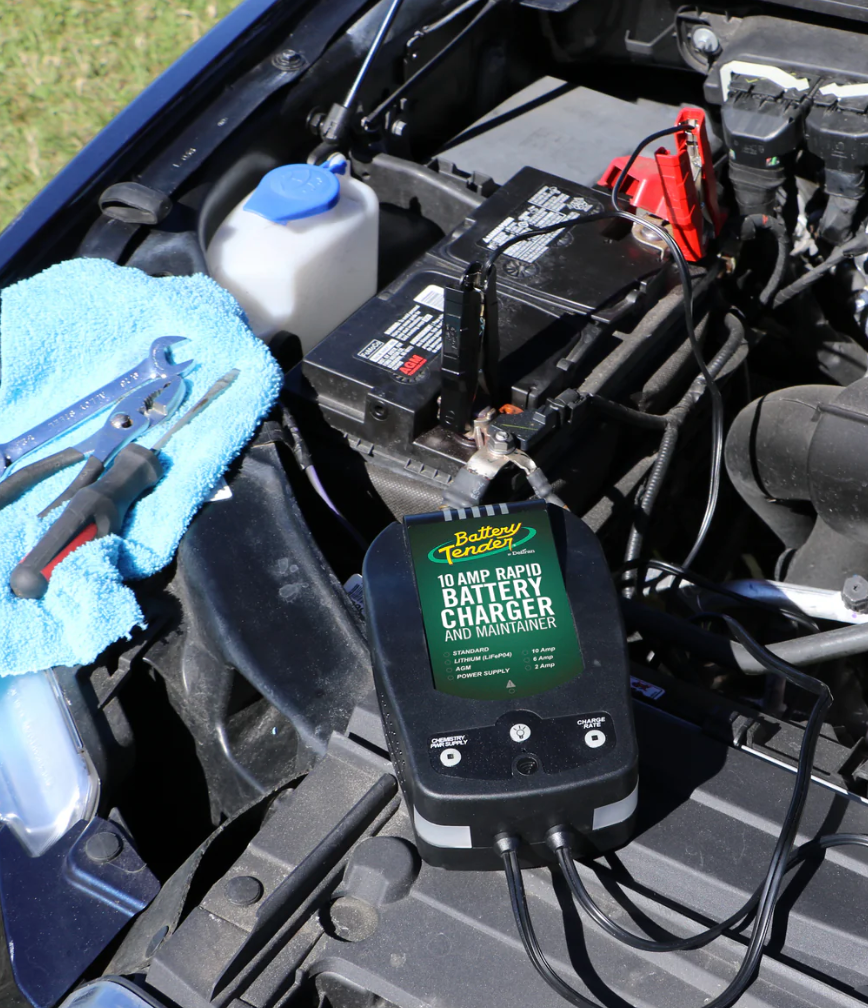
Many batteries labeled "dead" are only discharged, and a multimeter, a few hours, and a smart charger separate the two. The steps below cover testing, recovery, and prevention, with Battery Tender® smart chargers handling the recovery and maintenance phases.
Key Takeaways
- Rest voltage is the fastest test. A healthy 12V battery reads 12.6V to 12.8V after a full charge and a 12-hour rest.
- A parasitic draw above 50 mA (0.05A) can drain a healthy battery in days or weeks.
- A working alternator outputs 13.8V to 14.7V with the engine at about 2,000 rpm. Anything under 13.5V undercharges the battery.
- Early sulfation can often be reversed with a slow, multi-stage charge. Physical damage and batteries past 4 to 5 years usually mean replacement.
- A smart maintainer prevents repeat failures by holding the battery at full charge during short trips and storage.
Why Is a Car Battery Not Holding Charge? Five Root Causes
A car battery stops holding charge when its plates can no longer store energy, or when something drains or fails to replenish it. Identify which of the five causes below applies before you spend money on parts.
- Sulfation: When a lead-acid battery sits below roughly 12.4V, soft lead sulfate hardens into crystals that block the plates. Capacity drops, and the battery charges quickly but drains just as fast.
- Age and plate wear: Most automotive batteries last 3 to 5 years. Heat above 90°F speeds up grid corrosion and plate shedding.
- Parasitic draw: Aftermarket dash cams, alarms, stuck relays, and failing modules pull current while the car is off.
- Charging system faults: A worn alternator, loose belt, or corroded cable leaves the battery undercharged on every drive.
- Short trips and corrosion: Drives under 15 minutes rarely replace the energy used to start the engine. Corroded terminals add resistance that blocks charging.
The table below matches common symptoms to their likely cause and the first test to run.
| Symptom | Likely cause | First test |
|---|---|---|
| Starts fine after a long drive, dead after 2 to 3 days parked | Parasitic draw | Milliamp draw test |
| Dead every morning after a full charge | Sulfation or internal short | 24-hour rest test |
| Battery light on, dim headlights while driving | Alternator or belt | Running voltage test |
| Slow crank, battery over 4 years old | Age and plate wear | Load test |
| Weak starts after months of 10-minute trips | Chronic undercharging | Full charge, then rest test |
How Do You Diagnose a Car Battery Not Holding Charge at Home?
Diagnose the problem in three tests, in this order: battery rest voltage, parasitic draw, then alternator output. You need only a digital multimeter and a smart charger.
Step 1: Run the 24-Hour Rest Test
- Clean both terminals with a wire brush and a baking soda and water mix. Rinse and dry them.
- Charge the battery completely with a smart charger until it signals a full charge.
- Disconnect the charger and the negative cable. Leave the battery untouched for at least 12 hours, ideally 24, to clear any surface charge.
- Measure across the terminals with the multimeter set to DC volts.
Read the result against this guide: 12.7V or higher is about 100%, 12.4V is about 75%, 12.2V is about 50%, and 12.0V is about 25%. A battery that sits below 12.4V after a full charge and a long rest is sulfated or has a failing cell.
Step 2: Measure Parasitic Draw
Turn everything off, close the doors, and wait 20 to 45 minutes so the control modules go to sleep. Set the multimeter to 10A DC, connect it in series between the negative post and the disconnected negative cable, and read the current.
Normal draw is 25 to 50 mA. If it is higher, pull fuses one at a time until the reading drops. The circuit on that fuse holds the problem.
Step 3: Test the Alternator
Start the engine, hold it near 2,000 rpm, and measure across the battery terminals. A healthy system reads 13.8V to 14.7V. During cranking, voltage should stay above about 9.6V. A steep drop suggests a weak battery, even if the resting voltage looked acceptable.
Can a Car Battery Not Holding Charge Be Recovered?
Often, yes, if the cause is sulfation or deep discharge rather than physical damage. A slow, controlled charge can dissolve soft sulfate and restore much of the lost capacity, but it cannot repair shed plate material or a shorted cell.
Charge at roughly 10% of the battery's amp-hour rating or lower. Use the formula (Ah × depth of discharge) ÷ charger amps to estimate time. The table below shows approximate times from 50% discharge, before the extra 10% to 20% needed for the final taper.
| Battery size | Typical vehicle | Energy to restore | At 2A | At 8A | At 15A |
|---|---|---|---|---|---|
| 40 Ah | Compact car | 20 Ah | 10 hrs | 2.5 hrs | 1.3 hrs |
| 60 Ah | Midsize sedan | 30 Ah | 15 hrs | 3.75 hrs | 2 hrs |
| 80 Ah | SUV or truck | 40 Ah | 20 hrs | 5 hrs | 2.7 hrs |
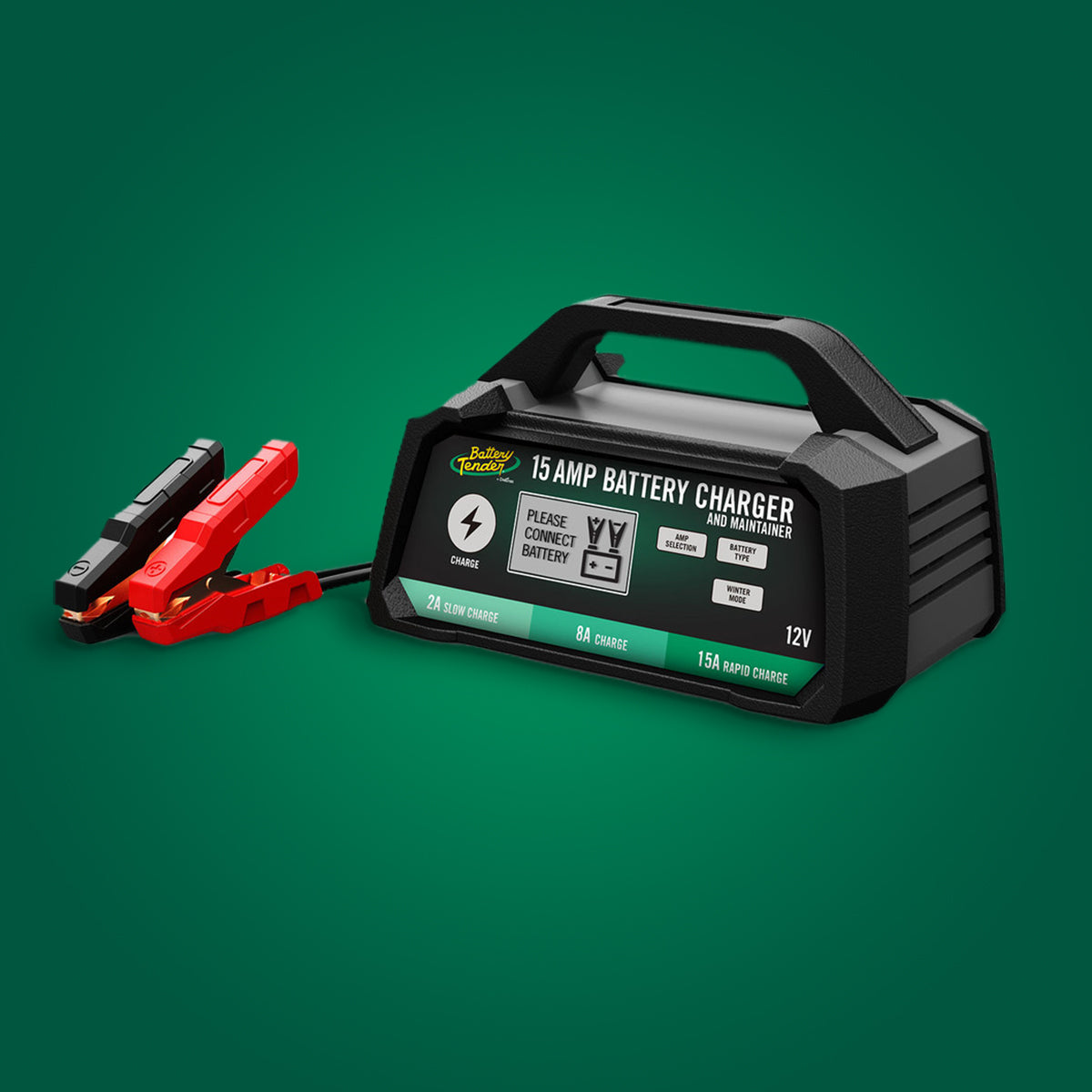
A selectable-rate unit covers all three sizes. The Battery Tender Power Tender 15/8/2 supports 15A, 8A, and 2A modes on 12V batteries. The 2A mode suits a small, deeply discharged battery. The 8A mode suits a 60Ah to 80Ah sedan or truck battery, and 15A handles quick turnaround on large batteries. Its LCD shows charging status, so you can see at a glance when the battery is full.
Battery Tender Power Tender 15/8/2 Amp 12V Battery Charger and Maintainer
After the recovery charge, repeat the rest test. If the battery holds 12.5V or higher after 24 hours and passes a load test, keep it. If it falls below 12.4V again, replace it. A battery past 5 years with repeated failures is not worth another recovery attempt.
How Does Infinite Sequential Monitoring (ISM) Prevent a Car Battery Not Holding Charge?
Battery Tender Infinite Sequential Monitoring (ISM) technology prevents the sulfation that causes most cases of a car battery not holding charge. It tests the battery, charges it fully, and then supplies power only when voltage drops, so a Battery Tender charger left connected will not overcharge the battery.
Battery Tender ISM technology works in four stages:
- Initialization: tests the battery and applies a gentle current to judge its condition.
- Bulk Charge: delivers constant, full rated current until the battery reaches about 80% state of charge.
- Absorption: holds voltage constant while current tapers, which helps dissolve sulfate crystals.
- Float Maintenance: monitors the battery and sends charge only when voltage drops.
Conventional trickle chargers push constant current whatever the battery's state. That overheats the electrolyte, wastes water, and corrodes the grids. Float-only chargers hold constant voltage with no Absorption stage, so they charge more slowly and recover sulfated batteries less effectively. A battery kept at full charge with a smart maintainer often reaches five years or more, compared with two to three years when it routinely sits partly discharged.
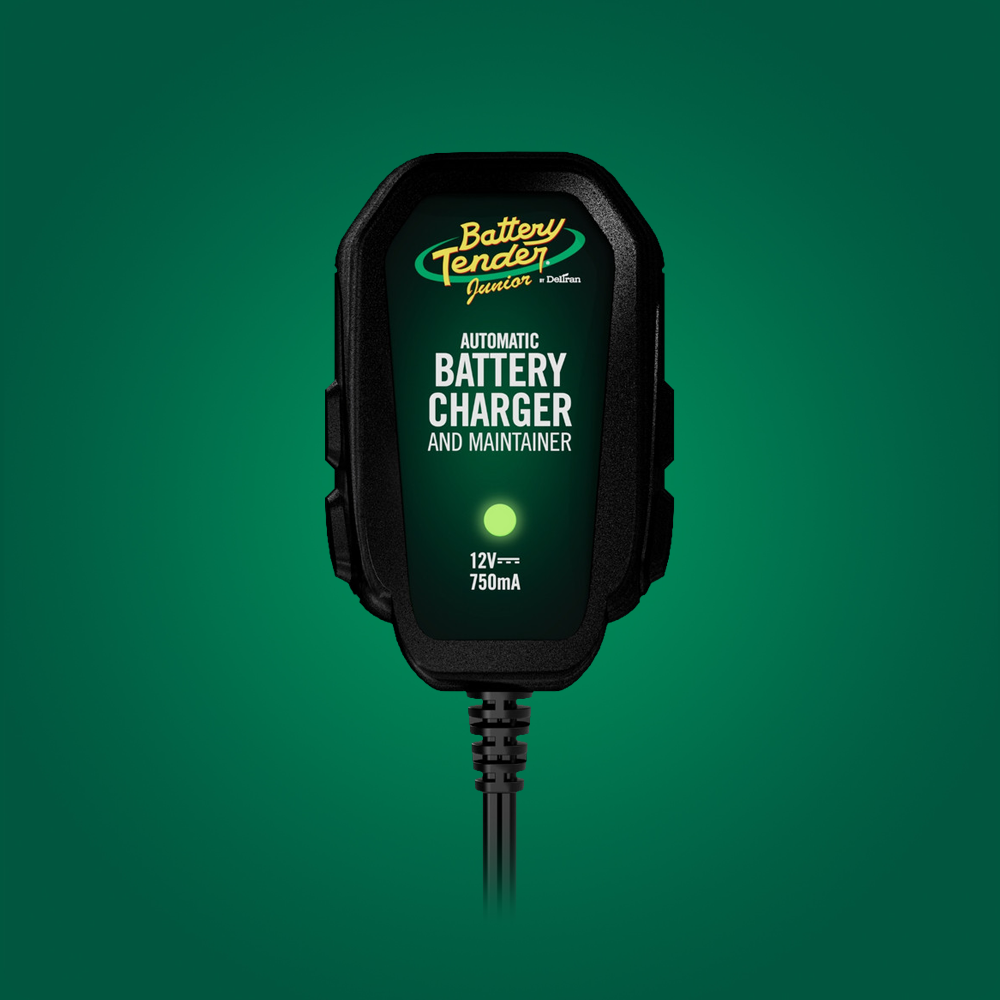
Battery Tender Power Tender models include temperature compensation, which adjusts the charge voltage for cold garages and hot driveways. Battery Tender Junior models do not, so choose a Battery Tender Power Tender or Battery Tender Plus model for vehicles stored in extreme temperatures.
Match the Maintainer to Your Situation
A household with several vehicles benefits from a multi-battery unit. The Battery Tender 4-Bank 12V 1.25 Amp charger handles four 12V batteries from one outlet, with 1.25A per bank. That suits a daily car, a weekend car, a motorcycle, and a lawn tractor.
Battery Tender 4-Bank 12V 1.25 Amp Battery Charger and Maintainer
For a single car, truck, or classic that sits for weeks, the Battery Tender Power Tender 3 Amp 12V/6V unit works on 12V batteries and on 6V batteries in older vehicles. Its 3A output is enough to recover a moderately discharged battery in a day and then hold it indefinitely.
Battery Tender Power Tender 3 Amp 12V/6V Battery Charger and Maintainer
Parking spots are often far from an outlet, so plan the connection point. The Battery Tender 25ft SAE Quick Disconnect Extension Cable 4-Pack lets you run charger leads to the driveway or a far garage bay and leave them ready to plug in.
Battery Tender 25ft SAE Quick Disconnect Extension Cable 4-Pack
What Charger Fits Your Battery Size and Situation?
Match charger amps to battery capacity: roughly 10% of amp-hours for recovery, and 1A to 4A for long-term maintenance. A charger far above that range stresses small batteries, and one far below it takes days to recover a large battery.
| Situation | Battery | Recommended unit | Why |
|---|---|---|---|
| Recover a discharged sedan or truck battery | 50Ah to 80Ah | Battery Tender Power Tender 15/8/2 | 8A restores a half-discharged battery in about 4 to 5 hours |
| Maintain three or four vehicles | 12V, mixed sizes | Battery Tender 4-Bank 12V 1.25 Amp | One outlet, four batteries |
| Maintain a car or 6V classic | 12V or 6V | Battery Tender Power Tender 3 Amp 12V/6V | Switchable voltage, indefinite connection |
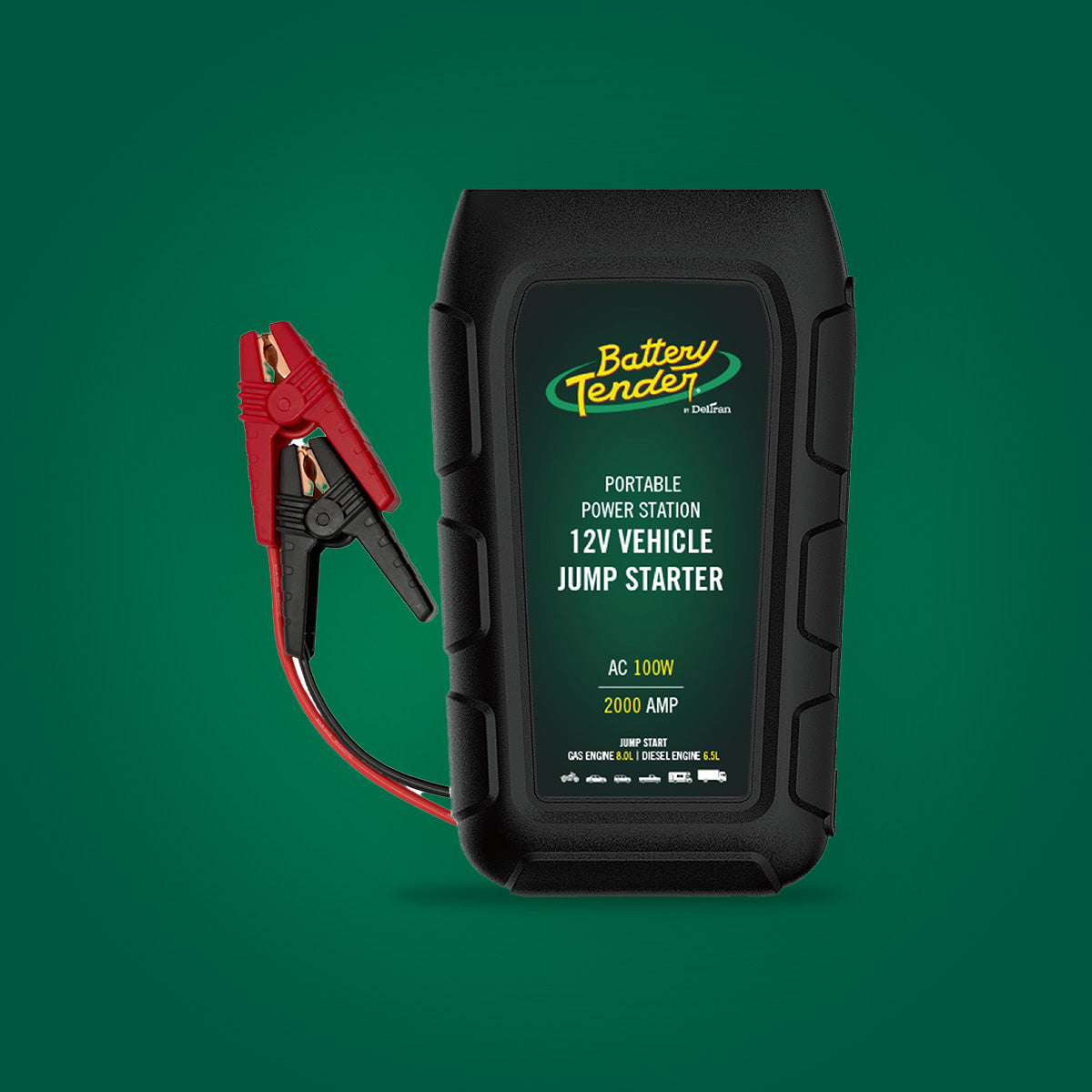
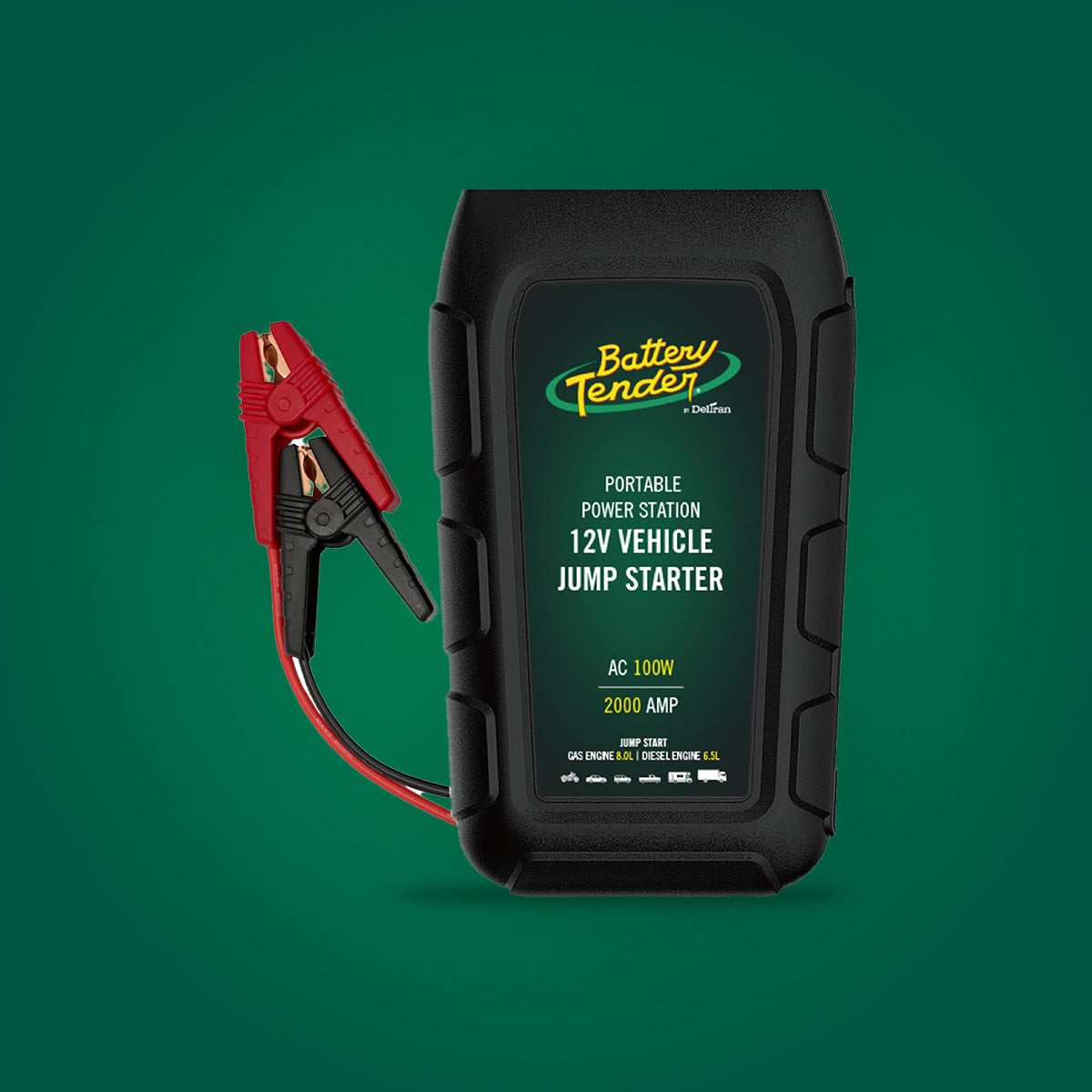
| Recover and jump-start in one unit | 12V lead-acid or lithium | Battery Tender Charge N Start 4120 | 4A charger plus 1,200A jump starter |
Some batteries fail without warning, usually when the car is far from home. The Battery Tender Charge N Start 4120 combines a 4A charger, which handles standard, AGM, GEL, and lithium 12V batteries, with a 1,200A jump starter. The internal pack is lithium-ion. The Charge N Store feature keeps it topped up, and SafeGuard protects against backfeed. The jump starter handles engines up to 6.0L gas or 4.0L diesel. It suits a truck or SUV owner whose battery has already shown signs of weakness.
Battery Tender Charge N Start 4120 — 4 Amp Battery Charger & 1200 Amp Jump Starter
The same logic applies elsewhere. Electric vehicles also depend on a small 12V battery that fails when it sits discharged, as covered in the guide to the 12V auxiliary battery most EV owners forget. Standby equipment faces the same self-discharge problem, explained in the Generac generator battery maintenance guide.
Frequently Asked Questions
Why does my car battery die overnight even after charging?
Overnight failure after a full charge points to either a parasitic draw or an internal fault. Measure current with the car off: more than 50 mA is a draw problem. If draw is normal and voltage still falls below 12.4V within 24 hours of resting, the battery is sulfated or has a shorted cell and likely needs replacement.
Can a car battery that won't hold a charge be fixed?
Sometimes. If sulfation or deep discharge caused the problem, a slow multi-stage charge can restore much of the capacity. If plates have shed material, a cell has shorted, or the battery is older than about five years, no charger can repair it. Confirm with a 24-hour rest test and a load test.
How long should a car battery hold a charge when parked?
A healthy, fully charged battery in a modern car typically lasts two to four weeks parked before voltage falls enough to cause a hard start, since computers and alarms draw a small current. In cold weather or with an older battery, that window shrinks to a week or less. A smart maintainer removes that limit by holding the battery at full charge.
Will driving recharge a battery that won't hold charge?
Driving recharges a battery only partially. A 15-minute trip rarely replaces the energy used to start the engine, and an alternator is built to maintain a charged battery, not recover a depleted one. A sulfated or deeply discharged battery needs a dedicated smart charger and a slow, multi-stage charge.
Is it safe to leave a Battery Tender smart charger connected all winter?
Yes. Battery Tender ISM technology moves through Initialization, Bulk Charge, Absorption, and Float Maintenance, then supplies charge only when voltage drops. It does not overcharge the battery, so the charger can stay connected for months. Conventional trickle chargers lack this monitoring and can overcharge if left connected.
Conclusion
A car battery not holding charge has a specific cause, and three tests find it: the 24-hour rest test, a parasitic draw check, and an alternator voltage check. Recover a salvageable battery with a slow, multi-stage charge, and replace one that fails the rest test twice or is past five years old.
Next step: charge the battery fully today, rest it overnight, and measure voltage in the morning. Then pick a maintainer sized to your battery from the Battery Tender battery charger collection so the problem does not return.