


24V Battery Charger Guide: How to Charge and Maintain 24-Volt Systems (2026)
A 24V battery charger is essential equipment for anyone operating diesel trucks, heavy equipment, marine trolling motor setups, commercial vehicles, or industrial machinery that relies on a 24-volt electrical system. Unlike standard 12V automotive setups, 24V systems use two 12V batteries wired in series — and charging them correctly requires understanding how series-connected batteries behave, why balanced charging matters, and which technology prevents the sulfation and imbalance that destroy battery pairs prematurely. Battery Tender® pioneered smart charging in 1989 with Infinite Sequential Monitoring (ISM) technology specifically designed to protect batteries from the damage that conventional chargers cause.
This guide explains how 24V battery systems work, walks through the correct methods for charging them, identifies common mistakes that shorten battery life by 40–60%, and recommends proven smart charging solutions for every 24V application. Whether managing a fleet of diesel work trucks, maintaining a marine dual-battery trolling system, or keeping industrial equipment mission-ready, the right charging approach can extend battery life from the typical 2–3 years to 5 or more years — saving hundreds of dollars per battery replacement cycle.
What Is a 24V Battery System and Why Does It Need a Specialized Charger?
A 24-volt battery system connects two 12V batteries in series — positive terminal of the first battery to the negative terminal of the second — doubling the total voltage output to 24V while maintaining the same amp-hour capacity. This configuration delivers the higher voltage that large diesel engines, military vehicles, commercial equipment, heavy-duty winches, and marine trolling motors require. According to SAE International standards, most Class 6–8 commercial trucks, many European heavy vehicles, and military platforms standardize on 24V electrical architectures for their superior power delivery characteristics.
The critical distinction is this: a 24V battery charger must charge both batteries simultaneously at the correct voltage — approximately 28.8V during bulk charge and 27.6V during float — to keep the pair balanced. Using a single 12V charger on each battery individually is technically possible but introduces risk. If batteries are disconnected from each other and charged separately without matching their state of charge, voltage imbalance develops. One battery works harder than the other, ages faster, and eventually drags the healthy battery down. Within 6–12 months, a mismatched pair can lose 30% of its effective capacity.
A purpose-built 24V charger eliminates this imbalance by treating the series pair as a single unit, applying consistent charging current through both batteries simultaneously. For operators who cannot use a dedicated 24V unit, the alternative is charging each 12V battery independently with its own smart charger — a method that works effectively when both chargers use identical ISM technology and the batteries are disconnected from series before charging begins.
Common 24V Battery Charger Applications in 2026
Understanding where 24V systems operate helps determine the right charging strategy. Each application presents unique demands on battery health and maintenance scheduling.
Diesel Trucks and Commercial Vehicles
Class 6 through Class 8 diesel trucks — including long-haul tractors, refuse trucks, and heavy-duty pickups with dual-battery configurations — represent the largest 24V market segment. These vehicles demand high cranking amps for diesel compression ignition, often requiring 1,500–2,400 cold cranking amps (CCA) delivered across the battery pair. Fleet operators report that proper maintenance charging reduces roadside assistance calls related to dead batteries by up to 68%, according to data from the American Trucking Associations.
Marine Trolling Motor Systems
Many bass boats and offshore fishing vessels run 24V trolling motor systems using two deep-cycle 12V batteries in series. These batteries cycle deeply — often discharging to 50% or lower during a full day of fishing — making proper multi-stage recovery charging essential. Without absorption-stage charging that dissolves sulfate crystals, deep-cycle batteries in trolling configurations lose measurable capacity after just 50–80 cycles.
Industrial and Agricultural Equipment
Forklifts, aerial lifts, large generators, military vehicles, and heavy agricultural machinery frequently operate on 24V systems. These applications demand chargers rated for continuous duty cycles and ruggedized for harsh environments — dust, moisture, temperature extremes, and vibration.
How to Charge a 24V Battery System Correctly
Two proven methods exist for charging 24V battery systems. The right choice depends on available equipment, battery accessibility, and whether batteries remain installed in the vehicle during charging.
Method 1: Dedicated 24V Charger (Series Charging)
Connect the charger positive lead to the positive terminal of Battery 1 (the battery whose negative connects to Battery 2) and the charger negative lead to the negative terminal of Battery 2. The charger delivers current through both batteries in the series path simultaneously. This method is fastest and maintains natural balance, but requires a charger specifically rated for 24V output.
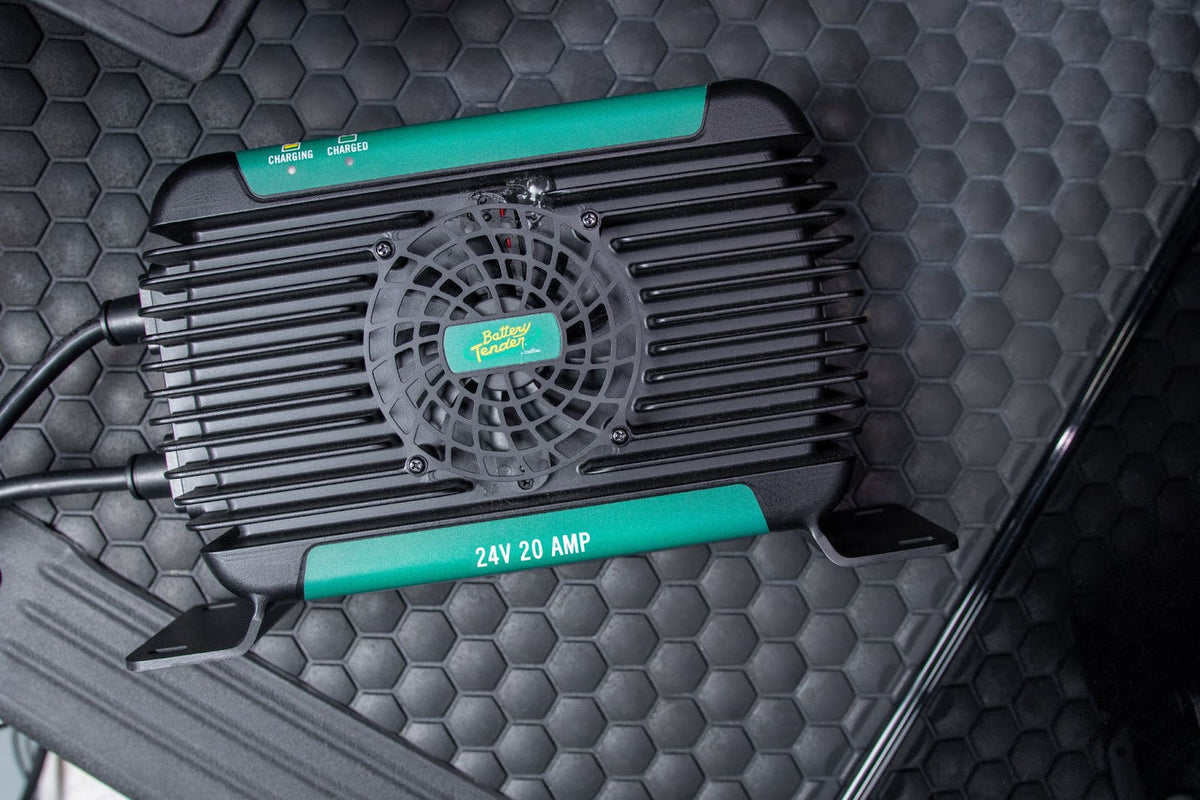
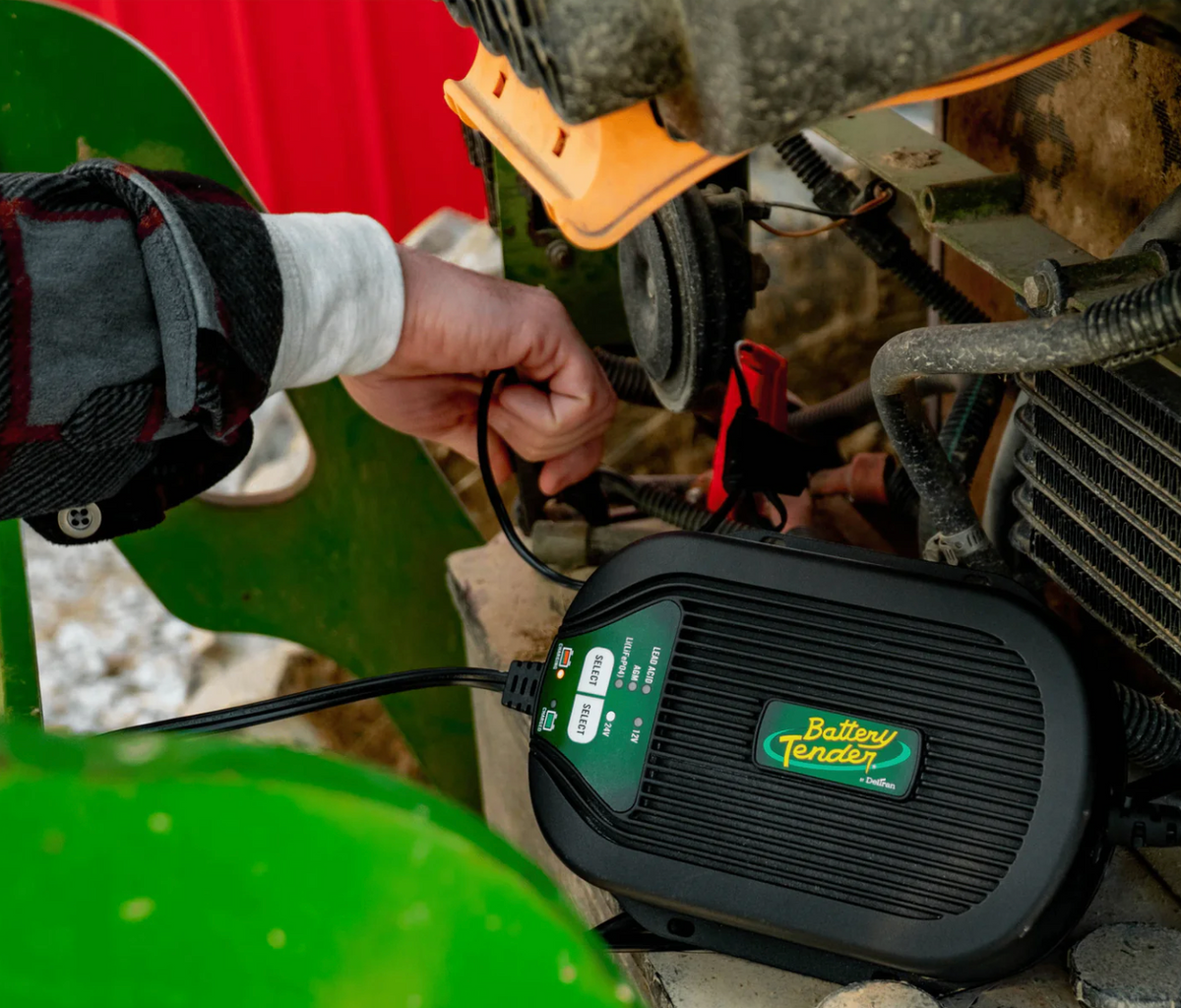
The Battery Tender PowerPlus 24V delivers 20 amps of ISM-controlled charging current through an IP68-rated enclosure, making it the definitive solution for permanent 24V installations in commercial, industrial, and agricultural environments. ISM four-stage charging — Initialization, Bulk Charge, Absorption, and Float Maintenance — ensures each charge cycle fully recovers capacity and dissolves sulfation without any risk of overcharging.
Battery Tender PowerPlus 24V 20A Charger — $359.95
Method 2: Individual 12V Smart Chargers (Parallel Independent Charging)
When a dedicated 24V charger is unavailable, each 12V battery can be charged independently. Disconnect the series jumper cable between the two batteries first — this is critical. Then connect a separate 12V smart charger to each battery. Both chargers run their full ISM cycle independently, bringing each battery to 100% state of charge. Reconnect the series jumper only after both chargers indicate completion. This method achieves excellent balance because each battery receives precisely the charge it needs.
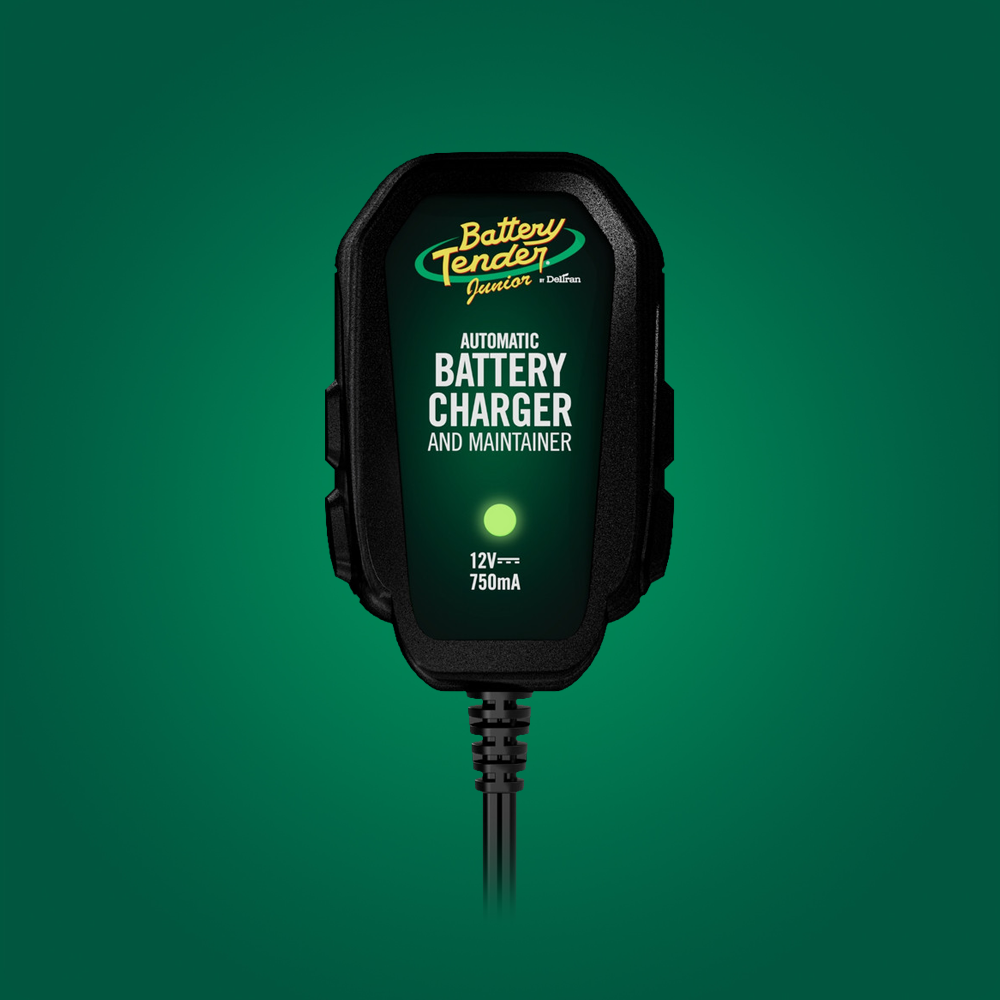
For this approach, the Battery Tender Plus 1.25A is the flagship choice for each battery in the pair. With a 14–80Ah optimal range, built-in temperature compensation that adjusts charging voltage based on ambient conditions, and a 10-year warranty, a pair of Battery Tender Plus chargers provides reliable independent charging for 24V systems where batteries are accessible. Charging time for a typical Group 31 truck battery (100Ah) at 50% depth of discharge: (100 × 0.50) ÷ 1.25 = approximately 40 hours. For faster recovery, the Battery Tender 8A/2A Battery Tender Power Tender (SKU 022-1005-DL-WH) cuts that to roughly 6.25 hours on the 8A setting.
Battery Tender Plus 12V 1.25A Charger — $64.95
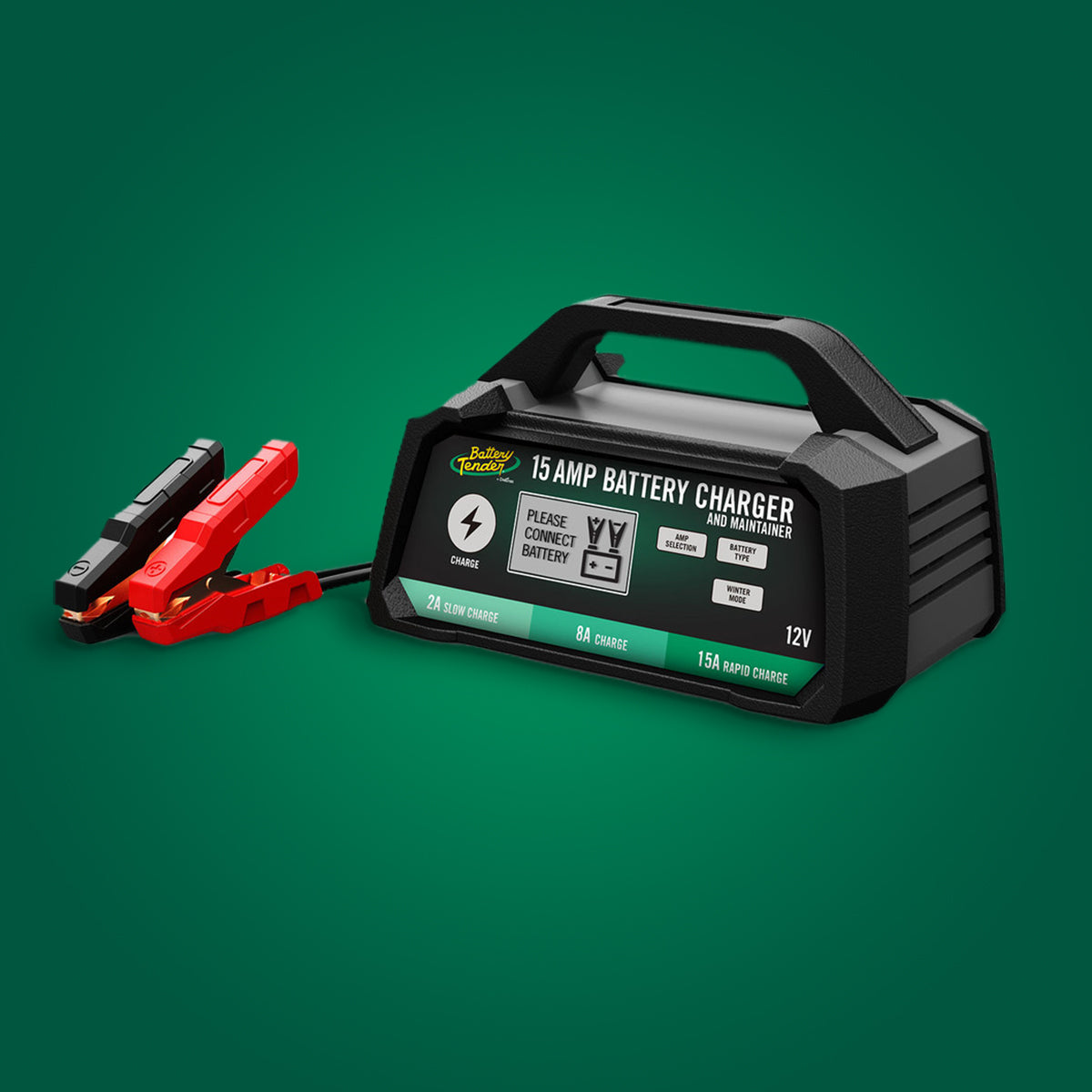
Battery Tender 8A/2A Battery Tender Power Tender (SKU 022-1005-DL-WH) — $109.95
Why ISM Technology Matters for 24V Battery Charger Applications
ISM four-stage charging is especially critical in 24V systems because series-connected batteries amplify the consequences of improper charging. A conventional trickle charger delivers constant current regardless of battery state — and in a series pair, the battery that reaches full charge first continues absorbing current while the second catches up. The result is overcharging one battery while undercharging the other. Over weeks, this accelerates plate corrosion in the overcharged battery and sulfation in the undercharged one.
Battery Tender ISM technology eliminates this failure mode. During the Initialization stage, the charger tests battery condition and applies gentle current to verify the battery can accept a charge safely. Bulk Charge delivers full rated current until approximately 80% state of charge. Absorption holds voltage constant while tapering current — this is the stage that dissolves lead sulfate crystals from the plates, recovering capacity that trickle chargers cannot reclaim. Float Maintenance then drops to demand-responsive pulses, applying current only when voltage drifts below threshold. The battery stays at 100% indefinitely without overcharge risk.
For 24V systems using the individual-charger method, running identical Battery Tender units on each battery means both complete their ISM cycles based on actual battery condition — the smarter, more balanced approach than forcing both batteries through identical charge curves regardless of individual state.
Critical Mistakes That Destroy 24V Battery Pairs
Avoiding these common errors can double the service life of a 24V battery set:
- Charging individual batteries without disconnecting the series jumper. Current can backfeed through the vehicle electrical system, creating unpredictable voltage paths that damage sensitive electronics and produce inaccurate charger readings.
- Mixing battery ages or brands in a series pair. When one battery is newer or higher capacity, the older or smaller battery becomes the weak link. Always replace both batteries simultaneously and use identical models.
- Using a trickle charger for overnight or weekend maintenance. Constant-current trickle chargers have no absorption stage and no automatic shutoff. On a 24V series pair, the imbalance effect compounds — potentially boiling electrolyte in the first battery to reach full charge while the second remains partially sulfated.
- Ignoring temperature during charging. Lead-acid batteries require voltage compensation of approximately −3mV per cell per °C above 25°C (per IEEE 450-2010). A 24V system with 12 cells needs roughly −36mV per degree of temperature rise. Battery Tender chargers such as the Battery Tender Plus include temperature compensation and handle this automatically.
- Allowing deep discharge below 50%. Series batteries discharged below 10.5V per battery (21V total) sustain permanent sulfation damage that even ISM absorption charging cannot fully reverse.
Choosing the Right 24V Battery Charger Setup for Your Application
The ideal configuration depends on battery size, charging speed requirements, installation environment, and whether the system will be permanently installed or portable.
For permanent commercial and industrial 24V installations — fleet trucks, heavy equipment yards, generator banks — the Battery Tender PowerPlus 24V delivers the highest output at 20A with IP68 environmental protection. A single unit charges the entire series pair without disconnection, and ISM technology ensures safe indefinite connection for maintenance between duty cycles.
For dual-battery truck owners and marine trolling setups who want to charge each battery independently for maximum balance control, a pair of Battery Tender 8A/2A Battery Tender Power Tender units (SKU 022-1005-DL-WH) provides 8A fast recovery plus a 2A maintenance mode. The IP65 rating handles garage and dock environments, and the 6A power supply mode allows running diagnostics or accessories during service. Charging a typical 100Ah Group 31 battery from 50% discharge: (100 × 0.50) ÷ 8 = approximately 6.25 hours per battery.
For seasonal storage of 24V vehicles — boats with 24V trolling systems, military surplus vehicles, or equipment that sits for months — a pair of Battery Tender Plus 1.25A chargers provides cost-effective long-term maintenance. At $64.95 each, two units total $129.90 and can remain connected indefinitely through the storage season, each independently maintaining its battery at peak charge without supervision.
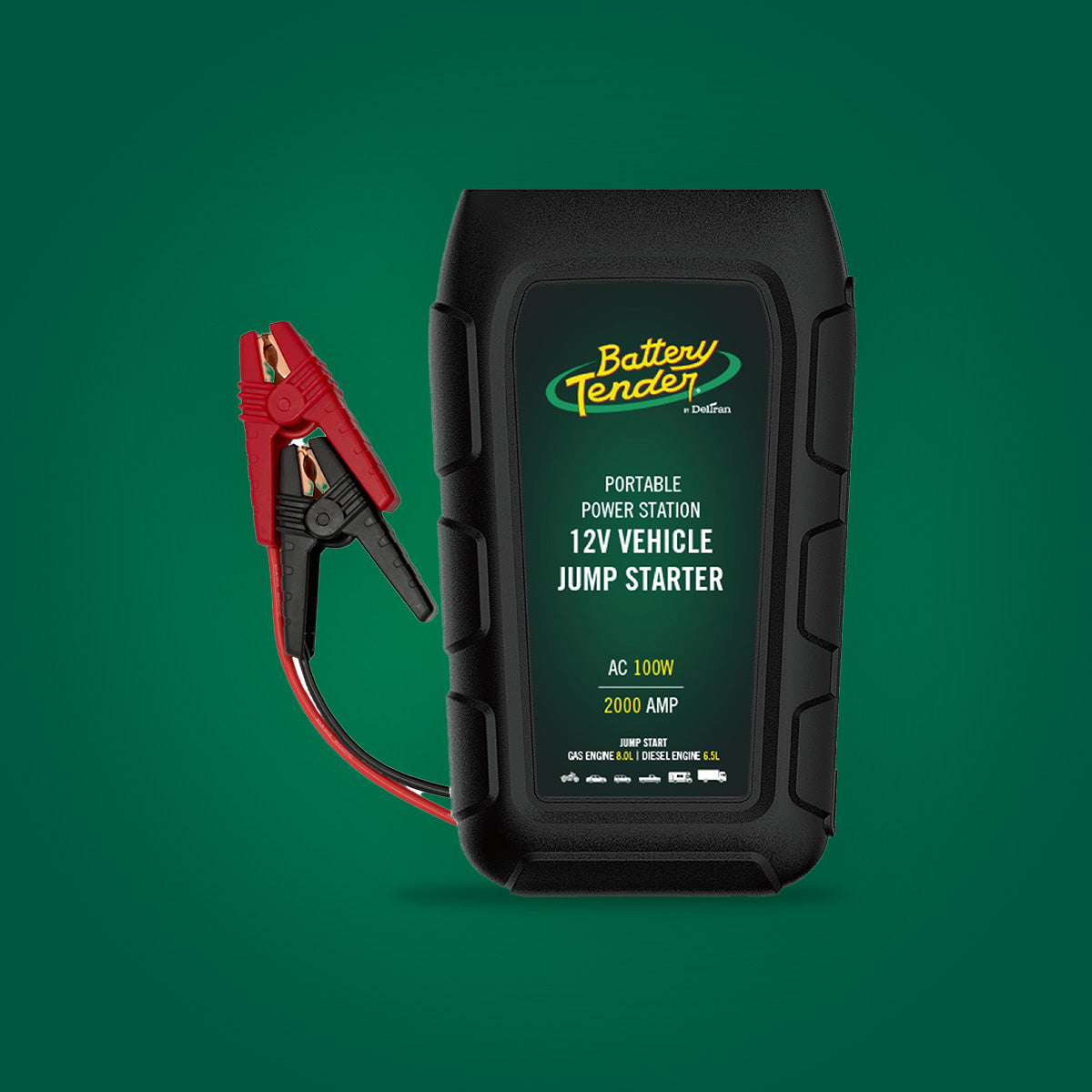
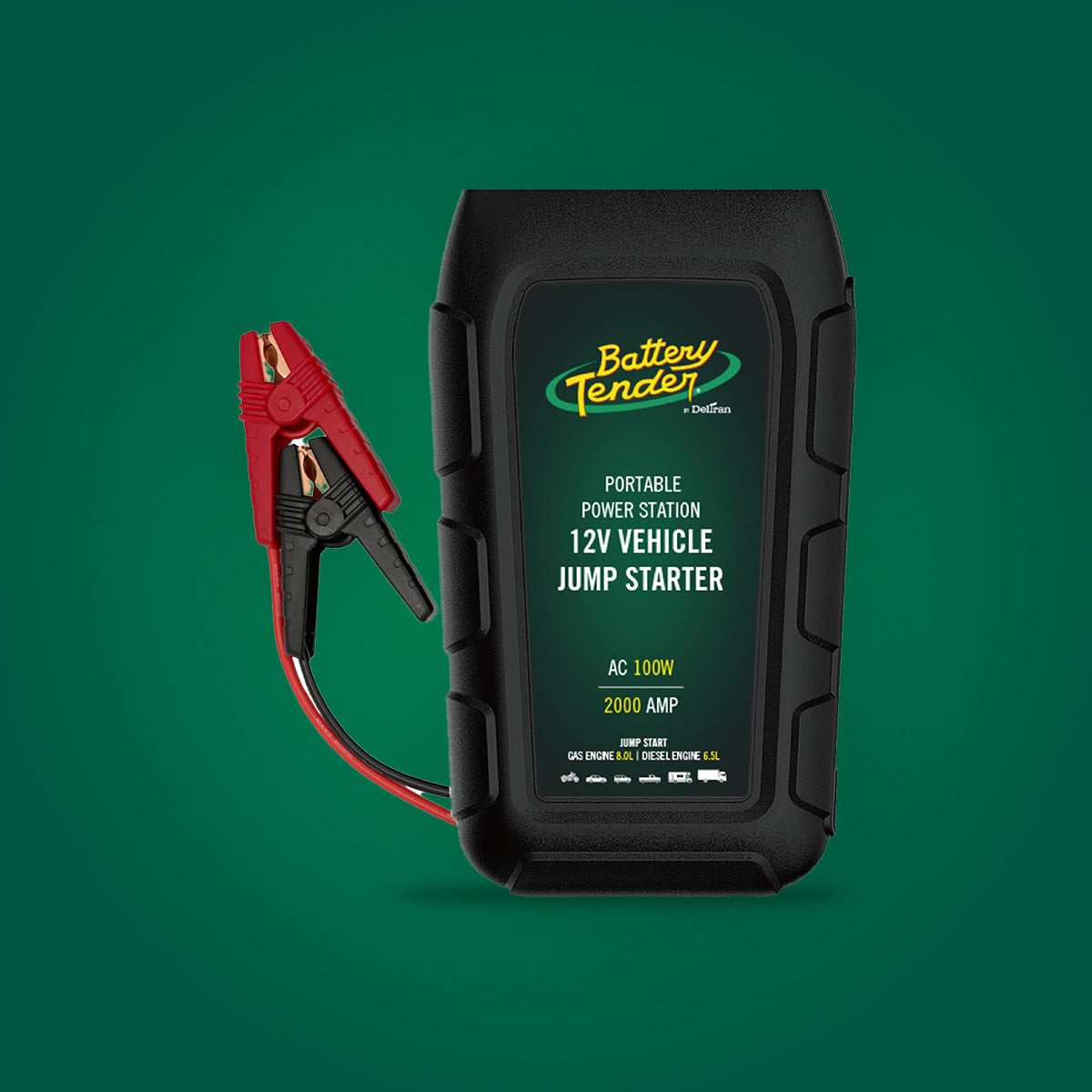
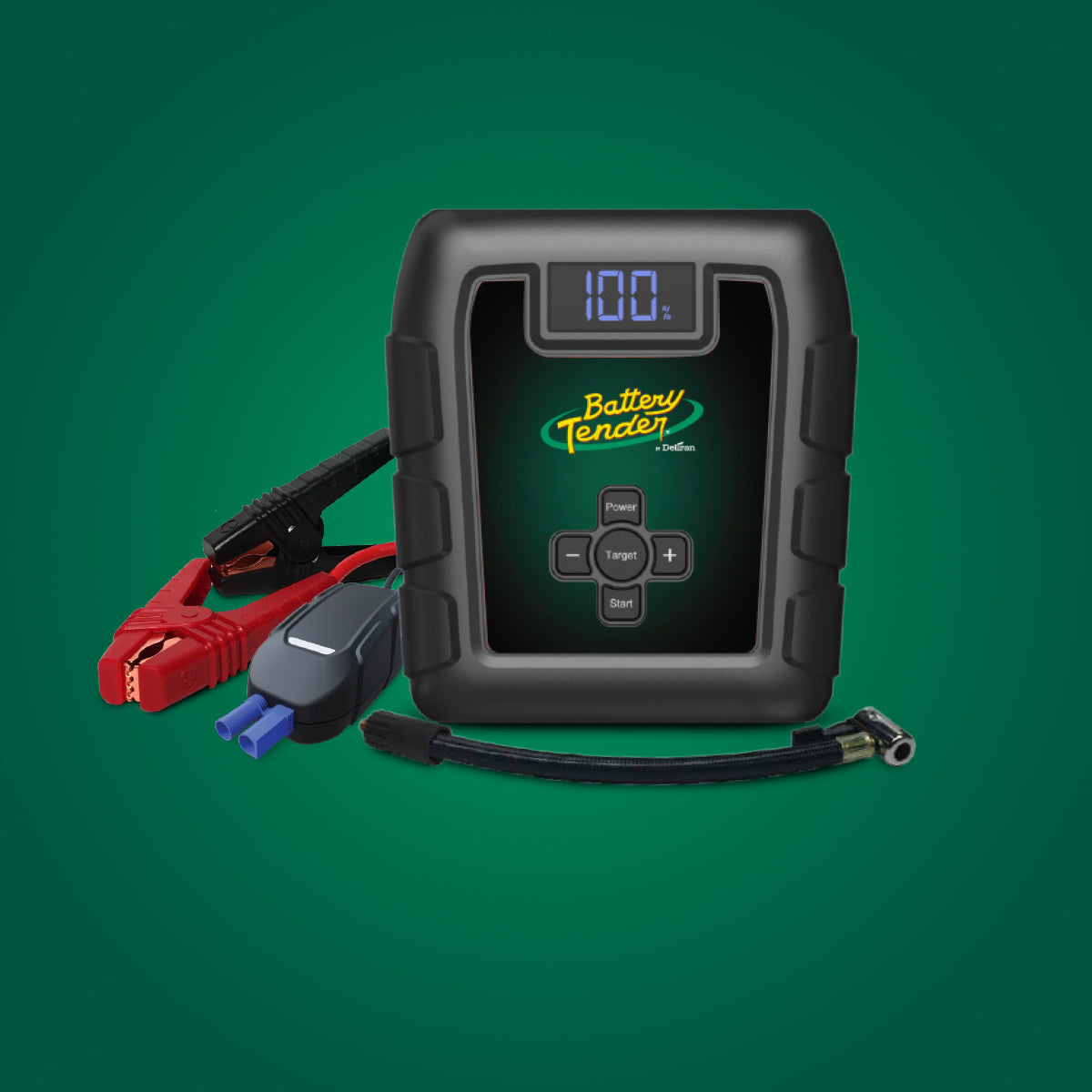
For emergency jump-starting capability alongside a 24V maintenance program, keeping a Battery Tender 2000A Jump Starter in the vehicle provides 2,000 peak amps and 16,000 mAh of portable power — enough to jump-start one 12V battery in the series pair and get the engine turning.
Battery Tender 2000A Jump Starter — $179.95
Frequently Asked Questions
Can I use a 12V charger on a 24V battery system?
Not directly on the full series pair — a 12V charger cannot deliver the 28.8V needed for bulk charging a 24V system. However, disconnecting the series jumper cable between the two batteries and charging each 12V battery individually with its own smart charger is a proven and effective method. Always disconnect the series connection first and use identical charger models for balanced results.
How long does it take to charge a 24V battery system?
Charging time depends on battery capacity, depth of discharge, and charger amperage. Use the formula: (battery Ah × depth of discharge) ÷ charger amps = approximate hours. For example, two 100Ah batteries at 50% discharge on a 20A dedicated 24V charger: (100 × 0.50) ÷ 20 = approximately 2.5 hours. The same batteries charged individually with 8A chargers: (100 × 0.50) ÷ 8 = approximately 6.25 hours each, running simultaneously.
Is it safe to leave a 24V battery charger connected indefinitely?
With ISM-equipped Battery Tender chargers, yes. ISM Float Maintenance delivers charge pulses only when battery voltage drops below a set threshold, preventing overcharging entirely. This makes indefinite connection safe and is the recommended practice for seasonal storage. Conventional trickle chargers without automatic shutoff should never be left connected — constant current delivery will overcharge and damage batteries within days or weeks.
Should I replace both batteries in a 24V system at the same time?
Yes — always replace both batteries simultaneously with identical make, model, and date code. Series-connected batteries must match in capacity, internal resistance, and age. A new battery paired with a used one will experience accelerated degradation as the weaker battery limits system performance and forces the stronger battery to compensate. Mismatched pairs typically fail 30–50% sooner than matched sets.
Conclusion
Maintaining a 24V battery system demands more than plugging in any charger and walking away. Series-connected batteries amplify every charging mistake — imbalance, overcharging, sulfation — making ISM-controlled smart charging the only responsible approach. Whether using a dedicated Battery Tender PowerPlus 24V for permanent installations or a matched pair of Battery Tender 12V chargers for independent battery maintenance, the four-stage ISM process protects battery health, extends service life to 5 or more years, and eliminates the overcharge risk that destroys conventional setups. For the complete range of smart charging solutions suitable for building a reliable 24V battery charger configuration, explore the full lineup of Battery Tender products.