


Battery Charger 10 Amp: Matching Charger Output to Battery Size (2026)
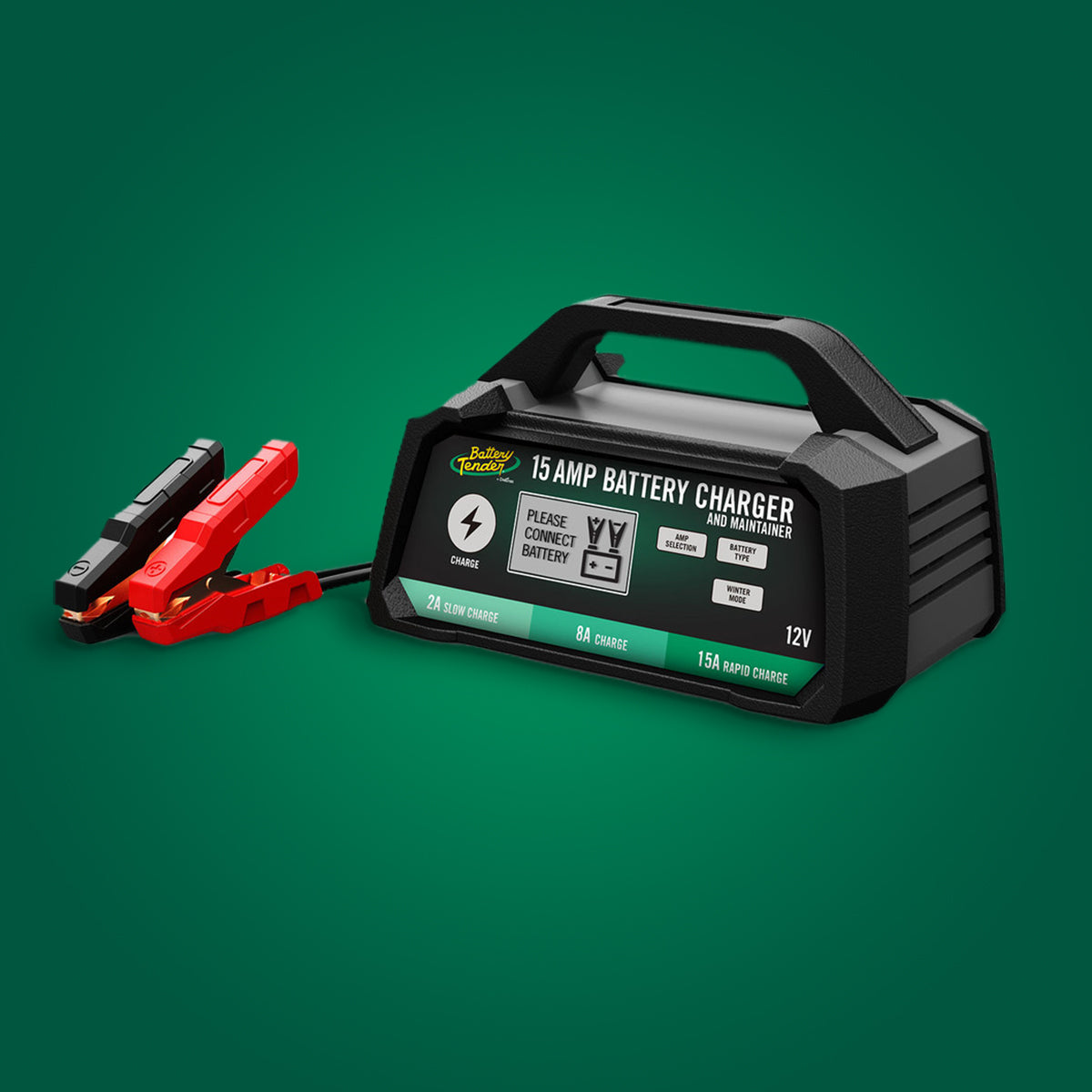
A battery charger 10 amp output is often the default choice for vehicle owners who want fast charging without the bulk of a commercial unit — but higher amperage does not always mean better results. Battery Tender® pioneered smart charging technology in 1989, and decades of engineering have proven that how a charger manages current matters far more than the peak number printed on the label. Choosing the right amperage starts with understanding battery capacity, charge acceptance rates, and the risk of pushing too many amps into a battery that cannot absorb them safely.
This guide breaks down the science behind charger amperage selection, explains the widely accepted 10% rule that governs safe charging rates, and demonstrates why Infinite Sequential Monitoring (ISM) technology delivers superior results across a range of amperage outputs. Whether a 10 amp battery charger is the right fit — or whether a lower-amperage smart charger will actually protect a battery more effectively — depends on specific battery size, chemistry, and intended use case.
Key Takeaways:- The 10% rule: optimal charge rate equals roughly 10% of a battery's amp-hour (Ah) capacity
- A 10 amp charger is ideal for batteries rated 80–120 Ah — oversized for most motorcycle and powersports batteries
- ISM 4-stage charging prevents overcharging regardless of amperage, unlike constant-current trickle chargers
- Matching charger output to battery size extends battery lifespan from 2–3 years to 5+ years by preventing sulfation and thermal stress
- Smart chargers with selectable amperage provide the most versatility across multiple vehicles
What Does "Battery Charger 10 Amp" Actually Mean?
A 10 amp rating refers to the maximum sustained current the charger delivers during its bulk charging phase. Amperage measures the rate of electrical flow — not total energy delivered. A 10 amp charger pushes electrons into a battery twice as fast as a 5 amp charger, which means shorter charge times but also greater thermal stress on battery plates if the battery cannot accept that rate safely.
The critical distinction is between rated output and actual delivered current. A conventional charger rated at 10 amps delivers a constant 10 amps regardless of what the battery needs — a dangerous approach that leads to overcharging, electrolyte boiling, and accelerated plate corrosion. A smart charger rated at 10 amps uses that as a ceiling, automatically reducing current as the battery approaches full charge. According to the Society of Automotive Engineers (SAE) J537 standard, charge acceptance rates decline as state of charge increases, making adaptive current control essential for battery health.
When shopping for a battery charger 10 amp models dominate the mid-range category. However, the amperage number alone reveals nothing about charging intelligence, safety features, or long-term battery protection. Two 10 amp chargers from different manufacturers can produce dramatically different outcomes on the same battery — one extending life by years, the other causing irreversible damage within months.
The 10% Rule: How to Match Battery Charger Amperage to Battery Size
The optimal charge rate for any lead-acid or AGM battery is approximately 10% of its amp-hour (Ah) capacity. This guideline, supported by battery manufacturers including those following Battery Council International (BCI) standards, balances charge speed against thermal and electrochemical stress on internal plates.
The math is straightforward:
| Battery Capacity (Ah) | Ideal Charge Rate (10%) | Is a 10A Charger Appropriate? |
|---|---|---|
| 10–20 Ah (motorcycle/powersports) | 1–2 amps | No — excessive; risk of overheating |
| 30–50 Ah (small car/compact) | 3–5 amps | Borderline — acceptable only with ISM tapering |
| 60–80 Ah (mid-size sedan/SUV) | 6–8 amps | Close fit — 8A selectable mode ideal |
| 80–120 Ah (truck/RV/marine deep cycle) | 8–12 amps | Yes — ideal match for 10A output |
| 120+ Ah (large RV/commercial) | 12–15+ amps | Underpowered — consider 15A+ unit |
Using the charging time formula — (Battery Ah × depth of discharge) ÷ charger amps = approximate hours — a 100 Ah battery at 50% depth of discharge charged at 10 amps requires approximately (100 × 0.50) ÷ 10 = 5 hours. That same battery charged at 1.25 amps requires 40 hours. The trade-off is speed versus gentleness, and the right balance depends on the situation.
Why Smart Charging Technology Matters More Than a Battery Charger 10 Amp Rating
Raw amperage is only half the equation. ISM technology from Battery Tender manages the entire charging cycle through four sequential stages, automatically adjusting current and voltage at each transition. This process prevents the two most common causes of premature battery failure: sulfation from chronic undercharging and plate degradation from overcharging.
The ISM 4-stage process works as follows:
- Initialization — The charger tests battery condition and applies gentle current to assess voltage response, determining whether the battery can accept a full charge safely
- Bulk Charge (constant current) — Full rated amperage flows until the battery reaches approximately 80% state of charge, delivering the fastest recovery during this phase
- Absorption (constant voltage) — Voltage holds steady while current tapers naturally as the battery approaches full charge, dissolving sulfate crystals that accumulate on lead plates
- Float Maintenance — Demand-responsive charge pulses activate only when voltage drops below a set threshold, keeping the battery at 100% without any risk of overcharging
Conventional trickle chargers skip stages 1 and 3 entirely, delivering constant current from start to finish. A constant-current 10 amp trickle charger connected to a fully charged battery continues pushing 10 amps into cells that have nowhere to store the energy. The result is electrolyte gassing, water loss, plate warping, and — in sealed AGM or GEL batteries — potential case swelling or rupture. ISM eliminates this risk entirely, which is why Battery Tender chargers are safe to leave connected indefinitely.
Choosing the Right Amperage: Product Recommendations by Use Case
Rather than defaulting to a 10 amp charger for every application, selecting a charger that matches the battery — and offers intelligent current management — produces significantly better results. Battery Tender offers ISM-equipped chargers across a range of amperages, each engineered for specific battery sizes and use cases.
For Motorcycles, ATVs, and Powersports (2–30 Ah Batteries)
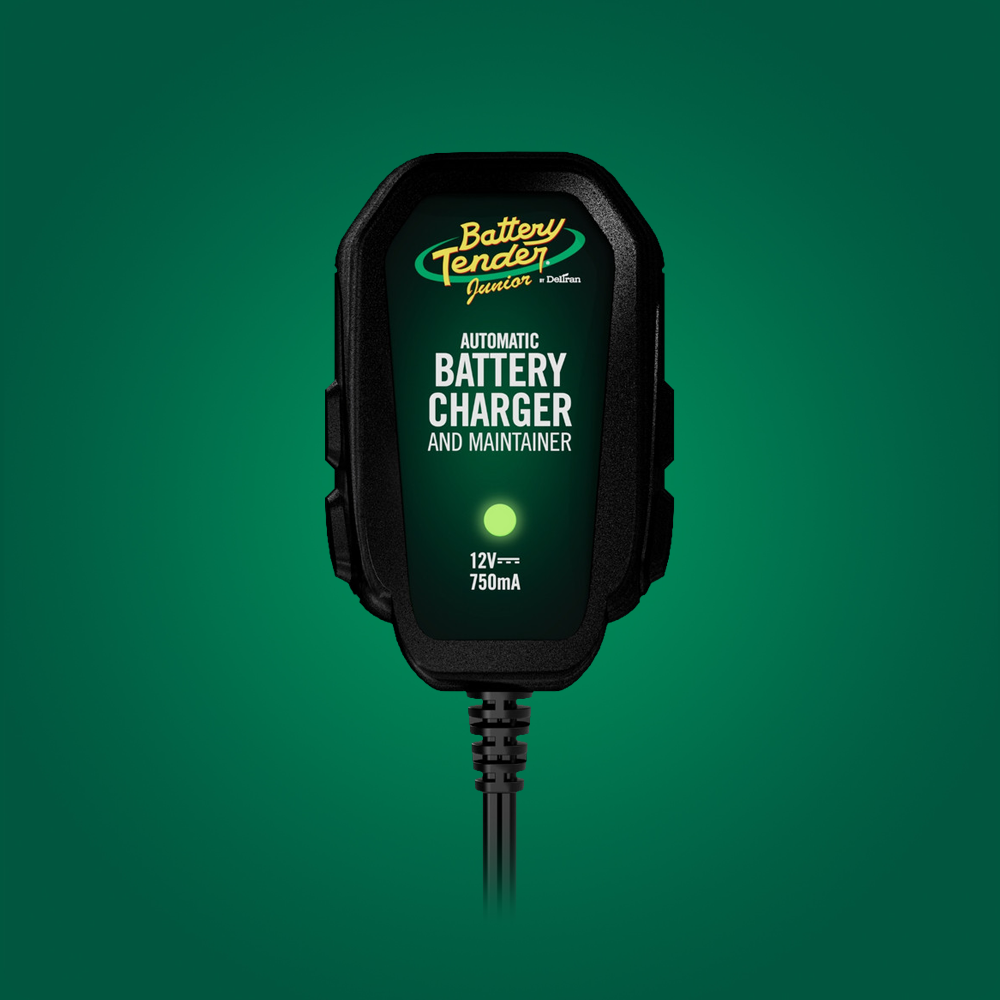
Powersports batteries range from 2 Ah to 30 Ah, making 1 amp the ideal charge rate for the vast majority of these applications. The Battery Tender Junior 1A Selectable delivers 1 amp of ISM-managed current with selectable chemistry support for both lead-acid and lithium batteries — covering the growing number of lithium-equipped motorcycles and ATVs entering the market in 2026. At 1 amp, a typical 14 Ah motorcycle battery at 50% discharge recovers in approximately 7 hours, well within overnight charging range.
Battery Tender Junior 1A Selectable — 12V Lead-Acid/Lithium ($52.95)
For Cars, SUVs, and Trucks (40–100+ Ah Batteries)
Automotive batteries typically range from 40 Ah in compact cars to 100+ Ah in full-size trucks with auxiliary electronics. The Battery Tender 8A/2A Power Tender (SKU 022-1005-DL-WH) offers selectable 8 amp or 2 amp output plus a dedicated 6 amp power supply mode — providing the flexibility to fast-charge a large truck battery at 8 amps or gently maintain a mid-size sedan battery at 2 amps. IP65 weather resistance allows permanent outdoor installation in engine bays or garages. Temperature compensation adjusts voltage targets based on ambient conditions, preventing overcharge in summer heat and undercharge during winter cold.
For an 80 Ah truck battery discharged to 30% capacity, charging at 8 amps recovers the battery in approximately (80 × 0.70) ÷ 8 = 7 hours. At the 2 amp maintenance rate, the same recovery takes 28 hours — perfectly suited for overnight or weekend storage charging.
Battery Tender 8A/2A Power Tender — 12V Selectable IP65 ($109.95)
For Multi-Vehicle Owners and Garages
Owners with both a daily driver and a weekend vehicle need simultaneous charging capability without running two separate units. The Battery Tender Plus 12V 1.25A remains the flagship single-output charger backed by an industry-best 10-year warranty, covering batteries from 14–80 Ah with temperature compensation. For owners needing to charge two vehicles at once, the Battery Tender 2-Bank provides independent ISM charging on two outputs simultaneously — each bank operates its own 4-stage cycle, so connecting a fully charged motorcycle alongside a depleted car battery causes no conflict.
Battery Tender Plus 12V 1.25A — Flagship Charger with 10-Year Warranty ($64.95)
When a 10 Amp Battery Charger Is the Wrong Choice
A 10 amp charger can cause measurable harm in three specific scenarios. First, applying 10 amps to a small battery — anything under 40 Ah — exceeds the 10% rule by a dangerous margin. A 14 Ah motorcycle battery receiving 10 amps experiences charge rates exceeding 70% of capacity per hour, generating heat faster than the battery can dissipate it. Internal temperatures above 125°F (52°C) accelerate positive grid corrosion exponentially.
Second, deeply sulfated batteries require low-current recovery before accepting high-amperage bulk charging. Sulfation creates a resistive barrier on plate surfaces that converts high current into heat rather than stored energy. ISM Initialization detects this condition and applies appropriate current; a non-smart 10 amp charger does not.
Third, lithium-iron-phosphate (LiFePO4) batteries — increasingly common in marine, motorcycle, and off-grid applications — require precise voltage cutoffs that differ from lead-acid chemistry. Charging a lithium battery with a non-selectable charger risks triggering the battery management system (BMS) protection circuits or, in worst cases, damaging cells permanently. Battery Tender chargers with selectable chemistry modes (like the Battery Tender Junior 1A Selectable) switch voltage profiles automatically to match the connected battery type.
What About Emergency Jump Starting?
No charger — regardless of amperage — delivers the instantaneous burst required to crank a starter motor. Starting a typical V8 engine demands 200–400 amps for 3–5 seconds, far beyond what any maintenance charger provides. For situations where a battery is too depleted to start a vehicle, a dedicated jump starter or a combination charger/jump starter unit is essential.
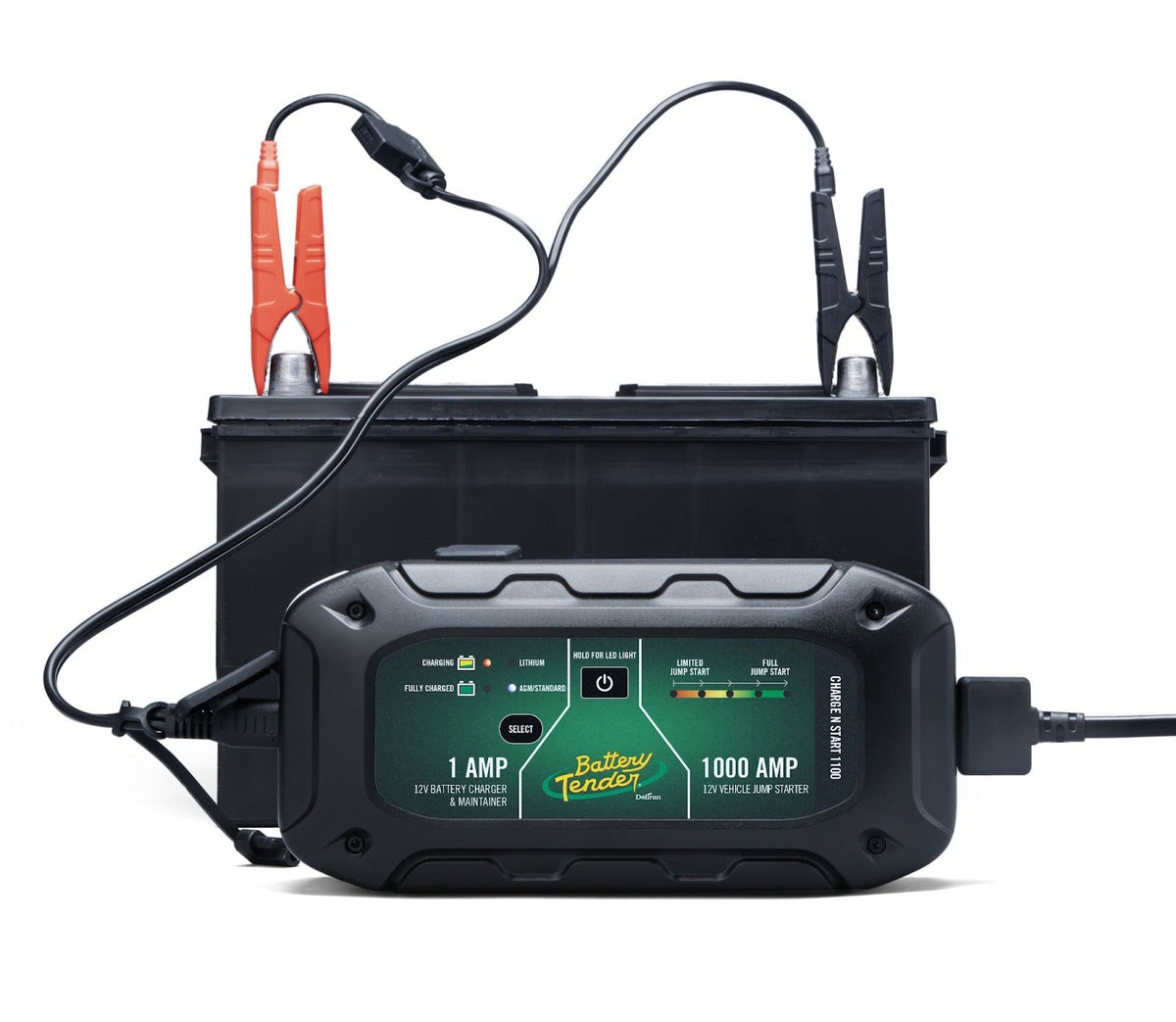
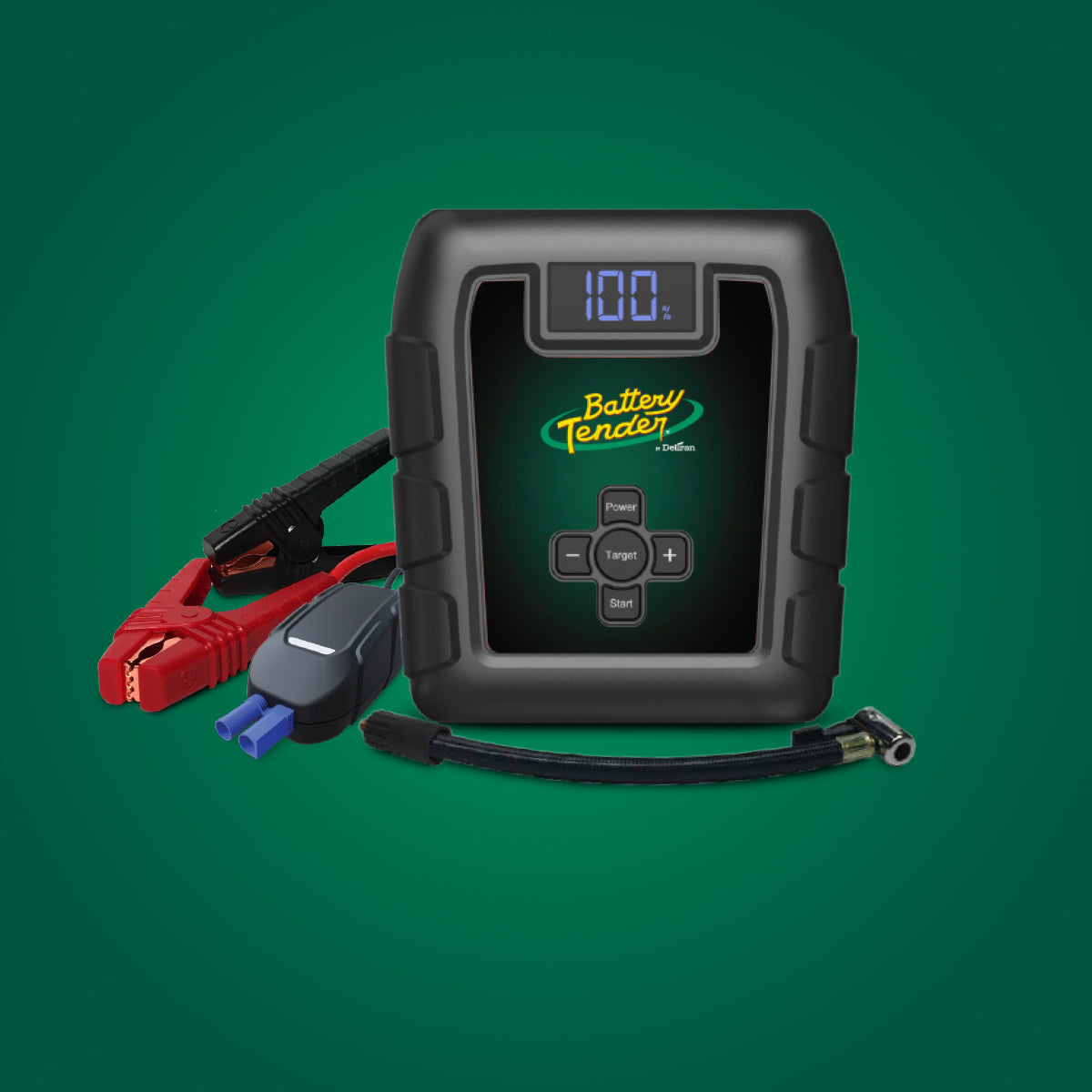
The Battery Tender Charge N Start 4120 combines a 4 amp ISM charger with a 1,200-amp lithium-ion jump starter in a single unit, covering both daily maintenance and emergency starting. The internal lithium-ion battery pack uses proprietary Charge N Store technology to maintain its own charge level, ensuring readiness even after months in a glove box or toolbox. SafeGuard anti-backfeed circuit protection prevents damage to the vehicle electrical system during jump-start connections.
Battery Tender Charge N Start 4120 — 4A Charger + 1,200A Jump Starter ($179.95)
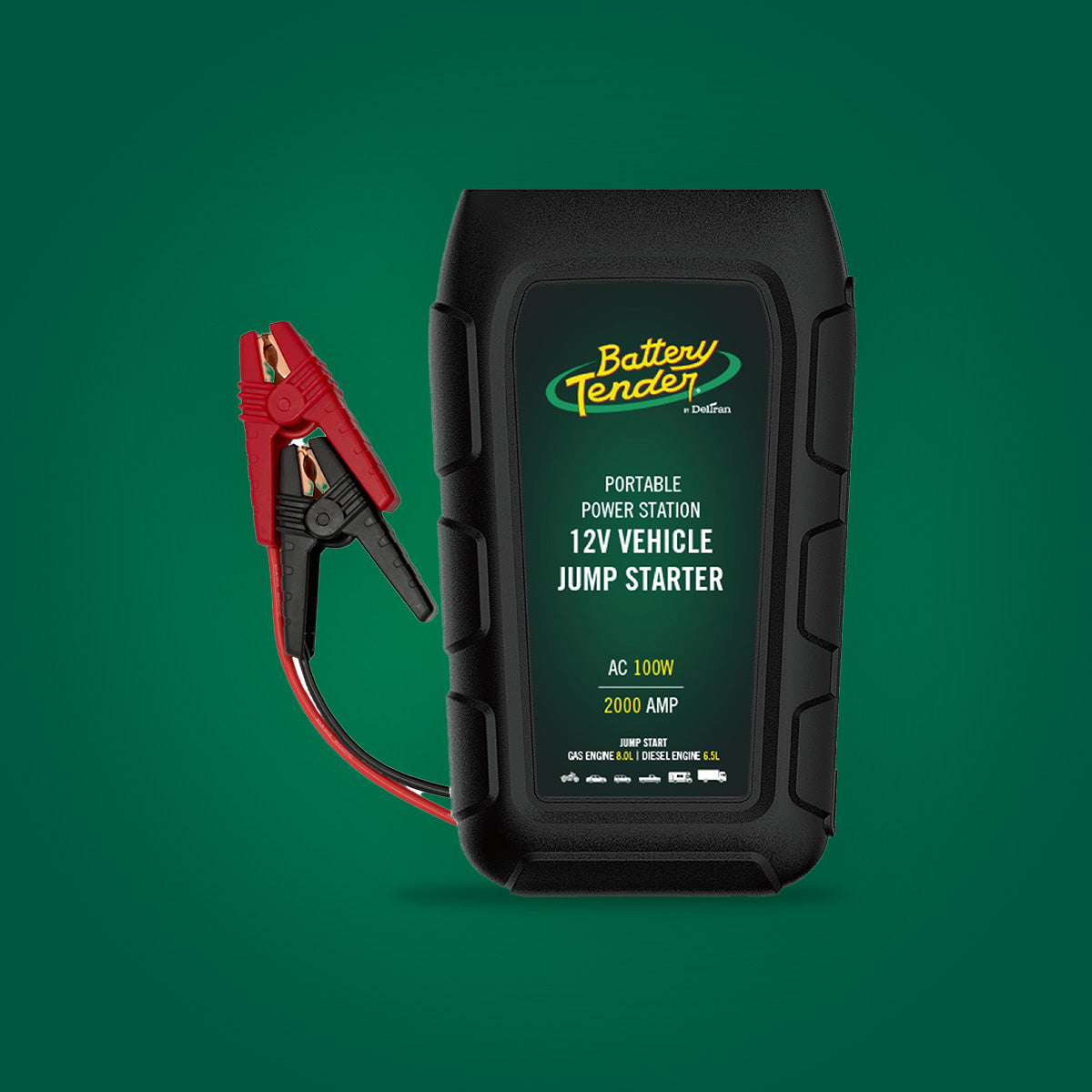
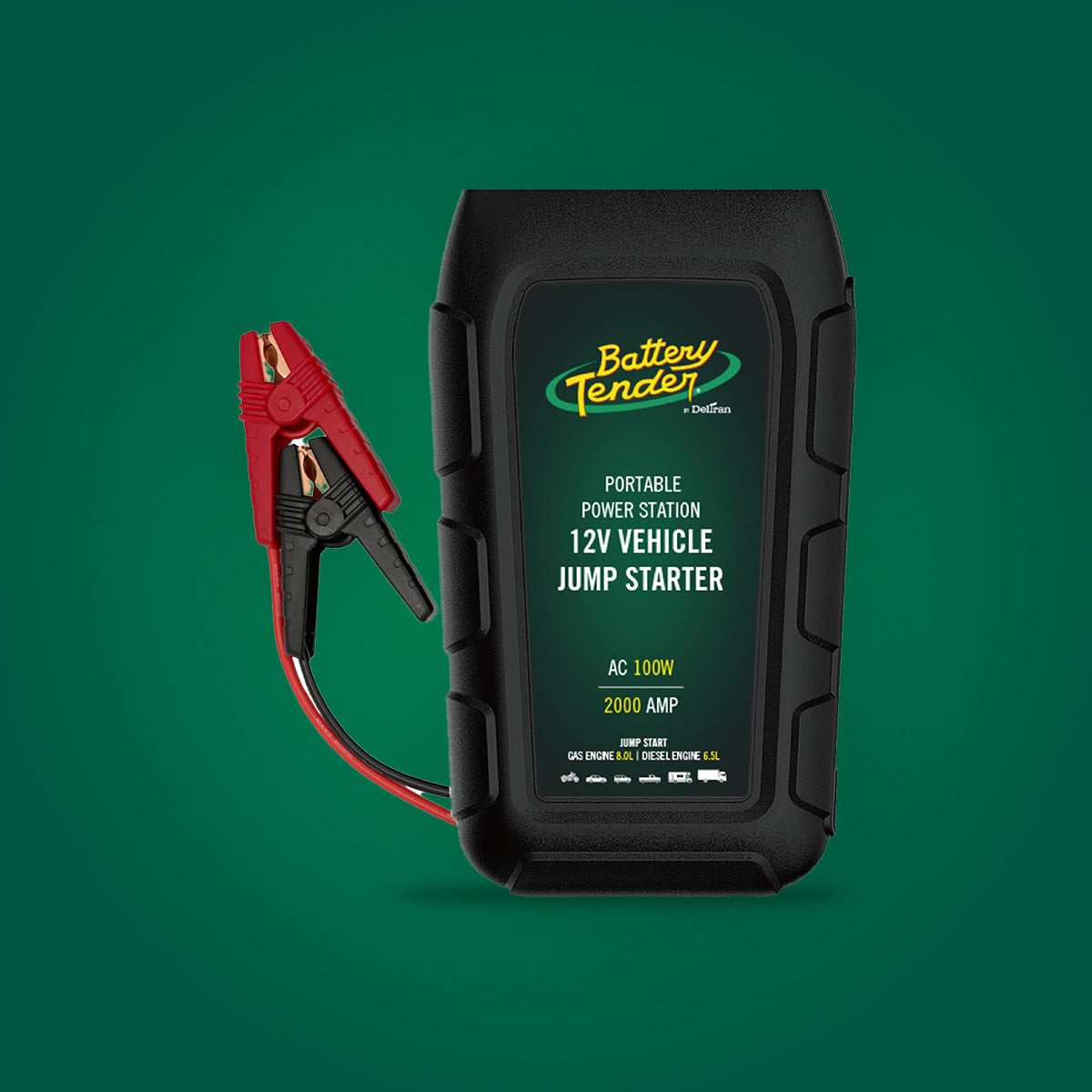
For maximum cranking power in a standalone portable unit, the Battery Tender 2000A Jump Starter delivers 2,000 peak amps from a 16,000 mAh lithium-ion battery pack, starting engines up to 8.0L gas and 6.5L diesel — enough for virtually any consumer vehicle on the road.
Battery Tender 2000A Jump Starter — 16,000 mAh Portable ($179.95)
Extending Battery Life: Why Amperage Selection Directly Affects Longevity
The average lead-acid automotive battery lasts 2–3 years under typical use conditions, according to data from the American Automobile Association (AAA). The primary killer is sulfation — the gradual buildup of lead sulfate crystals on battery plates during periods of partial discharge. Sulfation hardens into a permanent resistive layer when a battery sits below 80% state of charge for extended periods, reducing capacity and cranking power irreversibly.
ISM Absorption-stage charging directly combats sulfation by holding voltage at the optimal level while current tapers, dissolving soft sulfate crystals before they harden. Batteries maintained with ISM technology routinely achieve 5+ years of service life — more than double the industry average. This benefit applies regardless of the charger's amperage rating, which is precisely why a 1.25 amp Battery Tender Plus connected to a daily driver produces better long-term results than a 10 amp charger that gets disconnected after a quick charge.
The ideal scenario combines appropriately sized amperage for initial recovery with indefinite ISM maintenance. A vehicle that sits for days or weeks between uses benefits most from a permanently connected Battery Tender charger that cycles through ISM stages automatically, delivering current only when the battery calls for it.
Frequently Asked Questions
Is a 10 amp battery charger too much for a motorcycle battery?
Yes, in most cases. Motorcycle batteries typically range from 5–14 Ah, making the optimal charge rate 0.5–1.4 amps under the 10% rule. A 10 amp charger delivers 5–10 times more current than a motorcycle battery can safely absorb, generating excessive heat and accelerating plate degradation. A 1 amp smart charger like the Battery Tender Junior 1A Selectable is the correct match.
How long does a 10 amp charger take to charge a car battery?
Charge time depends on battery capacity and depth of discharge. Using the formula (Ah × depth of discharge) ÷ amps: a 60 Ah car battery at 50% discharge charged at 10 amps takes approximately (60 × 0.50) ÷ 10 = 3 hours. A completely dead 60 Ah battery requires roughly 6 hours. ISM-equipped chargers may take slightly longer because the Absorption stage tapers current, but the result is a fuller, healthier charge.
Can I leave a
Related guides: Battery Tender Product Comparison · Battery Tender Charge N Start Complete Guide · More automotive battery care guides