


Outdoor EV Charger Installation: A Complete Guide for Driveways, Carports, and Detached Structures
Not every EV owner parks in a climate-controlled garage, and that should never be a barrier to fast, reliable home charging. Carport owners, driveway parkers, and homeowners with detached garages or outbuildings all have legitimate, achievable paths to a permanent Level 2 outdoor EV charger installation. With the correct equipment ratings, proper conduit protection, code-compliant wiring, and a few smart mounting decisions, an exterior charger can perform just as reliably as any indoor unit — year after year, through rain, snow, summer heat, and everything in between. This guide covers every major consideration so you can approach the project with confidence, whether you are planning a DIY rough-in or briefing a licensed electrician.
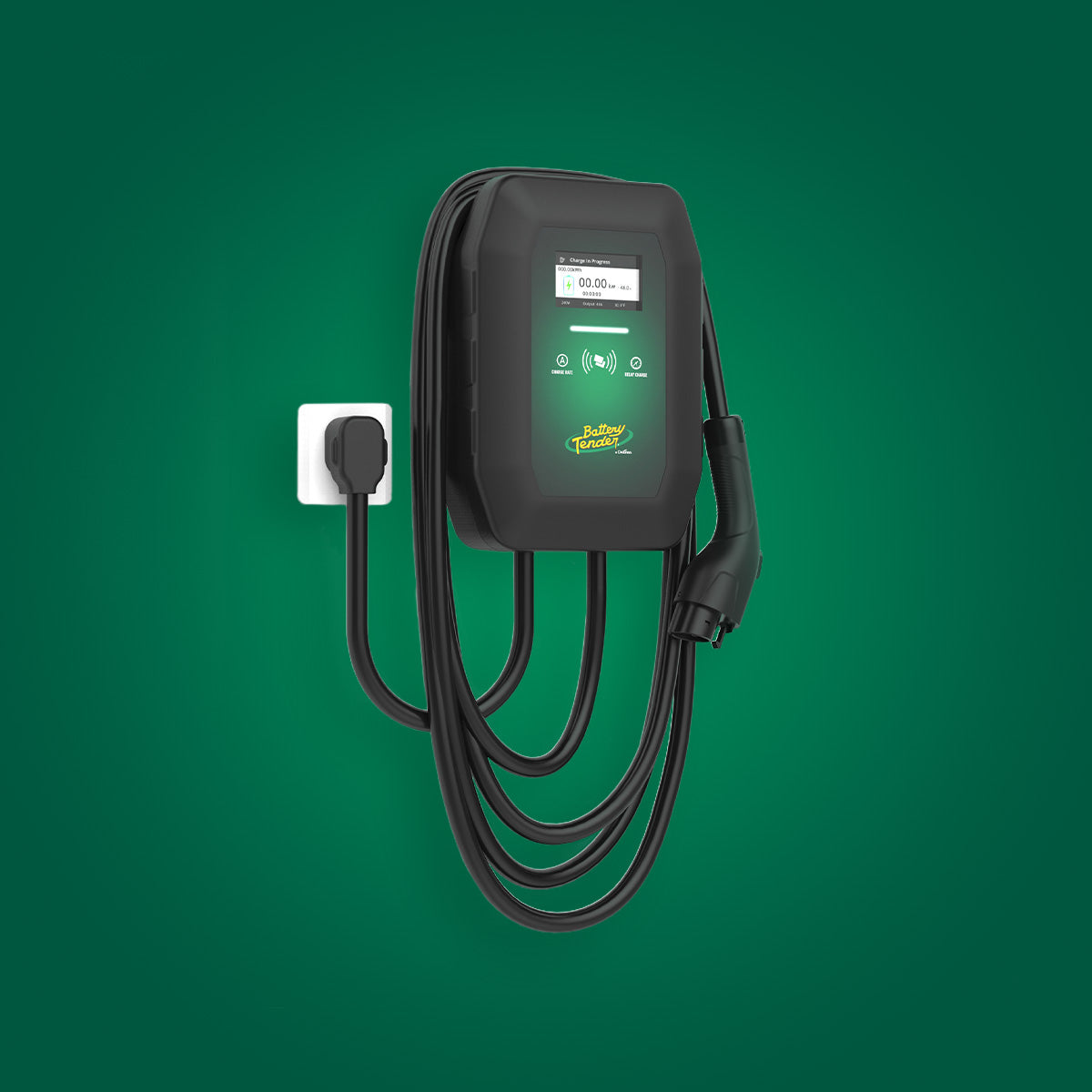
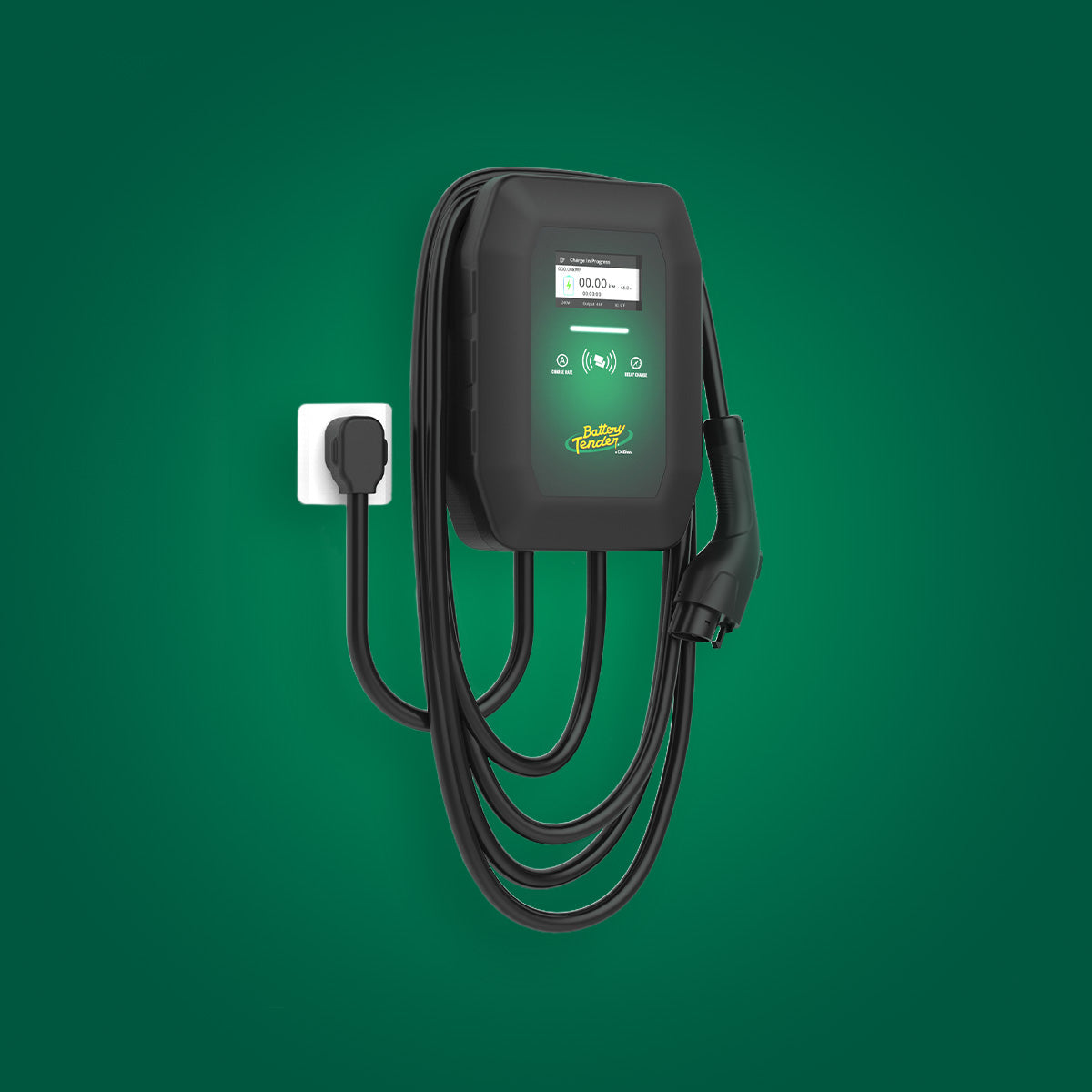
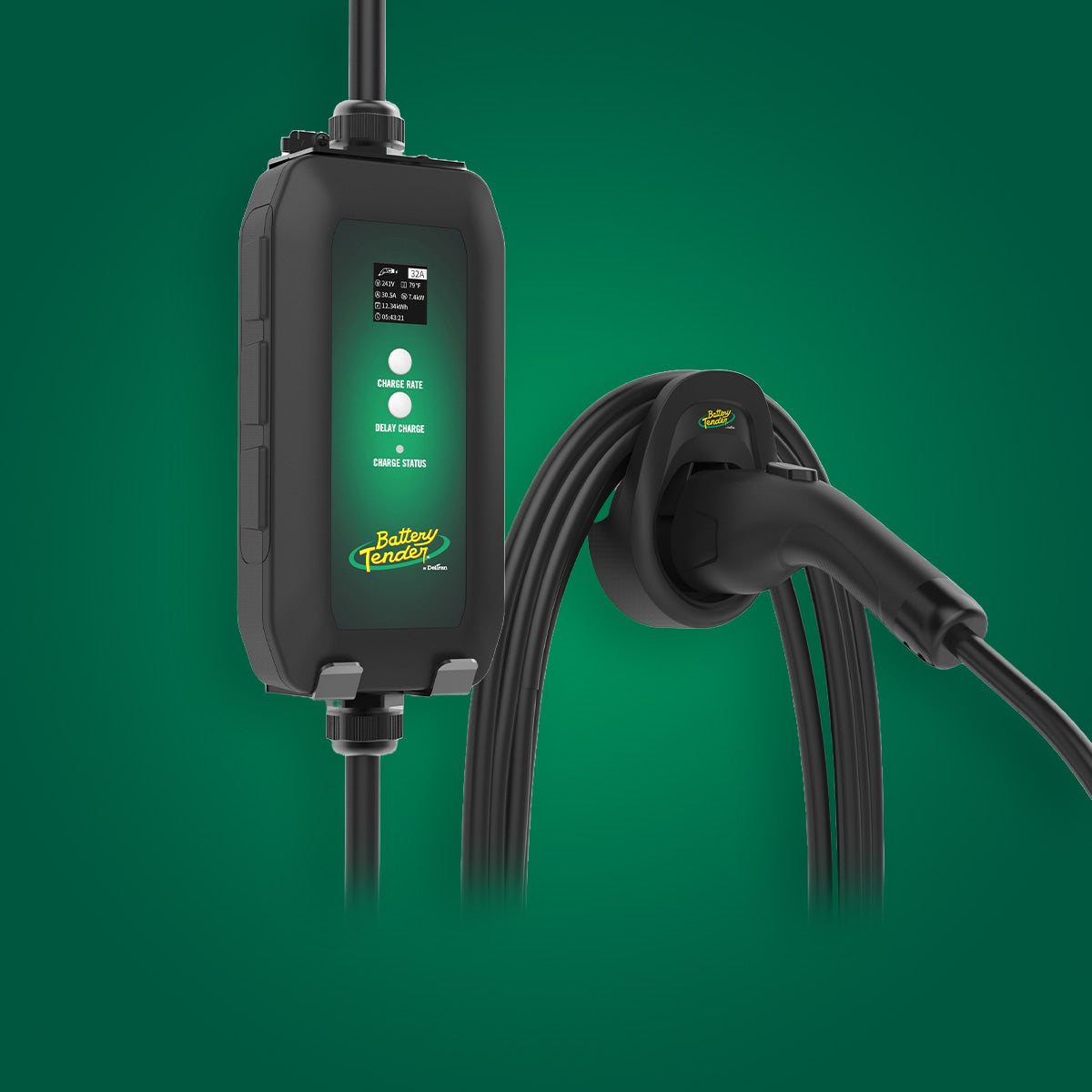
Battery Tender® EV chargers are purpose-built for both indoor and outdoor installation, carrying NEMA 4 or better weatherproof ratings that protect against driven rain, hose-down conditions, dust intrusion, and the full spectrum of residential exterior environments. If you are starting your equipment search, the Battery Tender EV Charging Solutions page is the right place to compare models and specifications before committing to a location or electrical plan.
Why Outdoor EV Charger Installation Is Entirely Feasible
A persistent myth holds that Level 2 EV chargers must be installed indoors to remain safe and functional. This is simply incorrect. Modern EVSE (Electric Vehicle Supply Equipment) is designed and tested for exterior environments. The electrical components are sealed, the enclosures are rated for weather exposure, and the safety systems — including ground fault protection — are engineered to operate reliably in wet conditions. The key is selecting equipment with the appropriate environmental rating and ensuring that the supporting electrical infrastructure — conduit, boxes, covers, and fasteners — meets the same standard of outdoor suitability.
What outdoor installation does require is more careful planning than a straightforward interior garage mount. You need to think about conduit routing, UV exposure, freeze-thaw cycles, mounting surface integrity, cable management, and compliance with outdoor-specific National Electrical Code (NEC) requirements. None of these challenges are prohibitive; they simply reward methodical preparation.
Understanding NEMA Ratings for Outdoor Charger Locations
NEMA enclosure ratings are the most important specification to evaluate when selecting a charger for exterior use. The National Electrical Manufacturers Association rating system defines what environmental stressors a device enclosure can withstand, and choosing the wrong rating is one of the most common and consequential mistakes in outdoor EV charger installation.
- NEMA 3R: The minimum rating considered appropriate for outdoor use. Protects against falling rain, sleet, and snow. Adequate for installations under deep eaves or carport rooflines where the charger will not be exposed to horizontal wind-driven rain or direct hose spray.
- NEMA 4: Protects against windblown rain and dust, splashing water, and hose-directed water from any direction. Recommended for open driveway installations, exposed carport columns, and any location where the charger could receive direct precipitation or spray from vehicle washing.
- NEMA 4X: Adds corrosion resistance to the NEMA 4 protection profile. Ideal for coastal environments or anywhere salt air, fertilizer drift, or chemical exposure is a realistic concern.
Battery Tender EV chargers meet NEMA 4 or higher ratings, which means they are appropriate for virtually any residential outdoor installation scenario without requiring additional weatherproof enclosures around the unit itself.
Conduit Requirements for Outdoor Electrical Runs
The charger enclosure rating tells you about the unit itself, but the wiring that feeds it requires its own layer of protection. Any portion of your EV charger circuit that runs outdoors — on an exterior wall, across a carport ceiling, underground to a detached structure, or through any space exposed to weather, UV radiation, or physical damage risk — must be protected by appropriate conduit.
Above-grade outdoor runs typically use Schedule 40 or Schedule 80 PVC conduit, or liquid-tight flexible metallic conduit (LFMC) for short transitional sections. Rigid metal conduit (RMC) is used in high-physical-damage-risk locations. All conduit fittings, connectors, and junction boxes in outdoor sections must carry a weatherproof or raintight rating, and conduit bodies must be sealed appropriately.
Underground runs to detached garages, carports, or outbuildings are governed by NEC burial depth requirements. For a 240V EV charger circuit in schedule 80 PVC conduit, the minimum burial depth is typically 18 inches, though running through rigid metal conduit or installing under a concrete slab can reduce that depth requirement. Always verify local amendments, as some jurisdictions exceed the NEC minimums.
Conduit fill calculations matter for a 50-amp or 60-amp EV charger circuit. The conductors must not exceed the allowable fill percentage for the conduit size chosen, and ampacity derating must be applied if conductors are bundled or if the conduit runs through areas with elevated ambient temperatures — such as an enclosed carport ceiling exposed to direct summer sun.
GFCI Protection and Code Compliance for Outdoor Circuits
The NEC requires GFCI (Ground Fault Circuit Interrupter) protection for all outdoor receptacles and, under recent code editions, for EV charging outlets installed outdoors. GFCI protection can be provided at the breaker level — through a GFCI circuit breaker in the main or subpanel — or at the outlet itself. For a hardwired Level 2 charger, a GFCI breaker is the standard approach.
Additional code compliance points for outdoor EV charger installation include:
- Weatherproof in-use covers: If your installation uses an outdoor receptacle rather than a hardwired connection, the receptacle must have an in-use weatherproof cover rated for the plug configuration in use.
- Dedicated circuit: EV charger circuits must be dedicated — no other loads on the same breaker. Size the breaker at 125% of the charger's continuous load rating per NEC 625.
- Disconnect means: NEC 625 requires a disconnecting means within sight of the charger or lockable in the open position. For detached structure installations, this often means a small subpanel or dedicated disconnect switch at or near the charger location.
- Permit and inspection: Outdoor EV charger installations almost universally require an electrical permit and inspection. This is not a bureaucratic inconvenience — it is the mechanism that ensures your installation is safe and that your homeowner's insurance remains valid in the event of an incident.
Always check with your local authority having jurisdiction (AHJ) before beginning work. Local amendments to the NEC are common, and some municipalities have specific requirements for EV charger installations that go beyond the base code.
Mounting Location and Height Considerations
Charger placement deserves as much thought as the electrical planning. A poorly positioned charger creates daily inconvenience and can accelerate cable wear. Work through these factors when selecting your mounting location:
Cable reach: Most Level 2 EV chargers include a 20- to 25-foot charging cable. Mount the charger so the cable can reach your vehicle's charging port with comfortable slack — not stretched taut and not dragging on the ground. For most passenger vehicles, a mounting height of 48 to 54 inches above the parking surface positions the connector at a natural working height. Taller vehicles like SUVs and trucks may benefit from the higher end of that range.
Surface integrity: The mounting surface must be structurally sound. Exterior wood siding, stucco, and composite materials can all work, but lag bolts must penetrate into solid framing — not just sheathing. Concrete or CMU block walls require appropriate masonry anchors. For carport installations on metal columns, a proper through-bolt mounting approach prevents loosening over time from vehicle vibration.
Sun and heat exposure: Mounting a charger on a south- or west-facing wall in a hot climate means sustained UV and thermal exposure. All Battery Tender EV chargers are rated for outdoor temperature ranges, but minimizing direct solar loading on the unit by using natural shading or a small equipment shade where practical will extend the service life of any electronic device.
Theft and vandalism deterrence: In locations with security concerns, tamper-resistant fasteners and cable locking accessories add a meaningful deterrent layer. Charger placement in a visible, well-lit area is the most effective passive deterrent.
Detached Garage and Outbuilding Installations
Installing an EV charger in a detached garage or outbuilding introduces a subpanel requirement in most cases. If the detached structure does not have its own electrical panel with sufficient capacity and an available two-pole breaker slot, a subpanel fed from the main panel via underground conduit is the standard solution. This subpanel also provides the required disconnect means for the EV charger circuit and can support additional loads — lighting, outlets, and other equipment — in the detached structure.
The feeder sizing for a detached structure subpanel must account for the EV charger load plus any existing or planned loads in the structure. A 60-amp or 100-amp feeder is typical for a basic EV charger installation with workshop lighting and convenience outlets. An electrician can perform the load calculation and specify the correct feeder and subpanel size for your specific situation.
Maintaining Your Auxiliary 12V Battery During EV Charging Downtime
One consideration that often surprises new EV owners: even battery-electric vehicles contain a 12V auxiliary battery that powers low-voltage systems including door locks, lighting, the BMS communication network, and EVSE handshake protocols. This 12V battery can self-discharge during extended storage or infrequent use, and a depleted auxiliary battery can prevent the vehicle from initiating a charging session — even when the Level 2 charger is functioning perfectly.
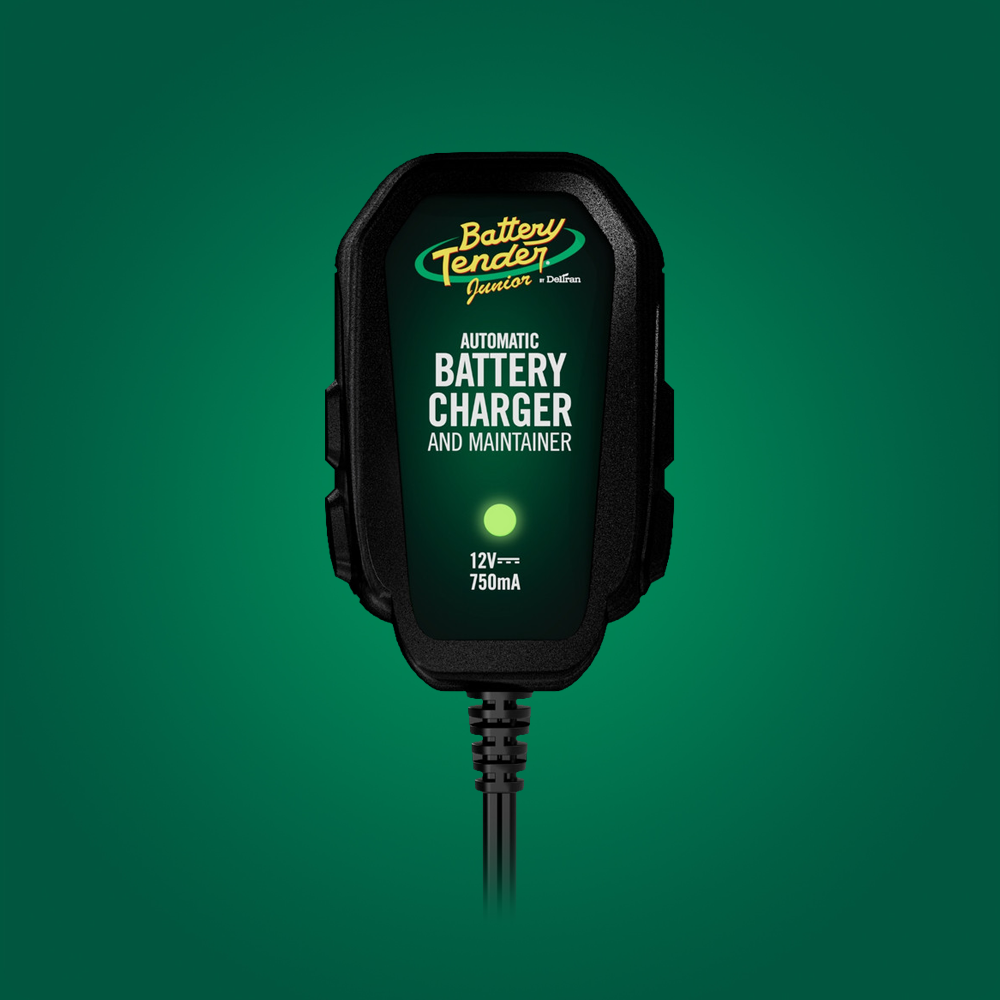
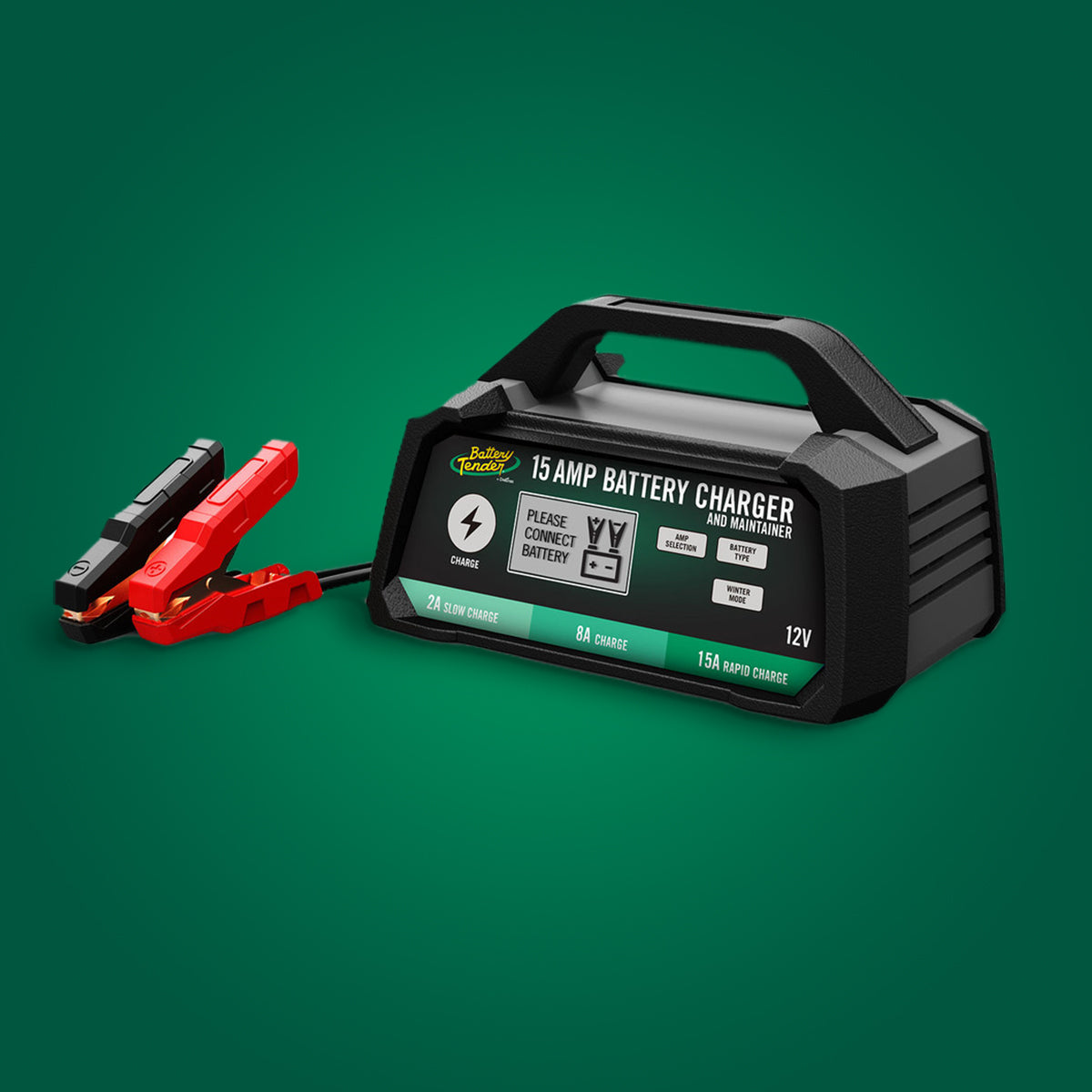
Keeping the 12V auxiliary battery properly maintained is a simple, low-cost safeguard. The Battery Tender Plus 12V 1.25A is a fully automatic, four-stage charger-maintainer that brings a depleted 12V battery back to full charge and holds it there indefinitely without overcharging — ideal for vehicles that sit between charging sessions or during seasonal storage. For lithium auxiliary batteries, which are increasingly common in newer EVs, the Battery Tender Lithium 12V Battery Charger provides lithium-specific charging profiles that protect cell chemistry and maximize cycle life.
Frequently Asked Questions About Outdoor EV Charger Installation
Can I install a Level 2 EV charger outside without a garage?
Yes. A Level 2 EV charger can be installed on any structurally sound exterior surface — an exterior house wall, a carport column, a fence post with proper structural backing, or a purpose-built pedestal mount. The charger must carry an appropriate NEMA outdoor rating (NEMA 4 minimum is recommended), and the circuit must be installed per NEC and local code requirements for outdoor electrical work.
Do I need a permit for an outdoor EV charger installation?
In virtually all jurisdictions, yes. Outdoor EV charger installations involve a new 240V dedicated circuit, which requires an electrical permit and inspection in almost every municipality. Skipping the permit creates liability and insurance exposure and may complicate a future home sale. Pull the permit — it is the right call.
What is the best conduit type for outdoor EV charger wiring?
Schedule 40 or Schedule 80 PVC conduit is the most common choice for above-grade outdoor runs due to its UV resistance, cost efficiency, and ease of working. Schedule 80 is preferred where physical damage is possible. For underground runs, Schedule 40 PVC is standard at the required burial depth. Liquid-tight flexible metal conduit (LFMC) is used for short flexible transitions at the charger connection point.
How do I protect an outdoor EV charger from freezing temperatures?
Properly rated outdoor EV chargers are designed to operate across a broad temperature range that includes well-below-freezing conditions. The main cold-weather precautions involve the charging cable rather than the charger unit: cables become less pliable in extreme cold, so coiling them gently and avoiding sharp bends when frozen reduces the risk of jacket cracking. Some owners use an insulated cable sleeve in extreme climates for additional protection.
Can a Battery Tender EV charger be mounted on a carport column?
Yes. Carport columns — whether wood, metal, or concrete — are common and practical mounting surfaces for outdoor EV charger installation. Wood columns require lag bolts into solid material with appropriate weatherproof sealant around the penetrations. Metal columns typically use through-bolts with backing plates. Verify that the column is structurally sound and that the mounting height allows appropriate cable reach to your vehicle.
Conclusion
Outdoor EV charger installation is a well-established, code-supported practice that opens reliable Level 2 home charging to the large percentage of EV owners who do not have an attached garage. Success comes down to four fundamentals: selecting a charger with the right NEMA outdoor rating, protecting all circuit wiring with appropriate conduit for the exposure conditions, meeting NEC and local code requirements including GFCI protection and dedicated circuit sizing, and choosing a mounting location that combines practical cable reach with structural integrity.
Battery Tender EV chargers are designed from the ground up to meet those requirements, with weatherproof enclosures, wide operating temperature ranges, and the build quality expected from a brand with decades of experience in outdoor charging environments. Explore the full lineup on the Battery Tender EV Charging Solutions page, and pair your Level 2 installation with the Battery Tender Plus 12V 1.25A or Battery Tender Lithium 12V Battery Charger to keep your vehicle's auxiliary battery in peak condition year-round. A well-planned outdoor installation is a long-term asset — approach it with the same care you bring to any significant home improvement project and it will serve you reliably for the life of the vehicle.