

Introduction
Winter temperatures transform even the healthiest car battery into a potential starting failure. When the mercury drops below freezing, your battery loses up to 35% of its starting power while your engine demands 50% more energy to crank. This dangerous combination leaves thousands of drivers stranded each winter morning—but it doesn't have to include you.
Battery Tender® has spent 60 years engineering cold-weather charging solutions for automotive, marine, and powersports applications. In 1989, we pioneered the first consumer smart battery charger, revolutionizing how drivers maintain batteries through winter. This comprehensive guide shares our proven winter battery care strategies, combining technical expertise with practical maintenance steps that work in real-world freezing conditions.
Whether you're preparing for your first winter in a cold climate or looking to extend your battery's lifespan through another harsh season, understanding cold-weather battery science and implementing proper maintenance protocols will keep you reliably starting all winter long.
Table of Contents
- Why Car Batteries Fail in Cold Weather
- Understanding Battery Capacity Loss in Freezing Temperatures
- Pre-Winter Battery Health Assessment
- Essential Winter Battery Maintenance Steps
- Smart Charging for Winter Storage and Daily Drivers
- Cold Weather Starting Best Practices
- When to Replace vs. Maintain Your Battery
- Frequently Asked Questions
Why Car Batteries Fail in Cold Weather
The Science Behind Cold-Weather Battery Failure
Lead-acid batteries—the standard in 99% of gasoline vehicles—operate through electrochemical reactions that slow dramatically as temperatures drop. At 32°F (0°C), a fully charged battery delivers only 65% of its rated cranking power. At 0°F (-18°C), that figure plummets to just 50%.
The chemical process inside your battery involves sulfuric acid and lead plates creating electrical current. Cold temperatures increase the internal resistance of this reaction, reducing the battery's ability to deliver the high amperage bursts needed for engine starting. Meanwhile, engine oil thickens in cold weather, requiring significantly more energy to turn the crankshaft.
This creates a dangerous double-effect: your battery has less power available precisely when your engine needs more power to start.
Critical Temperature Thresholds
Understanding these specific temperature impacts helps you prepare:
- 40°F (4°C): Battery capacity begins measurable decline
- 32°F (0°C): 20-35% capacity loss; battery fluid can freeze if discharged
- 0°F (-18°C): 50% capacity loss; starting power critically reduced
- -20°F (-29°C): Severe starting difficulty even with healthy batteries
A fully charged battery (12.6+ volts) won't freeze until temperatures reach -76°F (-60°C). However, a battery at 50% charge can begin freezing at 10°F (-12°C), and a fully discharged battery may freeze at 32°F (0°C), causing permanent internal damage.
Start-Stop Technology Compounds Winter Challenges
Modern vehicles equipped with start-stop systems place additional strain on batteries during winter months. These systems require enhanced flooded battery (EFB) or absorbed glass mat (AGM) batteries designed for frequent cycling. In cold weather, the battery must support numerous engine restarts during a single trip, each requiring substantial cranking amperage.
If your vehicle has start-stop technology, winter battery maintenance becomes even more critical. The battery must maintain sufficient charge between frequent restarts while also powering heating systems, defrosters, and electronic accessories—all high-draw systems essential in winter conditions.
Understanding Battery Capacity Loss in Freezing Temperatures
Cold Cranking Amps (CCA) Explained
Cold Cranking Amps (CCA) measure a battery's ability to start an engine in cold temperatures. Specifically, CCA indicates how many amps a battery can deliver for 30 seconds at 0°F (-18°C) while maintaining at least 7.2 volts.
Your vehicle's owner's manual specifies the minimum CCA rating required. In cold climates, selecting a replacement battery with a CCA rating at or above the manufacturer's specification is essential. Higher CCA ratings provide additional starting reserve for extreme cold conditions.
For example:
- Compact car: 400-600 CCA typical
- Mid-size sedan: 550-750 CCA typical
- Full-size truck/SUV: 650-850 CCA typical
- Diesel engine: 850-1000+ CCA typical (diesels require approximately 30% more starting power)
Battery Tender battery maintainers preserve your battery's full CCA capacity by preventing the sulfation and discharge that naturally occur during winter storage or infrequent use.
Reserve Capacity and Winter Reliability
Reserve Capacity (RC) measures how many minutes a fully charged battery can deliver 25 amps at 80°F (27°C) before dropping below 10.5 volts. This specification matters in winter scenarios where your alternator fails or your battery must power accessories without engine running.
Higher reserve capacity means more time to reach help if stranded. Winter-ready batteries typically offer 90-120 minutes of reserve capacity, ensuring you can run hazard lights, make phone calls, and operate minimal heat while awaiting assistance.
Battery Age and Cold Weather Vulnerability
Battery performance degrades progressively with age:
- Years 1-2: Full performance, minimal cold-weather concerns
- Years 3-4: Noticeable capacity loss, winter testing recommended
- Years 5+: High failure risk in extreme cold, proactive replacement advised
A battery older than 4 years that performed adequately through summer may fail completely when subjected to winter's first hard freeze. The weakened internal plates and reduced electrolyte capacity make old batteries particularly vulnerable to cold-induced failure.
Battery Tender maintenance charging technology extends battery lifespan by preventing the gradual sulfation that accelerates aging. Regular maintenance charging during winter can add 2-3 years to battery service life.
Pre-Winter Battery Health Assessment
Visual Inspection Checklist
Before winter arrives, perform a thorough battery inspection:
1. Case Condition:
- Cracks or bulges indicate internal damage (replace immediately)
- Warping suggests overheating or internal short circuit
- Leaking electrolyte creates corrosion and safety hazards
2. Terminal Connections:
- White, ashy deposits signal corrosion (clean immediately)
- Loose connections increase resistance and starting problems
- Green-blue corrosion indicates active battery acid leakage
3. Hold-Down Hardware:
- Ensure battery is securely mounted (vibration damages internal plates)
- Check hold-down bolts for corrosion or looseness
- Verify rubber padding under battery prevents excessive movement
4. Cables and Wiring:
- Frayed or damaged cables create high resistance
- Ensure positive and negative cables are properly secured
- Check ground connection to engine block or frame
Voltage Testing Procedure
A digital multimeter provides accurate battery voltage readings:
Testing Steps:
1. Turn off engine and all accessories
2. Wait 2 hours after last drive (allows surface charge to dissipate)
3. Set multimeter to DC volts, 20V range
4. Connect red probe to positive terminal, black to negative
5. Record voltage reading
Voltage Interpretation:
- 12.6-12.8 volts: Fully charged, excellent condition
- 12.4-12.6 volts: 75-100% charged, acceptable for winter
- 12.2-12.4 volts: 50-75% charged, recharge before winter
- 12.0-12.2 volts: 25-50% charged, recharge immediately
- Below 12.0 volts: Critically discharged, may have permanent damage
Batteries reading below 12.4 volts before winter require immediate charging with a quality battery charger. Battery Tender selectable amperage chargers provide the precise charging current needed to safely restore full capacity without overcharging.
Load Testing for Accurate Health Assessment
Voltage alone doesn't reveal a battery's true condition. Load testing measures the battery's ability to maintain voltage while delivering high amperage—exactly what happens during engine starting.
Professional load testers apply a load equivalent to half the battery's CCA rating for 15 seconds while monitoring voltage. A healthy battery maintains at least 9.6 volts during this test. Lower voltages indicate weakened internal plates or capacity loss.
Most auto parts stores offer free load testing. Schedule testing in late summer or early fall, allowing time for replacement before winter demands arrive. Testing during warmer weather provides more accurate results, as cold temperatures temporarily reduce load test performance even in healthy batteries.
Electrolyte Level Check (Non-Sealed Batteries Only)
Traditional flooded lead-acid batteries require periodic electrolyte level checks:
1. Remove cell caps (sealed/maintenance-free batteries lack these caps)
2. Inspect electrolyte level in each cell
3. Level should cover lead plates by 1/4 to 1/2 inch
4. Add only distilled water to low cells (never tap water or acid)
5. Charge battery after adding water (charging mixes electrolyte)
Low electrolyte levels expose lead plates to air, causing permanent sulfation damage. If you discover low electrolyte levels, the battery has likely been overcharged or has internal damage. Consider replacement rather than just topping off if multiple cells are low.
Modern AGM (Absorbed Glass Mat) and gel cell batteries are completely sealed and require no electrolyte maintenance. These advanced batteries offer superior cold-weather performance and are ideal for vehicles with high electrical demands or start-stop technology.
Essential Winter Battery Maintenance Steps
Terminal Cleaning and Protection
Corrosion creates electrical resistance that reduces starting power and charging efficiency. Winter's road salt accelerates corrosion, making regular terminal maintenance essential.
Proper Cleaning Procedure:
1. Disconnect battery (negative terminal first, then positive)
2. Inspect cables for damage or extreme corrosion
3. Prepare cleaning solution (baking soda and water, 1:1 ratio)
4. Apply solution to terminals and cable ends with old toothbrush
5. Scrub thoroughly until all corrosion is removed
6. Rinse with distilled water and dry completely
7. Apply terminal protectant or petroleum jelly
8. Reconnect cables (positive first, then negative)
9. Ensure tight connections (terminals should not rotate)
For severe corrosion, use a wire terminal brush or specialized battery terminal cleaner. The investment pays for itself through improved starting reliability and extended battery life.
After cleaning, coat terminals with Battery Tender-compatible terminal protectant spray or dielectric grease. This prevents moisture intrusion and corrosion reformation throughout winter.
Secure Mounting and Vibration Protection
Loose batteries suffer accelerated internal damage from vibration. Winter's rough road conditions—potholes, frost heaves, and emergency braking on ice—increase vibration stress.
Check battery hold-down brackets monthly during winter:
- Tighten mounting hardware to manufacturer specifications
- Replace damaged or corroded hold-down components
- Ensure rubber padding or battery mat is in good condition
- Verify battery cannot move side-to-side or front-to-back
Excessive movement causes internal plate damage and premature battery failure, often manifesting as sudden failure during cold starts.
Smart Charging for Optimal Winter Performance
Maintaining proper battery charge prevents the sulfation that permanently reduces capacity. During winter, several factors conspire to discharge batteries:
- Shorter daylight hours: More headlight and running light use
- Cold starts: Each start draws 200-400 amps from battery
- Heating systems: Defrosters, seat heaters, and HVAC draw significant power
- Reduced driving: People drive less in harsh weather
- Slower alternator charging: Cold batteries accept charge more slowly
Battery Tender Smart Charging Solutions
In 1989, Battery Tender revolutionized battery maintenance by introducing the first consumer smart battery charger. Our proprietary 4-step charging technology remains the industry standard:
1. Initialization: Checks battery condition and verifies connection
2. Bulk Charge: Delivers optimal amperage based on battery needs
3. Absorption: Tops battery to full charge without overcharging
4. Float Mode: Maintains optimal voltage indefinitely without damage
Our microprocessor-controlled chargers automatically adjust for temperature, battery chemistry, and state of charge—critical for winter maintenance.
Recommended Models for Winter Car Battery Care:

Perfect for: Standard cars, sedans, compact vehicles
- 10-year warranty for ultimate cold-weather reliability
- Compatible with all 12V lead-acid, AGM, and gel cell batteries
- Automatic float mode prevents overcharging during long-term storage

Perfect for: Larger vehicles, trucks, SUVs with higher capacity batteries
- Faster recharge times for frequent winter use
- Ideal for vehicles used irregularly during winter months
- Restores deeply discharged batteries safely

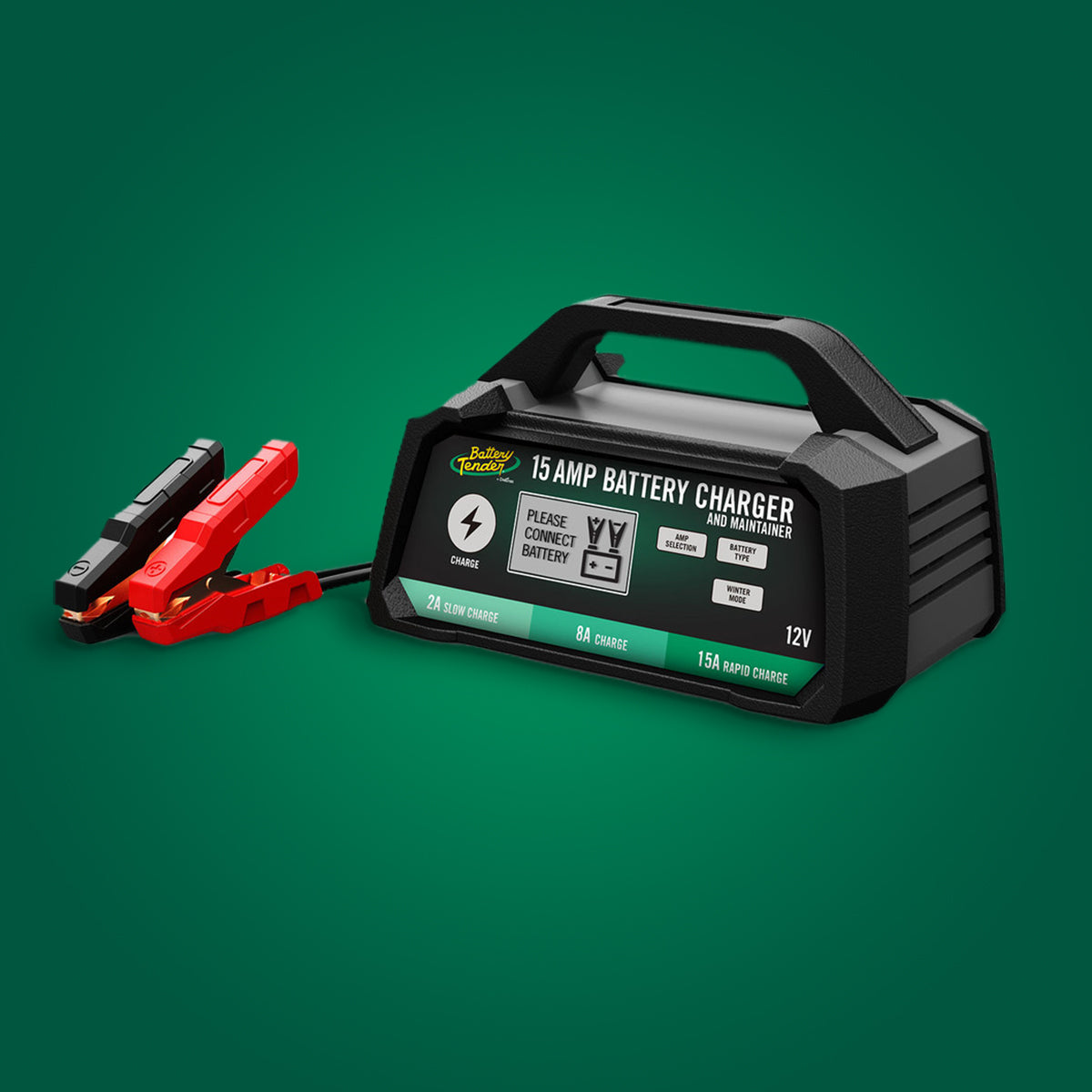
10 AMP Selectable Battery Charger
Perfect for: Multiple vehicles, varying battery sizes, professional use
- Selectable 10/6/2 AMP charging rates
- Chemistry selection for standard, AGM, and lithium batteries
- Built-in power supply mode for maintaining voltage during battery service
Charging Frequency for Daily Drivers vs. Stored Vehicles
Daily Drivers:
- Connect charger overnight weekly during coldest months
- Always charge after extended period without driving (3+ days)
- Charge before extreme cold weather forecast
Stored Vehicles:
- Connect charger continuously during entire storage period
- A Battery Tender charger's float mode prevents overcharging during months of connection
- Ensures instant readiness when you need vehicle
Weekend/Occasional Vehicles:
- Charge at least every two weeks
- Always charge immediately after any drive shorter than 20 minutes
- Consider permanent Ring Terminal Quick Disconnect installation for easy connection
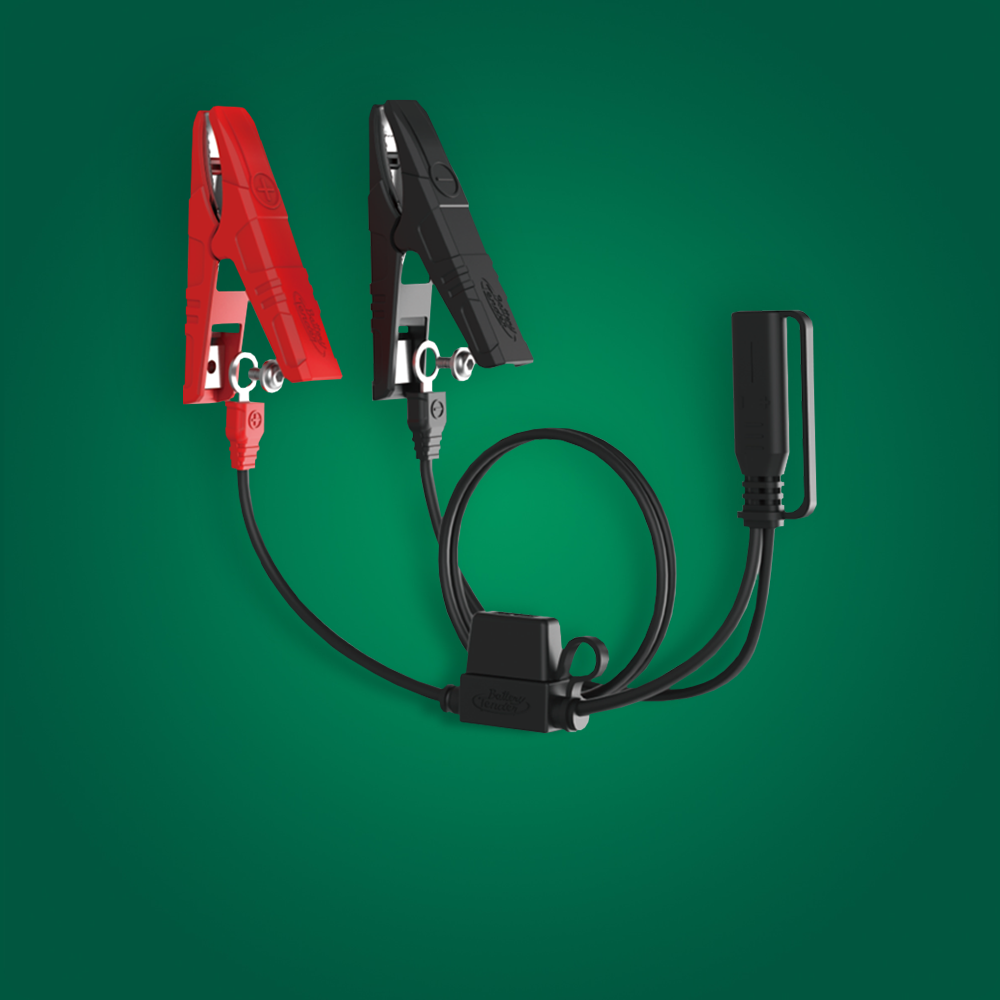
Battery Tender includes Ring Terminal Harness Quick Disconnect with all chargers. This allows permanent installation on the battery with weatherproof quick-disconnect access for instant connection.
Cold Weather Starting Best Practices
Reduce Starting Load for Maximum Reliability
When starting in freezing temperatures, minimize electrical load to dedicate maximum battery power to the starter motor:
Pre-Start Checklist:
1. Turn off all accessories (radio, HVAC, lights, seat heaters)
2. Depress clutch fully (manual transmission—reduces starter load)
3. Turn key or push button and hold until engine starts
4. If engine doesn't start within 5 seconds, wait 30 seconds before retry
5. After successful start, wait 60-90 seconds before activating accessories
This starting sequence allows your alternator to begin charging the battery before high-draw accessories engage. In extreme cold, those first 90 seconds of charging can mean the difference between starting successfully on your next attempt or needing a jump.
Understanding Engine Oil Viscosity Impact
Engine oil dramatically affects winter starting difficulty. Multi-viscosity oils (like 5W-30 or 0W-20) flow more easily in cold weather than conventional single-grade oils.
The "W" rating indicates winter viscosity—lower numbers mean better cold-weather flow. A 0W-20 oil flows far more easily at -20°F than a 10W-30, significantly reducing battery load during starting.
Check your owner's manual for cold-weather oil recommendations. Many northern-climate drivers switch to 0W-20 or 0W-30 for winter months, then return to 5W-30 in summer for optimal year-round performance.
Block Heaters: The Cold-Climate Secret
Engine block heaters warm engine oil and coolant before starting, dramatically reducing battery load. In extreme cold climates, block heaters are essential for reliable starting.
Benefits of block heaters:
- Reduce engine starting load by 40-60%
- Allow immediate cabin heat after starting
- Reduce engine wear during cold starts
- Decrease fuel consumption during warm-up period
- Extend battery life through reduced cycling stress
Plug in block heaters 2-3 hours before planned departure. Timer switches automate this process, ensuring optimal engine temperature without overnight electricity waste.
Combined with Battery Tender maintenance charging, block heaters provide maximum cold-weather starting reliability.
Jump Starting Safety and Proper Procedure
Despite best maintenance efforts, winter battery failures occur. Safe jump-starting requires understanding proper procedure:
Safe Jump-Starting Steps:
1. Position donor vehicle close to disabled vehicle (do not allow vehicles to touch)
2. Turn off both engines and all accessories
3. Identify positive (+) and negative (-) terminals on both batteries
4. Connect positive (red) cable to disabled battery positive terminal
5. Connect other end of positive cable to donor battery positive terminal
6. Connect negative (black) cable to donor battery negative terminal
7. Connect other end of negative cable to clean, unpainted metal on disabled vehicle's engine block (not directly to battery)
8. Start donor vehicle and allow to run for 3-5 minutes
9. Attempt to start disabled vehicle
10. Once started, allow both vehicles to run for 10 minutes before disconnecting
11. Disconnect in reverse order: negative from engine block, negative from donor, positive from donor, positive from disabled vehicle
Critical Safety Warnings:
- Never connect negative cable directly to disabled battery (spark risk near hydrogen gas)
- Ensure cables cannot contact moving engine components
- Wear eye protection (battery acid and hydrogen gas hazards)
- If battery is frozen, cracked, or leaking, do not attempt jump start
After successful jump start, drive for at least 30 minutes to recharge battery or connect a Battery Tender charger immediately upon arrival home. A jump start provides only minimal charge—insufficient for reliable next starting.
Battery Tender® Charge N Start: The 2-in-1 Winter Solution
The innovative Charge N Start series from Battery Tender combines automatic battery charging with powerful jump-starting capability—eliminating the need for a second vehicle.
Available in three configurations:
- 1100 (1A charger + 1000A jump start): Compact cars, sedans
- 1120 (1A charger + 1200A jump start): Mid-size vehicles, light trucks
- 4120 (4A charger + 1200A jump start): Full-size trucks, SUVs, diesel vehicles
These units maintain your battery year-round and provide instant jump-starting when needed—the perfect cold-weather security system.
Smart Charging for Winter Storage and Daily Drivers
Understanding Self-Discharge in Cold Weather
All batteries self-discharge over time, even when disconnected. Cold temperatures slow self-discharge, but storage conditions affect discharge rate:
- Concrete floor myths: Modern battery cases prevent ground discharge
- Actual factors: Parasitic electrical draws, battery age, ambient temperature
- Modern vehicles: Computers and security systems draw 25-75 milliamps continuously
A healthy 70 amp-hour battery loses approximately 1.8-5.2 amp-hours per month to self-discharge and parasitic draws. In cold weather, this discharge leaves the battery vulnerable to freezing damage and starting failure.
Float Charging vs. Trickle Charging: Critical Differences
Many people confuse trickle chargers with smart maintenance chargers—but they operate completely differently and produce dramatically different results.
Trickle Chargers (Obsolete Technology):
- Deliver constant low-amperage charge regardless of battery state
- Cannot detect when battery reaches full charge
- Cause overcharging, electrolyte loss, and plate damage
- Shorten battery lifespan through chronic overcharging
Smart Float Chargers (Battery Tender Technology):
- Monitor battery voltage continuously
- Charge only when needed to maintain optimal voltage
- Automatically switch to float mode when battery reaches full charge
- Can remain connected indefinitely without damage
- Extend battery lifespan through sulfation prevention
Battery Tender pioneered microprocessor-controlled float charging with the first consumer smart charger in 1989. Our patented Infinite Sequential Monitoring (ISM) technology continuously adjusts charging parameters based on real-time battery condition—providing optimal maintenance without user intervention.
Proper Storage Charging Setup
For vehicles stored during winter months:
1. Clean terminals thoroughly before long-term storage
2. Install permanent ring terminal harness for easy access
3. Connect Battery Tender and plug into wall outlet
4. Verify green light indicating full charge and proper float operation
5. Leave connected throughout entire storage period
Battery Tender chargers draw minimal electricity (less than $2/month for continuous operation) while ensuring your battery maintains a full charge and instant readiness.
For outdoor stored vehicles, use weather-resistant outlet covers and ensure the charger remains dry. Battery Tender chargers include a spark-proof design and fully automatic operation, making it safe for unattended long-term connection.
Multiple Vehicle Charging Solutions
Owners of multiple vehicles, classic cars, or seasonal equipment benefit from Battery Tender multibank charging solutions:

5 Bank Charger (4 AMP selectable)
- Charge up to five 12V or 6V batteries simultaneously
- Individual chemistry selection for each battery
- Perfect for multiple cars, motorcycles, lawn equipment
- Single wall outlet powers entire fleet
Each bank operates independently with automatic switching to float mode when that battery reaches full charge. This allows maintaining classic car collections, motorcycle fleets, or seasonal equipment without multiple chargers and outlets.
When to Replace vs. Maintain Your Battery
Diagnosing Terminal Battery Failure
Some battery conditions indicate maintenance can restore function, while others require immediate replacement:
Maintainable Conditions (Can Be Restored):
- Low charge from infrequent use
- Mild sulfation from sitting discharged
- Capacity loss from incomplete charging cycles
- Terminal corrosion reducing charging efficiency
Replacement Required (Cannot Be Restored):
- Physical damage (cracks, bulges, leaks)
- Cell failure (one or more cells reading 0 volts)
- Severe sulfation (battery won't accept charge)
- Age over 5 years with declining performance
- Capacity loss greater than 50% from rated CCA
Battery Tender smart chargers include safety features that detect and refuse to charge batteries with internal damage or cell failure, protecting you from attempting to charge a dangerous battery.
The 12-Hour Test
If uncertain whether your battery can be recovered:
1. Connect Battery Tender charger for 12 continuous hours
2. Disconnect charger and wait 2 hours
3. Measure voltage with multimeter
4. Test voltage should be 12.6+ volts
If voltage measures below 12.4 volts after this test, internal damage prevents the battery from holding charge. Replacement is necessary.
This test reveals permanent sulfation or cell damage that prevents the battery from accepting and retaining full charge—the most common irreversible battery failure mode.
Cost-Benefit Analysis: Maintenance vs. Replacement
New Battery Cost:
- Standard flooded: $100-150
- Enhanced Flooded Battery (EFB): $150-200
- AGM (Absorbed Glass Mat): $200-300
- Premium AGM with extended warranty: $300+
Battery Tender Investment:
- Entry-level (800mA-1.25A): $45-65
- Mid-range (2-5A): $60-125
- Professional (8-15A selectable): $110-150
A single Battery Tender Plus ($65) can maintain 2-3 batteries over its 10+ year lifespan, preventing premature replacement that would cost $300-900 total. The return on investment becomes clear when considering:
- Extended battery lifespan (3-5 additional years typical)
- Eliminated roadside assistance calls ($75-150 per incident)
- Prevented towing costs ($100-300)
- Avoided emergency battery purchases (premium pricing)
Many Battery Tender owners report 7-10 years of service from batteries that would typically last only 3-5 years without maintenance—representing savings of $200-600 per vehicle over that timeframe.
Winter Emergency Preparedness
Essential Winter Vehicle Kit

Alongside proper battery maintenance, every winter vehicle should carry:
Battery-Related Items:
- Battery Tender Portable Jump Starter (1000-2000A for your vehicle type)
- Voltmeter or battery tester
- Terminal cleaner and wire brush
- Spare battery terminal protectant
- Insulated work gloves
Additional Cold Weather Safety Items:
- Ice scraper and snow brush
- Blankets and hand warmers
- Flashlight with extra batteries
- Non-perishable food and water
- Phone charger (consider Battery Tender Power Station models with USB charging)
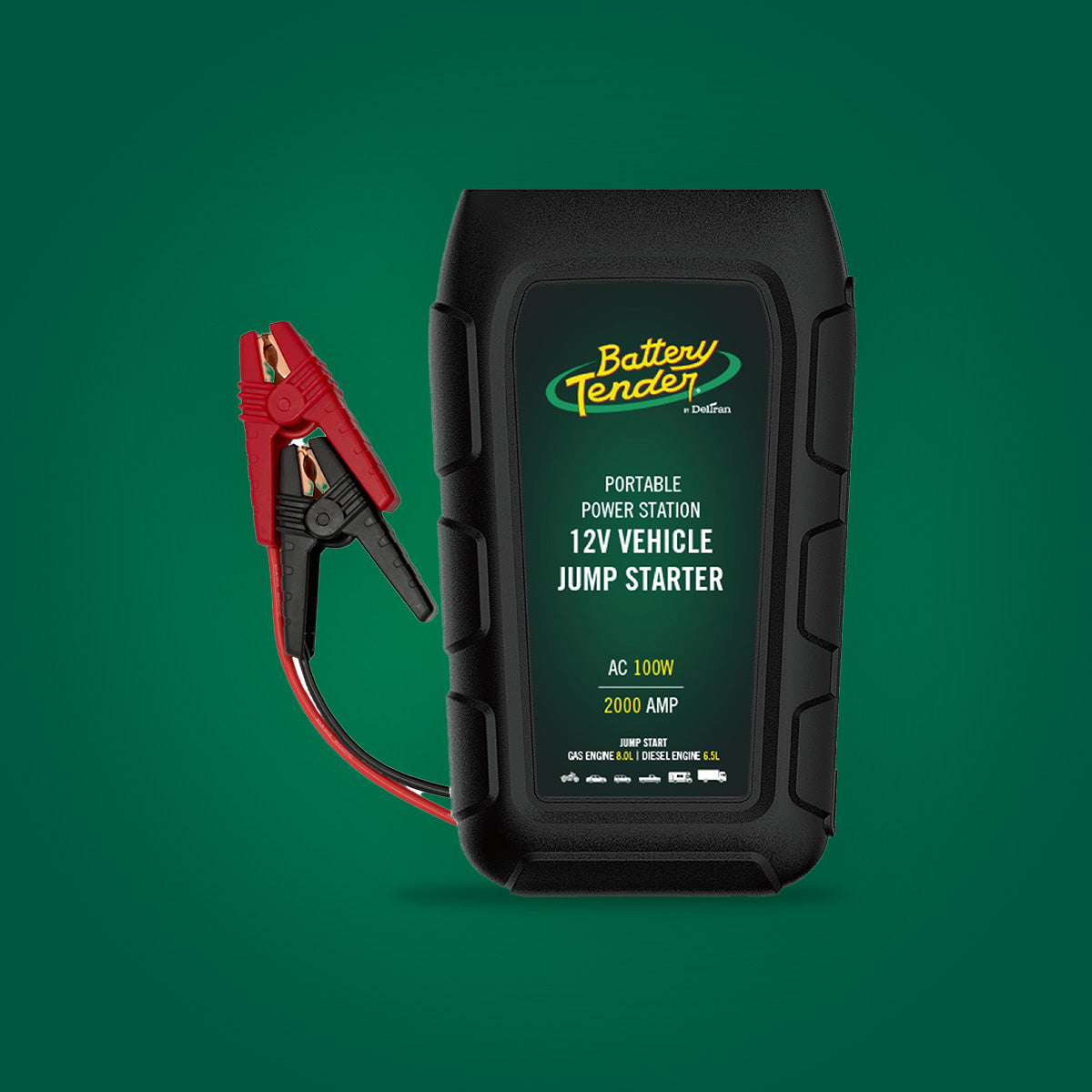
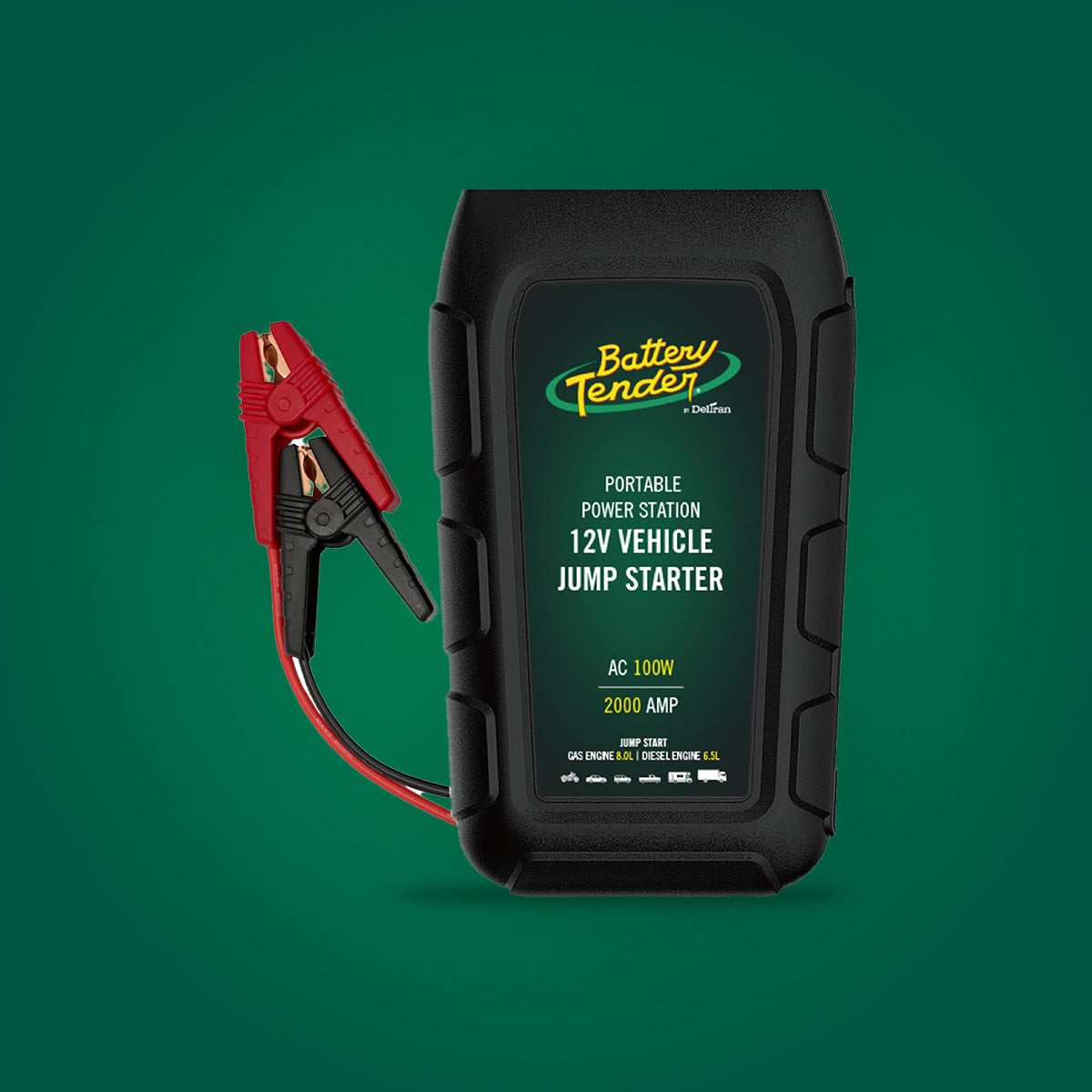
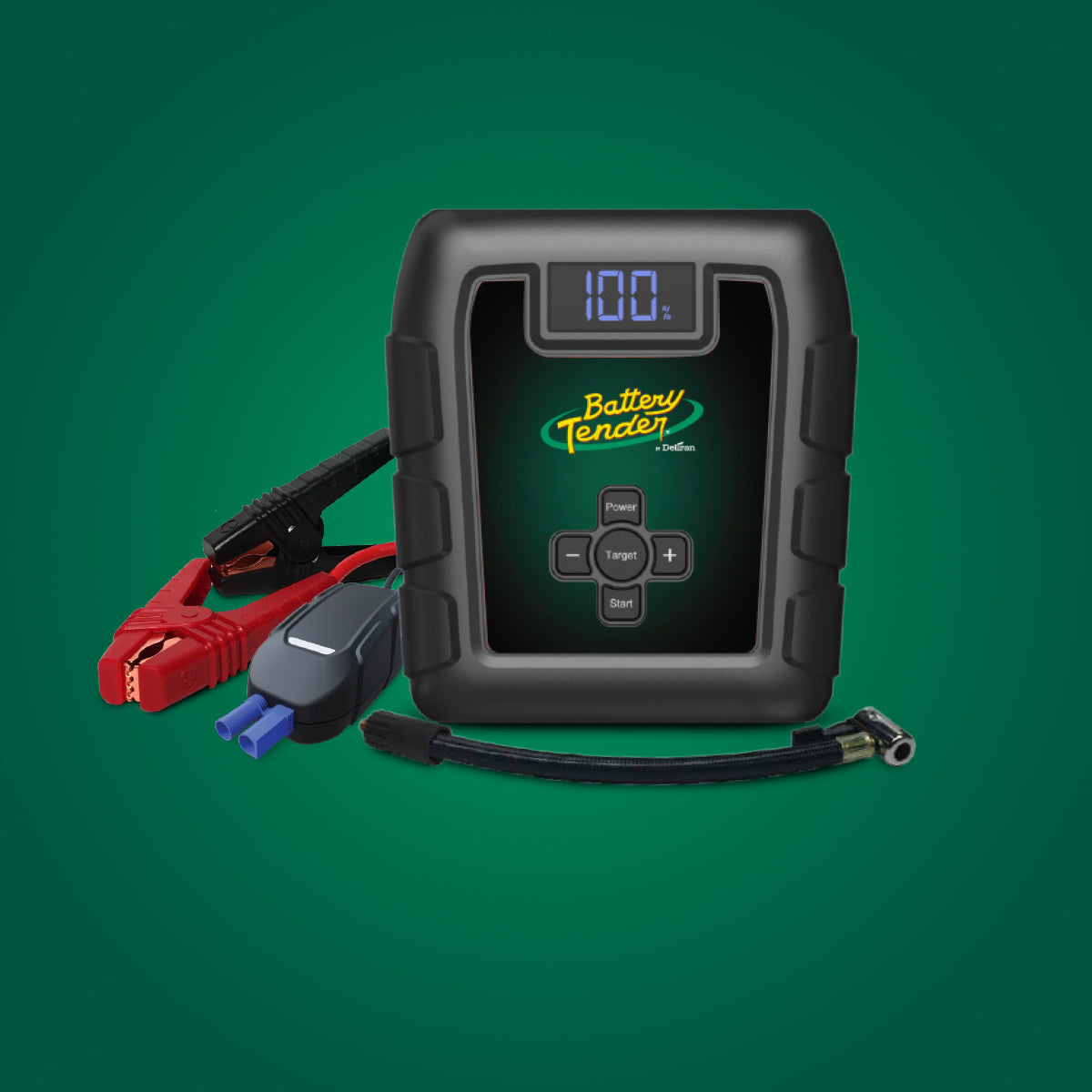
Battery Tender lithium jump starters provide 25-50 jump starts per charge, eliminating dependency on a second vehicle. Models include built-in flashlights, USB charging ports, and spark-proof technology for safe, simple operation.
Mobile Dead Battery Solutions
If caught with a dead battery away from home, charging options:
Immediate Solutions:
1. Jump start from another vehicle (follow proper procedure)
2. Use portable jump starter if available
3. Call roadside assistance (AAA, insurance provider, or manufacturer assistance)
Short-term Solutions:
1. Drive continuously for 30-60 minutes after jump
2. Avoid short trips until battery fully recharged
3. Run engine for 30 minutes while parked if unable to drive
Long-term Solutions:
1. Connect Battery Tender charger immediately upon arrival home
2. Leave charger connected for 12-24 hours to ensure complete recharge
3. Monitor battery health and consider replacement if old or repeatedly failing
Never assume a jump start has sufficiently recharged your battery. The alternator may require several hours of driving to restore a full charge, depending on how deeply discharged the battery became.
Frequently Asked Questions
How long can a car sit in cold weather without the battery dying?
A healthy, fully charged battery in a vehicle with minimal parasitic draws can sit 2-4 weeks in cold weather. However, several factors reduce this timeframe:
- Battery age: Older batteries (4+ years) self-discharge faster
- Temperature: Extreme cold accelerates parasitic draw impacts
- Parasitic draws: Security systems, computers, and clocks draw 25-75 milliamps continuously
- Battery condition: Partially charged batteries fail much sooner
For reliable winter storage, connect a Battery Tender maintainer. This ensures the battery maintains a full charge indefinitely, regardless of storage duration or parasitic draws.
Should I disconnect my battery for winter storage?
Disconnecting the battery prevents parasitic draws but creates other issues:
Pros of Disconnecting:
- Eliminates all parasitic draws
- Prevents battery drain from security systems
- Reduces corrosion from electrical activity
Cons of Disconnecting:
- Loses radio presets and computer memory
- May trigger anti-theft system issues
- Battery still self-discharges (slower rate)
- Requires reconnection and possible computer relearning
Better Solution:
Connect a Battery Tender maintainer instead of disconnecting. This maintains full charge while preserving all vehicle computer memory and settings. The charger's float mode consumes less electricity than the vehicle's parasitic draws would waste, making it the most cost-effective and convenient solution.
Can I use a Battery Tender Charger on AGM batteries?
Yes. Battery Tender smart chargers are compatible with all 12V lead-acid battery types:
- Flooded lead-acid
- AGM (Absorbed Glass Mat)
- Gel cell
- Lithium Iron Phosphate (select models with lithium mode)
Our chargers automatically adjust charging parameters for optimal performance across all battery chemistries. Models with selectable chemistry modes allow manual selection for specific battery types requiring specialized charging profiles.
AGM batteries benefit especially from float maintenance charging, as they're particularly sensitive to sulfation from incomplete charging. Battery Tender prevents the gradual degradation that reduces AGM battery lifespan.
How do I know if my battery is charging properly with a Battery Tender Charger?
Battery Tender chargers include LED indicator lights showing charging status:
Red Light: Charging in progress (bulk charge mode)
Yellow/Orange Light: Absorption mode (topping charge)
Green Light: Full charge reached, float mode active
For optimal results:
1. Connect charger to battery
2. Plug charger into wall outlet
3. Red light should illuminate (bulk charging)
4. After several hours, green light appears (float mode)
5. Green light remains steadily on indefinitely
If the red light never turns green after 24 hours, the battery may have internal damage or be extremely sulfated. If the green light never appears and the red light flashes, a connection problem or battery damage may exist.
What's the best cold-weather battery charger for multiple vehicles?
For multiple vehicles, consider these Battery Tender solutions:
Multiple Standard Chargers:
- Individual Battery Tender Plus for each vehicle
- Allows simultaneous charging of different battery types
- Flexibility for vehicles stored in different locations
Multibank Chargers:
- 5 Bank Charger for fleets up to 5 vehicles
- Single unit, single outlet, charges all batteries simultaneously
- Individual chemistry selection for each bank
- Ideal for garage-centralized storage
High-Amperage Selectable Chargers:
- 10 AMP Selectable for rotating between vehicles
- Three amperage settings (10/6/2A) for different battery sizes
- Fast charging when needed, maintenance mode for storage
The optimal solution depends on storage configuration, number of vehicles, and whether vehicles are stored together or separately.
Can extreme cold permanently damage my car battery?
Yes. Extreme cold can cause several types of permanent battery damage:
Physical Damage:
- Freezing and expansion of electrolyte cracks internal plates
- Ice formation punctures battery case (rare but catastrophic)
- Frozen electrolyte damages separators between plates
Performance Damage:
- Severe sulfation from deep discharge in cold temperatures
- Capacity loss from low-temperature chemical changes
- Reduced CCA from damaged internal structure
Prevention Methods:
- Maintain battery at full charge (prevents freezing above -76°F)
- Use Battery Tender smart charging during cold storage
- Test battery before winter and replace weak batteries proactively
- Keep terminals clean to ensure proper charging by alternator
A fully charged battery is extremely resistant to cold damage. Battery Tender maintenance charging is the most effective cold-weather damage prevention available.
Conclusion: Winter Battery Reliability Through Smart Maintenance
Winter battery failure is predictable, preventable, and ultimately optional. The combination of cold-weather understanding and proven maintenance protocols eliminates winter starting anxiety.
Deltran's (the parent company of Battery Tender) 60 years of charging technology innovation—beginning with the first consumer smart charger in 1989—delivers simple solutions to complex cold-weather battery challenges. Our microprocessor-controlled chargers automatically compensate for temperature, battery chemistry, and state of charge—providing optimal maintenance without requiring technical expertise.
Whether you're protecting a daily driver through New England winters, maintaining a classic car collection, or preparing seasonal equipment for spring readiness, the proven technology from Battery Tender ensures your batteries deliver reliable starting power when you need it most.
Invest 10 minutes now in proper winter battery preparation. The return—measured in eliminated roadside failures, extended battery lifespan, and winter morning confidence—far exceeds the modest effort required.
Browse our complete line of automotive battery chargers and accessories to find the perfect winter maintenance solution for your vehicle.
About Battery Tender®
For over 60 years, Deltran (the parent company of Battery Tender) has engineered innovative battery charging and maintenance solutions trusted by automotive enthusiasts, marine professionals, and powersports riders worldwide. In 1989, we revolutionized the industry by introducing the first consumer smart battery charger. Our family-owned company, headquartered in Central Florida, combines American innovation with proprietary technologies like ISM (Infinite Sequential Monitoring) and Charge N Store™ to deliver unmatched battery care solutions.
Every Battery Tender product carries our commitment to quality, backed by industry-leading warranties and technical support from our experienced team.