

A dead battery ruins spring riding plans. More critically, improper winter storage permanently damages expensive motorcycle batteries—whether traditional lead-acid ($100-200) or modern lithium ($200-500). Sulfation destroys lead-acid batteries left discharged for months. Cold-charging attempts damage lithium batteries permanently.
Battery Tender® pioneered consumer smart chargers in 1989 specifically for motorcycle applications. Our products maintain millions of motorcycles worldwide, supporting both traditional lead-acid and increasingly popular lithium technologies. This guide shares proven winterization techniques that preserve battery life and ensure spring readiness.
Motorcycle Battery Technology Evolution
Traditional Lead-Acid Batteries
Conventional Flooded:
- Most economical ($60-100)
- Requires maintenance (water additions)
- Vents during charging
- Can leak if tipped
- 2-5 year lifespan typical
AGM (Absorbed Glass Mat):
- Sealed, maintenance-free ($100-200)
- Superior vibration resistance
- Can mount in any position
- Most common modern choice
- 3-7 year lifespan with proper maintenance
Gel Cell:
- Specialized sealed design ($150-250)
- Deep discharge tolerance
- Sensitive to overcharging
- Less common in motorcycles
- 3-6 year lifespan
Lithium Motorcycle Batteries (LiFePO4)
The Modern Performance Choice:
Lithium batteries are rapidly becoming the premium option for motorcycles, especially sport bikes, adventure bikes, and custom builds.
Dramatic Weight Savings:
- 70-80% lighter than lead-acid
- Lead-acid: 10-15 lbs typical
- Lithium: 2-3 lbs typical
- Critical for performance bikes where every pound matters
- Improves handling and acceleration
Performance Advantages:
- Higher cranking amps per pound
- Excellent cold-cranking performance
- Maintains voltage under load (no voltage sag)
- Faster recharge capability
- Consistent power throughout discharge
Longevity Benefits:
- 2,000-5,000+ cycles vs 300-1,000 for lead-acid
- 8-12 year lifespan typical
- No sulfation issues
- Very low self-discharge (1-2% per month)
Cost Reality:
- Initial: $200-500 vs $100-200 lead-acid
- Break-even: 4-5 years typically
- Long-term cost advantage despite higher price
- Plus weight and performance benefits throughout
Lithium Considerations:
- CANNOT charge below 32°F (critical limitation)
- Requires lithium-compatible chargers
- Built-in Battery Management System (BMS)
- Different winterization requirements
- Requires temperature-controlled storage
Popular Lithium Applications:
- Sport bikes (weight savings for performance)
- Adventure bikes (reliable starting, lightweight for off-road)
- Custom builds (weight reduction, clean install)
- Race bikes (every ounce matters)
Battery Tender Lithium History:
We previously manufactured a line of lithium batteries and are launching a complete new lithium battery line in summer 2026, specifically engineered for powersports applications with enhanced cold-weather protection.
Pre-Winter Battery Assessment
Visual Inspection (All Types)
Physical Condition:
- Check for cracks, bulges, or case damage
- Inspect terminals for heavy corrosion
- Examine cables for fraying
- Verify hold-down bracket security
- Lithium: Check BMS indicator lights if equipped
Installation Quality:
- Terminals tight (prevent voltage drop)
- Cables properly routed (no chafing)
- Ventilation adequate (flooded batteries)
- Mounting secure (vibration protection)
Voltage Testing
Lead-Acid Voltages:
- 12.6-12.8V: Fully charged, excellent
- 12.4-12.6V: Acceptable, charge before storage
- 12.2-12.4V: Partially discharged, charge immediately
- Below 12.2V: Deeply discharged, potential damage
Lithium Voltages:
- 13.3-13.6V: Fully charged
- 13.0-13.3V: 50-90% charged
- Below 13.0V: Charge before storage
- Note: Lithium voltage doesn't correlate directly to lead-acid
Load Testing:
- Professional load test reveals true capacity
- Critical for batteries 3+ years old
- Replace batteries failing load test
- Don't store questionable batteries
Understanding Parasitic Draw
Motorcycles have electrical systems that draw power even when off:
Common Parasitic Draws:
- Clock functions: 5-15 mA
- ECU memory: 10-30 mA
- Security systems: 20-50 mA
- Fuel injection computers: 5-20 mA
Total Draw Impact:
Example Calculation:
- Parasitic draw: 30 mA
- Battery capacity: 10 Ah (10,000 mAh)
- Time to discharge: 10,000 ÷ 30 = 333 hours (14 days)
Critical Insight: Small 30mA draw completely discharges motorcycle in 2 weeks!
Battery Type Differences:
Lead-Acid:
- Self-discharge: 3-5% per month
- Parasitic draw: Compounds problem
- Combined effect: Can discharge in 1-2 months
- Sulfation begins within 2 weeks of discharge
Lithium:
- Self-discharge: 1-2% per month (much better)
- Parasitic draw: Same impact as lead-acid
- Combined effect: Longer life but still discharged eventually
- BMS may shut down if over-discharged
Winter Storage Options
Option 1: Battery Tender Connection (Recommended)
Best for All Riders:

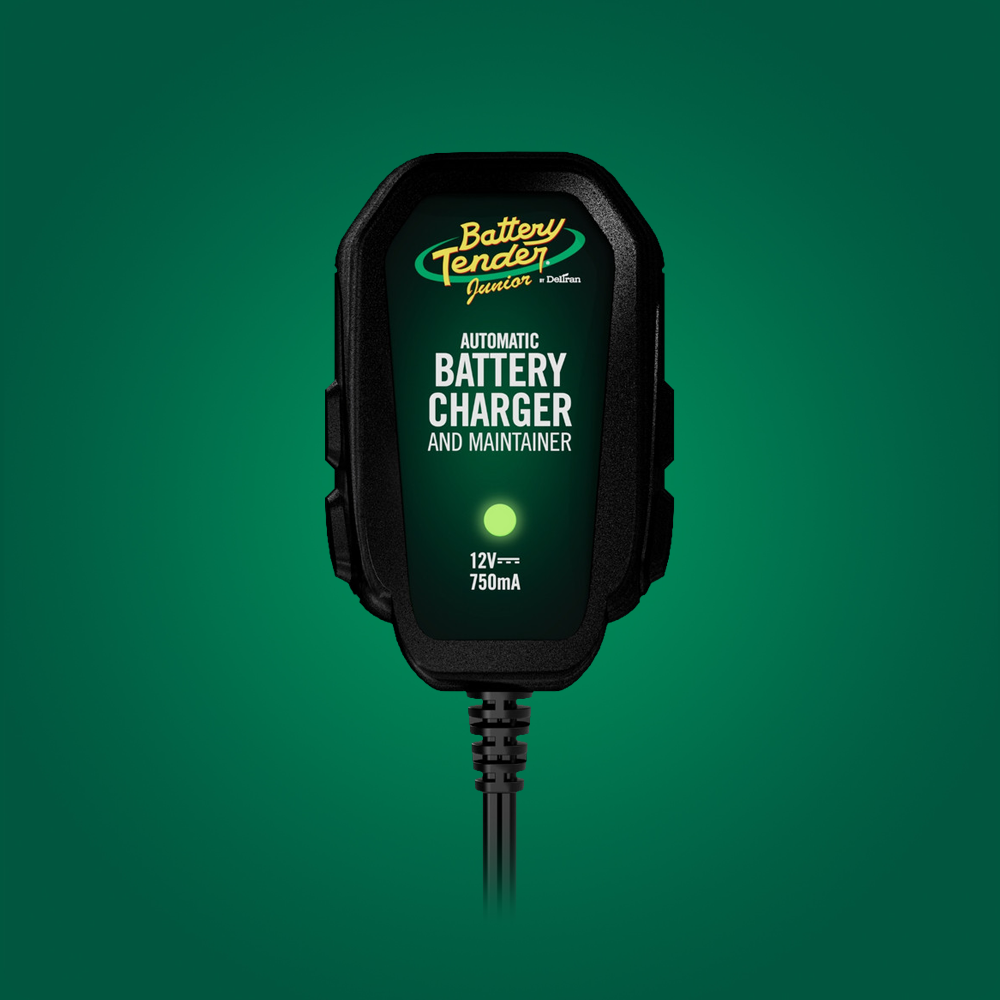
Battery Tender® Plus 1.25A - Lead-Acid
- Automatic switching to float mode
- Safe for 6-month continuous connection
- Compensates for parasitic draw
- Prevents sulfation completely
- Works with flooded, AGM, gel batteries

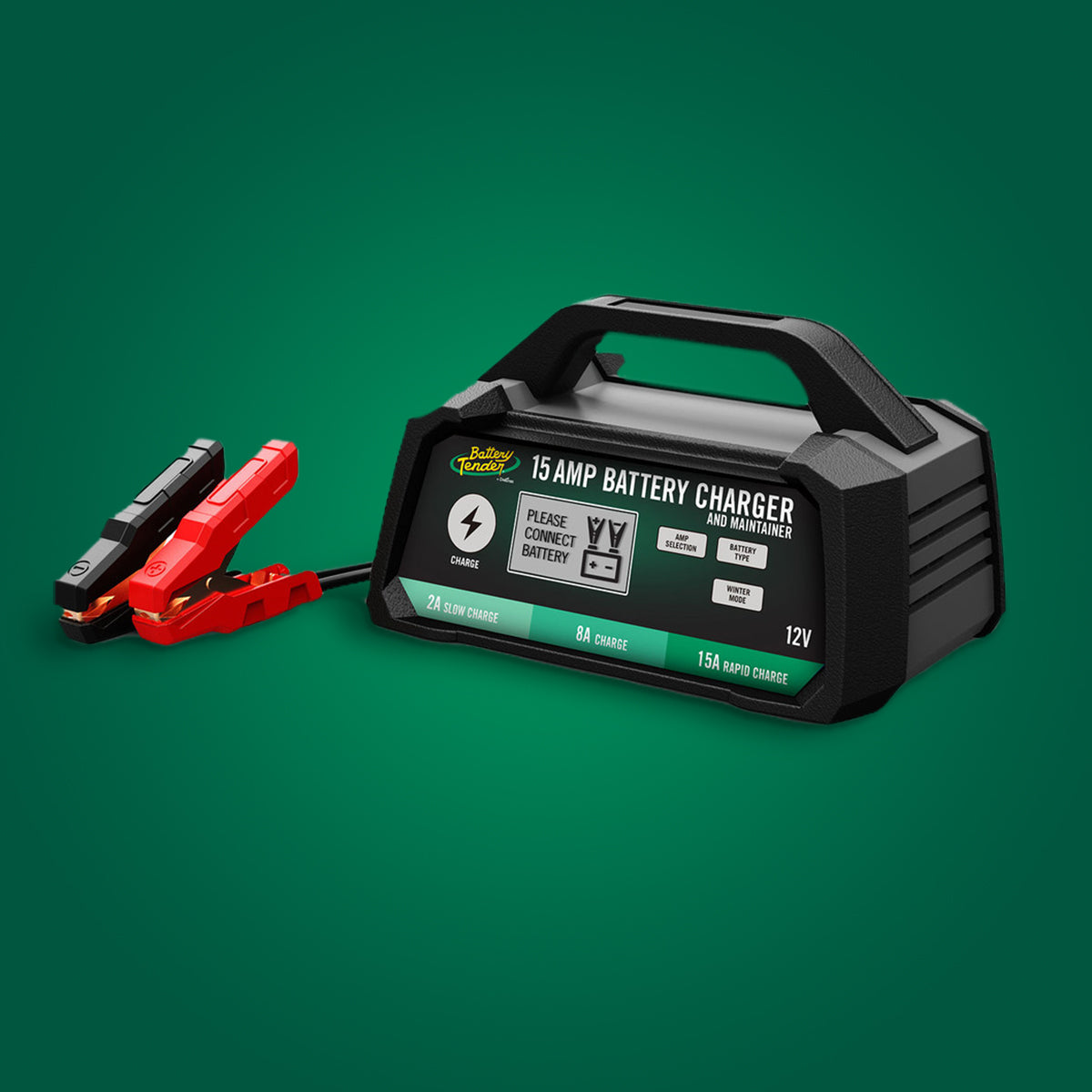
10 AMP Selectable Chemistry - Lithium
- Dedicated lithium charging mode
- Fast charging capability
- BMS-compatible profile
- Required for lithium batteries
- Also works with lead-acid (selectable)
Installation Methods:
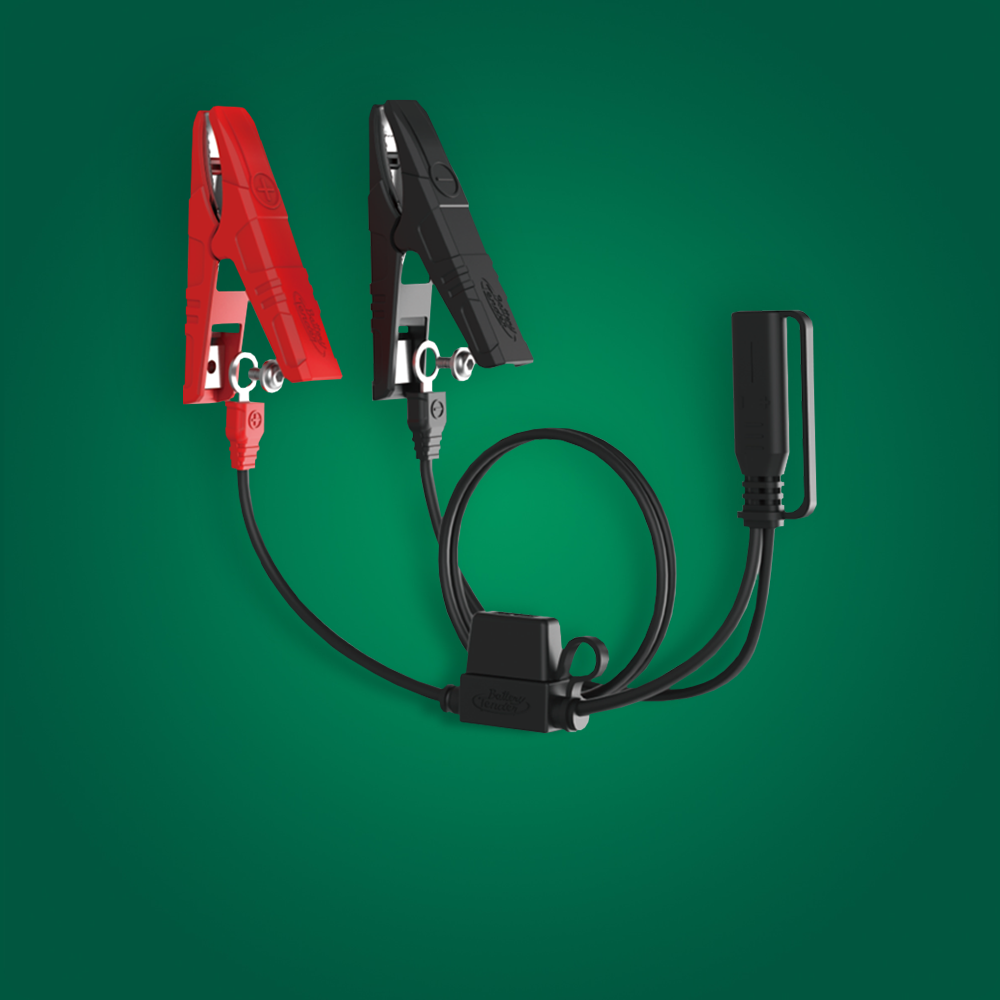
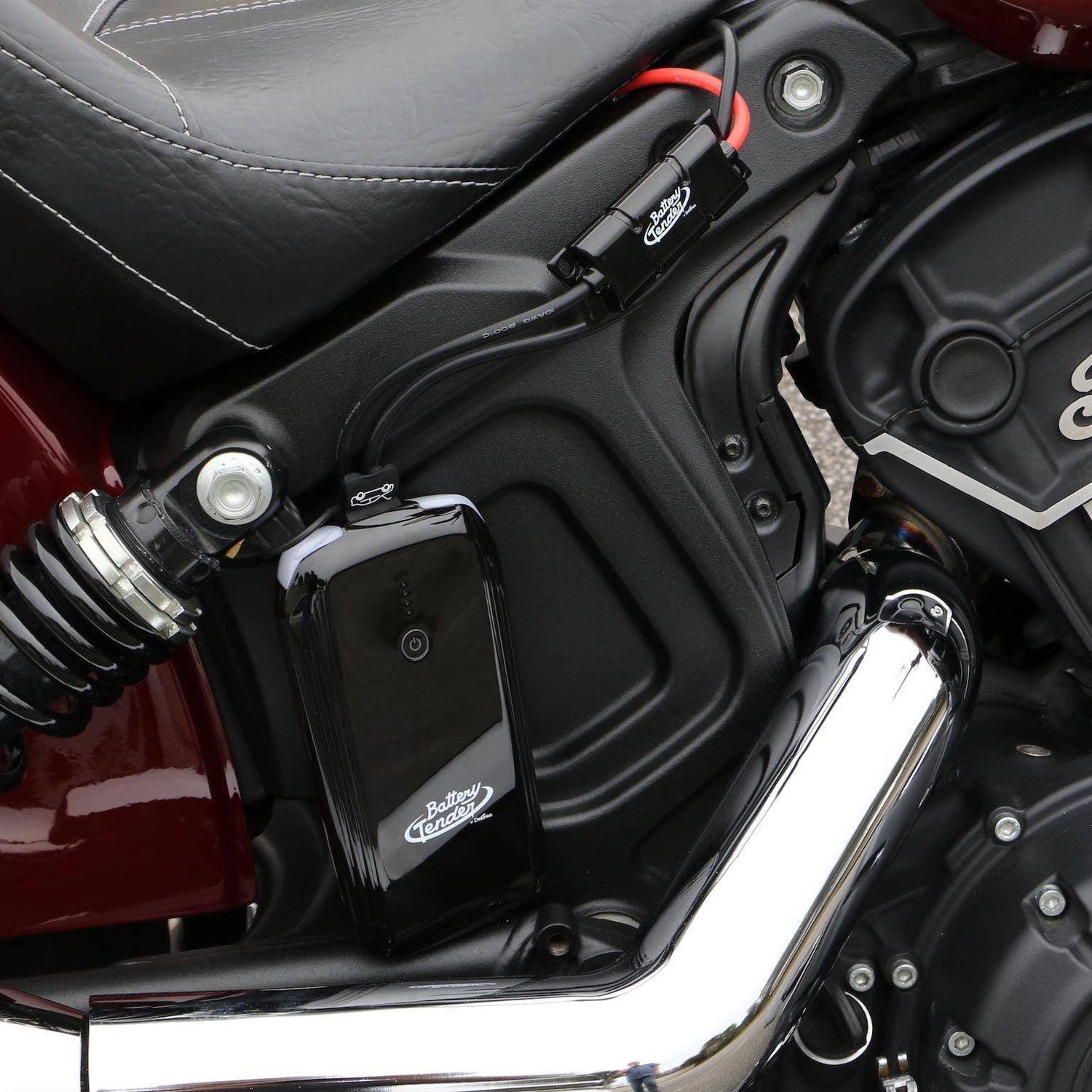
Quick Disconnect Harness (Easiest):
1. Install ring terminal harness permanently
2. Route connector to accessible location
3. Connect Battery Tender charger for winter
4. Disconnect in spring—harness stays installed

Direct Connection:
1. Connect alligator clips to battery terminals
2. Route cables carefully (no pinch points)
3. Plug in charger
4. Leave connected entire winter

Advantages:
- Zero maintenance needed
- Perfect charge maintained
- No monthly checks required
- Battery always ready
- Proven technology since 1989
Option 2: Battery Removal (Traditional Method)
Best for:
- No power outlet available
- Motorcycle stored outdoors
- Prefer traditional approach
- Multiple motorcycles
Lead-Acid Removal Process:
1. Disconnect negative cable first (prevents sparks)
2. Disconnect positive cable second
3. Remove hold-down hardware
4. Lift battery out carefully
5. Transport to storage location
Lithium Removal Process:
1. Check for external BMS disconnect switch
2. Disconnect negative cable first
3. Disconnect positive cable second
4. Remove hold-down hardware
5. Lift battery (much lighter than lead-acid!)
6. Transport carefully (sensitive electronics)
Storage Location:
Lead-Acid Requirements:
- Temperature: 40-70°F optimal (slower self-discharge in cold)
- Humidity: 40-60% (prevents corrosion)
- Ventilation: Good airflow
- Surface: Non-conductive shelf or battery mat
Lithium Requirements:
- Temperature: 40-70°F required
- MUST be above 32°F for charging capability
- Humidity: 40-60%
- Surface: Any stable platform
- Climate-controlled environment essential
Charging Schedule:
Lead-Acid:
- Check voltage monthly
- Recharge if below 12.4V
- Or connect Battery Tender in storage location
Lithium:
- Check voltage monthly
- Recharge if below 13.0V
- Store at 60-80% charge (NOT 100%)
- Warm to 40°F+ before charging
Option 3: Monthly Riding (For Mild Climates)
Requirements:
- Temperature consistently above 32°F
- Dry roads available
- 30-minute ride monthly
- Battery not near end of life
Proper Technique:
1. Start bike, let idle 2-3 minutes
2. Ride 20-30 minutes (not just idling!)
3. Use highway speeds when possible
4. Avoid short trips (discharge more than charge)
Limitations:
- Weather-dependent
- Inconsistent charging
- Risk of forgetting
- Still allows some sulfation (lead-acid)
- Better than nothing, but Battery Tender is superior
Storage Location Selection
Storing Motorcycle with Battery Installed
Indoor Heated Garage (Ideal):
- Temperature controlled (optimal for lithium)
- Battery Tender charger easily connected
- Bike stays clean
- Protected from elements
- Perfect for lithium batteries
Unheated Garage:
- Lead-acid: Acceptable with Battery Tender charger
- Lithium: Only if temperature stays above 40°F
- Monitor temperature during cold snaps
- Move indoors if necessary
Outdoor Storage:
- Lead-acid: Remove battery (temperature extremes)
- Lithium: MUST remove battery (temperature requirements)
- Extreme temperature fluctuations
- Humidity and condensation issues
Battery-Only Storage
If removing battery:
Ideal Location (Both Types):
- Heated basement or garage
- Workshop or utility room
- Climate-controlled storage unit
- Spare bedroom
Avoid:
- Damp basements (corrosion)
- Near furnace (excessive heat)
- Unheated sheds (lithium cannot charge if cold)
- Direct sunlight
Charging Protocol by Battery Type
Lead-Acid Charging
Initial Charge (Before Storage):
1. Charge to 100% (12.6-12.8V)
2. Allow 2-4 hours after charge complete
3. Verify voltage stabilizes above 12.6V
4. Battery ready for storage
Winter Maintenance:
With Battery Tender charger:
- Connect and leave
- Green light = maintained properly
- No monthly attention needed
- Float mode prevents overcharge
Without Battery Tender charger:
- Test voltage monthly
- Recharge if below 12.4V
- Full charge takes 4-8 hours typically
- Record voltage in maintenance log
Lithium Charging
Critical Lithium Requirements:
Temperature Restrictions:
- CANNOT charge below 32°F (0°C)
- BMS prevents cold charging (protects battery)
- Attempting cold charge = permanent damage
- Must warm battery to 40°F+ before charging
Charger Requirements:
- MUST use lithium-compatible charger
- 10 AMP Selectable has lithium mode
- Standard Battery Tender Plus is lead-acid only
- Using wrong charger damages battery
Initial Charge (Before Storage):
1. Warm battery to 40°F+ if cold
2. Charge to 60-80% (13.0-13.4V)
3. Do NOT charge to 100% for storage
4. Verify BMS shows normal status
Winter Maintenance:
- Check voltage monthly
- Recharge if below 13.0V
- Very low self-discharge means less frequent charging
- Ensure temperature above 40°F before charging
Multi-Motorcycle Storage
Managing Multiple Bikes
Common Scenarios:
- Daily rider + weekend bike
- Street bike + dirt bike
- His and hers motorcycles
- Vintage collection
Individual Attention:
- Each battery needs proper maintenance
- Different battery ages = different needs
- Mix of lead-acid and lithium common
- Track each battery individually
Multi-Bike Charging Solutions:
Multiple Battery Tender Units:
- One per motorcycle
- Ideal for mixed chemistry fleet
- Can select appropriate charger per bike
- Most flexible approach
Multi-Bank Alternative:
- 5-Bank Selectable
- Charge up to 5 batteries simultaneously
- Individual chemistry selection per battery
- Single outlet convenience
- Can charge mixed lead-acid and lithium
Permanent Harness Installation:
- Install ring terminal harness on each bike
- Quick disconnect at accessible location
- Swap single charger between bikes (if checking monthly)
- Or leave dedicated charger on each bike (if continuous)
Spring Recommissioning
Pre-Ride Battery Check
All Battery Types:
1. Visual inspection (damage, corrosion)
2. Voltage testing
3. Terminal cleaning
4. Connection verification
Lead-Acid Specific:
- Should be 12.6-12.8V if maintained properly
- Load test if voltage low
- Check electrolyte level (flooded only)
- Verify no sulfation occurred
Lithium Specific:
- Should be 13.0-13.6V depending on storage charge
- Verify BMS indicators normal
- Check for error codes
- Allow battery to warm to 50°F+ if stored cold
Reinstallation (If Removed)
Installation Procedure:
1. Clean battery tray/compartment
2. Position battery correctly
3. Connect positive cable first
4. Connect negative cable second
5. Secure hold-down firmly
6. Apply terminal protector
7. Lithium: Reconnect BMS if external disconnect
System Verification:
1. Check all lights functioning
2. Test horn and turn signals
3. Verify instrument cluster powers up
4. Test starter function
5. Monitor charging system voltage while running
Lead-Acid Charging Check:
- Voltage while running: 13.5-14.5V typical
- Should increase from resting voltage
- Stable after a few minutes running
Lithium Charging Check:
- Voltage while running: 14.0-14.8V typical
- Verify regulator/rectifier is lithium-compatible
- Some older bikes need voltage regulator upgrade
- BMS should show normal charging
Lead-Acid vs Lithium Storage Comparison
| Lead-Acid | Lithium (LiFePO4) |
|
Cost $100-200 |
Cost $200-500 |
|
Weight 10-15 lbs |
Weight 2-3 lbs |
|
Lifespan 3-7 years |
Lifespan 8-12 years |
|
Storage Temp 32-80°F acceptable |
Storage Temp 40-70°F required |
|
Charging Temp Down to 0°F |
Charging Temp Cannot charge below 32°F |
|
Self-Discharge 3-5% per month |
Self-Discharge 1-2% per month |
|
Maintenance Monthly check or Battery Tender charger |
Maintenance Monthly check, rare charging |
|
Storage State 100% (full charge) |
Storage State 60-80% (not full) |
|
Sulfation Risk High if discharged |
Sulfation Risk None |
|
Charger Needed Standard Battery Tender charger |
Charger Needed Lithium-compatible required |
|
Cold Start Performance Reduced in cold |
Cold Start Performance Excellent even when cold |
|
Weight Impact Standard |
Weight Impact Improves handling dramatically |
Cost-Benefit Analysis
Lead-Acid with Battery Tender Charger
Investment:
- Battery: $100-200
- Battery Tender Plus: $45-75
- Ring terminal harness: $15
- Total: $160-290
Lifespan:
- Without maintenance: 2-4 years
- With Battery Tender: 5-8 years
- Extended life: 3-4 years = $100-200 savings
Lithium with Proper Storage
Investment:
- Battery: $200-500
- 10 AMP Selectable Charger: $140
- Ring terminal harness: $15
- Total: $355-655
Lifespan:
- With proper storage: 10-12 years
- Poor storage: 3-5 years
- Proper care saves $200-500 over battery life
Break-Even Analysis:
- Higher initial cost: ~$200 more than lead-acid
- Longer lifespan: 10 years vs 5 years = 1 less replacement
- Break-even: 4-5 years
- Plus weight/performance benefits throughout
FAQ
Q: Can I leave my Battery Tender charger connected all winter?
A: Yes! The Battery Tender float mode is specifically designed for continuous connection. This technology has been proven safe and effective since 1989. The charger automatically switches to maintenance mode once the battery is full.
Q: Should I upgrade to a lithium battery?
A: Consider lithium if: (1) Weight matters (sport bikes, custom builds), (2) You have temperature-controlled storage, (3) Budget allows higher initial cost. The performance and longevity benefits are significant if you meet these criteria.
Q: Can I use my old Battery Tender charger with a new lithium battery?
A: No. You need the 10 AMP Selectable with dedicated lithium mode. Our new lithium battery line launches summer 2026 with dedicated charging solutions.
Q: Will my motorcycle start after 6 months on a Battery Tender charger?
A: Yes. Properly maintained batteries start immediately in spring. Battery Tender chargers maintains perfect charge level throughout storage, eliminating spring surprises.
Q: Do I need to start my motorcycle monthly if using a Battery Tender charger?
A: No. Battery Tender chargers provide complete protection without monthly starting. Monthly starting with short trips can actually harm the battery (discharge more than charge).
Q: Can lithium batteries freeze?
A: Lithium batteries don't freeze like lead-acid (lead-acid can freeze if discharged). However, lithium cannot be charged below 32°F. This charging limitation requires temperature-controlled storage.
Conclusion
Proper winter battery storage ensures spring riding readiness. Whether maintaining traditional lead-acid with the proven Battery Tender float-mode technology (pioneered in 1989) or upgrading to lightweight lithium with temperature-controlled storage, the key is matching storage procedures to battery chemistry.
Lead-acid demands consistent charge maintenance through the use of a Battery Tender charger or monthly checks. Lithium demands temperature control but rewards with dramatic weight savings and exceptional longevity. Battery Tender provides charging solutions for every motorcycle battery chemistry, with our summer 2026 lithium line bringing 60 years of charging expertise to this performance-focused technology.
Don't let winter storage destroy your riding plans. Install a Battery Tender charger or implement proper maintenance procedures today.
Browse our motorcycle battery chargers and accessories.