



Trickle Charger: What It Is, How It Works, and How to Choose the Right One
If you've ever returned to a vehicle that's been sitting in storage for weeks — only to turn the key and hear nothing — you already understand why a trickle charger matters. Whether you're maintaining a motorcycle over winter, keeping a classic car road-ready, or preserving the battery in a seasonal boat, a trickle charger is one of the most practical tools a vehicle owner can have. But not all trickle chargers are created equal, and understanding the difference between a basic charger and a smart battery maintainer can save you from a dead battery — or worse, a damaged one. This guide breaks down everything you need to know.
What Is a Trickle Charger?
A trickle charger is a low-amperage battery charger designed to deliver a small, continuous charge to a battery over an extended period of time. Unlike a standard battery charger that pushes high current to top off a battery quickly, a trickle charger works slowly and steadily — typically at rates between 0.5 and 2 amps. This gentle charge rate is intended to offset the natural self-discharge that all lead-acid batteries experience when not in use.
The term "trickle charger" is often used loosely to describe any low-rate charger, but there's an important distinction worth knowing: a traditional trickle charger delivers a constant charge regardless of the battery's state. A smart battery maintainer — like those made by Battery Tender® — monitors the battery's voltage and automatically adjusts or shuts off the charge when the battery is full, then resumes when voltage drops. That difference is critical for long-term battery health.
How Does a Trickle Charger Work?
Every 12-volt lead-acid battery slowly loses its charge through a process called self-discharge. Temperature, age, and the parasitic draw from onboard electronics all accelerate this process. A trickle charger compensates by feeding the battery a low, continuous current that keeps the battery at or near full charge.
Here's a simplified breakdown of what happens:
- Connection: The charger is connected to the battery terminals (or via a quick-disconnect harness).
- Bulk charge phase: The charger delivers current to bring the battery up to its target voltage.
- Absorption phase: As the battery nears full charge, a smart charger reduces the current to prevent overheating.
- Maintenance phase: The charger monitors battery voltage and applies a float charge only when needed, keeping the battery topped off indefinitely without overcharging.
This multi-stage process is the foundation of Battery Tender®'s DeltEQ® technology, which continuously reads the battery's condition and delivers precisely the charge it needs — nothing more, nothing less. Older, unregulated trickle chargers lack this intelligence and can boil away electrolyte or cause overcharging damage if left connected too long.
Trickle Charger vs. Battery Maintainer: Is There a Difference?
Yes — and the difference matters more than most people realize. Here's a quick comparison:
- Traditional trickle charger: Delivers a fixed, low current continuously. Safe for short-term maintenance but can overcharge if left connected indefinitely.
- Smart battery maintainer: Uses multi-stage charging logic to charge, then maintain, without overcharging. Safe for year-round, unattended use.
Most modern products marketed as "trickle chargers" are actually smart maintainers. When someone searches for a trickle charger, they typically want something they can plug in and forget — which means a smart maintainer is almost always the right tool for the job. The Battery Tender® Plus (1.25A) is the brand's most popular model for exactly this reason: it's fully automatic, safe to leave connected indefinitely, and compatible with standard 12V lead-acid, AGM, and gel batteries.
Choosing the Right Trickle Charger for Your Battery
Not every charger suits every application. Here's how to match the right charger to your needs:
For Motorcycles, ATVs, and Small Powersport Batteries
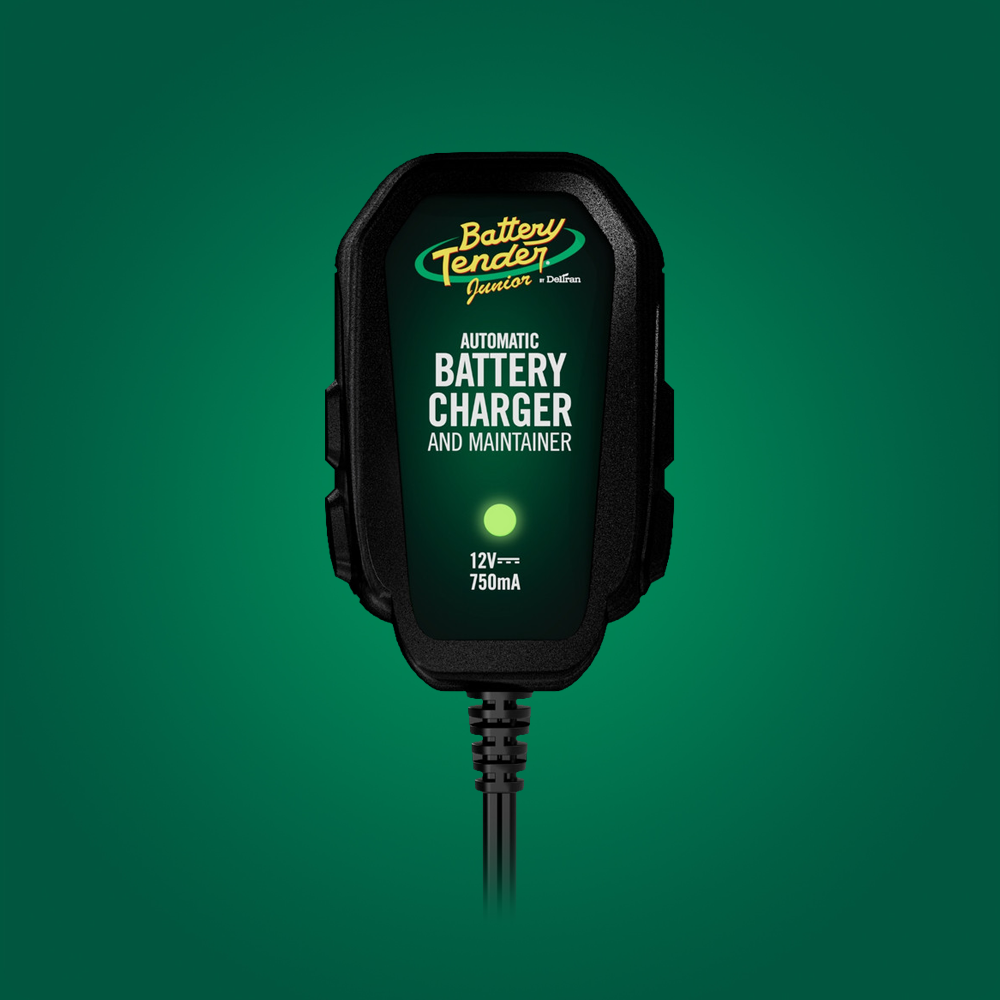
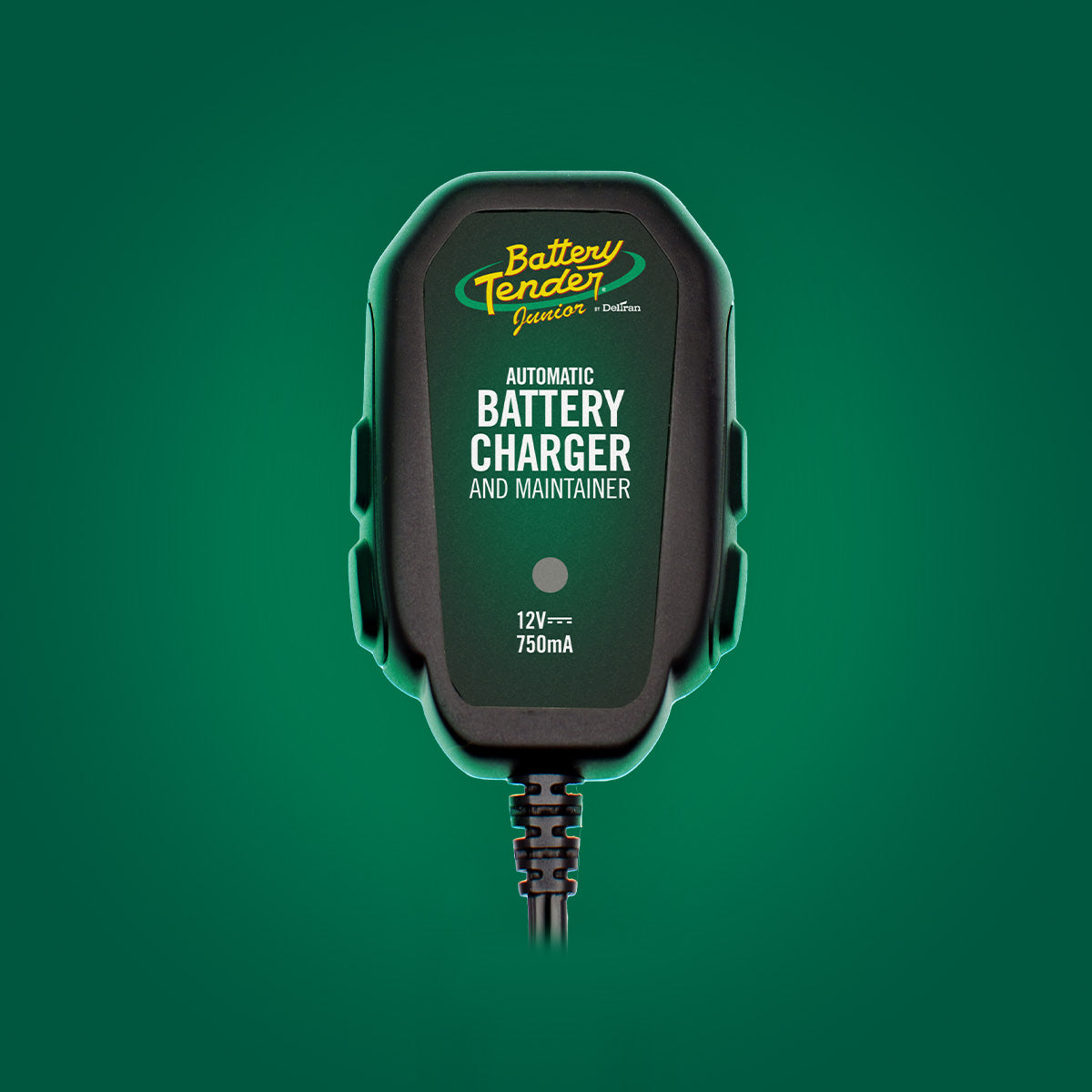
A compact, lower-amperage unit is ideal. The Battery Tender® Junior (0.75A) is purpose-built for smaller batteries. Its slim profile and lightweight design make it easy to store in a saddlebag, and it's fully automatic — plug it in and walk away.
For Cars, Trucks, and Full-Size Vehicles
The Battery Tender® Plus (1.25A) is the gold standard for passenger vehicles. At 1.25 amps, it charges efficiently without stressing the battery, and the automatic float mode makes it ideal for vehicles in seasonal storage or infrequent use.
For Lithium (LFP) Batteries
Lithium iron phosphate batteries have a different charge profile than lead-acid, and using the wrong charger can permanently damage them. The Battery Tender® Lithium Charger is engineered specifically for LFP batteries, delivering the correct voltage thresholds and charge algorithms lithium chemistry requires.
For Fleets or Multiple Vehicles
If you're managing several vehicles in storage — a classic car collection, a fleet of seasonal equipment, or a dealership's floor inventory — the Battery Tender® 4-Bank Charger lets you maintain up to four batteries simultaneously from a single unit. It applies independent charging logic to each port, so every battery gets exactly what it needs.
How to Use a Trickle Charger Safely
Even a smart charger requires proper setup. Follow these best practices every time:
- Charge in a ventilated area. Lead-acid batteries off-gas hydrogen during charging. Never charge in an enclosed space.
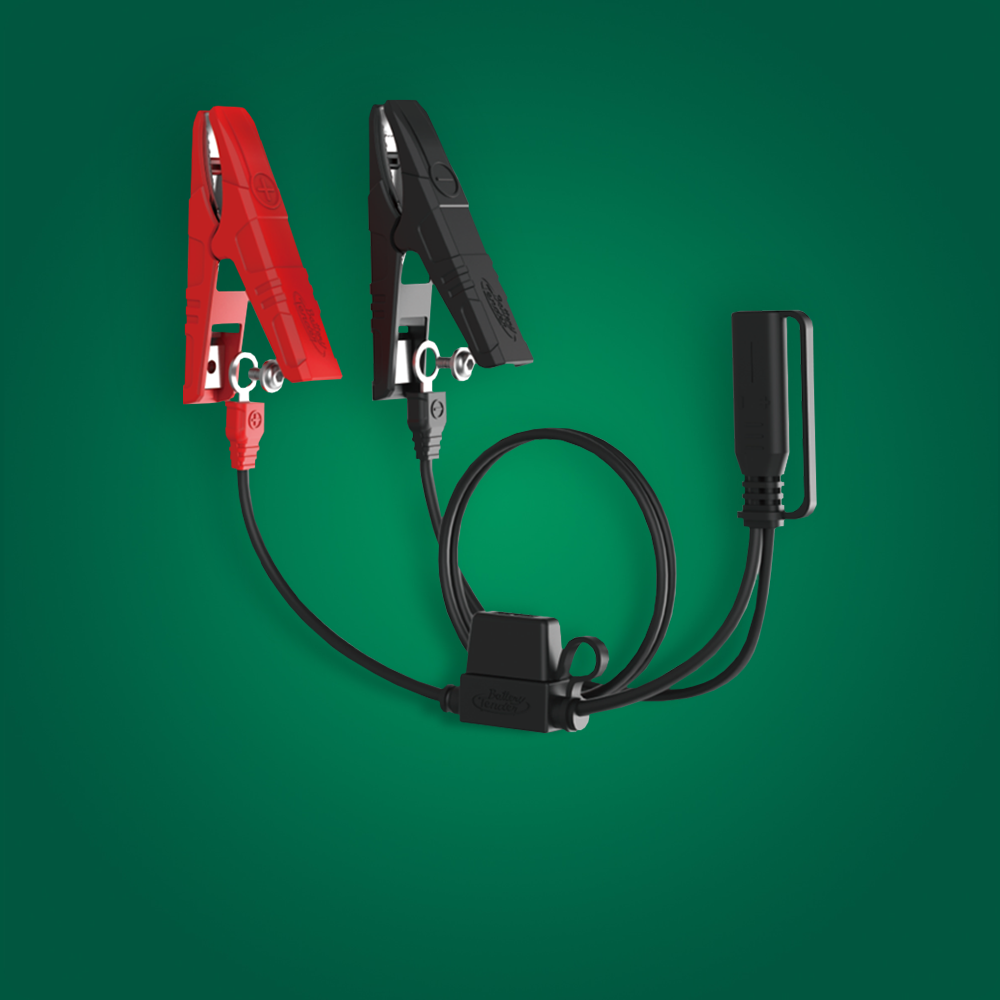
- Connect positive first. Attach the red clamp to the positive (+) terminal, then the black clamp to the negative (–) terminal or a chassis ground point away from the battery.
- Don't charge a frozen battery. If a battery has frozen, it must be thawed and inspected before charging.
- Check battery condition first. A battery that won't hold a charge after conditioning may be sulfated or defective and should be replaced.
- Use the right charger for your battery chemistry. Never use a lead-acid charger on a lithium battery.
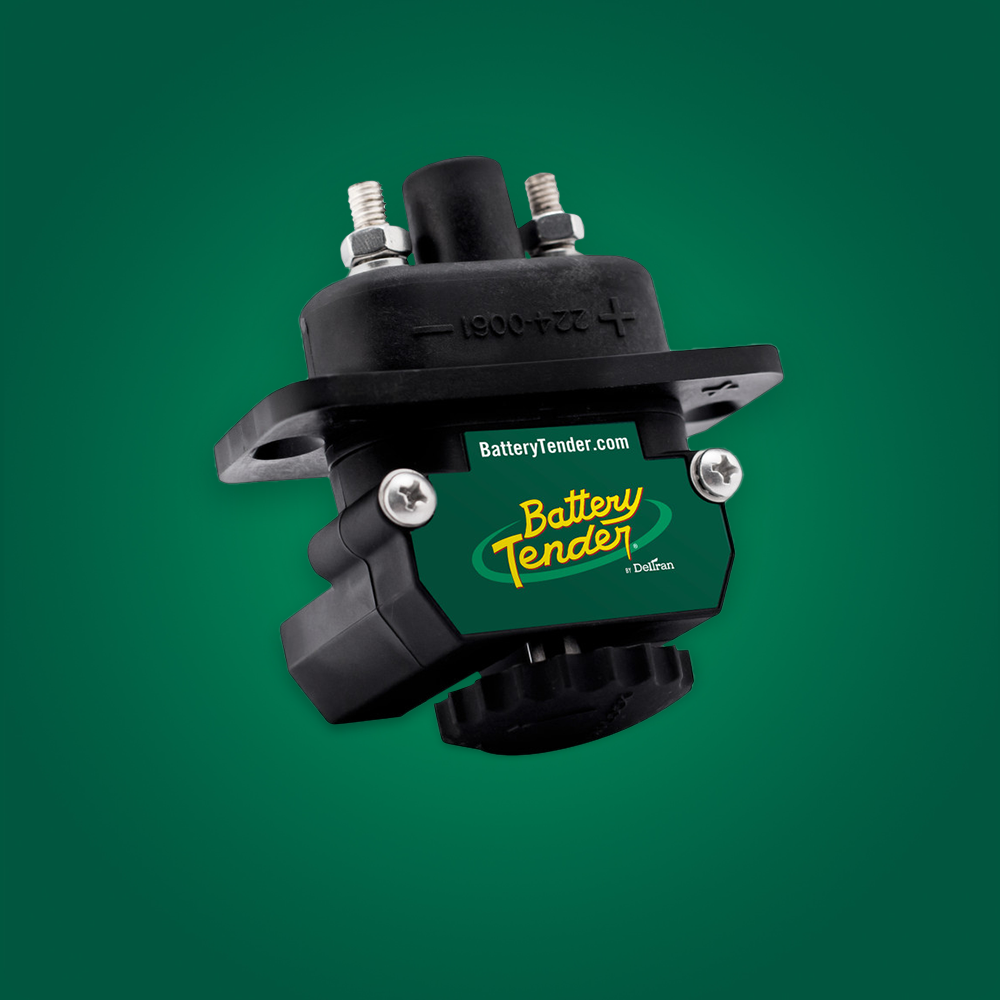
For long-term storage, Battery Tender®'s quick-disconnect ring terminal harness is one of the most convenient accessories available — it stays permanently attached to the battery so you can plug and unplug the charger in seconds without touching the terminals.
Common Signs Your Battery Needs a Trickle Charger
- The vehicle has been parked or stored for more than two weeks
- Slow or labored engine cranking
- Frequent need for jump-starts
- Battery warning light on the dashboard
- Seasonal use vehicles (motorcycles, boats, snowmobiles, golf carts)
If any of these apply to your situation, connecting a smart trickle charger sooner rather than later can extend battery life significantly — often doubling or tripling the usable lifespan of an otherwise healthy battery.
Frequently Asked Questions About Trickle Chargers
Can I leave a trickle charger on my battery all the time?
Yes — but only if it's a smart maintainer with automatic float mode. Products like the Battery Tender® Plus are designed for indefinite, unattended connection. A basic, unregulated trickle charger should not be left connected for extended periods, as it can overcharge and damage the battery.
How long does a trickle charger take to charge a dead battery?
A deeply discharged 12V battery can take 24–72 hours to fully recover on a low-amperage trickle charger. The exact time depends on the charger's output, the battery's capacity (measured in amp-hours), and how depleted the battery is. If a battery won't accept a charge after 24 hours, it may be sulfated or failed beyond recovery.
Is a trickle charger the same as a battery tender?
"Battery Tender®" is a registered trademark of Deltran and refers specifically to their line of smart battery chargers and maintainers. While people often use "battery tender" generically to mean any trickle charger or maintainer, the Battery Tender® brand products are distinguished by their multi-stage charging intelligence and DeltEQ® technology, which sets them apart from basic trickle chargers.
What's the difference between 0.75A and 1.25A chargers?
Amperage determines how quickly the charger can restore a depleted battery. A 0.75A charger (like the Battery Tender® Junior) is ideal for smaller batteries found in motorcycles and ATVs. A 1.25A charger (like the Battery Tender® Plus) charges faster and is better suited for full-size automotive batteries. For maintenance purposes, either will work — the difference mainly shows in recovery time from a deep discharge.
Can a trickle charger damage my battery?
An unregulated trickle charger left connected too long can overcharge a battery, causing electrolyte loss, plate damage, and heat buildup. A smart charger with automatic float control eliminates this risk. Always match the charger to your battery chemistry and follow the manufacturer's guidelines.
The Bottom Line on Trickle Chargers
A quality trickle charger is one of the best investments you can make in your vehicle's longevity. Whether you're storing a motorcycle through the winter, maintaining a classic car between shows, or simply keeping a daily driver ready after weeks of inactivity, the right charger prevents the slow death that kills more batteries than any other single cause. Battery Tender® has been engineering smart battery maintenance solutions since 1961, and their lineup covers everything from budget-friendly compact maintainers to multi-bank fleet chargers. Choose the right tool, connect it correctly, and your battery will be ready when you are — every single time.