



Solar Maintainer 12V: How to Keep a Battery Charged Off-Grid (2026)
A solar maintainer 12v setup pairs a small solar panel with a built-in charge controller to offset self-discharge while a vehicle sits with no power nearby. Battery Tender® solar chargers do this for 12V lead-acid, AGM, gel, and lithium batteries, so a motorcycle, boat, or RV stays ready to start.
Key Takeaways
- A solar maintainer 12v needs a charge controller. A bare panel can push 18V or more into a battery.
- Match panel wattage to battery size and parasitic draw: 5W for batteries up to about 20Ah, 17W for 40–70Ah, and 35W for 100Ah and up.
- Solar maintains a charge. It does not revive a deeply discharged battery quickly.
- Panel placement matters more than panel size. Shade, glass, and winter sun angle can cut output by half.
- Check battery voltage monthly. A healthy resting 12V lead-acid battery reads about 12.6V.
What Is a Solar Maintainer 12v and How Does It Work?
A solar maintainer 12v is a solar panel plus a charge controller that delivers low, regulated current to a 12-volt battery. It replaces the wall outlet for boats on moorings, RVs in storage lots, tractors in barns, and trailers parked in fields.
A 12V-class panel produces roughly 17–18 volts in full sun. The controller reduces that to a safe charging voltage and stops current flow when the battery is full. A raw panel with no controller can overcharge a battery. In flooded batteries that boils off electrolyte, and in sealed batteries it causes permanent damage.
The problem is self-discharge. A lead-acid battery loses roughly 3–5% of its charge per month at 77°F, and faster in heat. Modern vehicles add parasitic draw from alarms, clocks, and control modules, typically 20–50 milliamps. At 30mA, a 50Ah battery loses 0.72Ah per day. Down to 50% charge, that is about five weeks. Sulfation, and a shortened battery life, follows soon after.
Typical uses for a solar maintainer 12v:
- Motorcycles, ATVs, and UTVs stored in sheds or trailers
- Boats on trailers or moorings without shore power
- RVs and campers parked at remote storage lots
- Farm equipment, generators, and seasonal trucks
- Cars parked outdoors for months, such as a second vehicle or a deployed service member's car
How Do You Size a Solar Maintainer 12v for Your Battery?
Size the panel to cover parasitic draw plus self-discharge on a low-sun day. For most vehicles, 5W to 35W is enough. Output depends on peak sun hours, which are the hours of full-strength sunlight per day.
The formula: panel watts × peak sun hours × 0.75 efficiency ÷ 12 volts = amp-hours per day. A 17W panel with 4 peak sun hours yields 17 × 4 × 0.75 ÷ 12 = 4.25Ah per day. National Renewable Energy Laboratory solar maps show much of the U.S. averaging about 4–6 peak sun hours in summer and 2–3 in December. Divide summer figures by two for a conservative winter estimate.
| Application | Battery Size | Typical Parasitic Draw | Recommended Panel | Summer Output (4 sun hours) |
|---|---|---|---|---|
| Motorcycle, ATV, mower | 8–20Ah | 0–10mA | 5W | ~1.25Ah/day |
| Car, SUV, light truck | 40–70Ah | 20–50mA | 17W | ~4.25Ah/day |
| Boat starting battery, RV chassis battery, tractor | 70–100Ah | 20–60mA | 17W–35W | ~4.25–8.75Ah/day |
| RV house bank, dual-battery, deep cycle | 100–200Ah | 50–100mA | 35W or larger array | 8.75Ah+/day |
Why Maintenance Is Not Recovery
Panel output is small compared with an AC charger. A 50Ah battery at 50% depth of discharge holds 25Ah of missing charge. A 17W panel averaging 4.25Ah per day needs about six sunny days to refill it. An AC charger rated at 4 amps does the same job in roughly 6–7 hours. Use solar to hold a full battery at full charge, not to rescue a flat one.
For a deeper look at panel-to-battery matching in passenger vehicles, see Can a Solar Panel Keep a Car Battery Charged? (2026).
How to Set Up a Solar Maintainer 12v: Step by Step
Setup takes about 15 minutes and requires only a multimeter. Always follow the connection order in the product manual.
- Test the battery. Measure resting voltage with a multimeter. A lead-acid battery reads about 12.6V at full charge, 12.4V at roughly 75%, and 12.0V at roughly 25%. Below 12.0V, recharge with an AC charger first.
- Choose the panel location. In the Northern Hemisphere, face the panel south and tilt it toward the sun. Avoid shade from roofs, trees, and tarps. Even a partial shadow can drop output sharply.
- Connect to the battery. Attach the controller output to the battery terminals or the charging harness, red to positive and black to negative. Connect the battery side first, then the panel, if the manual calls for separate connections.
- Secure the panel and cable. Mount the panel and route the cable away from hot exhaust parts, sharp edges, and pinch points such as hood or door seams.
- Verify charging. After an hour in direct sun, measure at the battery. Voltage should read above the resting figure, typically 13.0–14.5V during charging.
- Inspect monthly. Wipe dust or snow off the panel, check connections for corrosion, and note the resting voltage.
Safety notes: Wear eye protection when working near flooded batteries, and ventilate the area. Do not charge a frozen or swollen battery. For lithium batteries, avoid charging below 32°F unless the pack has low-temperature protection.
Which Solar Maintainer 12v Fits Your Situation?
The right model depends on battery capacity, location, and how much winter sun the panel will see. Battery Tender solar products cover 5W to 35W, plus a controller for larger custom systems.
Cars, Trucks, and Mid-Size Boat or RV Starting Batteries
A 17W panel produces about 4.25Ah per day in summer, roughly six times the draw of a 30mA parasitic load. That covers a 40–70Ah starting battery. The built-in controller prevents overcharging, charging runs in three steps, and the waterproof panel handles outdoor mounting. It is compatible with lithium, lead-acid, AGM, and gel batteries.
Battery Tender 17 Watt Mountable Solar 12V Battery Charger with Solar Controller
Large Batteries and Low-Sun Regions
A 35W panel produces roughly 8.75Ah per day under the same summer assumptions, which is enough for a 100Ah battery with 50mA of parasitic draw. Choose it for dual-battery setups, trucks parked in northern states, or storage where winter days are short. It also includes a solar controller.
Battery Tender 35 Watt Mountable Solar 12V Battery Charger with Solar Controller
Motorcycles, ATVs, and Small Batteries
A 5W panel yields about 1.25Ah per day in summer and roughly 0.6Ah in winter. That is enough for a 12Ah motorcycle battery with little or no parasitic draw. It is too small for a modern car. The handlebar mount makes it a practical choice for a bike parked outside.
Battery Tender 5 Watt Solar 12V Battery Charger with Handlebar Mount
Custom Arrays on RVs, Boats, and Farm Equipment
Larger panels without a built-in controller need a separate one. A 30A PWM controller handles 12V or 24V systems and carries enough current for multi-panel arrays on an RV roof or tractor cab. The plug-in 17W and 35W units above do not need it.
Battery Tender 30 AMP, 24V/12V PWM Solar Charge Controller
Boat owners planning a permanent installation can find wiring and layout details in Solar Charging Integration for Boats. For portable and temporary setups, see the Portable Solar Battery Charger complete guide.
When Is a Solar Maintainer 12v Not Enough?
A solar maintainer 12v falls short when the battery is already deeply discharged, the panel is shaded, or the vehicle sits in an enclosed garage. Solar is a low-current tool with real limits.
- Indoor storage: Glass and garage windows cut output, and tinted windshields cut more. A panel needs direct sun.
- Snow and shade: A covered panel produces nothing. Clear snow after storms.
- Deeply discharged batteries: Below 12.0V, use an AC charger first, then let solar take over.
- High parasitic draw: A load above 100mA may exceed what a small panel can supply in winter.
When AC power is available, Battery Tender AC chargers use Infinite Sequential Monitoring (ISM), a four-stage process: Initialization, Bulk Charge, Absorption, and Float Maintenance. In Float Maintenance, the charger monitors voltage and resumes charging only when it drops, so the charger can stay connected indefinitely. Conventional trickle chargers apply constant current regardless of battery state, which risks overcharging. Battery Tender solar chargers use a built-in controller with three-step charging instead, a design suited to outdoor, outlet-free storage.
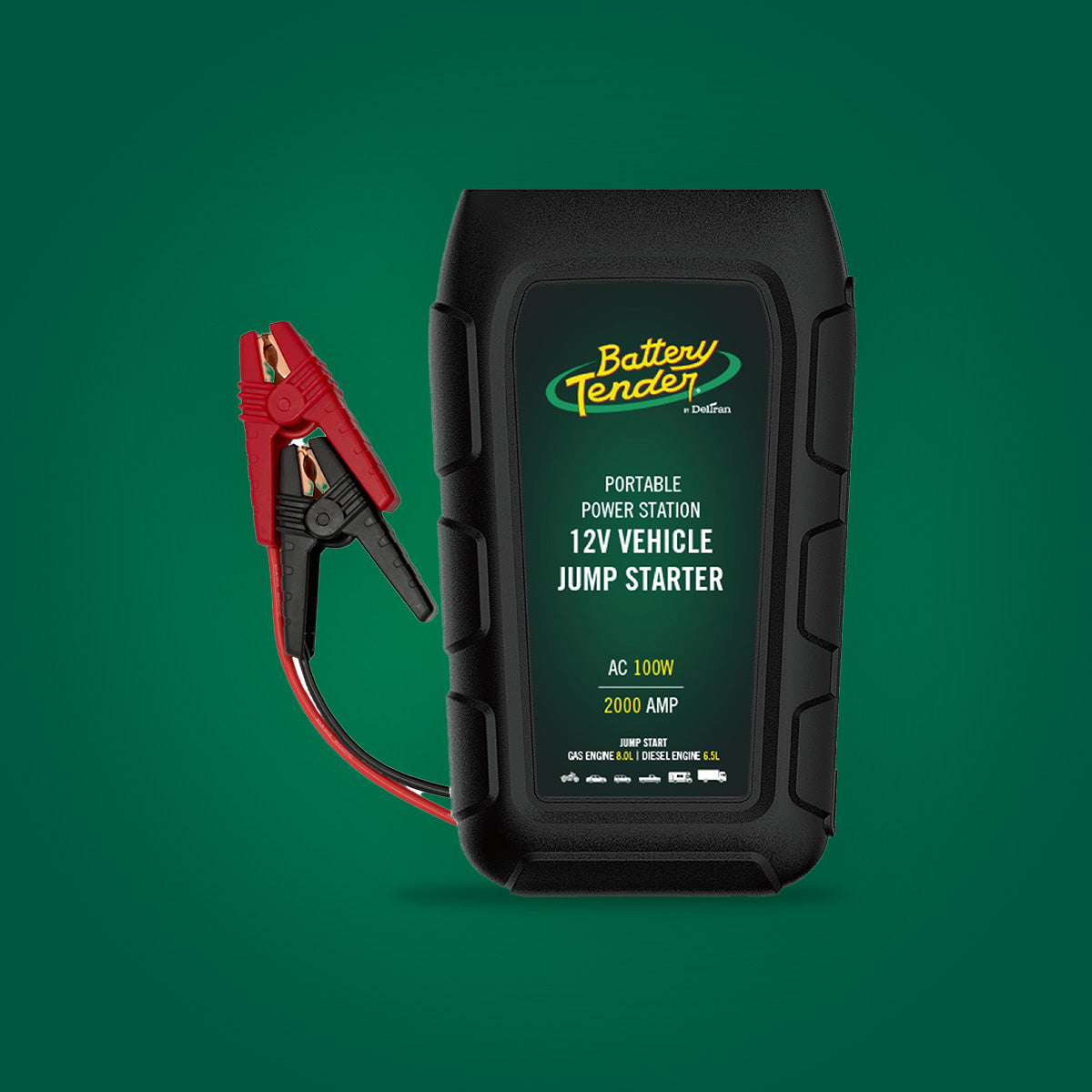
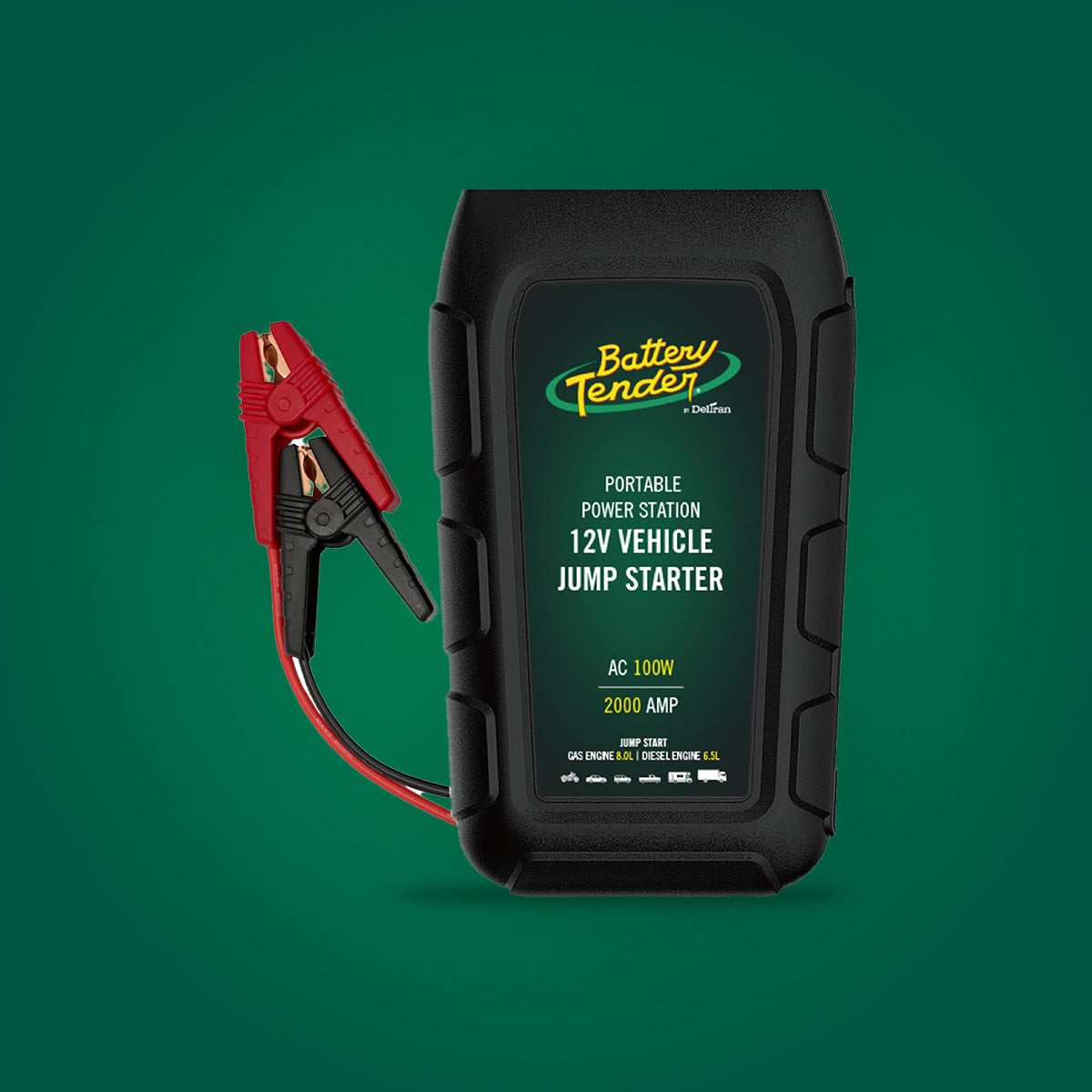
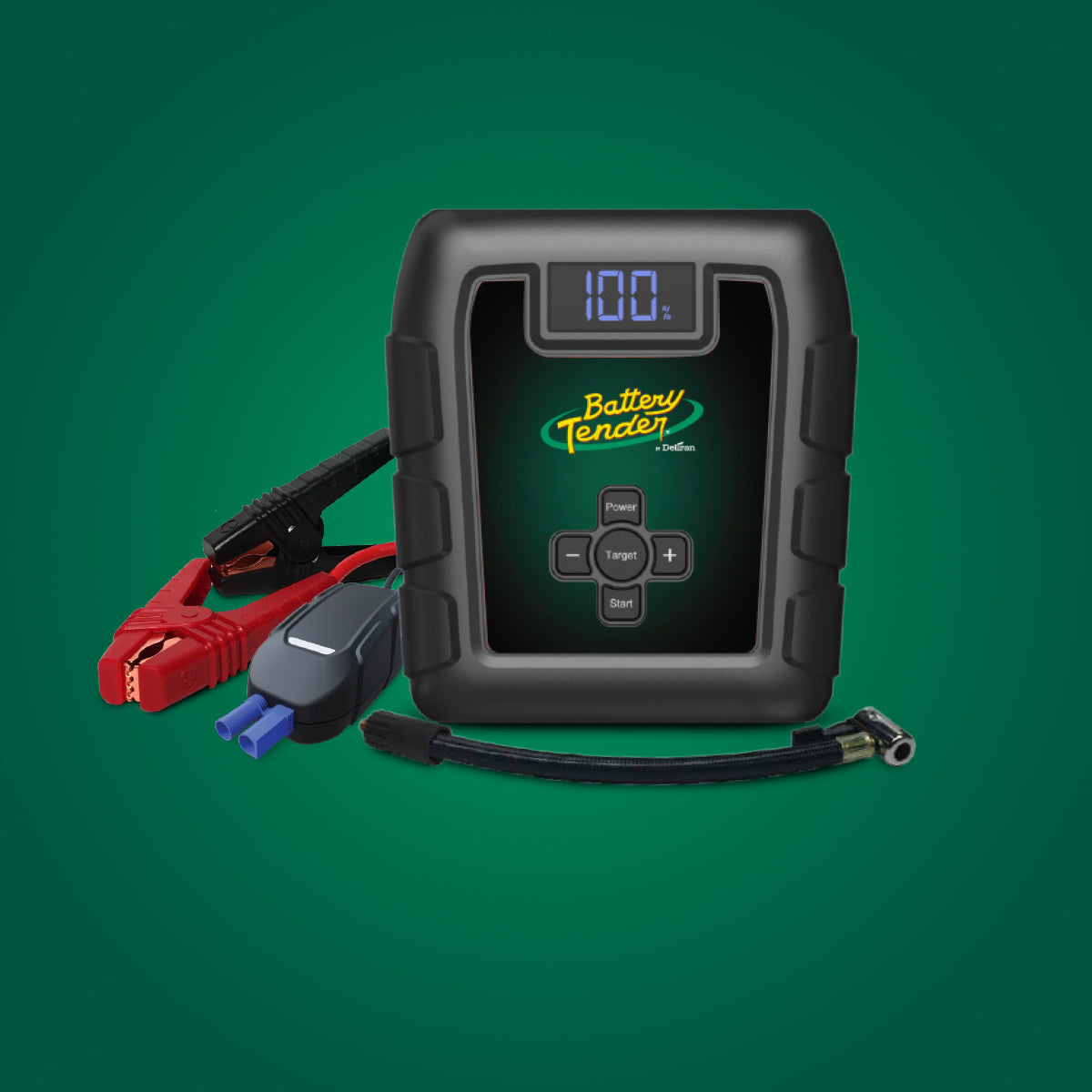
A solar maintainer prevents dead batteries but cannot start a vehicle that already will not crank. Keep a portable jump starter on board as a backup. The Battery Tender Jump N Start 2000 Amp Power Station starts gas engines up to 8.0L and diesels up to 6.5L, and its 100W AC inverter powers small devices in the field.
Battery Tender Jump N Start 2000 Amp Power Station with 100W Inverter
Frequently Asked Questions
What is a solar maintainer 12v?
A solar maintainer 12v is a solar panel with a charge controller that supplies small, regulated current to a 12-volt battery. It offsets self-discharge and parasitic draw during storage. It runs on sunlight alone, so it works in locations without electrical outlets, such as boat moorings, RV lots, or farm sheds.
Can a solar maintainer overcharge a battery?
A solar maintainer with a built-in charge controller will not overcharge a battery, because the controller regulates voltage and current. A bare panel with no controller can overcharge, since it may output 18V or more in full sun. Always confirm the controller is built in or added before connecting.
Will a solar maintainer work through a windshield or in cloudy weather?
It works, but output drops. Glass reduces light reaching the panel, and clouds can cut output substantially. A larger panel makes up the difference. A 17W or 35W panel usually still covers typical vehicle parasitic draw. Mount the panel outside the glass when possible.
What size solar maintainer do I need for a car battery?
A 17W panel suits most car and light-truck batteries from 40–70Ah. It produces about 4.25Ah per day in summer and roughly half that in winter, which exceeds a typical 30mA parasitic draw of 0.72Ah per day. Choose 35W for 100Ah batteries or very short winter days.
Conclusion
A solar maintainer 12v keeps a stored battery healthy without an outlet. Match the panel to the battery: 5W for small powersports batteries, 17W for cars and mid-size starting batteries, and 35W for large or low-sun applications. Confirm the controller, mount the panel in direct sun, and check voltage monthly. Specs and guidance are current for 2026.
Next step: measure the Ah rating of your battery, find it in the sizing table above, and browse the full Battery Tender solar battery chargers collection.