



A dead battery in a parking lot is an inconvenience. A dead battery on the water — a mile from the dock, with afternoon thunderstorms building on the horizon — is an emergency. Unlike automotive breakdowns where another vehicle is typically nearby within minutes, marine engine failures may require water rescue, towing fees, or dangerous anchoring in busy channels while waiting for assistance.
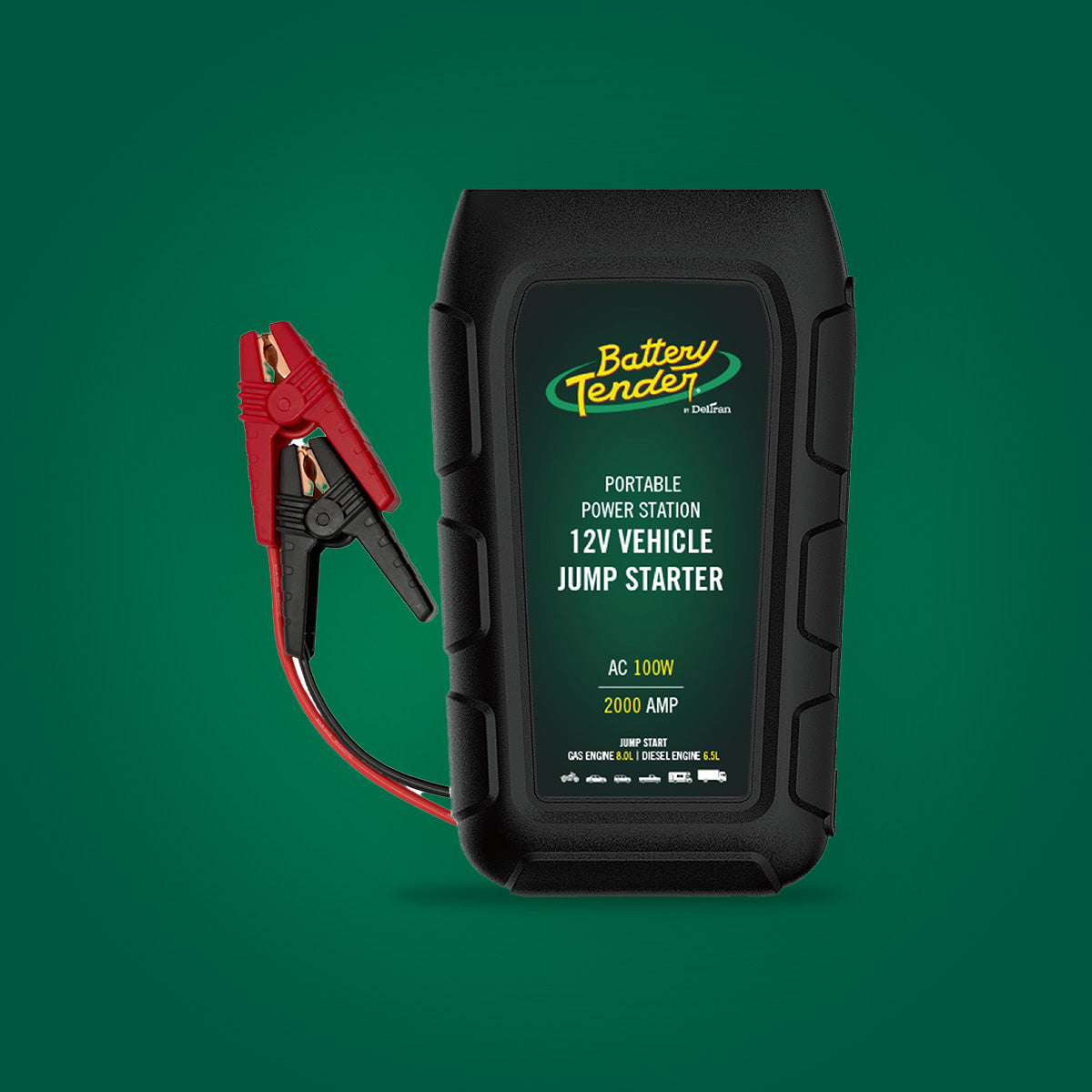
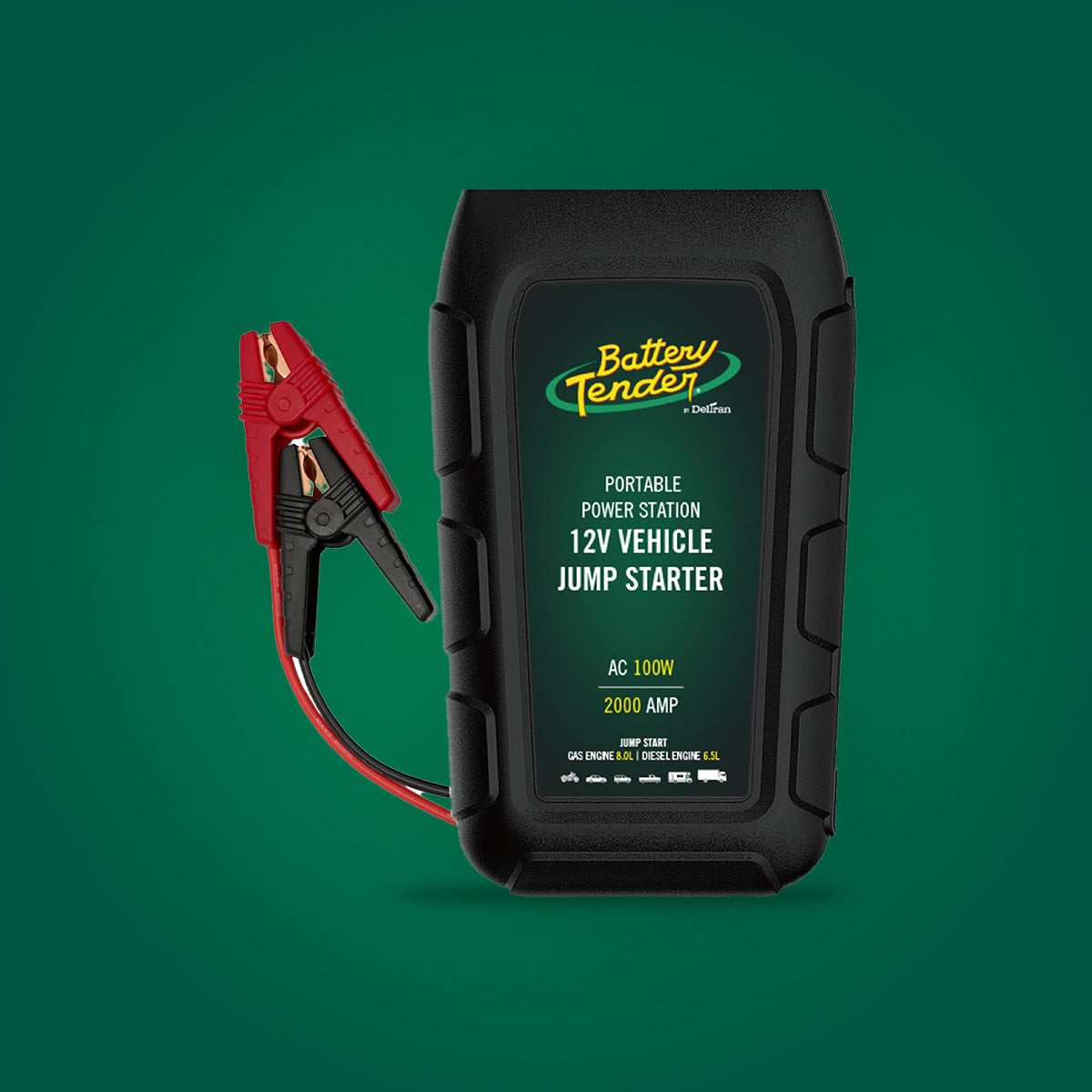
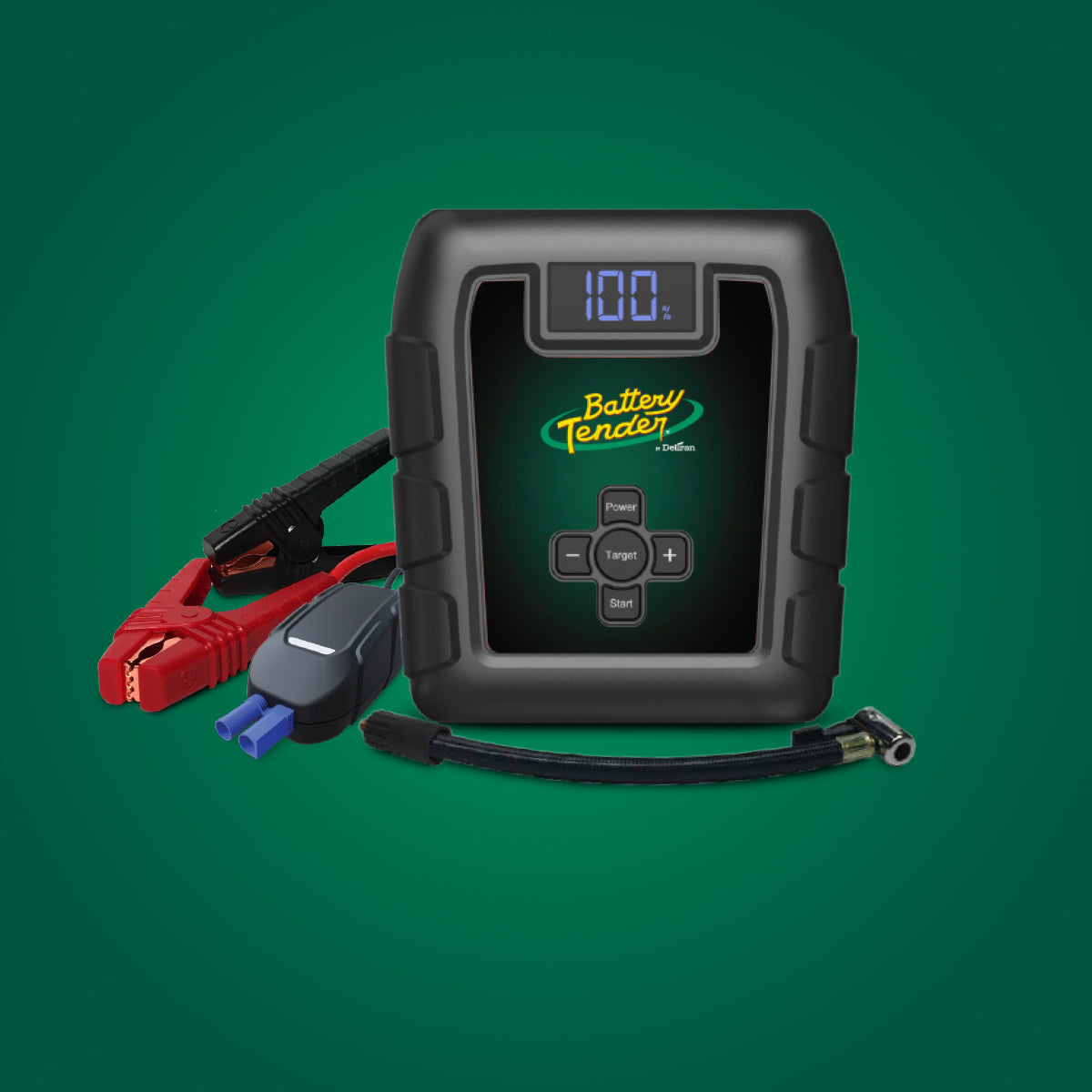
A marine-capable jump starter changes this calculus entirely. The right unit, properly maintained and aboard the boat, converts a dead battery from an emergency into a self-resolved 5-minute event. The Battery Tender® Charge N Start series provides the starting power needed for outboard engines up to 6.5L gas and 3.0L diesel — covering the vast majority of recreational marine engines.
Why Marine Jump Starting Is Different
Ignition Protection Requirements
Boats have enclosed spaces where gasoline vapors can accumulate — bilge areas, engine compartments, fuel tank bays. Electrical sparks in these environments can ignite accumulated vapors. Any electrical work near a boat's engine — including jump starting — should be preceded by running the blower for at least 4 minutes to clear accumulated vapors from enclosed spaces. Battery Tender Charge N Start units include spark protection circuits that minimize spark risk at connection, but the blower protocol is not optional.
Accessing the Battery
Marine batteries are often in below-deck compartments, under seats, or in engine-adjacent bays that make direct terminal access challenging while on the water. Know where your battery is located and how to access it before you need to in an emergency — practicing the access procedure at the dock takes five minutes and eliminates fumbling during a stressful situation.
Saltwater Environment
Saltwater is highly corrosive to electrical connections. Battery terminal connections that looked clean at the dock may have developed corrosion resistance during a long day on salt water. When jump starting in a marine environment, press the clamps firmly to ensure solid metal contact through any light surface corrosion.
Selecting a Marine-Capable Jump Starter
Not every portable jump starter is rated for marine engines. The key specification is peak amperage — outboard engines require more cranking current than gasoline passenger car engines of the same displacement because marine engines often sit cold for extended periods and because the starting circuit may also need to overcome water-logged conditions.
| Engine Type | Recommended Peak Amps | Battery Tender Recommendation |
|---|---|---|
| Small outboard (under 50 HP) | 400–600 A | Charge N Start 1100 (1000A) |
| Mid-size outboard (50–150 HP) | 600–900 A | Charge N Start 1100 or 1120 (1000–1200A) |
| Large outboard (150–350+ HP) | 900–1200 A | Charge N Start 1120 or 4120 (1200A) |
| Diesel inboard (under 3.0L) | 800–1200 A | Charge N Start 1120 or 4120 (1200A) |
| Large gas inboard (V8 marine) | 800–1000 A | Charge N Start 1120 (1200A) |
Shop the Charge N Start 1120 — 1 AMP Charger + 1200 AMP Jump Starter (SKU: 030-7012-WH) — the recommended all-around marine emergency unit.
For the largest outboard configurations and tournament boats, the Charge N Start 4120 — 4 AMP Charger + 1200 AMP Jump Starter (SKU: 030-7020-WH) provides the same peak power with 4-amp maintenance charging capability.
Marine Jump Start Procedure
- Run the engine compartment blower for a minimum of 4 minutes before any electrical work near the engine. This is non-negotiable in enclosed bilge/engine bay configurations.
- Visually inspect the battery — cracked case, leaking acid, or swelling means do not jump start; call for towing.
- Inspect jump starter charge level — confirm adequate charge before connecting.
- Connect the RED (positive) clamp to the positive (+) battery terminal.
- Connect the BLACK (negative) clamp to a metal ground point on the engine block or chassis — away from the battery.
- Wait 2 minutes if the battery is deeply discharged.
- Attempt to start the engine — maximum 5 seconds of cranking per attempt, 30-second rest between attempts.
- Once the engine starts, disconnect in reverse: black from ground first, then red from positive.
- Run the engine at elevated RPM for 20–30 minutes to allow the alternator to begin recharging the starting battery.
Storing the Jump Starter Aboard
Where and how you store the jump starter on the boat affects both its readiness and its longevity:
- Store in a dry, protected compartment — not in the bilge or areas exposed to water spray.
- Protect from heat — engine compartment adjacent storage in direct sun can exceed 120°F; a cockpit storage compartment is preferable.
- In saltwater boats, store in a sealed bag to protect against salt mist, which corrodes electronics over time.
- Check charge quarterly — the same maintenance schedule as a vehicle jump starter.
- Connect to the Charge N Start's charging function at the dock after each use to maintain the unit at 50–80% charge.
The Charge N Start Dual Advantage at the Dock
The Charge N Start's built-in smart charger function gives marine owners an additional tool beyond emergency starting: overnight battery maintenance at the dock. Connected to shore power, the Charge N Start functions as a dedicated 1-amp or 4-amp smart charger (depending on model), maintaining the starting battery at full charge through a full 4-stage ISM cycle.
This combination — dock-side maintenance charging plus on-water emergency starting — makes the Charge N Start a permanent marine companion rather than an emergency-only device stored and forgotten in a dry bag.
Preventing Marine Battery Emergencies
The best marine emergency is the one that never happens. The Battery Tender WaveCharge and WaveCharge Pro onboard marine charging system, connected at the dock after every outing, ensures every battery in the system enters each trip at full charge. Combined with the spring commissioning inspection covered in Article 28, WaveCharge-maintained boats simply do not experience the dead battery at the ramp that ends so many fishing and boating days.
Frequently Asked Questions
Can I use a car jump starter on a boat?
If the peak amp rating meets the engine's requirements and the unit has adequate charge, most modern lithium jump starters work on boat engines. The key differences in marine use are the blower protocol requirement and storing the unit in a protected location away from moisture and extreme heat.
What do I do if the jump starter cannot start my outboard?
If 3 jump start attempts fail: verify clamp connections are solid, wait 30 minutes and try again after the starter motor cools, check that the engine has fuel and the kill switch is properly positioned, and consider calling for towing assistance. A very heavily discharged battery may need 15–20 minutes of connection before accepting enough charge for a successful start.
How do I know if my jump starter has enough power for my engine?
Check the peak amp rating on your jump starter against the CCA rating of the battery in your boat. The jump starter's peak amps should exceed the battery's CCA rating for reliable starting. Battery Tender Charge N Start units at 1000–1200 peak amps cover the cranking requirements of most recreational marine engines.
Conclusion
Marine battery emergencies are more consequential and harder to resolve than their automotive equivalents — the right equipment aboard the boat converts them into manageable situations. A properly maintained Charge N Start provides both the day-to-day smart charging function that prevents dead batteries and the 1200-amp jump starting capability that resolves them when prevention is not enough.
Shop the full marine charging and jump starting lineup at Battery Tender.


