

Harley-Davidson Battery Maintenance: The Complete Owner's Guide
Harley-Davidson motorcycles earn their legendary status ride after ride, but that reputation depends on one often-overlooked component: the battery. Harley-Davidson battery maintenance demands more from a 12V battery than almost any other powersports application—high-vibration engines, heated grips, aftermarket audio systems, touring electronics, and long winter storage periods combine to create one of the most punishing electrical environments in motorcycling. Battery Tender® has served the Harley-Davidson community for decades with chargers and maintainers engineered specifically for these demands. This guide covers everything an owner needs to know, from choosing the right charger to maximizing battery lifespan across every model in the lineup.
Harley-Davidson® is a registered trademark of Harley-Davidson Motor Company. Battery Tender is an independent brand and is not affiliated with, endorsed by, or sponsored by Harley-Davidson Motor Company.
Understanding the Harley-Davidson Electrical Environment
Before selecting a charger or establishing a maintenance routine, it helps to understand exactly why Harley-Davidson batteries face challenges that other motorcycles do not. Three factors set ownership apart from the broader powersports world.
Vibration stress. The classic 45-degree V-twin engine—whether air-cooled or Milwaukee-Eight®—produces a distinctive power pulse that transmits significant vibration through the entire chassis. Over time, this vibration loosens battery terminal connections and accelerates internal plate degradation, shortening the service life of even a premium AGM battery. Checking terminal tightness at every oil change or every 3,000 miles is not optional maintenance—it is essential.
Accessory electrical loads. A stock Road King® draws meaningful current from its battery at idle. Add heated grips, heated seats, a fairing-mounted GPS, a premium audio upgrade, and auxiliary lighting, and that same battery is now supporting an electrical load that rivals many automobile accessories. Touring models in particular require larger-capacity batteries and more capable charging solutions to keep pace with real-world demand.
Seasonal riding patterns. Across much of the United States and Canada, Harley-Davidson motorcycles sit in storage for three to five months every winter. A battery left without maintenance during that period loses roughly 1% of its charge per day through self-discharge. By spring, an unmaintained battery may be too deeply discharged to recover fully, reducing capacity and shortening its usable life by one or more seasons.
Battery Types Across the Harley-Davidson Lineup
Modern Harley-Davidson motorcycles use sealed AGM (absorbent glass mat) batteries exclusively across the entire production lineup. AGM technology offers superior vibration resistance compared to flooded lead-acid batteries and requires no electrolyte maintenance, making it well suited to the demands of V-twin ownership. However, AGM batteries require chargers specifically designed for their chemistry—overcharging an AGM battery with an old-fashioned unregulated trickle charger will shorten its life significantly.
Battery capacity varies by model family and electrical load:
- Sportster® and Nightster® models: 12V, 12 Ah AGM battery. These models carry lighter electrical loads and use the most compact battery in the Harley-Davidson lineup.
- Softail® and Dyna® models: 12V, 18–20 Ah AGM battery. Mid-size capacity supports the Milwaukee-Eight and Twin Cam® engines along with standard Softail accessories.
- Touring models (Road King®, Street Glide®, Road Glide®, Ultra Limited®): 12V, 28 Ah AGM battery. The largest battery in the family is sized to support fairing-mounted electronics, infotainment systems, and the full suite of heated accessories that touring riders depend on.
- LiveWire® electric models: The high-voltage traction battery in LiveWire models operates on a completely separate system and requires manufacturer-specific charging equipment.
Identifying the correct battery capacity for your specific model year is the essential first step before selecting any charging or maintenance equipment. Consult your owner's manual or the Harley-Davidson Motor Company's official documentation for model-specific specifications.
Choosing the Right Battery Tender Charger for Your Harley-Davidson
Not all chargers are created equal, and matching charger output to battery capacity is critical for both charging speed and long-term battery health. Using a charger with insufficient amperage on a large touring battery wastes time. Using an oversized charger on a small Sportster battery without proper regulation risks overcharging. The following pairings reflect best practices for the Harley-Davidson lineup.
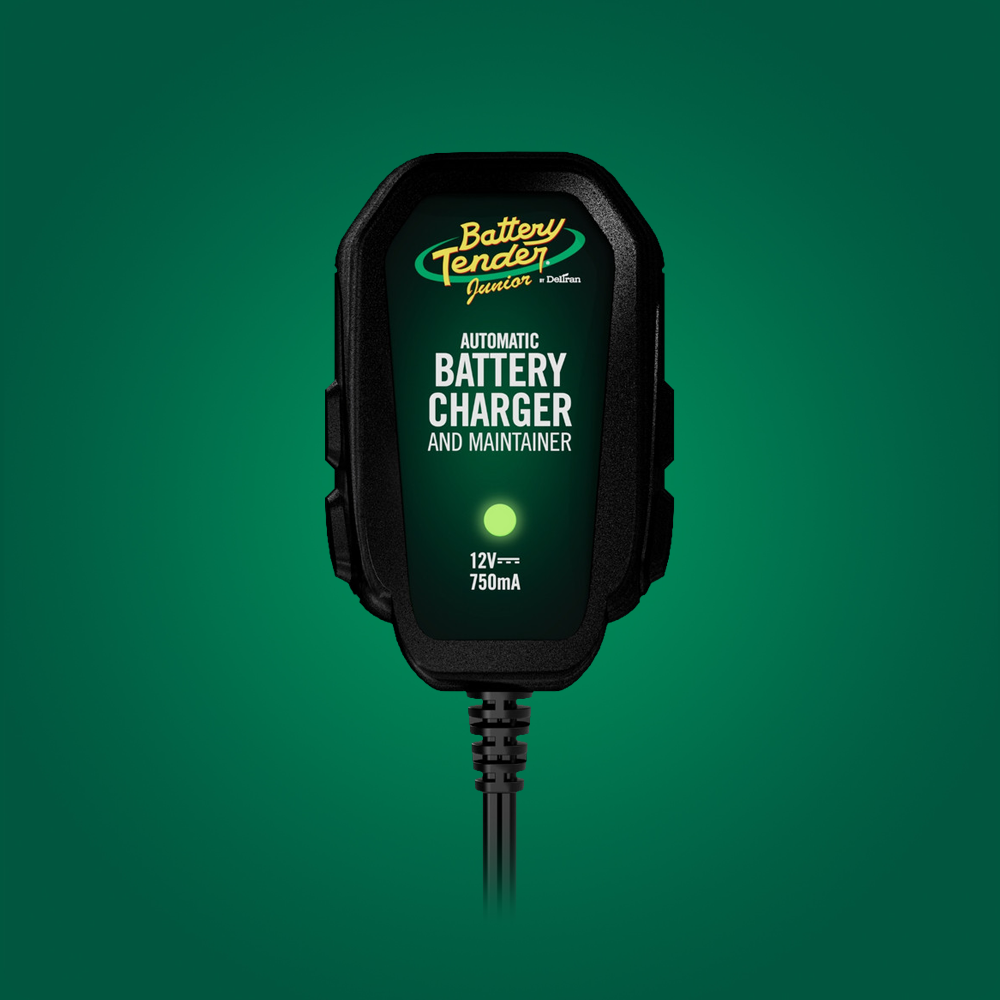
For Sportster and lighter Softail models: The Battery Tender Junior 1 AMP Selectable Battery Charger and Maintainer remains the most popular choice in the Harley-Davidson community for good reason. Its selectable chemistry mode ensures correct charging voltage for AGM batteries, and its four-stage charging algorithm—initialization, bulk charge, absorption, and ISM maintenance—protects battery health through every phase of the charge cycle. For a 12 Ah Sportster battery, the 1 AMP output delivers a complete charge in approximately 10–14 hours and then transitions automatically to float maintenance mode.
For Touring models and accessory-loaded Softails: The Battery Tender 3 AMP Power Tender Plus Battery Charger and Maintainer delivers the higher output needed to charge a 28 Ah touring battery in a reasonable timeframe—typically 10–16 hours depending on depth of discharge. The 3 AMP output is particularly valuable at the start of riding season when a touring battery may have experienced partial self-discharge despite being on a maintainer, requiring a more assertive reconditioning charge before the first long ride.
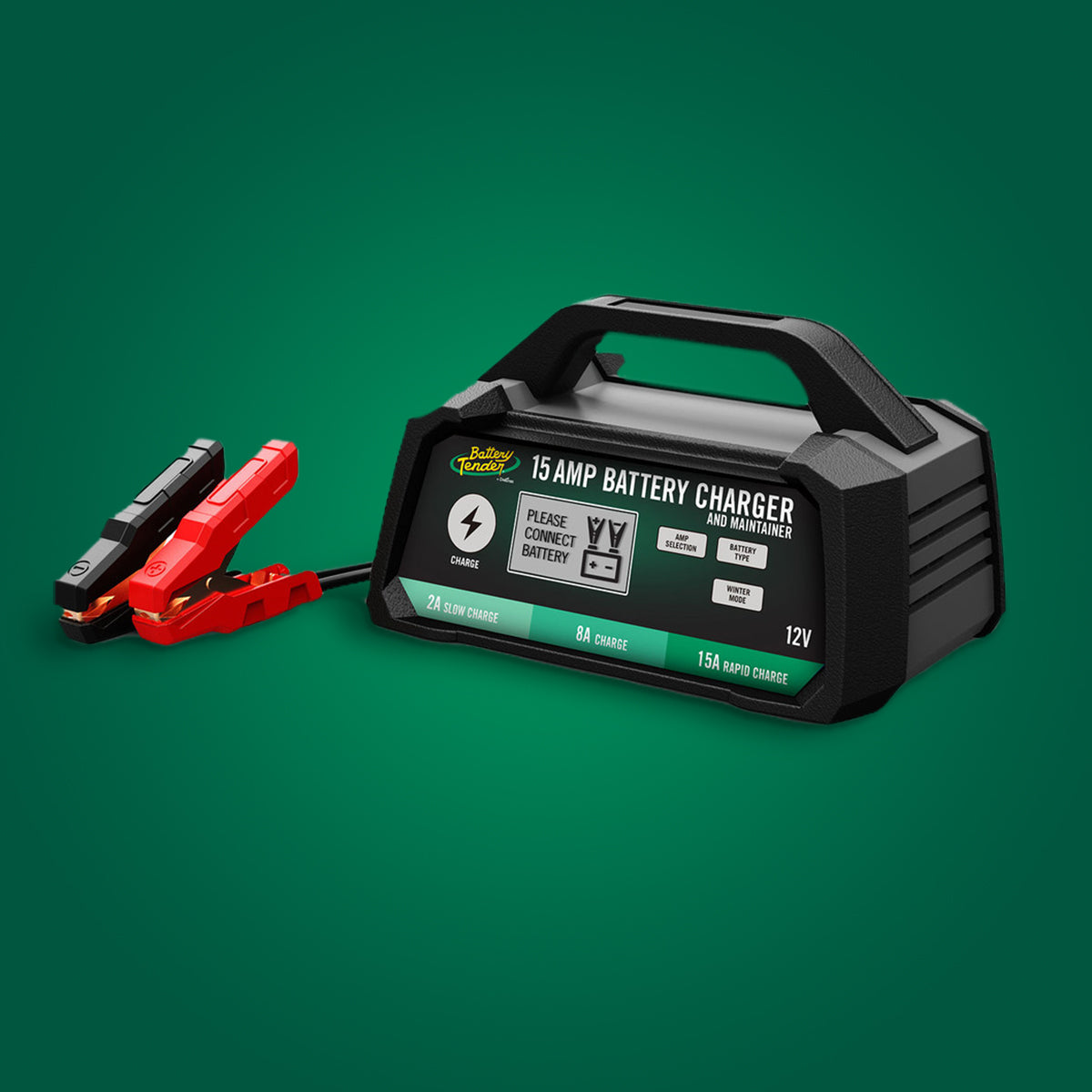
For riders who want maximum versatility: The Battery Tender 4 AMP Selectable Battery Charger and Maintainer handles every battery in the Harley-Davidson lineup with ease. Its selectable output and chemistry modes make it a single-charger solution for households with multiple models or mixed powersports equipment. The 4 AMP output brings even a deeply discharged 28 Ah touring battery back to full capacity efficiently without compromising the precision of the maintenance phase.
Harley-Davidson Battery Maintenance for Winter Storage
Proper winter storage is the single most impactful element of any Harley-Davidson battery maintenance routine. A battery that survives five or six winters in good condition represents significant savings compared to replacing a neglected battery every two years. The following steps reflect best practices for multi-month storage.
Step 1: Complete the final ride of the season. Ride the motorcycle long enough to bring the engine to full operating temperature. This burns off moisture that may have accumulated in the fuel system and ensures the battery receives a partial charge from the alternator before storage begins.
Step 2: Clean the motorcycle thoroughly. Salt, road grime, and moisture left on the chassis and electrical components accelerate corrosion during storage. Pay particular attention to the battery terminals and cable connections—clean any existing corrosion with a wire brush and apply a thin coat of dielectric grease to exposed terminal surfaces.
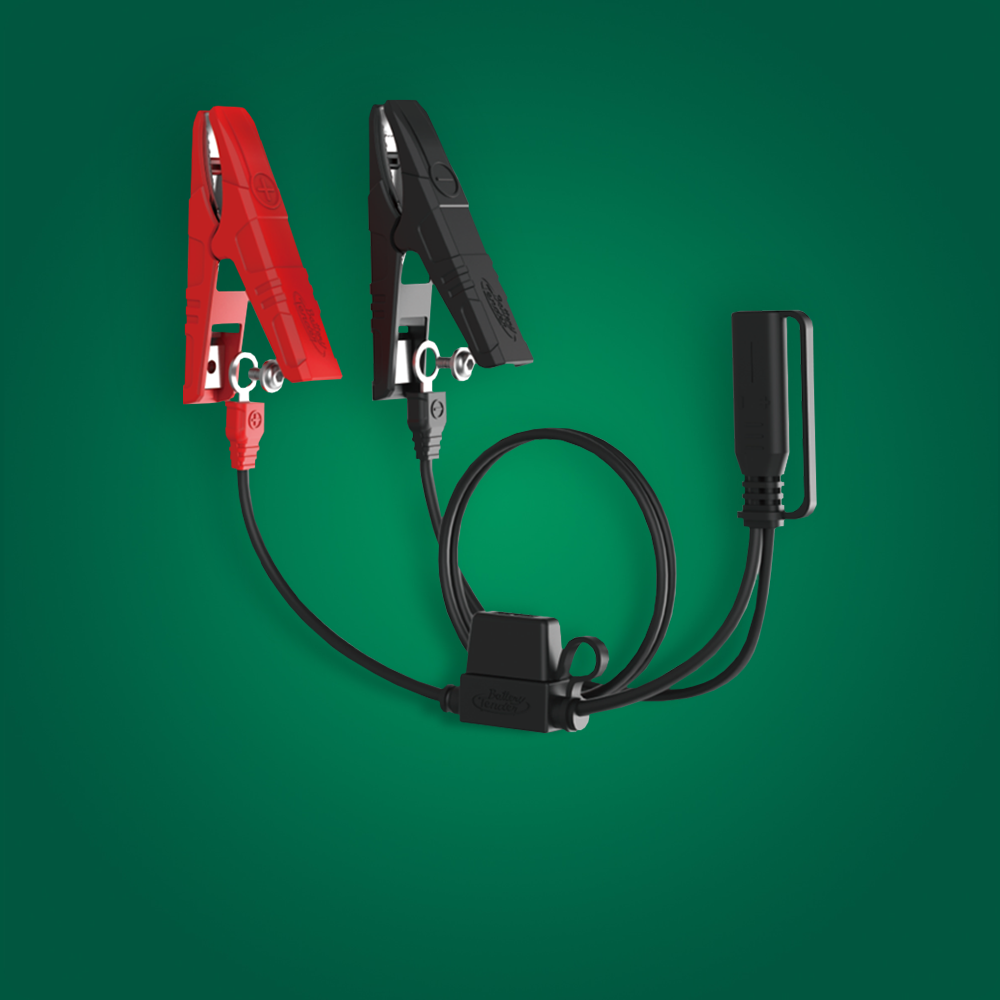
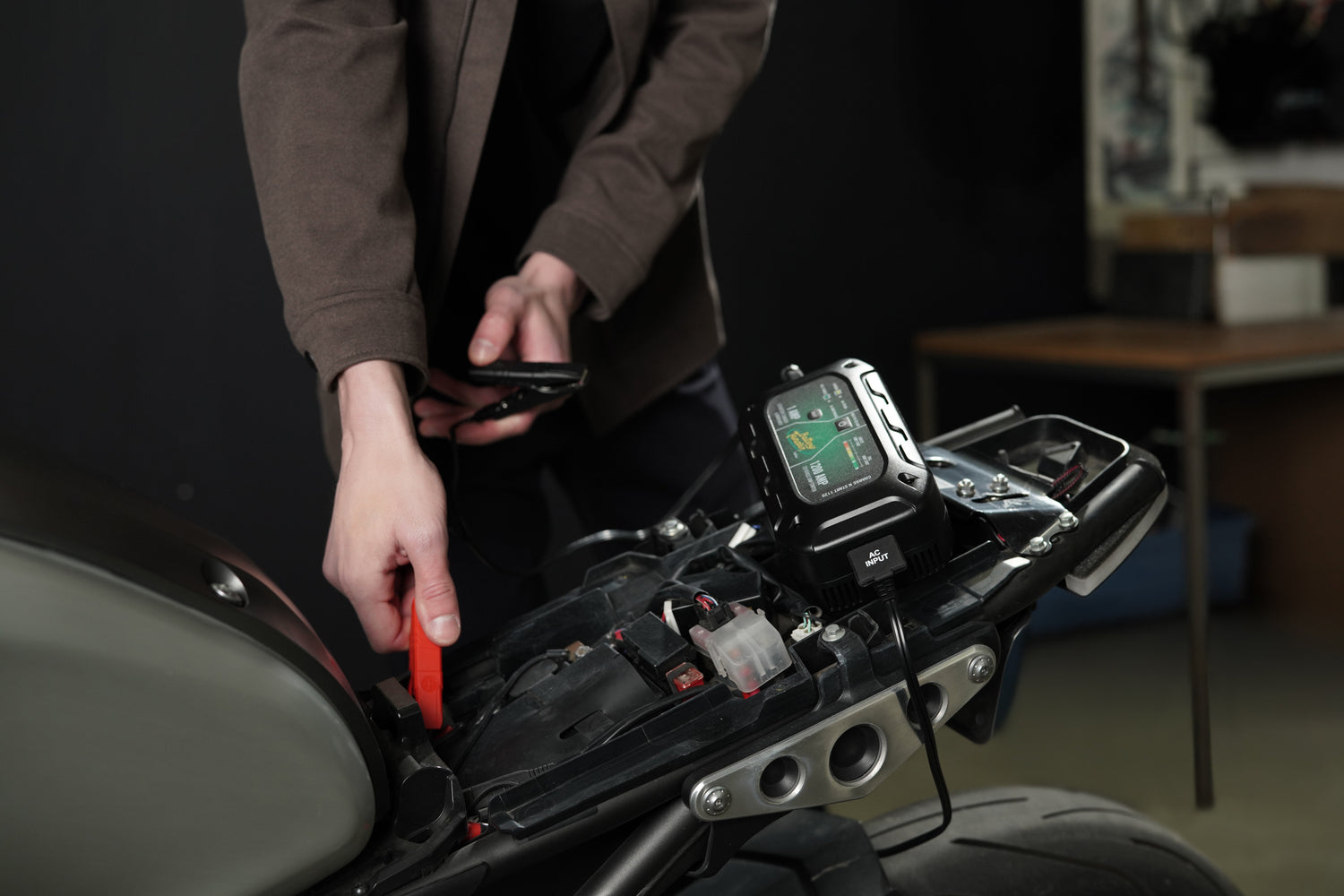
Step 3: Connect the Battery Tender charger using a ring terminal harness. The ring terminal harness included with Battery Tender chargers allows a permanent, tool-free connection point under the seat or in the battery compartment. With the harness installed, connecting and disconnecting the charger takes seconds and eliminates repeated handling of the battery terminals throughout the storage season.
Step 4: Leave the charger connected for the entire storage period. This is the most important step. The ISM (Input Sensing Mode) maintenance algorithm in Battery Tender chargers monitors battery voltage continuously and delivers a precision maintenance charge only when voltage drops to a threshold indicating self-discharge has occurred. The battery stays at 12.7–12.8V throughout storage without being overcharged, emerging in spring fully charged and ready to ride.
Step 5: Perform a spring startup check. Before the first ride of the season, inspect the battery terminals for corrosion, verify terminal tightness, and confirm that battery voltage reads 12.7V or higher with the charger disconnected. If voltage reads below 12.4V after disconnecting the charger, the battery may have developed a cell issue during storage and should be load-tested before any long ride.
Jump Starting a Harley-Davidson Safely
When a battery fails unexpectedly away from home, the temptation to grab jumper cables from a nearby car is understandable—but doing so creates serious risk. A running automobile's alternator produces unregulated voltage surges that can damage the ECM (engine control module), ABS module, digital instrument cluster, and infotainment system on modern Harley-Davidson motorcycles. Repair costs for ECM damage routinely exceed the cost of a quality jump starter by a significant margin.
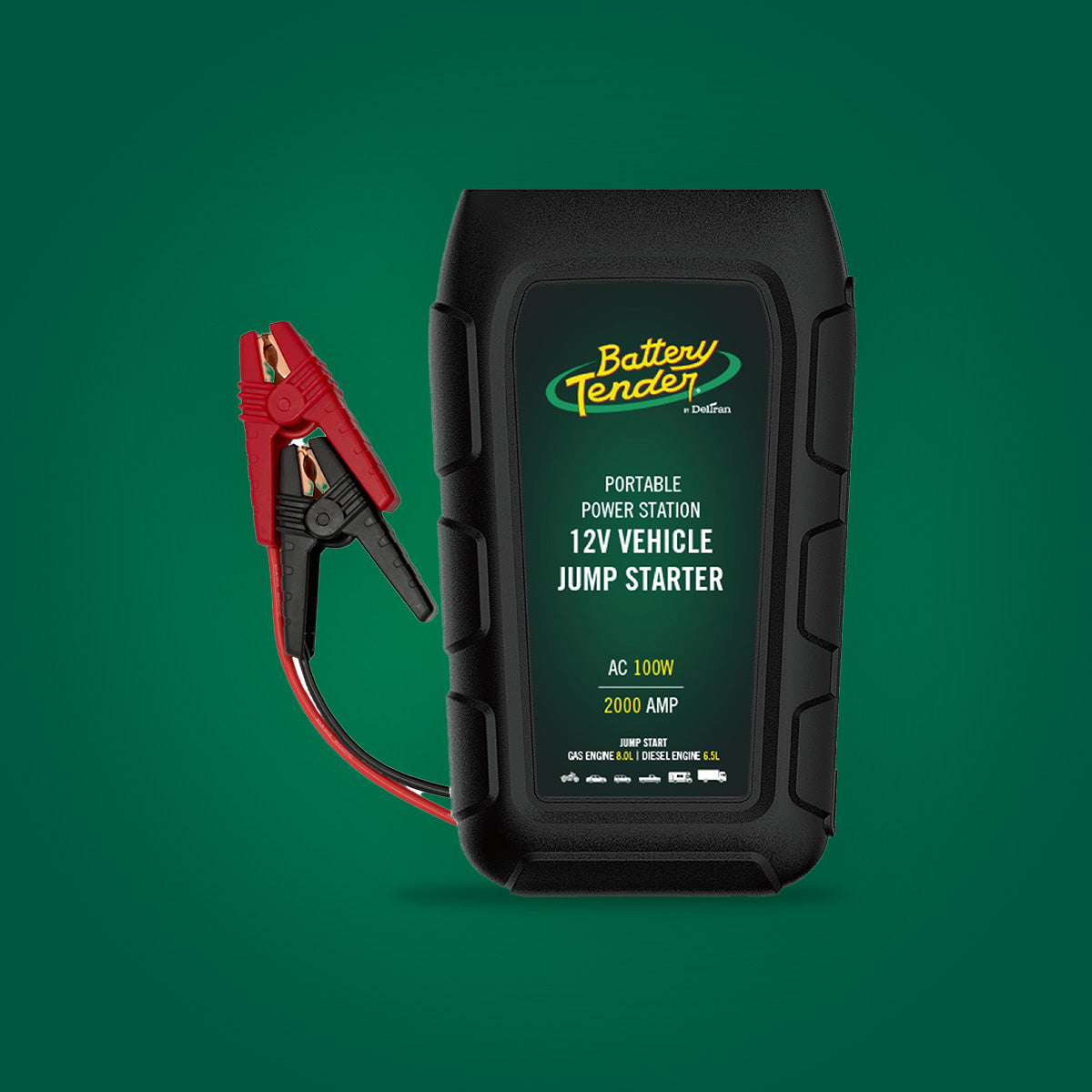
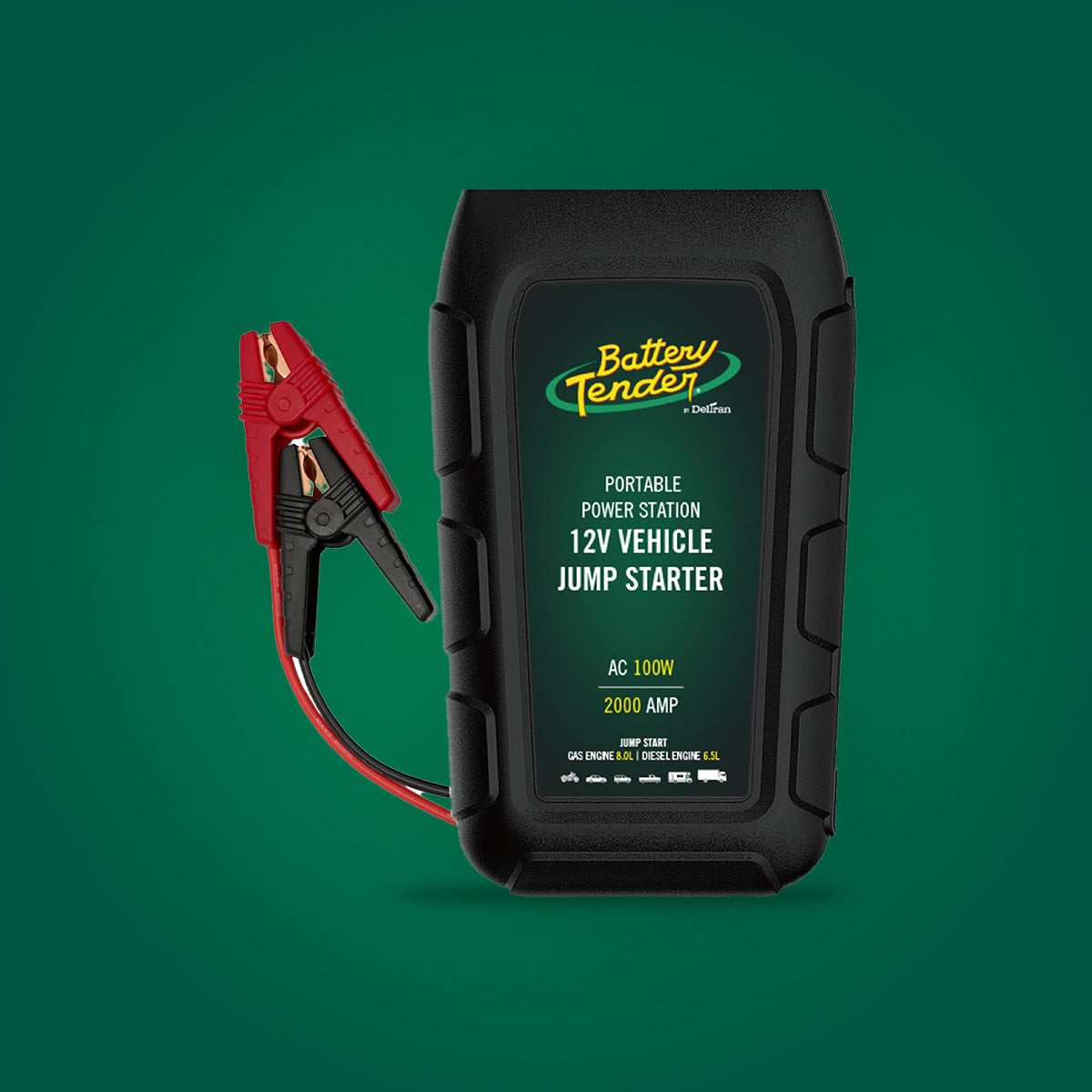
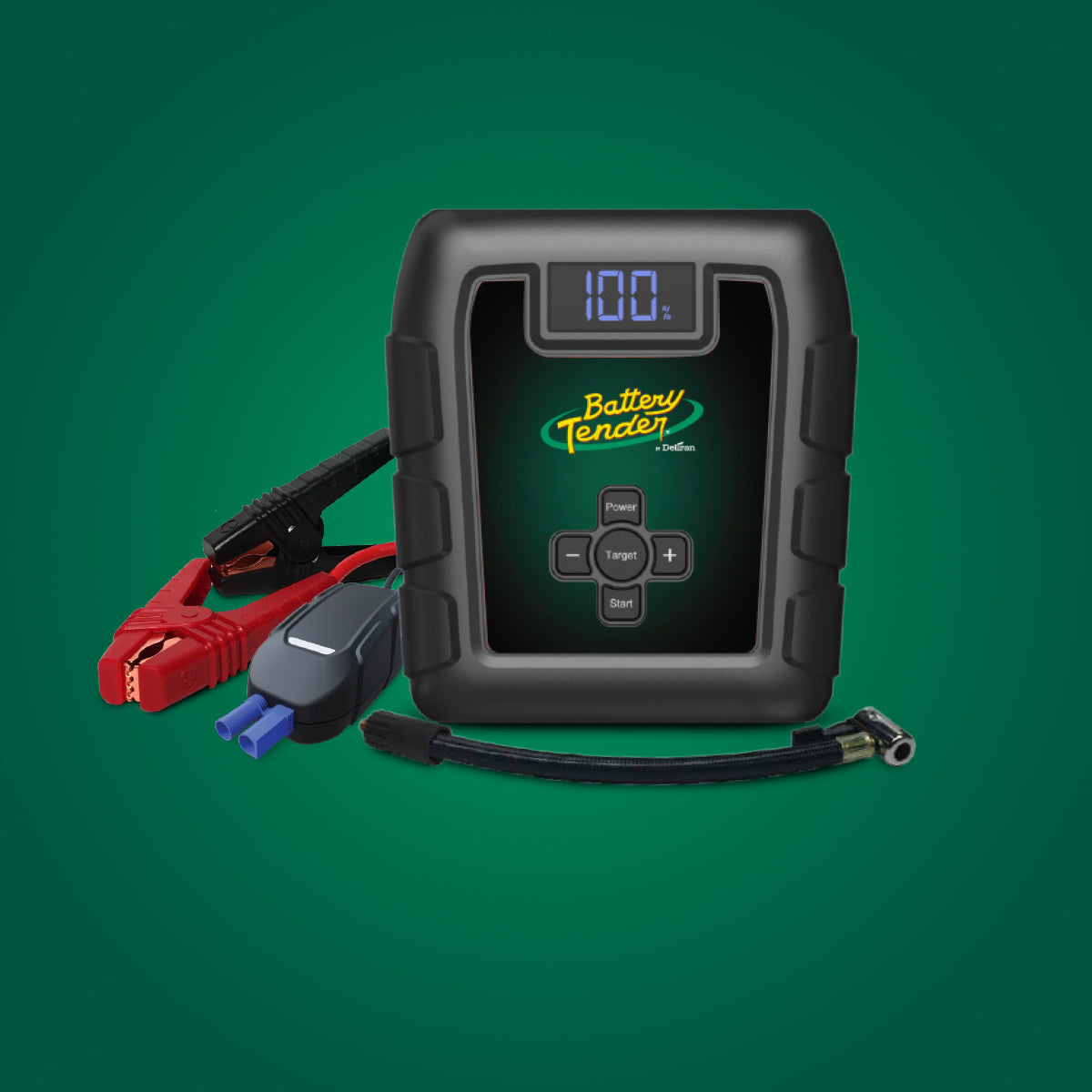
The Battery Tender Lithium Jump Starter and Power Bank solves this problem permanently. Compact enough to fit in a saddlebag, it delivers clean, regulated power specifically designed for powersports starting applications. Its built-in safeguards prevent the voltage spikes that make car-to-motorcycle jumper cable connections so risky, and its lithium construction means it holds a charge for months between uses—making it ready when it matters most.
Extending Battery Life: Harley-Davidson-Specific Tips
Beyond regular charging and winter storage routines, several practices specific to Harley-Davidson battery maintenance meaningfully extend battery service life.
Monitor parasitic draw from aftermarket accessories. Aftermarket audio amplifiers, alarm systems, and lighting controllers can draw current even with the ignition off. If a battery consistently drains faster than expected, a parasitic draw test with a multimeter will identify the source. Any draw exceeding 10–15 milliamps with all accessories off warrants investigation.
Check charging system output annually. The alternator and voltage regulator on a Harley-Davidson motorcycle should maintain charging voltage between 13.5V and 14.5V at highway cruise RPM. Voltage above 14.8V indicates a failing regulator that will damage the battery. Voltage below 13.0V means the alternator is not keeping pace with electrical loads, causing the battery to slowly discharge on every ride.
Avoid deep discharge cycles. AGM batteries tolerate occasional deep discharge but recover poorly from repeated deep discharge events. If a Harley-Davidson sits unused for more than two weeks without a maintainer connected, connect a Battery Tender charger before the next ride rather than relying on the alternator to recharge the battery during a short trip.
Tighten terminal connections at every service interval. Vibration from the V-twin engine works battery terminal fasteners loose over time. A loose terminal increases resistance at the connection point, generates heat, and can cause intermittent starting issues that are difficult to diagnose. Thirty seconds with a wrench at every oil change prevents this failure mode entirely.
FAQ: Harley-Davidson Battery Maintenance
How long does a Harley-Davidson battery last with proper maintenance?
A well-maintained AGM battery in a Harley-Davidson motorcycle typically lasts four to six years. Batteries that are regularly maintained with a quality charger, stored properly over winter, and kept free of deep discharge cycles consistently reach the upper end of that range. Neglected batteries—particularly those left uncharged through multiple winters—often fail within two to three years.
Can I leave a Battery Tender charger connected to my Harley-Davidson indefinitely?
Yes. Battery Tender chargers are specifically engineered for indefinite connection. The ISM maintenance algorithm prevents overcharging by monitoring voltage and delivering charge only when needed. Many Harley-Davidson owners leave a charger connected any time the motorcycle is not in use, not just during winter storage—this practice maximizes battery longevity regardless of season.
What voltage should a fully charged Harley-Davidson AGM battery read?
A fully charged AGM battery should read between 12.7V and 12.8V with no load and the charger disconnected. A reading of 12.4V indicates approximately 50% charge remaining. Any reading below 12.0V with no load suggests a battery that has been deeply discharged and may require a reconditioning charge cycle before returning to full service.
Does a Harley-Davidson alternator fully charge the battery during normal riding?
Under ideal conditions—highway riding at sustained RPM with minimal accessory load—yes. However, stop-and-go city riding, low-speed cruising, and heavy accessory use can result in a net discharge even with the engine running. This is particularly common on heavily accessorized touring models. Regular connection to a Battery Tender maintainer compensates for any deficit accumulated during normal riding.
Should I disconnect the battery when storing my Harley-Davidson for winter?
Disconnecting the battery reduces but does not eliminate self-discharge, and it also resets the ECM's learned parameters on fuel-injected models, which can result in rough running during the first few rides of the new season. The better approach is to leave the battery connected to the motorcycle and connect a Battery Tender charger to maintain it throughout storage—this preserves both battery charge and ECM memory simultaneously.
Is Harley-Davidson battery maintenance different for older carbureted models?
The core charging and storage principles are the same, but carbureted models—primarily pre-2007 Sportsters and older Evo-era motorcycles—do not carry the ECM vulnerability that makes car jumper cables so risky on modern fuel-injected bikes. That said, AGM battery chemistry remains consistent across model years, and a Battery Tender charger with selectable AGM mode is still the correct tool for proper maintenance regardless of whether the model is carbureted or fuel-injected.
Conclusion: Reliable Harley-Davidson Battery Maintenance Starts Here
Harley-Davidson battery maintenance is not complicated, but it does require attention to the specific demands of V-twin ownership—vibration management, accessory load awareness, and disciplined seasonal storage routines. A Battery Tender charger matched correctly to your model's battery capacity, combined with a ring terminal harness for convenient year-round connection, removes most of the risk from battery failure and extends service life well beyond what neglected batteries achieve. Whether you ride a Sportster, a Softail, or a fully loaded touring model, the investment in proper battery maintenance pays for itself many times over in reliable starts, extended battery life, and the confidence that comes from knowing your motorcycle is ready when you are.
Harley-Davidson®, Road King®, Street Glide®, Road Glide®, Ultra Limited®, Softail®, Sportster®, Nightster®, Dyna®, LiveWire®, Milwaukee-Eight®, and Twin Cam® are registered trademarks of Harley-Davidson Motor Company. Battery Tender is an independent brand and is not affiliated with, endorsed by, or sponsored by Harley-Davidson Motor Company.
Explore Battery Tender Powersports Battery Chargers and Maintainers