


Generac Generator Battery Maintenance: Keep Your Standby Generator Ready to Start
Generac generator battery maintenance is the single most important reliability practice for any standby generator owner. A standby generator exists for one critical moment — the instant grid power fails and your home needs backup power. Whether that moment arrives during a January ice storm or a summer hurricane, your generator has milliseconds to respond. The automatic transfer switch trips, the start signal fires, and everything depends on a single 12V lead-acid battery delivering enough cranking amps to spin the engine to life. If that battery is undercharged, cold-soaked, or quietly failing from months of neglect, your generator does nothing — and your family loses power at the most dangerous possible moment.
Battery Tender® smart charging and maintenance technology solves this problem permanently. A properly selected maintainer, continuously connected to your generator's starting battery, ensures a full charge is always present regardless of season, temperature, or how long it has been since the last exercise cycle. This guide explains exactly how standby generator batteries work, why they fail, and how to build a maintenance system that eliminates starting failure as a concern.
How Standby Generator Starting Batteries Work
Residential standby generators — Generac, Kohler, Briggs & Stratton, and Cummins models alike — use a conventional 12V lead-acid or AGM battery to power the starter motor and initiate the automatic starting sequence. This is the same fundamental battery chemistry used in automotive starting applications, sized to deliver high cold cranking amps (CCA) for a brief, intense burst of current.
Unlike a car battery that receives regular recharging from an alternator during daily driving, a standby generator battery sits in standby mode for the vast majority of its life. The generator's internal charging circuit replenishes some charge during the weekly automatic exercise cycle — typically a 20-minute run — but this brief run rarely provides the sustained, regulated charging that a lead-acid battery needs for long-term health. Between exercise cycles, the battery self-discharges at a slow but continuous rate. Over weeks and months, particularly in cold weather, this self-discharge accumulates into a meaningful capacity deficit.
The result is a battery that looks functional but carries only 75 to 85 percent of its rated capacity. Under normal conditions, this margin might be sufficient. During a winter outage when temperatures drop battery capacity by 20 to 40 percent, that same marginal battery may not have enough energy to complete a cold start.
Why Generator Batteries Fail at the Worst Possible Moment
The failure pattern for standby generator batteries is consistent and predictable. The battery is installed, the generator is commissioned, and for the first year or two everything works correctly. The weekly exercise cycle keeps the battery adequately charged, and the occasional real outage proves the system functional. Over time, however, sulfation begins accumulating on the battery's lead plates — a natural consequence of repeated partial discharge cycles without complete recharging. Capacity slowly degrades. Internal resistance climbs. Cold cranking performance drops below specification.
Because the generator starts successfully during every warm-weather exercise run, the degradation goes unnoticed. Then a major winter storm arrives. Temperatures drop to single digits. The transfer switch trips. The start signal fires. The battery, now at perhaps 60 percent of its original capacity and further reduced by cold temperatures, cannot deliver sufficient current to spin a cold engine. The generator fails to start. The failure that was building for two years reveals itself at precisely the moment it matters most.
Continuous smart charging with a Battery Tender maintainer addresses this failure mode at its root. By maintaining a full state of charge at all times, a properly connected maintainer prevents the partial-discharge cycles that cause sulfation, ensures maximum capacity is available for every start attempt, and extends overall battery service life significantly.
Generac Generator Battery Maintenance: Selecting the Right Battery Tender Maintainer
Generator starting batteries range from compact units in smaller residential generators to larger, higher-CCA batteries in whole-home systems. Matching the maintainer's output to the battery's capacity ensures effective maintenance without overcharging. For standby generator applications, a 3A to 5A output range strikes the ideal balance — fast enough to recover capacity lost between exercise cycles quickly, yet fully regulated for safe permanent connection.
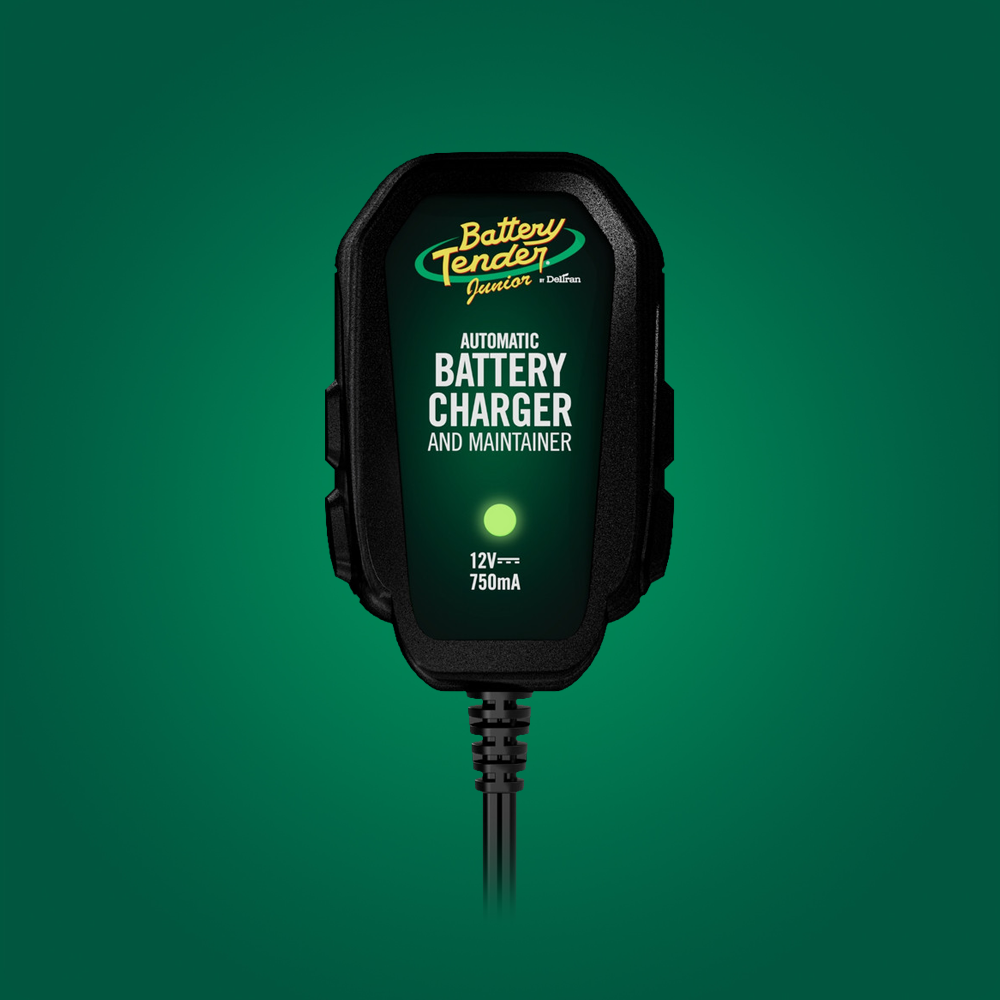
For most residential standby generators with standard 12V lead-acid or AGM starting batteries, the Battery Tender 4A 12V Charger and Maintainer is the recommended starting point. Its multi-stage charging algorithm — initialization, bulk charge, absorption, and float maintenance — delivers precisely the charge profile that lead-acid and AGM batteries need for long-term health. The 4A bulk charge rate restores capacity lost between exercise cycles far more efficiently than lower-amperage units, while the float stage holds voltage at the exact level that maintains full charge without gassing or overcharging. This makes it safe for permanent, unattended connection throughout every season — the core requirement for standby generator battery service.
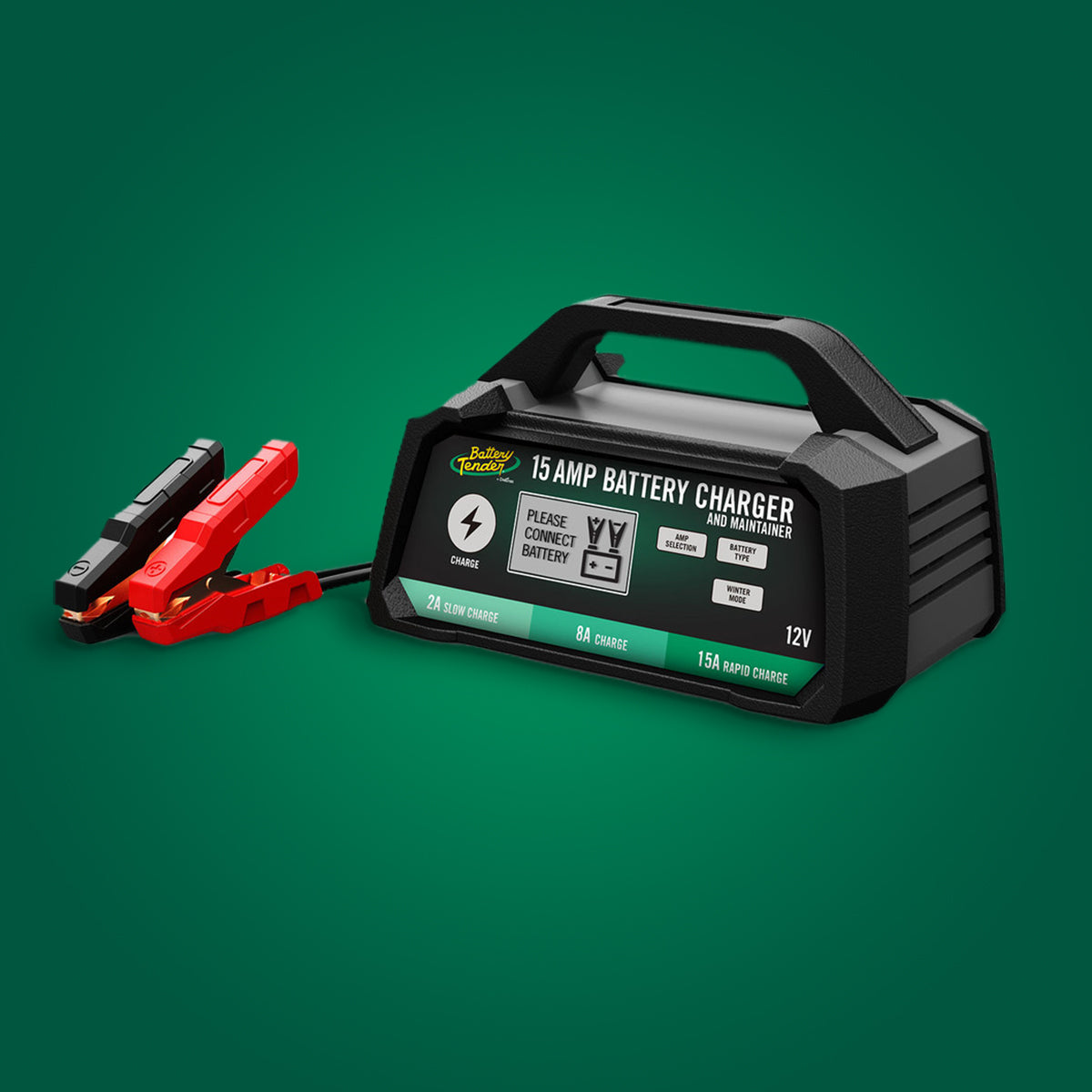
For larger whole-home generator installations with higher-CCA starting batteries, or for generators that run extended outage cycles that leave the starting battery more deeply discharged, the Battery Tender 8A/2A Charger and Maintainer (SKU 022-1005-DL-WH) provides an 8A bulk charge rate to recover deeply discharged batteries quickly before transitioning to precision float maintenance. The higher charge rate makes it the right tool for post-outage battery recovery, returning the battery to full capacity in a fraction of the time required by lower-output maintainers.
For generator installations where monitoring battery status remotely provides additional confidence, the Battery Tender Plus 12V with Bluetooth allows real-time charge status monitoring from a smartphone. For a generator installed in a detached outbuilding, behind landscaping, or otherwise out of regular line of sight, the ability to confirm battery charge status without physically accessing the unit delivers meaningful peace of mind between scheduled maintenance checks.
Installing a Permanent Battery Tender Connection on Your Generator
Effective generac generator battery maintenance requires a permanent, always-connected installation rather than periodic connection and disconnection. The practical method is installation of a ring terminal harness directly to the generator battery's terminals, routed to an accessible connection point on the generator enclosure.
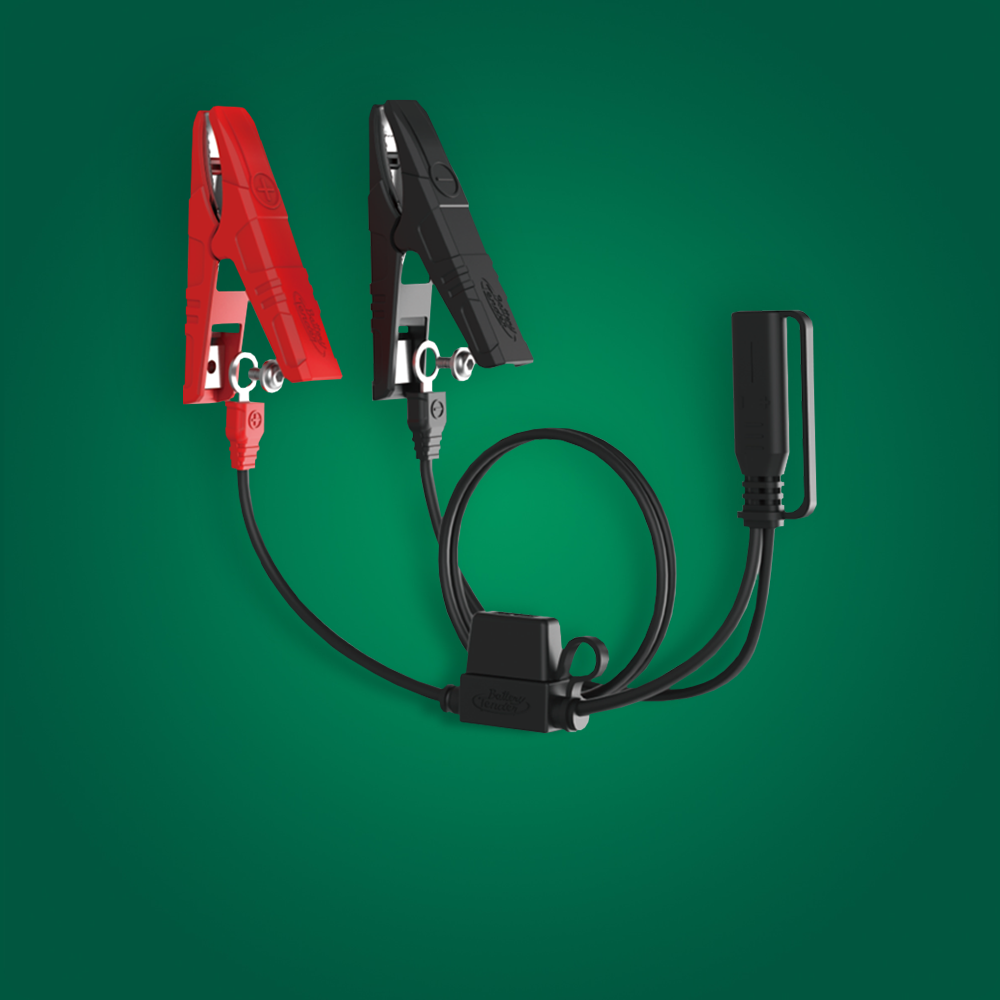
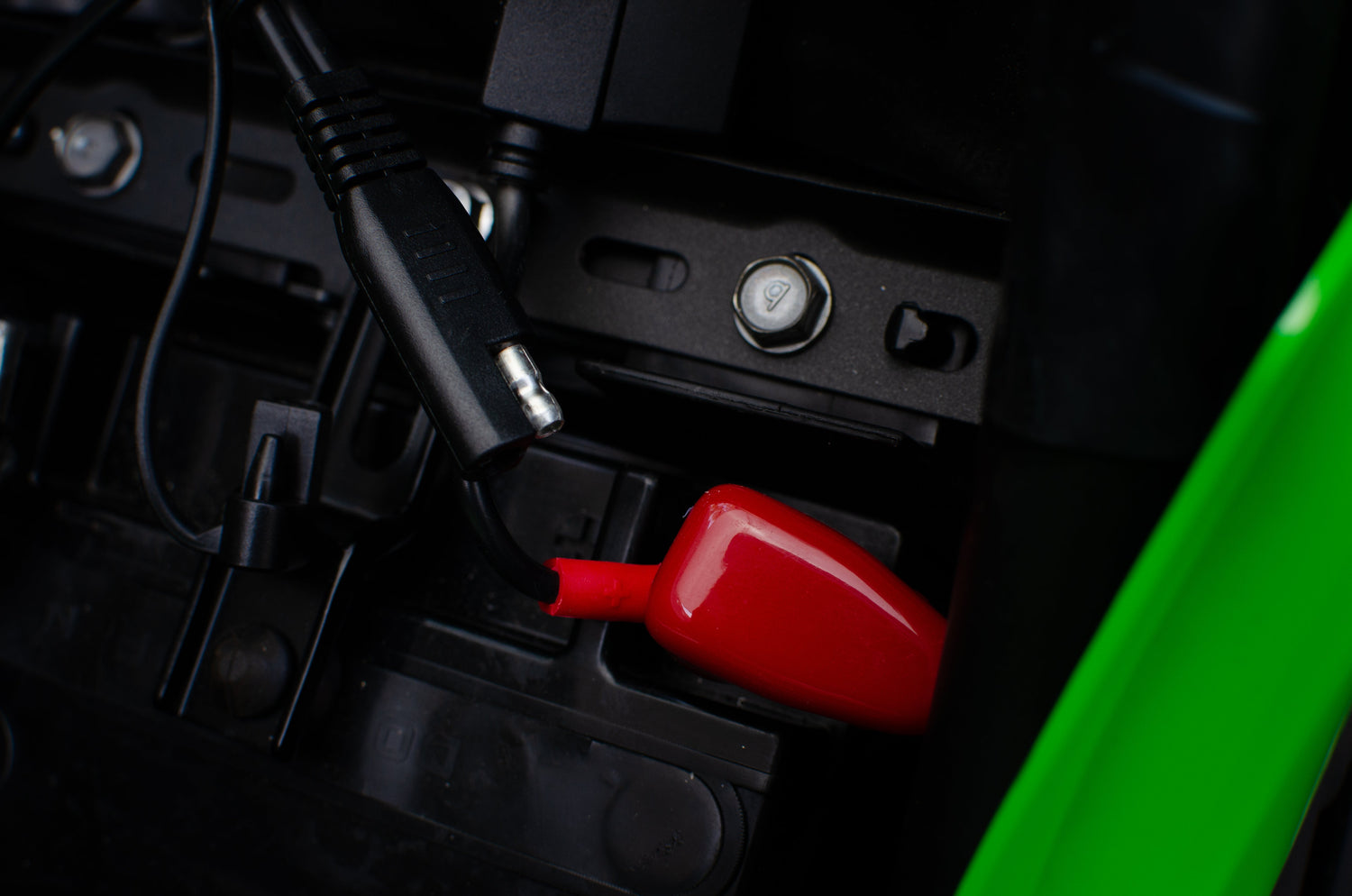
Battery Tender chargers include a ring terminal harness in addition to the standard alligator clip harness. The ring terminals attach directly to the battery's positive and negative posts using the same fasteners as the battery cables, providing a secure, corrosion-resistant connection that does not require opening the generator enclosure for routine charging. The harness connector — a weather-resistant two-pin connector — exits the enclosure through a small cable pass-through or existing wiring grommet and presents a convenient plug-in point on the outside of the generator housing.
The Battery Tender charger's output cable plugs into this connector and routes to a dedicated outlet — ideally a weatherproof outdoor outlet installed near the generator for exactly this purpose. With this permanent installation, the generator battery is maintained continuously without any ongoing effort. The charger's LED status indicators confirm active maintenance at a glance from outside the enclosure.
Important installation note: confirm that your specific generator model allows continuous external charging while connected to its internal charging circuit. Most major residential generators are compatible with simultaneous external maintenance charging, but the generator's installation manual should be consulted to verify. In all cases, Battery Tender's float maintenance voltage is within the safe operating range for standard 12V lead-acid and AGM batteries.
Cold Weather Generator Battery Performance
Cold temperature effects on battery chemistry are substantial and directly relevant to winter standby generator reliability. At 32°F (0°C), a lead-acid battery delivers approximately 80 percent of its rated CCA. At 0°F (-18°C), that figure drops to roughly 50 percent. A battery already sitting at 80 percent state of charge from self-discharge between exercise cycles, subjected to these temperature-related capacity reductions, may deliver only 40 percent of its rated cold cranking performance — well below what a cold generator engine requires.
A battery maintained at 100 percent state of charge by a Battery Tender maintainer enters cold weather with its full rated capacity available. Even at temperatures where battery chemistry is significantly impaired, a fully charged battery delivers substantially more cranking performance than a partially discharged one. In climates where winter storms are the primary driver of extended outages — exactly the conditions where standby generators earn their value — continuous battery maintenance is the single most impactful reliability improvement available.
Battery Maintenance as Part of a Complete Generator Service Plan
Continuous smart charging addresses the most common generator starting failure mode, but optimal reliability requires treating generac generator battery maintenance as one component of a broader service approach. Annual oil and filter changes, spark plug inspection, air filter service, and coolant checks for liquid-cooled models combine with battery maintenance to form a complete generator readiness program.
Within that program, battery service deserves particular attention. Battery terminals should be inspected annually for corrosion, cleaned with a baking soda solution if deposits are present, and treated with a terminal protector spray. Battery voltage should be measured under load periodically to confirm actual cranking capacity — a battery that reads 12.6V at rest but drops below 10V under load is failing internally and requires replacement regardless of its apparent resting charge.
Most generator manufacturers recommend replacing the starting battery on a 3-year cycle regardless of apparent condition. This schedule reflects the reality that battery capacity degrades gradually and invisibly until failure, and that the consequences of a failed generator start during a real emergency far outweigh the cost of a replacement battery. A continuous Battery Tender connection extends battery service life by preventing sulfation and maintaining optimal charge chemistry, but does not eliminate the need for eventual replacement as internal components age.
Frequently Asked Questions About Generator Battery Maintenance
Can I leave a Battery Tender connected to my generator battery indefinitely?
Yes. Battery Tender smart maintainers are specifically engineered for permanent, unattended connection. The float maintenance stage holds voltage at a level that keeps the battery fully charged without overcharging, gassing, or damaging battery chemistry. Many generator owners connect a Battery Tender during initial installation and leave it connected for the entire life of the battery.
Will an external maintainer interfere with the generator's internal charging circuit?
In most cases, no. Battery Tender maintainers regulate their output based on battery voltage, and the generator's internal charger operates independently. When the generator runs, its internal charger takes over active charging while the Battery Tender detects the elevated voltage and reduces its output accordingly. After the generator stops, the Battery Tender resumes maintenance charging. Consult your generator's installation manual to confirm compatibility for your specific model.
How do I know if my generator battery needs replacement versus maintenance charging?
A battery that has been in service for three or more years, or one that fails to hold a stable voltage above 12.4V after a full maintenance charge cycle, should be tested under load with a battery load tester or at a battery retailer. A battery that drops below 10.5V under a CCA-rated load is failing internally and should be replaced. A Battery Tender maintainer cannot recover a battery with damaged internal cell structure — replacement is the only solution in that case.
What is the correct battery size for a Generac standby generator?
Battery specifications vary by generator model and engine displacement. Consult your generator's owner manual or the Generac specification sheet for your model to identify the correct group size and minimum CCA rating. Generac's website also maintains a battery cross-reference tool organized by model number. Always match or exceed the factory CCA specification when replacing the starting battery.
Are Battery Tender chargers compatible with AGM generator batteries?
Yes. Battery Tender chargers in the 3A to 5A range are fully compatible with both standard flooded lead-acid and AGM batteries. AGM batteries benefit significantly from the precise float voltage control that Battery Tender maintainers provide, as AGM chemistry is more sensitive to overcharging than standard flooded batteries. The controlled multi-stage charging algorithm is particularly well-suited to permanent AGM battery maintenance in standby generator applications.
Why is a 3A to 5A charger better for generator batteries than a lower-amperage maintainer?
Generator starting batteries are typically larger-capacity batteries designed to deliver high CCA ratings. A 3A to 5A charge rate recovers capacity lost between exercise cycles efficiently — restoring a partially discharged generator battery in a matter of hours rather than days. Lower-amperage maintainers are better suited to smaller batteries or situations where the battery is already fully charged and needs only float-level top-off. For standby generator applications where real-world outage loads and infrequent exercise cycles create meaningful discharge between charges, the higher charge rate provides faster, more complete recovery.
Conclusion: Eliminate Generator Starting Failure with Continuous Battery Maintenance
The reliability of your standby generator ultimately depends on a single 12V battery performing flawlessly on demand. Every other component — the engine, the transfer switch, the automatic controls — performs correctly only if that battery delivers adequate cranking power at the moment of need. Generac generator battery maintenance through continuous smart charging is the most cost-effective, lowest-effort reliability improvement available for any standby generator installation.
A Battery Tender 4A 12V Charger and Maintainer connected through a permanently installed ring terminal harness ensures your generator's starting battery is at full charge every hour of every day, through every season, regardless of how long it has been since the last exercise cycle. When the outage arrives — and it will — your generator starts on the first attempt, every time.