





Why Classic Car Batteries Require Special Storage Care
The Vintage Vehicle Battery Challenge
Classic cars face unique battery vulnerabilities:
- Older electrical systems: Less efficient charging, higher resistance
- Lower alternator output: 35-45 amps vs. 90+ amps modern
- Parasitic drains: Analog clocks, poorly sealed systems
- Original 6V systems: Different storage requirements than 12V
- Irreplaceable components: Damage to vintage harnesses costly
Temperature impact on stored batteries:
- At 80°F: 100% capacity, 10% monthly self-discharge
- At 32°F: 65% capacity, 4% monthly self-discharge
- At 0°F: 40% capacity, 2% monthly self-discharge
- Below -20°F: Discharged battery freezes, case cracks
Cost of improper storage:
- Standard replacement battery: $150-200
- Vintage-correct battery: $300-600
- Electrical system damage: $500-2,000
- Irreplaceable wiring harness: $2,000-5,000+
Remove vs. Leave In: The Critical Decision
When to Remove Battery (Recommended for Most Classics)
Remove battery if:
- Stored in unheated garage/barn (below 50°F)
- Vehicle has aftermarket alarm system
- Classic has known parasitic drain issues
- Storage period exceeds 3 months
- No access to electricity for maintenance charger
- Battery is 3+ years old
Removal advantages:
- Store in temperature-controlled environment
- Easy to maintain with workbench charger
- Prevents parasitic drain from classic car systems
- Allows detailed battery inspection
- Protects against terminal corrosion from garage humidity
Proper removal procedure:
- Run engine 20 minutes to fully charge battery
- Negative terminal first (prevents shorts)
- Positive terminal second
- Clean both terminals with wire brush and baking soda solution
- Apply petroleum jelly to terminals for storage
- Store upright in plastic battery box
- Keep in heated space (basement, utility room)
When to Leave Battery In (With Maintenance Charger)
Leave installed if:
- Heated garage storage (above 50°F)
- Permanent charger installation
- Storage period under 3 months
- Battery less than 2 years old
- Classic driven monthly even in winter
- Convenience outweighs slight risk
Leave-in requirements:
- Maintenance charger connected
- Monthly voltage verification
- Visual inspection for corrosion
- Garage humidity control
- Fire extinguisher accessible (charging safety)
Recommended for permanent installation:
- Weather Resistant 800mA - $64.95
- Automatic maintenance charging
- Won't overcharge even if left connected 6+ months
- ISM technology adapts to battery condition
- 10-year warranty, 60-year proven design
Temperature-Controlled Storage Strategies
Indoor Storage (Ideal)
Optimal storage environment:
- Temperature: 50-70°F consistent
- Humidity: 40-60% relative humidity
- Ventilation: Moderate air circulation
- Surface: Wood shelf or plastic battery box
- Safety: Away from living spaces, HVAC systems
Best locations:
- Heated basement utility area
- Climate-controlled garage
- Workshop or hobby room
- Avoid: Near furnace, water heater, or open flame
Storage preparation:
- Fully charge battery (12.6V+ for 12V, 6.3V+ for 6V)
- Clean and dry battery exterior
- Check electrolyte level (flooded batteries)
- Apply terminal protectant
- Place in ventilated battery box
- Connect a maintenance charger if available
- Monthly voltage checks
Unheated Garage Storage (Acceptable with Precautions)
When garage storage is necessary:
- Install insulated battery box
- Elevate off concrete floor (wood platform)
- Maintenance charger connected continuously
- Increased monitoring frequency
- Consider battery blanket in extreme cold
Cold weather considerations:
- Fully charged 12V battery won't freeze until -76°F
- Partially discharged battery freezes at higher temps
- 50% charged battery freezes at 10°F
- Keep battery above 12.4V to prevent freeze damage
For garage storage:
- Battery Tender Plus 1.25 AMP 12V Battery Charger and Maintainer - $64.95
- Fully weatherproof for garage use
- Lower amperage for smaller classic batteries
- Can operate in freezing temperatures
- Ideal for 6-month+ storage periods
Vehicle Stored Off-Property (Storage Unit, Barn)
No electricity available:
- Remove battery completely
- Store at home in controlled environment
- Monthly maintenance charging
- Reinstall in spring after full charge
- Document removal date for reference
Solar charging option:
- 17W Solar Panel with charge controller
- No electricity required
- Mounts on dashboard or exterior
- Maintains charge in sunny climates
- Ideal for long-term storage facilities
6-Volt vs. 12-Volt Storage Differences
Classic 6V Systems (Pre-1955)
Special considerations:
- Smaller capacity, faster self-discharge
- Full charge voltage: 6.3-6.4V
- Maintenance charge: 6.8-7.0V
- More susceptible to sulfation
- Harder to find quality replacements
6V storage requirements:
- Check voltage every 2 weeks (vs. monthly for 12V)
- Use 6V-compatible charger
- Never connect 12V charger (permanent damage)
- Store in warmer environment if possible
Recommended for 6V systems:
- Battery Tender Plus 1.25 AMP 6V - $54.95
- Dedicated 6V charging
- Same ISM technology for vintage systems
- Prevents overcharging of smaller capacity batteries
Alternative for both 6V and 12V:
- Battery Tender Plus 1.25 AMP Selectable 6V/12V - $84.95
- Switch between 6V and 12V systems
- One charger for mixed classic collection
Converting 6V to 12V Systems
For heavily modified classics:
- 12V conversion provides better storage options
- More charger model choices
- Easier to maintain and find replacements
- Consider if original correctness not required
Spring Revival Procedure
Pre-Start Battery Inspection (Week Before First Drive)
Visual assessment:
- Check for cracks, leaks, or physical damage
- Inspect terminals for heavy corrosion
- Look for bulging battery case
- Verify hold-down is secure
- Check ground cable connection
Voltage testing:
- Battery should read 12.6V+ if maintained properly
- Below 12.4V: Charge overnight before starting
- Below 12.0V: Extended charging or replacement needed
Load testing:
- Take to auto parts store for free load test
- Applies 1/2 CCA load for 15 seconds
- Voltage shouldn't drop below 9.6V
- Confirms battery can handle actual starting
First Start After Storage
Preparation steps:
- Reconnect battery (positive first, then negative)
- Don't start immediately
- Turn ignition to ON (not start)
- Allow fuel pump to prime (30 seconds)
- Check all warning lights
- Turn key to START
If engine won't crank:
- Don't repeatedly attempt (damages starter)
- Check battery voltage under load
- Verify all connections tight
- Charge battery 2-4 hours and retry
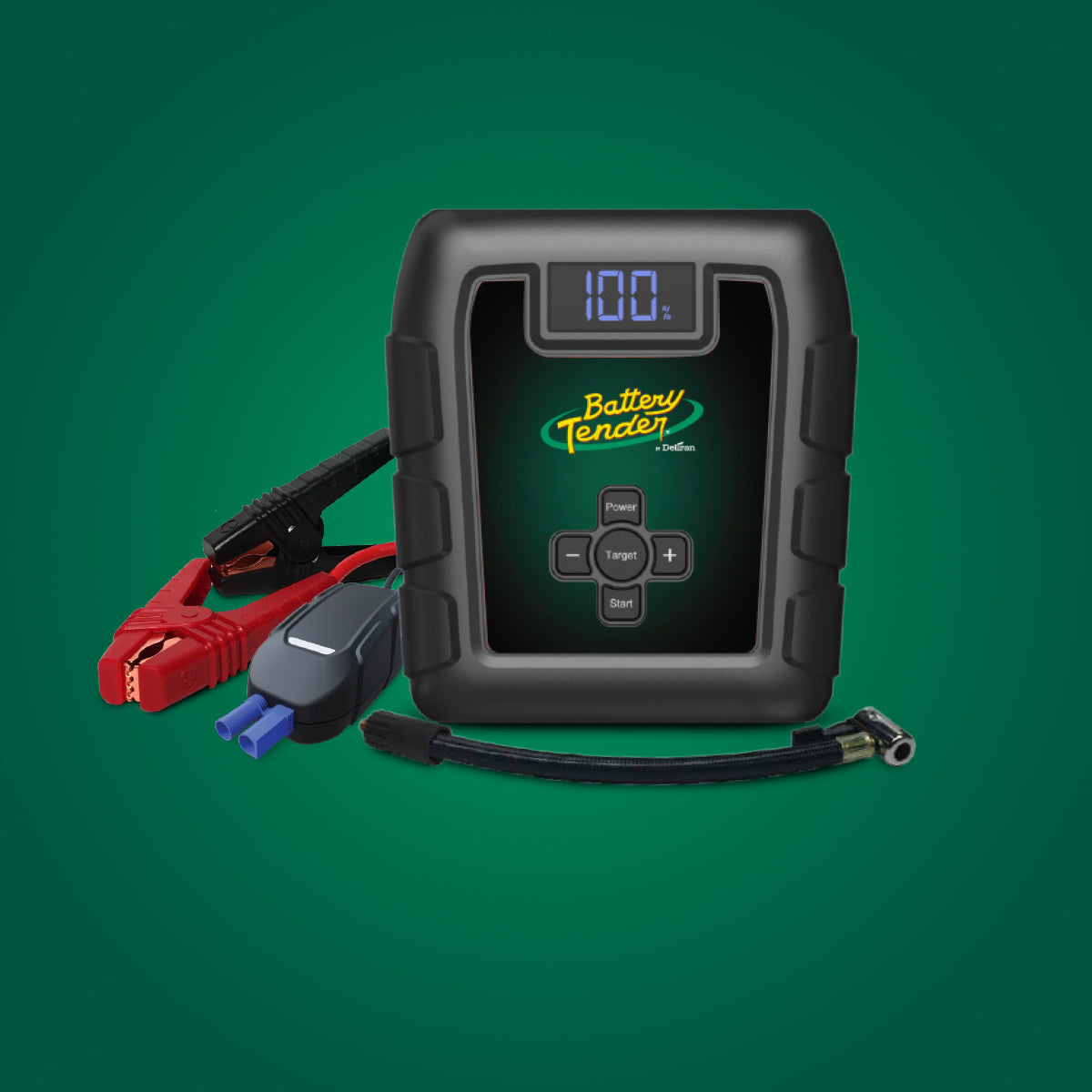
- Consider jump start from known good battery or a portable jump pack
Post-start monitoring:
- Let engine run 20+ minutes
- Check alternator voltage: 13.8-14.4V
- Listen for unusual electrical sounds
- Verify all gauges functioning
- Test lights, accessories, horn
Spring Break-In Period
First week after storage:
- Daily voltage checks before starting
- Monitor for slow cranking
- Watch for electrical glitches
- Check battery terminal tightness
- Consider replacing if 5+ years old
First month back in service:
- Weekly voltage testing
- Monthly maintenance charge even with regular driving
- Monitor for warning signs
- Document battery performance
Classic Car-Specific Storage Scenarios
Scenario 1: Show Car (Driven 6-8 Times Yearly)
Storage profile:
- 90% of year in garage
- Driven to local shows only
- Concours-level maintenance required
- Original electrical system preserved
Recommended solution:
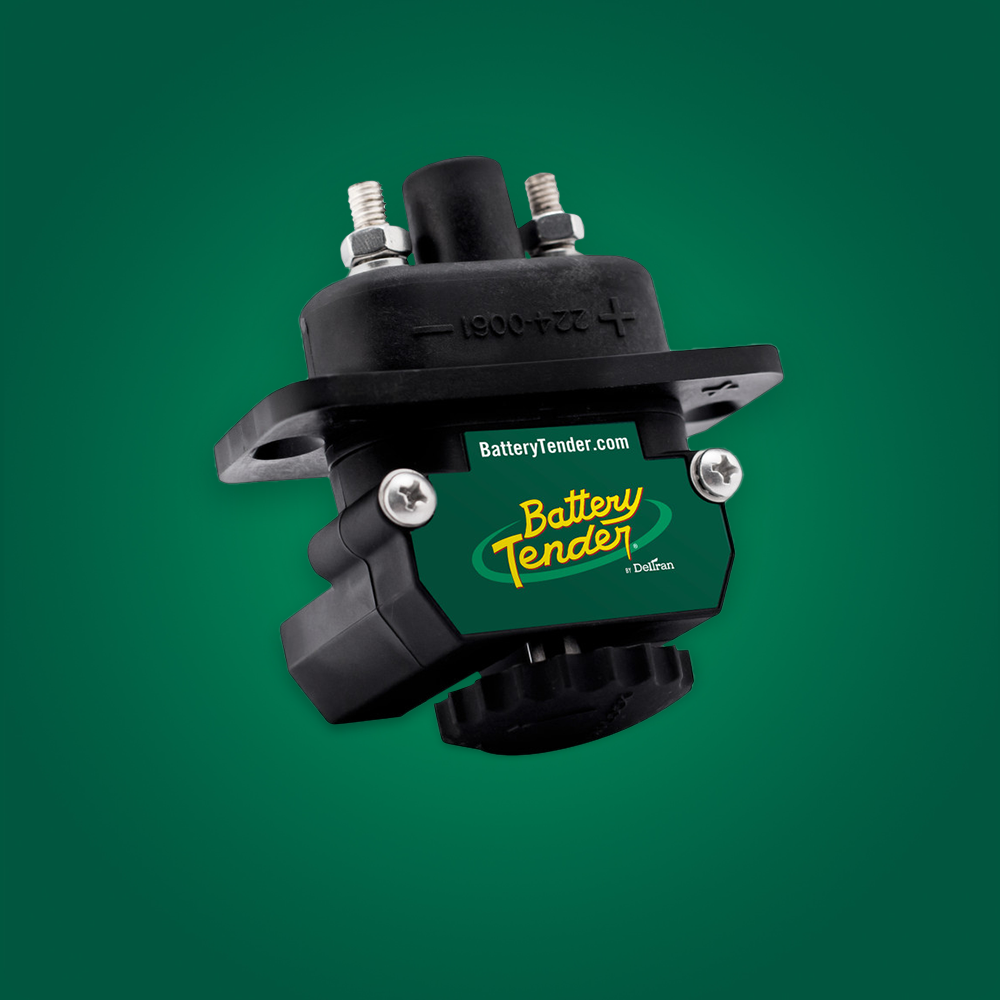
- Battery Tender Plus 1.25 AMP 12V permanent installation with Quick Disconnect
- Connected 24/7 except show weekends
- Monthly voltage documentation
- Annual battery replacement preventatively
Total annual cost: $13 (charger amortized) + $0 (extended battery life) = $13
Scenario 2: Restored Muscle Car (Weekend Driver March-October)
Storage profile:
- 8 months active use
- 4 months winter storage (Nov-Feb)
- Modern alternator and battery
- Some electrical upgrades
Recommended solution:
- Battery Tender Plus 1.25 AMP 12V for winter only
- Remove and store indoors November
- Monthly home charging schedule
- Reinstall in March with full charge
Total annual cost: $15 (winter electricity) + $40 (battery replacement fund)
Scenario 3: Driver-Quality Classic (Regular Use Year-Round)
Storage profile:
- Fair-weather daily driver (above 40°F)
- Stored during storms/salt season
- Frequent short trips (under 15 minutes)
- Upgraded electrical system
Recommended solution:
- Weekly overnight charging during active season
- Battery Tender Plus 1.25 AMP with 12' extension
- Permanent installation for bad weather periods
- Monthly voltage tracking year-round
Total annual cost: $5/month electricity = $60 annual
Scenario 4: Barn Find Under Restoration
Storage profile:
- Non-running during restoration
- Battery dead when acquired
- Electrical system condition unknown
- Long-term project (1-3 years)
Recommended solution:
- New battery with storage in mind
- AGM battery (sealed, no maintenance)
- 4 AMP Power Tender for faster charging when needed
- Storage on restoration workbench
Replacement strategy:
- Don't install battery until ready to start
- Store new battery properly from purchase
- Test charging system before installing battery
- Budget for quality battery ($200-300)
Troubleshooting Storage Battery Problems
Battery Won't Hold Charge During Storage
Possible causes:
-
Sulfation from previous neglect
- Recovery mode helps
- May require 48+ hours continuous charging
- If unsuccessful, replacement needed
-
Internal short circuit
- One cell fails, battery reads ~10.5V instead of 12.6V
- Cannot be repaired
- Immediate replacement required
-
Parasitic drain in classic car
- Clock drawing power
- Aftermarket stereo memory
- Poor ground creating drain path
- Test: measure amperage with car "off"
-
Faulty charger unit
- Rare but possible
- Test with multimeter during operation
- Should show 13.2-14.4V during charging
- Contact manufacturer for warranty replacement
Battery Froze During Storage
Symptoms:
- Bulging battery case
- Cracks in plastic housing
- Electrolyte leaked out
- Will not accept charge
Cause: Battery discharged below 12.0V before freezing temps
Solution:
- Battery is destroyed, replace immediately
- Do not attempt to charge or jump start
- Clean any spilled electrolyte carefully
- Prevent: Keep battery above 12.4V always
Classic Car Won't Start After Proper Storage
If battery tests good (12.6V+) but car won't crank:
- Starter solenoid: Common failure on classics
- Corroded ground connection: Clean battery ground to engine
- Ignition switch: Worn contacts in older switches
- Neutral safety switch: Prevents starting in gear
- Fuel system: Empty carburetor bowls, stale gas
If car cranks but won't fire:
- Points/condenser: Moisture in distributor (pre-electronic ignition)
- Spark plugs: Fouled from storage
- Carburetor: Varnished jets from old fuel
- Ignition coil: Failed during storage
Battery is rarely the culprit if voltage and cranking power are good.
Long-Term Battery Storage (1+ Years)
For Extensive Restorations
Special long-term considerations:
- Remove battery entirely from vehicle
- Store at home in climate control
- Charge every 2 months minimum
- Consider replacement after 2 years stored
- Don't install until ready to start project
Cost-benefit analysis:
- New battery: $150-300
- Proper storage maintenance: $20/year electricity
- If restoration takes 3+ years, plan on new battery anyway
- Don't waste effort maintaining battery for very long projects
Battery Replacement Timing
Replace battery preventatively if:
- Storage period exceeds 2 years
- Battery age exceeds 5 years total
- Voltage won't stabilize at 12.6V+
- Physical damage visible
- Load test fails
- Classic car is high-value (risk mitigation)
Original-style battery sources:
- Vintage-correct cases with modern internals
- Reproductions for concours showing
- Budget $200-600 for correct appearance
Product Recommendations for Classic Car Storage
Best Chargers for Long-Term Storage
For Standard 12V Classic Cars:
-
Battery Tender Plus 1.25 AMP 12V - $64.95
- Ideal for most classic cars with standard 12V systems
- Storage time: Unlimited continuous connection
- Features: ISM technology, 10-year warranty, weatherproof
- 60 years proven in classic car applications
For 6V Vintage Systems:
-
Battery Tender Plus 1.25 AMP 6V - $54.95
- Dedicated 6V charging for pre-1955 vehicles
- Prevents overcharging of smaller capacity batteries
For Mixed Collections:
-
Battery Tender Plus 1.25 AMP Selectable 6V/12V - $84.95
- Switch between 6V and 12V as needed
- One charger for multiple vehicles
For Smaller Classics or Budget-Conscious:
-
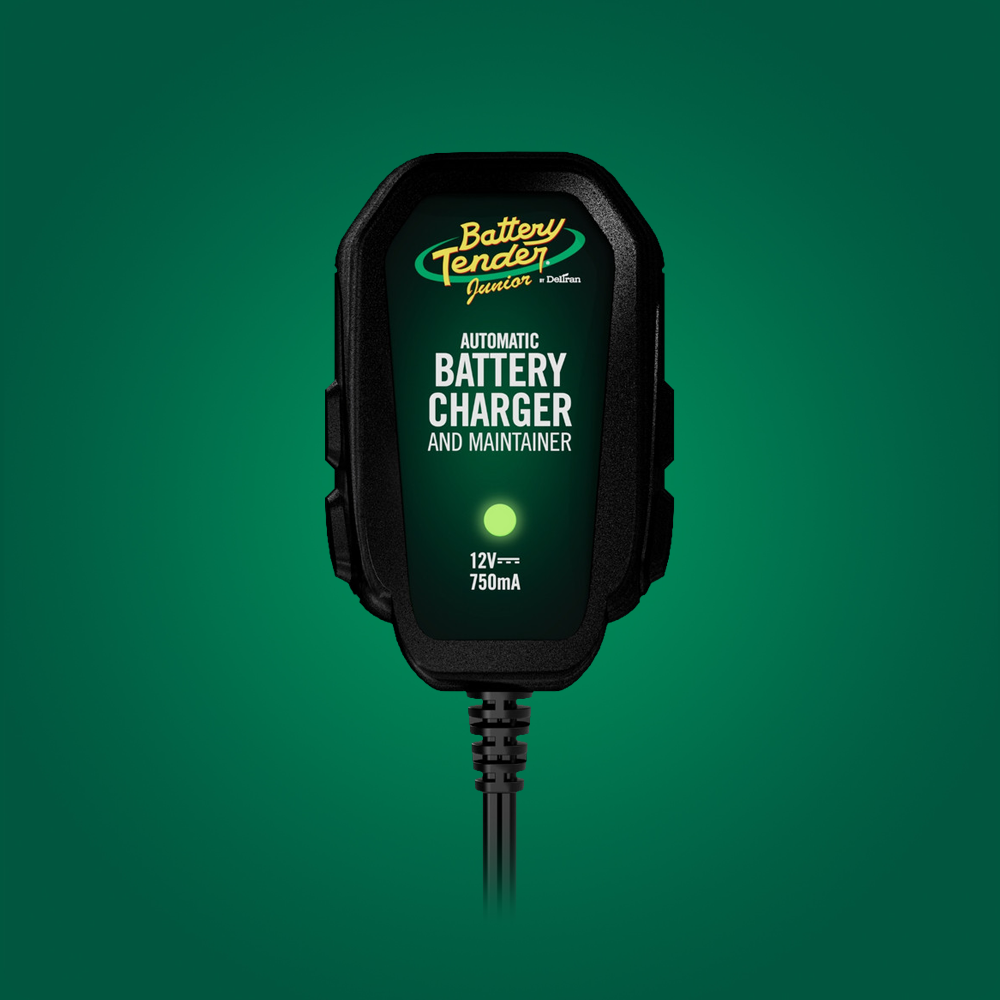
Battery Tender Junior 750mA - $44.95
- Compact, portable, basic maintenance
- Budget-friendly for occasional use
For Collections with Multiple Classics:
- 2-Bank 1.25 AMP - $139.95
-
4-Bank 1.25 AMP - $234.95
- Charge multiple classics simultaneously
- Permanent installation per vehicle
- Set-and-forget convenience
Visit the Classic Cars page for the complete selection.
Essential Accessories for Classic Storage
Quick Disconnect Systems:
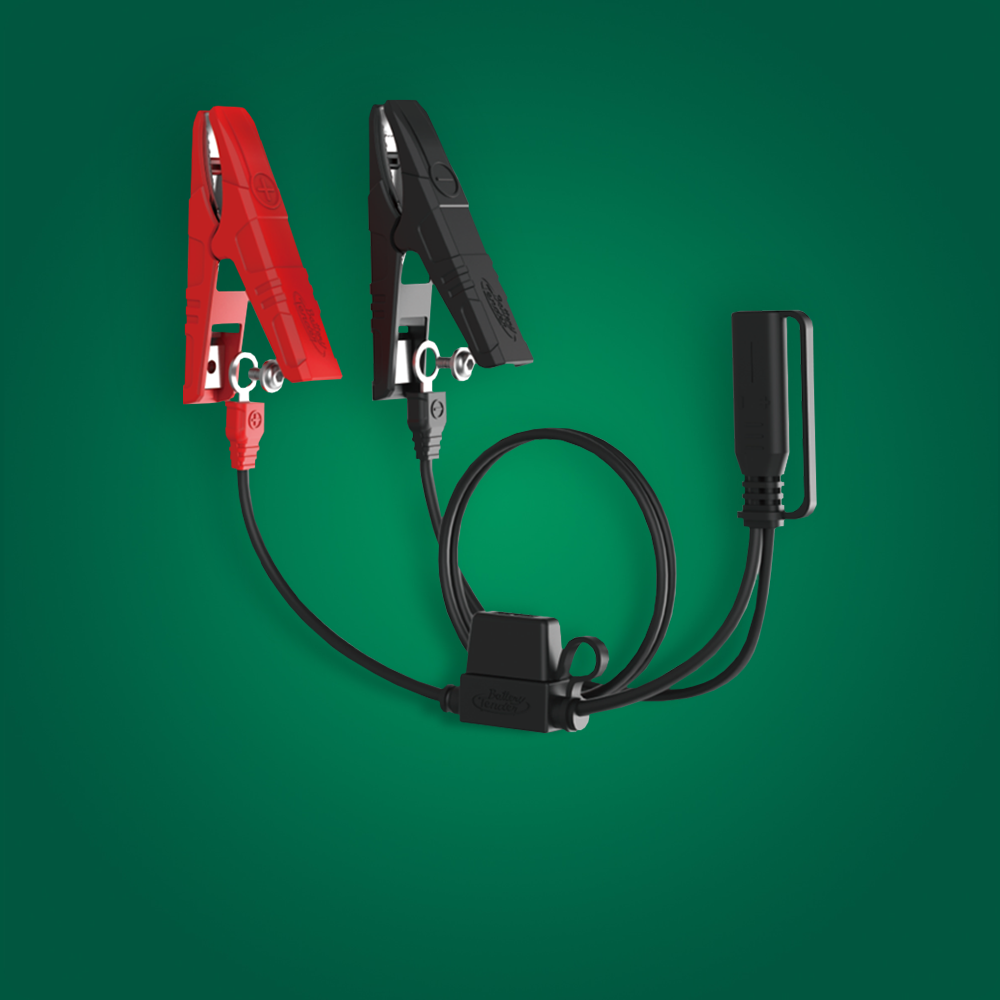
- Alligator Clip and Ring Terminal Combo - $15.95
- Ring terminal installation (permanent)
- Fused connections for safety
- Weatherproof connectors
- Tool-free connect/disconnect
Extension Cables for Collections:
- 12 Foot Extension Cable 4 Pack - $62.95
- 25 Foot Extension Cable 4 Pack - $104.95
- Perfect for multiple vehicles in large garage
Emergency Jump Starting:
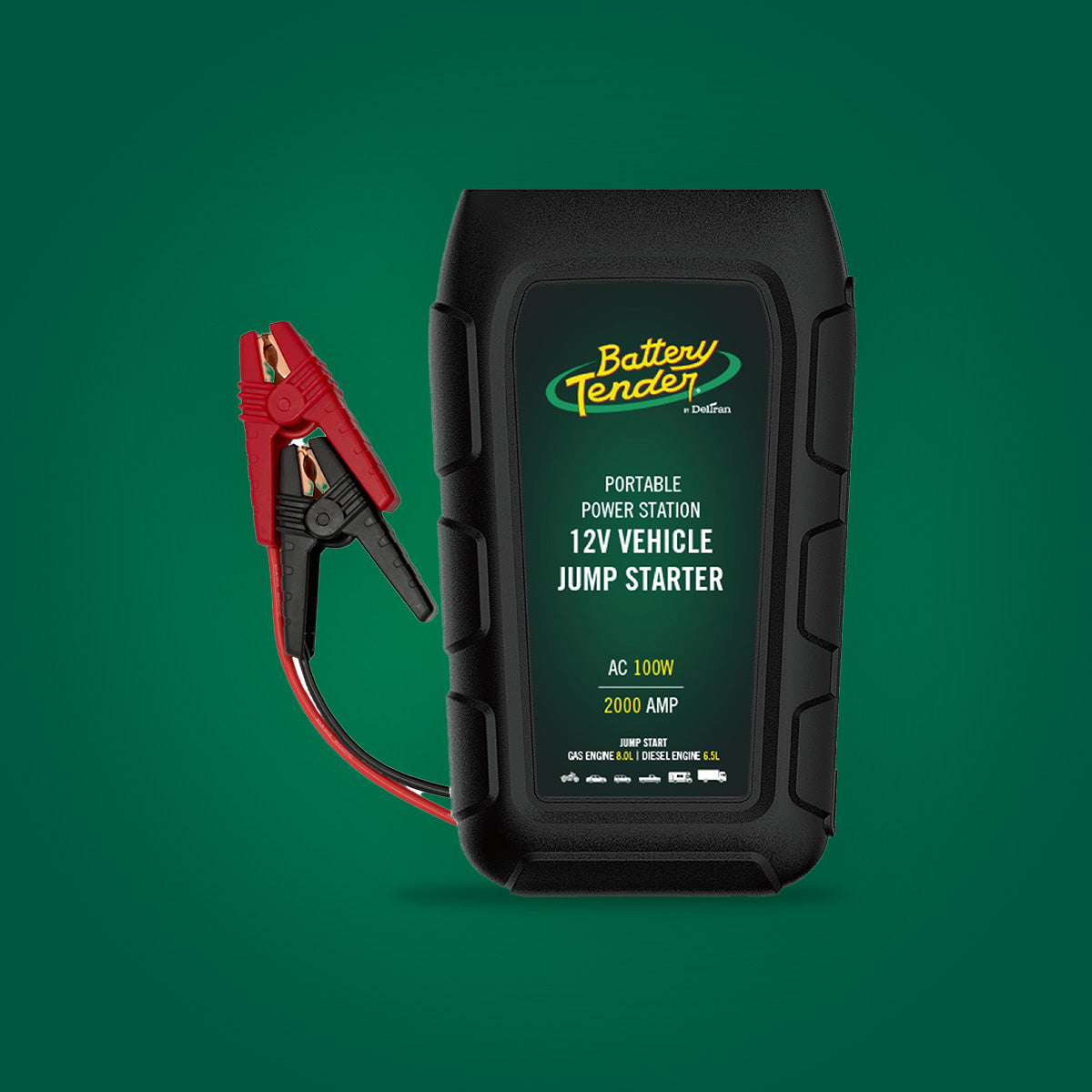
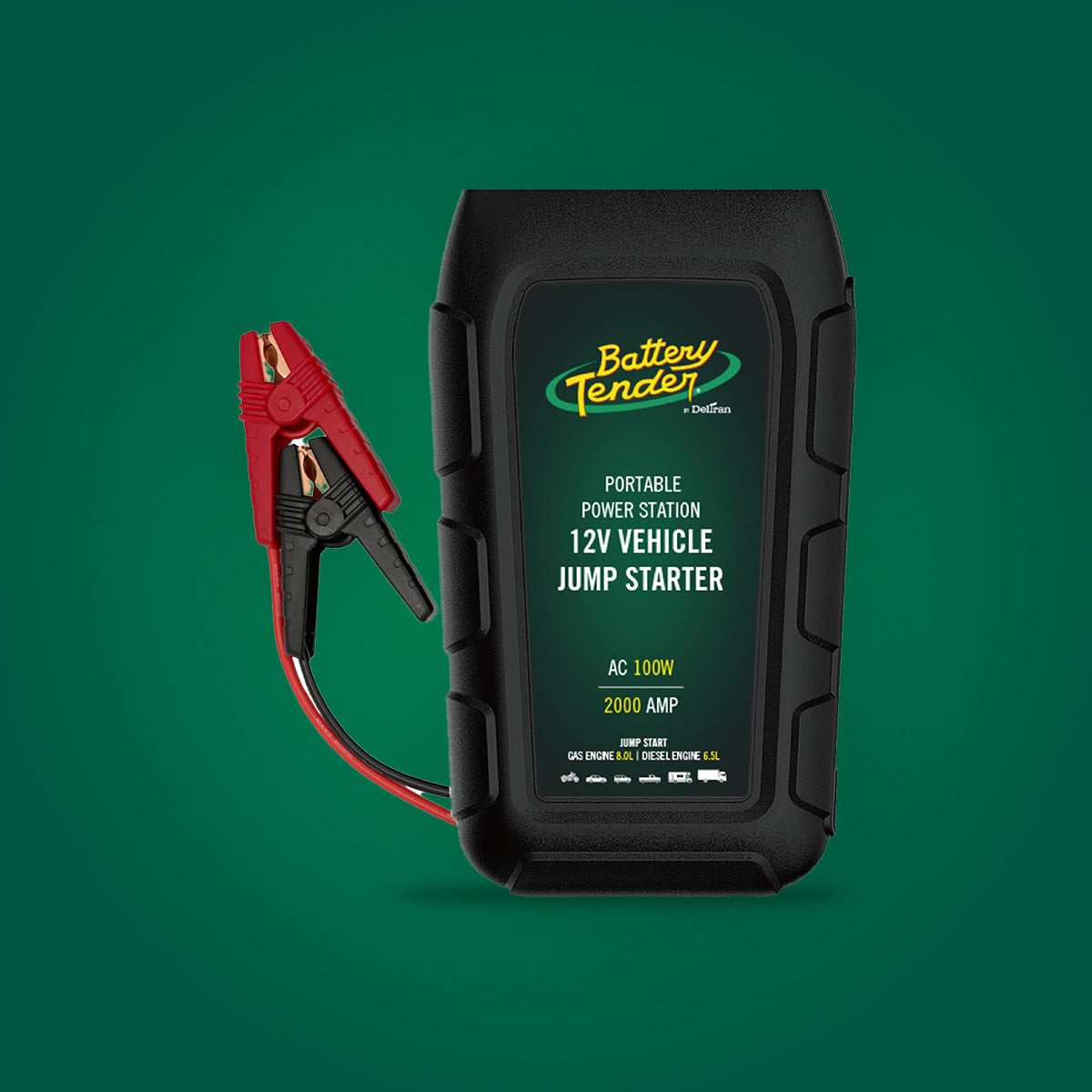
- 2000 AMP Jump Starter - $179.95
- Charge N Start 4120 - $179.95 (combines 4 AMP charging with 1200 AMP jump starting)
Frequently Asked Questions
Q: Should I disconnect my classic car battery even with a maintenance charger connected?
A: No need to disconnect if using a proper maintenance charger. It's designed for continuous connection. However, if your classic has known parasitic drains (old clock, faulty wiring), disconnecting the negative terminal plus using a charger provides double protection.
Q: How do I maintain a 6-volt system through winter storage?
A: Same principles as 12V but use a 6V-compatible charger like the Battery Tender Plus 6V. Check voltage every 2 weeks instead of monthly—6V systems have smaller capacity and discharge faster.
Q: Can I leave a maintenance charger connected for 6+ months without checking?
A: Chargers can operate continuously, but monthly visual checks are recommended for fire safety, verifying connections haven't loosened, and catching any battery problems early. A 5-minute check prevents major issues.
Q: My classic has an alternator instead of a generator—does this change storage?
A: Alternator-equipped classics charge more efficiently, making battery maintenance easier during driving season. Storage procedures remain the same—the alternator doesn't charge when the car is parked. Maintenance charging is still necessary.
Q: What if my battery terminals are in a weird location (side-mount, etc.)?
A: Most chargers include alligator clips and ring terminals. For awkward terminals, use ring terminal permanent installation. Some classic batteries may need adapter cables—consult manufacturer customer service for specific application.
Q: Should I store my battery on concrete or is that a myth?
A: Modern batteries with plastic cases are fine on concrete. Old hard-rubber cases could discharge through concrete, but that's vintage 1960s information. A wood shelf is still preferred for organization and preventing tip-over.
Q: How do I know if my classic needs an AGM battery vs. flooded?
A: If the classic is original, flooded battery is period-correct. AGM batteries offer better performance, longer life, and sealed design but cost more ($200-400 vs. $100-200). For driver-quality classics, AGM is worth the investment.
Q: Can I use a modern jump starter instead of maintaining a battery through storage?
A: Jump starting repeatedly damages classic car electrical systems and starters. The surge can blow fuses, damage voltage regulators, or harm original wiring. Proper maintenance charging is far superior to emergency jump starts.
Q: What voltage is too low to recover?
A: Below 10.5V indicates possible cell damage. Recovery mode can often recover batteries down to 3V, but success isn't guaranteed. If the battery has been deeply discharged multiple times, replacement is recommended.
Q: Should I start my classic monthly during winter storage?
A: Opinion divided. Starting without driving doesn't fully charge the battery, creates condensation in the exhaust system, and doesn't bring the engine to full operating temperature. Better to keep the battery maintained with a charger and start when actually driving.
Conclusion: Protecting Your Classic's Electrical Heart
Classic cars deserve the same care in storage as when displayed at shows. The battery—often overlooked—is critical not just for starting but for protecting irreplaceable vintage electrical systems from damage caused by improper jump-starting or voltage irregularities.
Your Classic Car Winter Storage Battery Plan:
- Remove battery for indoor storage OR install permanent maintenance charger
- Monthly voltage verification
- Spring revival checklist before first start
- Preventative replacement every 5 years
- Documentation in vehicle maintenance records
The Classic Car Battery Maintenance Advantage:
Since 1965, Battery Tender® has been the trusted name in classic car battery maintenance. ISM technology has protected millions of vintage vehicles through countless winters—from brass-era electrics to modern classics. When you choose Battery Tender, you're using the same technology that preserves concours-winning cars in climate-controlled collections worldwide.
Investment in Preservation:
- Maintenance charger: $44.95-$84.95 (one-time)
- $5-10 annual electricity
- 5-7 years battery life vs. 2-3 without maintenance
- Priceless: Protection of irreplaceable electrical systems
For classic car owners, proper battery storage isn't just about convenience—it's about preserving automotive history.
Ready to protect your classic through winter?
Shop Battery Tender products for classic cars: