


An ATV lives a harder life than almost any other powersports vehicle. It goes places cars and motorcycles cannot reach — through mud, water crossings, rocky trails, and steep terrain. It operates in conditions ranging from summer desert heat to winter snow. And it often sits between uses for weeks at a time when trail access is limited by weather or season. Each of these factors creates specific demands on the battery, and failing to account for them results in the most common ATV complaint: a machine that will not start when you need it.
Battery Tender® has been providing charging solutions for ATV owners since the powersports market first adopted smart charging technology. This guide addresses the specific challenges of ATV battery maintenance with practical solutions that keep your quad ready every time.
What Makes ATV Battery Maintenance Different
Vibration and Physical Stress
ATVs subject their batteries to more vibration than almost any other powered vehicle. Rough trails, rocky terrain, and off-road obstacles transmit significant shock loads through the frame to the battery. This vibration can crack battery plates, damage separators, and loosen terminal connections — all failure modes that are rare in automotive batteries but common in ATVs with inadequate battery mounting or under-spec batteries.
Always verify your ATV battery is firmly secured in its tray with the factory hold-down bracket. A loose battery vibrates freely and fails quickly. Check the hold-down bolt annually and after any significant impact. AGM batteries tolerate vibration better than conventional flooded batteries due to their absorbed electrolyte construction — if your older ATV still uses a conventional flooded battery, an AGM replacement is a worthwhile upgrade.
Water and Mud Exposure
ATVs routinely encounter water crossings, mud bogs, and rain — conditions that can introduce moisture and contamination to battery connections. While the battery case itself is sealed, the terminals and cable connections are vulnerable. Corroded or contaminated connections create voltage drop that causes starting problems even with a healthy battery. ATV riders should inspect and clean battery terminals more frequently than car owners — every 2-3 months during active riding season is appropriate.
Temperature Extremes
ATVs operate year-round for many riders — summer desert riding in 110°F heat and winter trail riding in sub-freezing temperatures. Both extremes stress batteries. Heat accelerates plate degradation and electrolyte loss. Cold reduces available cranking amps at the exact moment the cold-soaked engine needs maximum current to start. An ATV battery that tests fine at room temperature may not start the machine on a 10°F morning.
Irregular Use Patterns
Unlike a daily-driven car where the alternator charges the battery regularly, ATVs often sit for weeks between uses. Every week of sitting without charging allows the battery to self-discharge and sulfate. Riders who do not use their ATV for a month between trail days are often surprised to find a flat battery — but the math of self-discharge makes it predictable.
Choosing the Right ATV Battery Charger
ATV batteries span a wide range of sizes — from small 7-amp-hour batteries in lightweight sport ATVs to 18-20 amp-hour batteries in larger utility quads. The charger amperage needs to match the battery size: too low and charging takes excessively long; too high and you risk overcharging a small battery.
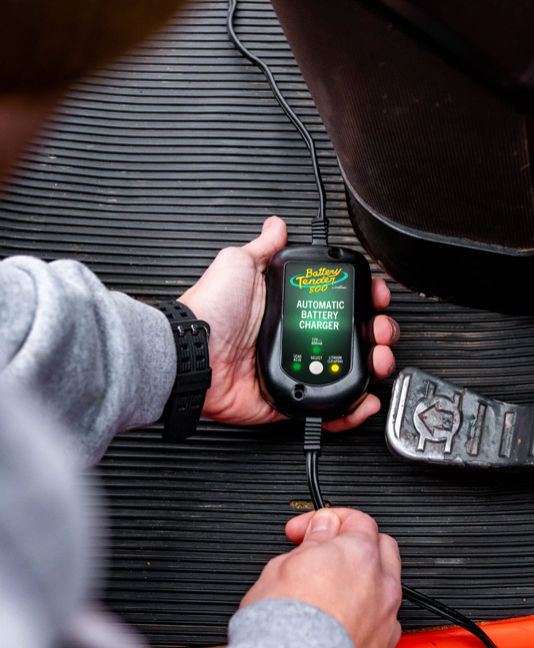
For most ATVs with batteries in the 10-20 amp-hour range, the Battery Tender Plus 1.25 AMP provides appropriate maintenance charging for indefinite storage periods. It fully charges and then maintains without any risk of overcharging — leave it connected throughout a month of non-use without concern.
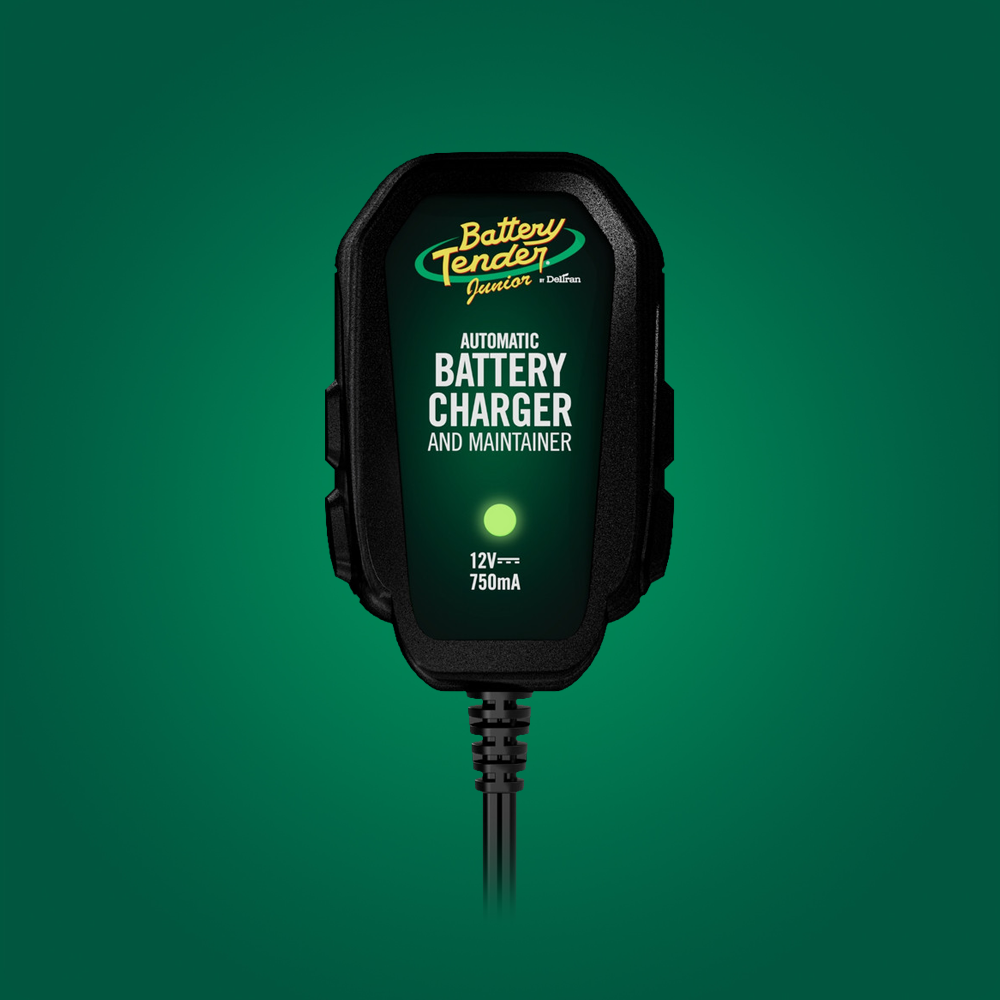
For ATVs with lithium batteries, which are increasingly common in performance and sport models, the Battery Tender Junior 1 AMP Selectable Chemistry Charger properly maintains both lead-acid and lithium batteries with the appropriate voltage profile for each.
Shop the Battery Tender Junior 1 AMP Selectable Chemistry (SKU: 022-0199-DL-WH).
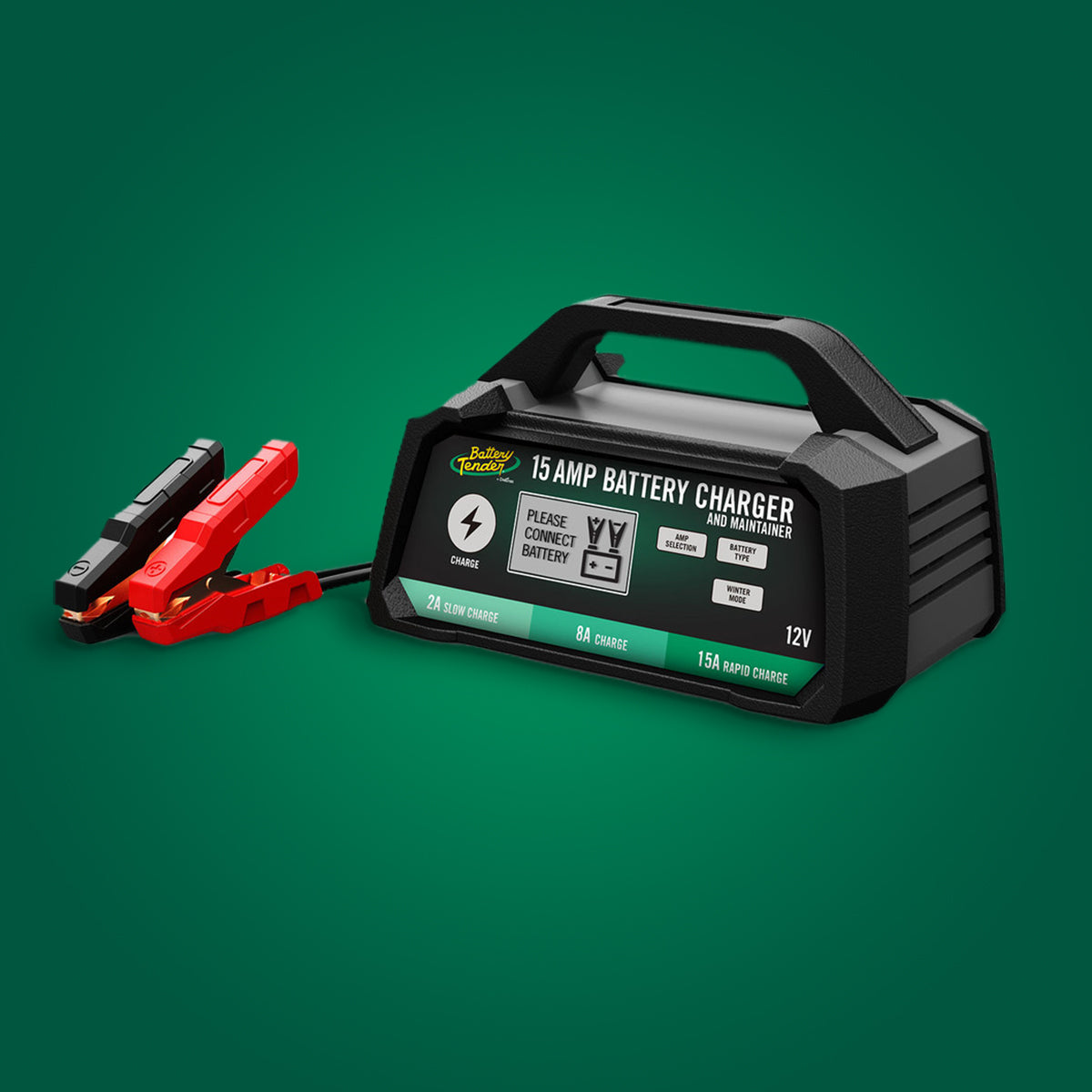
For utility ATV and UTV owners who need faster recharge times between heavy-use days, the 4 AMP Power Tender cuts recharge time significantly compared to 1.25-amp maintenance chargers, while still providing the full ISM 4-stage charging cycle.
Shop the 4 AMP Power Tender 12V/6V (SKU: 022-0209-BT-WH) for faster recovery between rides.
Seasonal Battery Maintenance Protocol
Pre-Season Preparation (Spring)
Before the first ride of the season, give the battery a full diagnostic:
- Check battery voltage with a multimeter — should read 12.6V or higher at rest after a full charge
- Load-test the battery at a shop or with a home battery tester — a battery that fails a load test despite appearing charged has internal plate damage and needs replacement
- Clean all terminals and cable connections thoroughly
- Inspect the battery case for cracks, swelling, or leakage that indicate failure
- Verify the hold-down is secure
In-Season Maintenance
- Connect a smart maintainer any time the ATV will sit more than two weeks between rides
- Inspect terminals every 2-3 months and clean as needed
- After any significant water crossing, visually inspect the battery compartment for water intrusion and dry as needed
- Check battery voltage if starting performance seems slow or weak — catching degradation early avoids a stranded situation
Off-Season Storage
This is where the most battery damage occurs for seasonal ATV riders. If the quad sits from October through April without any charging, the battery self-discharges and sulfates progressively. A battery in this condition often cannot be recovered regardless of what charger you connect in spring.
The correct off-season protocol: fully charge the battery, connect a Battery Tender smart maintainer, and leave it connected throughout the storage period. The charger will cycle between charge and float as needed, maintaining the battery at full charge for the entire storage period without any attention required from you.
For riders with limited garage outlets or several stored vehicles, the WaveCharge multi-bank charger handles multiple ATVs simultaneously — each bank independent so each battery gets exactly what it needs.
Jump Starting Your ATV: When and How
Even with excellent maintenance habits, situations arise where the ATV needs a jump start — a forgotten key-on drain, an unexpected cold snap, or a battery that has simply reached end of life. Having a quality compact jump starter in your gear bag or garage is excellent insurance.
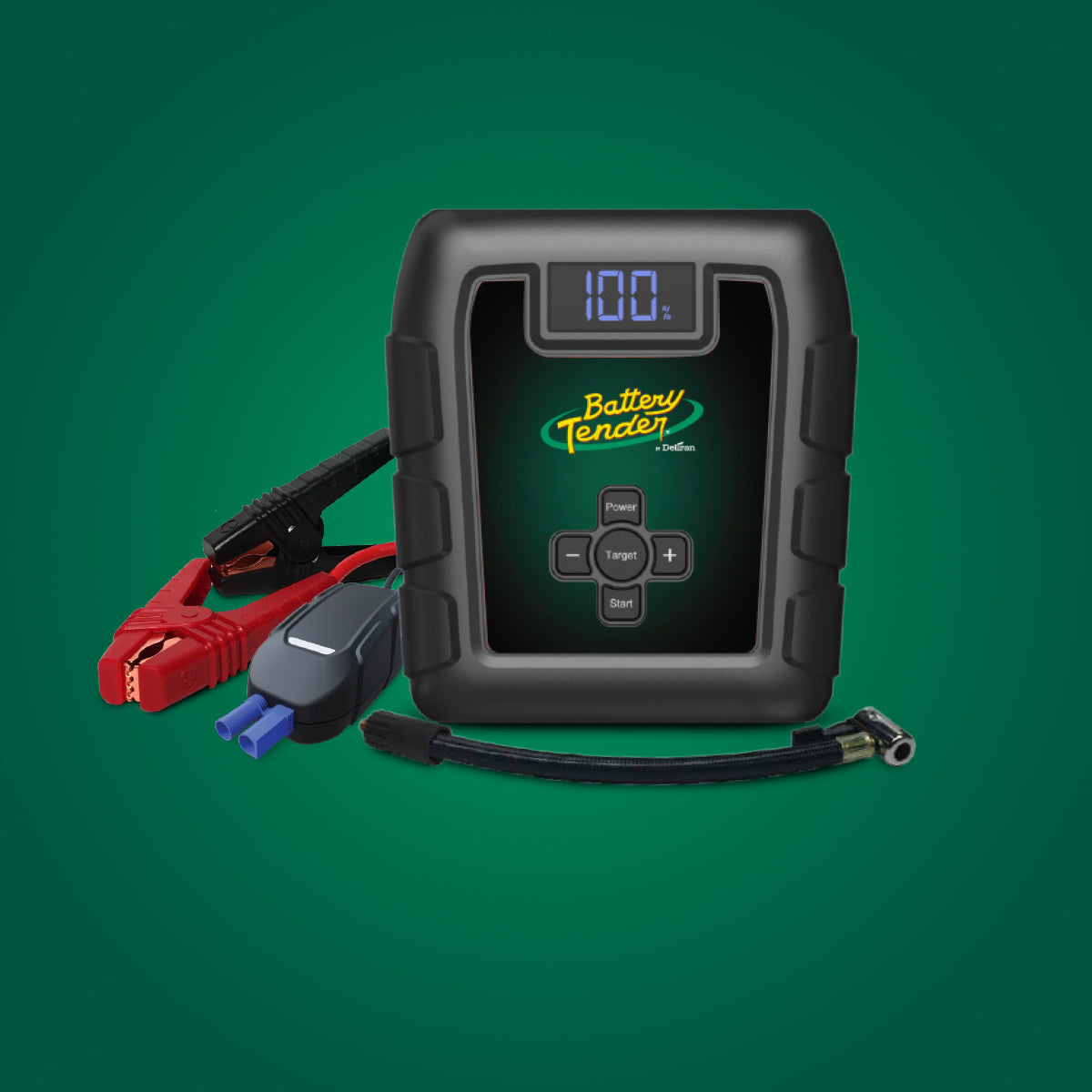
The Charge N Start 1100 offers 1000 amps of jump starting capability in a compact package — enough starting power for virtually any ATV or UTV engine — combined with a built-in 1-amp smart charger. Instead of two separate devices, one unit handles emergency starting and ongoing maintenance.
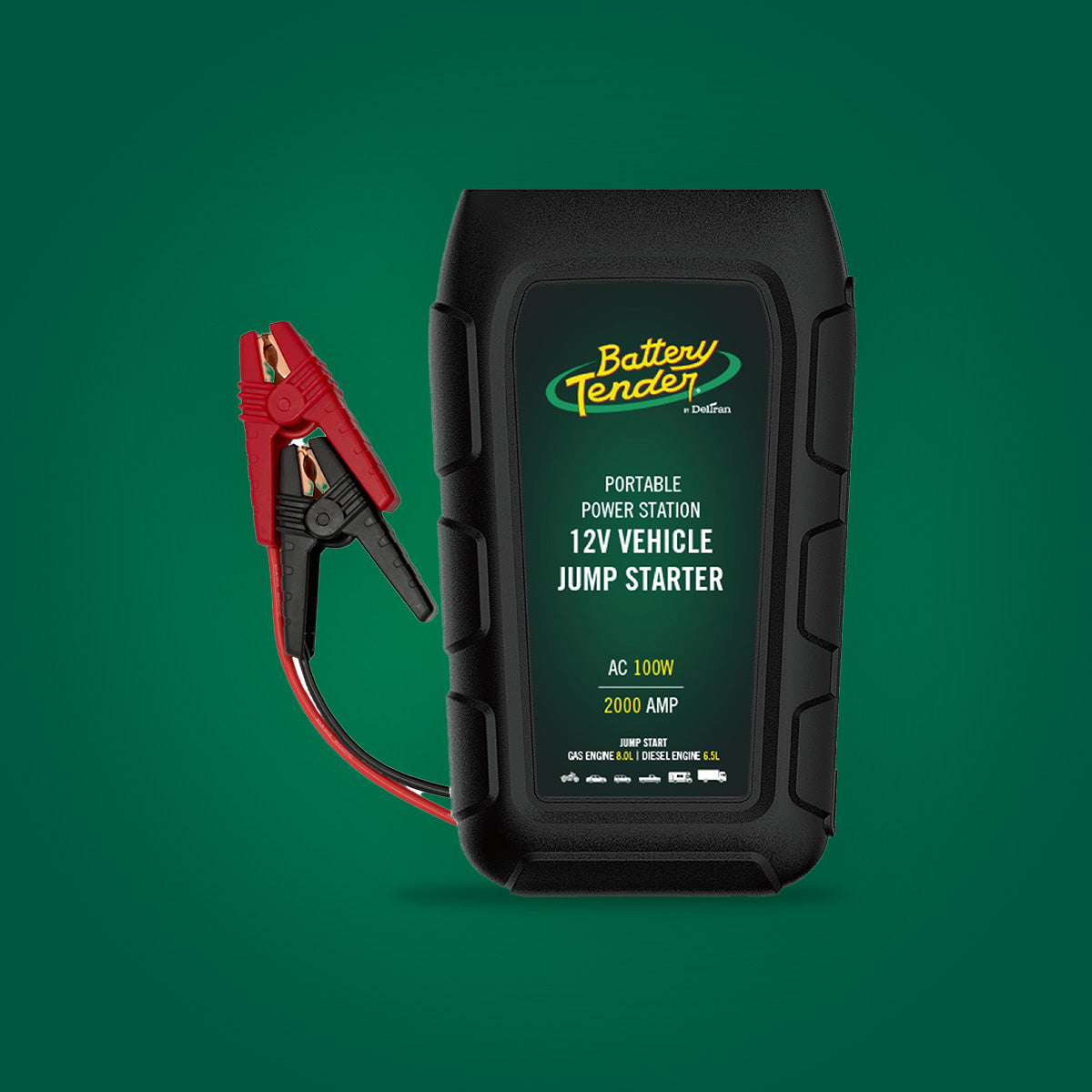
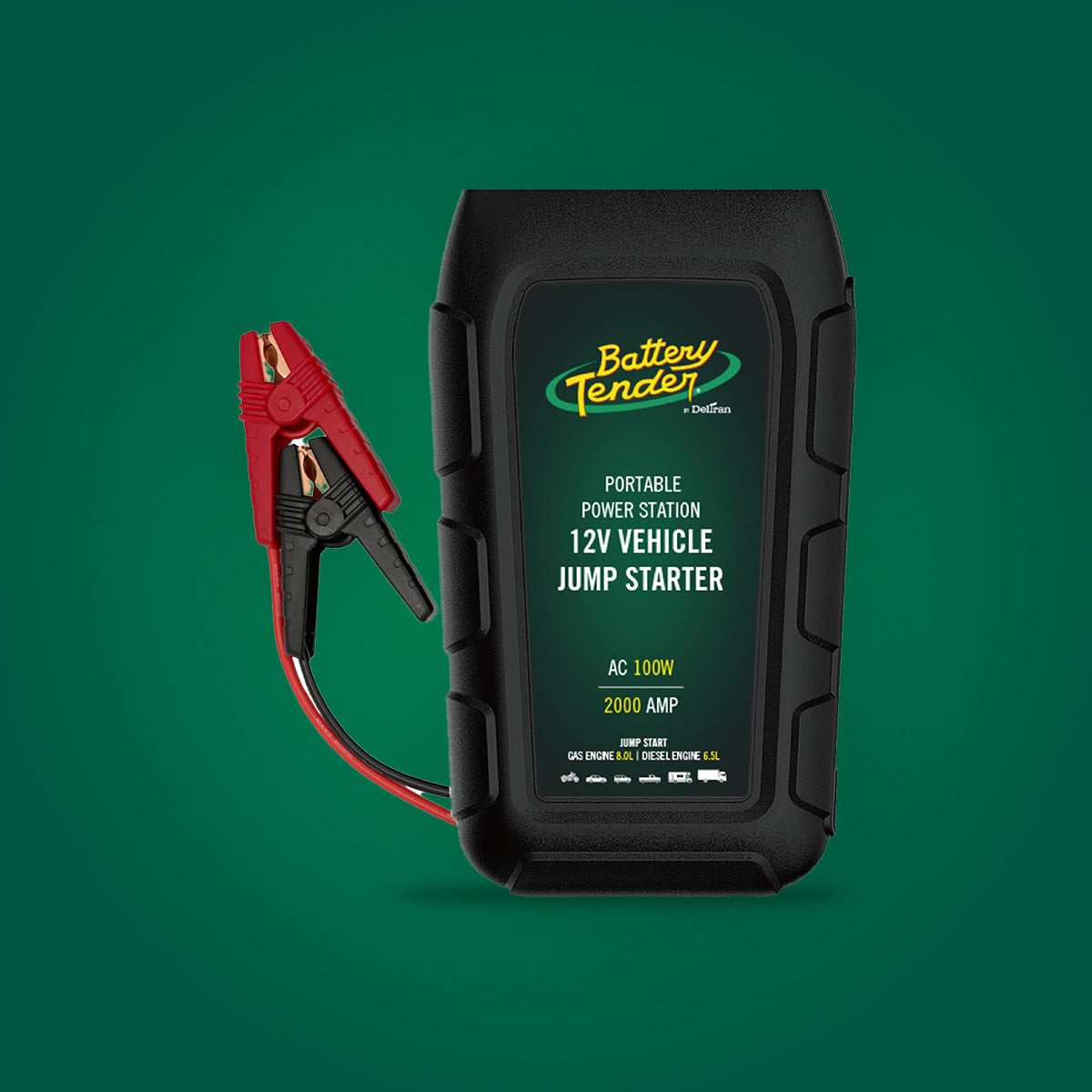
For trail riders who are often far from the garage when problems occur, the compact 600 AMP Jump Starter fits in a saddle bag and handles ATV and side-by-side engines up to 6.0L gas without requiring another vehicle to be present.
Diagnosing ATV Battery Problems
Slow or Weak Cranking
The engine cranks, but more slowly than usual or struggles to fire. This indicates a partially discharged battery or one with reduced capacity due to sulfation or plate damage. Check voltage and load test before assuming the battery is fine. A battery that reads 12.5V but fails a load test needs replacement.
Clicking but Not Cranking
A rapid clicking sound when the start button is pressed indicates the battery lacks sufficient voltage to engage the starter motor. The solenoid is chattering as the battery voltage collapses under load. This battery needs immediate charging or jump starting, followed by load testing to determine if it can hold charge.
No Response at All
Complete silence with no clicking or motor response suggests either a severely discharged battery, a blown fuse, a failed solenoid, or a broken connection. Start by checking the battery voltage. If it reads below 10V, attempt charging with a smart charger — some Battery Tender chargers include a recovery mode that can revive deeply discharged batteries that standard chargers refuse to charge.
Works Fine in the Shop but Won't Start on a Cold Morning
Cold cranking performance that fails in the field while passing shop tests suggests the battery's CCA rating is insufficient for your conditions, or the battery has reduced capacity at cold temperatures due to age. Cold weather is the true test of battery health — if it struggles to start in cold, the battery is likely nearing end of life.
Frequently Asked Questions
How long does an ATV battery typically last?
With proper maintenance including a smart charger during storage, ATV lead-acid AGM batteries typically last 3-5 years. Without maintenance during storage, 1-3 years is more realistic. Lithium batteries, properly maintained, can last 5-8 years.
Can I charge an ATV battery without removing it?
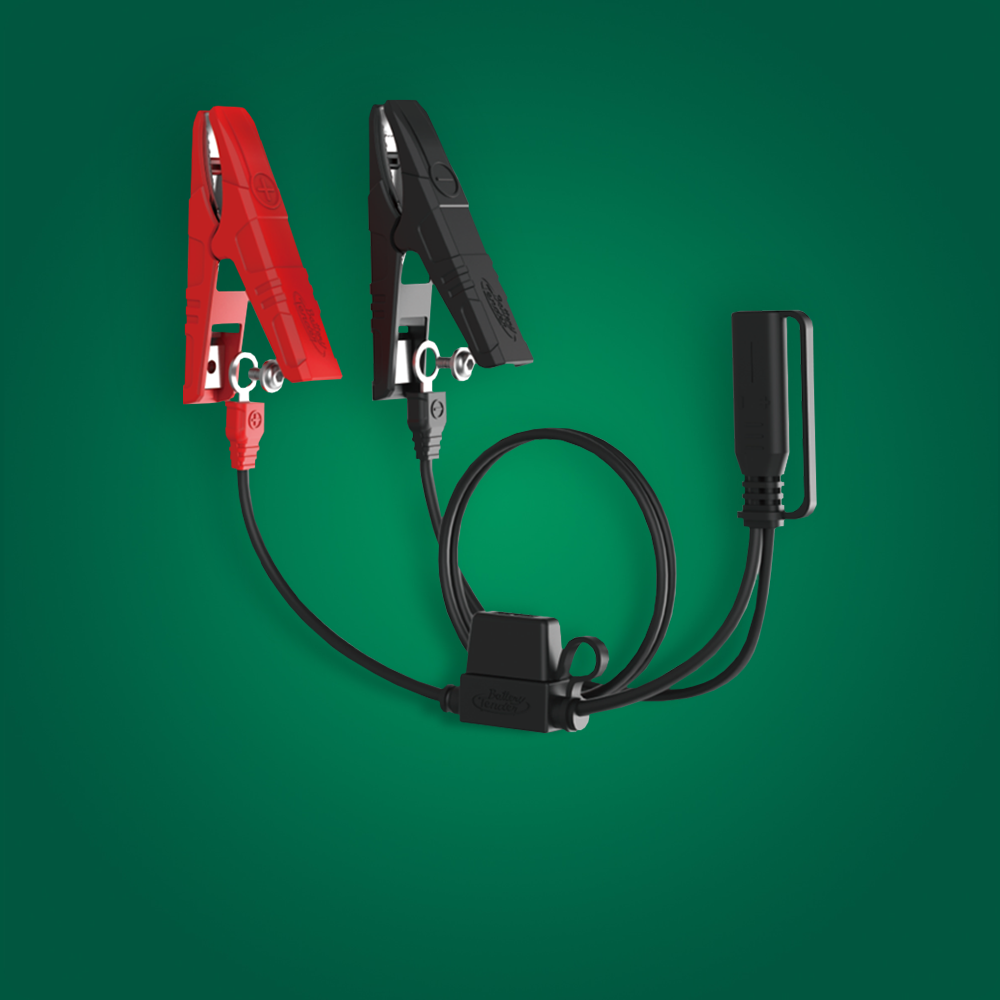
Yes, and in most cases it is preferable to charge the battery in place. Modern smart chargers like Battery Tender products are safe to connect directly to the battery terminals while the battery remains installed. Installing a permanent ring terminal pigtail with quick-disconnect makes connecting the charger even more convenient.
My ATV ran into a puddle and the battery compartment got wet. What do I do?
Remove any standing water from the battery compartment immediately. Inspect all connections for water intrusion. Allow the compartment to dry thoroughly before charging or operating. If the battery terminals show water contamination, clean and dry them before reconnecting power. If the battery experienced water immersion (not just spray), inspect it for damage and test before relying on it.
Do I need a special charger for an ATV with a lithium battery?
Yes. Lithium (LiFePO4) batteries require a charger with a lithium-specific charging profile. Battery Tender selectable chemistry chargers handle both lead-acid and lithium with the appropriate charging algorithm for each. Using a lead-acid only charger on a lithium battery can cause overcharge or BMS shutdown.
How often should I check my ATV battery voltage?
Check before each riding season, after any storage period of more than two weeks, and whenever you notice slow cranking or starting issues. Regular voltage monitoring catches problems early — before they leave you stranded on the trail.
Conclusion
ATV batteries face more demanding conditions than most automotive batteries, but they are not inherently unreliable — they simply require maintenance that matches the demands placed on them. Vibration protection through proper mounting, terminal maintenance appropriate to muddy and wet conditions, adequate seasonal storage charging, and the right smart charger for your battery chemistry all contribute to a battery that starts reliably season after season.
Battery Tender powersports charging solutions are built with these demands in mind — from the compact Junior charger for small sport ATVs to the multi-bank WaveCharge for fleet garage storage. Whatever you ride, keeping the battery maintained is the simplest and most cost-effective maintenance task in your entire pre-ride checklist.
Shop all powersports battery chargers and find the right solution for your quad.